
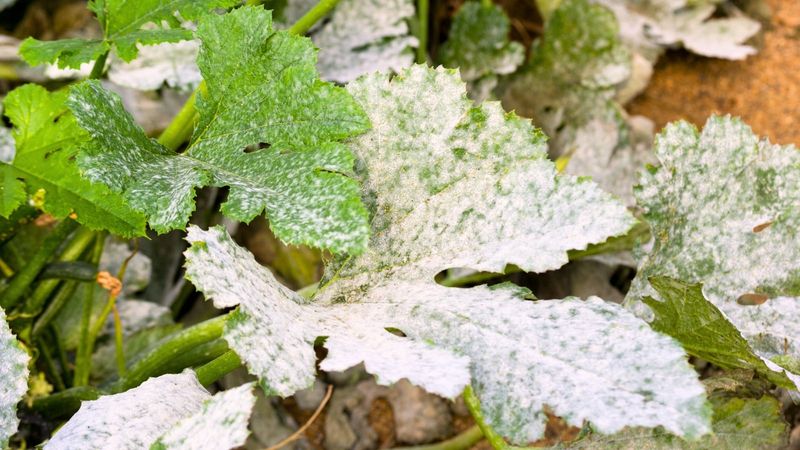
Walking out to your garden and finding your cucumber leaves dusted white is one of those sinking moments that makes you wonder if the whole vine is done. That chalky coating is often a sign of cucurbit powdery mildew, a fungal disease that can move fast once conditions favor it. The good news is that catching it before it blankets the canopy gives you real options, and a partially diseased vine can still produce cucumbers worth eating. A measured plan, started early, may protect the healthy leaves that remain.
Powdery-white leaves may signal powdery mildew
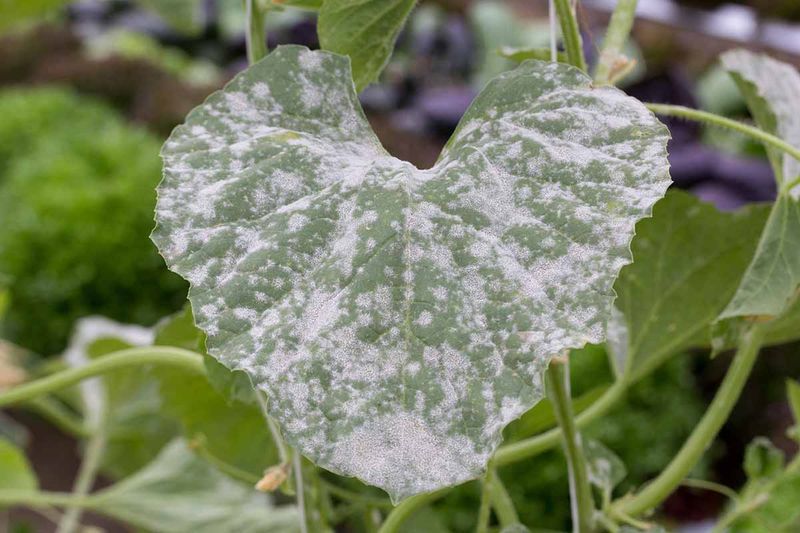
White or gray, flour-like patches on cucumber leaves are one of the more recognizable symptoms in a vegetable garden, but the appearance alone does not confirm the diagnosis. What you are likely looking at is consistent with cucurbit powdery mildew, a fungal disease caused by Podosphaera xanthii or related species, though other problems can also cause discoloration. Confirming the specific symptom pattern before you treat matters, because the wrong response can waste time and money.
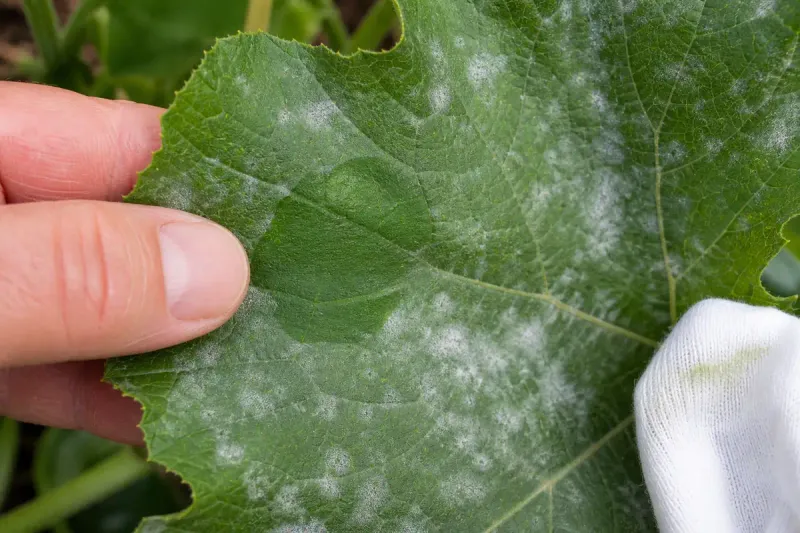
According to University of Minnesota Extension guidance on cucurbit powdery mildew, the disease typically begins as pale spots and develops into visible powdery growth, often appearing first on older or shaded leaves lower in the canopy. As infection progresses, affected leaves may yellow, brown, wither, and drop early, weakening the vine’s ability to support fruit. The Minnesota Extension cucumber leaf diagnostic tool lists several possible causes for discolored leaves, which is a useful reminder that not every white or yellow mark is powdery mildew.
One important distinction is downy mildew, which can appear at the same time of year. Downy mildew commonly produces angular yellow or pale-green lesions on the upper leaf surface, with gray, brown, or purplish growth on the underside. Minnesota Extension’s downy mildew resource notes that downy mildew requires moisture on the leaf surface for infection, which is a key difference from powdery mildew. Flip a leaf over and look carefully before choosing a course of action.
Late-summer canopy conditions can favor the disease
Powdery mildew on cucurbits does tend to show up or accelerate in late summer in many parts of the United States, but that timing is not a universal rule. University of Illinois Extension identifies late summer and fall as common periods for cucumber powdery mildew, and Minnesota Extension notes similar seasonal patterns. Regional weather, the specific cultivar you are growing, shade exposure, plant density, and which pathogen strains are present in your area all shape whether or when the disease appears.
Humidity plays a role, but not in the straightforward way many gardeners assume. UC IPM’s powdery mildew on cucurbits page explains that moderate temperatures combined with humid or shaded canopy conditions and poor air circulation can favor disease development. Crucially, powdery mildew spores do not need free water on the leaf surface to germinate and infect. Colorado State Extension’s powdery mildew resource adds that warm, dry conditions can also support spore production and spread, which means a dry August is not necessarily safe territory.
The practical takeaway is that the management target is not humidity in the air around your garden but the crowded, stagnant microclimate inside a dense canopy. When leaves are packed tightly together, air barely moves between them, temperatures and moisture levels stay elevated in that small space, and a susceptible host with the pathogen already present can tip into active disease quickly. That is the environment worth addressing.
Open the canopy before spots spread
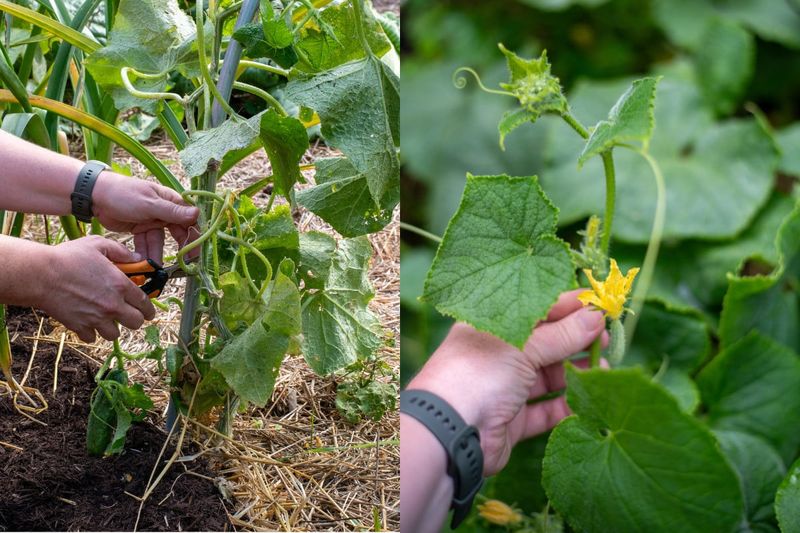
Once you spot the first signs of powdery mildew, the fastest thing you can do for the vine is give it more breathing room. Trellising cucumbers, if they are not already supported, lifts foliage off the ground and separates leaf layers so air can move through. UC IPM’s cucumber growing guide recommends trellising as a standard practice for reducing disease pressure, and the benefit is especially noticeable when plants have been sprawling in a humid garden bed.
If trellising is not practical at this stage of the season, focus on reducing crowding through selective pruning. Remove weeds that are pressing against the vines, and thin out any leaves or lateral shoots that are blocking airflow without contributing much photosynthesis. Penn State Extension’s vegetable garden problem-diagnosis guide supports pruning as part of a broader disease-management approach, though it emphasizes that the goal is improved circulation, not a dramatic reduction in plant size.
Better ventilation may reduce disease pressure going forward, but it cannot erase the fungal growth already established on infected leaves. Think of canopy opening as a way to slow the spread and protect healthy foliage rather than reverse existing damage. Minnesota Extension cautions against removing so much foliage that the vine loses the productive leaf area it needs to ripen fruit. Work gradually, step back often, and stop before the plant looks bare.
Water for overall disease management, not to cure powdery mildew

A common piece of garden advice says that watering your cucumber leaves causes powdery mildew, but that is not accurate for this particular disease. Powdery mildew spores do not need free water on foliage to infect, and wet leaves may actually interfere with the infection process. That said, there are still good reasons to change how you water once disease appears in the garden, because overhead and evening irrigation can worsen other diseases that do require surface moisture.
Minnesota Extension’s home garden disease management guide recommends drip or soil-level irrigation as a general practice for reducing prolonged canopy wetness. Colorado State Extension’s cucurbit growing guide echoes this, noting that keeping foliage as dry as possible limits conditions that favor a range of leaf diseases. If overhead watering is your only option, do it early enough in the morning that leaves can dry fully before evening temperatures drop.
Nutrition is worth addressing at the same time. Overly vigorous, succulent growth can make plants more susceptible to powdery mildew, and Minnesota Extension specifically advises applying fertilizer according to soil-test results and avoiding excess nitrogen. If you have been feeding your cucumbers heavily, hold off on additional nitrogen applications for the rest of the season and let the plant focus on the fruit it already has rather than pushing new leafy growth.
Remove the worst leaves while keeping healthy foliage
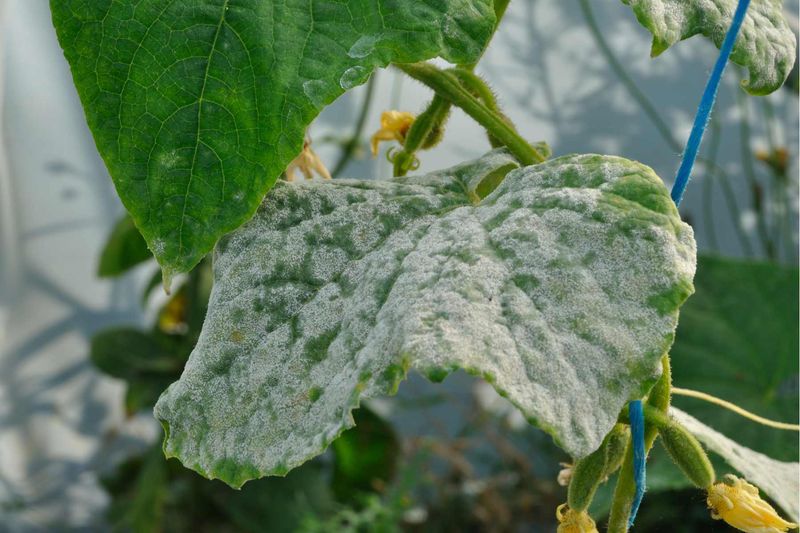
Leaf removal is one of those tasks where restraint matters as much as action. The goal is to reduce active disease pressure by taking out leaves that are heavily infected, collapsing, or so far gone that they contribute little photosynthesis but continue to release spores. Leaves with a small number of spots or mild coverage are still working for the plant and should stay.
Colorado State Extension’s cucurbit guide supports removing diseased plant material as part of an integrated management approach, and Utah State University Extension’s powdery mildew guide lists sanitation, including debris removal, as a component of managing the disease. Once you pull a leaf, bag it or dispose of it away from the garden. Do not add it to a home compost pile, because backyard compost often does not reach temperatures high enough to kill fungal pathogens reliably.
Aggressive defoliation creates its own problems. Minnesota Extension’s disease management guidance notes that removing too much foliage reduces photosynthesis and can expose developing cucumbers to direct sun, causing sunscald on the fruit skin. If a large portion of the canopy is already infected, you face a difficult trade-off, and in that case combining modest leaf removal with other management steps is more sensible than stripping the vine in one session.
Consider an early treatment that the cucumber label permits
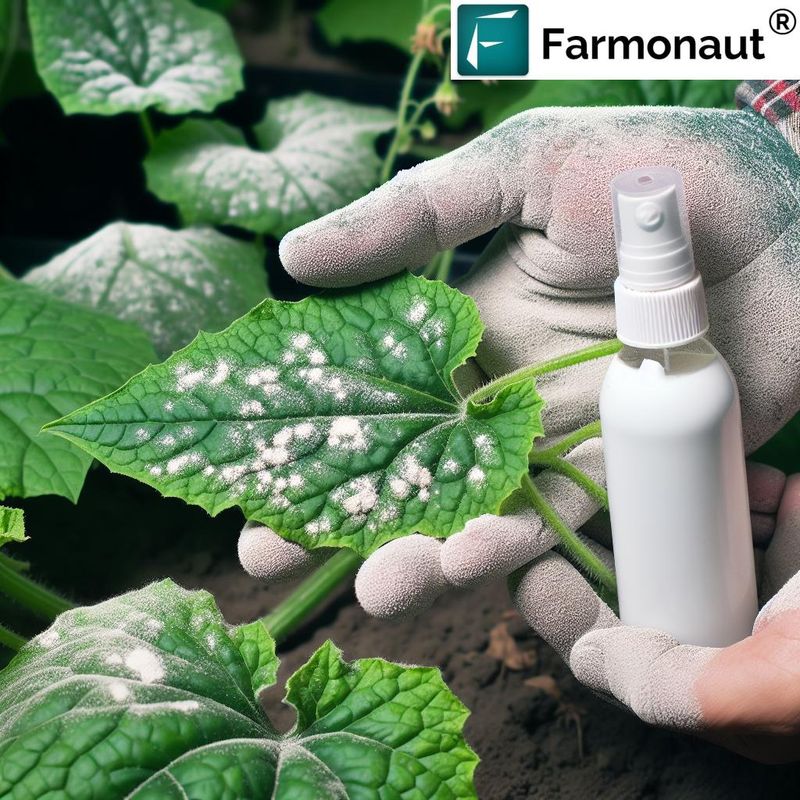
Fungicides are most useful at the start of an infection, before powdery mildew has spread across much of the canopy. Once leaves are broadly colonized, a spray will not restore them. What a properly chosen and timed product can do is protect healthy and newly emerging leaves from new infections, potentially slowing the disease’s progress through the rest of the vine.
Several active ingredients appear in products labeled for powdery mildew on cucurbits, including sulfur, potassium bicarbonate, and horticultural oils. Utah State University Extension’s powdery mildew guide lists these options and includes an important temperature warning: do not apply sulfur-based products when temperatures are above 90 degrees Fahrenheit because of the risk of foliar injury. The product label may impose additional restrictions beyond that threshold, so always read the full label before mixing or applying.
Before buying anything, check that the label specifically covers cucumbers or lists an applicable cucurbit crop group. A product registered for ornamental use only is not legally or safely appropriate for an edible crop. EPA guidance on pesticide labels makes clear that the label is a legal document, and EPA label Q&A resources explain that crop registration, application rates, protective equipment, and preharvest intervals are all binding requirements. Colorado State Extension and Minnesota Extension both note that repeat applications may be needed according to label directions and disease pressure.
One spray will not eliminate the disease, and expecting otherwise sets up disappointment.
Avoid household mixtures presented as cures
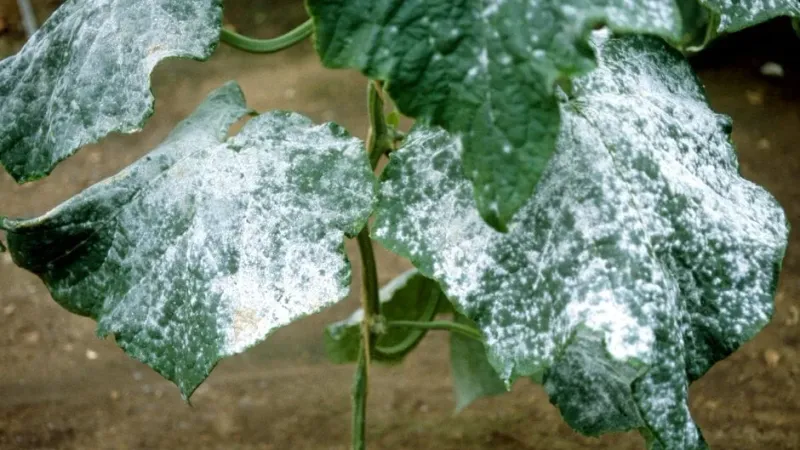
Searching online for powdery mildew remedies quickly turns up recipes involving milk, vinegar, dish soap, and household bleach. None of these should be treated as reliable fungicides for cucumbers. The evidence reviewed by Extension plant pathologists does not establish them as safe and effective treatments for edible crops, and some formulations can injure foliage or introduce substances that are not appropriate for food plants.
Baking soda is often mentioned in gardening forums, sometimes mixed with horticultural oil. Colorado State Extension describes the baking-soda-plus-horticultural-oil approach as experimental, based on research conducted on roses rather than cucumbers, and advises using it at your own risk. That is a meaningful qualifier: a treatment tested on ornamental roses does not automatically translate to safe or effective use on a vegetable crop you plan to eat.
The practical reason to skip these mixtures is not that they are forbidden but that they can distract from steps that have more consistent support. Time spent applying unproven sprays is time not spent improving airflow, adjusting irrigation, or sourcing a properly labeled product. If you are curious about low-input options, potassium bicarbonate products labeled for cucumbers are a more defensible starting point than kitchen experiments.
Choose resistance and airflow for next season
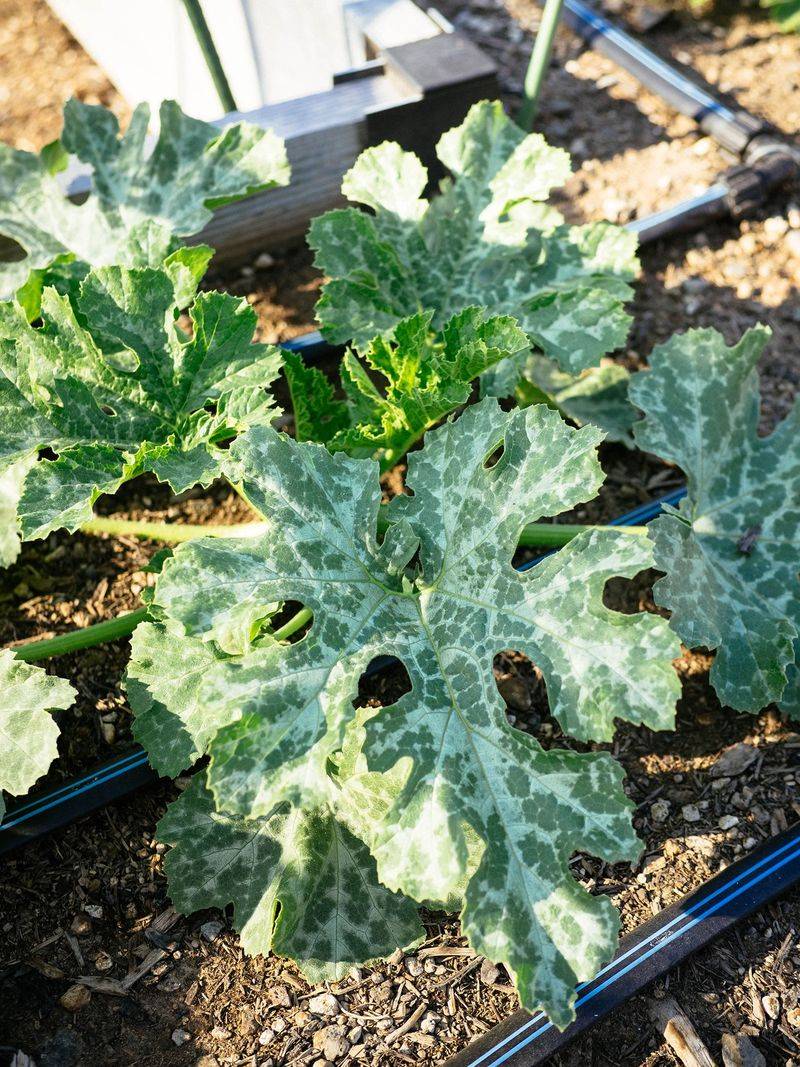
After managing an outbreak mid-season, the most useful thing you can do is carry the lesson forward into next year’s planting decisions. Choosing cucumber cultivars described as resistant or tolerant to powdery mildew is a reasonable starting point. Minnesota Extension recommends resistant varieties as part of an integrated approach, while also noting that resistance is not absolute.
University of Illinois Extension’s plant problem database and Illinois Extension’s cucumber growing guide both identify powdery mildew as a recurring concern for cucumber growers in the region and support cultivar selection as a preventive measure. The caveat worth keeping in mind is that pathogen populations vary by region and season, and resistance-breaking strains do exist. A cultivar that performed well last year in your neighbor’s garden may still get some disease in yours under different conditions.
Physical setup matters just as much as variety. Wider spacing between plants, consistent trellising, weed control to reduce competition and canopy crowding, and avoiding excess nitrogen fertilizer all address the conditions that allowed the disease to gain a foothold this season. None of these steps guarantees a clean harvest, but combining them with a resistant cultivar gives you a meaningfully lower-risk starting point than repeating the same setup that produced this year’s outbreak.
Protect the leaves that still work
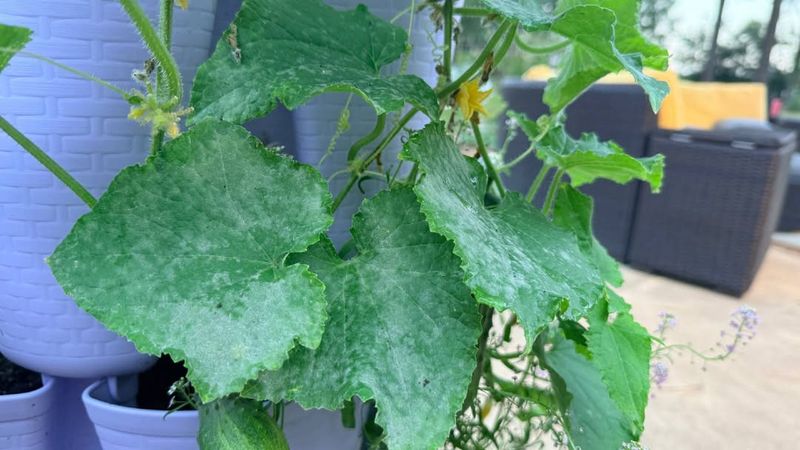
Pulling together what works comes down to a short, ordered list. Confirm the symptom matches powdery mildew before treating. Open the canopy through trellising, selective pruning, and weed removal. Shift to drip or early-morning irrigation and hold off on additional nitrogen.
Remove only the most severely affected leaves and dispose of them away from the garden. If the infection is still early, consider a fungicide product that specifically lists cucumbers on the label, follow every instruction including temperature restrictions, and expect to repeat applications as directed rather than hoping one spray resolves it.
Minnesota Extension and Minnesota Extension’s home garden disease guide both note that a vine carrying some disease can still produce a useful crop if enough healthy foliage remains to support fruit development. Extensive leaf loss is the real threat to yield and quality, not the presence of a few white patches. The practical goal at this point in the season is not a complete cure but protecting the functional leaves that are still feeding your cucumbers.