
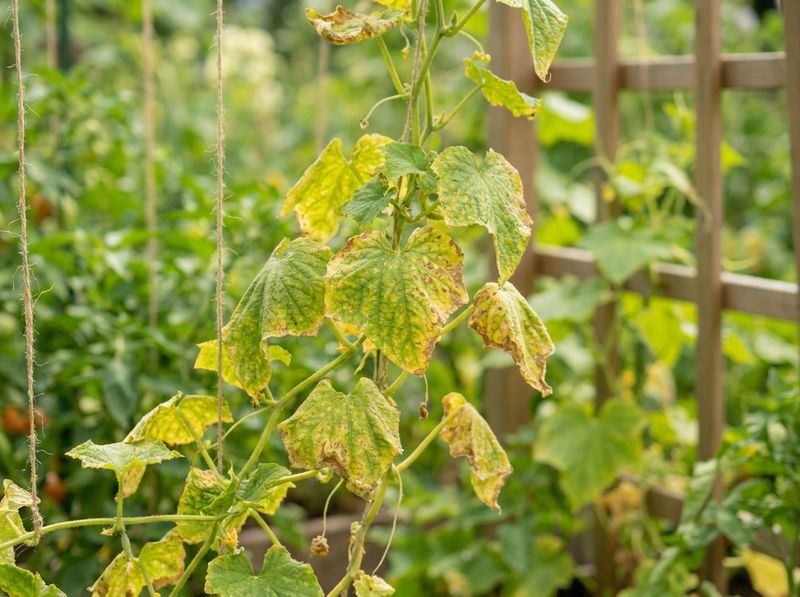
Walking out to your garden in July and finding the lower leaves on your cucumber plants turning yellow can feel alarming, especially when the rest of the vine looks fine. The pattern does have meaning: older leaves at the base of the plant tend to show stress first, which makes the root zone worth checking early. But several different problems, from spider mites to fungal diseases to inconsistent watering, can produce that same bottom-up yellowing, so the root zone is a starting point for investigation, not an automatic answer. Working through a short sequence of observations before reaching for fertilizer or a spray can save you time and protect your plants from treatments they do not actually need.
Bottom-Up Yellowing Is a Clue, Not a Diagnosis
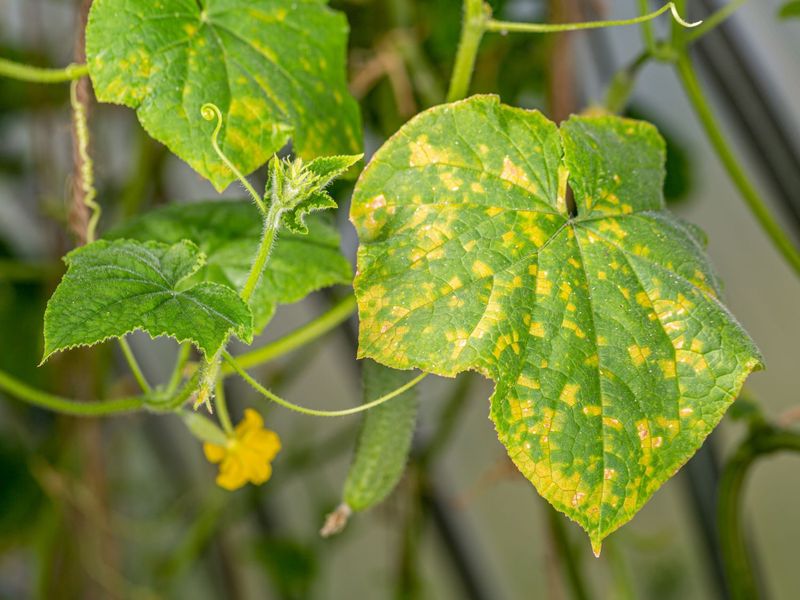
Older leaves at the base of a cucumber vine are the first to feel the effects of almost any stress the plant experiences, whether that stress originates underground or right on the leaf surface. That makes bottom-up yellowing a useful starting clue, but not a reliable shortcut to a single answer. Penn State’s plant health diagnostic guidance is clear that overlapping symptoms require a systematic look at the whole plant before settling on a cause.
Root-zone problems are genuinely worth investigating early, particularly in peak summer heat. Cucumbers are heavy water users, and University of Minnesota Extension’s cucumber growing guide explains that consistent soil moisture is essential for healthy root function and nutrient uptake. When moisture becomes erratic or drainage fails, older leaves often show the strain before younger tissue does.
At the same time, powdery mildew, spider mites, downy mildew, bacterial wilt, viruses, and other foliar or vascular problems can all start on lower leaves and look similar at first glance. The University of Minnesota cucumber diagnostic guide lists multiple possible causes for discolored cucumber leaves, none of which can be identified by leaf position alone. Treat the pattern as an invitation to look more carefully at soil, stems, and leaf surfaces before drawing conclusions.
Check Soil Moisture, Drainage, and the Crown
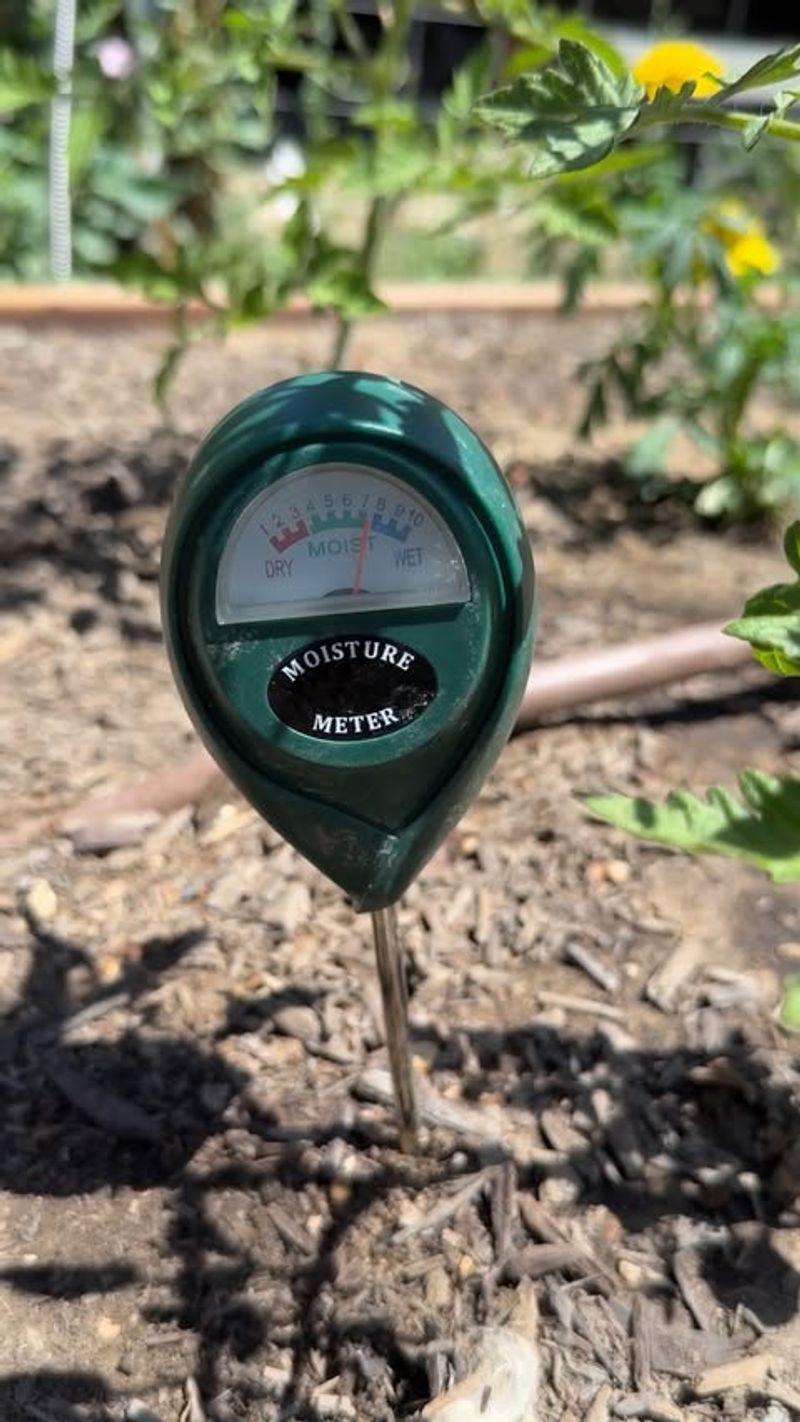
Before doing anything else, push two fingers about two inches into the soil near the plant’s root zone. The top inch of soil can dry out quickly in summer heat even when the soil below holds adequate moisture, so surface dryness alone is not proof the plant needs water. What you find at that two-inch depth gives a much clearer picture of what the roots are actually experiencing.
While you are at soil level, look for signs of poor drainage. Water pooling after irrigation, soil that stays soggy for more than a day, or a surface crust that sheds water instead of absorbing it can all deprive roots of the oxygen they need to function. Utah State University Extension’s cucurbit irrigation guidance notes that both drought and saturated conditions can damage cucumber roots, so the goal is to understand which situation you are dealing with, not to assume watering will fix it.
Check the crown and lower stem as well. Healthy tissue there should feel firm and look greenish or tan. Soft, dark, water-soaked, or sunken areas near the soil line can point to crown or root disease, which Minnesota’s cucumber wilting diagnostic guide links to yellowing, wilting, stunting, and sometimes sudden collapse. Also check whether mulch is piled directly against the stem, since contact there can trap moisture and promote rot.
University of Minnesota’s vegetable garden watering advice recommends keeping the stem base clear even when mulching for moisture retention.
Water Thoroughly Without Overwatering
Cucumbers use a lot of water, and that demand climbs further when temperatures push into the upper 80s and 90s. University of Minnesota Extension recommends roughly one inch of water per week as a starting point, but that figure shifts depending on your soil type, how much wind and heat the garden receives, how large the plants are, and whether you are growing in containers or on a trellis. Sandy soils drain faster and may need more frequent attention; dense clay holds moisture longer but can become waterlogged if irrigation is not dialed back accordingly.
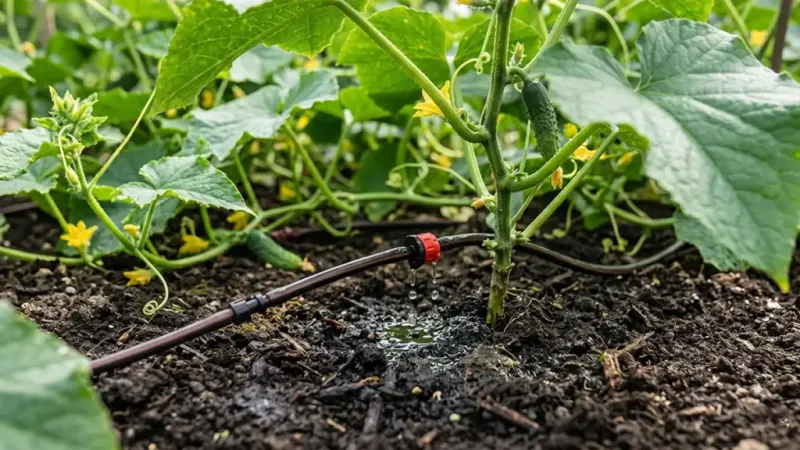
When your two-inch soil check confirms the root zone is dry, water slowly and thoroughly at the soil surface rather than applying a quick overhead sprinkle. Minnesota Extension’s vegetable watering guidance favors drip irrigation or soaker hoses because they deliver water directly to roots, keep foliage dry, and reduce the risk of some foliar diseases. A layer of mulch two to three inches deep can help the soil hold that moisture between waterings, as long as it stays clear of the stem.
Pay attention to how your plant looks in the morning rather than at the hottest point of the afternoon. Minnesota Extension’s heat-gardening guidance explains that temporary midday drooping is common in cucumbers even when soil moisture is adequate, because leaves lose water faster than roots can replace it during peak heat. Morning wilt that does not recover is a more meaningful signal that something is wrong with water uptake, root function, or vascular transport. Gardening in hot weather also cautions against shallow daily sips that keep only the top inch moist, since shallow watering encourages roots to stay near the surface where they are most vulnerable to heat and drought.
Never add more water to soil that is already saturated.
Separate Nutrient Deficiency From Nutrient-Uptake Trouble
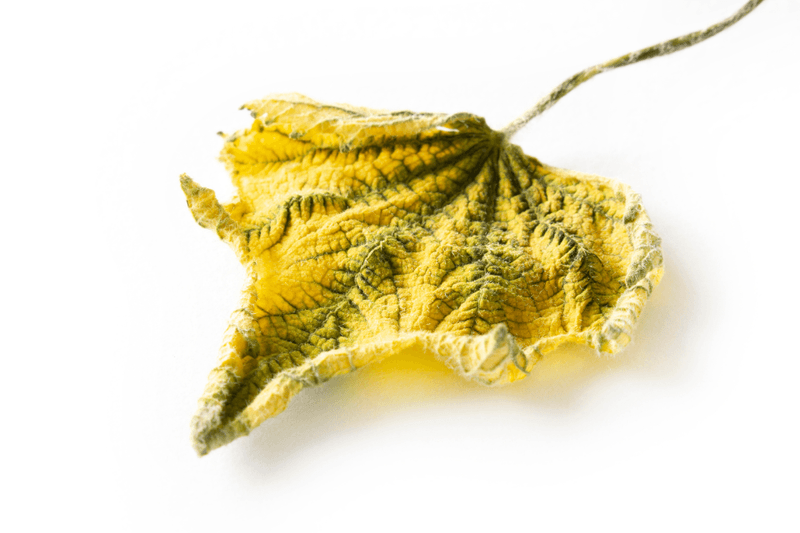
Uniform yellowing that moves from older lower leaves toward newer growth can fit the pattern of nitrogen deficiency. Magnesium shortage sometimes shows as yellowing between the veins of older leaves, and potassium problems can cause scorched or brown leaf edges. But those descriptions overlap significantly, and Penn State Extension’s plant health diagnostic guidance is explicit that yellow leaves alone are not enough to identify which nutrient is missing or whether a deficiency is even the real problem.
A nutrient can be physically present in your soil and still unavailable to the plant. Soil pH that has drifted too high or too low, excess moisture that damages roots, root injury from disease or physical disturbance, and antagonism between nutrients can all restrict uptake even when soil levels look adequate on paper. Oregon State University Extension cautions against guessing at fertilizer needs because adding more of a nutrient the plant cannot absorb will not solve the problem and may create new ones.
A soil test is the most reliable next step before you apply substantial fertilizer or soil amendments. Many US state universities offer low-cost testing through their extension services, and results typically include pH, major nutrient levels, and amendment recommendations tailored to your soil. If testing or a clear, reliable diagnosis does confirm a deficiency, use a fertilizer labeled for vegetables and follow its directions exactly. One important caution: do not apply concentrated fertilizer to a plant that is already wilted or drought-stressed, because it can injure roots and make the underlying problem worse.
Inspect Leaves, Undersides, and Stems for Other Causes
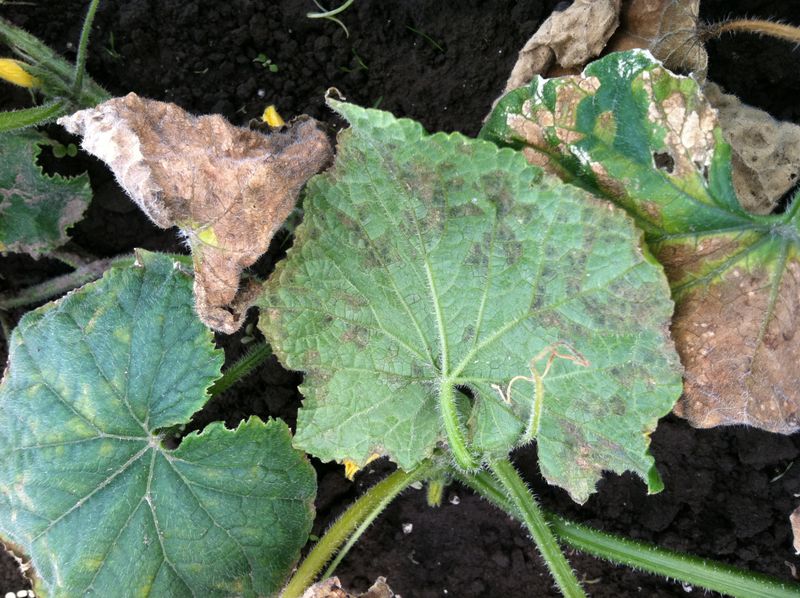
Spend two minutes flipping leaves over before you settle on any diagnosis. The undersides of cucumber leaves hold some of the most useful clues available, and skipping this step is one of the most common ways gardeners end up treating the wrong problem.
Fine pale stippling scattered across the leaf surface, a bronze or washed-out color, or delicate webbing on the underside all point toward spider mites. Colorado State University Extension’s spider mite resource notes that these pests thrive in hot, dry conditions, which makes them especially relevant during July heat waves. Mite populations can build quickly and cause significant leaf damage before the infestation becomes obvious from above.
Angular yellow spots bounded by leaf veins, particularly if a gray-purple fuzzy growth appears on the underside in humid conditions, are a strong signal for downy mildew. University of Minnesota’s downy mildew guide for cucurbits explains that this disease is associated with leaf wetness and humid conditions rather than dry heat, which illustrates why summer weather alone cannot point you toward a single diagnosis. White powdery growth on leaf surfaces, often starting on older or shaded leaves, points toward powdery mildew instead.
Yellow-green mottling, puckered or distorted leaf tissue, stunted growth, or misshapen fruit can suggest a viral infection such as cucumber mosaic virus, though Utah State University Extension’s cucumber mosaic virus page notes that visual symptoms alone are often insufficient for a confident diagnosis. Sudden wilting that moves quickly along a vine, especially when striped or spotted cucumber beetles are present nearby, raises concern for bacterial wilt rather than heat stress or drought. The Minnesota cucumber discoloration diagnostic guide also flags holes or green-to-orange sawdust-like frass at the stem base as possible signs of borer injury, though vine borers are more commonly associated with squash than cucumbers. Each of these signs narrows the possibilities; none of them closes the case on its own.
Choose Treatment Only After You Identify the Problem
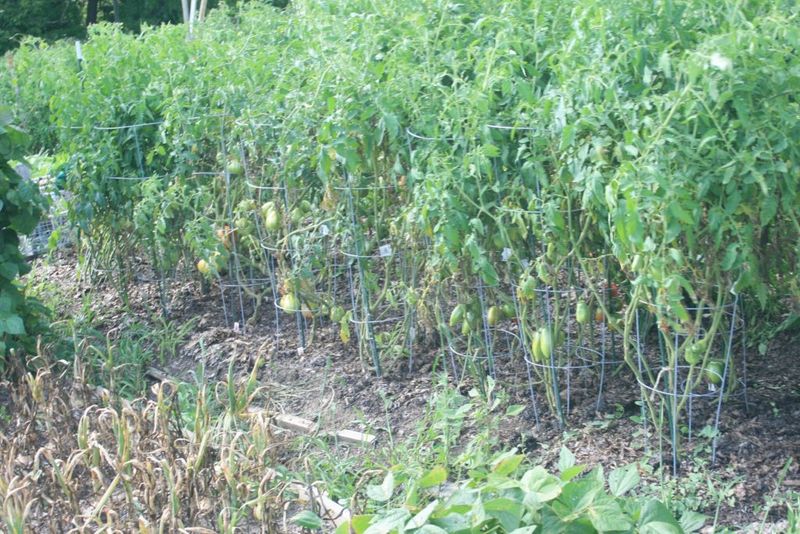
Once your inspection gives you a clearer picture, match your response to what you actually found rather than to the symptom that worried you first. If the root zone is dry, correct your irrigation delivery. If drainage is poor, address that before adding more water. Confirmed nutrient problems identified through soil testing or a reliable diagnosis call for a fertilizer labeled for vegetables, applied according to its directions and only to plants that are not already wilted or drought-stressed.
Routine foliar spraying is not the right first response to yellow leaves. Penn State Extension’s foliar fertilization guide explains that roots provide the primary nutrient-uptake pathway for vegetable crops and that foliar application generally cannot supply the overall amounts a crop needs through the growing season. Foliar fertilization can serve a legitimate role when a specific micronutrient deficiency has been confirmed or when a documented short-term need exists, but it should follow the product’s fertilizer label and crop directions. Incorrectly mixed foliar sprays can burn foliage and compound the stress the plant is already under.
Removing a few badly yellowed lower leaves may improve airflow and tidy up the plant’s appearance, but pruning cannot correct a root problem, a nutrient imbalance, a pest infestation, or a disease. Think of it as cosmetic, not curative.
For any pesticide, fungicide, or insecticidal soap, the product must be registered and labeled for use on cucumbers. The EPA’s introduction to pesticide labels and its pesticide labeling Q&A both make clear that pesticide labels are legally enforceable and that a product cannot be applied to a crop not listed on its label simply because the problem looks similar. Follow the current label exactly, including any stated preharvest interval. Homemade sprays, dish soap concentrations, essential oils, hydrogen peroxide, and off-label products are not substitutes.
Oregon State University Extension reinforces that guessing at treatments without a diagnosis risks making conditions worse.
Use a Practical Sequence of Checks
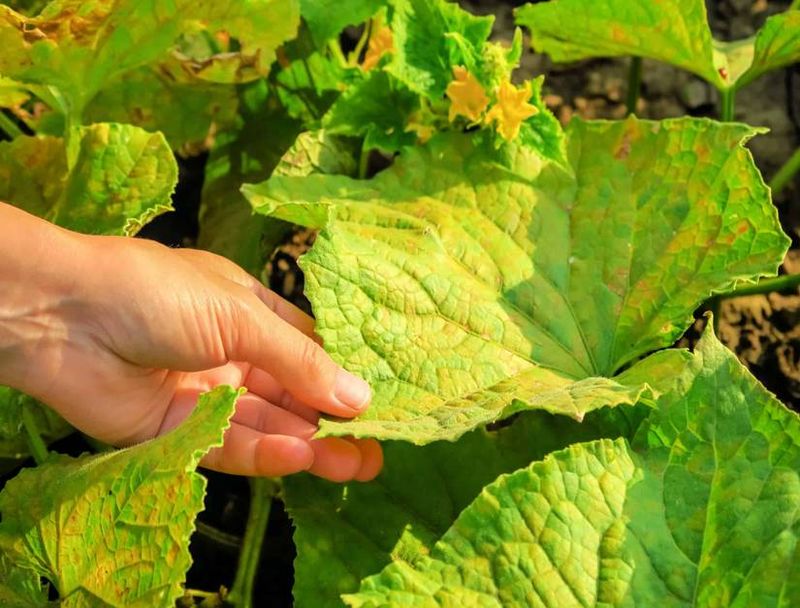
A workable sequence starts at the soil. Check moisture about two inches down, look for pooling or slow drainage, and examine the crown and lower stem for soft or discolored tissue. Then step back and compare how the plant looks in the morning versus the hottest part of the afternoon, since morning wilt carries more diagnostic weight than temporary midday droop.
From there, flip leaves over and examine stems. Spider mite stippling, downy mildew spots, powdery growth, mosaic patterns, beetle damage, and borer frass are all things you can see before spending money on treatments. The Minnesota cucumber discoloration diagnostic tool and the companion wilting diagnostic guide are free resources that can help you match symptoms to likely causes.
If your checks point toward a nutrient problem, get a soil test before major fertilizing or amending, as both Oregon State and Penn State recommend. Confirmed pests or diseases can move to properly labeled treatment without waiting for soil results. Lower-leaf yellowing deserves your attention, but the pattern by itself cannot tell you whether the culprit is thirst, waterlogged roots, a hungry mite, or a spreading fungus – only the full picture can do that.