
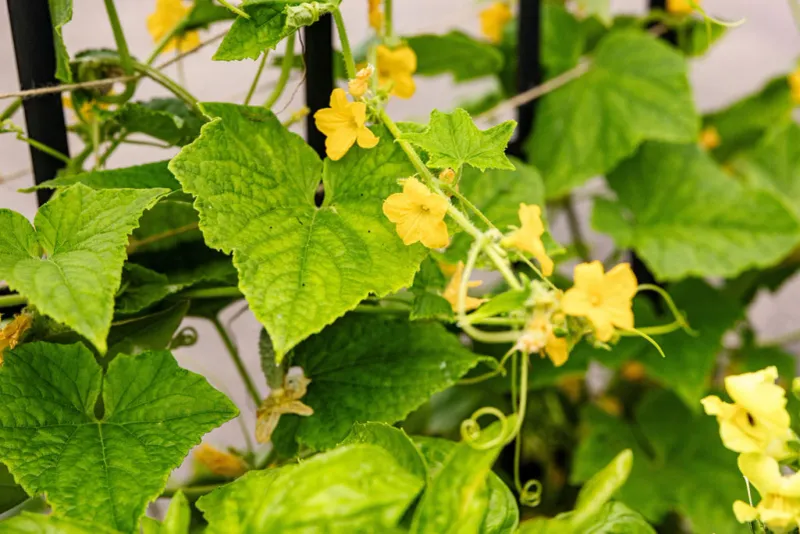
Watching a cucumber plant explode into a tangle of thick vines and broad leaves is exciting, right up until you realize there are almost no cucumbers to show for it. That mismatch between leafy growth and harvest is genuinely frustrating, and it can have more than one cause. Too much nitrogen from repeated fertilizer, compost, or manure applications is one real possibility, but heat, poor pollination, uneven watering, and harvest timing can produce the same picture. Working through the likely causes one by one is the fastest way back to a productive plant.
Lush growth is a clue, not a verdict
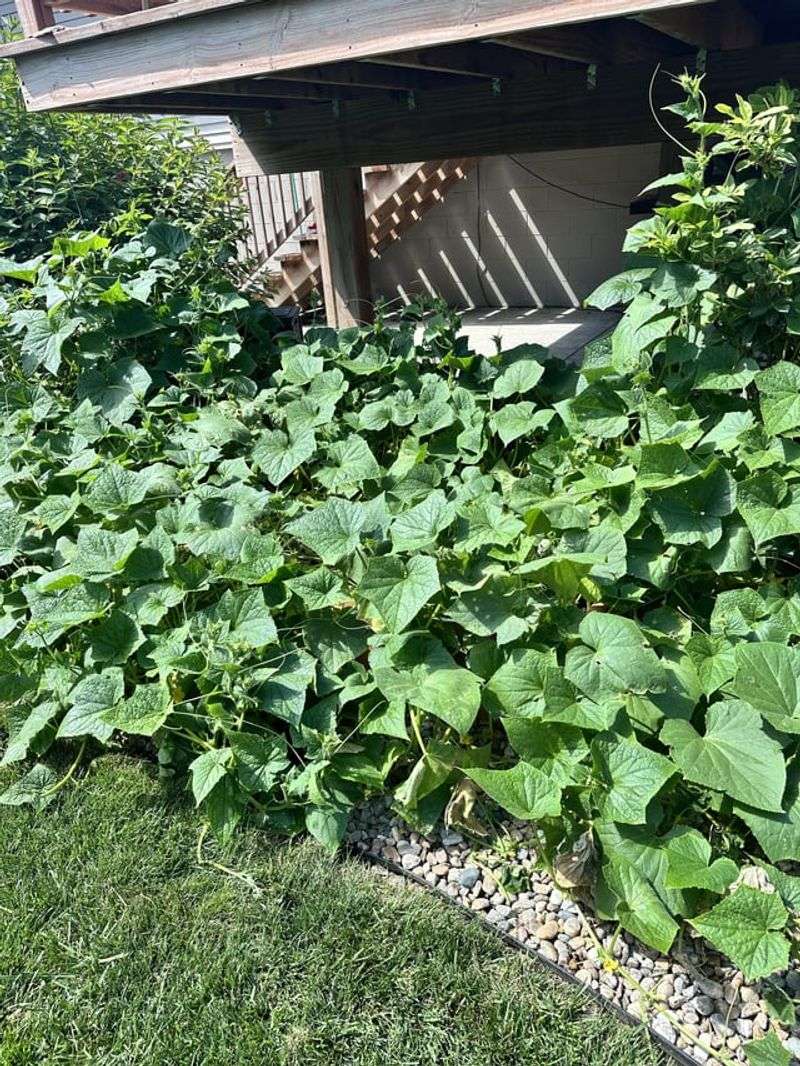
A cucumber vine covered in deep green leaves but carrying almost no fruit sends a mixed message. The lush growth can suggest that nitrogen, the nutrient most responsible for leafy development, has been applied more generously than the plant needs right now. That suspicion grows stronger when the foliage is unusually dark green rather than the lighter, medium green typical of a healthy vine, and when the gardener has been adding fertilizer, compost, or manure on a regular schedule throughout the season.
Even so, the symptom pattern alone does not confirm nitrogen excess, and it certainly does not make overfeeding the usual cause. University of Minnesota Extension guidance on heat and vegetable gardens makes clear that high temperatures, reduced bee activity, and flower abortion can independently explain why a vigorous cucumber vine produces few cucumbers during summer. Heat and earlier overfeeding can also occur at the same time, making it hard to separate one cause from the other without a closer look.
Other factors worth checking before landing on a diagnosis include pollination success, soil moisture consistency, the variety being grown, the timing of male versus female flowers, and whether large fruits have been left on the vine too long. Adding more fertilizer before understanding what is actually limiting the harvest risks compounding the problem rather than solving it. A step-by-step look at each possible cause is the most reliable path forward.
Nitrogen can favor vines over cucumbers
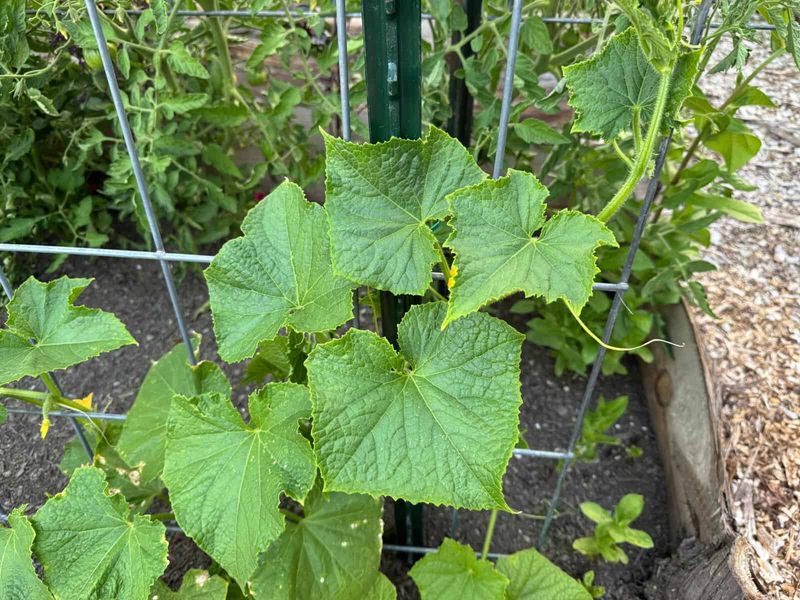
Nitrogen is the nutrient that drives leaf and stem production. When a plant receives more of it than it can redirect into reproductive growth, the result is often a vine that looks impressive but puts most of its energy into foliage rather than flowers and fruit. University of Minnesota Extension’s fertilizing guide notes that excessive or late nitrogen applications can result in excessive foliage and delayed or reduced fruiting, and that vining vegetables are particularly prone to this pattern.
The key is distinguishing between normal vigor and a genuine imbalance. A cucumber vine that is large, spreading, and medium green is doing exactly what a healthy cucurbit does. The warning signs are different: foliage that is unusually dark green, leaves that seem almost waxy or oversized, and a history of repeated applications of synthetic fertilizer, bagged compost, or manure throughout the season. Compost and manure count as nitrogen sources just as much as granular fertilizer does, so the cumulative load across all inputs matters.
Appearance alone cannot confirm a nutrient problem. Soil-test interpretation guidance for fruit and vegetable crops from UMN Extension reinforces that visual assessment is a starting point, not a diagnosis. The color and texture of the foliage, combined with a clear feeding history, give the best early indication of whether nitrogen is a contributing factor worth investigating further.
Pause unnecessary feeding and investigate the soil
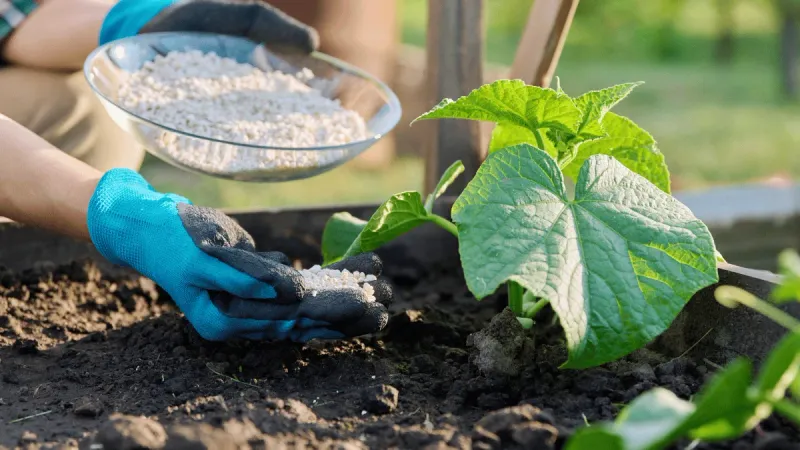
When a cucumber plant is unusually dark green and excessively leafy after a season of repeated nitrogen applications, the most sensible first move is to stop adding nitrogen-containing fertilizer while you figure out what is actually going on. That means pausing synthetic granular fertilizers, liquid feeds, and any additional compost or manure top-dressings until you have a clearer picture of the soil’s current nutrient status. Reread the label on any product you have been using, note the nitrogen percentage, and tally all the sources you have applied since planting.
A soil test is the most reliable next step. UMN Extension’s soil-testing guidance for lawns and gardens explains that testing helps determine whether additional nitrogen, phosphorus, potassium, or no supplemental fertilizer at all is actually needed. Keep in mind that a routine test result does not automatically prove nitrogen excess; nitrogen decisions also depend on your crop history, the amount of organic matter in the soil, any prior manure or compost applications, and the specific recommendations your local extension laboratory provides for cucumbers at this stage of growth.
Resist the temptation to switch to a high-phosphorus or high-potassium fertilizer as a fruiting fix without test-based evidence of a deficiency. Applying phosphorus when soil levels are already adequate can create environmental runoff problems without helping the plant. Similarly, fresh manure, including high-nitrogen poultry manure, and manure tea should never be applied to growing edible crops. Penn State Extension’s guidance on home garden food safety specifically warns about pathogen risks from raw manure on edible plants.
Use properly composted materials only, and follow recommended intervals between application and harvest.
Heat can disrupt fruit set on any vine
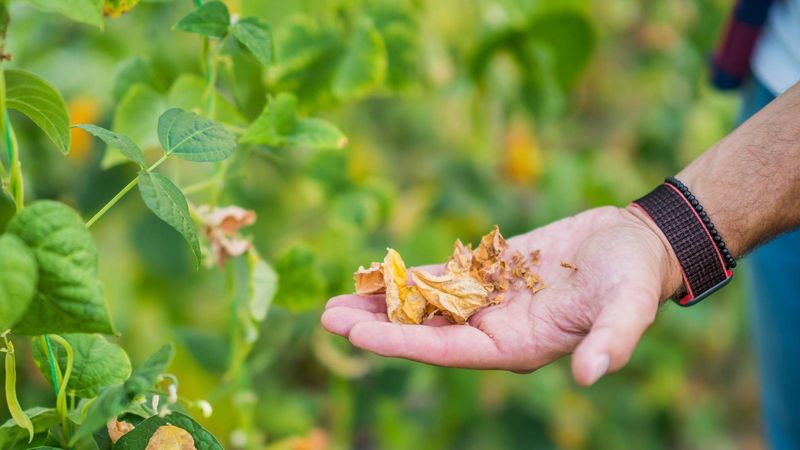
Even a cucumber plant with a perfectly balanced nutrient supply can produce almost no fruit during a heat wave. Very high daytime temperatures, particularly when combined with warm nights, can shift the ratio of male to female flowers, cause developing flowers to drop before they open, and reduce the bee activity that standard cucumbers depend on for pollination. UMN Extension’s research on heat and vegetable gardens identifies daytime temperatures above approximately 90 degrees F and nighttime temperatures above approximately 70 degrees F as conditions associated with reduced fruit set in cucurbits. Those figures are useful warning ranges, not rigid cutoffs that apply identically to every cultivar or every location.
Heat and earlier overfeeding are not mutually exclusive. A plant that received heavy nitrogen applications in spring may be unusually leafy going into a heat event, which makes it harder to tell which factor is carrying more weight. The practical response is to check both possibilities rather than assuming one is the whole story.
From a diagnostic standpoint, heat-related fruit-set problems tend to improve once temperatures moderate, while nitrogen-driven leafiness tends to persist regardless of weather. Watching how the plant responds over a week or two after a cooler stretch can help distinguish between the two. No single heat-management tactic guarantees recovery, but understanding that heat alone can explain a sparse harvest prevents unnecessary and potentially counterproductive fertilizer changes during a stretch of hot weather.
Inspect female flowers before blaming fertilizer
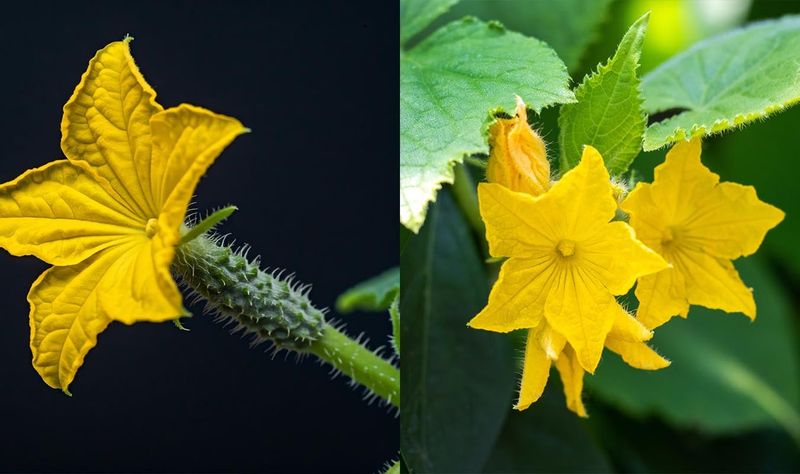
Before concluding that fertilizer or heat is the problem, spend a few minutes actually looking at the flowers. Female cucumber flowers are identifiable by the tiny swollen structure at their base, a miniature cucumber-shaped ovary that is visible even before the flower opens. Male flowers attach directly to a thin stem with no such swelling. UMN Extension’s cucumber growing guide explains that early flowers on a cucumber plant are often all male, which is completely normal.
A brief period with no fruit does not by itself indicate a fertilizer problem or a pollination failure.
What matters more is whether female flowers appear and then fail to develop into cucumbers. If fruitlets form but shrivel and drop within a few days, that points toward a pollination gap or moisture stress rather than a nutrient imbalance. Standard cucumber varieties generally need insects to carry pollen from male to female flowers. Cold spells, excessive heat, low bee activity, and poorly timed insecticide applications can all interrupt that transfer.
Utah State University Extension’s pollination guidance recommends avoiding insecticide sprays on open blooms to protect visiting pollinators.
Variety matters here too. Parthenocarpic cucumbers can set fruit without any pollination, while some all-female cultivars still need a pollen-producing variety planted nearby, depending on the specific cultivar. UMN Extension’s fruit and vegetable pollination requirements note that pollinating a greenhouse-type parthenocarpic variety can actually produce misshapen or seeded fruit. If female flowers are present and pollination looks like the limiting factor, Colorado State University Extension’s cucurbit guide describes hand-pollination as a reasonable rescue step, transferring pollen from a fresh male flower to the stigma of an open female.
Hand-pollination may help when pollination is genuinely the bottleneck, but it cannot correct heat stress, drought, a nutrient imbalance, or disease.
Keep moisture steady and harvest often
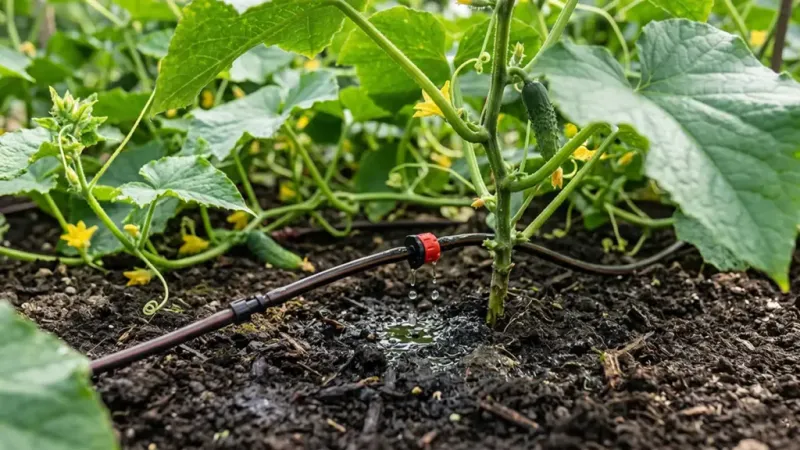
Cucumbers have shallow root systems, which makes them sensitive to gaps in soil moisture during flowering and fruit development. Dry spells between waterings can cause fruitlets to abort or produce bitter, misshapen cucumbers, mimicking the same harvest failure that overfeeding or heat can cause. Illinois Extension’s cucumber growing guide recommends deep, consistent irrigation and notes that mulching helps the soil hold moisture between watering sessions. The right amount of water varies by plant size, soil type, and weather conditions, so rather than following one fixed weekly figure, aim for soil that stays evenly moist a few inches down without becoming waterlogged.
One approach that does not work is flooding the bed with the goal of washing excess fertilizer out of the soil. Excessive irrigation can leach nutrients into groundwater, damage shallow roots, and create other soil problems without reliably correcting a nutrient imbalance. Consistent, appropriate moisture is the goal, not dramatic overwatering as a remedy.
Harvest frequency is the other non-fertilizer factor that gardeners most often overlook. Cucumbers grow fast, and a fruit that is left on the vine past its prime sends a signal to the plant to slow down or stop producing new ones. Illinois Extension recommends checking the vines and harvesting at least every other day during peak season. Removing oversized or yellowing cucumbers promptly keeps the plant focused on setting new fruit rather than maturing seeds inside fruit that has already been overlooked.
Choose the next step from the evidence
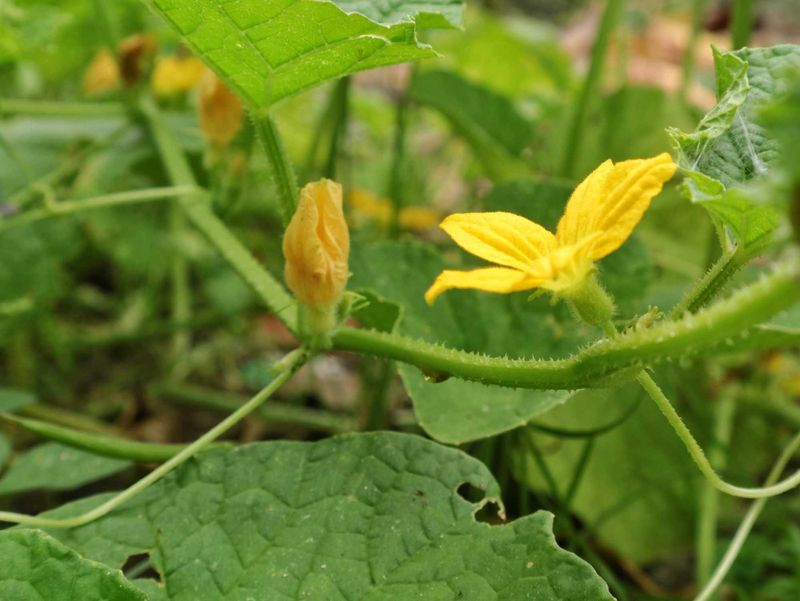
Pulling together what you have observed makes the next step clearer. If the foliage is unusually dark green, the plant has received repeated nitrogen applications from any source, and female flowers are present but fruit set remains poor, pausing routine nitrogen feeding is a reasonable precaution. Follow it up with a soil test and consult your local extension recommendations for cucumbers at this crop stage. A soil test informs nutrient decisions, especially for phosphorus and potassium, but UMN Extension’s soil-test interpretation guidance makes clear that the test result alone does not prove nitrogen excess; site history, organic matter, and prior amendments all factor into that conclusion.
If the problem coincides with a heat wave and female flowers are absent or scarce, review the variety you planted and monitor conditions as temperatures shift. UMN Extension’s cucumber guide can help confirm whether your cultivar is standard, parthenocarpic, or all-female, since each type has different pollination needs. If female flowers appear but fruitlets shrivel and drop, focus on pollinator access and soil moisture before assuming a nutrient problem. If large cucumbers are sitting on the vine, start harvesting more frequently and watch whether new fruit sets within a week or two.
A separate category of problems requires a completely different response. Sudden wilting, leaf spots, distorted new growth, cucumber beetle damage, and virus-like symptoms on the foliage are not fertilizer issues, and adding more nutrients to a diseased or pest-stressed plant can make the situation worse. Those symptoms call for a pest or disease evaluation, not a feeding adjustment. Matching the remedy to the actual cause is what separates a plant that recovers from one that keeps declining despite your best efforts.