
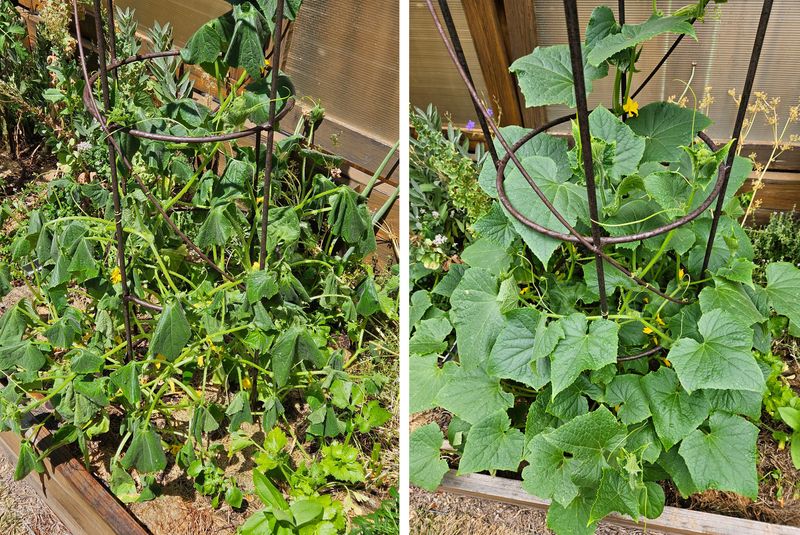
Watching your cucumber plants droop on a hot afternoon can feel alarming, especially when you thought you were doing everything right. The good news is that some afternoon wilting is a normal response to summer heat, not a sign that your plants are dying or that you watered at the wrong hour. Understanding what is actually happening in the root zone gives you a much better starting point than guessing at your watering schedule. A few simple checks can tell you whether to water, wait, or look more closely at a bigger problem.
Afternoon wilt may be a normal heat response
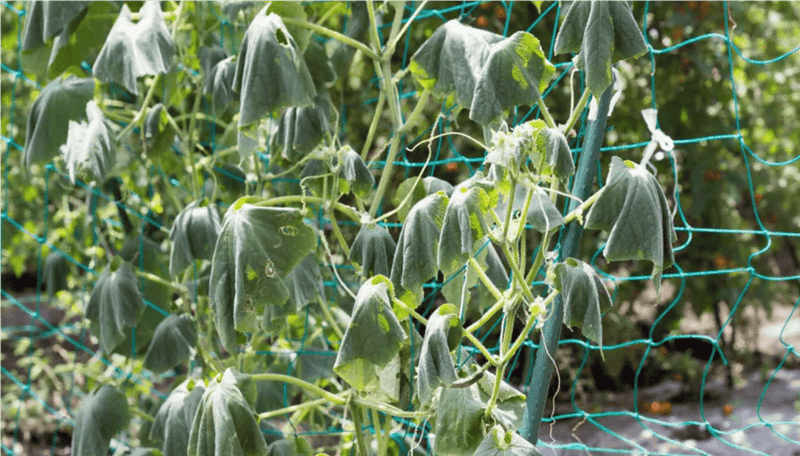
Hot summer afternoons can push cucumber leaves into a temporary droop that has nothing to do with when you last watered. Cucumber leaves lose water through tiny pores called stomata, and on a scorching day, that loss can outpace what the roots deliver, even when the soil holds plenty of moisture. CSU Extension guidance on cucumbers and melons notes that this kind of wilt is common under high heat and does not automatically signal a serious problem.
Plants that perk back up as the evening cools are likely going through a short-term heat response rather than a water crisis. That recovery is a useful observation, but not proof that everything is fine. Bacterial wilt, for example, can also cause daytime droop followed by overnight recovery, especially early in its progression.
The warning signs worth paying attention to are different from simple afternoon sag. Wilt that shows up first thing in the morning, worsens day after day, never improves overnight, or spreads across the entire plant at once deserves closer investigation. Temporary afternoon wilt in otherwise healthy-looking plants is a common summer experience, not an automatic emergency.
Check the soil before you change the schedule
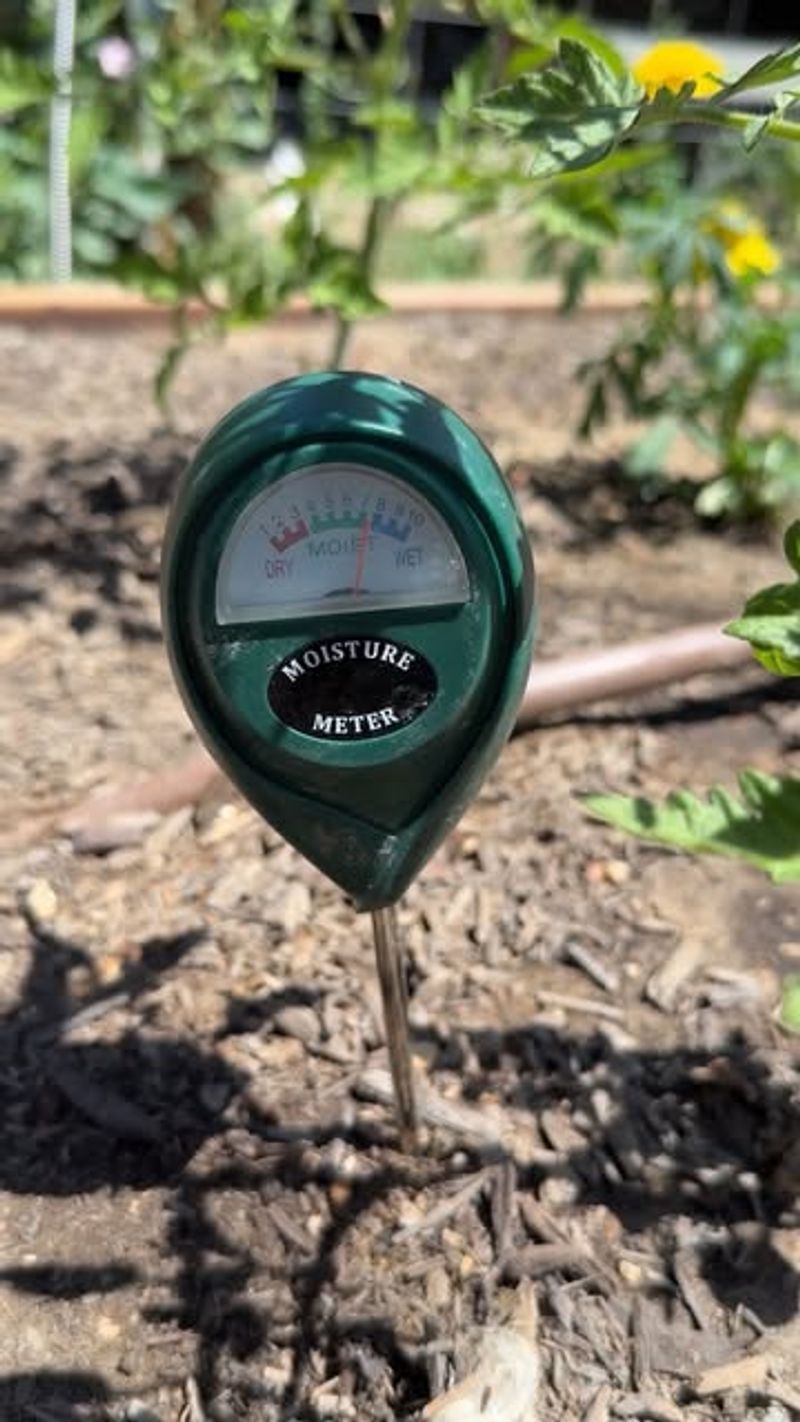
Before adjusting anything about your watering routine, push a finger about two inches into the soil near the base of your cucumber plant. Dry soil at that depth is a clear signal that water is needed. Moist or wet soil at that same depth means more water is not the answer, and adding it anyway could create a different set of problems.
A wilted plant sitting in soggy soil is telling you something other than thirst. Saturated soil pushes oxygen out of the root zone, which stresses roots and can open the door to rot and disease. University of Minnesota Extension guidance on vegetable garden watering recommends checking soil moisture below the surface rather than relying on how the leaves look.
Containers and small pots deserve special attention here. They dry out considerably faster than in-ground beds, especially during hot weather, so a container cucumber may genuinely need water more often than a garden-bed plant. Penn State Extension advice on summer watering suggests checking container soil more frequently and not assuming it stays moist as long as garden soil does. Leaf appearance is secondary to what the root zone is actually doing.
Use thorough, adaptable watering instead of relying on light sprinkling
Frequent, light sprinkling can leave an established cucumber plant short of water even when the surface soil feels damp. A quick sprinkle wets the top inch or two but may never reach the deeper root zone where the plant actually draws moisture. CSU Extension recommends thorough irrigation over light daily sprinkles for cucumbers and related crops, because roots need a consistent reservoir of moisture, not just a wet surface.
That said, light and frequent watering is not wrong in every situation. Seedlings with shallow roots, sandy soils that drain quickly, containers, and plants enduring exceptional heat may all need water more often than an established plant in good garden soil. The goal is matching your approach to what the root zone actually needs.
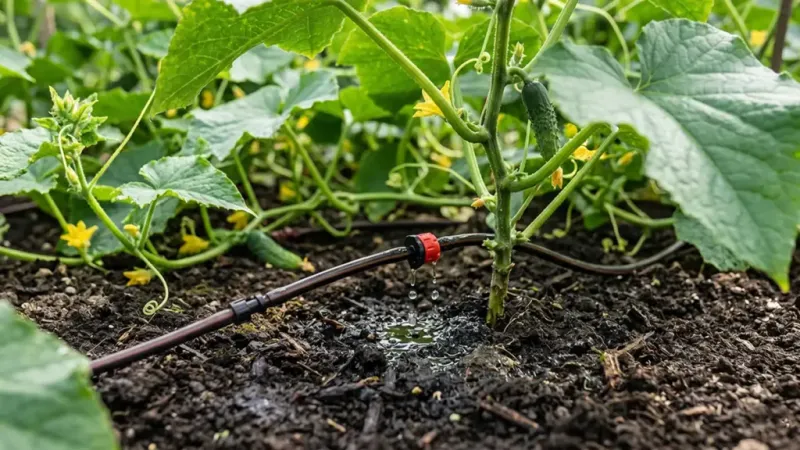
Applying water slowly at the base of the plant gives it time to soak in rather than run off across the surface. Drip irrigation, a soaker hose, or a gentle hand-held hose aimed at the soil rather than the leaves are all practical options. Utah State University Extension guidance on growing cucumbers emphasizes steady, consistent soil moisture for healthy plants. Success looks like a root zone that stays adequately moist without becoming waterlogged, which you confirm by checking below the surface rather than by sticking to a fixed calendar.
Water early when possible, but do not make timing absolute
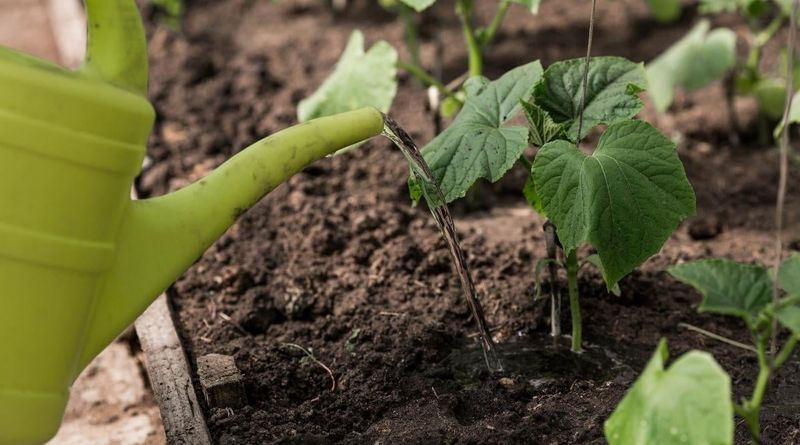
Morning is a good time to water cucumbers. When you water early, any moisture that lands on the foliage has the rest of the day to dry off, which means conditions are less favorable for the foliar diseases that thrive on wet leaves. Roots also take up water more efficiently before the heat of the day peaks.
Morning preference is a practical guideline, not a strict rule. If your cucumber plant is visibly wilting in the afternoon and the soil two inches down feels dry, water it then. University of Minnesota Extension guidance on vegetable watering is clear that you should water immediately when plants are wilting and the soil is dry, regardless of the time of day. Postponing needed irrigation until the next morning to hit the ideal window is not worth the added stress to the plant.
Where you aim the water matters more than the hour on the clock. Directing flow to the soil at the base of the plant rather than overhead keeps foliage drier and gets moisture where it belongs. Leaf wetting is not an automatic disaster, but watering at the root zone is simply more efficient and reduces unnecessary moisture on the plant surface. Keep the focus on the soil, and the timing question becomes much less stressful.
Adjust watering for heat, containers, soil, and mulch
No single watering schedule fits every cucumber in every garden. Heat, wind, rainfall, soil texture, plant size, whether the plant is actively setting fruit, and how you apply water all change how quickly the root zone dries out. Published extension recommendations commonly suggest starting around 1 to 2 inches of water per week, but Utah State University Extension guidance on cucumber growing makes clear that this is a starting range, not a fixed prescription. A cucumber carrying a heavy fruit load in a heat wave may need considerably more.
Containers push the variables further. They lose moisture faster than in-ground beds and may need checking every day during hot spells. Garden beds in sandy soil drain more quickly than beds with heavier loam, so two gardens in the same neighborhood can have very different watering needs.
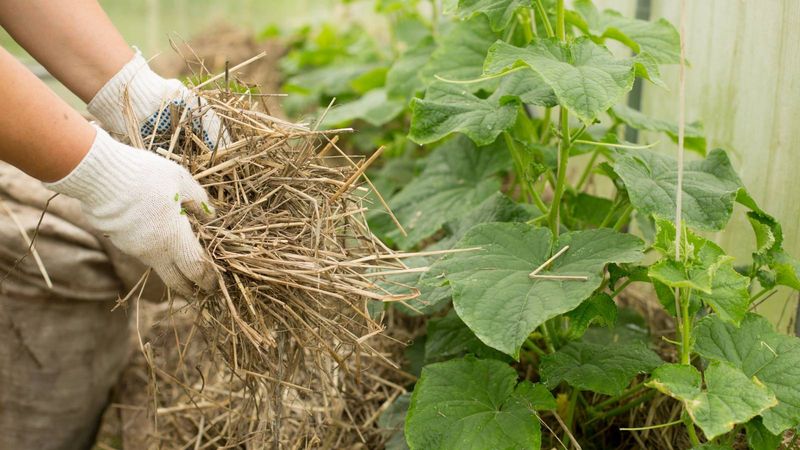
Mulch is one of the most practical tools for slowing moisture loss between waterings. USU Extension water recommendations for vegetables suggest about 1 to 2 inches of mulch around plants to reduce evaporation, while other extension sources recommend up to 2 to 3 inches for general vegetable beds. Keep mulch around the plant rather than piled against the stem, and remember that mulch slows drying but does not eliminate the need to check root-zone moisture. Penn State Extension summer watering guidance reinforces that regular soil checks remain the most reliable indicator of when to water.
Adequate moisture cannot remove every effect of extreme heat

A cucumber plant can still show signs of stress even when the root zone has plenty of moisture. Extreme heat puts the whole plant under pressure, and watering cannot fully counteract what very high temperatures do to leaf tissue and flower development. Recognizing that distinction prevents a cycle of overwatering a plant that actually needs shade rather than more water.
Temporary shade cloth or another elevated shade structure with good airflow can help reduce heat load during exceptional heat events. OSU Extension guidance on heat stress in plants recommends using shade structures with airflow rather than tight covers that trap heat. Prolonged heavy shade, however, can reduce plant growth and fruit production, so shade is a short-term tool for exceptional conditions, not a permanent fixture.
Production problems during heat waves deserve a separate look. Penn State Extension guidance on cucumber production notes that sustained temperatures above roughly 90 degrees Fahrenheit can reduce cucumber flower and fruit set, and that production may recover once temperatures drop. Flower drop or a pause in fruiting during a heat wave is not necessarily a sign that you are watering incorrectly. Blaming irrigation for what heat is doing leads to changes that do not address the real issue.
Persistent wilt calls for a pest, drainage, or disease check
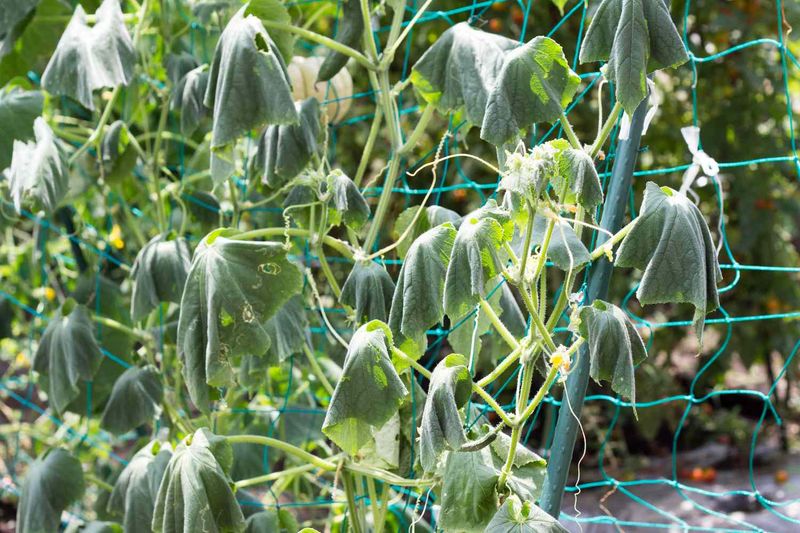
When a cucumber plant stays wilted despite adequate soil moisture, or when wilt appears in the morning before the day heats up, adding more water is the wrong response. Saturated soil already short of oxygen, combined with extra irrigation, can accelerate root problems rather than solve them. At that point the plant is telling you something that a watering schedule cannot fix.
Bacterial wilt is one possibility worth checking. University of Minnesota Extension guidance on bacterial wilt of cucurbits describes symptoms that include progressive daytime wilt, yellowing or browning leaves, and individual vines declining before the whole plant fails. Seeing striped or spotted cucumber beetles on your plants raises the risk because these insects spread the bacterial wilt pathogen as they feed. Their presence is a reason to inspect plants more carefully, not automatic confirmation of infection.
Importantly, once a plant is infected with bacterial wilt, pesticides cannot cure it. Removing infected plants and managing beetle populations are the main tools for limiting spread.
Fusarium wilt follows a different pattern. USU Extension notes on Fusarium wilt describe initial improvement during cooler evening hours that gives way to permanent wilt, yellowing, vascular discoloration inside cut stems, and eventual plant death. Crown and root problems, covered by USU Extension Fusarium crown and root rot guidance, show up differently: look for browning or soft tissue at the crown and along roots near the soil line. Progressive or permanent wilt, morning wilt, or failing individual vines all warrant a real diagnosis rather than a heavier watering schedule.
Follow a simple wilt-response sequence
When your cucumber droops in the afternoon, start by watching rather than reaching for the hose. If the plant recovers as the evening cools and looks healthy the next morning, CSU Extension guidance on cucumbers supports treating that as a likely heat response rather than a crisis. Then check soil moisture about two inches below the surface.
Dry soil at that depth means water slowly at the base and reassess over the next day or two. Wet or saturated soil means look at drainage, roots, pest activity, and disease symptoms instead of irrigating again. University of Minnesota Extension watering guidance frames the soil check as the core decision point, not the appearance of the leaves.
Wilt that repeats every morning, worsens despite good soil moisture, or travels from vine to vine is a cue to investigate pests and disease rather than adjust the hose. Common afternoon heat wilt passes on its own; progressive or unexplained wilt earns a closer look. The difference between the two is almost always visible once you know where to check first.