
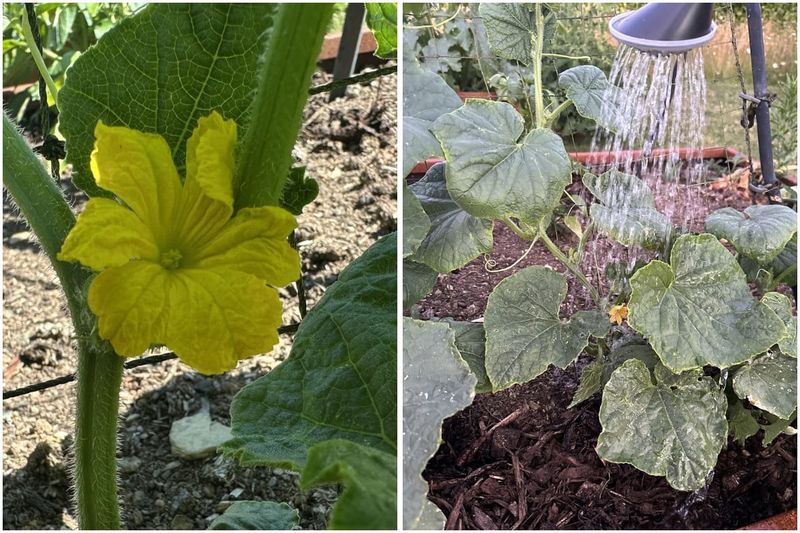
Your cucumber vines are loaded with bright yellow flowers, yet the harvest bucket stays nearly empty. That gap between blooms and cucumbers is one of the most frustrating summer garden puzzles, and it rarely has just one answer. Before blaming the bees, a quick inspection of what kind of flowers your vine is actually producing can point you toward the real problem faster than any other step.
Start by counting female flowers
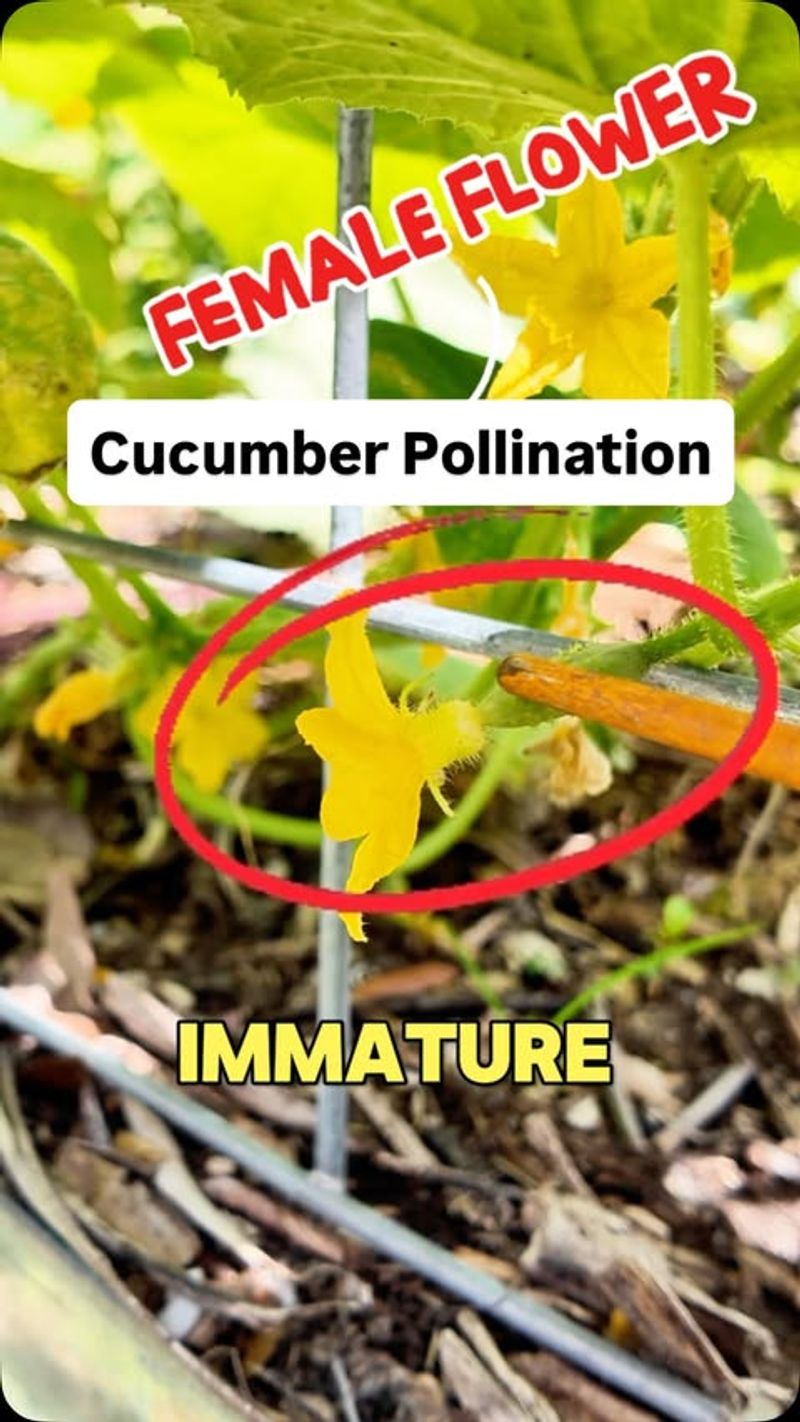
Grab a coffee and head out to your cucumber bed on a few consecutive mornings. You are looking for two very different types of flowers, and the ratio between them tells you more than the total flower count ever could. University of Minnesota Extension guidance on growing cucumbers explains that male flowers appear first, sit on slender stems, and cannot develop into cucumbers regardless of how many bees visit them.
Female flowers are the ones worth counting. Each one carries a swollen, miniature cucumber between the blossom and the vine. That tiny fruit-in-waiting is the ovary, and only fertilized ovaries grow into the cucumbers you eat. A vine absolutely packed with yellow blooms may still have only a handful of female flowers, which means the ceiling on your harvest is already set very low before pollination enters the picture.
Early in the season, males routinely outnumber females by a wide margin, so a flush of dropped flowers during the first few weeks is not automatically a sign that something is wrong. Check several mornings in a row and look specifically for the swollen base. If female flowers are scarce or absent, the diagnosis shifts away from pollination entirely and toward what the plant is doing upstream of the bloom.
Heat can alter fruit set before pollination
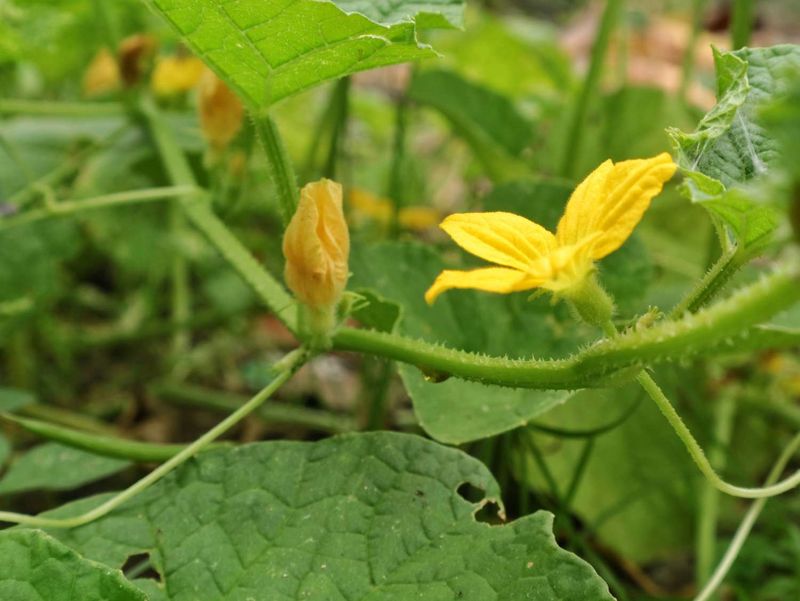
Sustained heat can change what your cucumber vine is making, not just how well those flowers get pollinated. University of Minnesota Extension’s research on heat and the vegetable garden points to approximately 90 degrees Fahrenheit during the day and 70 degrees Fahrenheit at night as practical warning levels where cucurbit vines tend to shift toward producing more male flowers and fewer female flowers. Think of those numbers as yellow flags rather than absolute cutoffs.
The response varies considerably depending on cultivar genetics, how many days the heat persists, nighttime conditions, soil moisture, and plant age. Peer-reviewed research on temperature and cucumber sex expression confirms that high temperatures affect female flower formation, but notes that the effect differs across cucumber germplasm. One variety may push out female flowers through a heat wave while another almost stops producing them entirely.
Beyond flower sex, heat can trigger abortion of young fruits that were already forming. A tiny cucumber that starts to develop and then yellows and shrivels may have been aborted by heat stress or water stress rather than by poor pollination. Recognizing this distinction matters because adding more bees or hand pollinating cannot recover a flower or fruitlet that the plant has already abandoned. Inspect the actual flower pattern on your vine before drawing conclusions about what stage the problem started.
Stabilize moisture and avoid excess nitrogen
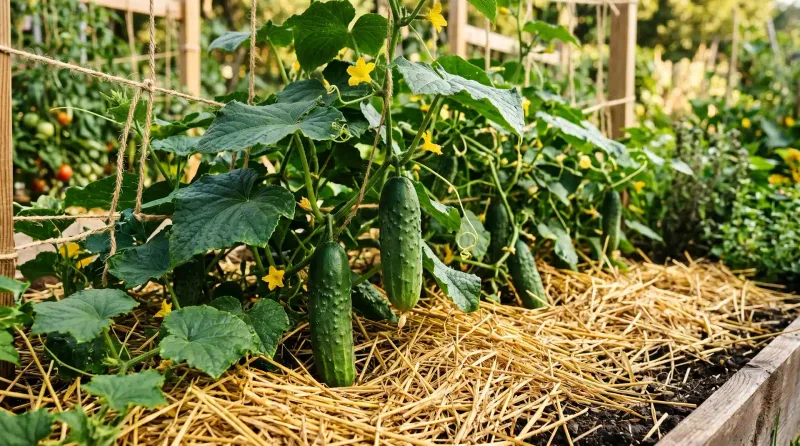
Hot weather does not act alone. It magnifies every other stress the plant is already dealing with, and inconsistent watering during flowering and fruit set is one of the most common compounding problems. Utah State University Extension’s cucurbit irrigation guidance states that cucurbits need regular, uniform moisture and that uneven watering around flowering and fruit set can produce misshapen cucumbers and affect size, flavor, and color. Research on deficit irrigation similarly finds fewer and smaller fruits when water supply is inconsistent.
The goal is steady soil moisture, not simply watering more. Overwatering can encourage root and fruit rots just as readily as drought stress can reduce yield. A layer of mulch helps considerably. Utah State’s guidance on mulches and row covers notes that mulch improves water-use efficiency and reduces soil-temperature swings.
During peak summer heat, lighter-colored or reflective mulch may keep root-zone soil cooler than black plastic, which is primarily useful for warming soil earlier in spring.
Oklahoma State University Extension’s cucumber production fact sheet cautions against repeatedly applying high-nitrogen fertilizer when a vine is not fruiting. Excess nitrogen can drive lush, fast-growing vines with delayed flowering and fruit set. Fertilize according to a soil test or the specific directions on your fertilizer label for vegetable crops, rather than adding more nitrogen because the harvest looks thin.
When female flowers appear, assess pollination
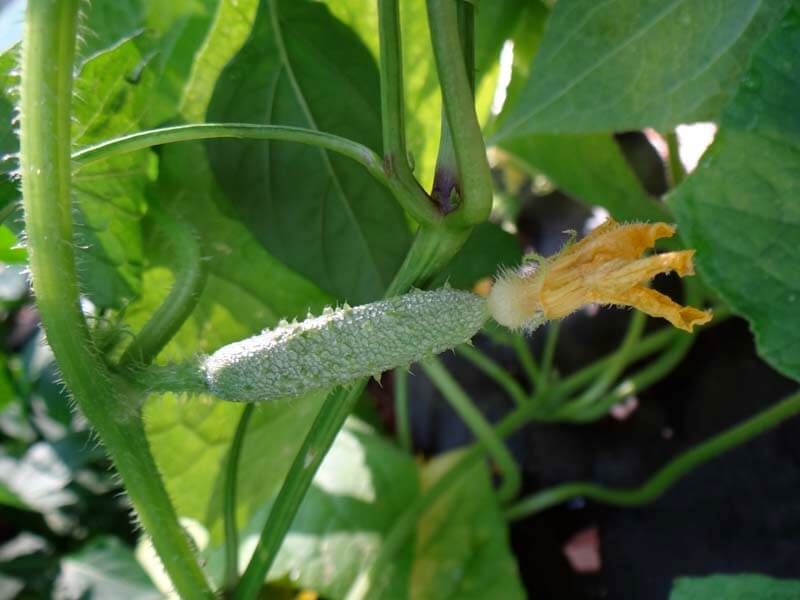
Once you have confirmed that your vine is producing female flowers, the next question is whether those flowers are setting fruit. A female flower that opens, stays open for its short receptive window, and then shrivels without enlarging could point to inadequate pollination, but heat stress, water stress, and fruit abortion are all on the same suspect list. Crooked or uneven cucumbers are commonly linked to incomplete pollen transfer, though water stress and other pressures can also affect fruit shape, so the symptom alone does not close the case.
Penn State Extension’s cucumber pollination guidance explains that cucumber fruit quality and yield depend on adequate pollen transfer during the flower’s short receptive period, not merely on bee presence. A brief walk through the garden at midday may catch no bees at all, while early-morning visits when flowers first open could reveal plenty of activity. Conversely, seeing a bee land on a flower does not confirm that enough pollen was deposited.
University of Minnesota Extension’s pollination requirements resource notes that many bees reduce activity around 90 degrees Fahrenheit, and that very hot or rainy conditions can limit pollination even when bees are present in the garden. The relevant question is not whether a bee appeared, but whether enough pollen reached receptive female flowers during the window they were open. Observe across several mornings before drawing a conclusion.
Check the seed packet before blaming the bees
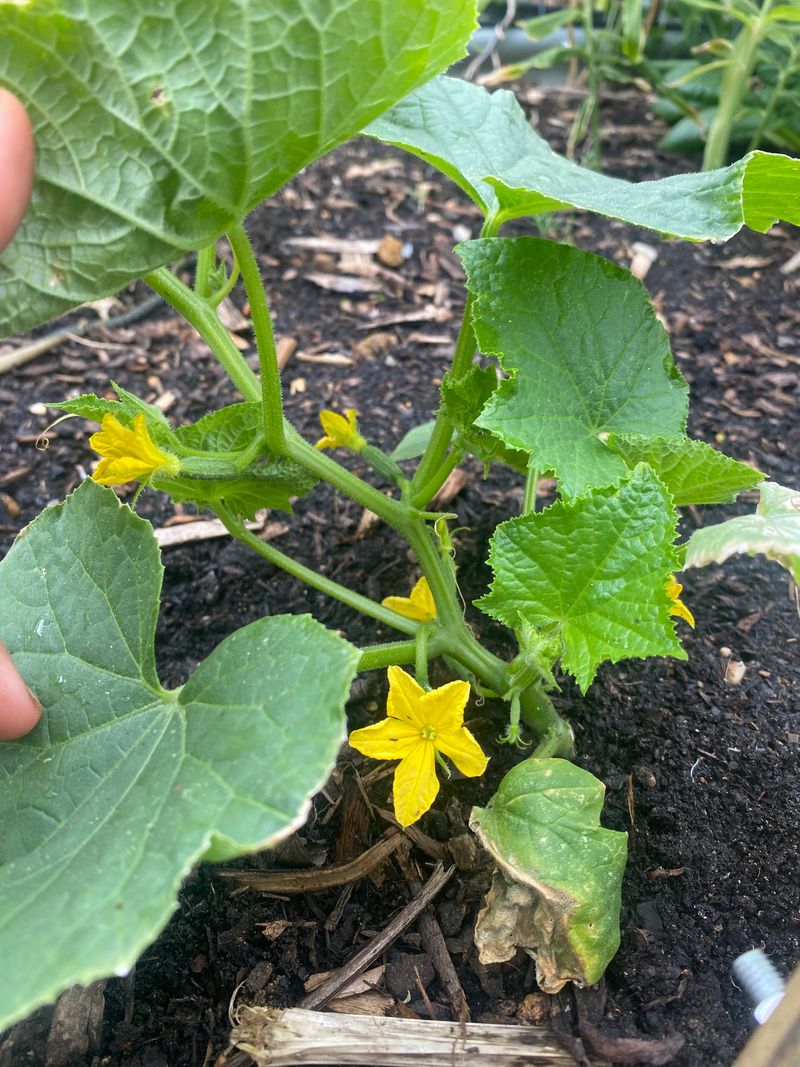
Your cultivar choice can completely change the diagnosis. Standard cucumber varieties generally need insect pollination to set fruit, and that is the type most home gardeners grow. University of Minnesota Extension’s cucumber growing guide distinguishes between standard, gynoecious, and parthenocarpic types, and the differences are significant for troubleshooting.
Parthenocarpic cucumbers can set fruit without pollination and typically produce seedless or nearly seedless cucumbers. These are often labeled for greenhouse or container growing and perform well in tunnels or under row covers where bee access is limited. Gynoecious varieties produce mostly or only female flowers, which sounds like an advantage, but unless the variety is also parthenocarpic, it still requires pollen from male flowers to set fruit. Illinois Extension’s cucumber guide points out that gynoecious seed packets often include a few seeds of a standard pollenizer variety, sometimes dyed a different color, specifically to supply pollen.
If those pollenizer seeds were not planted or did not germinate, a gynoecious vine may have abundant female flowers and still set almost nothing.
Pulling out the seed packet or looking up the variety name online takes five minutes and can immediately clarify whether you need to focus on pollinator activity, add a pollenizer plant, or simply provide conditions that let the parthenocarpic variety do its thing without competition or stress.
Use hand pollination as a targeted test
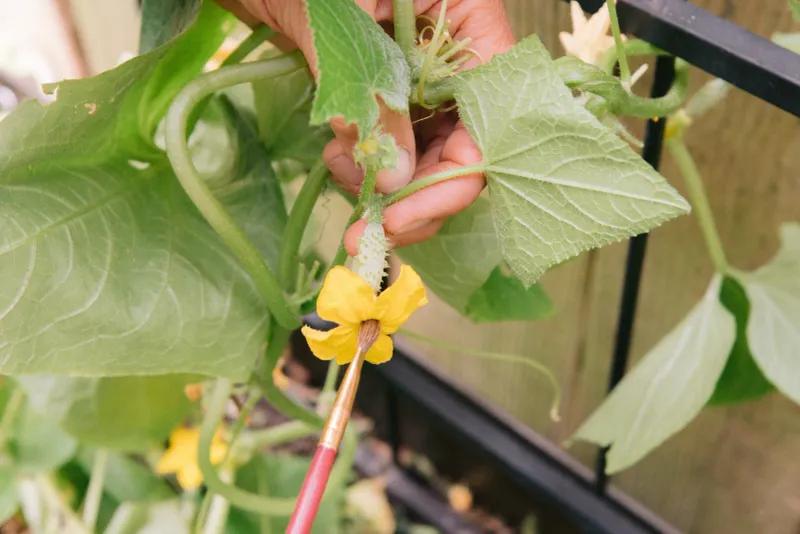
Hand pollination works best as a targeted diagnostic step, not a first response. It only makes sense when female flowers are present and open, and when you have reason to suspect that bee activity during the short receptive window is genuinely limited. Colorado State University Extension’s guide to cucumbers, pumpkins, squash, and melons describes a straightforward method: pick a freshly opened male flower, remove its petals, and touch the pollen-bearing center directly to the center of a freshly opened female flower. Doing this across several female flowers on the same morning gives you a meaningful comparison point.
If hand-pollinated flowers go on to develop cucumbers while unpollinated flowers on the same vine shrivel, you have strong evidence that pollen transfer was the bottleneck. If hand-pollinated flowers also shrivel or abort, the problem is more likely heat, water stress, or another upstream factor that more bee visits would not have fixed anyway.
Row covers deserve a mention here. Minnesota Extension’s cucumber guide recommends removing insect-excluding covers once flowering begins on standard varieties so bees can reach the blooms. Keeping a solid cover over blooming standard cucumbers while waiting for fruit set simply removes the pollinators the plant depends on. If you choose to hand pollinate under a cover, open it daily during flowering, transfer pollen, and then close it again if pest exclusion is the goal.
Lower heat load without blocking pollinators

Practical heat management for blooming cucumbers requires balancing two competing needs: protecting the plant from solar stress while keeping pollinators able to reach the flowers. Light, ventilated shade over the hottest part of the afternoon is a reasonable approach for a home garden. Utah State University Extension’s season-extension research references 20 to 30 percent shade cloth as useful in high-tunnel conditions when summer temperatures consistently exceed 90 degrees Fahrenheit. That figure comes from a managed tunnel context, not a prescription for every backyard cucumber bed, so treat it as a starting point rather than a rule.
For open gardens, a shade structure that blocks afternoon sun while leaving the sides open preserves airflow and lets bees move freely in the morning when flowers are most receptive. A sealed cover over blooming standard cucumbers defeats the purpose. Pair any shade strategy with mulch to moderate soil temperature and conserve moisture, since the root zone benefits from staying cooler and more consistently moist even when air temperatures are high.
Colorado State University Extension’s cucurbit guide recommends harvesting cucumbers every other day during active production, because mature or oversized fruits left on the vine can suppress further fruit set. Oklahoma State University Extension notes that fruit set may remain low through the hottest stretch of summer even with good management, so consistent harvesting and steady care position the vine to rebound once temperatures ease.
Inspect the whole vine for pests and disease
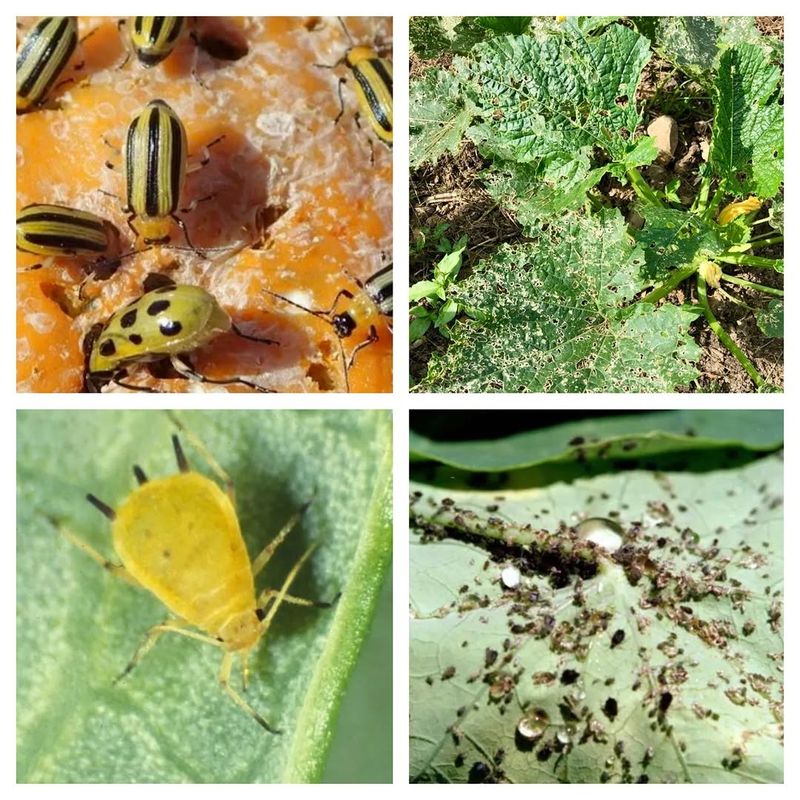
A vine that wilts suddenly, develops mottled or distorted new leaves, or shows distinct lesions on older foliage is telling you something beyond a pollination or heat story. University of Minnesota Extension’s cucumber growing guide lists cucumber beetles, aphids, spider mites, bacterial wilt, cucumber mosaic virus, and foliar diseases as common threats that can weaken vines and reduce yield independent of flower sex or pollinator activity. Bacterial wilt, spread by cucumber beetles, can cause rapid whole-vine collapse that looks nothing like a gradual heat or moisture problem.
Before reaching for a spray, read the label carefully. Penn State Extension’s cucumber production guidance warns that insecticides applied to blooming plants or nearby blooming weeds can harm bees and other pollinators, which would compound any existing pollination shortfall. Natural or organic products are not automatically pollinator-safe. Any pesticide decision should follow the current product label, crop registration, application timing, and any specific pollinator warnings listed.
The full inspection sequence, when your cucumber vine flowers but barely fruits, runs like this: count and identify female flowers, watch whether they are retained or aborted, stabilize heat load and soil moisture, evaluate whether pollen transfer is reaching receptive flowers at the right time, confirm what your cultivar actually needs, and then look carefully at the whole vine for pest damage or disease symptoms. University of Minnesota Extension’s heat and vegetable garden resource reinforces that multiple stresses often overlap in midsummer. Working through the list in order keeps you from treating one symptom while missing the actual cause. Vines that survive the heat wave with steady care often surprise gardeners with a second flush of fruit once cooler nights return.