
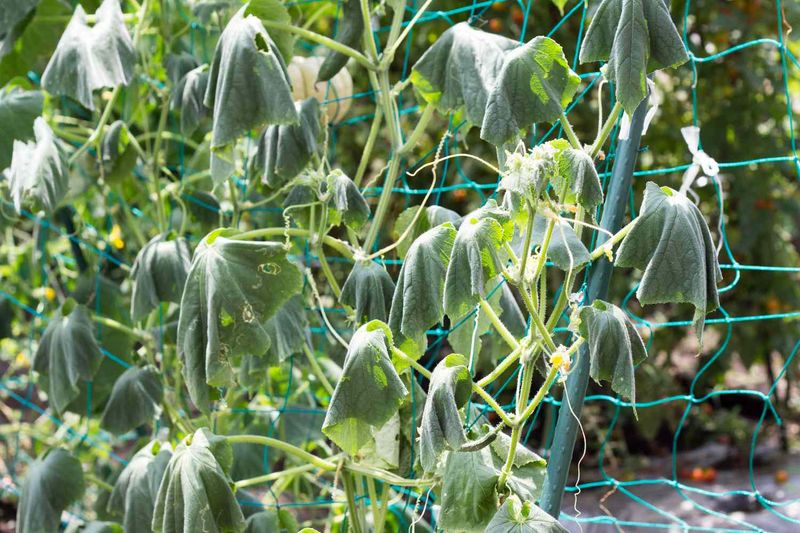
Watching your cucumber vines droop in the afternoon heat is unsettling, especially when they look perfectly fine the next morning. That daily bounce-back is actually a clue worth paying attention to, not proof that your plants are doomed. In cucumbers, the same pattern that signals ordinary heat stress can also be an early sign of bacterial wilt or a root-zone problem. Learning to tell the difference could save your harvest.
Morning Recovery Narrows the Possibilities
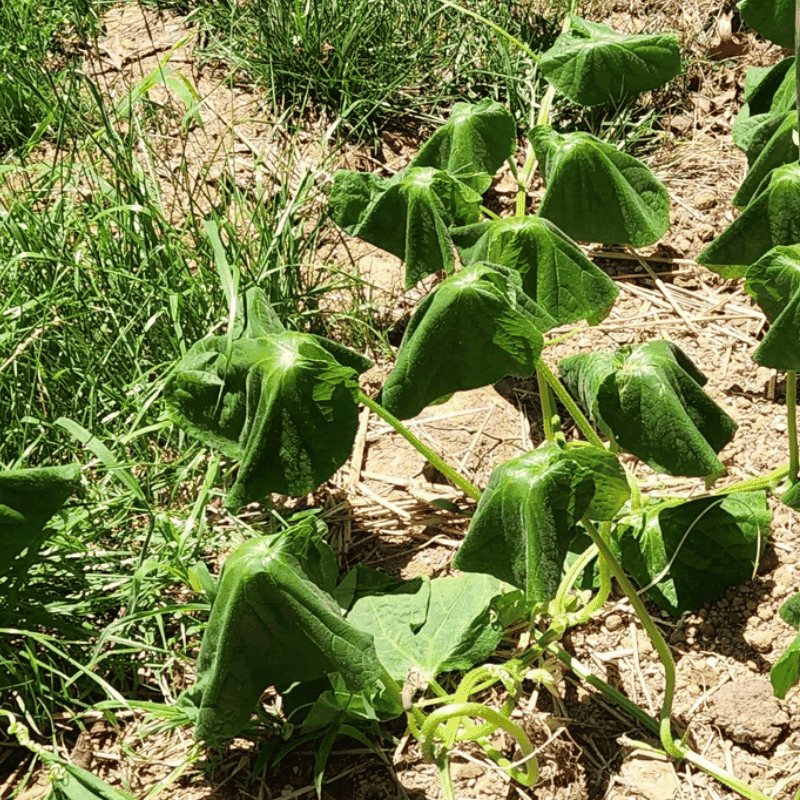
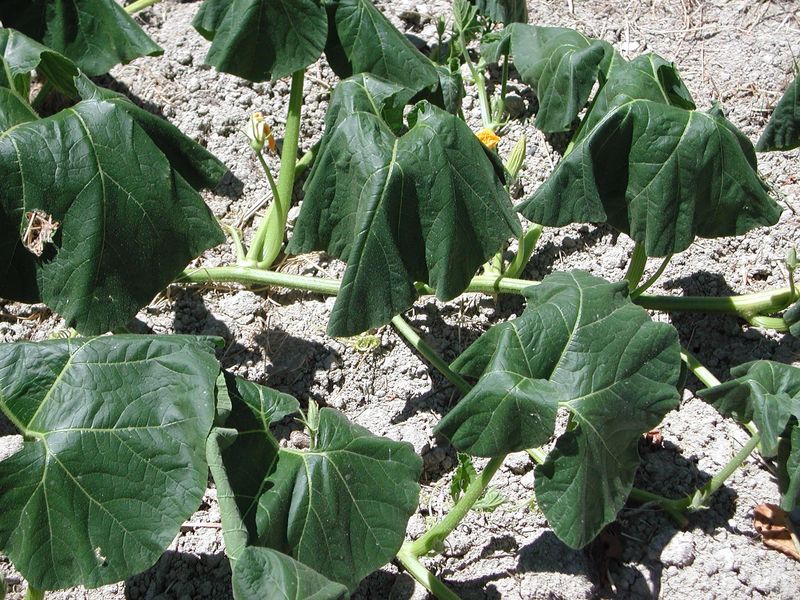
Cucumber leaves wilt during the hottest part of the day because the plant loses water through its leaves faster than its roots can pull moisture from the soil. When temperatures drop in the evening, that gap closes, and the vine regains its firmness by morning. OSU Extension guidance on heat stress describes afternoon wilting followed by evening or morning recovery as a common pattern in heat-stressed plants, not an automatic signal of disease.
Morning recovery is a useful clue, but it does not rule out trouble. University of Minnesota Extension guidance on bacterial wilt notes that cucumber vines in the early stages of bacterial wilt can also recover overnight before symptoms worsen day by day. The overlap between heat stress and early disease is exactly why tracking the pattern over several days matters more than reacting to a single droopy afternoon.
Watch for these escalating signals: the vine stays wilted later into the morning than it did the previous day, individual runners or leaves stop recovering while others look fine, or you start seeing yellowing and brown leaf margins alongside the wilt. Any of those changes deserves a closer look. A vine that droops only during peak afternoon heat and looks completely normal by sunrise is more likely experiencing temporary stress than a root-level crisis.
Check Soil Moisture Before You Water
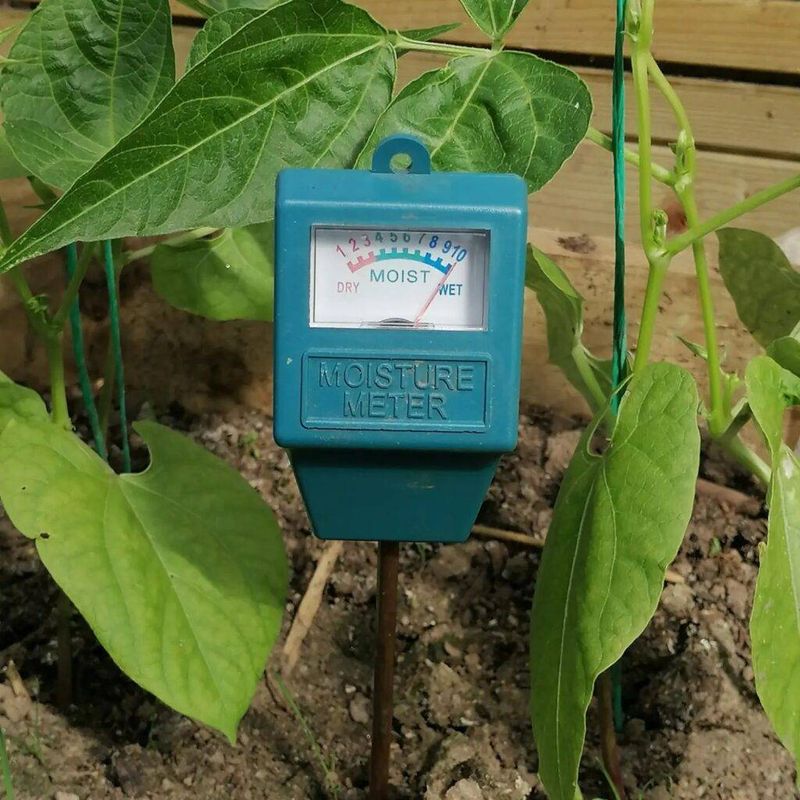
Before reaching for the hose, take a few minutes to check what is actually happening in the soil. Push a trowel or your finger into the ground a few inches, aiming a hand’s width away from the plant stem rather than right against it. OSU Extension advice on protecting plants during extreme heat recommends assessing soil moisture and watering deeply rather than relying only on how the leaves look.
Genuinely dry soil, crumbly and pale below the surface, tells you the plant may simply need water. Saturated soil, dark and clinging, that smells faintly sour tells a different story: adding more water to an already wet root zone can cut off oxygen to the roots and create conditions that favor root disease. UC IPM guidance on cucurbit root rot highlights poor drainage and excess moisture as key risk factors, not heat alone.
Cucumbers do benefit from consistent, sufficiently deep watering, but the right amount depends on your soil texture, whether plants are in containers or in-ground beds, local heat and wind, and how much mulch you have in place. OSU’s cucumber growing guide recommends encouraging deeper rooting through thorough, less-frequent watering rather than light daily sprinkles. A wilted leaf is not a reliable substitute for actually checking the soil.
Inspect the Crown and Roots in Wet Conditions
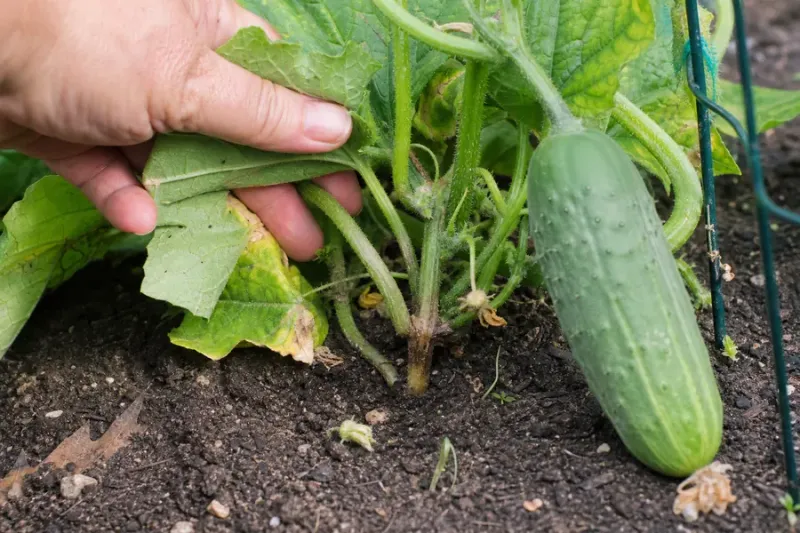
A root inspection makes the most sense when the soil has stayed wet for several days, drainage in the bed is visibly poor, or the vine remains limp well after the afternoon heat has passed. Gently clear the soil from the base of the plant and look at the crown, the point where the stem meets the roots, and at the main roots themselves. UC IPM’s guide to cucurbit root rots describes healthy roots as firm and light-colored, while diseased roots may appear dark, water-soaked, or decayed.
Signs that point toward a root or crown problem include a soft or mushy crown, brown or black discoloration at the base of the stem, and roots that crumble or slip apart when you handle them. A plant growing in a low spot that collects water after rain, or in heavy clay that drains slowly, faces more risk. UC IPM’s home-garden root rot resource notes that these conditions favor water-mold pathogens like Pythium and Phytophthora.
What a visual inspection cannot do is name the specific pathogen or rule out other causes such as overwatering, physical root damage, or nematode feeding. Penn State Extension’s plant health diagnosis guide emphasizes that dark or decayed roots can result from several different problems, and a home inspection should guide next steps like improving drainage or seeking lab testing, not serve as a confident diagnosis on its own.
Look for Beetles and Progressive Vascular Wilt
Bacterial wilt deserves a place on your checklist whenever a cucumber vine wilts repeatedly and you cannot trace the problem to heat or dry soil. The disease is caused by the bacterium Erwinia tracheiphila, which enters the plant through feeding wounds made by striped and spotted cucumber beetles. Once inside, the pathogen colonizes the plant’s vascular tissue, the internal channels that carry water up through the stem, rather than attacking the roots directly. research published in Plant Disease describes how bacterial growth and vascular plugging interfere with water movement throughout the plant.
The progression is what sets bacterial wilt apart from ordinary heat stress. UMN Extension’s bacterial wilt resource explains that symptoms often begin in one or a few leaves or runners, then advance steadily down the vine. Yellowing, brown leaf margins, leaves that never recover by morning, and dead runners spreading from a single point are all more concerning than a vine that simply droops during a scorching afternoon and looks fine by sunrise.
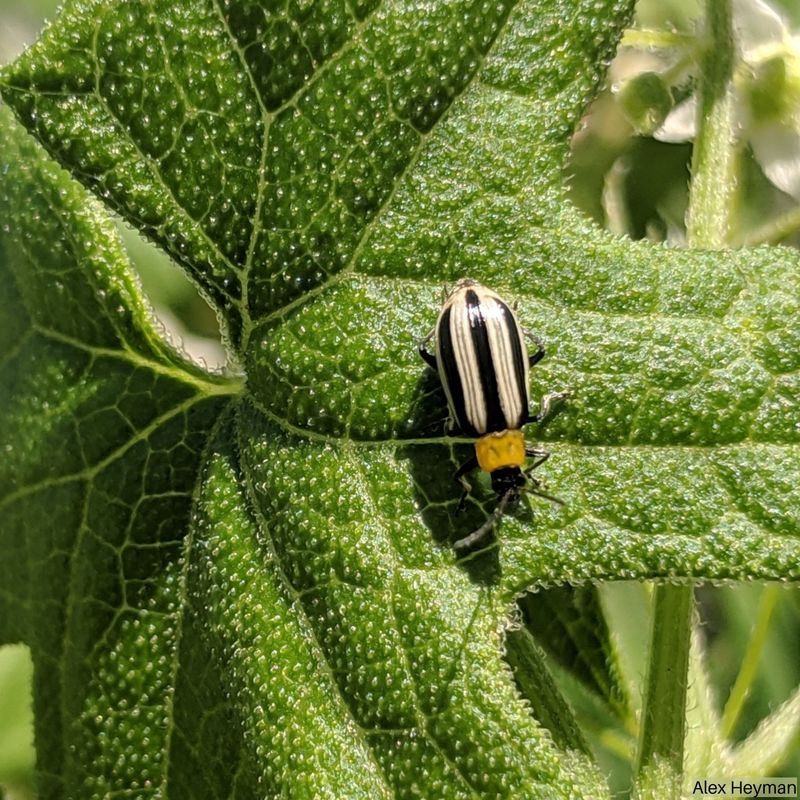
Striped cucumber beetles are small, about a quarter inch long, yellow with three black stripes running lengthwise. Spotted cucumber beetles are similar in size but carry black spots instead of stripes. Finding either insect on a vine that is also showing progressive wilt raises the suspicion of bacterial wilt considerably, though beetle presence alone is not a diagnosis. Scout the undersides of leaves and along stems during morning hours when beetles are most active.
Use the String Test as Supporting Evidence
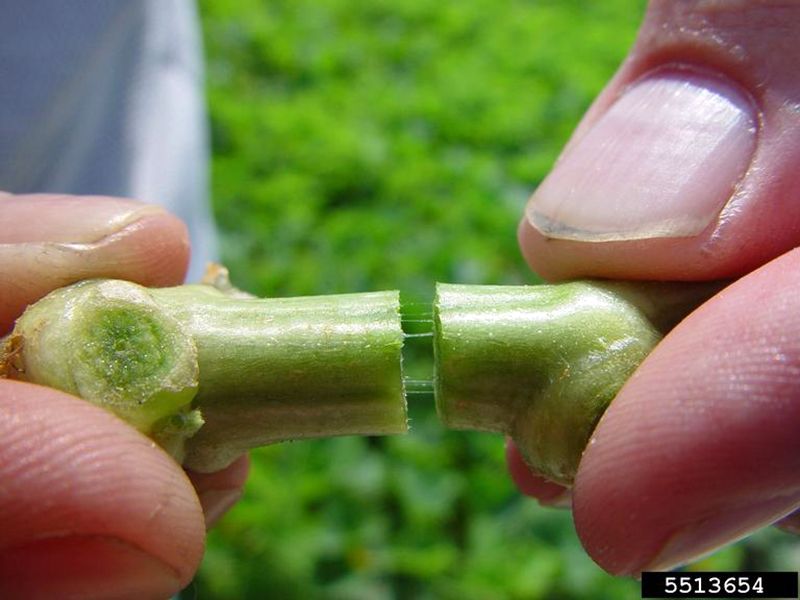
The cut-stem string test is a quick field check that can add one more piece of evidence to your assessment, though it works best as a supporting clue rather than a final answer. To perform it, use a clean blade to cut a symptomatic stem close to the crown. Press the two cut surfaces firmly together for a few seconds, then slowly pull them apart while watching the cut ends. Thread-like strands of bacterial ooze stretching between the surfaces suggest bacterial wilt may be present.
UMN Extension’s bacterial wilt guidance is clear that a positive result, visible sticky strands, increases suspicion but does not confirm the disease. A negative result is even less definitive: the strands can be difficult to see, may be absent in early infection, or may not appear at all even when Erwinia tracheiphila is present. Treating a negative test as a clean bill of health would be a mistake.
If the test produces visible strands alongside progressive symptoms and cucumber-beetle activity, that combination justifies taking the situation seriously. When the results are mixed or hard to read, a plant diagnostic clinic can provide reliable confirmation through laboratory methods. Knowing whether bacterial wilt is truly the cause matters because the management response, including whether to remove the plant, depends on getting the diagnosis right.
Choose a Response That Fits the Evidence
Matching your response to what the evidence actually shows prevents both under-reaction and over-reaction. When the most likely explanation is temporary heat or water stress, site-appropriate measures can help. Applying a layer of organic mulch around the base of the plants slows soil moisture loss, moderates root-zone temperature, and reduces the stress plants face during the hottest hours. OSU Extension heat-stress guidance also suggests temporary shade cloth or wind protection for plants facing extreme conditions.
When wet or poorly drained soil is the likely culprit, the priority is improving drainage rather than adding more water. Stop irrigating until the soil dries to an appropriate level, and consider whether the bed needs better structure for future seasons. Avoid cultivating deeply near the roots: OSU’s cucumber growing guide notes that deep cultivation close to cucumber vines destroys the shallow feeder roots that the plant depends on. Gentle, shallow weeding is safer.
Fertilizer, Epsom salt, calcium products, household tonics, copper sprays, and bactericides do not address the underlying cause of this symptom pattern and will not cure bacterial wilt once infection has taken hold. UC IPM’s cucumber cultural tips and APS background on cucurbit bacterial wilt both emphasize that diagnosis, drainage management, and beetle control are the productive responses, not broad-spectrum treatments applied without a clear cause.
Remove Strongly Suspected Wilted Vines
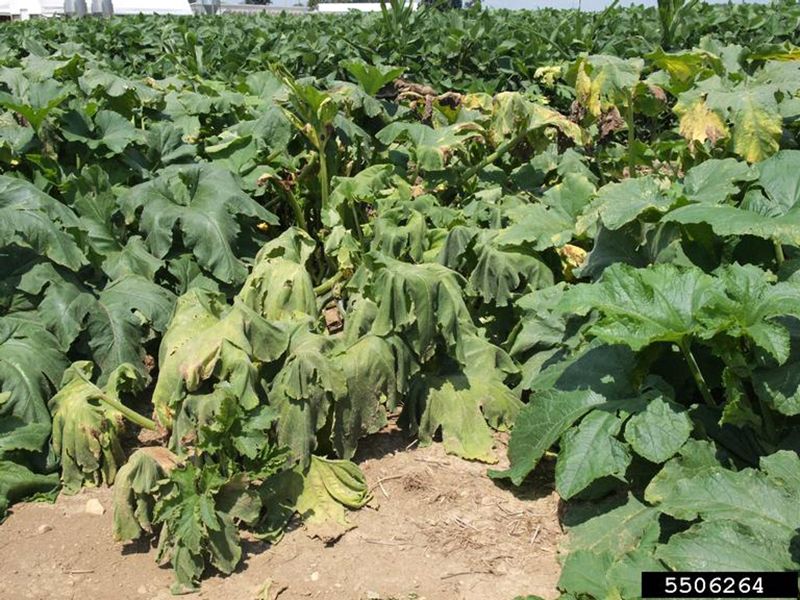
A vine showing progressive wilt, evidence of cucumber-beetle feeding, and other signs consistent with bacterial wilt has reached a point where removal is the most sensible option. Confirmed bacterial wilt has no curative treatment, and a diseased plant left in place continues to serve as a source from which beetles can pick up the bacterium and carry it to healthy vines nearby. UMN Extension’s bacterial wilt page recommends removing and destroying infected plants rather than leaving them in the garden.
Removal is not the right call for every vine that droops during a hot afternoon. Reserve it for cases where symptoms have progressed across multiple days, beetles are present, and the vine is no longer recovering fully. For remaining and future plants, consistent scouting is the most practical tool. Walk the garden in the morning when beetles are easier to spot, and remove beetles by hand or use a yellow sticky trap to monitor populations.
Some cucumber varieties carry resistance or tolerance to bacterial wilt, and planting those in seasons where beetles are a known problem can reduce risk, though no variety is completely immune.
Floating row covers placed over young transplants can physically exclude beetles before plants are established. The covers must come off, or be temporarily lifted, once flowers open so that bees and other pollinators can reach the blossoms. If you consider an insecticide, the EPA requires that pesticide labels be followed as legally binding instructions, and EPA pollinator protection guidance underscores the need to protect bees whenever applications are made near flowering plants.
Send Uncertain Cases to a Plant Clinic
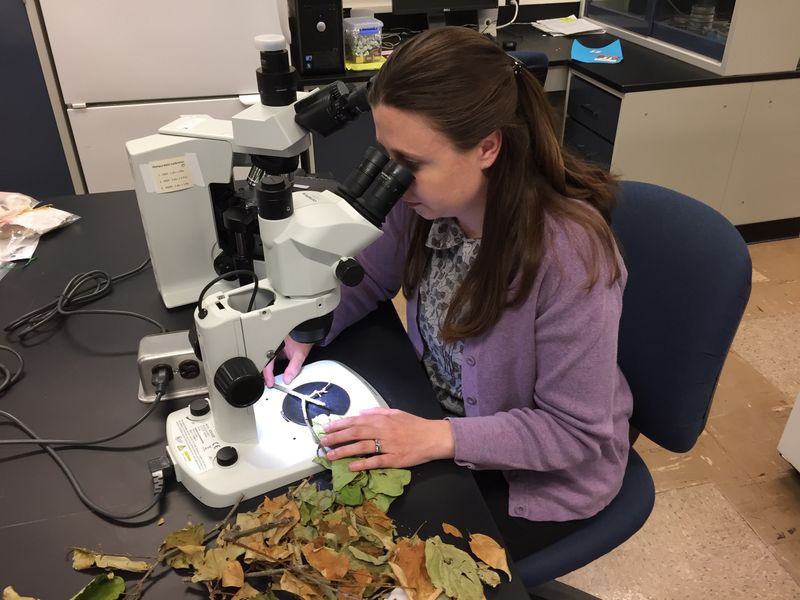
When you have checked soil moisture, inspected the crown and roots, looked for beetles, and performed the string test, but the picture still does not add up, a plant diagnostic clinic is your next step. Before submitting anything, build a short record: note whether the vine recovers by morning, how symptoms have spread from day to day, what the soil moisture and drainage look like, and whether beetles were present. That context helps the clinic narrow down possibilities faster. Penn State Extension’s scouting guide for vegetable crops reinforces the value of thorough observation records when seeking a diagnosis.
When you dig the plant for submission, use a trowel rather than pulling it by the stem so the roots stay intact. Choose a plant whose symptoms are still developing, not one that has completely collapsed and dried out. A fresh, beginning-to-progress specimen gives the lab the best chance of isolating a pathogen or identifying another cause. Local university extension offices and state departments of agriculture typically maintain diagnostic clinics that can run the appropriate tests.
Morning recovery may reflect nothing more than ordinary heat stress on a healthy vine, but a repeated or worsening cycle deserves a root-zone and cucumber-beetle check before you dismiss it. The gardeners who catch bacterial wilt or a root disorder early are usually the ones who kept watching rather than waiting for the plant to fail completely.