
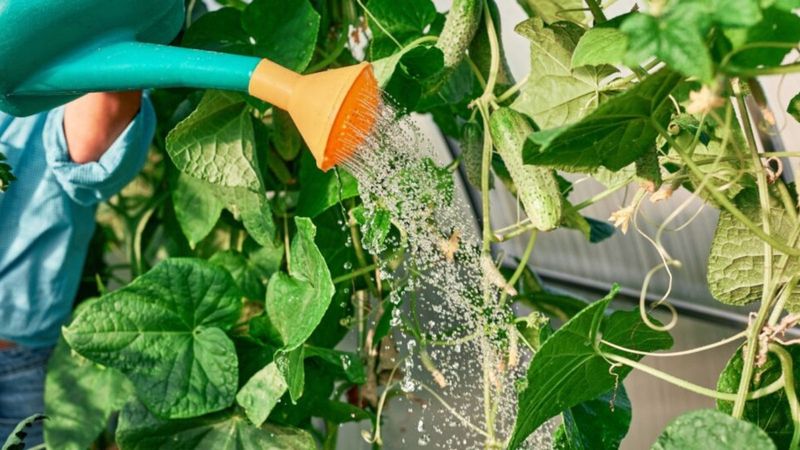
Biting into a cucumber you grew yourself and getting a mouthful of bitterness is genuinely frustrating, especially after weeks of tending the plant through summer heat. That sharp, unpleasant taste has a real biological cause, and knowing what drives it can help you grow better fruit from here on out. Keeping your watering more consistent is one practical step worth taking, though it works on cucumbers still developing on the vine rather than ones already picked. Understanding the full picture of what creates bitterness puts you in a much better position to get ahead of the problem.
What can make a cucumber taste bitter?
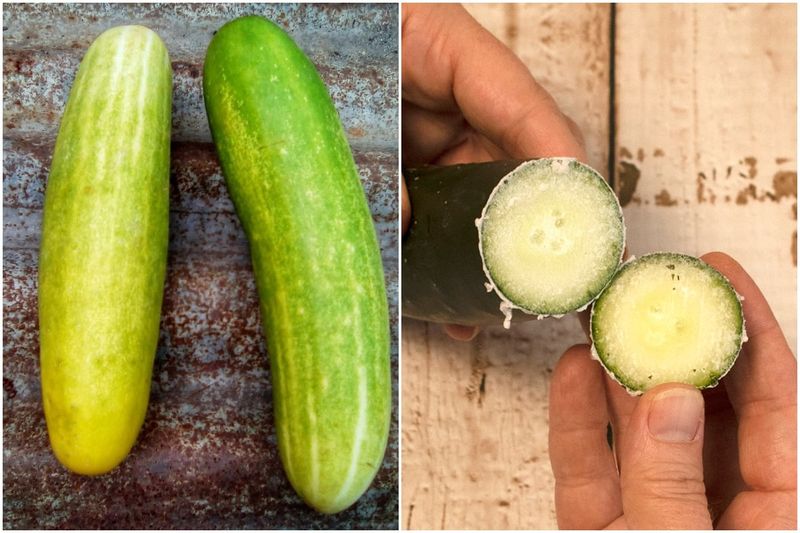
Bitter cucumbers get their off-putting flavor from compounds called cucurbitacins, particularly cucurbitacin B and cucurbitacin C. University of Georgia extension research explains that cucurbitacins are naturally present in the cucumber plant’s vegetative parts as a defense against insects and other threats, but stress can push these compounds into developing fruit.
Heat, drought, and uneven watering are among the stresses that can contribute to higher cucurbitacin levels during fruit development. Alabama Cooperative Extension notes that other factors, including wide temperature swings, poor soil nutrition, insect damage, and disease, can also play a role. Cultivar genetics matter too, since some varieties are simply more prone to bitterness than others regardless of care.
There is also a separate kind of unpleasant flavor that comes from leaving cucumbers on the vine too long. An overmature cucumber can turn yellow, develop tough seeds, and taste flat or off in a way that has nothing to do with cucurbitacins. NC State cucurbit breeding research distinguishes stress-driven bitterness from overmaturity-related quality loss, and the remedies differ. Adjusting your care routine may help cucumbers currently forming on the plant, but it cannot change the flavor of fruit already harvested.
Keep moisture consistent while fruit develops
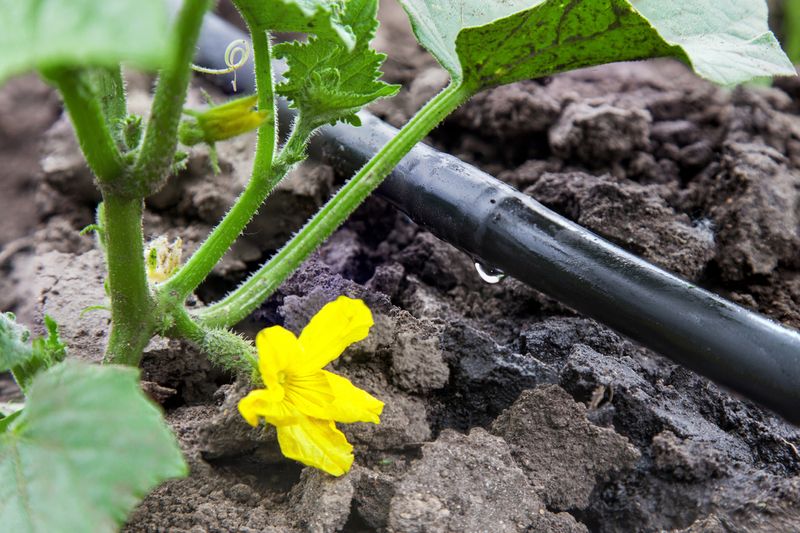
Cucumbers are at their most vulnerable to stress during three overlapping windows: flowering, fruit set, and fruit enlargement. When soil moisture swings from bone-dry to waterlogged and back again during those periods, the plant experiences repeated stress that can encourage cucurbitacin production in the fruit forming at that moment. Keeping the root zone evenly moist rather than lurching between extremes is one way to reduce that stress load.
Utah State University Extension emphasizes that consistent irrigation during fruit development supports better fruit quality and can reduce the kind of plant stress associated with flavor problems. The goal is a root zone that stays uniformly moist, not a schedule that alternates between neglect and flooding.
It is worth being honest about what the research shows, though. UC Agriculture and Natural Resources guidance reports that irrigation frequency has shown little consistent effect on the actual number of bitter cucumbers a plant produces, even when moisture is carefully managed. That does not mean watering well is pointless. Consistent moisture is sound crop-quality practice and reduces stress in multiple ways, but it is best understood as risk reduction rather than a guaranteed fix for every bitter fruit you encounter.
Check the root zone instead of following a calendar
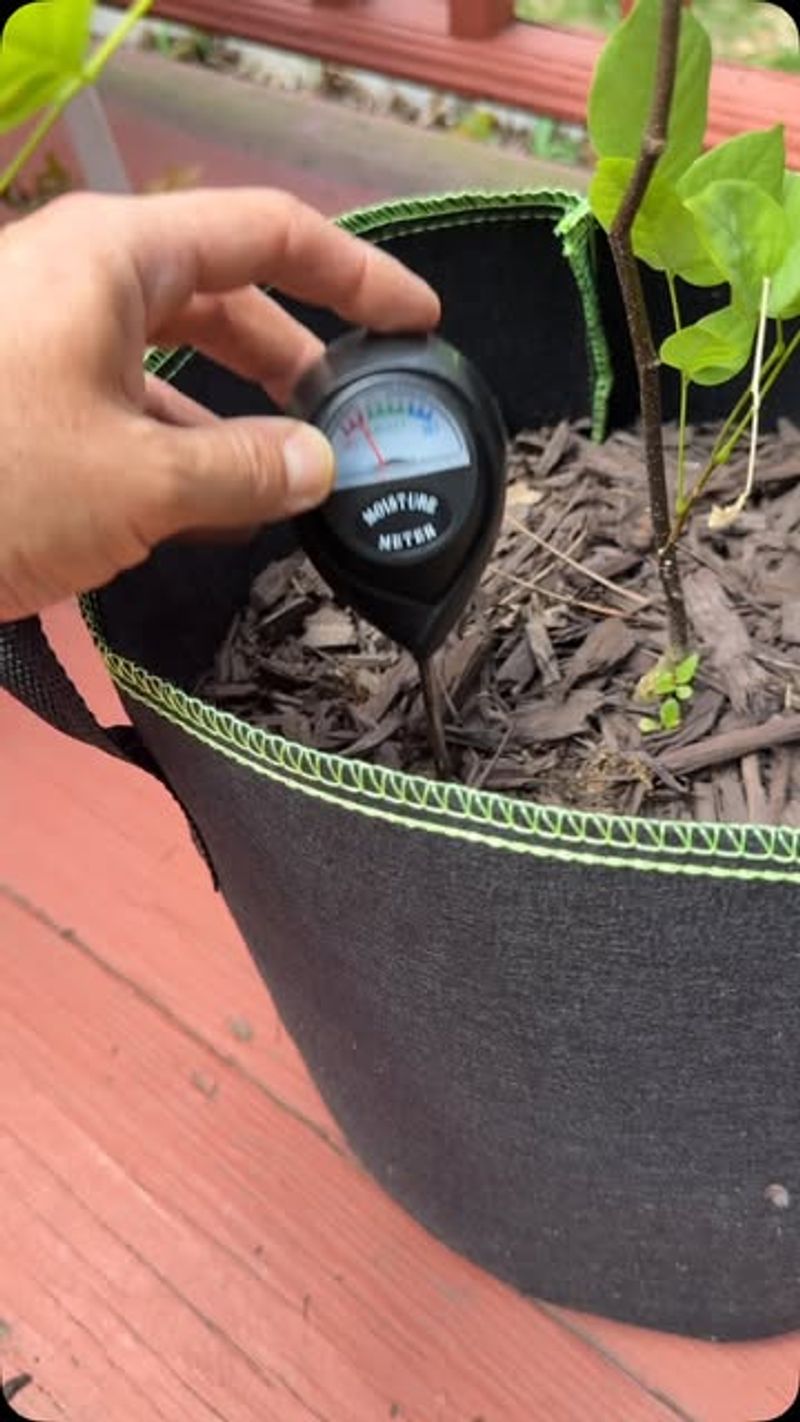
Watering on a fixed schedule is less reliable than reading what your soil is actually telling you. Push a finger or a trowel several inches below the surface near the plant’s root zone. If the soil at that depth feels dry or barely damp, it is time to water. If it still feels moist, you can wait another day before checking again.
Oregon State University Extension’s watering guidance recommends watering deeply enough to wet the full root zone rather than applying a shallow sprinkle that barely penetrates the surface. Deep watering encourages roots to grow downward and access moisture more reliably between waterings.
Published recommendations from University of Minnesota Extension suggest roughly 1 inch of water per week as a starting point, while Utah State University notes that 1 to 2 inches may be needed depending on plant size, growth stage, soil type, temperature, and rainfall. These figures include rain that falls naturally, so a week with a good soaking storm may mean you skip a watering entirely.
Sandy soil drains quickly and typically needs more frequent watering than clay, which holds moisture longer but can become waterlogged if overwatered. Containers dry out faster than in-ground beds. Mulched plants stay moist longer than bare soil. Wind and extreme heat increase evaporation.
None of these variables fit a single rigid schedule, so treat the soil-check as your most reliable guide. Waterlogged roots invite rot and other problems that will make cucumber quality worse, not better.
Use mulch and soil-level irrigation to reduce swings
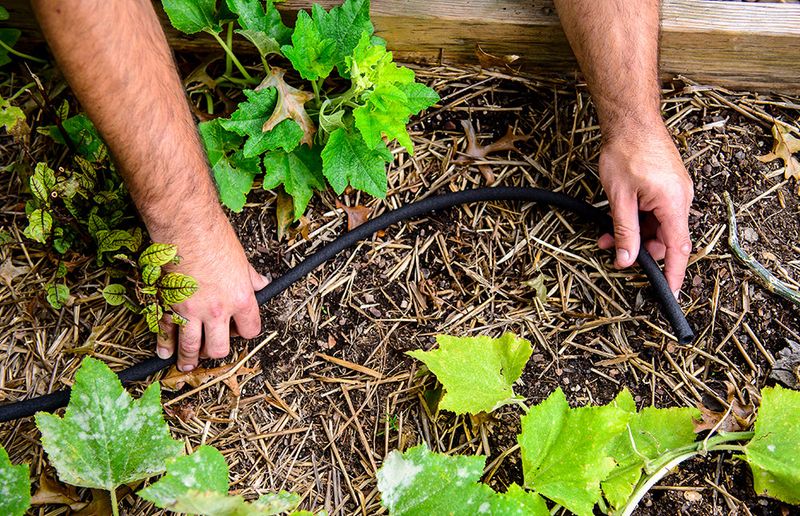
Once you have corrected a dry root zone, the next practical move is making it easier to keep moisture steady going forward. A 2- to 3-inch layer of organic mulch, straw, shredded leaves, or compost spread around the plant but kept a few inches away from the stem does two useful things: it slows evaporation from the soil surface and moderates soil temperature during heat waves. UC ANR’s guidance on curbing cucumber bitterness specifically recommends mulching as a way to support more stable growing conditions.
How you deliver water matters as much as how much you apply. Overhead sprinklers wet the foliage, and wet leaves in warm weather create conditions where fungal diseases can take hold. Drip irrigation lines or a soaker hose laid along the soil surface direct water straight to the root zone. University of Minnesota Extension recommends drip or soaker irrigation for cucumbers specifically because it delivers moisture more evenly and keeps the canopy dry.
Combining mulch with soil-level irrigation creates a more forgiving environment when temperatures spike and evaporation accelerates. These are practical infrastructure improvements that support steadier conditions through the rest of the season, not a promise that every subsequent cucumber will taste perfect.
Give the next fruit set a practical reset
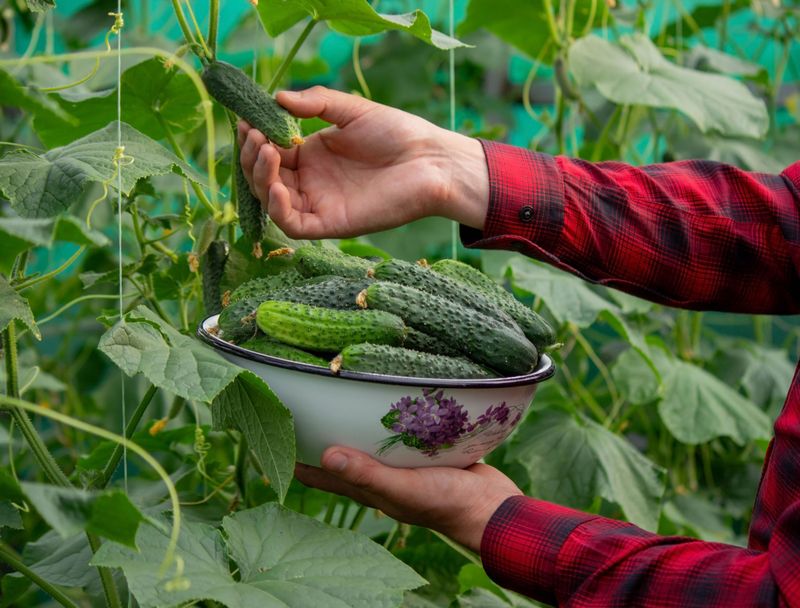
When you realize your current cucumbers are bitter, the most productive response is shifting focus to the fruit still forming on the plant. Start by doing a soil-moisture check several inches down. If the root zone is dry, water thoroughly right away and then layer mulch around the plant to help hold that moisture longer.
From that point, aim to maintain more consistent soil moisture through the rest of the fruiting period. Check every couple of days rather than waiting for the plant to look stressed. Utah State University Extension identifies the period of fruit enlargement as particularly important for avoiding quality problems, so this is not the time to let the root zone dry out completely between waterings.
While you are out there, look the plant over carefully. Check the undersides of leaves for insect pests, scan for lesions or unusual discoloration, and look at the roots if any wilting seems out of proportion to the heat. Oregon State University Extension’s cucumber growing guide recommends harvesting fruit frequently and at the right size rather than letting cucumbers linger and overripen on the vine.
Frequent harvesting also encourages the plant to keep setting new fruit. University of Minnesota Extension notes that leaving mature cucumbers on the vine can slow or stop production. Doing all of this may improve the flavor of later fruit, but it is honest risk reduction rather than a guarantee that every new cucumber will taste sweet.
Look beyond watering when the symptoms do not fit
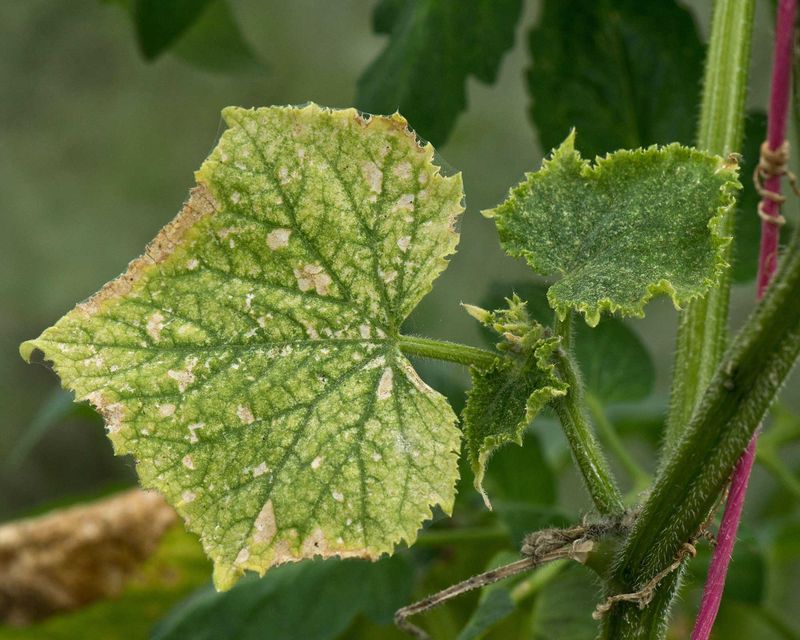
Watering is one piece of the picture, but bitterness does not always trace back to moisture. Some cucumber varieties carry a stronger genetic tendency toward cucurbitacin production, and no amount of careful watering will fully overcome that. Alabama Cooperative Extension lists high temperatures, cool temperatures, wide temperature swings, poor fertility, and low soil pH alongside moisture stress as contributors to bitterness.
NC State cucurbit breeding research confirms that genetics play a meaningful role, which is why selecting varieties described as bitter-free, burpless, or low-bitterness can be one of the most reliable preventive steps. Varieties such as Sweet Success, Sweet Slice, and several modern hybrids are bred to produce lower cucurbitacin levels, though even these can be affected under severe stress.
If your plant is suddenly wilting, has mottled or distorted leaves, visible lesions, or is under heavy pest pressure, adding more water is unlikely to solve the problem and could make root conditions worse. Those symptoms call for a separate diagnosis covering disease, insect damage, poor pollination, or root injury. University of Minnesota Extension recommends inspecting for cucumber beetles, aphids, and common foliar diseases as part of routine cucumber care.
One persistent myth worth putting to rest: cucumbers do not become bitter because they cross-pollinated with squash, melons, or watermelons. Illinois Extension confirms that cucumbers cannot cross with those unrelated crops in any way that affects the current season’s fruit flavor. Cross-pollination between cucumbers and squash simply does not happen, and repeating that story as an explanation sends gardeners chasing the wrong cause.
Decide whether a bitter cucumber is usable
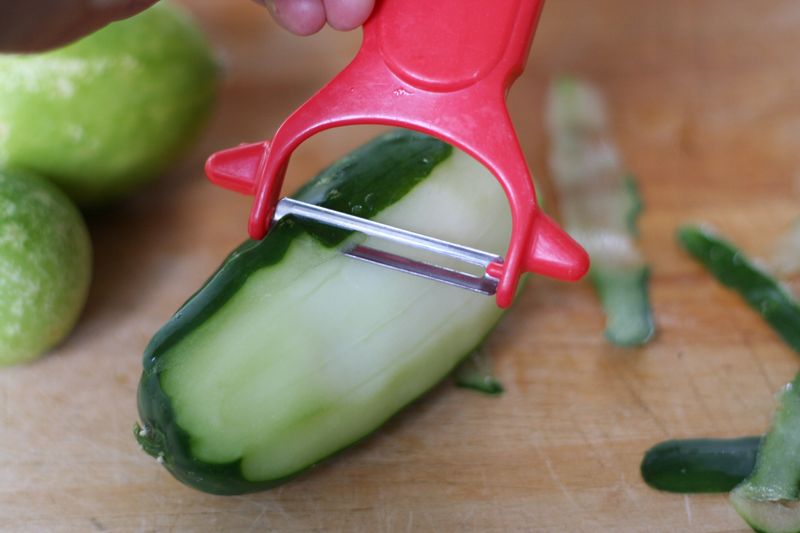
Cucurbitacins tend to concentrate near the skin and at the stem end of the fruit, which is why some rescue advice focuses on those areas first. Cutting off the stem end by an inch or so and peeling the cucumber generously removes much of the tissue where bitterness is highest. University of Minnesota Extension suggests this approach for mildly affected fruit, and it can make a cucumber that would otherwise be unpleasant into something acceptable.
Severe bitterness is a different situation. When cucurbitacins have moved throughout the flesh rather than staying near the surface and stem, peeling and trimming will not reliably remove the off-flavor. A cucumber that tastes sharply bitter all the way through is probably not worth trying to salvage for fresh eating.
On the question of safety, mild bitterness in an ordinary cultivated cucumber is not a sign of poisoning. Cucurbitacins are bitter defensive compounds, and the levels found in typical bitter garden cucumbers are unpleasant but not a health emergency. The safety concern is more specific: extremely bitter cucurbit fruit, particularly from an unexpected volunteer plant that looks like a squash or gourd, should not be eaten. OSU Extension warns that high cucurbitacin levels in certain volunteer cucurbits can cause gastrointestinal illness, and extremely bitter fruit from an unknown volunteer plant is a reason to discard it entirely rather than trim around the problem.
Standard bitter cucumbers from a known cultivar do not carry that same risk. The practical rule is: mildly bitter and from a named variety, try trimming; extremely bitter or from an unknown volunteer plant, do not eat it.
Steadier moisture may help the next harvest
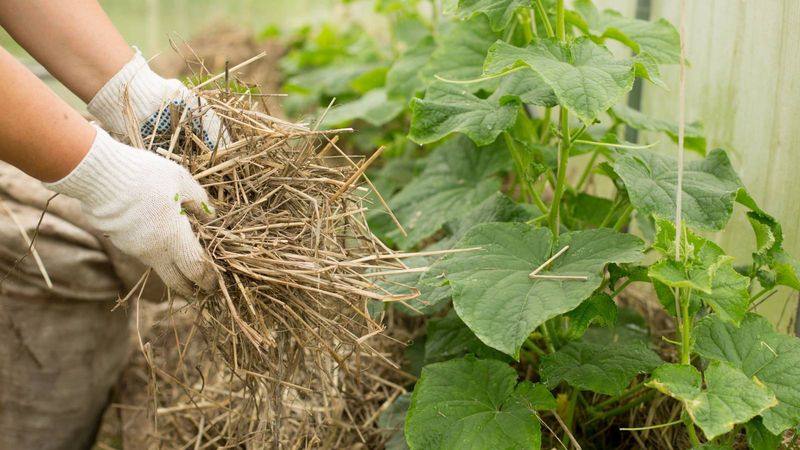
Pulling together everything in this article leads to a short, realistic action list. Check soil moisture several inches down before each watering. Water deeply when the root zone is dry, and use mulch or drip irrigation to help hold that moisture more steadily between checks. Utah State University Extension and UC Agriculture and Natural Resources both point to consistent moisture during fruit development as sound crop-quality practice, even while acknowledging it does not guarantee flavor results in every case.
Inspect the plant regularly for pests, disease, and signs of root trouble. Choose cultivars known for lower bitterness when you plan next season’s garden. Harvest cucumbers promptly at the right size rather than letting them linger. These steps together reduce the conditions that stress a plant and encourage cucurbitacin buildup in new fruit.
None of this changes a cucumber already sitting on your counter. The fruit in hand is what it is, and consistent watering going forward is an investment in the ones still forming on the vine.