
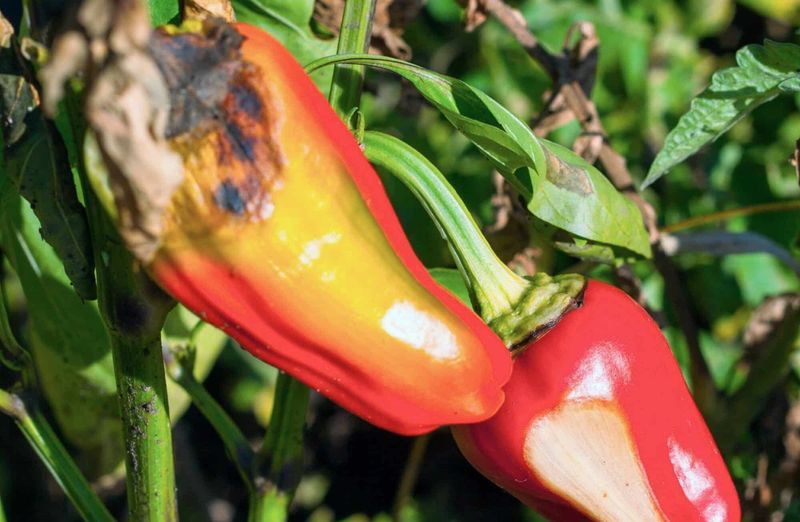
Spotting a pale, bleached, or blistered patch on a pepper you have been watching all season is genuinely disheartening, especially when temperatures are climbing and the rest of the plant looks fine. That discoloration on the sun-facing side of the fruit can indicate sunscald, a direct solar injury that happens when fruit loses its protective leaf cover and bakes under intense radiation.
The title above overstates the case a little, though: soft, wet, or spreading lesions point toward other problems entirely, and knowing the difference can save the rest of your harvest. Getting the diagnosis right is what this guide is built to help you do.
A pale sun-facing patch can indicate sunscald
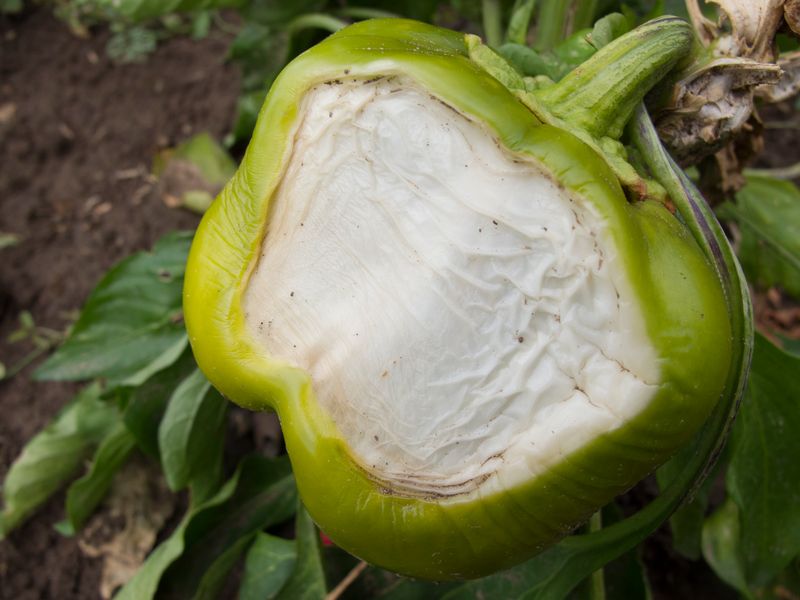
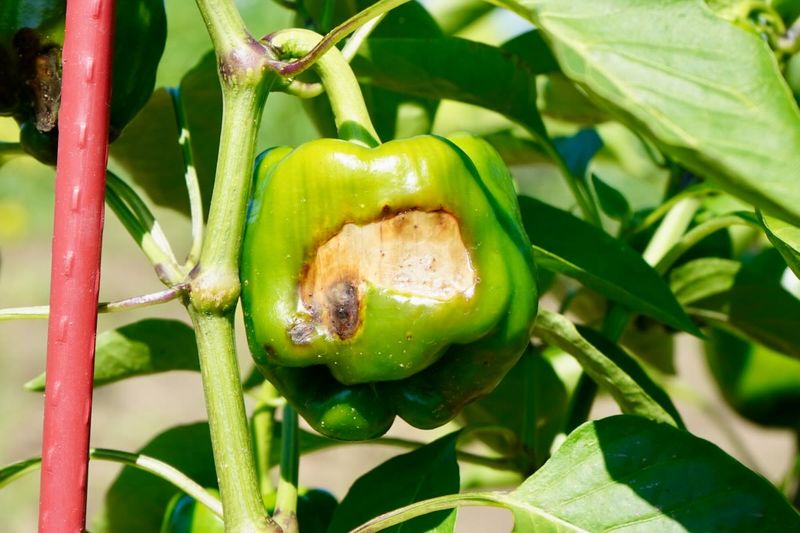
Pale, white, tan, blistered, wrinkled, leathery, or papery skin confined to the side of a pepper that faces the sun is the most telling sign of sunscald. According to University of Minnesota Extension’s pepper fruit diagnosis guide, sunscald produces this kind of surface injury specifically where intense direct sunlight strikes exposed fruit tissue.
The patch may look bleached or slightly translucent at first, then dry out into a thin, papery layer as it ages.
What strengthens the diagnosis is context. If you recently pruned the plant heavily, if a branch broke, or if insects or a leaf disease stripped away foliage and the pale patch appeared shortly after, sunscald is a reasonable working explanation.
Utah State University Extension’s pepper growing guide confirms that good leaf cover significantly reduces this problem, which means a sudden gap in the canopy is an important clue.
Sunscald can happen any time fruit becomes exposed to intense direct radiation, not only during late summer. Hot air temperatures add to the risk, but the core mechanism is solar exposure, not simply a seasonal calendar date.
Soft, wet, clearly sunken, spreading, or foul-smelling tissue does not fit the sunscald profile. Those symptoms overlap with blossom-end rot, anthracnose, and Phytophthora blight, all of which require a different response.
Hold the sunscald label for patches that are pale, dry, and limited to the sun-facing surface.
Lost leaf cover lets direct sun heat the fruit
Healthy pepper leaves do more than feed the plant. They act as a living parasol, keeping developing fruit in filtered light and reducing the temperature at the fruit surface.
When that canopy is intact, peppers ripen in relatively stable conditions even on scorching days.
The trouble starts when something removes that protection quickly. Utah State University’s vegetable pest identification guide notes that overpruning, broken branches, insect feeding, and leaf diseases can all expose fruit that was previously shaded, creating the conditions for direct solar injury.
A branch snapped by wind, a round of aggressive pruning, or a wave of aphid or caterpillar feeding can open a gap in the canopy fast enough that fruit has no time to harden against the sudden exposure.
The mechanism behind the damage is direct solar radiation reaching the fruit surface, not simply hot air. USU Extension’s shade use guide for fruit and vegetable production points out that fruit-surface temperature under direct sun can climb well above the surrounding air temperature, and dry or reflective conditions nearby can push that surface heat even higher.
Walk the whole plant before deciding what to do next. Look for the event that thinned the canopy: broken stems, chewed leaf edges, yellowing from disease, or simply the aftermath of an overzealous pruning session.
Identifying that trigger is the first step toward preventing the next round of injury.
Add breathable shade before more fruit becomes exposed
Once you spot sunscald on one pepper, the priority is protecting the fruit that has not been damaged yet. The scorched patch already on the plant will not recover, but every other developing pepper is still at risk if the canopy gap remains.
Stop any unnecessary pruning immediately. Leaves that look a little scraggly are still reducing the amount of direct radiation hitting nearby fruit.
Removing them to tidy the plant or to “let in more light” during a heat spell removes the very protection peppers need. USU Extension’s pest identification guide emphasizes that maintaining healthy foliage is the primary defense against this kind of solar injury.
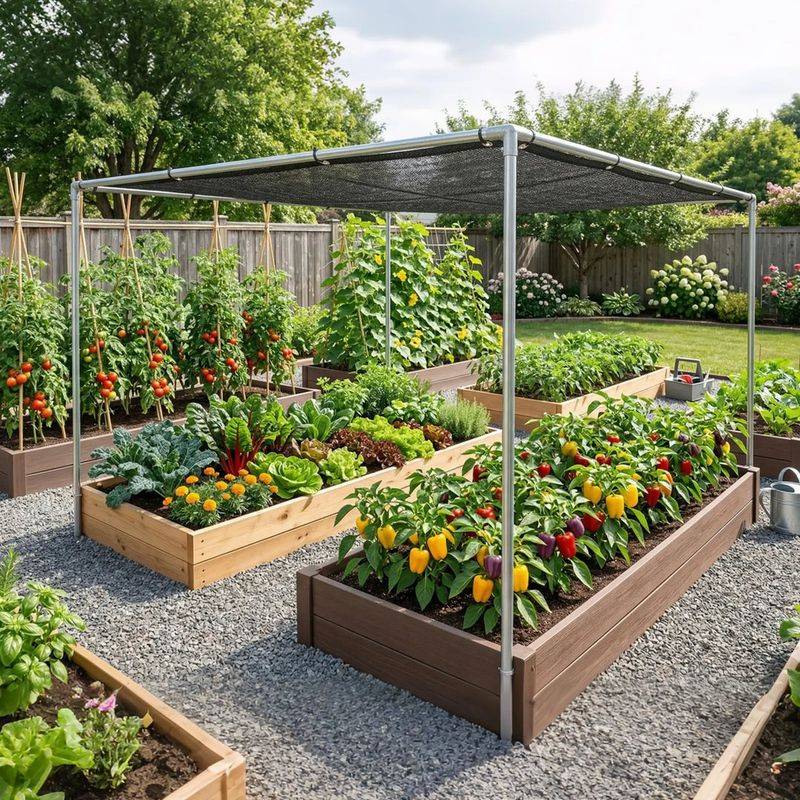
When natural leaf cover is not enough, a breathable shade cloth or similar open-weave screen placed over or alongside the plant offers an immediate, practical way to prevent additional injury. USU’s shade production guide and University of Minnesota Extension’s high-tunnel heat preparation guidance both describe using supported shade material to reduce fruit-surface temperatures without cutting off airflow entirely.
Keep the cloth elevated on stakes or a simple wire frame so it sits above the foliage and fruit rather than pressing against them. Fabric draped directly onto the plant traps heat and moisture underneath, which can create a different set of problems.
UF/IFAS guidance on shade structures notes that loose fabric can be torn or displaced by wind, so secure the edges with clips, stakes, or weights. Airflow through and around the screen is not optional, especially for Florida and Texas gardeners who already contend with high humidity.
Use the lightest effective protection during intense sun
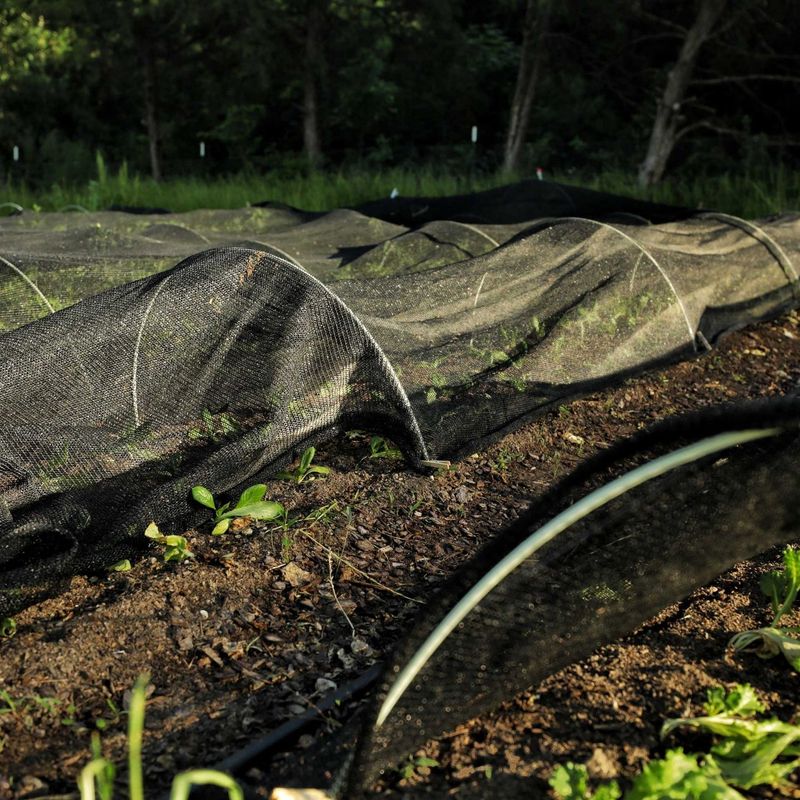
Shade cloth comes in a range of densities, and picking the right one matters. Going too heavy cuts the light your peppers need to keep producing fruit.
Extension and production research commonly discuss approximately 20 to 30 percent shade as a practical starting range for heat mitigation in vegetable crops. USU’s shade use guide and University of Minnesota Extension’s summer heat preparation resource both reference this range in the context of protected and field vegetable production.
That figure is a starting point, not a fixed rule. The right percentage depends on your local climate, how your plants are arranged, and how much natural light your garden receives.
A densely planted bed in partial shade may need far less added protection than a single exposed plant baking in full western sun all afternoon. UF/IFAS vegetable production guidance notes that shade cloth density choices vary considerably depending on crop and regional conditions.
Soil moisture and mulch belong in this conversation too, but with a clear boundary: they are supportive measures, not sunscald treatments. USU Extension’s pepper growing page and a USU IPM advisory both recommend keeping soil moisture reasonably uniform during hot weather.
Consistent irrigation helps the plant maintain vigorous foliage, and a layer of mulch slows surface drying between waterings. Neither practice will repair a pepper that is already scorched, but both help the plant stay strong enough to protect the fruit still on the vine.
Compare sunscald with rot and disease
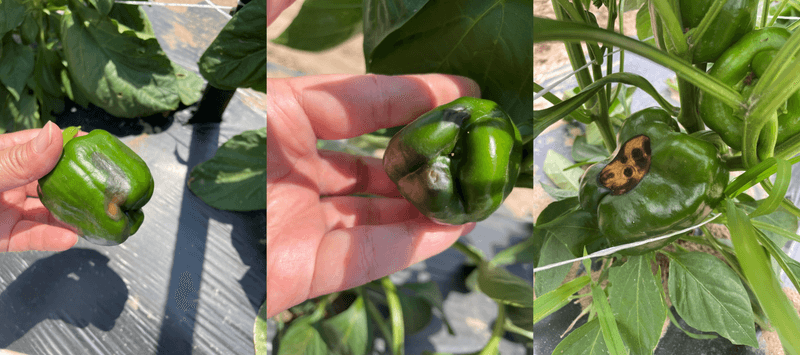
Getting the diagnosis right changes what you do next, so it is worth spending a moment comparing sunscald to the disorders it most often gets confused with.
Blossom-end rot starts at the opposite end of the fruit from the stem, the blossom end, and typically produces a dark brown or black leathery patch that sinks inward as it ages. University of Georgia Extension’s pepper production guide distinguishes blossom-end rot from sunscald specifically by location and color: sunscald appears on the sidewall where sun strikes, and the tissue tends toward pale or white rather than dark brown.
Anthracnose looks different again. University of Minnesota Extension’s pepper fruit diagnosis tool describes anthracnose as round, sunken spots that often develop dark centers and may appear on ripe or overripe fruit.
The spots can spread and may show salmon-colored spore masses in humid conditions. That pattern, circular, darkening, and potentially spreading, does not match the pale, elongated, sun-facing bleach of sunscald.
Phytophthora blight is the most urgent concern to rule out. A USU Extension vegetable IPM advisory describes Phytophthora fruit lesions as soft and water-soaked, and the disease often accompanies wilting, stem lesions at the soil line, or white fungal growth on affected tissue.
If you see any of those additional plant symptoms alongside a soft, spreading lesion on the fruit, treat the situation as a potential disease problem rather than ordinary sun exposure.
The practical rule: pale, dry, and sun-facing points toward sunscald. Wet, dark, spreading, or paired with broader plant decline signals rot or disease, and those conditions call for different action.
Treat the cause of canopy loss, not the sunscald
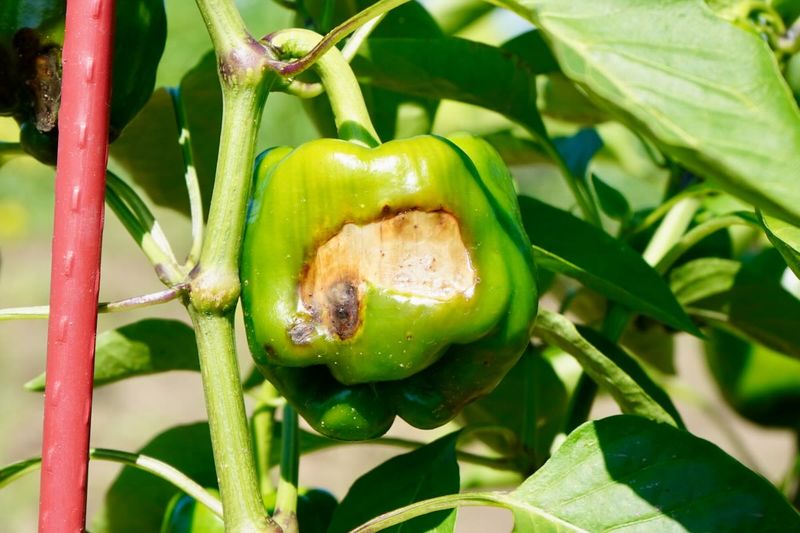
Sunscald is a physical injury caused by direct solar radiation on exposed tissue. Spraying it with a pesticide or fungicide will not help the damaged fruit and will not prevent the next pepper from getting scorched.
The treatment for sunscald is shade and canopy restoration, not chemistry.
What deserves a closer look is why the canopy thinned in the first place. USU Extension’s pepper growing guide and the USU vegetable pest identification guide both identify leaf-spot diseases, powdery mildew, insect feeding, broken stems, overfertilization, and irrigation problems as indirect contributors to sunscald because they weaken or remove the foliage that shields developing fruit.
If caterpillars chewed through the leaf cover, or if a fungal leaf spot caused widespread defoliation, addressing those problems directly is what prevents the next round of exposure.
Pesticide or fungicide treatment becomes relevant only after you have identified a specific pest or disease that is actively thinning the canopy. Confirm the cause first, then choose a registered product for that specific problem if one is warranted.
Calcium supplements are sometimes suggested for pale pepper patches, but that recommendation applies to blossom-end rot, not sunscald. UGA Extension’s pepper guide is clear that blossom-end rot and sunscald differ in location and appearance.
Applying calcium to a pale sidewall patch misidentified as blossom-end rot wastes product and delays the right response.
Keep firm peppers and discard active decay
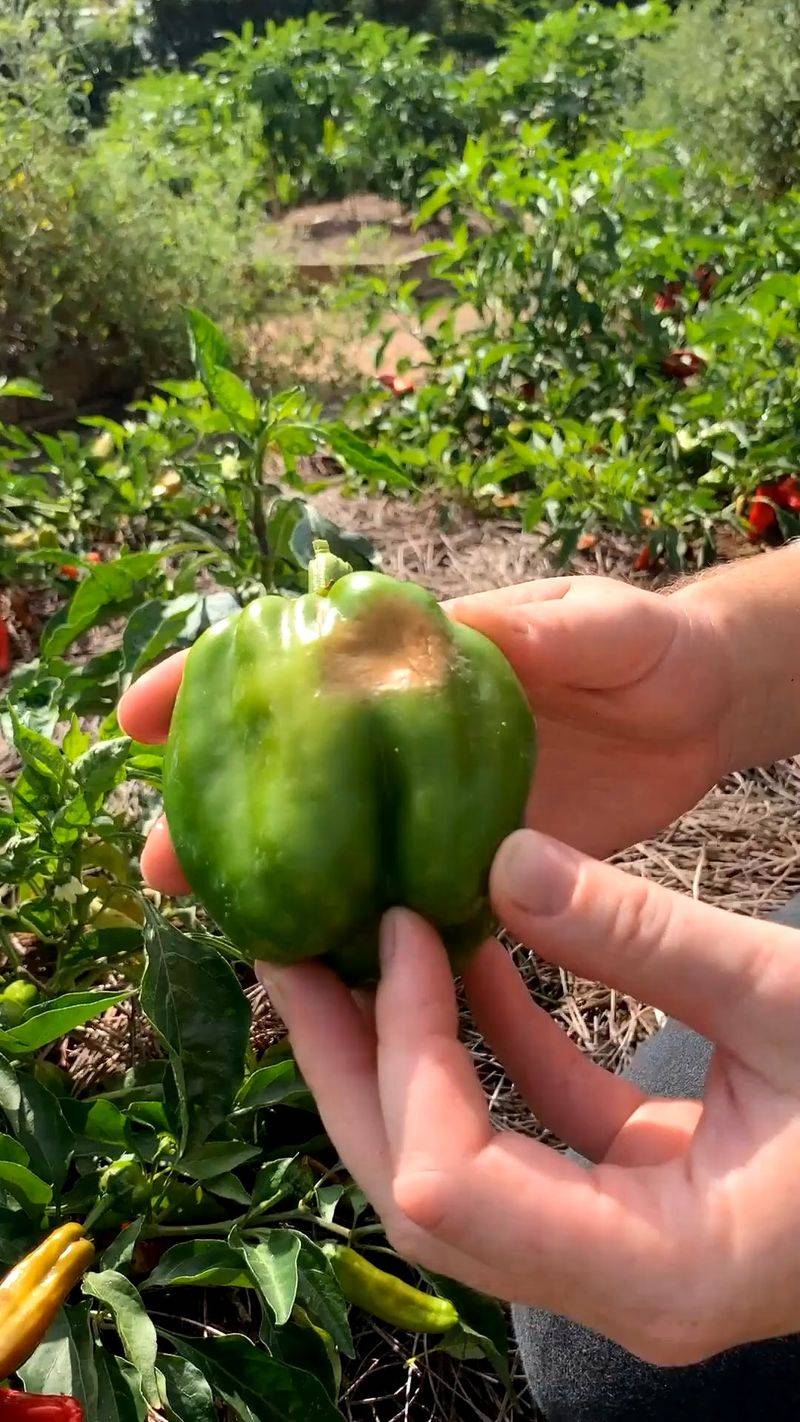
Not every pepper with a sunscald patch needs to go in the compost bin. A mature pepper that is still firm, shows no soft or watery tissue, and carries no foul smell may be perfectly usable after trimming.
Utah Pests Newsletter guidance from USU Extension notes that peppers with a sunscald deformation can still be edible, which applies to superficial surface damage on otherwise sound fruit.
Cut away the bleached, papery, or leathery section with a clean knife and check what is underneath. If the underlying flesh is firm and normal in color, the pepper is likely fine for cooking or fresh eating.
Discard any fruit that is soft, watery, spreading decay, foul-smelling, visibly moldy, or showing symptoms you cannot confidently identify as simple sun injury. Penn State Extension guidance on pepper quality recommends discarding peppers showing disease or substantial damage, a standard that commercial growers apply strictly and home gardeners should follow when decay is present or uncertain.
The University of Minnesota Extension pepper diagnosis tool reinforces that wet, rotting lesions belong in a different category from dry sunscald, and that distinction matters at harvest time. Shade and canopy care can protect peppers still forming on the plant, but they cannot restore tissue that has already been destroyed by sun or decay.
Protect the next peppers with a pattern-based check
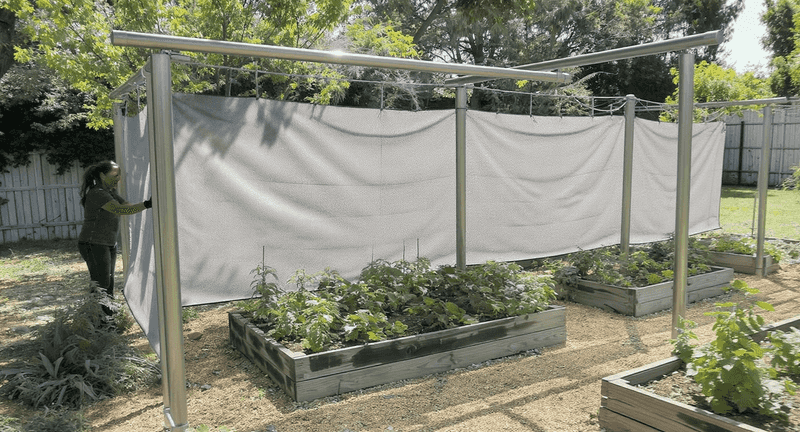
A quick pattern-based check can catch the next problem before it ruins more of the harvest. When you find a pale, dry, blistered patch limited to the sun-facing side of a pepper and you can point to a recent canopy gap, sunscald is a reasonable working diagnosis.
Preserve whatever healthy foliage remains, add a supported, ventilated shade screen if the gap cannot be closed with leaves alone, and secure the cover against wind.
Switch to disease or rot precautions when the lesion is wet, dark, spreading, or paired with wilting, stem damage, or unusual growth elsewhere on the plant. Those signs call for identification of the specific problem rather than a shade fix.
University of Minnesota Extension’s pepper fruit diagnosis resource and USU Extension’s vegetable pest guide are both useful references for working through that differential.
USU Extension’s shade production guide makes the underlying point well: timely protection for unaffected fruit can preserve a meaningful portion of the remaining harvest even after the first scorch has already occurred. The first scorched pepper is a warning worth acting on.