
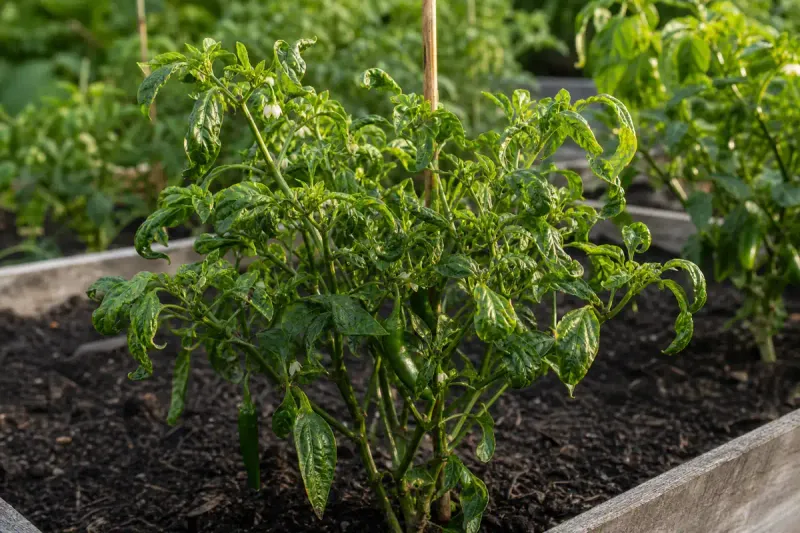
Walking out to your pepper plants on a scorching afternoon and finding their leaves curled tight like little tacos can send your heart straight to your stomach. That twisted, cupped shape looks alarming, but the story behind it usually started hours or even days before you noticed the leaves moving. Heat waves put peppers under a kind of invisible pressure that builds in the root zone long before anything shows up on the surface. Understanding where that pressure begins is the fastest way to figure out whether your plant needs water, shade, or a closer look for something else entirely.
The curl pattern suggests stress, not a diagnosis
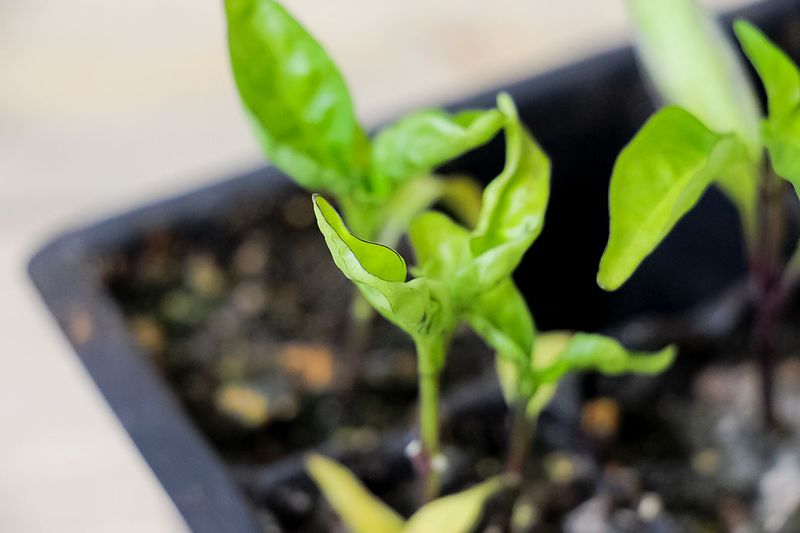
Pepper leaves that cup upward or roll inward during a heat wave follow a recognizable pattern, and knowing that pattern helps you read the plant more accurately. The cupping tends to affect most of the plant at once, the leaves usually stay green rather than turning yellow or mottled, and the worst distortion often shows up during the hottest part of the afternoon. According to University of Illinois Extension guidance on heat stress, plants under heat and water pressure may roll or cup their leaves as a way to reduce the surface area exposed to sun and dry air.
One of the more reassuring details is that the curl sometimes eases noticeably during cooler evening temperatures or after the root zone gets a good drink of water. That kind of partial recovery is consistent with heat-and-water stress, though it does not prove that heat stress is the only thing going on.
What this pattern cannot do is hand you a confirmed diagnosis. University of Minnesota’s plant diagnostic tool lists multiple causes for curled vegetable leaves, including insects, viruses, and herbicide injury, several of which can look almost identical to heat-related curl. Before treating the leaves themselves, spend a few minutes checking the conditions around the plant, starting at the soil surface and working outward.
Heat exposes an imbalance between water loss and root uptake
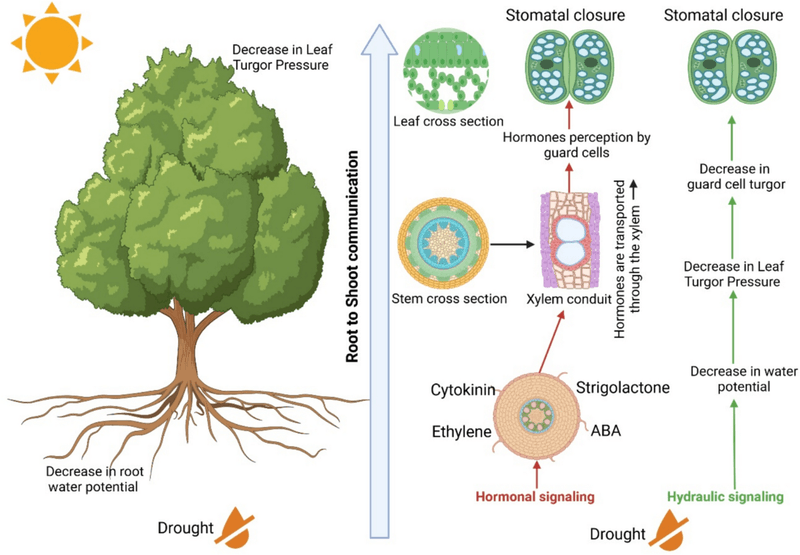
On a brutally hot day, a pepper plant loses water through its leaves far faster than it can pull replacement water up from the soil. High air temperature, intense sun, and even a moderate breeze all increase the rate at which water evaporates from leaf surfaces, a process called transpiration. Research on plant responses to combined heat and drought shows that when this demand outpaces supply, plants activate several protective responses, including partially closing the tiny pores on their leaves called stomata, which reduces both water loss and the intake of carbon dioxide.
Leaf rolling or cupping fits into that same protective sequence. By curling inward, a leaf exposes less of its surface to direct sun and moving air, which can slow the rate of water loss somewhat. Studies on stomatal regulation under moisture stress indicate that roots can actually send chemical signals upward to the leaves when the soil begins to dry, triggering stomatal closure before the plant ever reaches the dramatic drooping stage most gardeners associate with serious drought.
That upstream signal is the key detail here. The leaf is showing you the consequence of a water-delivery gap that began in the root zone, sometimes well before the soil surface looks or feels dry. The curl itself is a symptom, not the source of the problem, which is exactly why reaching for a spray bottle to mist the leaves will not fix what is happening below ground.
A two-inch soil check tells you what to do first
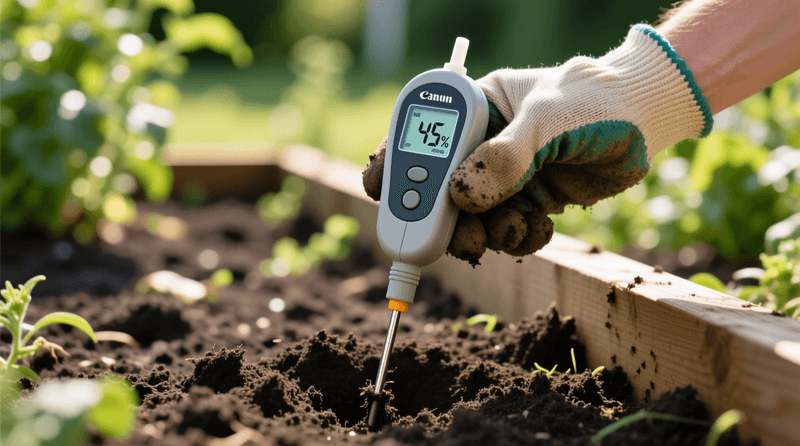
Before adjusting anything, push a finger or a narrow trowel about two inches below the soil surface near the base of the pepper plant. That layer, not the top crust, tells you whether the root zone is actually dry. Surface soil can look and feel parched within an hour of watering while the zone where roots are actively feeding still holds adequate moisture. If the soil at two inches feels dry or barely damp, watering is the right first move.
If it feels moist or wet, adding more water may not help and could make things worse.
University of Minnesota Extension’s vegetable watering guidance recommends using a finger-probe check rather than relying on a schedule, because soil texture, weather, and plant size all affect how quickly moisture is used. A general starting benchmark of about one inch of water per week is often cited, but as Penn State Extension’s review of watering myths points out, that figure does not account for sandy soil, containers, wind exposure, mulch, plant size, or days when temperatures push well past 90 degrees Fahrenheit.
Container peppers, peppers growing in sandy ground, and large plants in full sun during a heat wave may need water much more often than that benchmark suggests. Utah State University’s irrigation guide for peppers reinforces that irrigation frequency should match actual soil conditions rather than a fixed calendar interval. Let the two-inch check drive the decision, not the calendar.
Restore steady moisture without drowning the roots
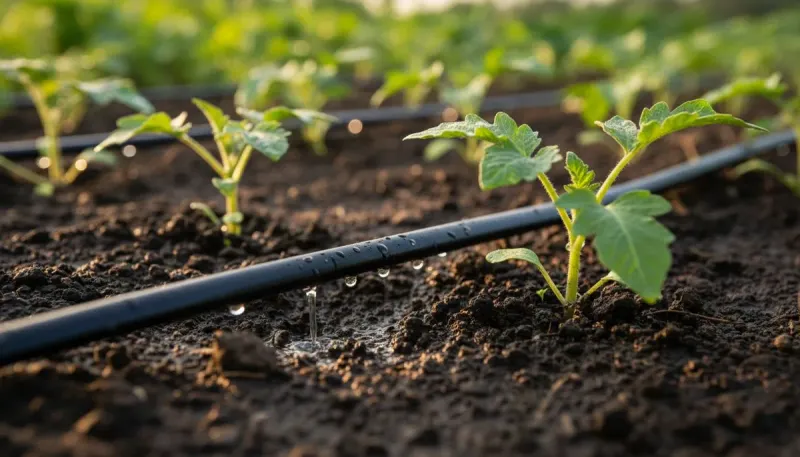
When the two-inch check confirms the root zone is dry, water slowly and thoroughly so moisture reaches well below the surface. Oregon State University Extension’s extreme-heat plant protection guidance recommends wetting at least six inches into the soil during a heat event, which means a slow, steady application rather than a quick splash. Drip lines and soaker hoses are particularly useful here because they deliver water directly to the root zone with minimal evaporation and keep foliage dry, reducing disease risk.
Penn State Extension’s overview of drip irrigation for vegetables notes that soil-level delivery also reduces the amount of water lost before it ever reaches the roots. If you are hand watering, aim at the base of the plant and let water soak in rather than running off. After watering, wait until the two-inch layer shows signs of drying before watering again, because keeping roots in constantly saturated soil reduces oxygen and can impair uptake just as badly as drought.
Organic mulch applied two to three inches deep around the plant, but kept a few inches away from the stem, can slow evaporation significantly and buffer the soil against rapid temperature swings. OSU’s heat-wave garden guide identifies mulch as one of the most practical tools for moderating root-zone conditions during prolonged heat. One caution worth repeating: skip fertilizing, heavy pruning, and any transplanting while the plant is already under heat stress, as those activities can compound the strain on a root system that is already working at its limit.
Temporary shade buys the plant time during peak heat
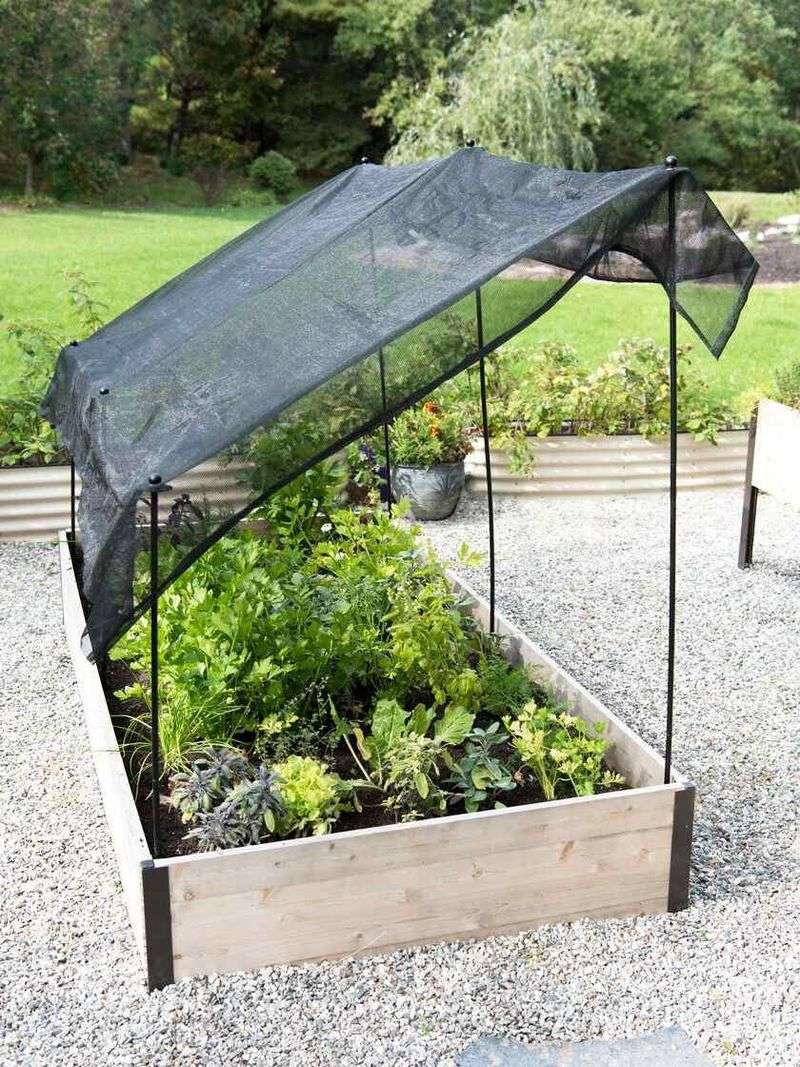
Once you have addressed the root zone, reducing the heat load on the leaves themselves can give the plant breathing room during the worst hours of the day. A simple frame covered with 30-40 percent shade cloth, positioned so air can still move underneath, provides afternoon relief without turning the garden into a dark tunnel. University of Minnesota Extension’s heat-garden guidance specifically names that shade-cloth range as an appropriate temporary measure during extreme events, and Oregon State University Extension echoes the recommendation for an elevated shade structure that preserves airflow.
Shade cloth is a heat-event tool, not a permanent growing condition. Peppers are full-sun crops, and heavy or prolonged shading reduces photosynthesis, which can lower fruit production even after the heat passes. The goal is to blunt the peak radiation during the most dangerous afternoon hours and then restore full sun once temperatures moderate.
Leaf recovery after shading and watering is a positive sign, but it does not guarantee that flowers and fruit escaped damage. University of Illinois Extension’s pepper-growing guide notes that sustained high temperatures can cause flower drop, poor fruit set, and fruit abortion as separate effects from leaf stress. UMN’s irrigation strategies for vegetables reinforces that consistent soil moisture during flowering and fruit development is especially important. Leaves may look fine while the plant quietly drops its blooms, so keep monitoring even after the curl improves.
Containers and damaged roots can mimic a thirsty plant
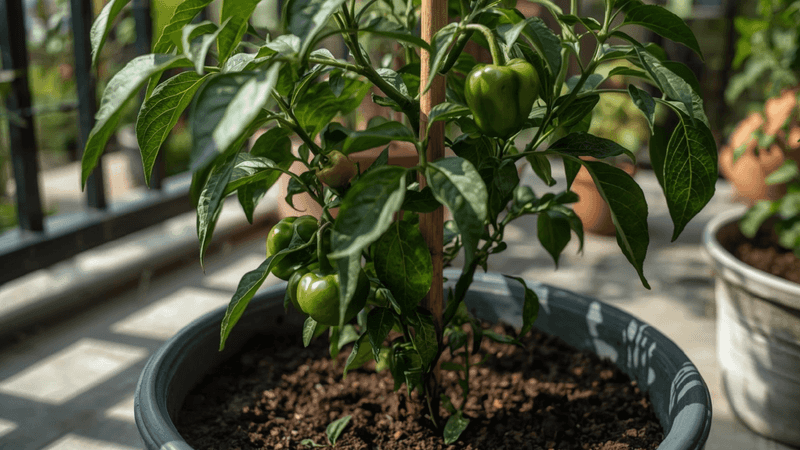
Container peppers present a particular challenge during a heat wave because the entire root system is confined to a small volume of soil that can dry out or overheat much faster than garden beds. Oregon State University’s pepper-growing publication points out that once roots fill the pot, containers may need watering daily or even twice daily in warm weather. That sounds like a lot, but a pot with a dense root ball and no drainage problem genuinely can exhaust its moisture that quickly.
The catch is that not every container pepper with curling leaves is thirsty. Waterlogged soil in a pot with blocked or absent drainage holes deprives roots of oxygen just as effectively as dry soil deprives them of water, and the leaves look nearly identical in both cases. Utah State University Extension’s plant diagnostic guidance cautions that drought-like symptoms in containers often trace back to drainage failure rather than insufficient watering.
The same principle applies in the ground. Compacted soil, root pruning from a nearby cultivation pass, root rot from a previous wet spell, or heavy clay that holds water around the crown can all impair uptake and produce leaves that look drought-stressed. USU’s water recommendations for vegetables note that checking both moisture level and drainage is essential before deciding that more water is the answer. Lift the container, check the drain holes, and probe the soil before reaching for the hose.
Look for clues that point to aphids, viruses, drift, or salt
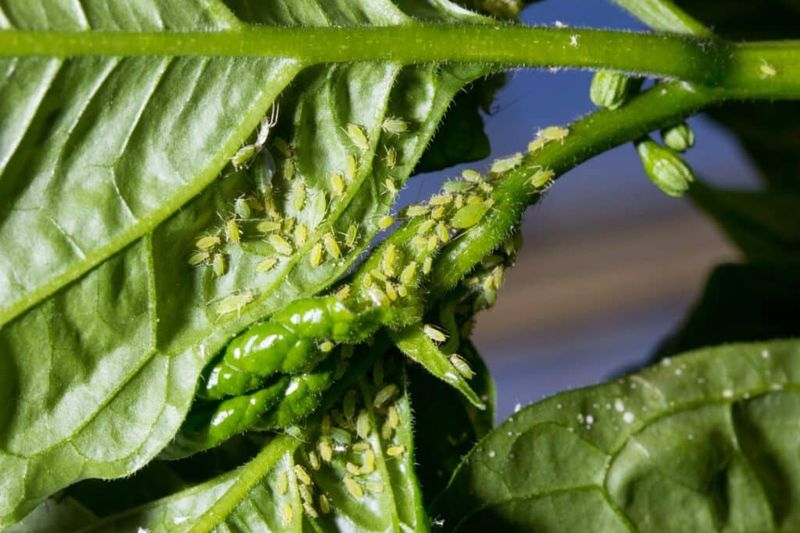
Plants that stay curled or get worse after heat and soil conditions improve deserve a second look. Start at the undersides of the leaves and the newest growing tips, because that is where aphid colonies tend to concentrate. University of Minnesota Extension’s aphid guidance describes the telltale signs as clusters of small soft-bodied insects, sticky honeydew residue on lower leaves, and distorted or yellowing growth where feeding is heaviest. A handful of aphids rarely causes serious harm, but a dense colony on new growth warrants attention.
Curl alone is not enough evidence to justify spraying anything; you need to see the insects before treating for them.
Viral disease produces a different picture. Mosaic or mottled coloring on the leaves, severe puckering or distortion of new growth, stunted plants, and oddly shaped or discolored fruit are the flags to watch for. Penn State Extension’s cucumber mosaic virus resource explains that aphids and leafhoppers can transmit several viruses to peppers, and that symptoms alone cannot reliably identify which virus is present. Infected plants generally cannot be cured, but the diagnosis needs more than a curled leaf before you pull the plant.
Herbicide injury from dicamba or 2,4-D drift is another possibility worth considering when several plants show cupping, twisting, or thick, pale veins, especially if the damage is worse on the side of the garden facing a recently treated lawn. UMN’s herbicide injury guide for gardens notes that peppers are among the more sensitive vegetables to drift injury, and that symptoms can appear days after the exposure. Finally, in arid regions, heavily fertilized containers, or gardens irrigated with high-mineral water, salt injury can show up as leaf-margin burn and curling. Each of these causes has a different fix, which is why the pattern of symptoms across the whole plant matters more than any single curled leaf.
Let the plant’s response guide the next decision
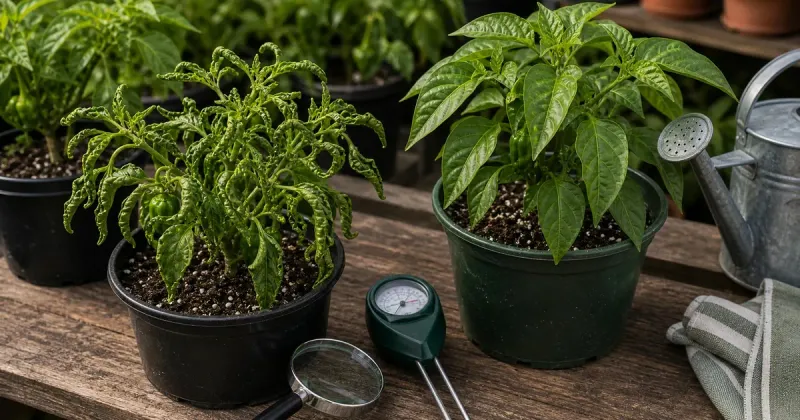
Work through the steps in order: probe the root zone, correct any dry or poorly draining conditions, reduce afternoon heat load with temporary shade, and then watch what happens over the next day or two as temperatures moderate. OSU’s heat-wave garden resource frames this kind of sequential observation as the most reliable way to distinguish heat-related stress from problems that need a different response.
If the curl eases as evenings cool and the root zone stays consistently moist, heat-and-water stress was the most likely explanation. Keep in mind that leaf recovery is separate from any flower or fruit damage the heat may have already caused. UMN’s vegetable irrigation strategies note that consistent moisture during flowering and fruit set matters as much as any single watering session.
Reconsider the diagnosis if leaves remain cupped after conditions improve, if new growth continues to distort, or if multiple plants in a row show a pattern that water and shade do not explain. Those are the moments when checking for insects, herbicide drift, or viral symptoms becomes the more productive next step. A plant that recovers cleanly is telling you something useful; one that does not is telling you something different.