
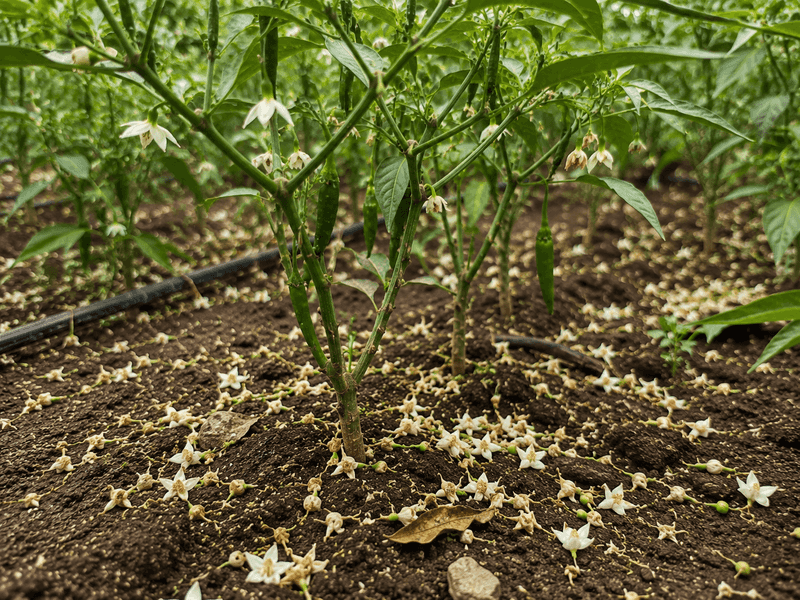
Your pepper plants look lush and full of flowers, yet the blossoms keep falling off before a single fruit forms. That is one of the most frustrating things a home gardener can face in midsummer, especially when the plants look perfectly healthy. The real culprit is usually the heat itself, not just one watering mistake, and understanding why can help you respond in a way that actually gives your plants a chance.
Heat is usually the first suspect
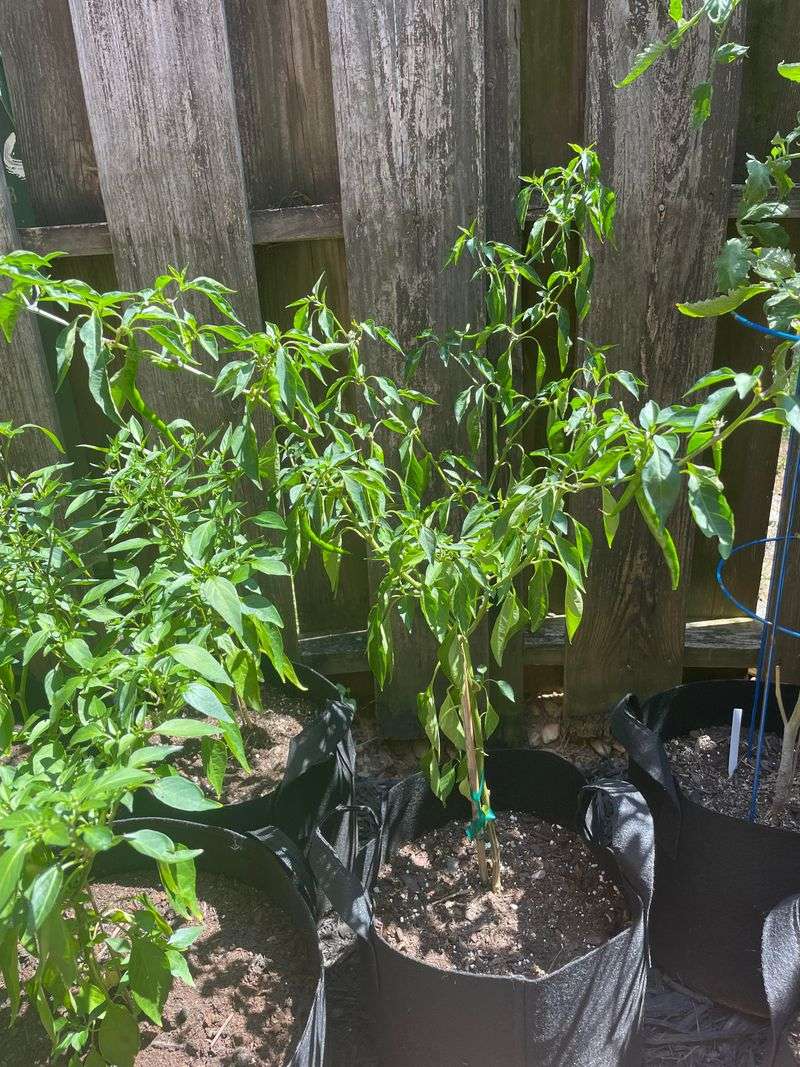
Midsummer blossom drop on pepper plants catches a lot of gardeners off guard because the foliage stays green and the plants look vigorous. Blaming one watering mistake is tempting, but University of Minnesota Extension guidance on vegetable irrigation identifies heat stress as a primary cause of blossom drop and fruit abortion, noting that flowers can fall even on plants with adequate soil moisture. The watering side of the equation matters, but it usually plays a supporting role rather than the starring one.
Hot afternoons combined with unusually warm nights create a double burden for flowering pepper plants. Oklahoma State University Extension reports that many peppers shed blossoms when daytime temperatures climb well above roughly 90 degrees F while nights stay above about 75 degrees F. Afternoon highs get most of the attention, but warm nights can be especially damaging because the plant never gets a chance to recover between hot days.
Inconsistent root-zone moisture can intensify that stress, so water management still deserves attention. A short production pause caused by heat, though, does not mean your plant is permanently damaged. UMN’s pepper-growing guide notes that plants often resume flowering once temperatures moderate, so patience is part of the plan.
What heat disrupts inside the flower
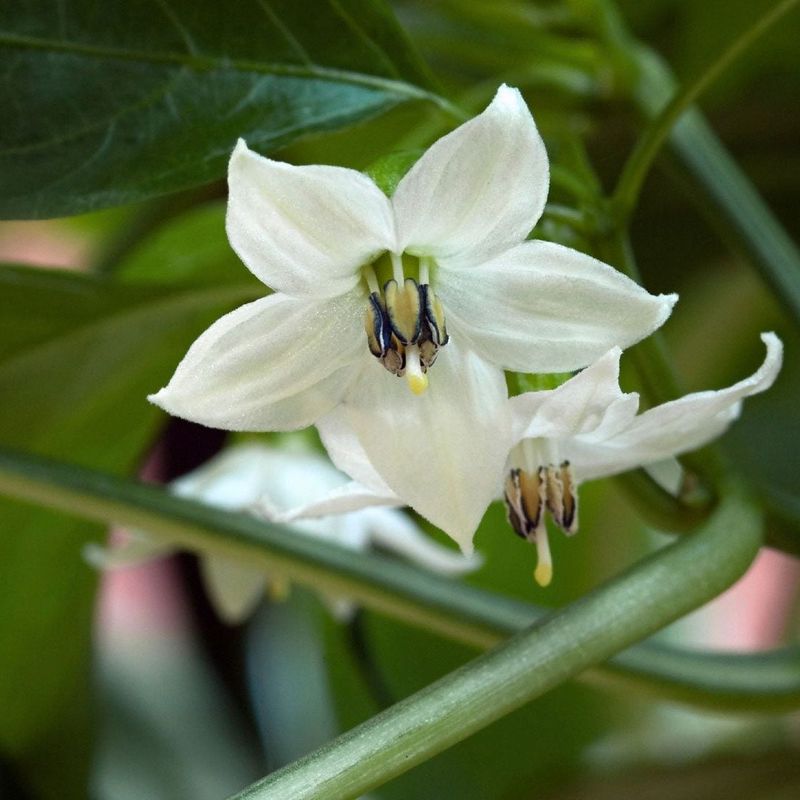
A pepper plant can look completely healthy on the outside while something has gone wrong at the reproductive level. Green leaves and sturdy stems reflect how the plant manages its own tissues, but those tissues cannot tell you whether pollen is viable or whether fertilization is actually taking place inside each flower.
Research published in Plant, Cell and Environment by Erickson and Markhart found that exposing bell pepper plants to temperatures around 33 degrees C (roughly 91 degrees F) during sensitive stages of flower development reduced pollen viability, fruit set, fruit size, and seed number. The damage happens inside the flower before you can see any outward sign of trouble, which is why lush foliage gives gardeners a false sense of security.
Pepper types and cultivars respond differently to heat. Oklahoma State’s pepper production fact sheet notes that small-fruited and hot pepper varieties tend to tolerate high temperatures better than bell peppers, so your specific plant matters. Hand-pollinating may feel like an active fix, but moving pollen around cannot restore viability that heat has already damaged, and it will not correct problems with fertilization or early fruit development. The most reliable path forward is reducing heat load and waiting for conditions to improve.
Check the root zone before you water
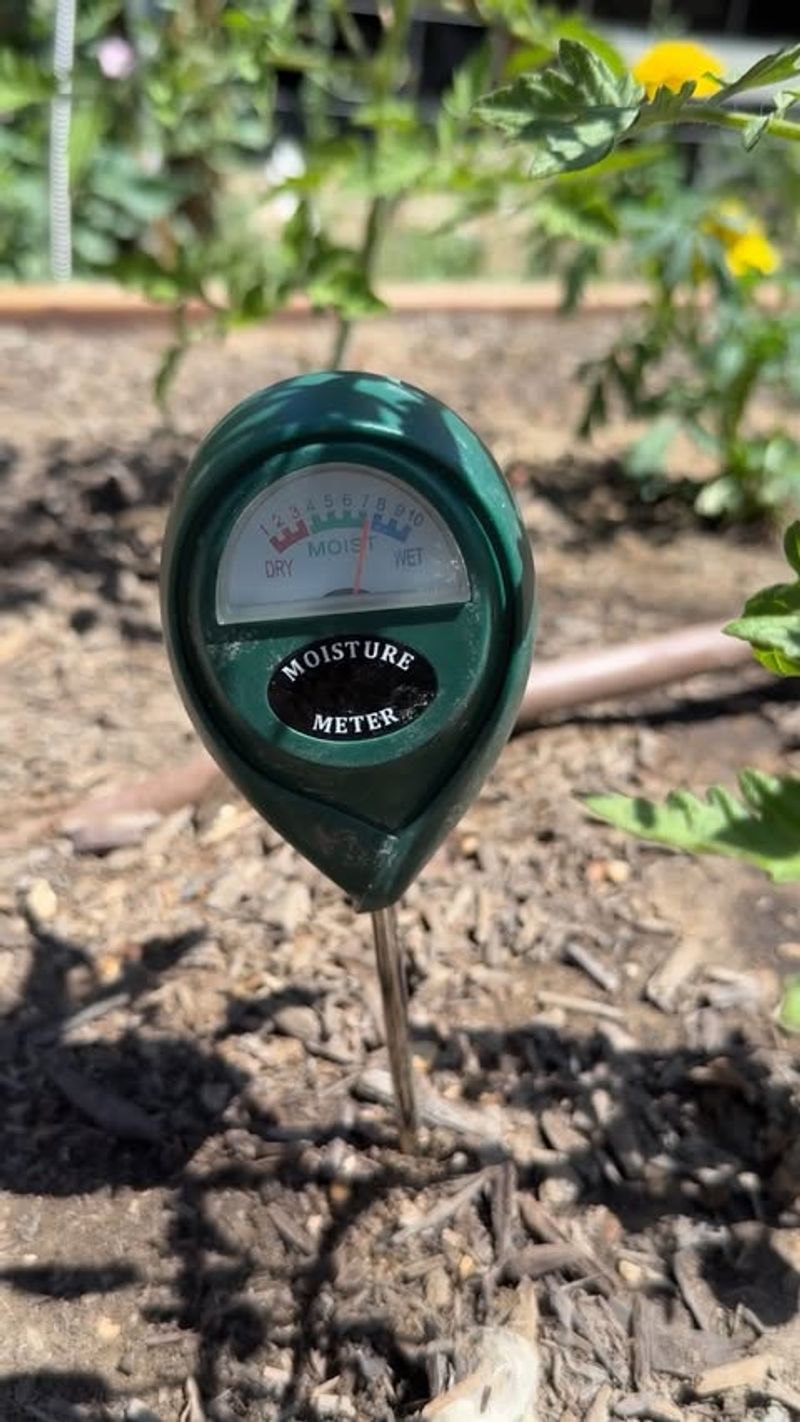
Before adjusting your watering schedule, find out what is actually happening below the surface. Surface soil can look and feel dry while the root zone several inches down still holds adequate moisture, and adding water on top of an already moist root zone creates its own set of problems.
Georgia Extension’s guidance on landscape watering recommends checking moisture at roughly 4 to 6 inches below the surface before deciding whether to irrigate. Push a finger or a trowel blade down to that depth and feel what is there. Damp soil that holds together slightly means the roots are not dry, and if your blossoms are still dropping during a hot spell, heat is the more likely primary explanation rather than thirst.
Soil type, container size, rainfall, wind, and plant size all change how quickly that root zone dries out. Sandy soil loses moisture faster than clay, raised beds drain more readily than in-ground beds, and containers in full sun can dry out surprisingly fast during a heat wave. A calendar-based watering schedule cannot account for all those variables, so the finger-or-trowel check gives you real information instead of a guess. If the root zone feels genuinely dry at that depth, water thoroughly.
If it still feels moist, hold off and check again the next day.
Restore even moisture without overwatering
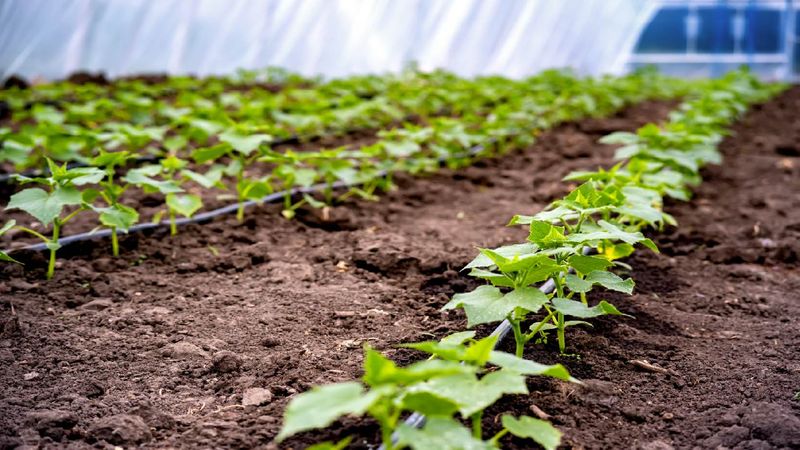
Once you know the root zone actually needs water, the goal is to bring it back to evenly moist without swinging to the opposite extreme. Saturated soil is not a solution. Roots sitting in constantly wet conditions are vulnerable to rot and other problems, and a plant dealing with root damage is even less able to hold onto blossoms during a heat wave.
Utah State University Extension recommends deep, infrequent watering for peppers and offers a general starting guideline of roughly 1 to 2 inches per week. That range is a useful reference point, not a rule carved in stone. Sandy soil, raised beds, containers, strong wind, and extreme heat can all push actual needs higher, while heavy clay or poor drainage can make the same amount excessive. Let the root-zone check guide frequency more than any number on a calendar.
Containers need especially close attention during hot weather because the growing medium can dry out much faster than in-ground soil. Check containers daily during heat waves and water when the root zone feels dry, but do not assume a fixed schedule like twice a day applies to every pot in every situation. UMN’s pepper guide and Oklahoma State’s pepper production fact sheet both favor drip irrigation or soaker hoses that deliver water directly to the root zone. If overhead watering is your only option, morning is a better time than midday, not because afternoon water burns leaves (that claim is not well supported) but because morning irrigation is more efficient and allows foliage to dry before evening.
Reduce heat while the wave lasts
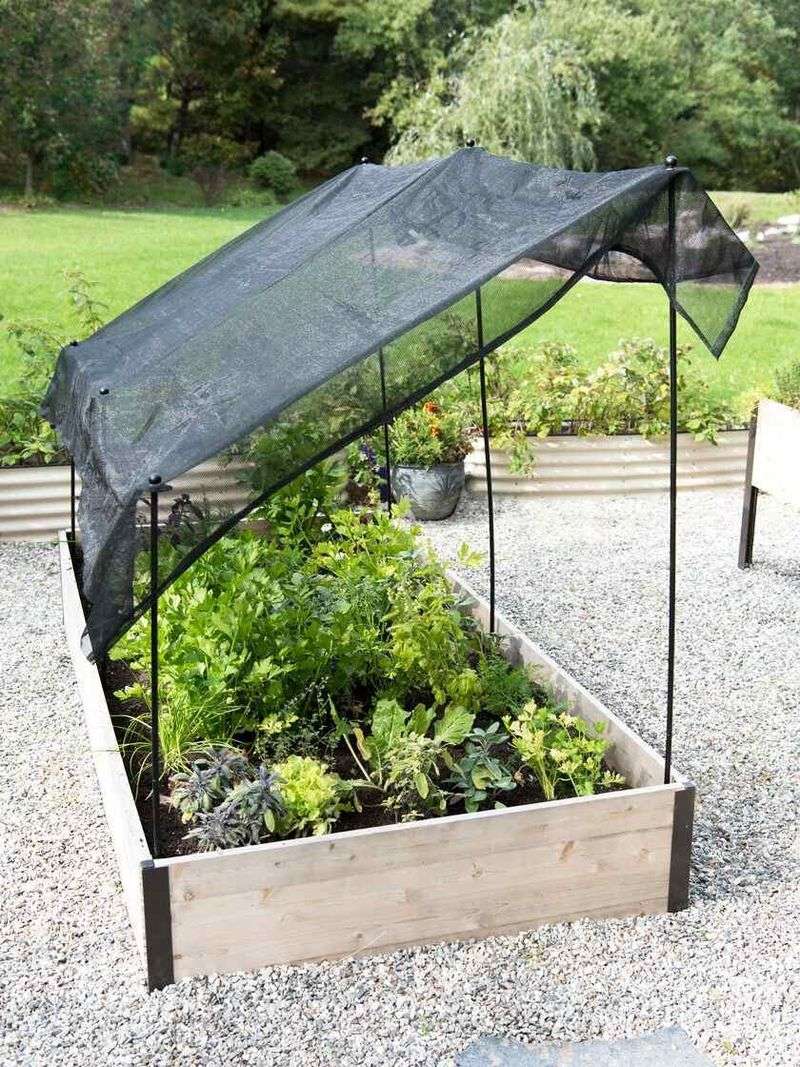
Watering alone cannot lower air temperature, and during a serious heat wave, that is exactly the problem. A few physical strategies can reduce how much heat your pepper plants absorb during the worst part of the day, giving them a slightly better environment for flower retention.
Organic mulch laid 2 to 3 inches deep around the base of each plant is one of the simplest and most consistent tools available. Utah State University Extension recommends mulch as part of maintaining uniform root-zone moisture during hot weather because it slows evaporation and helps buffer soil temperature. Keep it a few inches away from the main stem so it does not hold excess moisture against the base of the plant.
Temporary shade cloth rated at 30 to 40 percent is another option during peak heat. UMN’s heat-gardening guidance suggests this as a short-term measure during extreme conditions. The word “temporary” is doing real work in that sentence. Peppers need full sun to produce well, so leaving shade cloth in place beyond the hottest days can reduce light enough to slow growth and fruiting.
These steps reduce the heat load your plants carry, but they cannot guarantee that blossoms will stop dropping during a prolonged heat event. Think of them as reasonable measures to improve conditions, not as a switch that fixes the problem immediately.
Separate blossom drop from lookalike problems
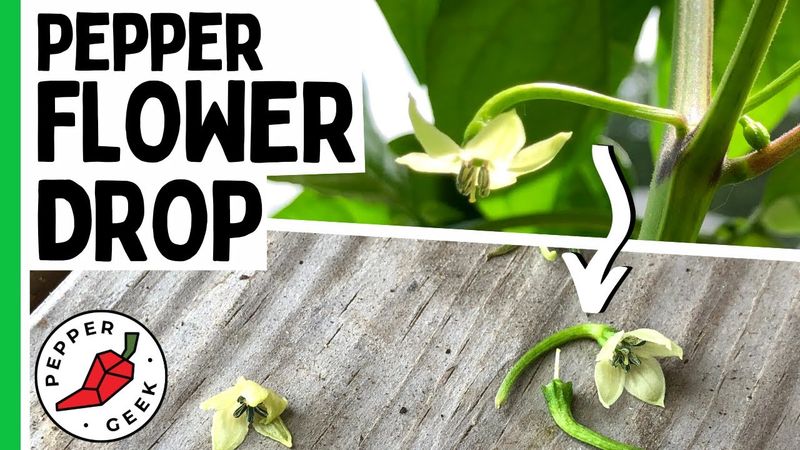
Not every pepper problem that involves flowers or developing fruit has the same cause, and treating the wrong problem rarely helps. Two issues that gardeners sometimes confuse are blossom drop and blossom-end rot, and they are quite different.
Blossom drop means the flower falls off before any fruit begins to form. Blossom-end rot appears later, on a pepper that has already started developing, as a dry, dark, sunken or leathery area on the bottom end of the fruit. Fluctuating water availability can contribute to both, but Utah State University Extension and University of Illinois Extension both caution that calcium additions are not an automatic fix for either condition. Blossom-end rot involves calcium movement into fruit tissue and is commonly tied to inconsistent water management and root function, so adding calcium without a soil test rarely corrects the underlying issue.
Lush green foliage is another detail that sometimes sends gardeners down the wrong path. Excess nitrogen can slow a plant’s transition into fruiting, but heat-related reproductive failure can leave a plant equally green and vigorous because energy is not being diverted into developing fruit. You cannot distinguish between those two situations by looking at the leaves alone.
Variety also matters. Oklahoma State Extension notes that hot and small-fruited pepper types tend to tolerate heat better than bell peppers. One more caution worth keeping in mind: plastic row covers or enclosed tunnels left over flowering pepper plants during summer can trap heat and make conditions significantly worse. Utah State’s row-cover guidance advises removing covers when temperatures under the cover approach 90 degrees F, or when plants begin to flower.
Follow a measured recovery plan
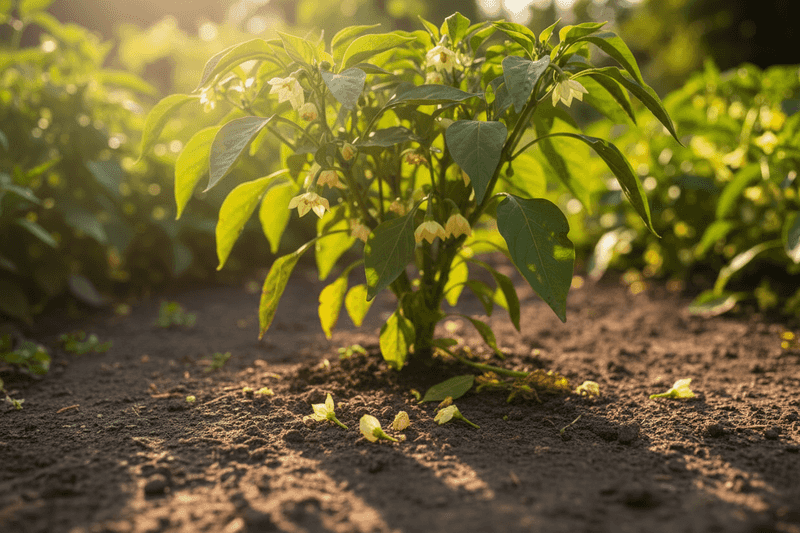
A calm, step-by-step response will serve your plants better than a reactive one. Start by checking the root zone at 4 to 6 inches deep. If it is genuinely dry, water thoroughly at the base and then monitor rather than continuing to add water on a fixed schedule. If it is already moist and blossoms are still falling, heat is most likely the primary issue, and watering more will not change that.
Utah State’s pepper-growing research reassures gardeners that peppers can pause flowering during unfavorable conditions and resume production once temperatures moderate, which is the most realistic timeline to hold in mind. Avoid the impulse to respond with daily soaking, automatic calcium supplements, or extra fertilizer, since none of those address the heat that is driving the problem. UMN’s heat guidance also reminds gardeners that temporary shade cloth and mulch can reduce heat load during the worst days.
Over the coming weeks, watch for new flowers forming and check whether small fruit is beginning to hold on the plant after the heat eases. That is the real sign that conditions have improved. Pepper plants that looked like they had given up in July often surprise gardeners with a strong second flush when late-summer temperatures finally drop back into a comfortable range.