
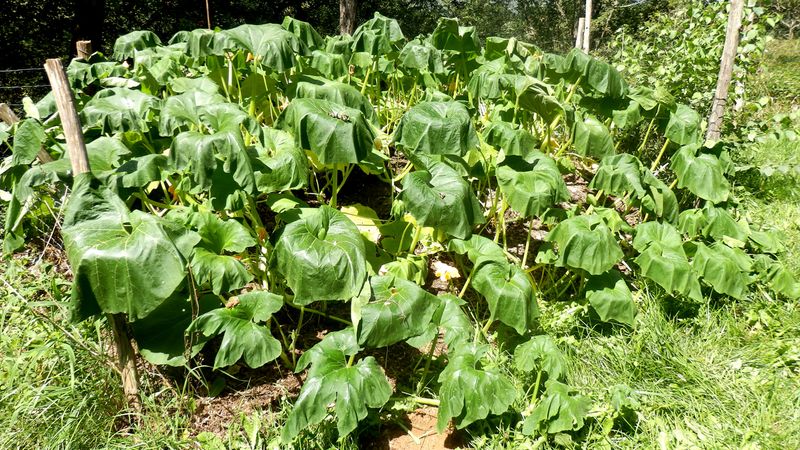
Watching your squash plants collapse in the afternoon heat is enough to make any gardener panic, but drooping leaves do not always mean your plant is thirsty. Squash have enormous leaves that can lose water faster than the roots can replace it during the hottest part of the day, and that temporary wilting often corrects itself by evening.
Before you reach for the hose, there is a simple soil check that can tell you far more than the leaves ever will.
Afternoon wilt is not automatically a watering failure
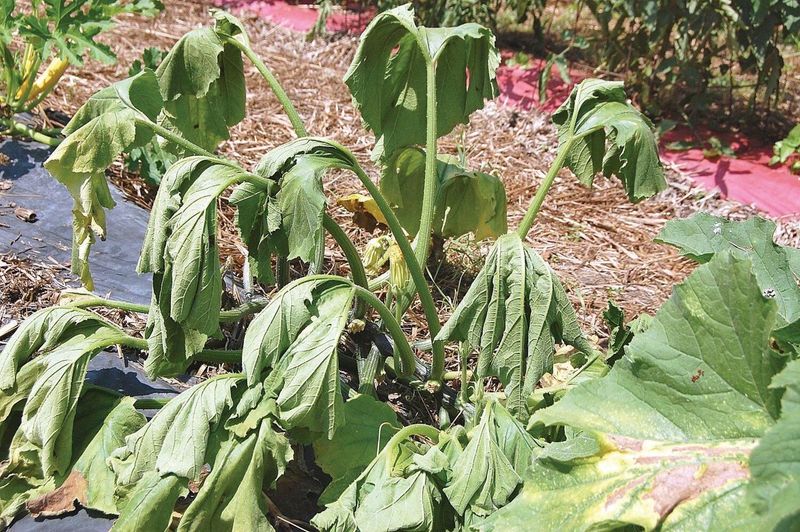
Squash leaves tell a dramatic story at 2 p.m., but the story is not always about thirst. Large-leaved cucurbits can lose water through their leaves faster than the root system can pull it up from the soil during peak afternoon heat, causing a sudden, sometimes alarming droop even when the root zone remains adequately moist.
University of Nevada, Reno Extension guidance on vegetable garden irrigation notes that this kind of temporary wilting is a recognized heat response in large-leaved plants, not automatic proof that irrigation has failed.
Evening or morning recovery is the first clue worth watching. If your squash leaves perk back up once temperatures drop and the plant looks normal the following morning, heat stress is a reasonable explanation.
That pattern does not eliminate every other possible cause, but it shifts the picture considerably compared to a plant that stays limp through the night.
North Carolina Cooperative Extension’s explanation of heat stress versus water needs reinforces that timing and recovery together matter more than the afternoon appearance alone. Soil moisture and the plant’s overall condition, not just the position of the leaves at the hottest hour, are the evidence-based starting points for figuring out what is actually going on.
Check the soil below the surface before turning on the hose
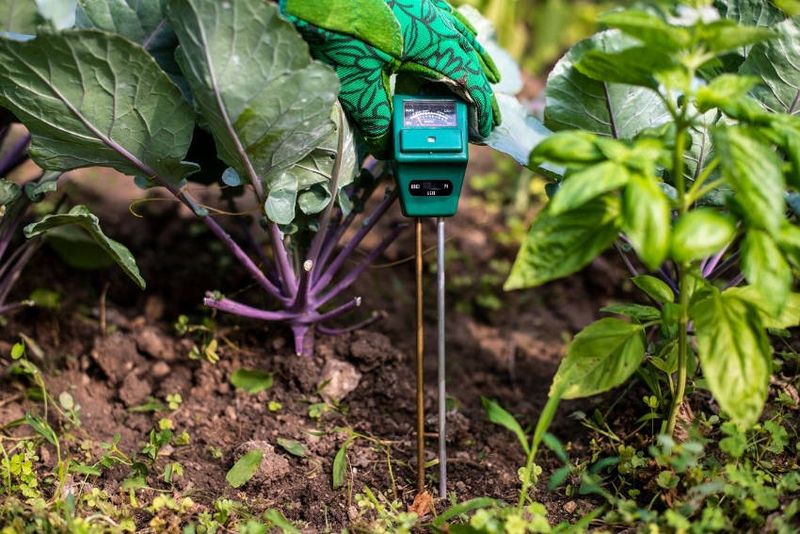
Leaf position at midday is an unreliable guide to what the root zone actually needs. A much more useful habit is pushing a finger or a wooden dowel about two inches into the soil near the base of the plant.
University of Minnesota Extension’s vegetable garden watering guidance recommends checking below the surface rather than relying on how dry the top layer looks or how the leaves are positioned, because surface soil can dry out quickly while the deeper root zone still holds enough moisture.
Moist soil at that two-inch depth, combined with a plant that recovers by evening or the following morning, points toward temporary heat stress rather than a water shortage. Dry soil below the surface, especially when the wilt lingers into the cooler evening hours or the next morning, makes inadequate or poorly delivered irrigation a more likely explanation.
This test has real limits, though. Persistent wilt even after watering, leaves that are crisping or turning yellow, slowing growth, or poor fruit production all suggest the plant’s trend matters as much as a single soil reading.
NCCE’s breakdown of wilting causes encourages gardeners to consider the plant’s overall direction rather than treating any single symptom in isolation. A one-time afternoon droop on an otherwise healthy, productive plant reads very differently than repeated wilt in a plant that is visibly struggling.
Light, frequent sprinkling can leave deeper soil inadequately moist
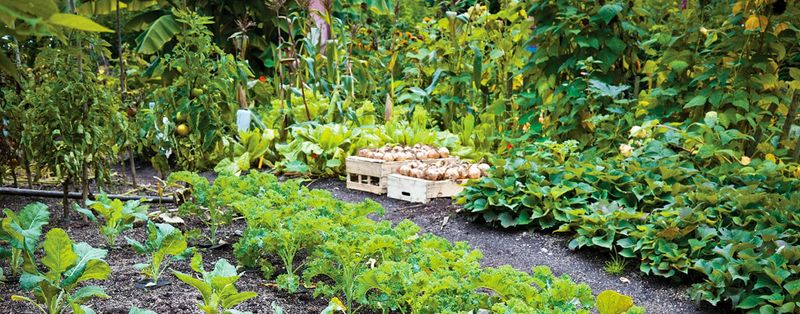
A quick daily sprinkle feels attentive, but it may not accomplish what squash roots actually need. When water is applied in small amounts, it can wet only the top inch or two of soil before evaporating or being absorbed by surface roots, leaving the deeper root zone drier than it appears.
The outcome depends on how much water is applied, the soil type, recent rainfall, mulch coverage, and whether the plants are in the ground, raised beds, or containers, so light sprinkling is not guaranteed to fail in every situation.
University of Georgia Cooperative Extension’s water-conservation guidance for vegetable gardens recommends slow, thorough irrigation that wets the root zone rather than a light daily pass. The practical target for most vegetable gardens is wetting roughly six inches of soil, allowing each increment to soak in before adding more.
Texas A&M AgriLife Extension’s vegetable gardening guide echoes this approach for Texas home gardens, where summer heat can accelerate evaporation and make shallow watering especially ineffective.
Before adjusting how often you water, verify what is actually happening below the surface. If the soil at two inches is already moist, adding more water does not help and can contribute to problems described in a later section.
The goal is a root zone that stays consistently moist, not a surface that looks wet for an hour before drying out again.
Use weekly water ranges as planning tools, not fixed rules
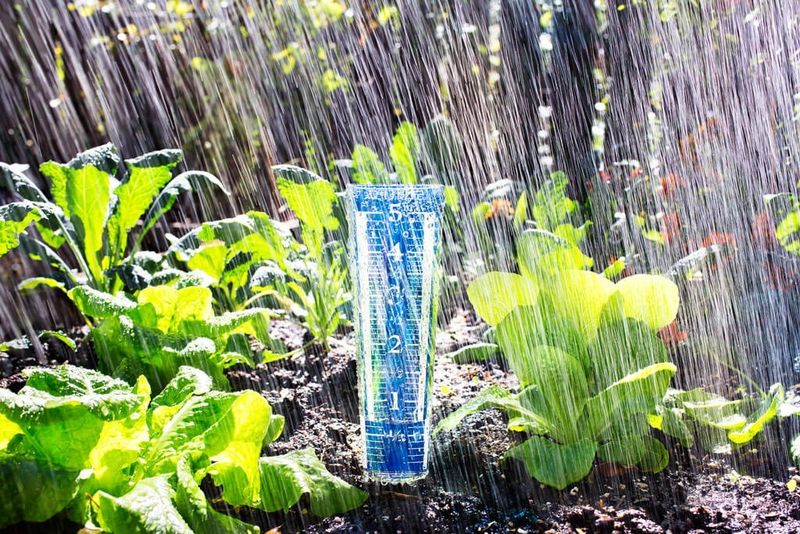
A starting range of roughly one to one and a half inches of water per week, counting both rainfall and irrigation combined, gives established squash growers a useful benchmark. UGA Extension’s squash production guidance and Penn State Extension’s drip irrigation timing resource both treat this as a flexible planning range rather than a fixed weekly prescription.
The actual amount any plant needs shifts constantly with soil type, plant size, crop stage, heat, wind, and how much rain has recently fallen.
A simple rain gauge or a straight-sided container placed in the garden can show how much water the beds are actually receiving from rainfall and irrigation combined. Sandy soils, common across much of Florida and parts of Texas, drain quickly and generally need more frequent watering than clay or loam because they hold less available water between irrigations.
University of Minnesota Extension’s irrigation strategies for vegetables highlights soil texture as one of the most important variables in setting watering frequency.
Containers and raised beds typically dry out faster than in-ground gardens and may need attention more often, especially during heat waves. UF/IFAS Extension’s Florida squash production resource reinforces that rigid schedules are a poor fit for Florida’s sandy soils and variable summer rainfall.
Root-zone moisture and the plant’s recovery pattern, checked by hand, should guide the next irrigation rather than a calendar date alone.
Improve water delivery and manage heat without overwatering
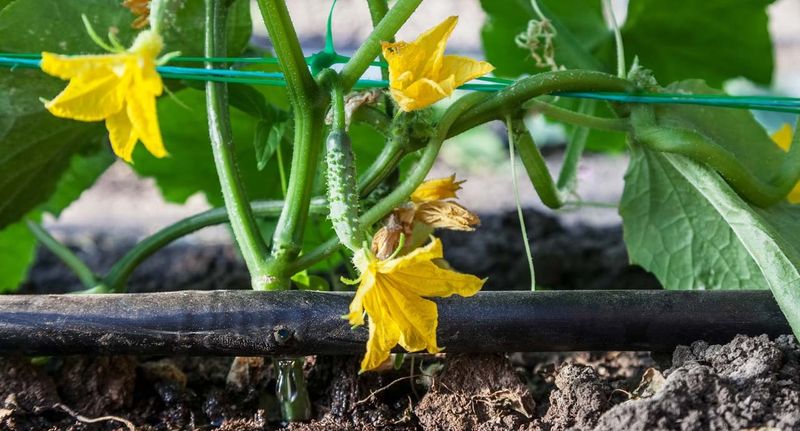
Once you confirm through a soil check that your squash genuinely needs water, how and when you deliver it matters. Morning is the preferred time for routine irrigation, particularly when using overhead sprinklers or hand watering, because leaves have the entire day to dry out and evaporation is lower than during midday heat.
UGA Extension’s vegetable water-conservation guide and Texas A&M AgriLife’s home vegetable gardening guide both recommend morning as the routine default. That said, a plant in genuine drought stress should not be left unwatered just because it is afternoon; the priority then shifts to giving the roots what they need.
Drip irrigation and soaker hoses are generally preferable to overhead watering because they deliver water close to the root zone, reduce evaporation, and keep foliage dry. UF/IFAS Extension’s Florida squash production guidance specifically recommends drip systems for Florida gardens, where overhead irrigation can promote foliar disease in humid summer conditions.
A two-to-three-inch layer of mulch around the base of the plant can meaningfully reduce evaporation and extend the time between irrigations.
When the root zone is already moist and the plant is still drooping in the afternoon, adding more water is not the right response. University of Nevada, Reno Extension notes that temporary shade or a windbreak may reduce heat and wind stress when soil moisture is adequate, offering a possible alternative to irrigation during the hottest hours.
Wet foliage from overhead watering also carries a disease risk, particularly when leaves stay damp for extended periods, so root-zone watering remains the safer routine approach.
Persistent wilt may signal disease or squash vine borer damage
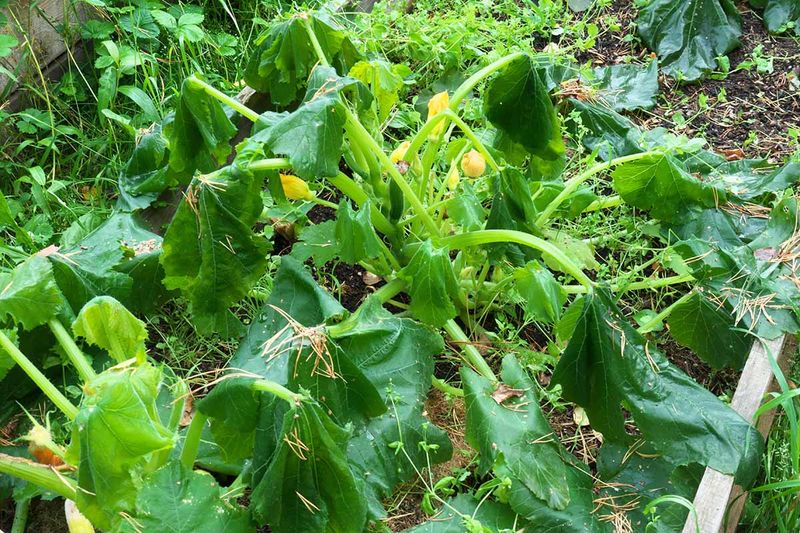
Wilt that does not follow the heat-stress pattern deserves a closer look before you water again. Cucurbit bacterial wilt, spread by cucumber beetles, can cause squash leaves to collapse dramatically during the day and partially recover overnight, especially early in the disease’s progression.
That partial overnight recovery can look deceptively similar to ordinary heat stress, which is why timing alone is not enough to rule disease out.
UMass Extension’s cucurbit bacterial wilt fact sheet and University of Illinois Extension’s bacterial wilt resource describe progressive yellowing, wilt that spreads along individual runners, visible cucumber beetle activity, and eventual permanent collapse as warning signs. Summer squash is generally less susceptible than cucumber or melon, but it can be affected.
University of Maryland Extension notes that once bacterial wilt is established, no amount of irrigation will reverse the damage.
A cut-stem test can offer supporting evidence: slice through a wilted stem, press the two cut ends together, and pull them apart slowly to look for a sticky thread of bacterial ooze. Ohio State University’s bacterial wilt diagnostics page and Iowa State University Extension’s cucurbit bacterial wilt entry both caution that this test is less reliable for squash and pumpkin than for cucumber or melon, and a negative result does not rule disease out.
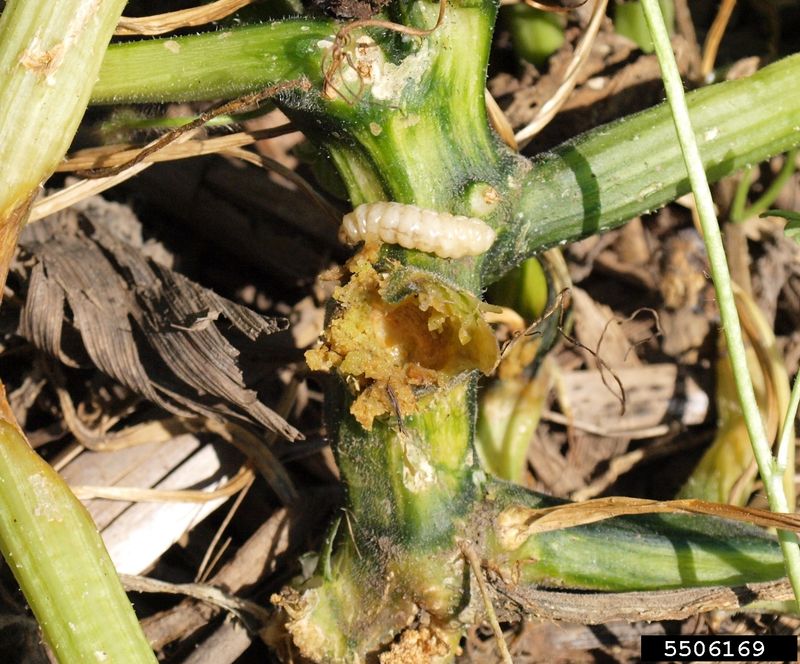
Squash vine borers present a separate concern: small holes near the base of the main stem and sawdust-like frass nearby point toward borer injury rather than a watering problem. When any of these signs appear, the next step is pest or disease investigation, not more irrigation.
Match the recovery pattern to the next action
A simple sequence works better than guessing. Check the soil about two inches below the surface near the plant’s base, then compare how the plant looks at the hottest afternoon hour versus the following morning.
If the root zone is dry and the plant stays limp after temperatures cool, water slowly and deeply enough to wet roughly six inches of soil, letting it soak in rather than running off. University of Minnesota Extension and UGA Extension both point to this kind of root-zone-first approach as the practical standard for vegetable gardens.
When the soil is already moist and the plant recovers on its own each evening, consider whether shade cloth, a temporary windbreak, or added mulch might reduce stress more appropriately than another irrigation. Wilt that persists into morning, spreads along individual stems, or comes with holes and frass near the base of the plant calls for disease or pest investigation rather than more water.
Afternoon wilt is a symptom worth reading carefully, not a reflex command to water. The soil tells a more reliable story than the leaves do at 2 p.m.