
Walking out to your garden and finding a squash plant completely limp can feel like a gut punch, especially when it looked fine the day before. The reflex is to grab the hose, but more water may not be the answer. A sudden-looking collapse during hot weather can trace back to hidden damage that started weeks earlier inside the stem. Before you water or spray anything, a quick inspection can tell you a lot about what you are actually dealing with.
A sudden-looking collapse may hide earlier stem damage
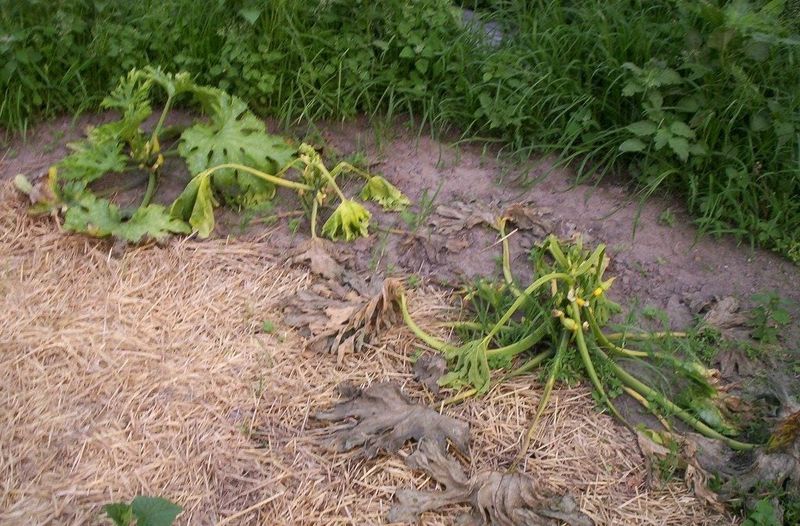
Reaching for the hose the moment a squash plant collapses in heat is a completely understandable reaction, but the wilt you saw this morning may have been building for weeks without any outward sign. Squash vine borer larvae, if present, enter the stem near the crown and tunnel through the vascular tissue that carries water up to the leaves. That feeding can go on quietly for a long time before enough tissue is damaged to trigger a visible collapse.
According to University of Minnesota Extension guidance on squash vine borers, wilting is often the first symptom a gardener notices, and the damage is frequently overlooked until the plant appears to suddenly fail. The word “overnight” describes how the symptom feels, not how long the damage took. A larva working through stem tissue for several weeks can leave the plant at a tipping point where one hot afternoon finally pushes it over.
Zucchini, summer squash, pumpkins, and many winter squashes are most at risk, though susceptibility varies by species and cultivar. That said, squash vine borers are not the only explanation. Heat stress, bacterial wilt, squash bugs, Fusarium wilt, and crown or root diseases like Phytophthora can all produce a similar dramatic wilt. Before you conclude anything, check the soil about 2 inches below the surface to rule out simple dryness, then take a closer look at the base of the plant.
Inspect the crown before you reach for more water
Before watering a wilted squash plant a second time, spend two minutes at the base of the plant. Push a finger into the soil about 2 inches down, right at the root zone. If the soil feels moist at that depth, adding more water will not help and may actually encourage crown rot or other problems. University of Minnesota’s vegetable watering guidance recommends checking moisture at that depth and watering deeply only when the root zone is genuinely dry.
Squash generally benefits from about an inch of water per week, adjusted for weather and soil type.
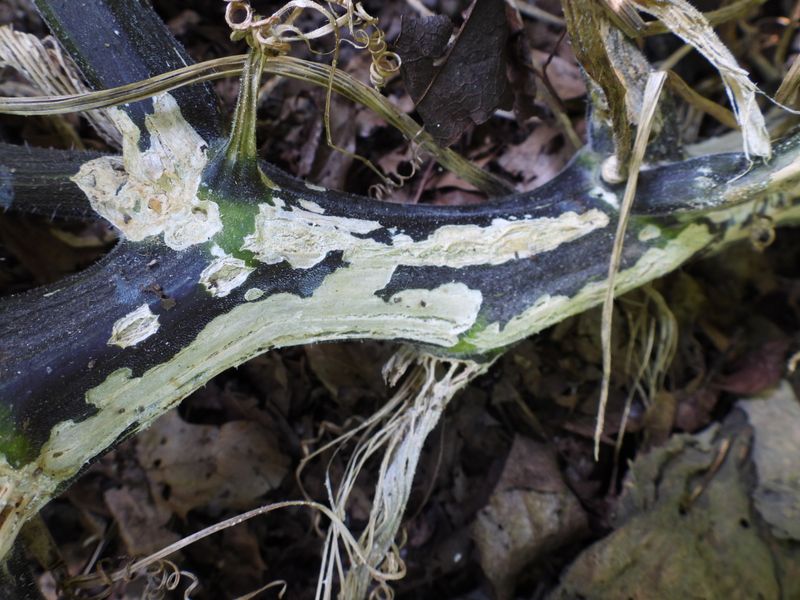
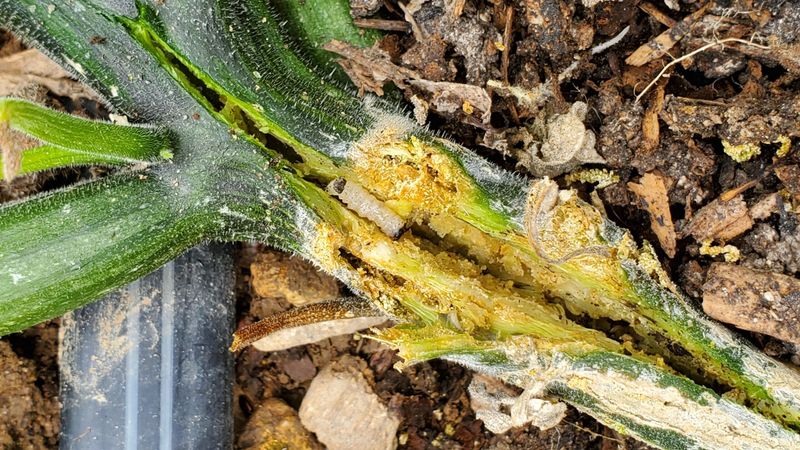
If the soil is already moist and the plant is still limp, shift your attention to the crown and the lower few inches of stem. You are looking for small entry holes, which can be easy to miss, and for frass, the telltale waste material that larvae leave behind. Frass from squash vine borers may look greenish, orange, tan, or sawdust-like, and it often collects right at the entry point or falls onto the soil below the stem.
Moist, mushy tissue or visible decay at the base of the stem also points away from simple heat stress and toward something more serious. The UMN summer squash wilting diagnostic tool reinforces that inspection of the crown and lower stem is a key early step. Watering can correct heat or water stress, but it cannot dislodge or harm a larva already feeding inside a stem.
A careful stem opening can strengthen the diagnosis
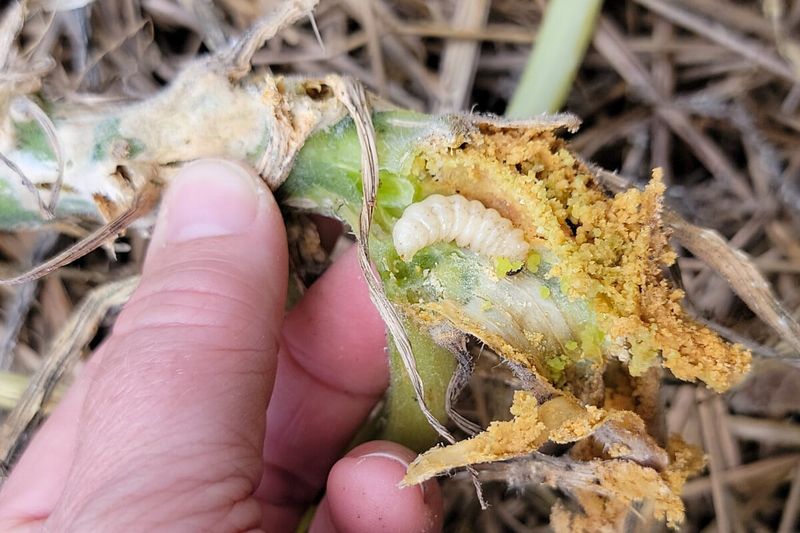
External clues like entry holes and frass can point toward squash vine borers, but they are not proof on their own. Making a careful lengthwise slit in the lower stem can tell you much more. Use a clean, sharp knife and cut slowly along the stem starting just above soil level, stopping when you reach tissue that looks undamaged. What you find inside will help confirm or rule out the diagnosis.
A stem with borer activity may contain feeding galleries, discolored or destroyed vascular tissue, frass packed into the tunnels, or the larva itself. Finding the larva, which is cream-colored, somewhat wrinkled, and can reach about an inch in length, is the clearest confirmation available to a home gardener. University of Wisconsin Extension’s squash vine borer profile describes the larva and the pattern of internal feeding in practical detail. Keep in mind that the stem may contain a mix of damaged and intact tissue rather than a clean, uniformly hollow channel, so look carefully through the full cut section.
If the stem looks healthy inside, with no frass, no galleries, and no larva, borer damage becomes much less likely and the wilt probably traces to heat, water stress, or a disease. UMN’s borer guidance is clear that a strong diagnosis rests on multiple clues together, not on wilt alone. An open stem that shows nothing unusual is useful information too.
Compare heat stress with the main look-alikes
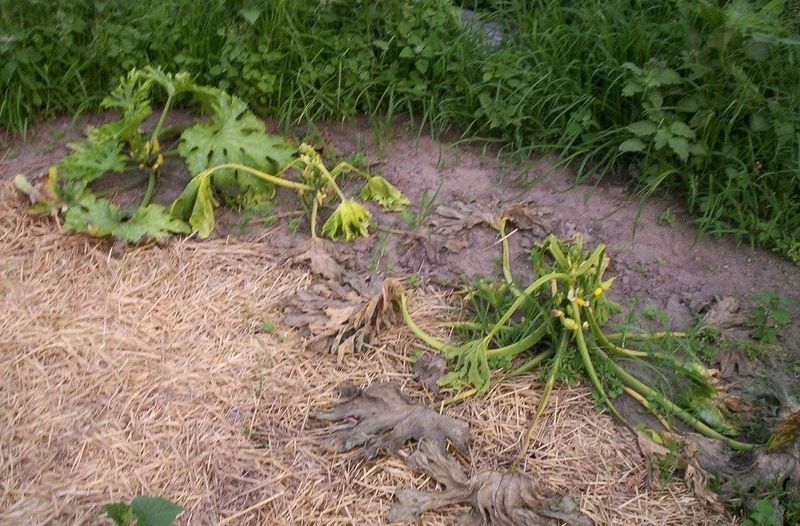
Knowing what you are not dealing with is just as useful as identifying the actual problem. Heat or water stress typically produces wilt during the hottest part of the day, followed by recovery in the evening or early morning once temperatures drop and the plant can rehydrate. Oregon State Extension’s heat stress guide notes that this recovery pattern, combined with dry soil, is a strong indicator of heat or water stress rather than pest or disease damage. If the soil is dry and the plant bounces back after sunset, watering deeply is a reasonable first response.
Morning wilt is more concerning. A plant that is still collapsed after a cool night, especially with moist soil, warrants a close look at the crown and lower stem. UMN specifically flags morning wilt as a signal to inspect more carefully rather than water again. Borer damage can show most clearly in strong sun, so time-of-day behavior alone does not settle the question.
Bacterial wilt is a serious look-alike, spread by striped and spotted cucumber beetles. It causes daytime wilt that may ease at night, particularly in cucumbers and melons. UMN’s bacterial wilt page explains that sticky bacterial strands may appear when a freshly cut stem is pressed together and slowly pulled apart, though the absence of strands does not rule the disease out. UW Extension’s bacterial wilt overview adds that squash and pumpkins are less commonly and severely affected than cucumbers.
Squash bugs are another possibility. UC IPM’s squash bug profile and UMN’s squash bug page both describe yellow speckling, browning, and visible adults, nymphs, or bronze egg clusters on leaf undersides as the typical pattern. Phytophthora blight and other crown or root diseases, more common in wet or poorly drained conditions, can also produce rapid collapse; Barron County Extension’s Phytophthora blight fact sheet points to water-soaked lesions, crown rot, and rotting fruit as distinguishing signs. These clues guide suspicion rather than guarantee any single diagnosis, and UMN’s summer squash growing guide reinforces that multiple causes can look alike in the field.
Try a stem rescue only while the plant remains viable
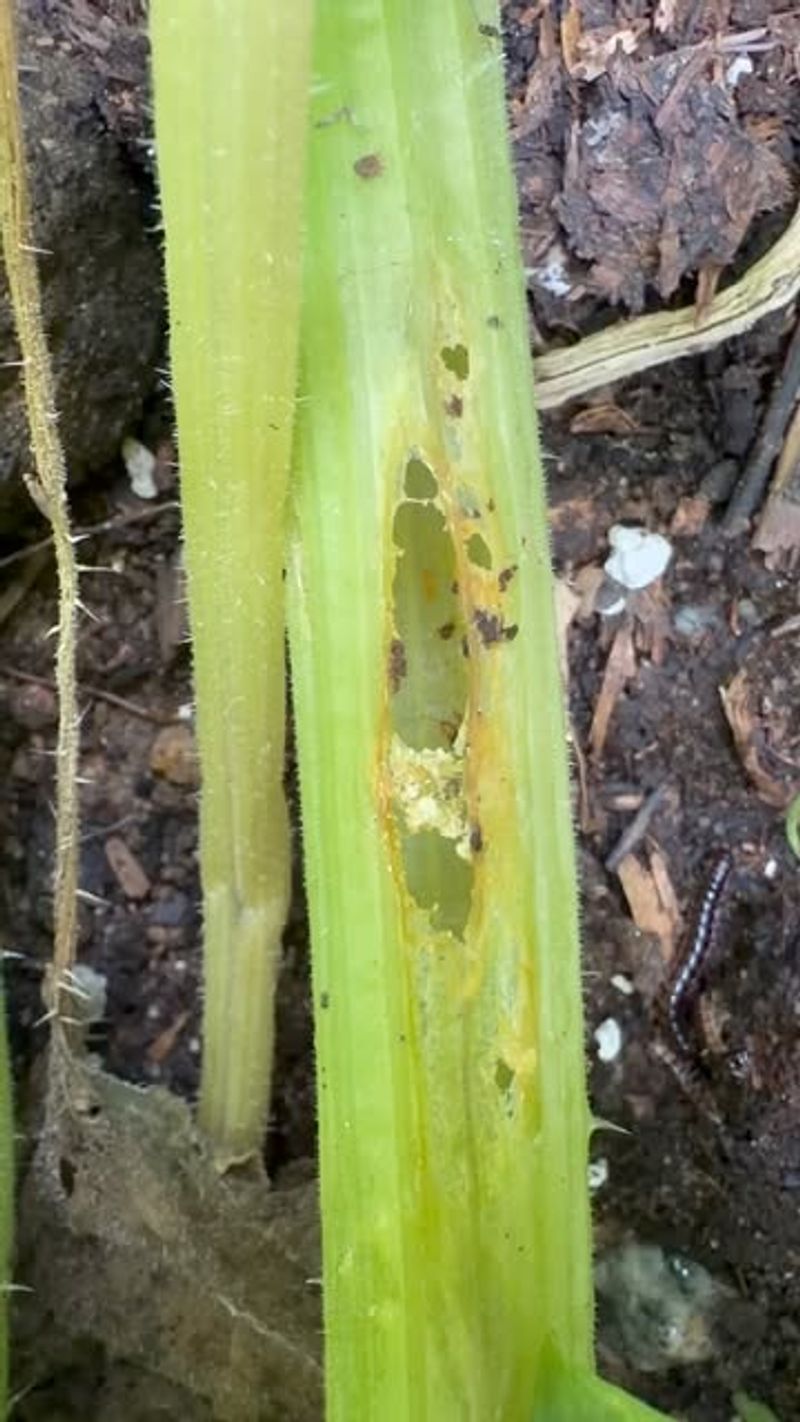
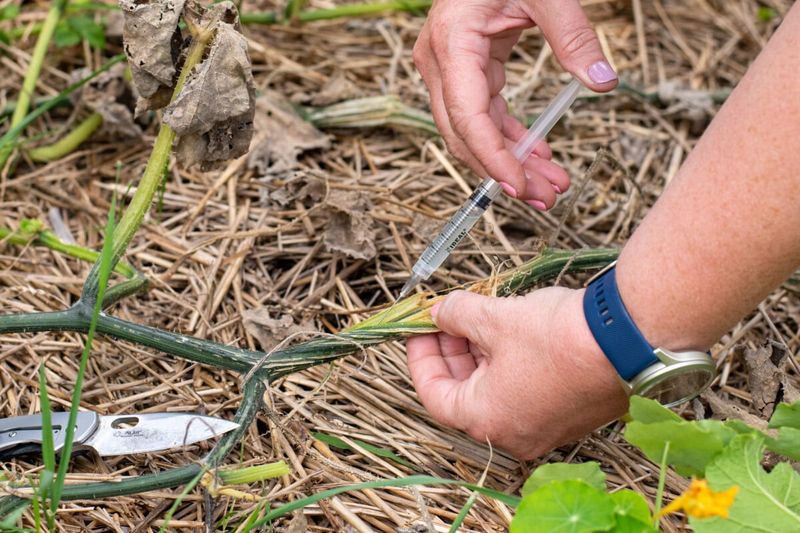
Finding a larva inside the stem does not automatically mean the plant is finished. If the plant still has some firm, green tissue and has not fully collapsed or rotted at the crown, a careful rescue attempt is worth considering. The method described in UMN Extension’s squash vine borer guidance involves making a slow, precise lengthwise slit in the damaged section of stem, locating the larva, and removing it. Work carefully to avoid cutting deeper than necessary.
Once the larva is out, press the stem tissue back together as best you can and cover the damaged section with moist soil, burying it a few inches deep while leaving the growing tip exposed. The goal is to encourage the stem to form new roots along the buried section, which can partially compensate for the vascular damage above. Keep the soil around that section consistently moist in the days that follow.
Be honest with yourself about the plant’s condition before starting. A stem that is already mushy, blackened, or fully separated at the crown is unlikely to respond. Even in a plant that looks salvageable, the rescue can fail, and additional feeding galleries you did not find may finish the job. This is a reasonable attempt for a still-viable plant, not a reliable fix, and some plants will not pull through despite your best effort.
If the plant declines over the next few days regardless, remove it promptly rather than leaving it in place.
Reduce borer risk before larvae enter the stem
Prevention has a much better track record than rescue when it comes to squash vine borers, and the window for effective action is before the adult moth ever lays an egg. The adult is a day-flying clearwing moth that looks strikingly like a wasp, with a reddish-orange abdomen and clear hindwings. It typically becomes active in early to mid-summer and lays flat, reddish-brown eggs singly near the base of susceptible plants. Larvae hatch roughly a week later and tunnel into the stem almost immediately.
Timing your defenses to match adult activity matters more than reacting after wilt appears. UW Extension’s borer profile mentions growing-degree-day thresholds as a regional forecasting tool, around 900 for adult emergence and 1,000 for the peak egg-laying period, but these figures vary by location and year. Pair any degree-day information with local monitoring, such as checking for adults in your own garden or contacting your county extension office, rather than relying on a fixed date.
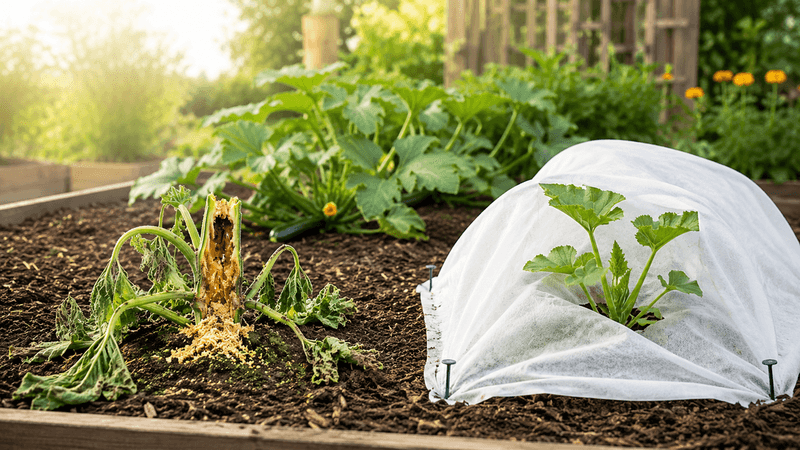
Secured floating row covers placed over young plants before adult activity begins can physically exclude egg-laying moths. UMN Extension notes that covers must be removed when plants begin flowering so bees can reach the blossoms, and that covers are less suitable if cucurbits grew in the same bed the previous season, since overwintering moths may emerge from the soil beneath the cover.
Promptly removing and destroying plants killed by borers reduces the number of larvae or pupae that can overwinter near next year’s planting. Crop rotation helps, though its benefit is limited if neighboring gardens also grow cucurbits nearby. Preventive insecticide applications, when timed to contact adults or newly hatched larvae before stem entry, may reduce risk. Once larvae are inside the stem, most foliar sprays cannot reach them.
Any product decision must start with reading the current label carefully. EPA guidance on pesticide labels makes clear that the label is a legally enforceable document, and federal pesticide registration rules require that use be consistent with label directions. Check crop registration, harvest intervals, state restrictions, and pollinator warnings before applying anything.
Use a symptom-first decision path
When a squash plant collapses in hot weather, the most useful first move is a quick soil check, not an automatic watering or a spray application. Push a finger about 2 inches into the soil at the root zone. Dry soil and a plant that recovers by morning point toward heat or water stress; water deeply if that is what you find, and UMN’s vegetable watering guidance suggests applying enough to wet the full root zone rather than a light surface sprinkle.
If the soil is moist and the plant is still wilted in the morning, move to the crown and lower stem. Look for entry holes, frass, and soft or discolored tissue. Morning wilt with moist soil and no clear heat pattern is the combination that calls for closer inspection, as UMN’s borer guidance emphasizes. Collect at least two or three corroborating clues before cutting the stem open or starting any treatment.
If symptoms fit bacterial wilt, squash bugs, or crown disease better than borer damage, adjust your response accordingly rather than defaulting to a borer fix. Remove dead or dying plants promptly, bag them in the trash rather than composting, and note the location for next year’s crop rotation plan. UMN’s summer squash growing guide is a useful reference for the full range of problems that can affect these crops across a season. A plant that collapses fast deserves a careful look, not a quick fix – the right response depends entirely on what you find at the base of the stem.