
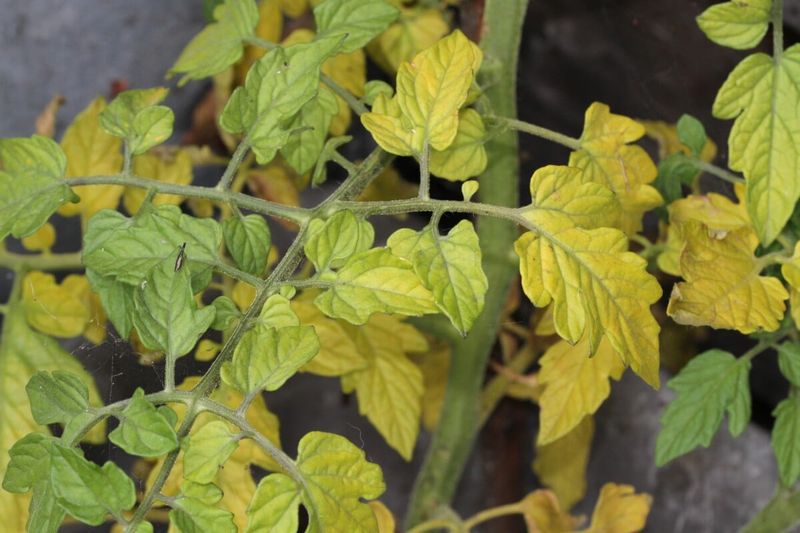
Walking out to your tomato plants and spotting a cluster of yellowing lower leaves can send a gardener straight into problem-solving mode. That bottom-up pattern is a real clue worth paying attention to, but it does not automatically point to one single cause.
Nitrogen deficiency is one possibility, and heat adds its own complications, yet disease, water stress, root trouble, and normal leaf aging can all produce a similar look. Working through the full picture before reaching for fertilizer is the move that actually protects your plants.
Bottom-up yellowing suggests nitrogen deficiency—but does not prove it
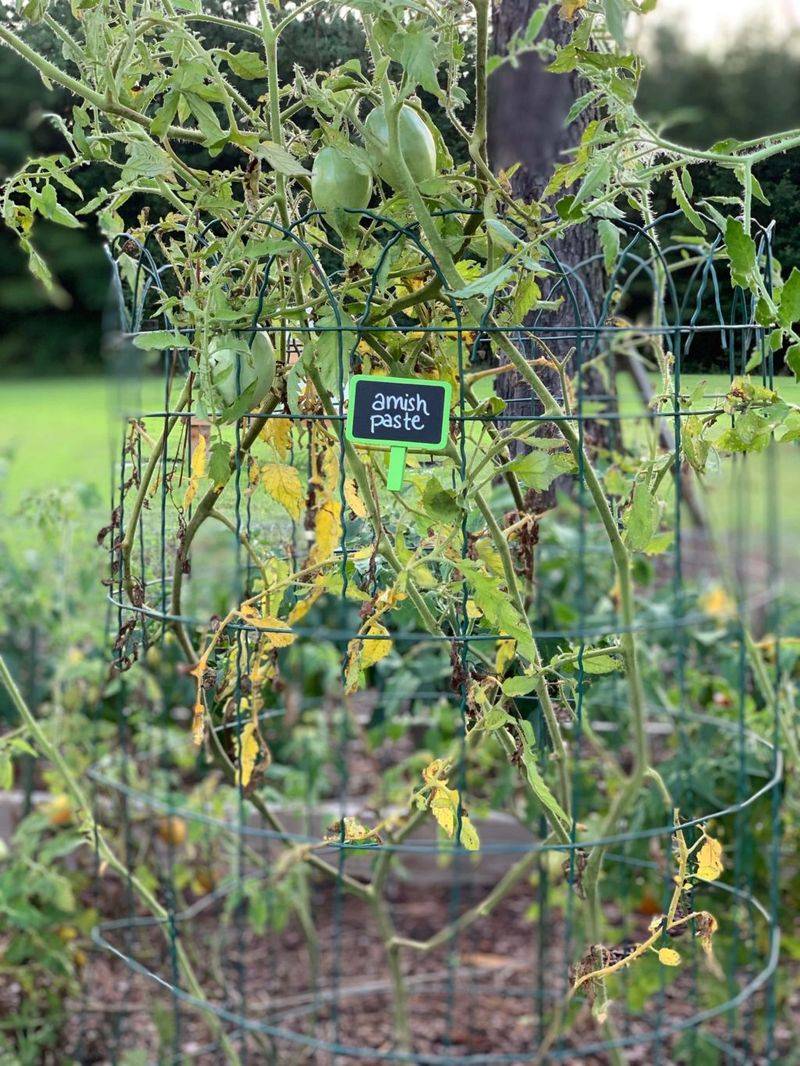
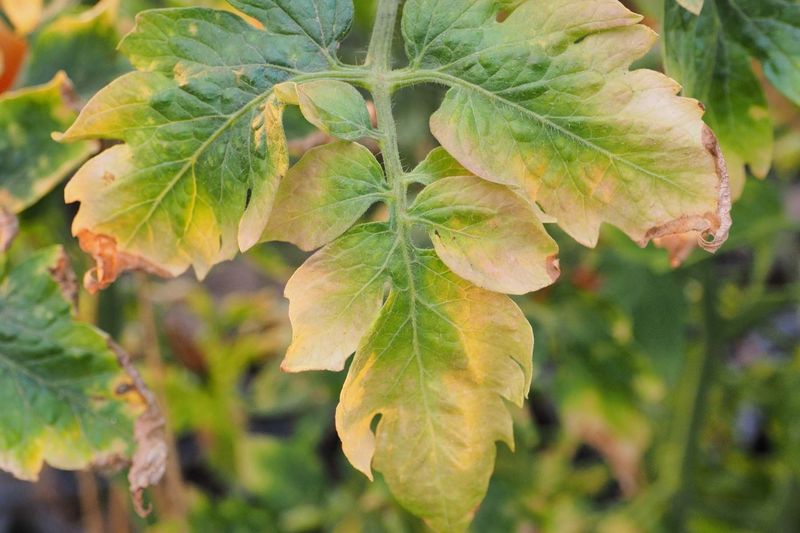
Older, lower tomato leaves turning a fairly even, washed-out yellow is one of the classic signs that a plant may be running short on nitrogen. The reason comes down to how nitrogen moves inside the plant: because it is a mobile nutrient, the tomato pulls it from older foliage and sends it toward the newer leaves and developing fruit where growth is most active.
University of Georgia Cooperative Extension guidance on tomato cultural problems describes this upward-moving yellowing as a key marker of nitrogen deficiency, and extension programs in Minnesota, Florida, and Oklahoma note the same pattern.
The supporting clues matter as much as the yellowing itself. A nitrogen-short plant often looks pale all over, grows more slowly than expected, produces thin stems, and may set fruit that stays small or develops poorly.
When those whole-plant signals line up alongside the lower-leaf color change, nitrogen deficiency becomes a reasonable working hypothesis.
A vigorous plant that is flowering well and setting a solid crop tells a different story, even if a few bottom leaves are fading. Shaded inner leaves naturally age and drop as the canopy fills in, and that process needs no fertilizer response.
UC ANR guidance on tomato leaf yellowing notes that lower leaves on otherwise productive plants may simply be senescing normally. The symptom opens an investigation, not a prescription.
Heat changes the plant’s demands, not the diagnosis
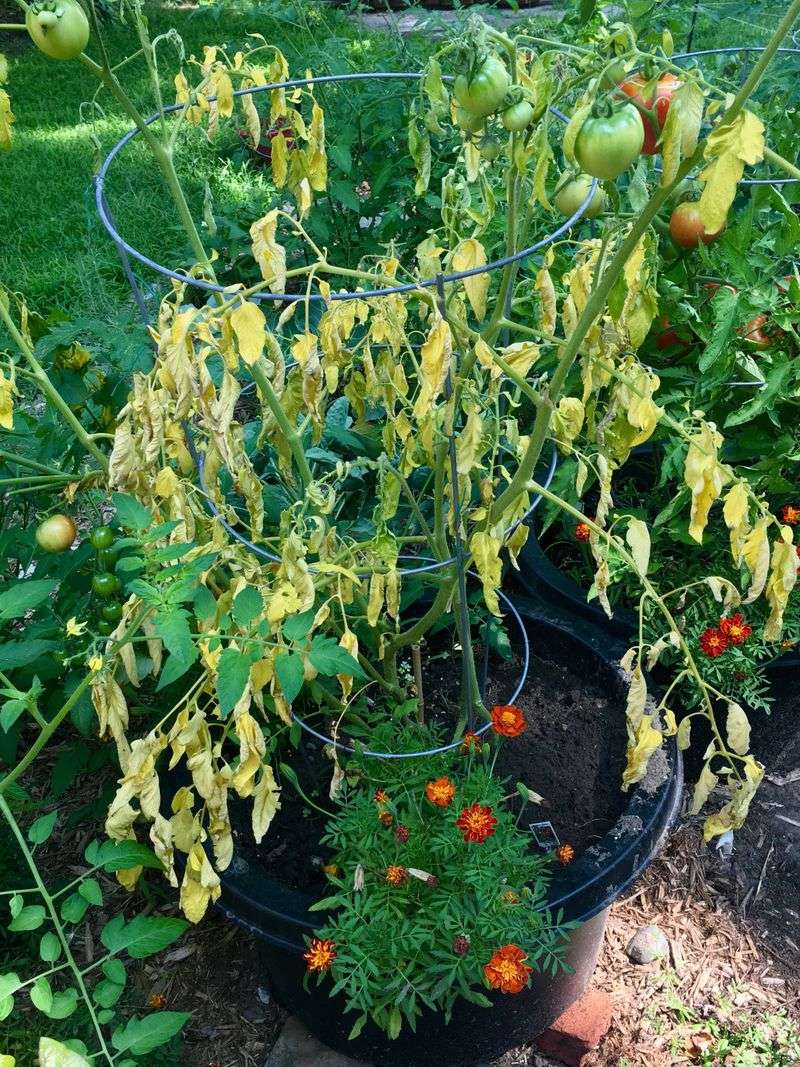
Late-summer heat puts real pressure on tomato plants, but the symptoms it produces are not the same as those caused by nitrogen deficiency. University of Minnesota Extension heat-stress guidance describes the most common heat responses as wilting, inward leaf curl, flower drop, stalled fruit set, tip scorching, and fruit-quality problems like poor color or soft spots.
Those are heat’s fingerprints, not nitrogen’s.
Hot weather does increase the plant’s water demand, and that higher demand can ripple into nutrient uptake. When roots are stressed by drought or inconsistent watering during a heat wave, the plant absorbs less of everything, including nitrogen.
That interaction can make a water problem look like a fertilizer problem if you only check the leaves.
Temperature alone cannot tell you whether the soil is low in nitrogen. A gardener who sees yellowing lower leaves on a hot August afternoon and immediately assumes the plant needs fertilizer is skipping several diagnostic steps.
Minnesota Extension’s tomato-growing guide emphasizes evaluating the full set of symptoms and growing conditions before making any fertility decision. The season is context, not a diagnosis.
Compare the leaves for look-alike patterns
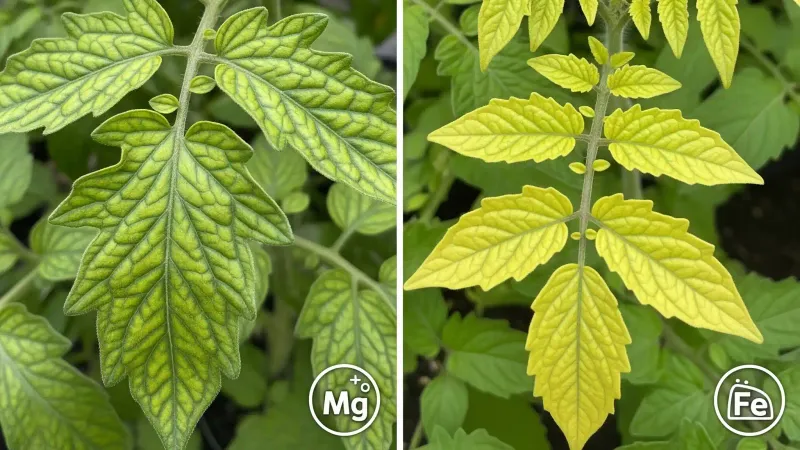
Not every yellow leaf tells the same story, and reading the pattern carefully can save you from treating the wrong problem. Uniform yellowing across the whole leaf blade, starting on older lower leaves and moving upward, fits the nitrogen picture.
But if the yellowing sits between the veins while the veins themselves stay green, that interveinal pattern points more toward magnesium or another nutrient issue rather than a nitrogen shortage. Cornell University’s tomato nutrient disorder diagnostic key lays out these distinctions clearly and is a useful reference before you buy anything.
Brown or scorched leaf margins shift the suspect list again. That edge-browning pattern can involve potassium deficiency, salt injury from overfertilizing, drought, or certain diseases, and Minnesota Extension’s fertilizing guide cautions against assuming a single nutrient is responsible without checking other factors.
Adding nitrogen to a plant with a salt or drought problem makes things worse, not better.
Yellow spots, brown lesions, or yellowing paired with wilting are the signals that push the investigation away from fertilizer entirely. Early blight starts as dark spots with yellow halos on lower leaves.
Fusarium wilt and Verticillium wilt can both cause lower-plant yellowing that mimics nutrient deficiency before other symptoms appear. University of Florida IFAS guidance on tomato diseases identifies these diseases as common sources of lower-leaf decline.
One-sided yellowing, symptoms confined to a single branch, or rapid spread across the plant are all reasons to look hard at disease rather than reaching for a fertilizer bag.
Check moisture and roots before applying fertilizer
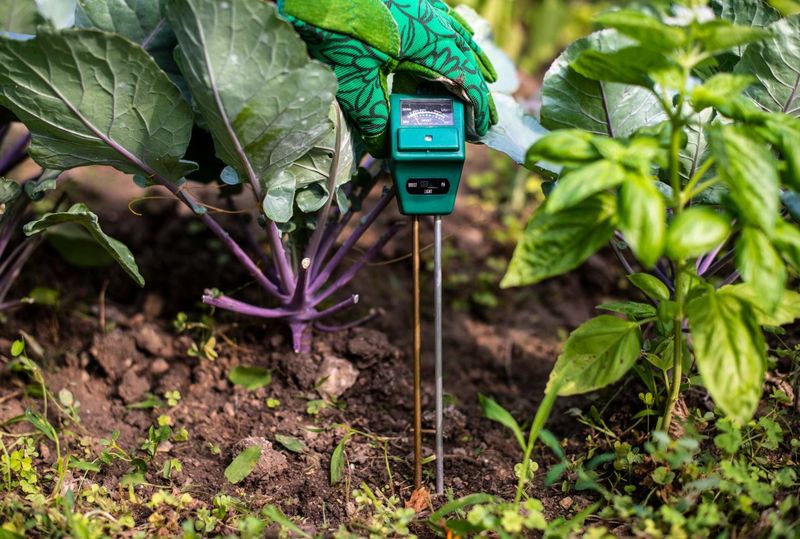
Before anything else goes into the soil, check what the root zone is actually doing. Dry, cracked soil around the base of a tomato plant is an obvious flag, but waterlogged or consistently soggy soil is just as damaging and easier to miss.
Both extremes reduce the plant’s ability to absorb nutrients, including nitrogen, even when those nutrients are present in adequate amounts. What looks like a deficiency on the leaves may be a delivery problem at the roots.
Minnesota Extension’s tomato-growing guidance recommends watering deeply at the root zone rather than repeatedly wetting the foliage. Shallow, frequent watering encourages roots to stay near the surface where they are most vulnerable to heat and dry spells.
Deep, consistent watering builds the kind of root system that keeps absorbing nutrients through late summer.
Root damage from compaction, nematodes, or previous disease can also mimic nutrient deficiency symptoms on the leaves. If the soil moisture seems reasonable but the plant still looks off, gently examine the root zone for discoloration, girdling, or unusual softness.
In Florida and other areas with sandy soils, heavy rain or overirrigation can flush nitrogen downward through the profile, making leaching a genuine contributor to deficiency in those settings. That is a soil-type and irrigation issue, not a heat issue, and correcting the watering pattern matters as much as any fertilizer application.
Use testing and garden history to guide fertilizer decisions
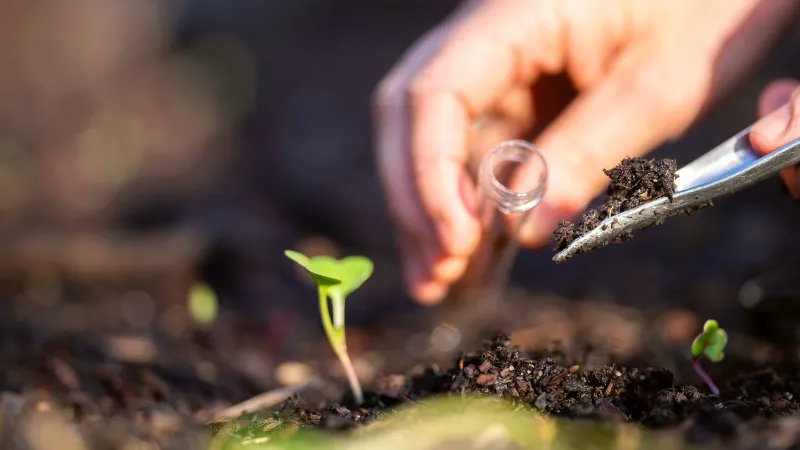
A soil test is the most reliable tool a home gardener has for deciding whether fertilizer is actually needed and, if so, how much. It measures what is already in the ground, which means you are making decisions based on real data rather than guessing from leaf color alone.
Minnesota Extension’s fertilizing guide frames a soil test as the starting point for any rational fertility program, not as a confirmation of what you already suspect.
That said, a soil test does not independently prove that yellow leaves mean nitrogen deficiency. Test results need to be read alongside the full picture: the plant’s symptoms, how consistently the soil has stayed moist, what fertilizers were applied earlier in the season, how much organic matter the bed contains, recent rainfall or irrigation, and where the plant is in its growth cycle.
A soil that tests low in nitrogen but belongs to a plant that is setting fruit heavily and growing vigorously may simply be cycling nutrients efficiently.
When symptoms are severe, the plant is particularly valuable, or a reasonable correction fails to produce any visible improvement, tissue testing adds another layer of precision. University of Florida IFAS guidance on plant tissue analysis explains how tissue testing can identify deficiencies that soil tests miss, especially when root uptake problems are involved.
Your county extension office can guide you toward the right lab and help you interpret results in the context of your specific soil and crop.
Apply a restrained correction only when the pattern fits
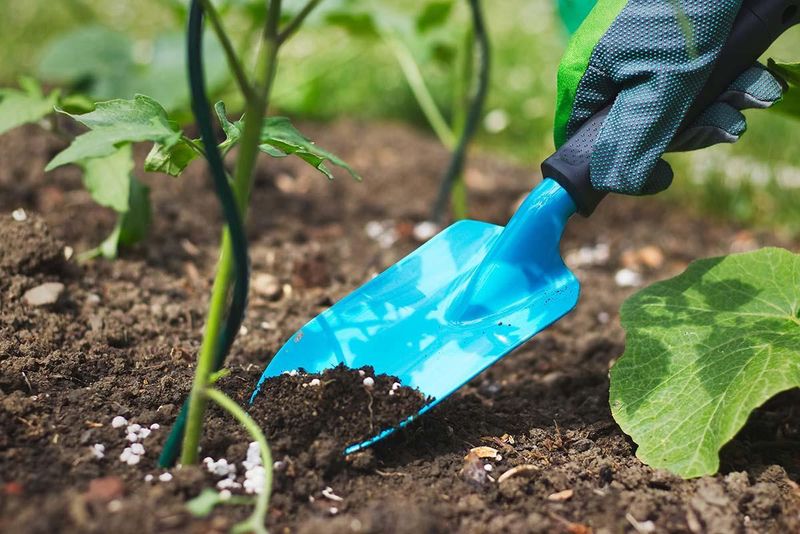
When the evidence actually lines up, a measured fertilizer application is a reasonable next step. The pattern that justifies action looks like this: older lower leaves turning fairly uniformly pale yellow, the yellowing moving upward over time, the plant looking generally thin or slow, new growth that started out greener than the older leaves, and no stronger explanation from moisture, root condition, alternate nutrient patterns, or disease symptoms.
That combination makes nitrogen deficiency a plausible working diagnosis.
Without a soil test in hand, the safest move is a cautious, label-rate application of a complete vegetable fertilizer or a nitrogen source formulated for garden use. UGA Cooperative Extension’s guide to nutritional deficiencies in vegetables reinforces that application rates should follow product directions rather than intuition, and that more is not better when the diagnosis is uncertain.
A conservative rate corrects a real deficiency without creating a new problem.
Soluble fertilizers move into the root zone faster than granular slow-release products, which can matter late in the season when time is short. Minnesota Extension notes that diluted soluble fertilizer may begin to green a nitrogen-deficient plant within roughly a week, though that timeline is variable guidance rather than a guarantee.
Soluble products are also easier to overapply, so mixing to label strength and stopping there protects the plant from salt stress while still giving the correction a fair trial.
Avoid turning a suspected deficiency into excess
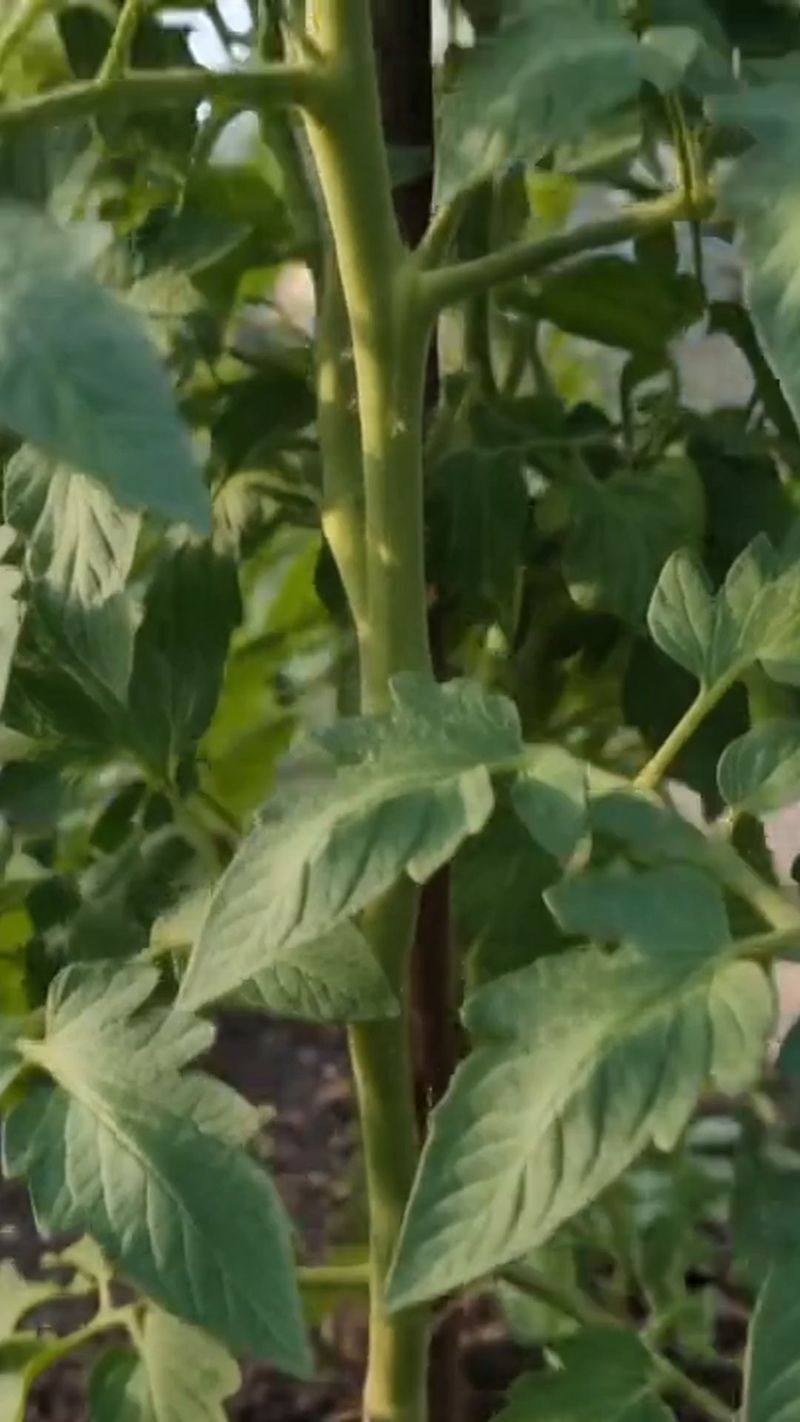
Fertilizer is a targeted tool, not a general rescue for any plant that looks off. Nitrogen deficiency produces pale, thin, slow-growing plants with fading older leaves.
Nitrogen excess produces the opposite: dark, dense, overly leafy plants that put their energy into stems and foliage rather than flowers and fruit. A plant that gets too much nitrogen may look impressively green while producing almost nothing worth harvesting.
Heavy applications also carry physical risks. Excess fertilizer salts can burn roots, increase water stress, and make it harder for the plant to absorb other nutrients it needs.
UGA Cooperative Extension’s Georgia homegrown tomatoes guide specifically warns that excess nitrogen can delay flowering and fruiting and contribute to disrupted plant growth and water relations. That disruption matters because it connects directly to one of late-summer tomato gardening’s most frustrating problems.
Blossom-end rot is a useful example of how fertilizer decisions ripple through the plant. The dark, sunken spot on the bottom of developing fruit is linked to disrupted calcium movement, but adding calcium spray is not a reliable fix on its own.
Minnesota Extension’s tomato disorders guide points to inconsistent water availability, root damage, and excessive nitrogen as factors that interfere with how calcium moves into fruit. Keeping irrigation steady and avoiding heavy nitrogen applications protects the crop far more reliably than any spray treatment after the fact.
Follow a diagnosis-first decision path
Working through a short checklist before acting keeps a manageable leaf problem from turning into a fertilizer mistake. Start at the leaves: is the yellowing fairly uniform across the leaf blade, and does it begin on the oldest, lowest leaves?
Then look at the whole plant: is new growth staying relatively green, and does the plant seem pale, thin, or slower than it should be at this point in the season? A vigorous plant with a few fading lower leaves in a shaded part of the canopy may need nothing at all.
UC ANR’s tomato yellowing resource reinforces that normal senescence of shaded lower leaves does not require a fertilizer response.
Next, check the root zone for moisture and any signs of physical damage, then scan the leaves carefully for interveinal patterns, brown margins, spots, lesions, or wilting that point toward a different nutrient issue or disease. If disease symptoms appear or the decline is rapid, one-sided, or spreading unevenly, Florida IFAS disease guidance recommends investigating the disease pathway rather than adding nitrogen.
Use a soil test when you can, and follow its recommendations alongside the product label. Minnesota Extension’s fertilizing guide is a practical reference for matching test results to application decisions.
A diagnosis-first approach costs very little time and consistently produces better outcomes than reflexive fertilizing.