
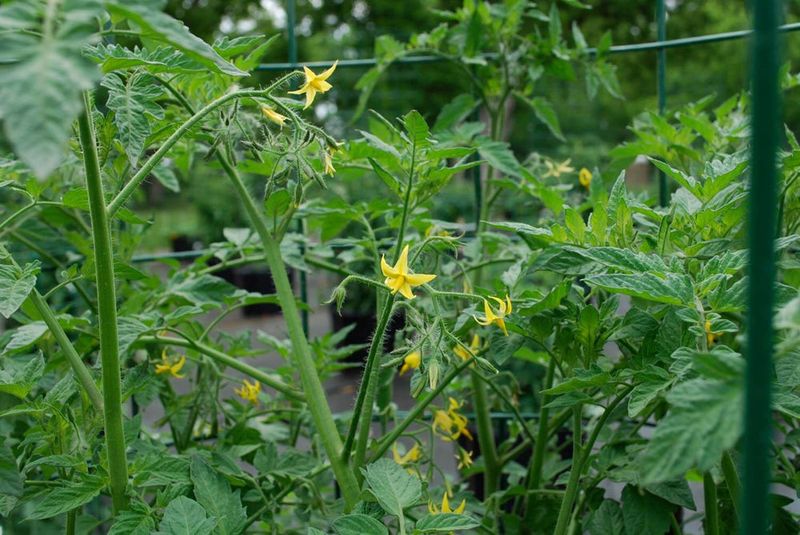
Few things are more frustrating than watching a tomato plant shoot up lush and green all summer while the fruit tray stays empty. Before you grab another bag of fertilizer, it helps to know that several things can keep tomatoes from setting fruit, and the fix depends on which one is actually happening. Heavy nitrogen feeding is one real possibility, but temperature swings, pollination problems, and uneven watering can cause the same symptom. A careful look at your plant’s flowers, feeding history, and recent weather will point you toward the right answer.
Tall, bushy growth does not diagnose the problem
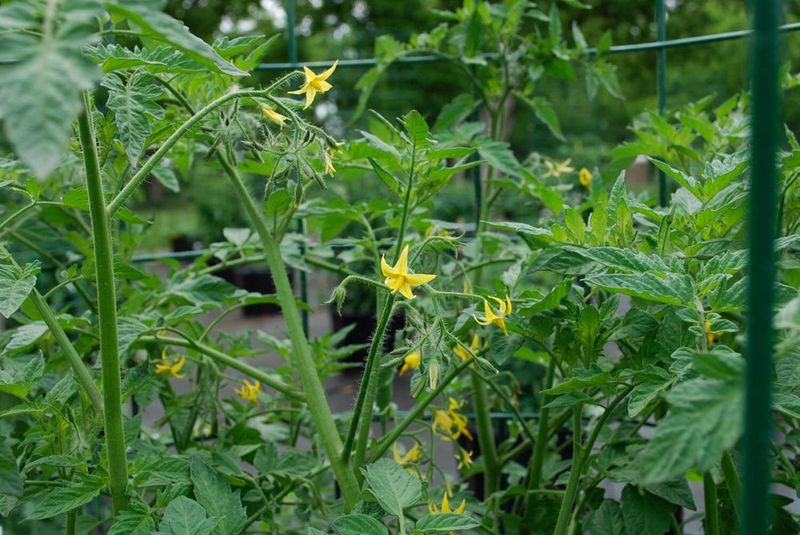
Many gardeners see a towering tomato plant and immediately suspect overfertilization, but the plant’s size alone tells you surprisingly little. Indeterminate tomato varieties, which include popular types like Big Boy, Cherokee Purple, and most heirlooms, keep producing new stems, leaves, flowers, and fruit from planting until frost. University of Minnesota Extension’s tomato growing guide notes that indeterminate vines can reach several feet in length and continue growing throughout the season as part of their normal habit, not as a sign of a problem.
Some cultivars are simply more vigorous than others, and a young plant that has not yet reached flowering maturity will look all green no matter how carefully you feed it. A plant that went into the ground six weeks ago may just need more time before its first flower cluster appears. Growth habit, cultivar, and plant age are all worth ruling out before you conclude that fertilizer is to blame.
Excess nitrogen becomes a more reasonable suspect when unusually lush growth coincides with a history of repeated high-nitrogen feeding and delayed or absent flowering. Oregon State University Extension’s tomato guide reinforces that the combination of symptoms and feeding history matters. Gather the evidence first: what variety are you growing, how old is the plant, are flowers forming at all, are flowers forming and then dropping, and what fertilizers or organic amendments have you applied?
How excess nitrogen can favor leaves over fruit
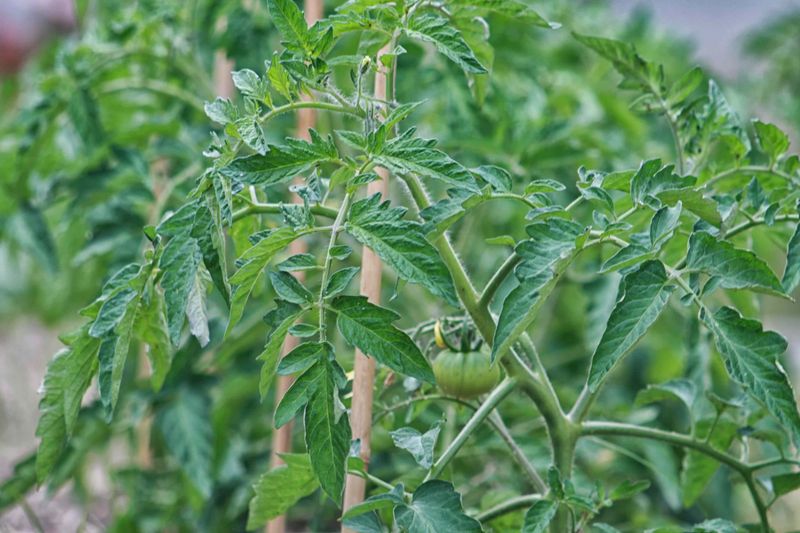
Nitrogen is the nutrient most responsible for leafy, green growth in plants. When a tomato receives more nitrogen than it can channel into reproductive growth, it tends to put that energy into stems and leaves instead. University of New Hampshire Extension’s tomato fact sheet describes this pattern directly, explaining that high nitrogen can cause vines to grow excessively large at the expense of fruit production.
The feeding habits worth auditing are specific ones: applying a nitrogen-heavy fertilizer more often than the label recommends, using a product with a very high first number on the N-P-K label throughout the growing season, or adding substantial amounts of fresh manure or compost without accounting for the nitrogen those materials release over time. A UNH Extension resource on vegetable fertility notes that heavy nitrogen fertilization into summer can produce all vine and no fruit, and that slow-release products or heavy manure applications can delay fruit development in a similar way.
Nitrogen itself is not the villain. Tomatoes need it throughout the season, and a plant running short later in summer will show yellowing on its older leaves and reduced yields, as Colorado State University Extension’s tomato guide makes clear. The diagnosis depends on the combination: repeated heavy feeding plus unusually lush growth plus delayed fruit. When those three things line up, the feeding habit becomes a strong candidate worth addressing.
The flowers tell you which cause to investigate
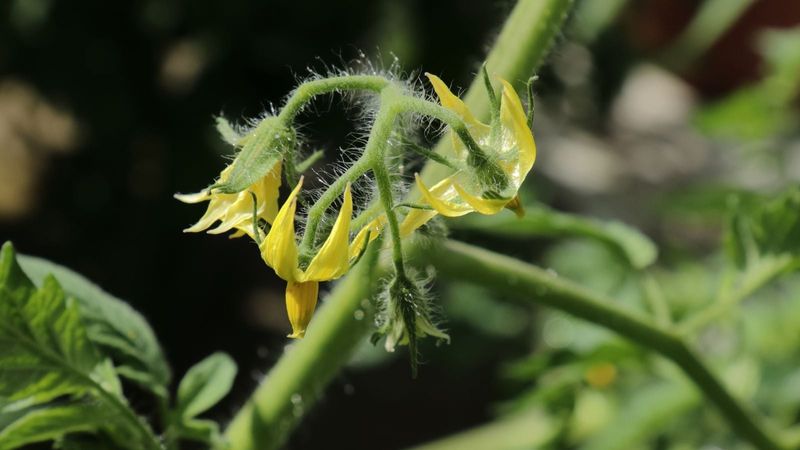
Before adjusting any fertilizer, spend a few minutes at the plant and look at what the flowers are doing. That observation will split your diagnosis into two very different directions. A plant with no flower clusters at all points toward nitrogen excess, plant immaturity, or variety behavior. A plant that produces flowers but loses them before fruit forms points much more strongly toward temperature, pollination conditions, or general stress.
Cool nights are one of the more common culprits for flower drop. Penn State Extension’s heat stress guide and University of Illinois Extension’s tomato page both identify night temperatures near or below 55 degrees Fahrenheit as a condition that can interfere with pollen development and prevent fruit set. On the opposite end, sustained heat can be just as disruptive. University of Minnesota Extension’s guide on heat in the vegetable garden identifies sustained temperatures above roughly 85 degrees Fahrenheit during the day and 70 degrees at night as conditions that can reduce pollination and cause healthy-looking plants to abort their flowers entirely.
Humidity, wind, root injury, drought, and general stress can all contribute to blossom drop as well, according to Missouri Extension’s research on the topic. In a greenhouse or very sheltered setting, gently shaking flower clusters can help move pollen between blossoms, but that is a secondary step. Correcting heat stress, uneven moisture, or excessive nitrogen feeding will do more for fruit set than any mechanical pollination technique.
Pause extra nitrogen while you audit the soil
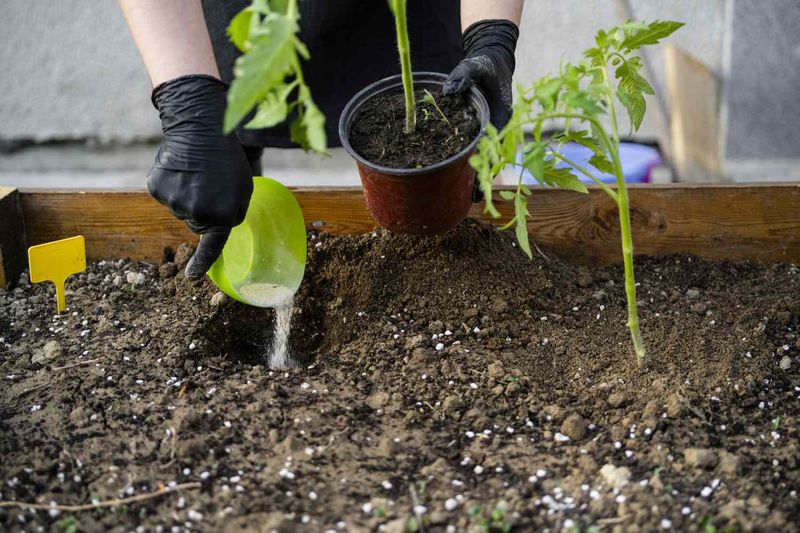
When a tomato plant is unusually leafy and you have a history of heavy nitrogen feeding, the most sensible immediate step is to stop adding more nitrogen for now. Reaching for another fertilizer product to counteract the first one rarely helps and can make the situation harder to read. Minnesota Extension’s growing guide recommends low- or no-phosphorus fertilizer for tomatoes unless a soil test specifically calls for more, which is a reminder that adding products without evidence can create new problems.
While you pause, do a full audit of everything you have already applied: check the N-P-K label and the application rate on every product you used, note how often you fed the plant, and account for any compost, manure, or slow-release granules that are still releasing nutrients into the root zone. Minnesota Extension’s fertilizing guide explains that organic materials and slow-release products contribute nitrogen over time, so a plant can be receiving more than you realize even if you stopped adding liquid fertilizer weeks ago.
A soil test can help fill in the picture for pH, phosphorus, potassium, and overall fertility. Penn State Extension’s soil testing resource and Minnesota Extension’s guide to interpreting soil tests for vegetables both note that nitrogen availability changes quickly and cannot be measured as precisely as other nutrients in a standard home-garden test, but the other results still guide smarter decisions. Treat the pause as an evaluation window, not a permanent ban on feeding. Combine test results, observed symptoms, prior inputs, and product label directions before you resume or change your fertilizer approach.
Do not chase poor fruit set with a bloom booster
Reaching for a high-phosphorus bloom booster is a tempting move when tomatoes are not setting fruit, but it is one of the more common overcorrections. Phosphorus supports root development and reproductive growth, but adding it to soil that already contains adequate phosphorus does not reliably trigger flowering or fruit set. Colorado State University Extension’s soil management guide explains that many established garden soils already have sufficient phosphorus, and excess can contribute to nutrient imbalances and environmental runoff problems.
Epsom salts, eggshells, and calcium sprays are three other products that frequently appear in tomato troubleshooting threads but rarely address the actual problem. Minnesota Extension’s review of common garden additives is direct on this point: Epsom salts increase tomato productivity only when magnesium is genuinely deficient, and overuse can worsen calcium uptake or scorch foliage if applied as a spray. The same source states that eggshells do not prevent blossom-end rot.
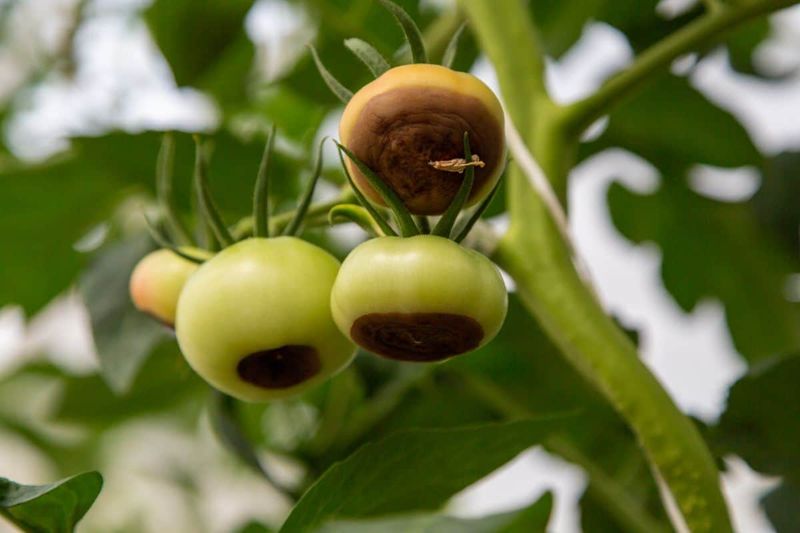
Blossom-end rot itself is worth understanding correctly before treating it. Minnesota Extension’s tomato disorders page explains that the condition reflects disrupted calcium movement inside the plant, commonly triggered by uneven watering, root damage, or rapid growth rather than a shortage of calcium in the soil. Adding calcium amendments when the real cause is irregular irrigation will not solve the problem. Replace product-chasing with a clear diagnosis, and let soil-test results and observed symptoms guide any fertilizer decisions you make.
Stabilize moisture and manage the plant’s growth
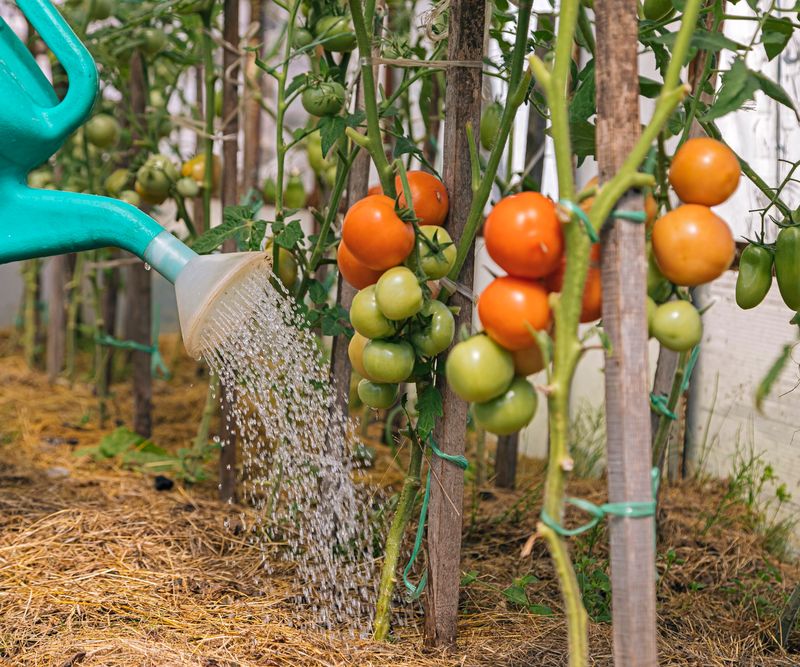
Consistent soil moisture is one of the most practical things you can do to support fruit development once you have addressed the fertilizer question. Drought and irregular watering reduce fruit development and create the conditions associated with blossom-end rot, because calcium moves through the plant in water. Minnesota Extension’s tomato disorders guide connects uneven moisture to disrupted calcium movement, and UNH Extension’s tomato fact sheet recommends mulching around the plant to moderate soil temperature and hold moisture between waterings. A 2-3 inch layer of straw, wood chips, or shredded leaves placed around the base of the plant can reduce moisture swings noticeably.
Container tomatoes need a slightly different approach. Frequent watering, which containers require, leaches nutrients out of the potting mix faster than in-ground beds lose them. Minnesota Extension’s container plant care guide notes that container plants may need regular, label-directed feeding to maintain adequate nutrition. An indefinite fertilizer ban on a container tomato can create a nutrient shortage that causes its own set of problems, so adjust the pause based on where your plant is growing.
Trellises, cages, and stakes help manage a tall plant’s weight and keep stems and fruit off the ground, which is their real value. Minnesota Extension’s trellis and cage guide presents support as a way to manage plant growth and fruit weight. It does not improve pollination or guarantee the next fruit set, and stripping away most of the plant’s leaves to compensate for poor structure is counterproductive. Excessive defoliation increases heat stress on developing fruit and can cause sunscald; modest, variety-appropriate pruning is the safer path.
Use the feeding history and weather together
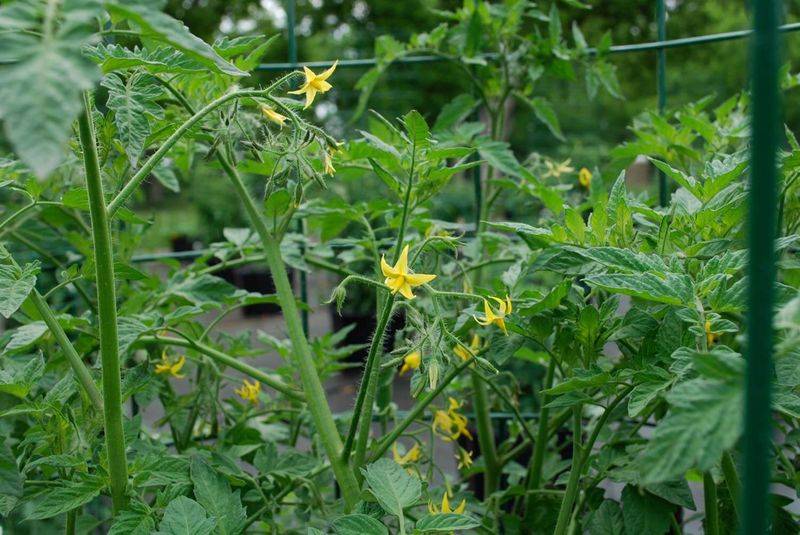
Working through a leafy, low-fruiting tomato plant is easier when you treat it as a short checklist rather than a single-cause problem. Start by identifying your tomato variety and whether it is indeterminate. Then look closely at the flowers: are they absent, or are they forming and dropping? Review every nitrogen-heavy input you have applied this season, including the frequency, the product’s N-P-K ratio, and any compost or manure added to the bed.
Missouri Extension’s blossom drop guide describes poor fruit set as a stress response with multiple possible triggers, which is a useful frame for the whole evaluation.
Next, check your recent weather. Have nights dipped near or below 55 degrees Fahrenheit? Have afternoons been running above 85 degrees with warm nights? Minnesota Extension’s heat stress guide and Penn State Extension’s heat stress resource both identify these temperature bands as conditions that can shut down fruit set even on a well-fed, healthy-looking plant.
Also consider moisture consistency, wind, humidity, root disturbance from cultivation, and whether the plant is simply young.
When lush growth and repeated heavy nitrogen use line up together, pausing additional nitrogen is a sensible, low-risk step while you correct other conditions and watch new growth and flower clusters develop. No single intervention proves the cause or guarantees fruit, but a clear-eyed look at the full picture puts you in a much better position to help the plant than another bag of fertilizer ever would.