
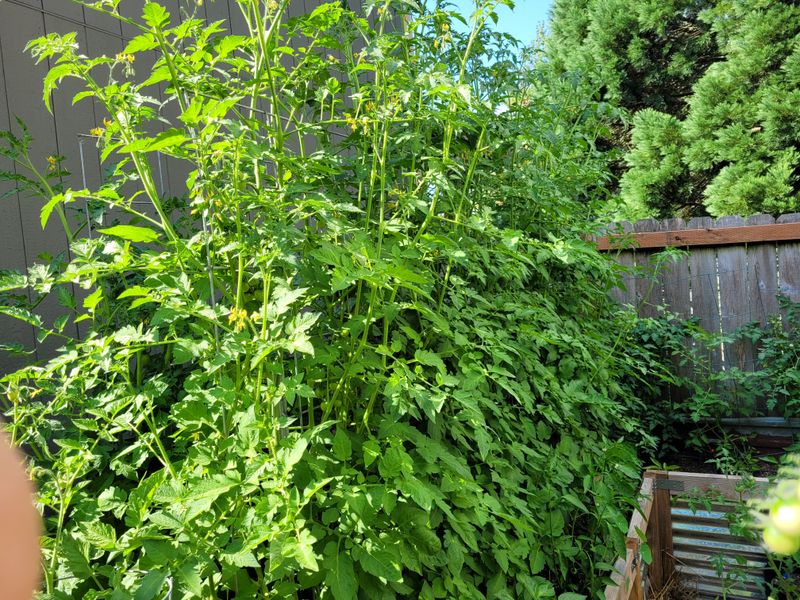
Your tomato plant looks incredible from a distance – thick stems, dark green leaves, and more foliage than you know what to do with. But walk up close and you notice something missing: almost no fruit, and maybe very few flowers. Before you change everything about how you water, prune, or feed, it helps to know that two separate problems can cause this exact picture, and they often show up together in midsummer.
Excess nitrogen can make a tomato grow more leaves than fruit
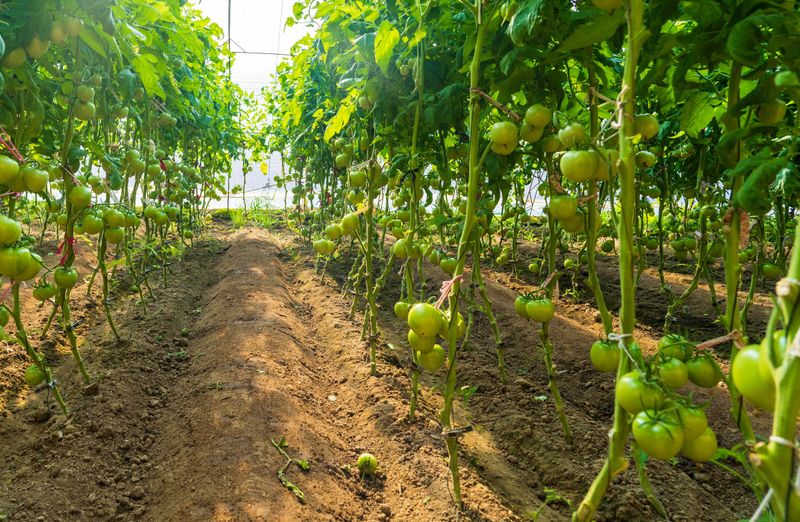
Repeated fertilizer applications are easy to overlook as a culprit when a tomato plant looks so healthy. High-nitrogen fertilizers, general-purpose granular blends, fresh manure, or nitrogen-rich compost applied on top of already fertile soil can push a tomato plant toward aggressive vegetative growth. University of Minnesota Extension guidance on growing tomatoes notes that overfertilization can stimulate leafy growth while delaying the flowering and fruiting that gardeners are actually after.
The tricky part is that a leafy plant alone cannot confirm nitrogen excess. A vigorous variety, consistently moist soil, or naturally fertile ground can all produce the same lush look without any overfeeding. Applying above-label fertilizer rates makes the situation worse, but even standard applications repeated too frequently across a full growing season can accumulate more nitrogen than the plant needs at this stage.
Before adjusting the feeding regimen, review the plant’s actual history. How often has it been fertilized? What products were used, and at what rates? If the answer involves frequent applications of a general-purpose or high-nitrogen product, that feeding pattern is worth investigating further before assuming another cause is responsible.
Heat can cause the same tomato to miss its fruit-setting window
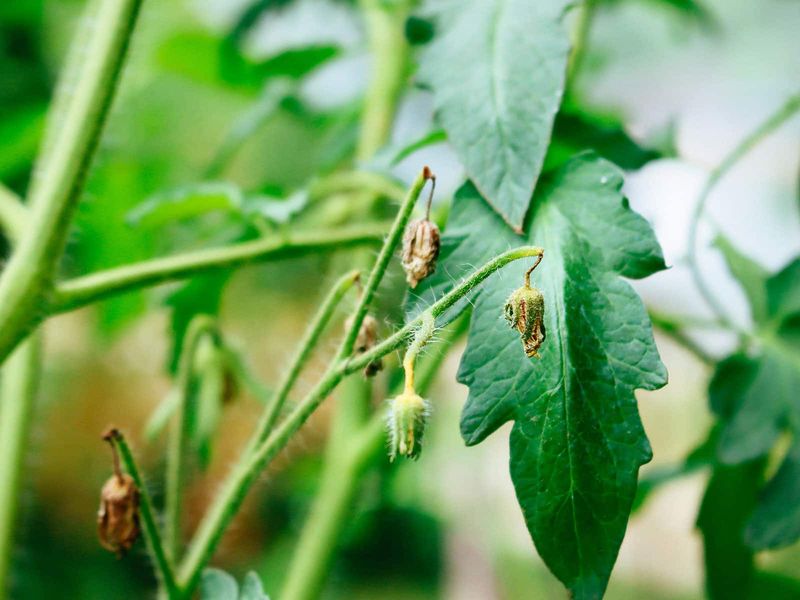
Even when fertilizer is not the problem at all, midsummer heat can shut down fruit set on its own. Tomato flowers rely on viable pollen and functional pollination to become fruit, and high temperatures interfere with both. University of Minnesota Extension’s guidance on heat and vegetable gardens identifies daytime temperatures above roughly 85 to 90 degrees Fahrenheit and nighttime temperatures above about 70 to 75 degrees Fahrenheit as ranges where blossom drop becomes more likely.
Those numbers are practical warning ranges, not hard cutoffs. Cultivar, humidity, drought stress, and how long the heat persists all affect how a specific plant responds. Some varieties handle high temperatures better than others, and a brief hot spell may cause less damage than a sustained stretch of nights that stay warm. Virginia Cooperative Extension’s tomato resource explains that heat can reduce pollen viability and interfere with pollen tube growth, directly preventing fertilization even when the flower looks normal.
Rapid nitrogen-fueled vegetative growth can create a second, overlapping stress by directing the plant’s energy toward leaves rather than reproduction. Heat may be the immediate trigger for blossom drop while excess nitrogen made the plant more vulnerable. Treating fertilizer as the only explanation misses what is often the more urgent problem during a hot summer.
Inspect the flowers before diagnosing the fertilizer
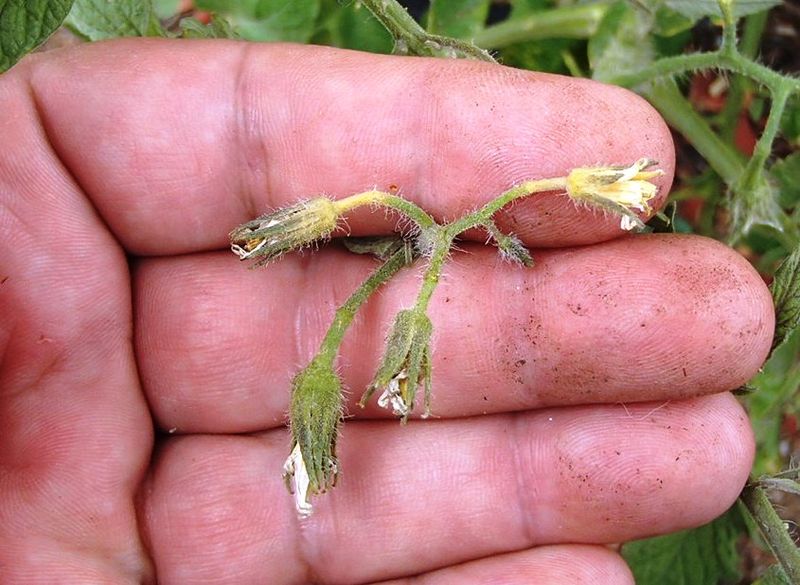
A quick look at the flowers can narrow down what is actually happening. Flowers that dry, shrivel, or fall away cleanly without leaving behind a small swelling where a fruit should form are a classic sign of blossom drop. When that pattern repeats during hot days and warm nights, heat and pollination problems deserve more attention than fertilizer at that moment.
A plant that produces no flowers at all is a different situation. Excessive vegetative growth, insufficient sunlight, the plant’s natural growth habit, transplant stress, disease, or other environmental factors can all suppress flowering before it starts. Virginia Cooperative Extension notes that distinguishing between flowers that never form and flowers that form but then abort points toward different root causes and different responses.
One important distinction worth making: blossom-end rot is not the same problem as failed fruit set. Blossom-end rot appears as a dark, sunken spot on the bottom of a developing tomato that has already formed. Illinois Extension’s tomato guidance links blossom-end rot to localized calcium uptake problems and inconsistent moisture, not to flowers failing to become fruit. Applying calcium supplements to a plant that simply is not setting fruit will not solve the actual problem and may not be warranted without testing.
Pause nitrogen and read the N-P-K label
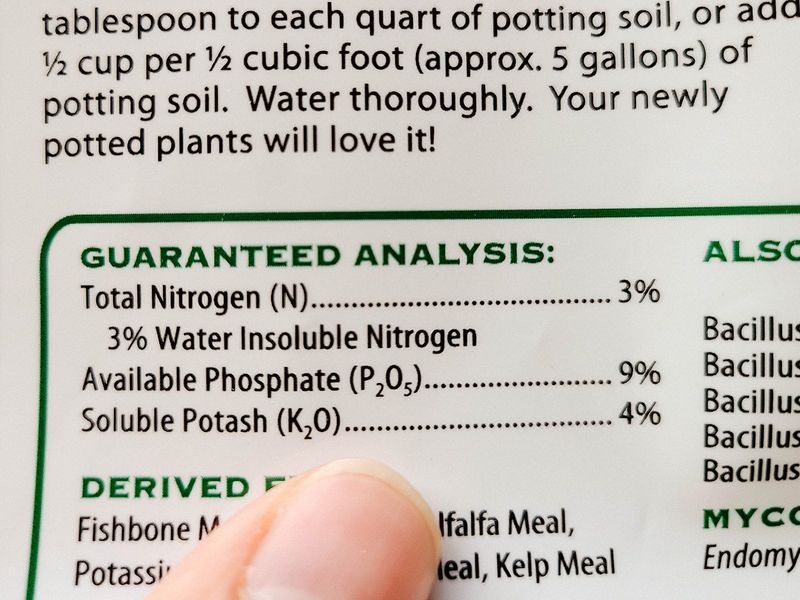
When a tomato is unusually leafy and setting little fruit, and the feeding history includes frequent nitrogen applications, the first practical step is to stop routine nitrogen-heavy fertilizing for now. Adding more of the same product while the plant is already growing vigorously in the wrong direction rarely helps. University of Minnesota Extension’s fertilizing guide explains that the first number in an N-P-K analysis represents nitrogen, so a product labeled 20-10-10 or 24-8-16 carries a high nitrogen load relative to the other nutrients.
Repeated use of products with a high first number is the feeding pattern most likely to reinforce leaf growth when applied more often than the plant needs. Checking what has been used and how often takes only a few minutes and may confirm whether nitrogen accumulation is a reasonable suspect. That said, a high-nitrogen label on a bag is a clue to investigate, not proof that nitrogen is causing the problem.
A common overcorrection is to switch immediately to a high-phosphorus bloom booster or to add large amounts of potassium. Penn State Extension’s vegetable soil fertility guidance and UC IPM’s tomato fertilization resource both emphasize that fertilizer decisions should rest on soil test results, crop needs, and label rates. When soil nutrient levels are already adequate, adding more fertilizer of any kind is unlikely to improve yield and may create new problems.
Treat severe overfertilization as a root-zone problem
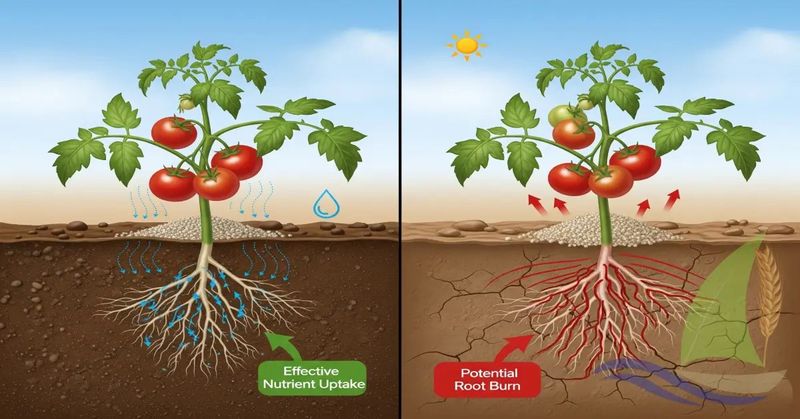
Repeated or above-label fertilizer applications can raise soluble salt levels around the roots, adding stress on top of the foliage and fruit-set problems already visible above ground. Roots exposed to high salt concentrations have more difficulty taking up water and nutrients efficiently, which compounds the situation rather than helping it resolve.
Alabama Cooperative Extension’s blossom drop resource describes a one-time thorough leaching of container soil as a possible response when overfertilization has been severe. For a container that drains freely, slowly running water through the mix until it flows out the bottom can help carry away excess soluble salts. Keep the foliage dry during this process to avoid spreading foliar disease.
Flushing should not become a routine practice, and the same approach does not translate easily to in-ground garden beds with poor drainage. Applying this technique casually or repeatedly can leach beneficial nutrients along with excess salts and may waterlog roots. The goal here is limited: reduce additional root stress in a clearly overfertilized, well-draining container, not guarantee that fruit set will resume immediately afterward.
Protect the plant from heat while fruit set is vulnerable
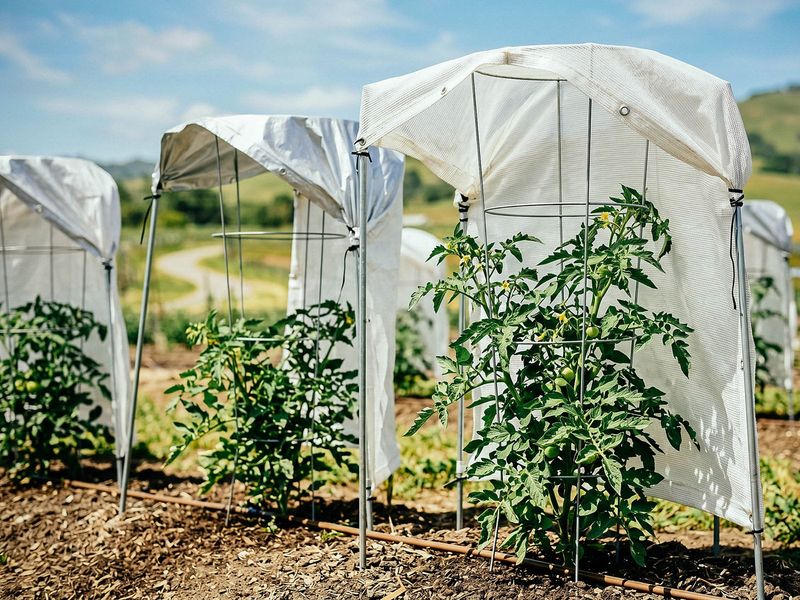
Adjusting fertilizer is only part of the response when heat is also a factor. Keeping the root zone consistently moist matters just as much, because moisture stress during hot weather can accelerate flower drop and make a plant more sensitive to temperature extremes. Deep watering at the root zone is a safer default than overhead watering or misting, which can spread foliar disease without reliably cooling the plant where it counts.
Iowa State University Extension’s tomato growing guide commonly references roughly 1 to 1.5 inches of water per week as a general starting point, but local rainfall, soil type, container size, and the intensity of the heat all affect how much any specific plant actually needs. Mulching around the base of the plant reduces evaporation, moderates soil temperature, and smooths out the moisture swings that can stress roots during hot spells.
Severe pruning during a heat wave can backfire by removing the foliage that shades developing fruit and keeps soil temperature lower. Illinois Extension’s guidance on tomato leaf stress supports keeping canopy coverage intact during high heat. Temporary shade cloth stretched over the plant during the hottest part of the day may help reduce heat stress and flower drop, and choosing heat-tolerant cultivars for future seasons can improve fruit-set performance during reliably hot summers, though neither measure is a guaranteed fix.
Hand pollination cannot reverse heat-damaged flowers
Tomato flowers are self-pollinating, meaning they carry both male and female parts and do not depend on honeybees the way some crops do. Pollen release still requires vibration and temperatures that fall within a workable range, which is why wind and buzzing insects help in outdoor gardens even if they are not strictly required.
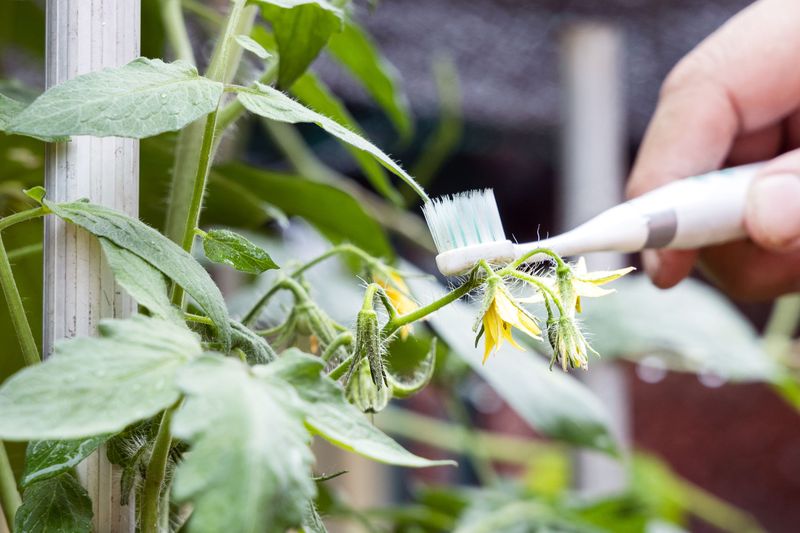
Gently vibrating an open flower cluster, using a finger or a small tool like an electric toothbrush, may help release pollen from flowers that are open and structurally intact. Colorado State University Extension’s tomato heat resource and University of Maryland Extension’s pollination guidance for tomatoes both frame vibration as a limited aid rather than a reliable cure, particularly when heat has already compromised pollen viability.
When temperatures stay elevated day and night for extended periods, pollen can become sterile or fail to function properly before vibration even enters the picture. Research on pollen tolerance to high temperatures in tomato cultivars confirms that heat damage to pollen is a physiological problem that mechanical pollination cannot correct. Focusing on temperature and moisture management during a heat wave will do more for future flowers than any hand-pollination technique applied to already-damaged blooms.
Match the next feeding decision to the evidence
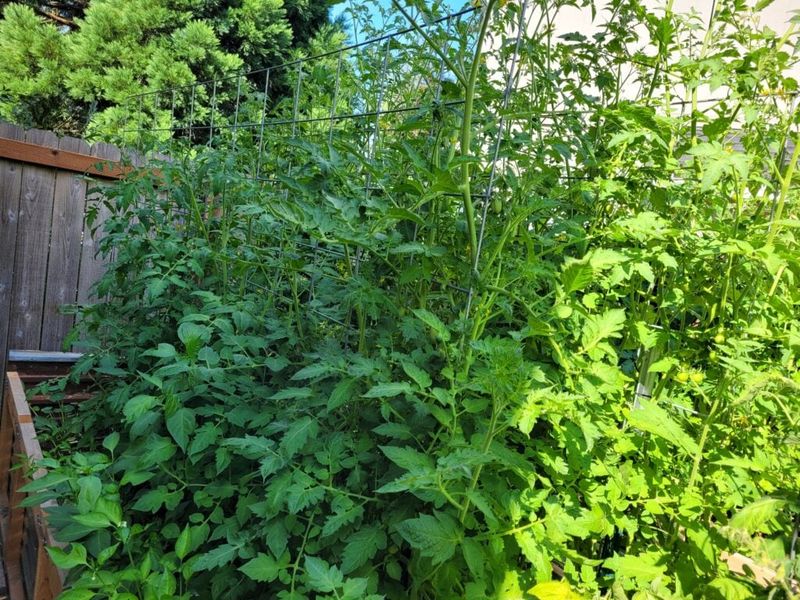
A clear decision rule helps when the symptoms are ambiguous. A very leafy tomato with a history of frequent nitrogen-heavy feeding should receive no routine extra nitrogen while the gardener reviews the label, checks how often fertilizer has been applied, and considers a soil test to get real data rather than guessing. University of Minnesota Extension’s tomato guide and UC IPM’s tomato fertilization resource both support basing nutrient decisions on actual soil conditions rather than routine calendar applications.
Flowers that repeatedly drop during sustained heat require simultaneous attention to moisture consistency and canopy protection, not just a fertilizer change. University of Minnesota Extension’s heat and vegetable garden guidance makes clear that fruit set may not resume until temperatures moderate, regardless of what else changes in the garden.
No bloom booster, calcium treatment, fertilizer adjustment, or hand-pollination technique guarantees recovery once heat and overfertilization have both been at work. The most useful thing a gardener can do right now is stop adding fuel to the problem, give the plant stable moisture, and let conditions improve – a healthy plant in better conditions will often find its way back to fruiting on its own schedule.