
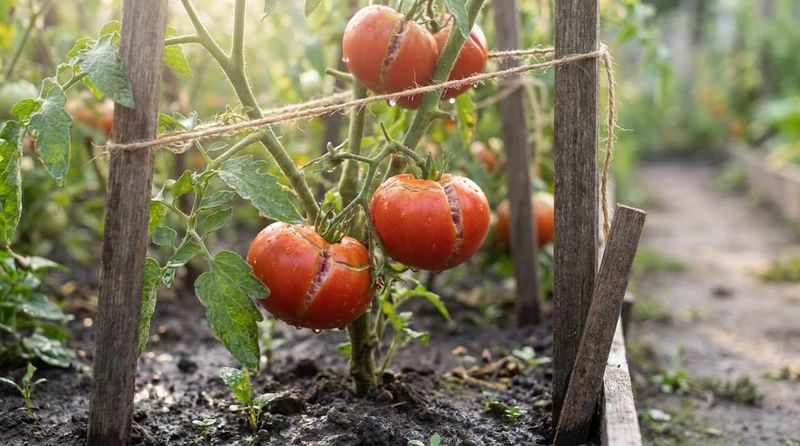
Picking a tomato only to find it split open along the stem is one of summer’s most discouraging garden moments. The crack seems to appear out of nowhere, often right after a hot stretch or a good rain. Understanding why it happens puts you back in control, and the answer involves more than just one watering mistake.
Identify tomato cracking before treating the wrong problem
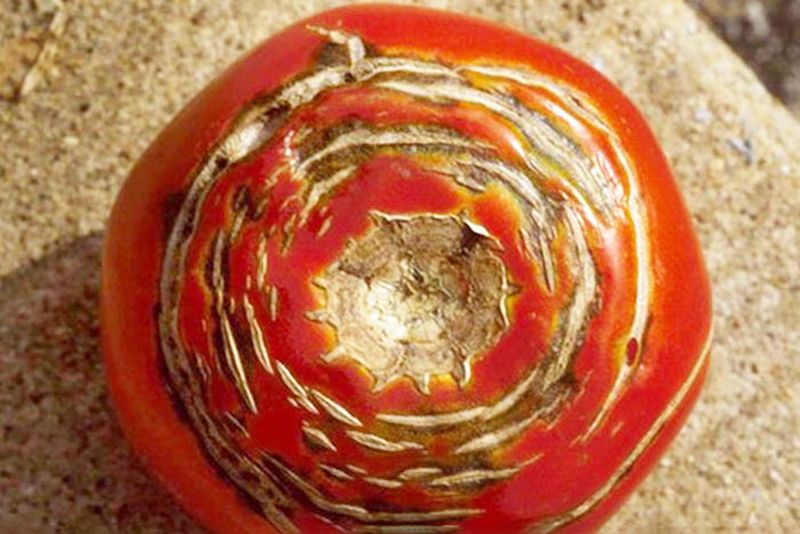
Two distinct crack patterns show up on tomatoes, and recognizing them helps you confirm you are dealing with a growth disorder rather than a disease. Radial cracks extend outward from the stem scar like spokes on a wheel, while concentric cracks form rings that circle the same area. University of Minnesota Extension’s tomato fruit crack diagnostic describes both patterns as growth disorders caused by uneven expansion inside the fruit, not by a fungal or bacterial infection.
Because the problem is physiological rather than infectious, fungicides and disease treatments will not help. The crack is the fruit’s skin failing to keep pace with rapid internal growth, and the fix focuses on managing the conditions that trigger that growth surge.
Two other disorders sometimes get confused with cracking. Blossom-end rot produces a dark, sunken, leathery patch at the blossom end of the fruit, which is the opposite end from the stem, and it involves calcium transport and moisture stress rather than rapid expansion. Sunscald appears as a pale yellow, white, or grayish patch on the sun-exposed side of the fruit. Minnesota Extension’s guide to tomato disorders notes that sunscald and cracking share a common contributor, which is exposed fruit with reduced canopy cover, but their symptoms and underlying mechanics differ.
Once you have confirmed the split or ring pattern of cracking, the next useful step is to think back over recent weather and watering. Did a dry stretch just end with heavy rain or a deep irrigation session? That sequence is where the investigation usually leads.
Why changing water availability splits ripening fruit
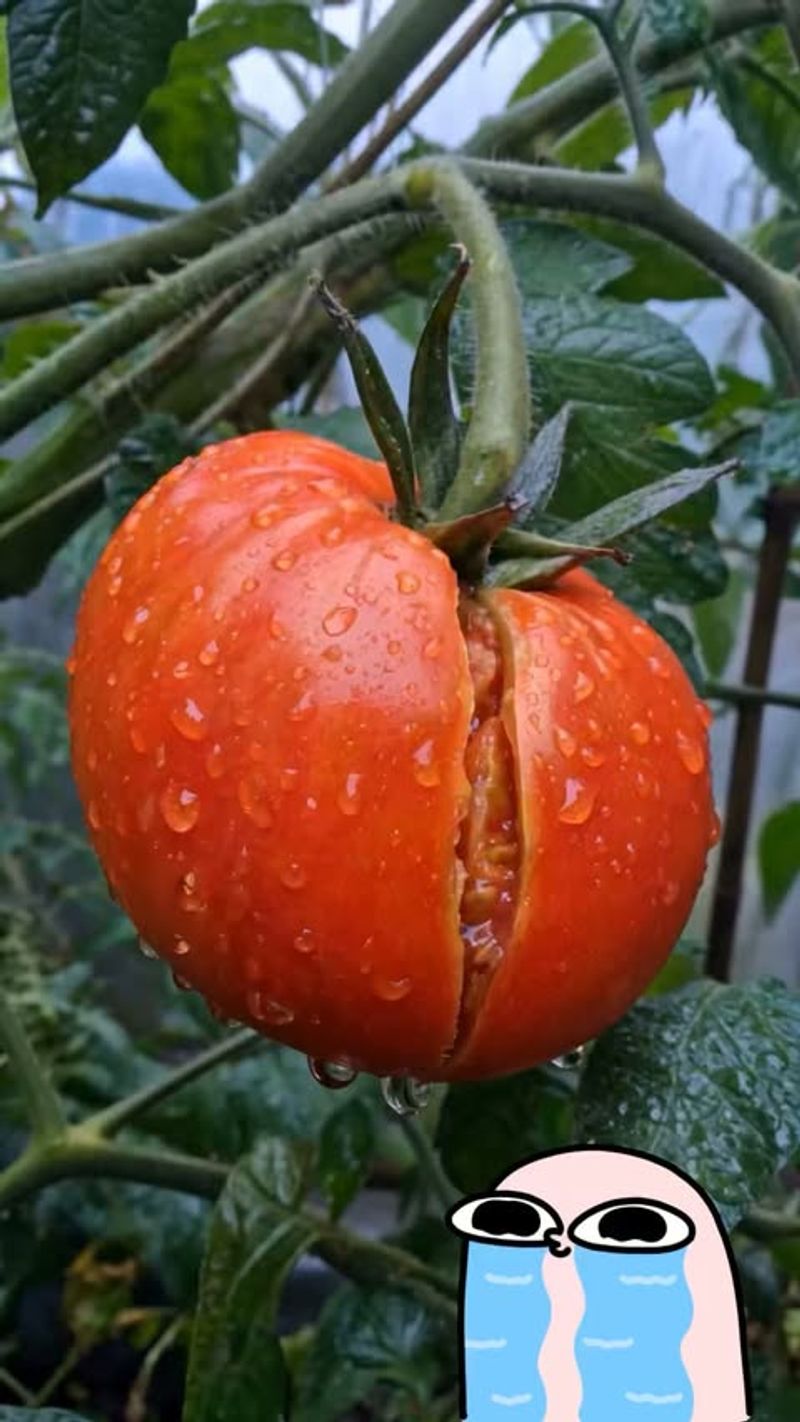
When the soil around a tomato plant dries out over several hot days, water uptake slows and the fruit more or less holds steady. Then a heavy rainstorm arrives, or a gardener delivers a deep irrigation session to make up for lost time. The plant suddenly has abundant water available and draws it up quickly. The interior of a ripening tomato absorbs that water and expands, but the skin, which has been sitting under hot sun and has had little reason to stay flexible, cannot stretch fast enough to keep up.
The result is a split, typically starting at or near the stem end.
UC ANR’s guide to fruit cracks on tomatoes identifies this rapid shift from limited to abundant moisture as a primary driver of cracking. Penn State Extension’s cracking explainer adds that rain can contribute in two ways: it raises soil moisture abruptly, and water may also enter directly through porous tissue near the stem scar of ripening fruit.
High heat and strong sunlight are not just background conditions. Elevated fruit temperature can reduce the skin’s ability to flex, and recent research on tomato skin mechanics under heat stress supports the idea that hot conditions increase susceptibility. The most accurate explanation is a combination of heat and a sudden moisture increase working together, not heat alone causing every crack and not one watering habit as the single culprit.
Stabilize the soil instead of alternating drought and drenching
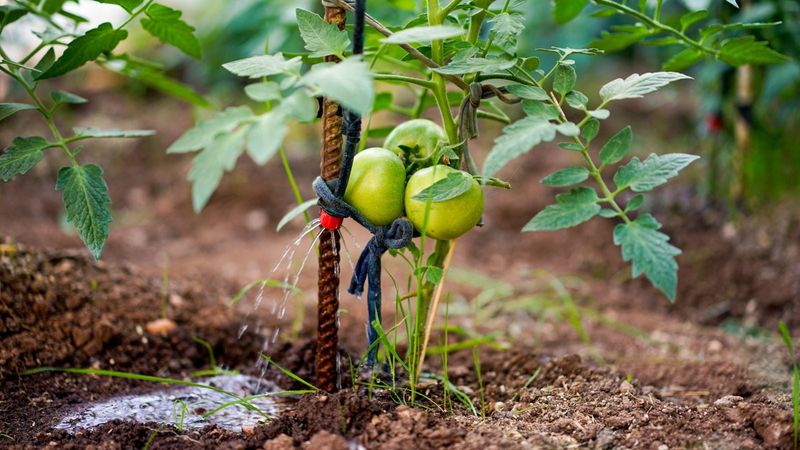
The most direct way to reduce cracking risk is to keep the root zone at a more consistent moisture level rather than letting it swing between dry and saturated. That means checking below the surface, not just glancing at the top of the soil. Minnesota Extension’s tomato growing guide recommends using a trowel to check soil depth: if only the top inch or two is wet after watering, the session was probably not deep enough to reach the root zone where the plant actually draws moisture.
A common starting benchmark is roughly 1 inch of rainfall or irrigation per week for established tomato plants. Kansas State Extension’s 2024 piece on tomato cracking notes that this figure should be adjusted for your specific situation. Sandy soils drain faster and may need more frequent watering. Container-grown plants dry out more quickly than in-ground beds.
Larger plants, intense heat, and low humidity all increase water demand. Mulched beds lose less moisture to evaporation and may need less frequent irrigation.
NC State Extension’s cracking overview reinforces that the practical target is evenly moist soil, not constantly saturated ground. Thorough, less frequent watering that reaches the root zone tends to produce more stable moisture levels than daily shallow sprinkles that wet only the surface.
One caution worth keeping in mind: if the soil has gone very dry and plants are wilting badly, restoring moisture thoroughly is the right move, but then let soil conditions and upcoming weather guide subsequent sessions rather than flooding the bed on a rigid daily schedule. Repeatedly cycling between severe dryness and saturation is exactly the pattern most likely to produce cracked fruit.
Use mulch and soil-level irrigation to moderate swings
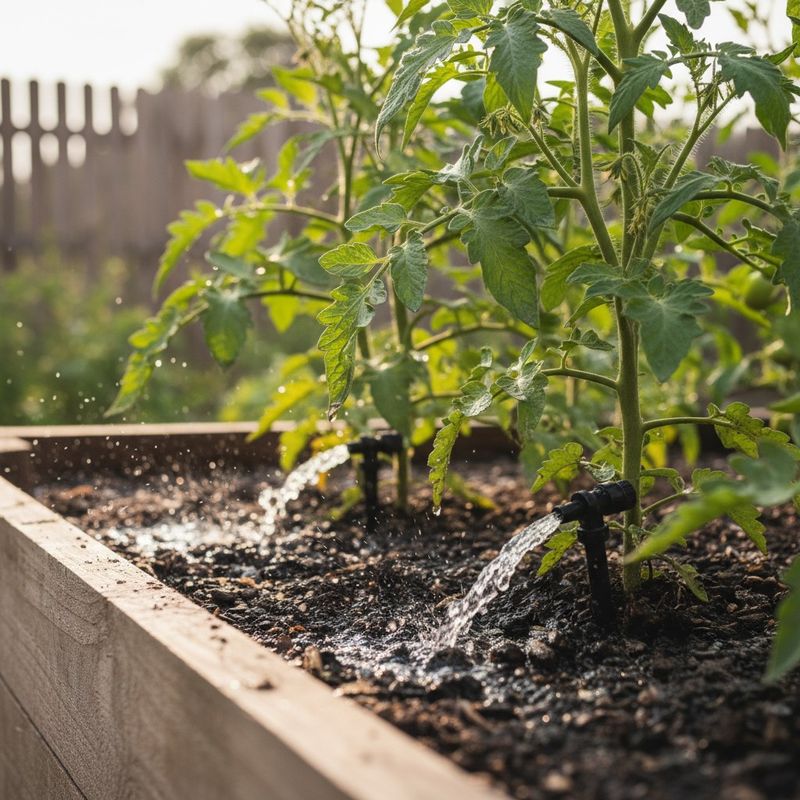
Mulching the root zone is one of the more practical steps a home gardener can take to keep soil moisture steadier between watering sessions. A 2- to 3-inch layer of straw, shredded leaves, or suitable compost slows evaporation from the soil surface, which means the root zone holds moisture longer during hot weather. Iowa State University Extension’s tomato cracking FAQ and UC ANR’s fruit crack guide both recommend organic mulch as a support tool for moisture management. Keep the mulch pulled back a few inches from the stem so it does not trap moisture against the base of the plant and encourage rot.
Drip irrigation lines and soaker hoses deliver water directly to the soil at a slow, steady rate. That approach gives the root zone time to absorb moisture more gradually compared to a sudden flood from overhead sprinklers, and it also keeps water off the ripening fruit itself. NC State Extension notes that soil-level irrigation can reduce direct water contact with the fruit, which may lower cracking risk when rain follows a dry stretch.
These tools support better moisture management, but they do not guarantee crack-free tomatoes. A prolonged dry spell followed by heavy rain can still shift soil moisture faster than any irrigation system can compensate for. Think of mulch and drip lines as reducing the size and frequency of moisture swings rather than eliminating them entirely.
Heat, foliage, maturity, and variety change the risk
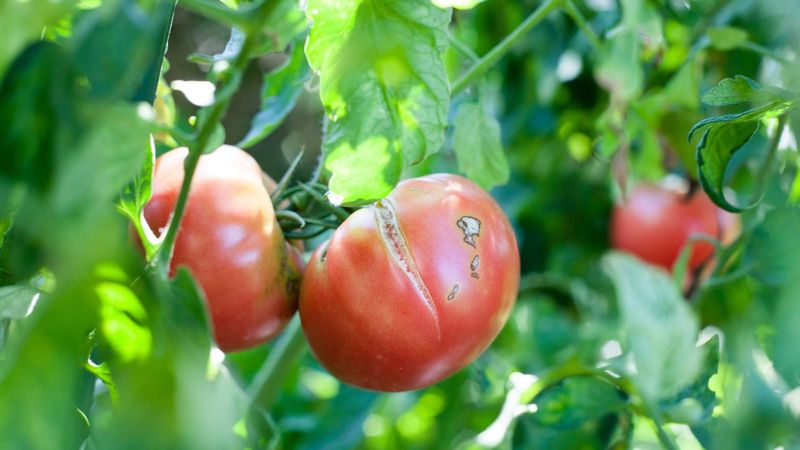
Water availability is a major piece of the cracking puzzle, but several other factors raise or lower the odds. High temperatures, strong sunlight, and high humidity can all increase susceptibility. Penn State Extension points out that these conditions can affect skin flexibility and fruit growth rate, meaning a tomato that might handle a modest moisture change without splitting during mild weather may crack under the same change during a heat wave.
Fruit maturity matters too. Fully ripe and nearly ripe tomatoes are more prone to cracking than fruit at an earlier stage, partly because the skin has less capacity to stretch as ripening progresses. Exposed fruit, whether from aggressive pruning or disease-related leaf loss, faces higher fruit temperatures and greater risk. Minnesota Extension’s diagnostic guide and their tomato disorders overview both note that maintaining healthy foliage can shade fruit, moderate its temperature, and reduce both cracking and sunscald.
Variety selection also plays a real role. Large-fruited and heirloom types tend to crack more readily than smaller-fruited varieties. Iowa State University Extension and Kansas State Extension specifically mention varieties such as Jetstar, Mountain Spring, and Mountain Fresh as relatively crack-resistant options. That said, published horticultural research on tomato skin properties confirms that variety performance varies by location and growing conditions, so a cultivar that resists cracking well in one region or season may still crack under unusual heat and rain in another.
Harvest cracked fruit promptly and judge it carefully
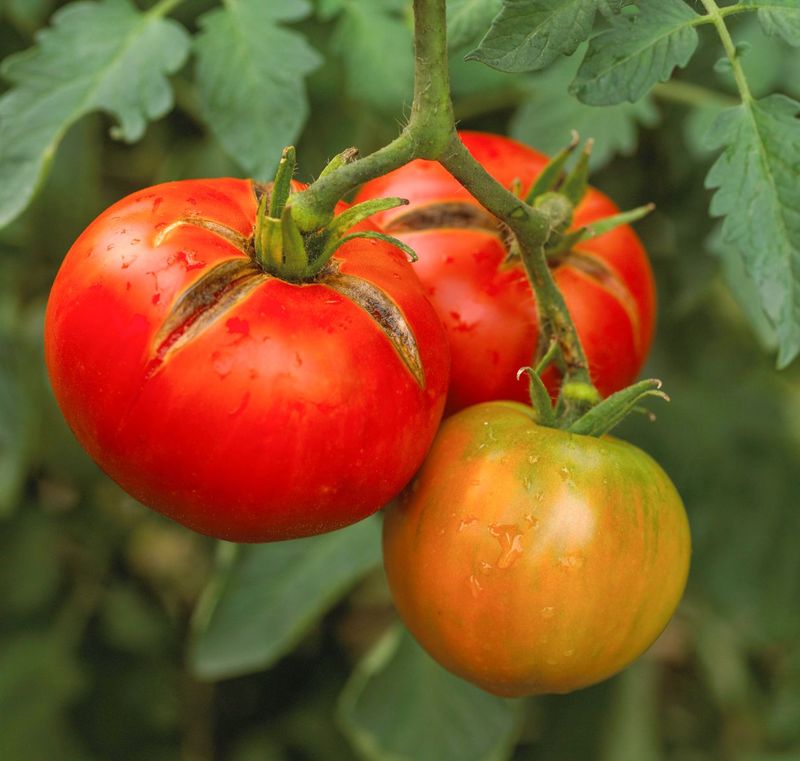
Once a crack appears, the clock starts running. Open splits give moisture, insects, fungi, and bacteria a direct path into the fruit. Leaving a cracked tomato on the vine does not allow it to heal; it only extends the window for contamination. Harvest cracked fruit as soon as you notice it, even if it is not fully ripe.
Picking ahead of trouble is an equally useful strategy. Penn State Extension and NC State Extension both recommend harvesting nearly ripe fruit before an expected heavy rain, especially if the garden has recently gone through a dry period. A tomato that is showing good color but has not yet fully softened will finish ripening indoors at room temperature without the risk of splitting on the vine during a storm.
Deciding whether a cracked tomato is still usable comes down to what else you see. Rowan County NC State Extension and University of Nebraska-Lincoln’s guide on tomato fruit problems explain that a recently cracked tomato with no visible rot, no mold, no soft or leaking areas, and no sour smell can be washed thoroughly and have the damaged portion cut away before eating. FDA guidance on selecting and serving produce safely recommends discarding any produce with signs of decay, so fruit that is moldy, leaking juice, soft throughout, sour-smelling, or visibly rotten should not be eaten, even after trimming.
Reduce losses without promising perfect fruit
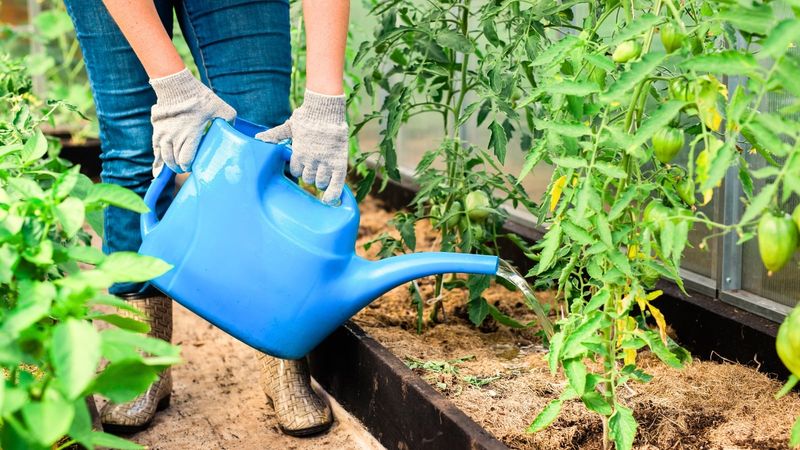
Pulling together everything above, a practical response to cracking starts with a quick check of two things: recent weather and current soil moisture. If the bed has been dry and rain is forecast, water the root zone thoroughly now rather than waiting, and consider harvesting any nearly ripe fruit before the storm arrives. Add or refresh mulch to slow evaporation and soften future moisture swings.
Preserve as much healthy foliage as possible rather than pruning heavily for airflow. A full canopy moderates fruit temperature and reduces direct sun exposure on developing tomatoes. UC ANR’s fruit crack resource and Kansas State Extension both frame these steps as risk-reduction measures, not guarantees. Some seasons, an unusually hot stretch followed by heavy rain will overwhelm even well-managed beds, particularly with large-fruited or heirloom varieties.
For next season, Minnesota Extension’s tomato growing guide suggests considering crack-resistant varieties if splitting has been a recurring problem in your garden. No variety is immune, but starting with genetics that favor thicker or more elastic skin gives you a better foundation to work from. The goal is fewer losses over a season, not a promise of unblemished fruit, and the first step is simply checking the soil before you water rather than after the damage is done.