
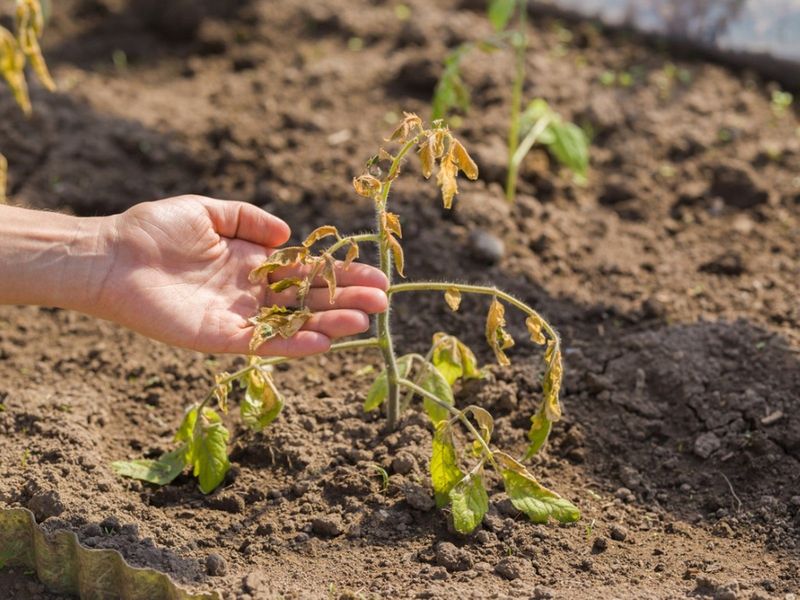
July heat can stop a tomato plant cold, and watching a vine sit motionless while the summer ticks away is genuinely frustrating. Before you reach for a fertilizer bag, though, it helps to understand why the plant actually quit. The real answer often has more to do with temperature than nutrition, and sorting that out first will save you time and protect your plants from further setbacks.
Heat may be the reason your tomato stopped
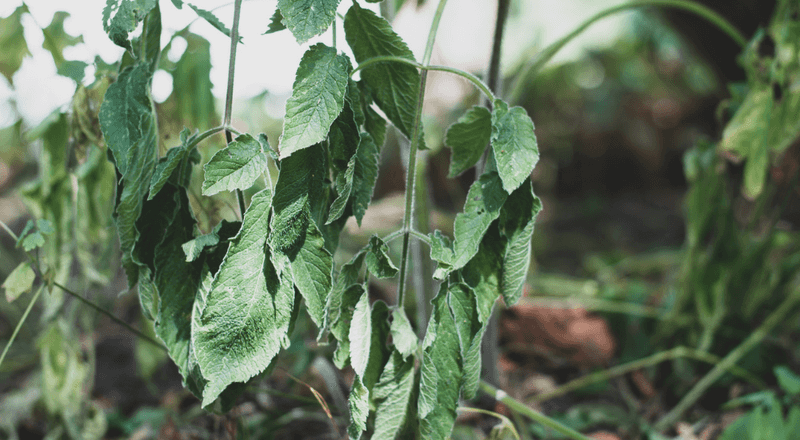
The title of this article promises a single feeding fix, but the honest answer is more nuanced. Sustained high temperatures can bring a tomato plant to a near-complete standstill, and no fertilizer application will override that biological reality while the heat continues.
According to Penn State Extension’s guidance on heat stress and tomatoes, high temperatures can impair photosynthesis, disrupt pollen development, reduce pollination success, and degrade fruit quality. The stress begins roughly in the 88-102 degrees F range for daytime highs, but warm nights above 70 degrees F contribute as well, because the plant never fully recovers between hot days.
Flower drop during a heat wave is a reproductive problem, not a fertilizer problem. University of Minnesota Extension explains that daytime temperatures consistently above about 85 degrees F combined with warm nights can cause flowers to abort before they ever set fruit. Leaf curl, afternoon flagging, and a general pause in new growth can all follow from the same cause.
The practical takeaway is to diagnose before you act. If temperatures have been running high and your plant recently stalled, heat stress is a credible explanation that deserves attention on its own terms before you change anything about your feeding routine.
Define what “stalled” means
“My tomatoes stopped” can mean several different things, and each symptom points toward a different cause. Sorting out which kind of stall you are looking at is the fastest way to decide whether fertilizer belongs in the conversation at all.
Absent vine growth, where the plant simply is not putting out new leaves or extending its stems, can reflect heat stress, a genuine nutrient shortage, root damage, disease, or roots that have run out of room. Minnesota Extension’s tomato growing guide notes that excess nitrogen can actually delay flowering and reduce fruit production, so weak growth does not automatically call for more fertilizer.
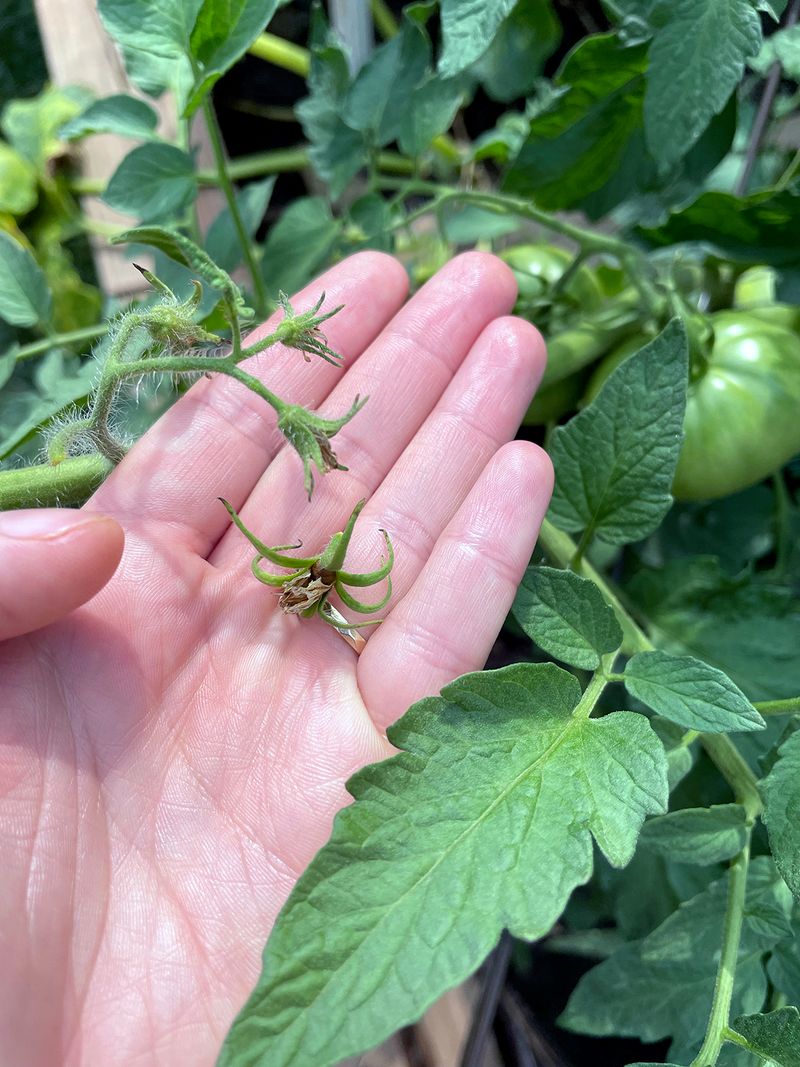
Flower drop is usually a temperature story. When blossoms fall without setting fruit during a heat wave, the cause is most often reproductive failure driven by heat, not a missing nutrient. Green fruit that refuses to ripen is also commonly temperature-related; cooler nights are often what finally moves those tomatoes from green to red.
Afternoon wilting that resolves by morning may simply be the plant conserving water under high evaporative demand, even when the soil is adequately moist. Oregon State University’s overview of environmental factors affecting plant growth confirms that heat and vapor pressure stress can produce visible wilt even when soil moisture is not limiting. Yellow lower leaves are worth noting but are not proof of nitrogen deficiency on their own; normal leaf aging, overwatering, root injury, and disease can all produce similar yellowing.
Protect the root zone during the heat wave
Root-zone care is the right first response to a heat-stressed tomato, and it comes well before any decision about fertilizer. The goal is to reduce the environmental load on the plant without adding new stresses that could compound the problem.
Start by checking soil moisture several inches below the surface. The top inch can feel dry while the deeper root zone still holds adequate water, and the reverse is also possible: a crust of dry soil can mask waterlogged conditions below. Minnesota Extension’s hot-weather gardening guidance recommends watering deeply and consistently rather than giving frequent shallow applications, which encourages surface rooting and leaves plants more vulnerable to heat.
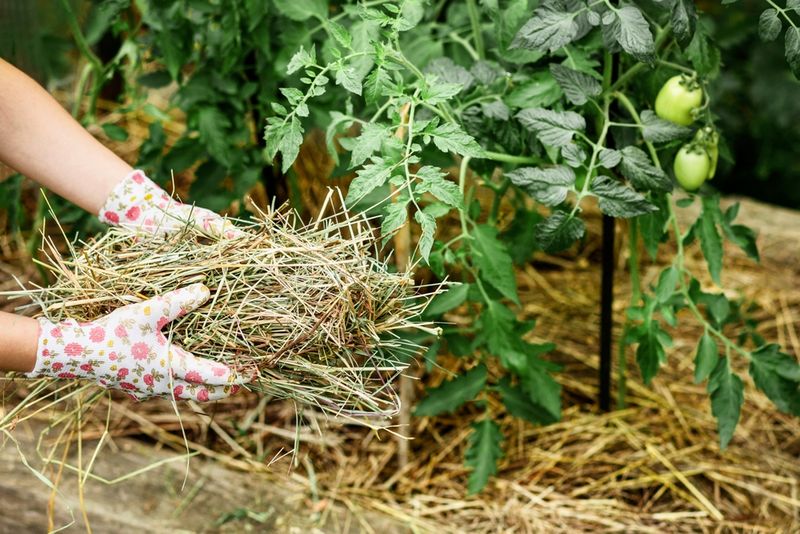
Mulch is one of the most effective tools available during a heat wave. A two-to-three-inch layer of straw, wood chips, or shredded leaves moderates soil temperature, slows evaporation, and helps keep moisture available to roots throughout the day. If the mulch layer has thinned over the season, now is a good time to refresh it.
Oregon State University’s heat-wave garden guide also suggests using temporary shade cloth or row cover during the hottest part of the afternoon where that is practical. Avoid pruning, transplanting, or any other activity that wounds or disturbs the plant while temperatures are extreme. The plant needs its energy for survival, not recovery from additional disruption.
Wait for cooler conditions before feeding in-ground plants
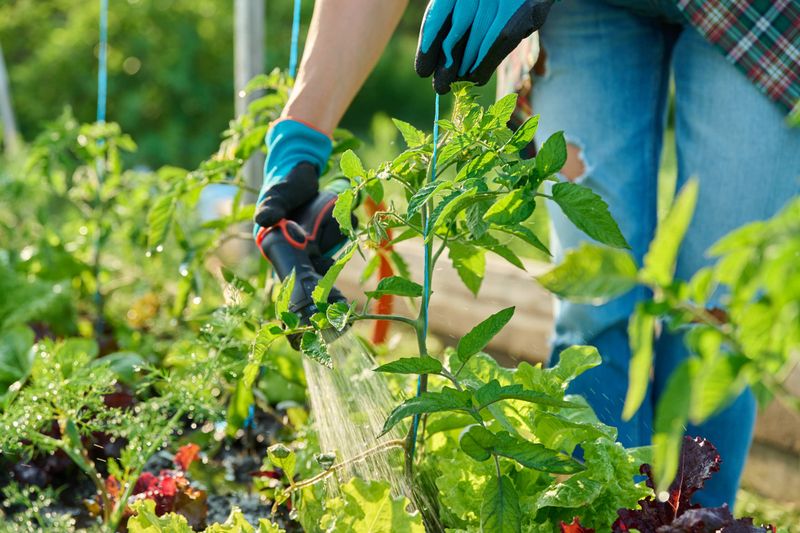
Fertilizer is not a heat treatment. Applying it to a severely stressed in-ground tomato during a July heat wave is unlikely to help and may make things worse. The reasoning is straightforward: fertilizer encourages the plant to push new growth, and tender new tissue is exactly what suffers most under intense heat and high light.
Oregon State University specifically recommends waiting to fertilize during extreme heat, because stimulating growth at the wrong moment adds stress rather than relieving it. The same guidance applies to any amendment that would change the soil chemistry or push the plant into a growth response.
The practical approach is to focus on moisture and shade during the heat wave, then reassess the plant once temperatures moderate. Many tomatoes that appear completely stalled during a stretch of 95-plus-degree days will resume normal growth when nighttime temperatures drop back below 70 degrees F and daytime highs ease. That recovery may happen without any fertilizer change at all.
If the plant does not resume growth after conditions improve, that is the right moment to look more carefully at whether a nutrient deficiency might be contributing. Patience here is not passive; it is the action most likely to protect the plant and give you accurate information about what it actually needs.
Look for a credible nitrogen-deficiency pattern
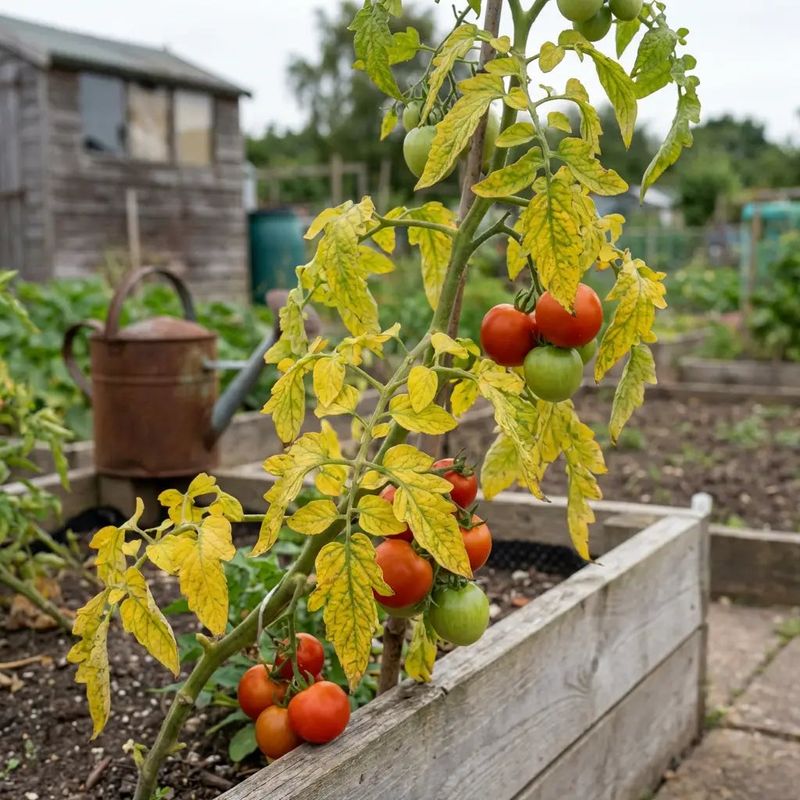
Once temperatures ease, take a careful look at the whole plant before deciding whether to feed it. A single yellow leaf is not a diagnosis. What you are looking for is a consistent pattern that points toward nitrogen as the limiting factor rather than heat, age, or water stress.
The combination that suggests genuine nitrogen deficiency is a generally pale or washed-out green color across the plant, noticeably weak or stunted new growth, and yellowing that begins on the older, lower leaves and progresses upward. Colorado State University Extension’s tomato guide notes that a light supplemental nitrogen application in mid- to late summer can be appropriate on low-organic-matter soils, where nitrogen is more likely to have been depleted by the time the season reaches its midpoint.
Sandy soils are particularly prone to nitrogen loss through leaching, especially after heavy watering or rain. If your garden bed was built with little added organic matter, or if you have been watering heavily to keep up with heat demand, nitrogen depletion is a more plausible explanation for the symptoms you are seeing.
UC Cooperative Extension’s resource on yellowing tomato leaves reinforces the point that yellowing has multiple causes, including overwatering, root injury, and disease, so the overall picture matters more than any single leaf. If the deficiency pattern is clear and consistent, a light post-heat feeding may genuinely help the plant recover its momentum.
Feed in-ground plants lightly and test the soil
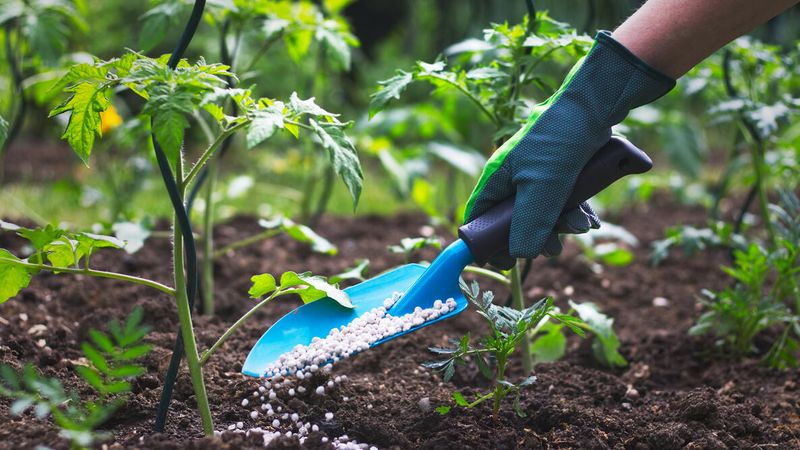
When deficiency signs are present and the heat has moderated, a light fertilizer application can help an in-ground tomato get back on track. The key word is light. More fertilizer is not better, and a large dose applied to a plant that is already under stress can burn roots, increase salt buildup in the soil, and create new problems.
Illinois Extension’s tomato guide recommends using a soluble vegetable fertilizer and applying it to the soil rather than the foliage. Follow the product label’s rate, or a reduced rate where the label specifically permits it, and water the fertilizer in according to the directions. Applying it to dry soil without watering it in can concentrate salts near the root zone and cause injury.
Colorado State recommends light supplemental fertilization in mid- to late summer rather than a large single dose, which aligns with the goal of supporting steady recovery without overwhelming the plant.
For phosphorus, potassium, lime, calcium, and other amendments beyond nitrogen, a soil test is the most reliable guide. Oregon State University’s soil testing guide explains how home gardeners can submit samples and interpret results. Minnesota Extension’s fertilizing guide echoes the recommendation to base amendments on test results rather than assumption, since excess nutrients can accumulate in the soil and create their own problems over time.
Treat container tomatoes as a separate case
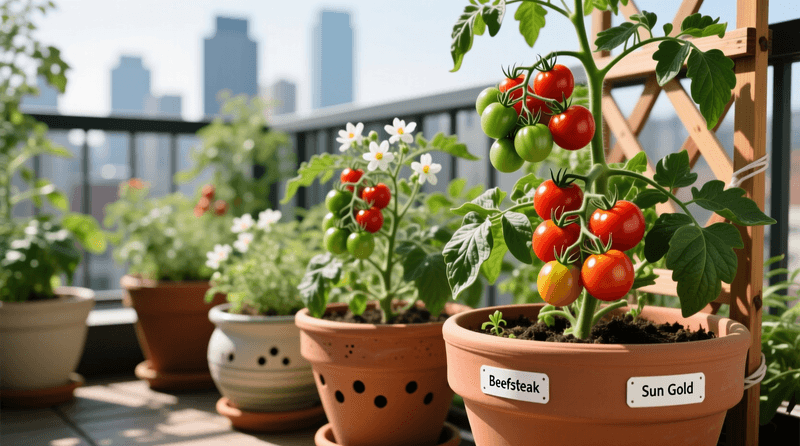
Container tomatoes operate under different rules than in-ground plants, and the distinction matters when you are deciding whether to feed during hot weather. A plant growing in a pot does not have access to the broader nutrient reserves of a garden bed, and the frequent watering that hot weather demands accelerates nutrient loss from the limited volume of potting mix.
Minnesota Extension’s guidance on fertilizing container plants explains that nutrients leach out of potting media with regular watering, which means a container tomato may genuinely need routine low-rate feeding even when an in-ground plant in the same yard does not. You do not need to wait for the pale-leaf deficiency pattern before feeding a container plant during the growing season.
University of New Hampshire Extension’s container tomato guide supports a regular feeding schedule for potted tomatoes, with the rate and frequency based on the fertilizer label and the size of the container.
That said, more fertilizer is not a remedy for heat stress in containers either. Follow the product label’s recommended rate and do not increase feeding in response to heat-related symptoms. The goal is to maintain an adequate nutrient supply through consistent low-rate applications, not to force recovery with a heavy dose during a stressful period.
Avoid nutrient and home-remedy shortcuts
When tomatoes stall, it is tempting to reach for the most specialized-looking product on the shelf. High-phosphorus or high-potassium tomato fertilizers, calcium sprays, and Epsom salts all get marketed as targeted fixes, but the evidence for using them without a specific diagnosis is thin.
Minnesota Extension’s fertilizing guide recommends applying phosphorus and potassium according to soil-test results and using low- or no-phosphorus fertilizer unless testing indicates a need. Switching to a high-phosphorus product in midsummer without that data is unlikely to restart a heat-stressed plant and may contribute to nutrient accumulation in the soil over time.
Excess nitrogen carries its own risks. Minnesota Extension’s tomato guide notes that too much nitrogen produces lush, leafy growth while delaying flowering and reducing fruit production. More is not the answer if the plant is already carrying adequate nitrogen.
Blossom-end rot is one of the most commonly misdiagnosed problems in the summer garden. Minnesota Extension’s tomato disorders resource explains that the condition is associated with inconsistent water availability, which impairs calcium delivery to developing fruit, rather than a straightforward calcium shortage in the soil. Minnesota Extension also cautions that Epsom salts are not a reliable treatment for blossom-end rot; excess magnesium can interfere with calcium uptake, and foliar applications risk leaf scorch. Consistent watering supports calcium delivery far more reliably than any amendment.
Use a measured reset, not a magic switch
A stalled tomato in July is a problem worth taking seriously, and the path forward is a short sequence of decisions rather than a single product change. Protect root-zone moisture first, reduce heat load where you can, and give the plant time to respond before drawing conclusions about fertilizer.
For in-ground plants, wait for temperatures to moderate, then reassess whether growth resumes on its own. Oregon State University’s heat-wave garden guide and Colorado State Extension’s tomato guidance both support feeding lightly only when deficiency signs or soil-test results make a clear case for it. Container plants follow a different schedule and may need routine low-rate feeding throughout the season regardless of visible symptoms, as outlined by Minnesota Extension.
Flower drop, delayed ripening, and a temporary growth pause during a heat wave may simply need time and better conditions to resolve. The most reliable reset is a diagnosis-led plan, and the most important step is the first one: check the soil, read the plant, and let the evidence guide what comes next.