
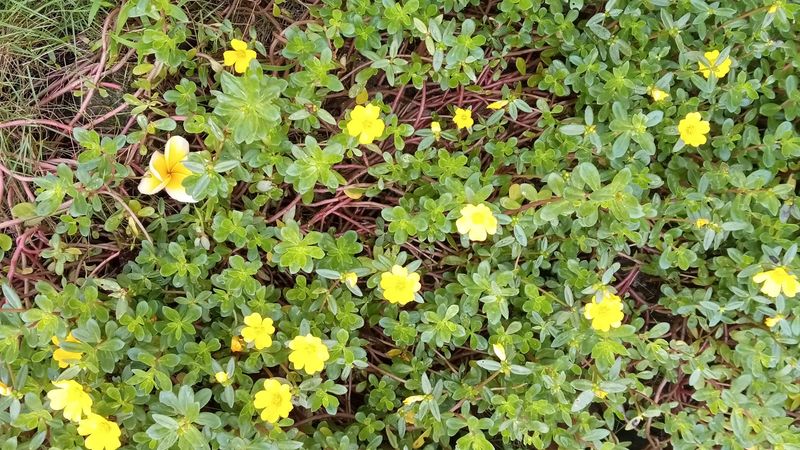
Noticing a low, fleshy weed creeping around your tomato plants at the same time growth seems to stall can feel like a sign that something is seriously wrong underground. Before you start digging or changing your watering schedule, it helps to slow down and read what both the tomato and the weed are actually telling you. The weed is most likely common purslane, an edible volunteer that thrives in warm weather and can point you toward a closer look at your soil. Getting the diagnosis right matters, because the fix depends entirely on what is actually causing the problem.
The low weed beside the tomatoes may be common purslane
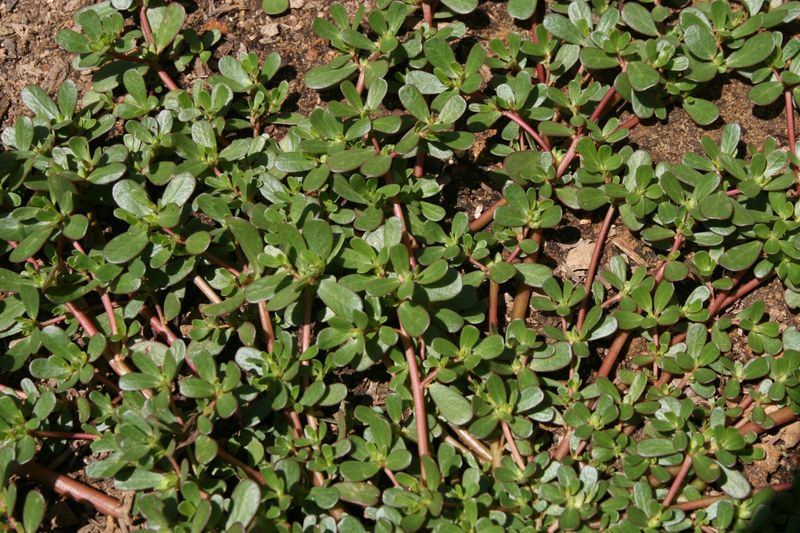
Spotting a low, mat-forming plant threading its way between your tomato stems on a hot summer afternoon is easy to dismiss as just another weed. Before you pull it or interpret it as a warning sign, take a closer look at what it actually is. The plant sprawling beside your tomatoes is most plausibly common purslane (Portulaca oleracea), a warm-season annual that shows up in gardens, driveways, and landscape beds across most of the United States every summer.
According to the University of Minnesota Extension weed identification guide, common purslane forms a low, spreading mat with fleshy, paddle-shaped leaves, stems that are often reddish and succulent, and small yellow flowers that open in bright sunlight. It has a taproot, tolerates drought and compacted conditions, and commonly appears in vegetable gardens throughout the growing season. The NC State Extension plant profile for Portulaca oleracea confirms these traits as consistent identifiers.
Resist the urge to confirm the ID from a single photo or one noticeable feature. Compare the leaf thickness, stem color, flower color, and overall growth habit together before deciding what you have. Purslane’s presence beside a tomato is worth noting as a clue about your site conditions, but it is not, on its own, proof of compaction, failing roots, or any specific soil problem. The UC IPM fact sheet on common purslane notes that it tolerates a wide range of garden conditions, which is exactly why a single sighting tells only part of the story.
First ask whether the tomato needed to grow taller
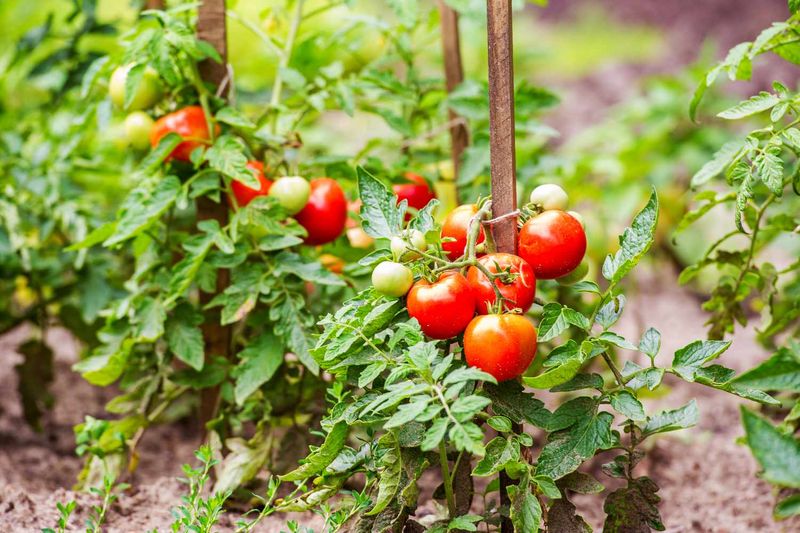
A tomato that has stopped adding new height is not automatically a sick tomato. The most overlooked explanation is also the simplest: the plant may be a determinate variety that has reached its genetically programmed stopping point, and stopping there is exactly what it is supposed to do.
Determinate tomatoes, sometimes called bush tomatoes, form a terminal flower cluster at the top of the main stem after reaching a fixed height, typically somewhere between two and four feet depending on the variety. Once that cluster sets, the plant redirects its energy toward ripening the fruit it has already produced rather than extending upward. University of New Hampshire Extension explains that determinate varieties complete their growth cycle in a compact, predictable form, while indeterminate varieties continue producing new stem growth and fruit throughout the season until frost or disease stops them.
Check the seed packet, plant tag, or variety name online before concluding there is a problem. If the label says determinate and the plant looks healthy, has fruit developing, and shows no wilting or discoloration, the height plateau may simply be the plant doing its job. An indeterminate variety that stalls is a different situation and deserves further investigation into heat, moisture, and root conditions. University of Illinois Extension recommends confirming the growth type as a first step when diagnosing unexpected tomato behavior.
Heat can stall growth without proving root damage
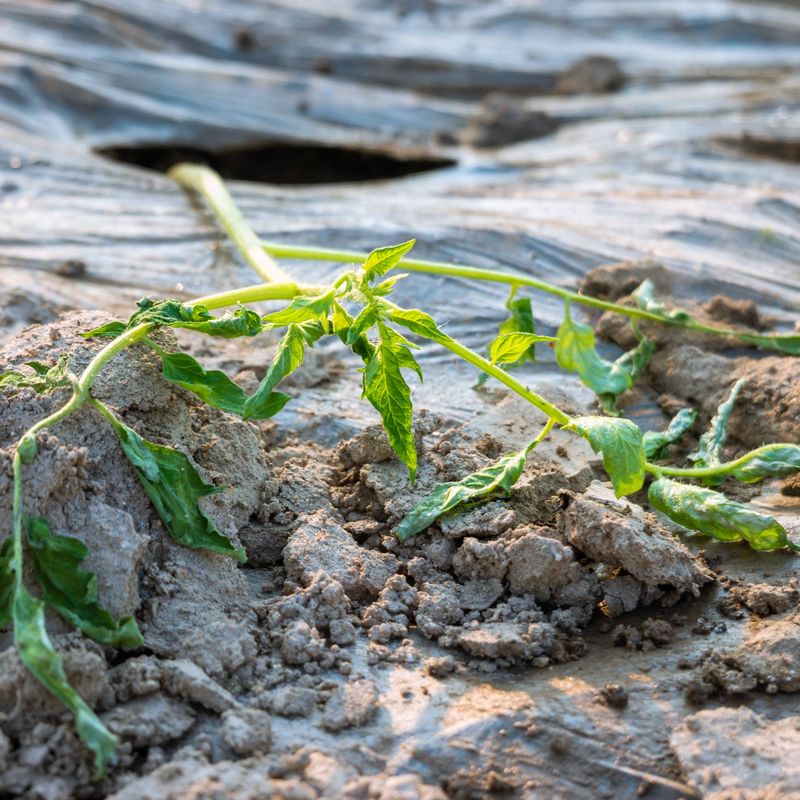
Hot weather can bring an otherwise healthy tomato to a standstill, and that pause does not automatically mean something is wrong below the soil surface. When temperatures climb into the upper 80s and 90s Fahrenheit, tomatoes often slow or stop producing new stem growth, and flower and fruit set can become unreliable or fail entirely.
Penn State Extension explains that tomato blossoms become difficult to pollinate under sustained high heat, particularly when nighttime temperatures stay elevated as well. The UC Agriculture and Natural Resources blog on tomatoes feeling the heat notes that the combination of hot days, warm nights, low humidity, and drought stress compounds the effect, making it harder for the plant to recover between temperature peaks. Cultivar, plant condition, and how long the heat lasts all influence how badly a plant responds, so there is no single temperature that guarantees trouble across every garden.
What heat stress looks like above ground can mimic root failure: the plant sits still, may wilt in the afternoon, and produces little or nothing new. The practical difference is that a heat-paused plant typically recovers when temperatures drop, while a plant with genuine root damage often continues to decline. University of Illinois Extension advises watching the plant across several days and checking soil conditions rather than treating afternoon wilt as immediate evidence of root trouble. Observation and inspection come before any changes to irrigation or fertilization.
Purslane suggests an inspection, not a diagnosis
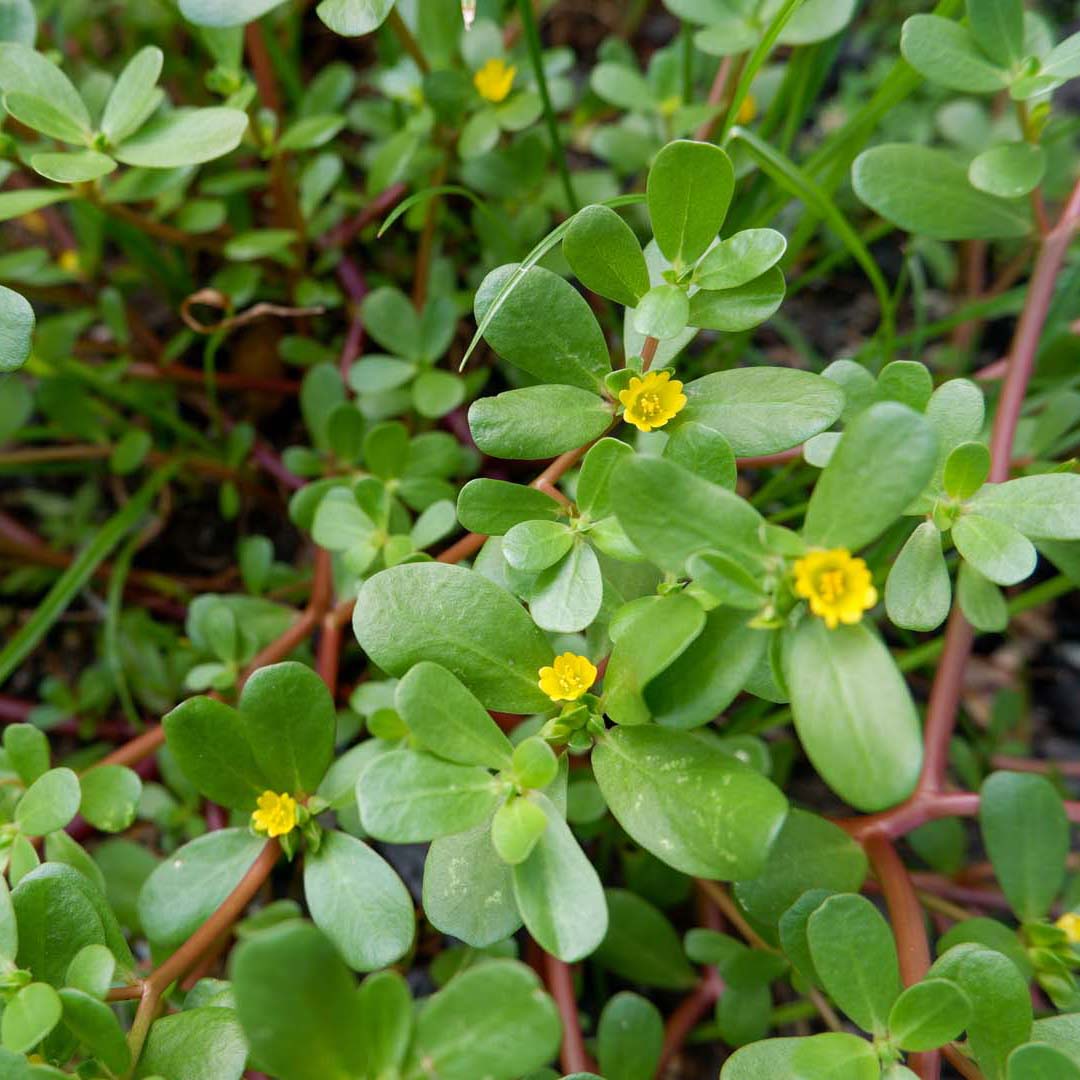
Purslane has a reputation for appearing in tough spots, and that reputation is partly earned. It tolerates dry, compacted, and low-fertility conditions where many other plants struggle. But tolerating hard conditions is not the same as requiring them, and that distinction matters when you are trying to figure out why your tomato has stalled.
According to Cornell University weed science, purslane is considered especially problematic in fertile, well-managed garden soils because it competes aggressively for resources. The University of Minnesota Extension guide confirms that purslane appears across a wide range of soil conditions, not only compacted or depleted ones. Seeing it beside your tomato does not establish that the soil is compacted, that fertility is low, that pH is off, or that roots are failing. It tells you the site is worth examining more closely, and nothing more specific than that.
A sparse, low mat of purslane can shade bare soil and may slow the germination of some other weed seeds, which the University of Florida IFAS publication on purslane acknowledges as a potential incidental benefit. That limited upside does not mean purslane is helping your tomato. A dense mat that crowds the root zone competes directly for water, nutrients, and space, and the University of Georgia Extension tomato production guide classifies weeds as meaningful competitors in vegetable crops. Use the weed as a prompt to look at the soil, not as a verdict about what you will find there.
Inspect the root zone before changing the watering schedule
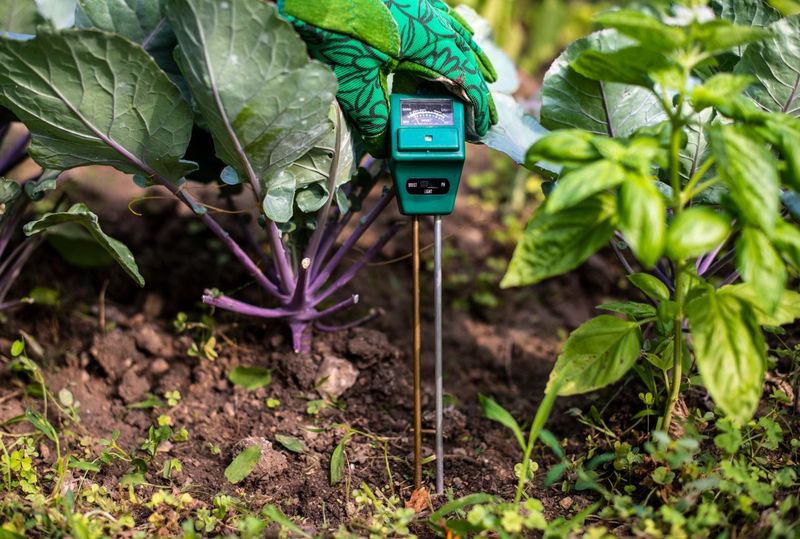
Reaching for the hose or adjusting the drip timer is a natural reaction when a tomato looks stressed in hot weather. The problem is that acting on appearance alone can make things worse. The soil surface can look and feel dry while the deeper root zone still holds adequate moisture, and it can look normal while being persistently saturated below a few inches.
Push a finger, a wooden dowel, or a screwdriver several inches into the soil near the plant before changing anything. If the soil is dry several inches down, the plant likely needs water. If it feels wet or waterlogged well below the surface, adding more water can promote conditions that favor Phytophthora root rot, a soilborne disease that the UC IPM Phytophthora root rot guide notes causes slow growth, wilting, and crown discoloration that becomes more visible during heat stress. Symptoms of heat wilt and root rot can look nearly identical above ground, which is why soil inspection comes first.
Also check for a hard, compacted layer by pressing a probe into the soil. Research on tomato root architecture found that compaction reduced the volume of soil that roots could explore, delayed lateral root formation, and shortened total root length. The University of Georgia tomato guide notes that tomato roots are concentrated in the upper soil profile, often the top 12 to 24 inches, rather than deep subsoil. If you can, gently expose a small section of root or inspect the crown for brown discoloration or water-soaked tissue.
The University of Maryland Extension common tomato problems resource recommends checking the crown and lower stem rather than diagnosing solely from what you see above ground.
Thin or remove purslane when it crowds the tomato
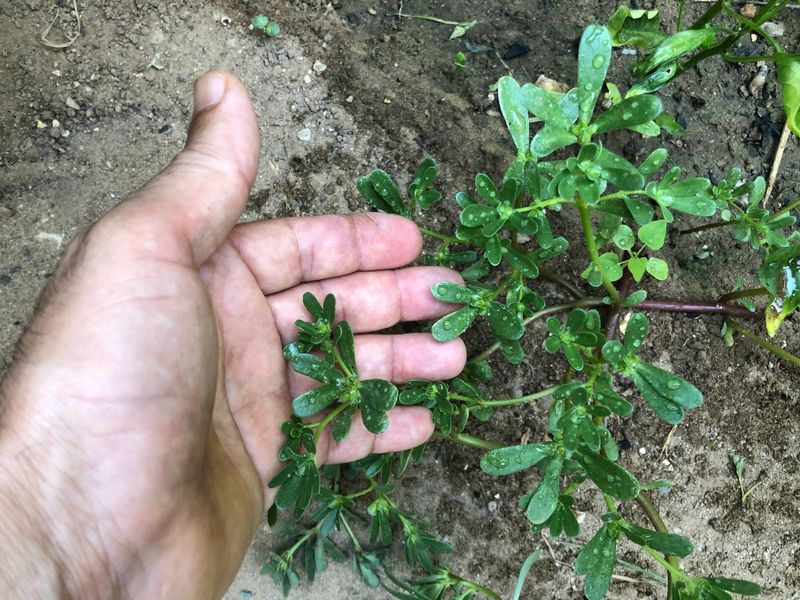
Once you have identified what is likely purslane and confirmed it is growing close to the tomato stem, the practical question is how much to leave and how much to remove. A scattered plant or two at the edge of the bed is a different situation from a dense mat that has filled the space around the tomato’s base.
The UC IPM guidance on common purslane emphasizes pulling plants while they are small and before they produce seed, because a single purslane plant can generate thousands of seeds that persist in the soil for years. Hand-pull plants rather than cutting them at the surface, and pick up every detached stem and leaf you remove. Purslane can re-establish from stem fragments left on moist soil, so leaving pulled material on the bed is not a safe shortcut.
Thin or remove any plants growing within the tomato’s immediate root zone, especially those crowding the stem. The University of Georgia tomato guide treats weeds as direct competitors for water, nutrients, and space in vegetable plantings. The Missouri Department of Conservation field guide notes that purslane can form a dense, difficult-to-control mat once established. Removing that competition may reduce stress on the tomato, though it will not reverse heat effects, correct a determinate variety’s natural height limit, or repair root damage from disease.
A sparse volunteer well outside the root zone is less urgent, but it is still worth monitoring before it sets seed.
Identify purslane confidently before eating it
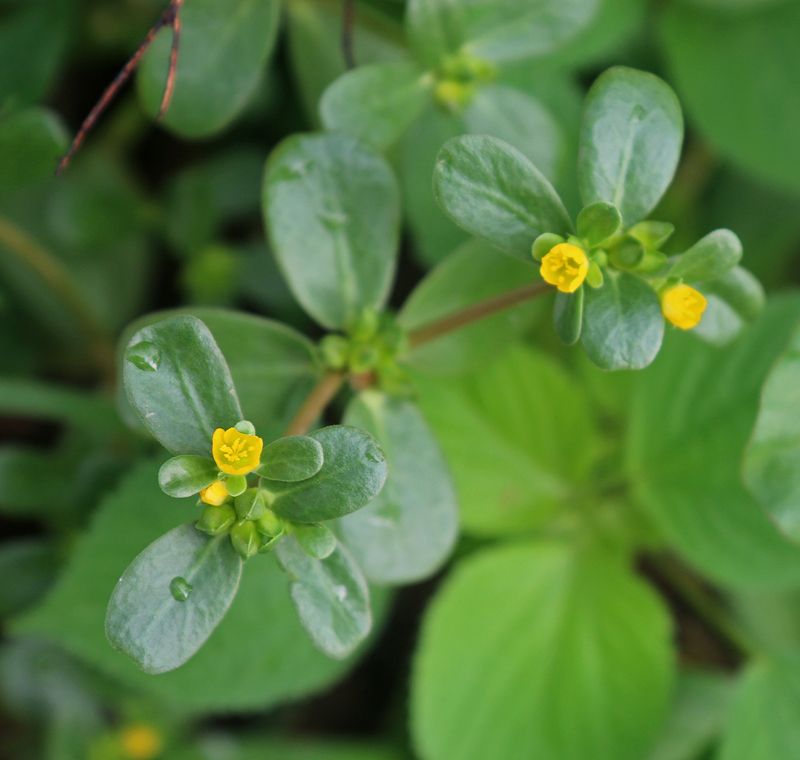
Common purslane has a long history as a food plant, and correctly identified plants can be eaten raw in salads, cooked as a pot herb, or used as a garnish. The key phrase is “correctly identified.” Eating a plant because it has thick leaves or because it looks like something you saw in a photo is not a safe approach.
Reliable identification requires checking several traits together. Look for fleshy, paddle-shaped leaves, reddish or pinkish succulent stems, a spreading low growth habit, and small yellow flowers that open in direct sunlight. Equally important is what purslane does not have: milky sap. The Ontario government weed identification guide specifically distinguishes purslane from prostrate spurge by noting that spurge produces a milky latex when a stem is broken, while purslane does not.
Spurge also has thinner, less fleshy leaves. If breaking a stem produces any milky liquid, stop and do not eat the plant.
The University of Florida EDIS publication on purslane explicitly recommends identifying the species before consumption because other plants can resemble it. Once you are confident in the identification, the Cornell Cooperative Extension Master Gardener blog on purslane notes that leaves, stems, flowers, and seeds are all used in cooking.
Purslane contains oxalates, and extension guidance on purslane oxalate content advises that people with kidney disease, kidney stones, gout, or related dietary restrictions should consult a clinician before eating it or avoid it entirely. Separately, the ASPCA lists common purslane as toxic to dogs, cats, and horses because of soluble calcium oxalates. Keep pets away from plants in the garden and from any purslane you bring inside.
Use measured watering and mulch during hot weather
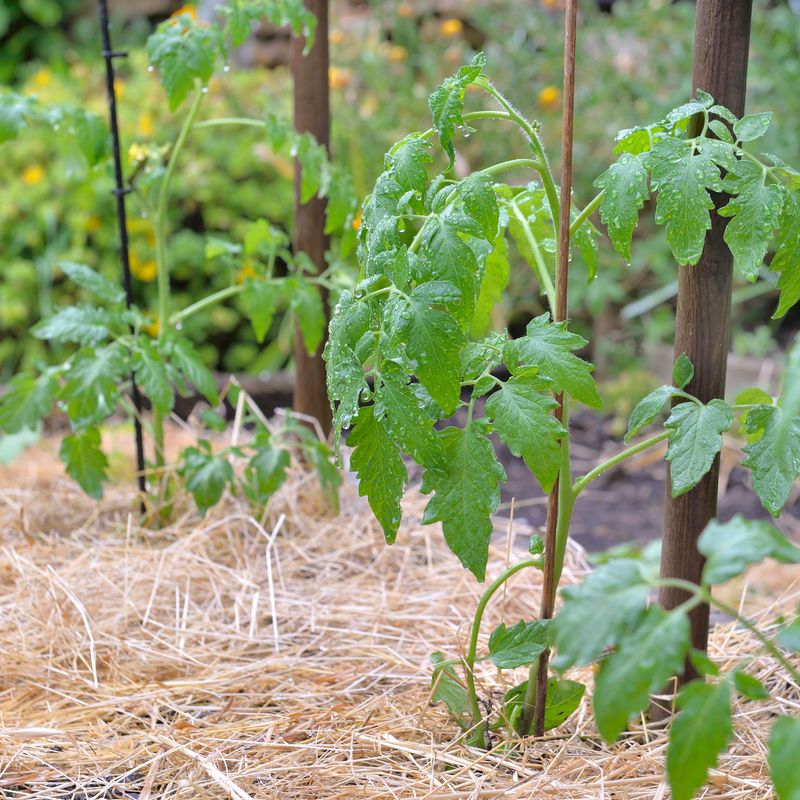
After inspecting the soil and ruling out compaction, waterlogging, and root disease, the practical heat-response plan is straightforward. Water deeply and at the root zone when the soil is actually dry several inches below the surface, and stop before the soil becomes saturated. Consistent moisture, not frequent shallow sprinkles, is what tomato roots need during hot spells.
University of Minnesota Extension guidance on gardens in heat recommends checking soil moisture below the surface and watering deeply when needed rather than watering on a fixed schedule that ignores actual conditions. The University of Connecticut home garden tomato fact sheet and the University of Arizona Extension tomato guide both note that established tomatoes generally need roughly 1 to 2 inches of water per week as a starting range, adjusted for rainfall, soil type, container size, and temperature. That range is a reference point, not a rule to follow blindly.
Mulch is one of the most reliable tools for protecting tomatoes during heat. A clean layer of straw, wood chips, or shredded leaves spread 2 to 3 inches deep over the root zone slows evaporation, buffers soil temperature, and can reduce the frequency of watering needed. Texas A&M AgriLife Extension identifies approximately 75 degrees Fahrenheit as an optimum root-zone temperature and recommends mulch to keep the soil closer to that range during summer heat. Keep mulch pulled a few inches away from the main stem to avoid trapping moisture against the crown.
If the soil stays persistently wet despite normal watering, address drainage or investigate root disease rather than cutting water further without understanding the cause.
Verify what the weed and tomato are telling you
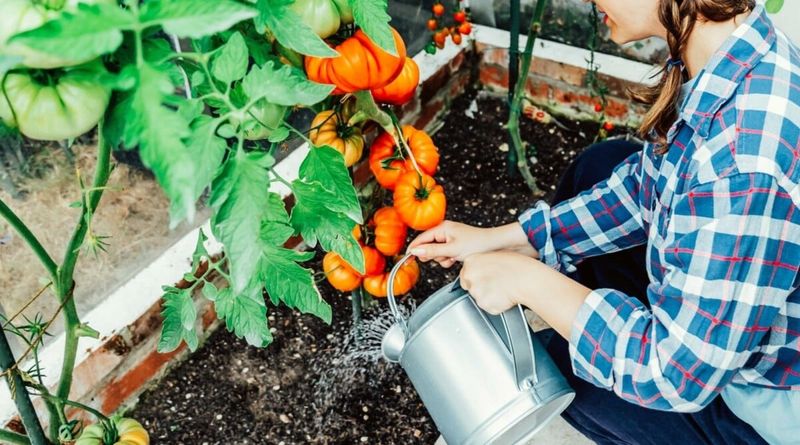
Working through a stalled tomato and an unfamiliar weed does not require guessing. Start with the tomato variety: determinate plants naturally stop growing taller, and that alone explains many height plateaus. If the variety is indeterminate, check for heat stress, then inspect soil moisture and drainage below the surface before adjusting irrigation.
Confirm the weed’s identity using multiple traits before deciding whether to eat it or simply remove it. Cornell’s purslane weed profile and the UNH tomato fact sheet together reinforce that both plant identification and variety type are foundational steps, not optional ones. Pull purslane that crowds the root zone, and monitor any you leave for seed production.
Common purslane can be a useful prompt for closer observation and, once confidently identified, an edible bonus from the garden. What it cannot do is reliably diagnose compaction, root failure, or any other specific problem on its own. Inspect the root zone because it is worth checking, not because the weed proves something is wrong there.