
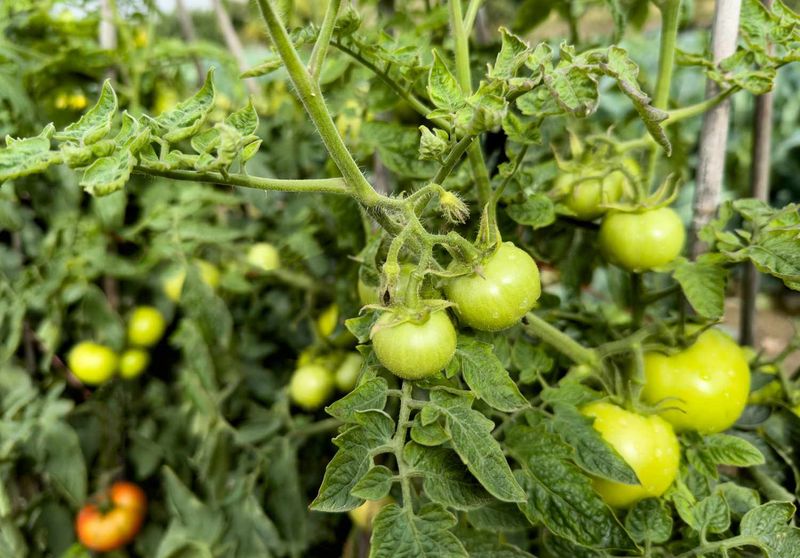
Walking out to your garden and finding tomatoes that have been full-sized and green for weeks is genuinely frustrating, especially when the plants look healthy and the season is slipping away. The good news is that most cases come down to one of two very different problems, and once you can tell them apart, you know exactly where to focus. Some plants are so leafy and lush they barely bother flowering, while others are loaded with green fruit that simply will not color up in the heat. Knowing which situation you are looking at changes everything about how you respond.
Start by identifying the symptom
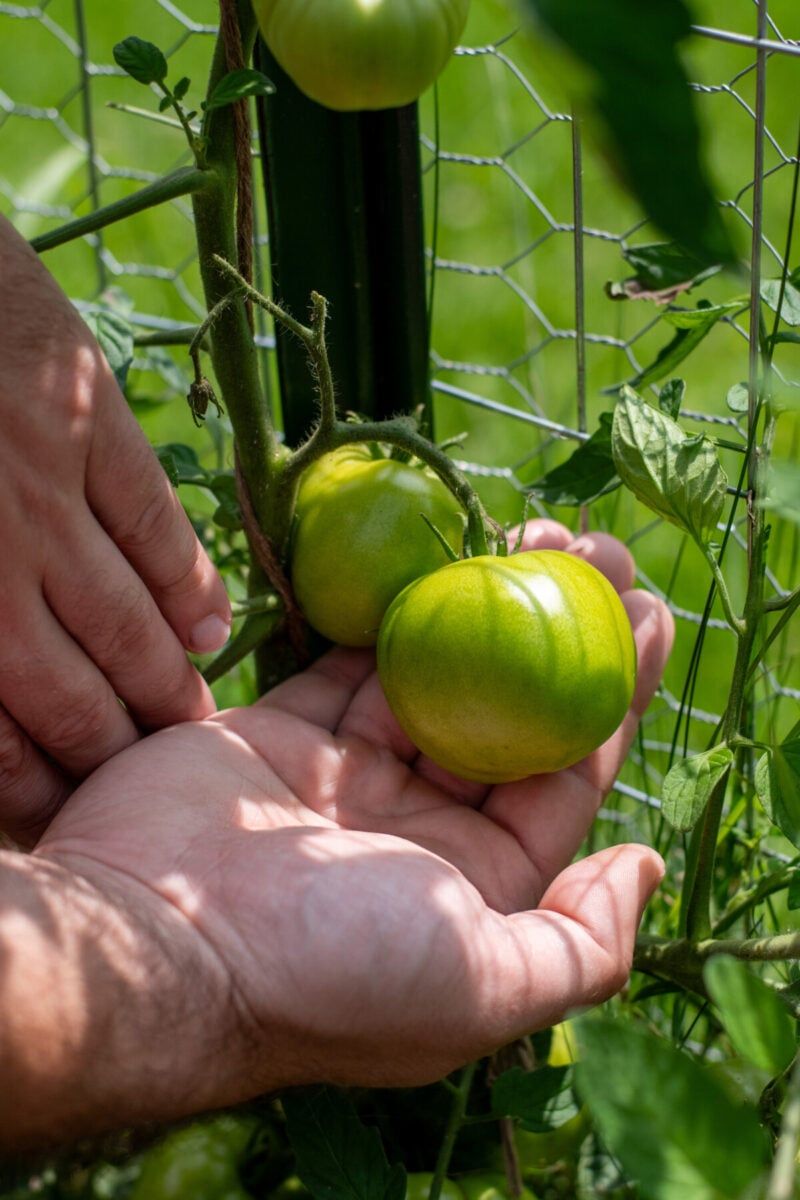
Not every stuck tomato tells the same story, and treating them all the same way can make things worse. Before reaching for fertilizer, a hose, or pruning shears, take a close look at what the plant is actually doing.
The first pattern to watch for is a plant that is unusually lush and dark green but producing very few flowers or fruits. The vines may be thick and sprawling, the leaves a deep, saturated green, but blossoms are scarce and actual tomatoes are rare. When a plant looks more like a houseplant than a food crop, excess nitrogen is worth putting on your list of suspects. Virginia Cooperative Extension notes that heavy nitrogen applied before fruit set can result in “all vine and no fruit,” with flowering and harvest delayed for weeks.
That said, lush foliage alone does not prove overfertilization. Heat, insufficient light, water stress, poor pollination, plant age, and certain diseases can also reduce flower and fruit production.
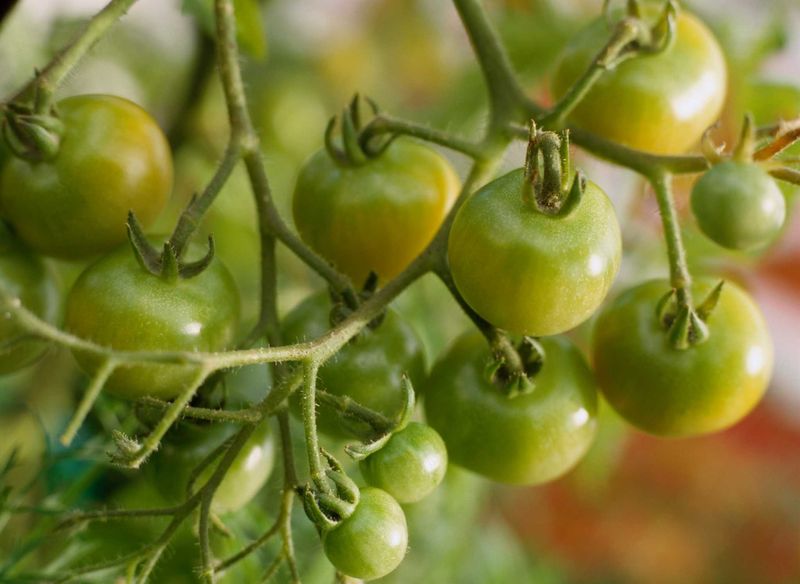
The second pattern is quite different: a plant carrying many full-sized green tomatoes that simply refuse to turn red during a stretch of hot weather. Here, University of Minnesota Extension points to sustained high temperatures as a direct reason color development stalls. The same plant can experience both problems at once, but no single observation locks in the diagnosis on its own.
Heat can delay color after fruit has formed
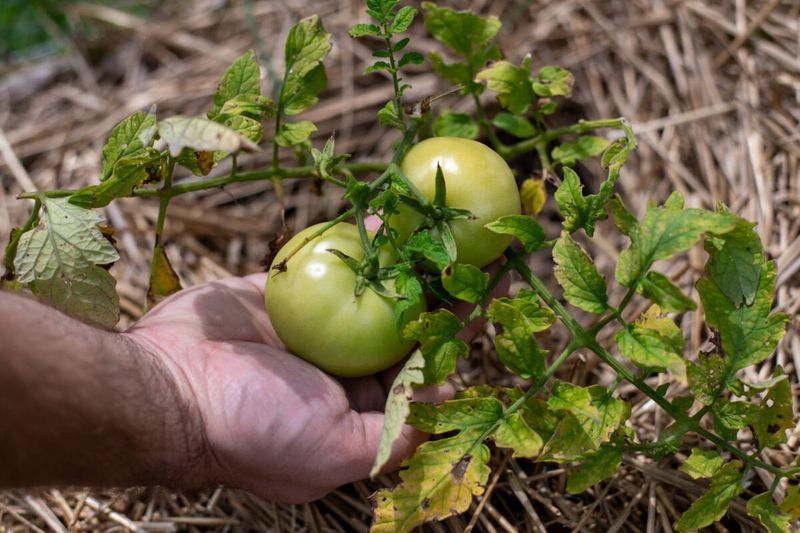
Once a tomato has grown to full size, most gardeners assume it is just days away from turning red. During a heat wave, that assumption can leave you waiting much longer than expected.
Tomato color development depends on a fairly narrow temperature window. Ripening happens fastest somewhere around 68 to 77 degrees Fahrenheit, and Oregon State University Extension explains that red pigments may not form normally when temperatures climb too high. Penn State Extension confirms that sustained heat can delay or disrupt normal color development in existing fruit, which is why a garden full of green tomatoes in July or August often points straight to the weather rather than something the gardener did wrong.
Heat affects pollination and future fruit set too, but that is a separate problem. Virginia Cooperative Extension reports that daytime temperatures above 90 degrees Fahrenheit and nighttime temperatures above 70 degrees Fahrenheit can reduce flowering and fruit set on new blossoms. So a plant can have green fruit that will not color and also be failing to produce new flowers, both for heat-related reasons.
The reassuring part is that heat delay does not automatically mean crop failure. Tomatoes often resume coloring once cooler weather returns. Severe or prolonged heat, however, can cause uneven ripening, soft spots, poor color, or sunscald, so protecting the plant now still matters even if red fruit is weeks away.
Excess nitrogen can leave the plant all vine and little fruit
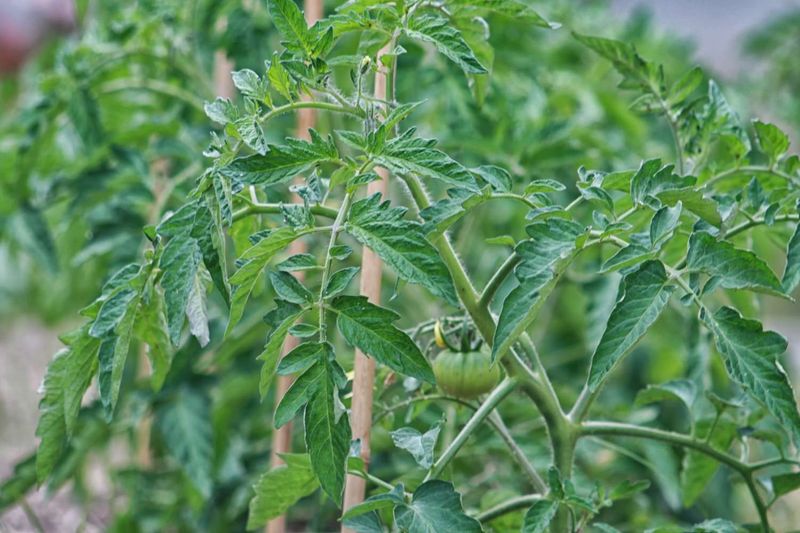
A tomato plant that looks almost too healthy, with thick stems, oversized leaves, and a deep forest-green color, can actually be signaling a problem rather than peak performance. When that same plant is producing almost no flowers or fruit, excess nitrogen is a reasonable explanation to consider.
Nitrogen is the nutrient most responsible for leafy, vegetative growth. When too much is available in the soil, the plant can keep channeling its energy into producing more foliage rather than shifting into reproductive mode. Virginia Cooperative Extension describes this outcome plainly: heavy nitrogen applications before fruit set can produce plants that are all vine with little to no fruit, and flowering and ripening can be pushed back by weeks.
The sources of excess nitrogen are not always obvious. Rutgers New Jersey Agricultural Experiment Station specifically flags fresh manure, lawn fertilizer, and high-nitrogen products as common culprits for gardeners who mean well but apply too much. University of Missouri Extension also cautions against repeated feeding once plants are established and actively growing.
Fertilizer in general is not the enemy. The problem is excess nitrogen applied at the wrong time or in the wrong amount. Lush foliage with few flowers is a clue worth taking seriously, but it remains a clue rather than a guarantee, since heat, light, water, and plant age can produce similar-looking results through entirely different mechanisms.
Stop unnecessary nitrogen and skip untested boosters
If your tomato plant fits the first pattern, meaning it is unusually leafy with very few flowers or fruits, the most useful step right now is straightforward: stop any nitrogen-heavy applications you have been making and do not add more until the situation changes.
That means pausing repeated feedings, setting aside the lawn fertilizer, and skipping fresh manure for the rest of the season. Rutgers advises against fertilizers where the nitrogen level is more than three times the phosphorus or potassium level when a plant is already showing excessive foliage and poor fruiting. Virginia Cooperative Extension is equally clear that fertilizer rates should match the crop’s actual needs rather than a habit or a general schedule.
Resist the urge to substitute another product as a quick fix. Phosphorus, potassium, calcium, and commercially sold tomato boosters are sometimes marketed as ripening accelerators, but applying them without a soil test or a confirmed deficiency can cause real harm. Utah State University Extension warns that overapplication of fertilizer can lead to salt buildup in the soil, root damage, nutrient imbalances, delayed maturity, and reduced yield. USU’s soil fertility guidance recommends basing any fertilizer decision on a soil test.
Stopping unnecessary nitrogen will not turn existing green tomatoes red overnight. Nitrogen already in the soil can persist for several weeks, and how quickly the plant responds depends on soil type, weather, the cultivar, and how much was applied. The goal here is to stop making the problem worse, not to promise an instant red harvest.
Protect the plant while the heat passes
Whether your tomatoes are stuck green because of heat or because of a nitrogen imbalance, the plant still needs consistent support while you wait for conditions to improve. A few practical steps can reduce additional stress without creating new problems.
Soil moisture is one of the most important levers you have. University of Minnesota Extension recommends keeping moisture consistent rather than swinging between dry soil and heavy flooding, with roughly 1 to 1.5 inches of water per week as a general target, adjusted for your soil type, rainfall, and container situation. Water deeply at the base of the plant rather than sprinkling the foliage lightly, which encourages shallow roots and can spread disease.
Penn State Extension recommends applying 2 to 3 inches of seed-free straw or bark mulch around the base of the plant, kept away from direct contact with the stem. Mulch slows evaporation and buffers soil temperature swings, both of which reduce heat stress on the root zone.
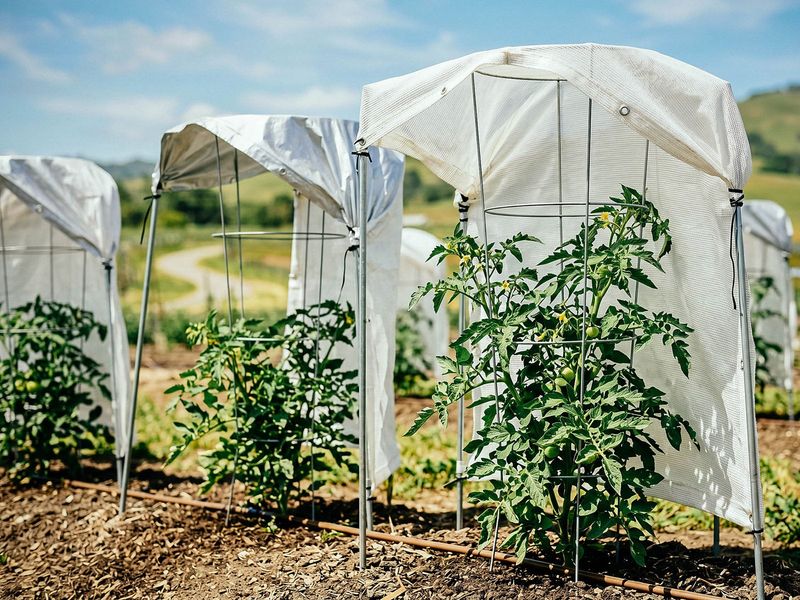
Temporary shade cloth can also help during the hottest stretches. Penn State identifies shade cloth as a reasonable heat-stress measure, and Oregon State University Extension notes that temperatures under shade cloth can be meaningfully cooler. Keep airflow moving and avoid enclosing plants in stagnant covers that trap heat.
Avoid fertilizing, transplanting, or doing major pruning during extreme heat. Healthy foliage that shades developing fruit should stay in place: Oregon State warns that overexposed green fruit can suffer sunscald, and stripping leaves to let in more sun is not supported as a ripening technique. Heavy watering as an emergency measure can contribute to fruit cracking and blossom-end rot, so consistent moisture beats dramatic intervention every time.
Harvest mature-green fruit for indoor ripening
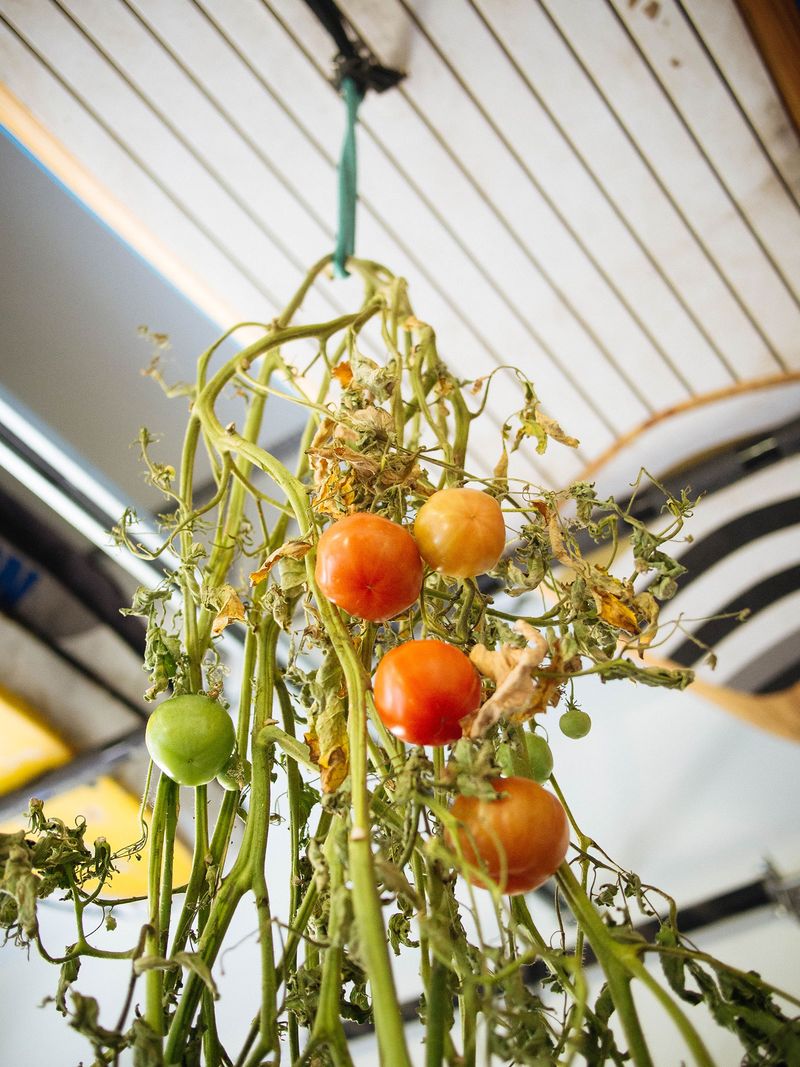
When outdoor temperatures continue to hover in ranges that suppress color development, bringing fruit indoors is a legitimate option, but only for tomatoes that are actually ready for it.
A mature-green tomato has reached full size and its internal chemistry has shifted to the point where it can finish ripening without the vine. A breaker-stage tomato has already begun to show a hint of color change at the blossom end. Penn State Extension explains that sunlight on the fruit is not required for ripening, so a windowsill in direct sun is not necessary and may actually cause heat damage. A counter or shelf away from direct light, at a moderate room temperature, works well.
Temperature during indoor ripening matters more than most gardeners realize. University of Georgia Extension notes that mature-green tomatoes ripen best around 63 to 70 degrees Fahrenheit. Penn State’s tomato production guidance adds that temperatures above about 80 degrees Fahrenheit can interfere with normal ripening indoors just as they do outside. Avoid storing harvested tomatoes in a hot garage or on a sunny windowsill that heats up during the day.
Immature green tomatoes that have not yet reached the mature-green stage generally will not ripen successfully indoors, so harvest selectively rather than picking everything at once. The broader decision rule for the whole season comes down to this: if your plant is overly leafy with few flowers, focus on reducing unnecessary nitrogen; if full-sized green fruit is the issue, prioritize heat protection, consistent moisture, and patience. Weather sets the final timeline, not any single action in the garden.