
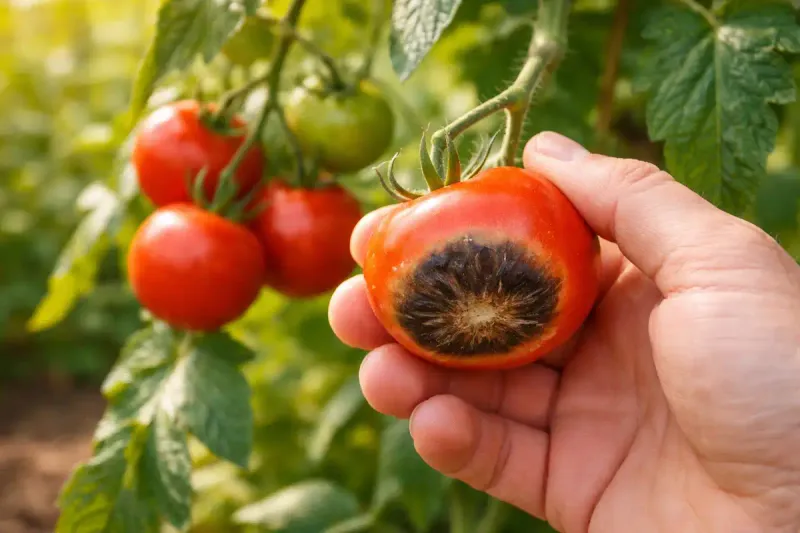
Finding a dark, sunken patch on the bottom of a tomato you have been watching all season is genuinely discouraging. That lesion has a name, blossom-end rot, and it shows up most often right after a stretch of hot weather, which makes a lot of gardeners wonder what they did wrong. The good news is that understanding what actually causes it points straight to a practical fix, and the fix is more about building a steady moisture routine than rushing out for a soil amendment.
The blossom end shows the first clue
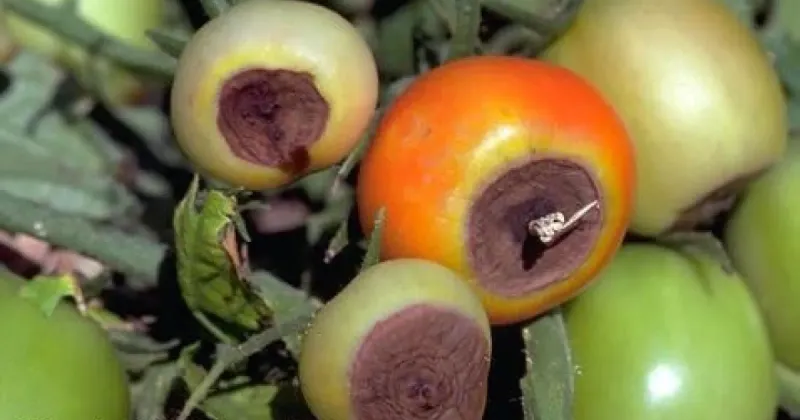
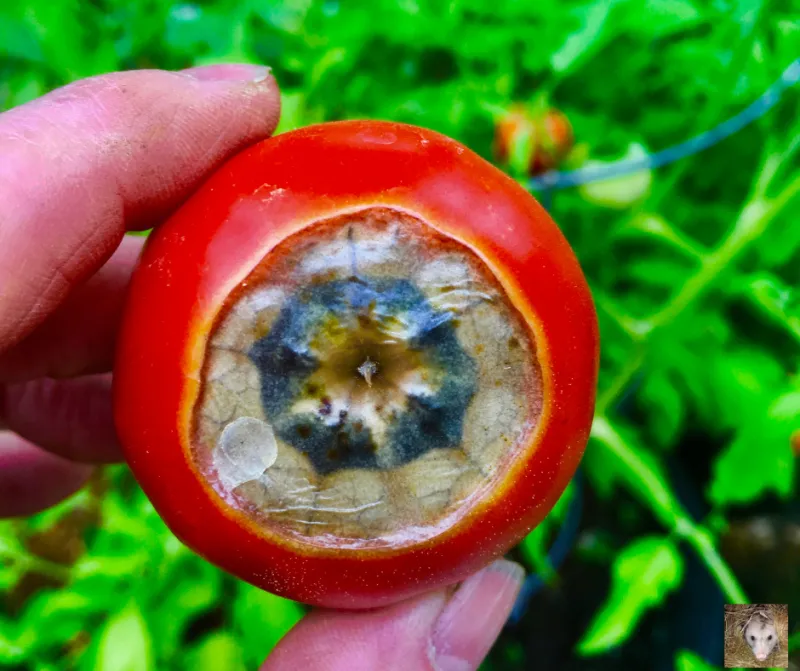
Blossom-end rot announces itself in a specific, recognizable way. A small tan or water-soaked spot appears on the bottom of the fruit, the end opposite the stem, while the rest of the tomato may still look perfectly healthy. Over the following days, that spot darkens to brown or black, sinks inward, and dries into a firm, leathery patch. Utah State University Extension describes this progression clearly: the affected tissue collapses and becomes dry and tough rather than soft or weeping.
Sometimes the damaged area looks wetter or moldier than expected. Secondary fungi or bacteria may colonize the already-dead tissue, giving it a darker, mushier appearance. That secondary growth is not the original cause of the problem, and the rot itself will not jump to neighboring plants or spread through the soil the way a fungal disease can.
Knowing what blossom-end rot is not helps just as much as knowing what it is. Sunscald typically shows up as a pale, papery, or whitish patch on the side of the fruit that faces the sun, not the bottom. Oregon State University Extension notes that blossom-end rot is a physiological disorder, not an infectious disease, so it does not spread from plant to plant. Anthracnose and other fungal diseases typically produce lesions on the fruit sidewalls or elsewhere on the plant.
A dry, sunken lesion locked to the blossom end is the signature of this specific disorder, and that location is the first clue that points you toward the real cause.
The calcium problem usually starts with delivery
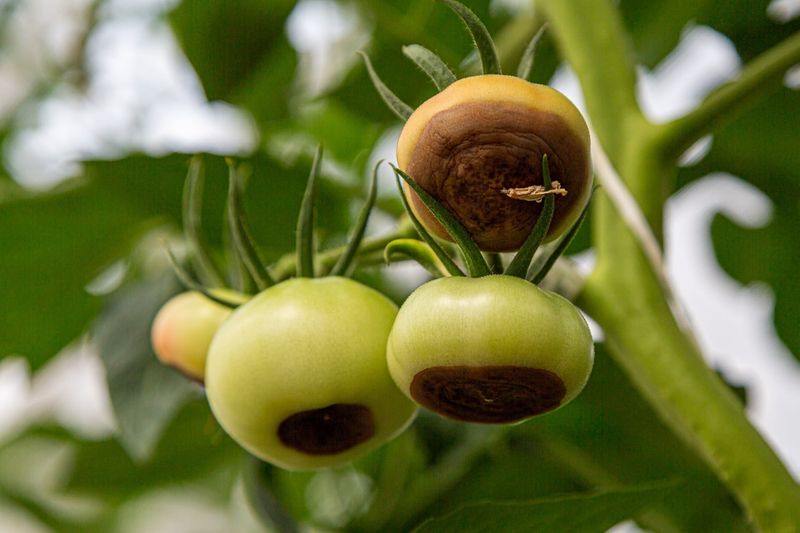
Blossom-end rot is classified as a localized calcium-deficiency disorder in developing fruit. The affected tissue does not receive enough calcium to stay structurally intact, which is why the cells collapse. What surprises many gardeners is that the soil around the plant often contains perfectly adequate calcium. Penn State Extension explains that the disorder frequently reflects a problem with calcium uptake, transport, or allocation rather than a shortage in the ground.
Calcium moves through a tomato plant almost entirely with the flow of water. Roots absorb calcium dissolved in soil moisture, and that solution travels upward through the plant’s vascular tissue. Young, rapidly growing fruit at the blossom end is one of the last destinations in that flow, so any disruption along the way tends to show up there first.
Several conditions can interrupt delivery even when calcium is present in the soil. Dry soil reduces the amount of calcium-carrying water available to the roots. Waterlogged or compacted soil can damage root function and slow uptake. University of Georgia Cooperative Extension points out that rapid fruit growth during warm weather increases calcium demand faster than the plant can always meet it.
High salinity, root injury, and excessive nitrogen fertilization can also interfere. Adding a calcium product to the soil will not automatically correct an active episode if the underlying delivery problem, whether that is moisture stress, root damage, or something else, remains unaddressed.
What a hot spell can—and cannot—tell you
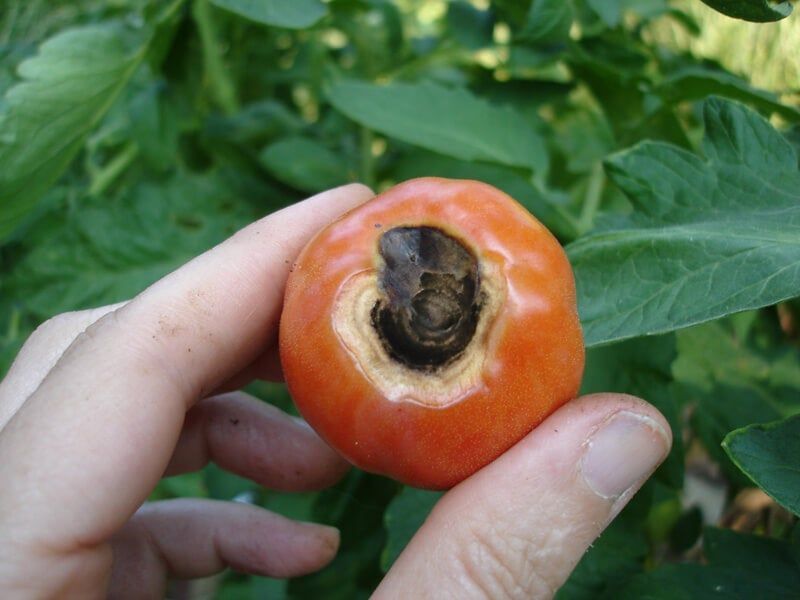
Seeing blossom-end rot appear right after a heat wave is common enough that many gardeners assume the hot weather caused it directly. Heat does raise the risk, but the connection is more layered than a single cause. High temperatures increase how much water a tomato plant loses through its leaves, and that higher demand can outpace what the roots supply, reducing the calcium flowing into young fruit. Penn State Extension notes that high light intensity and rapid fruit growth during warm periods add to the strain even when watering has been reasonably regular.
The timing of visible symptoms adds another layer of confusion. Blossom-end rot begins during early fruit development, often before the lesion is visible to the eye. By the time a gardener notices the dark patch, the triggering stress may have happened days or even a week earlier. A heat episode that ended several days ago can still show up as fresh-looking damage today.
A dry stretch followed by heavy irrigation is a particularly disruptive pattern. The root zone swings from dry to saturated, and that instability interferes with consistent calcium delivery. According to University of Georgia Cooperative Extension guidance on calcium nutrition in tomatoes, erratic moisture is a recognized contributing factor. Even so, heat alone, independent of any watering mistake, can push calcium demand high enough to trigger the disorder.
A hot spell tells you to investigate moisture conditions carefully, but it does not automatically mean you watered incorrectly.
Build a watering rhythm from the soil, not the calendar
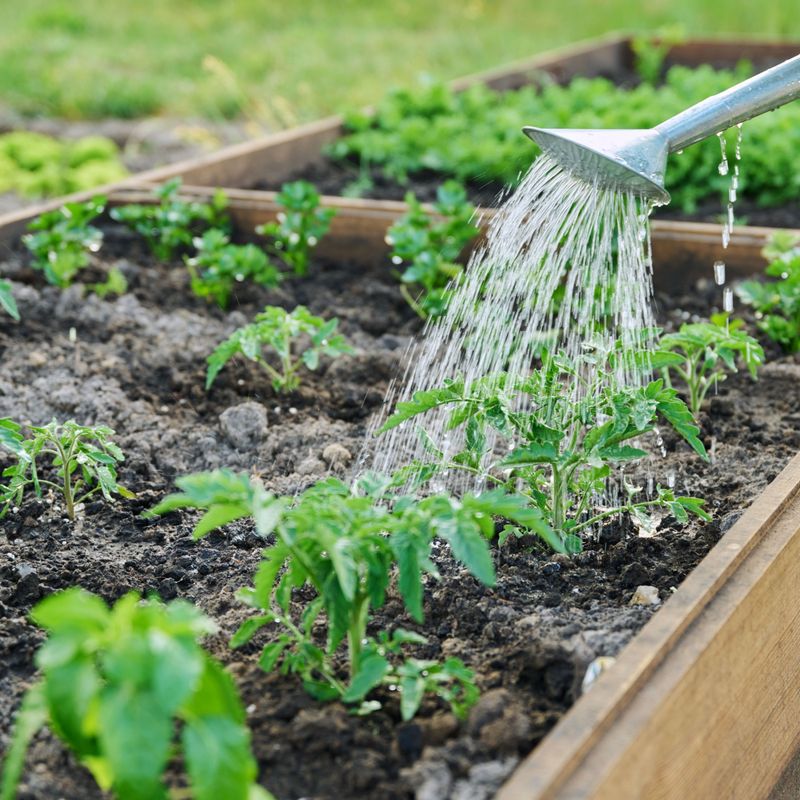
Watering on a fixed schedule, say every Tuesday and Friday regardless of conditions, is less reliable than checking the soil directly. Stick a finger or a thin trowel into the soil several inches near the base of the plant. If the soil feels dry at that depth, water thoroughly. If it still feels cool and faintly damp, give it another day.
That simple check accounts for rainfall, temperature swings, and soil type in a way a calendar cannot.
When you do water, water deeply enough to wet the full root zone rather than applying a brief sprinkle. Shallow, frequent sips encourage roots to stay near the surface, where they are most exposed to drying. Illinois Extension recommends keeping the root zone evenly moist, with roughly 1 inch of rain or irrigation per week as a general starting benchmark. That figure shifts considerably depending on your situation: sandy soil drains faster and needs more frequent attention, raised beds dry out quicker than in-ground plots, and containers can need daily checks during a heat wave.
University of Minnesota Extension guidance on growing tomatoes cautions against using leaf wilting alone as your signal to water, because tomatoes can curl their leaves temporarily during peak afternoon heat even when the soil is adequately moist. Morning watering is generally a good practice during extreme heat because it reduces evaporation and gives the plant water before the hottest part of the day. Oregon State University Extension adds that a severely wilted plant should be watered promptly rather than left wilted until the next morning routine. The goal throughout is consistent moisture, not a wet schedule and not a dry one.
Protect the root zone between waterings
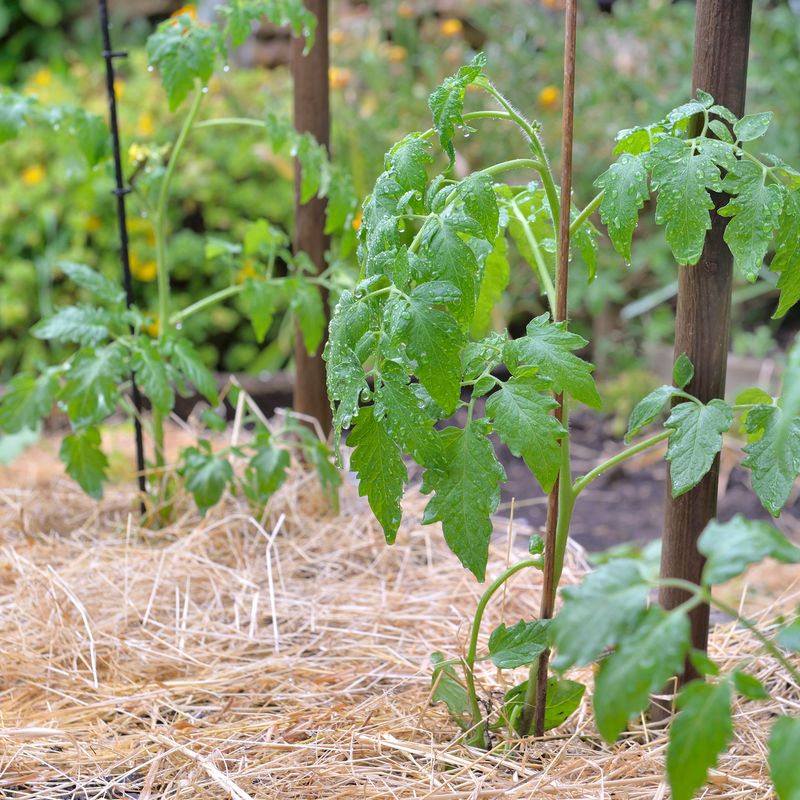
Mulch is one of the most straightforward ways to hold the progress you make with good watering. A 2- to 3-inch layer of straw, shredded leaves, or wood chips slows evaporation from the soil surface, moderates temperature swings that can stress roots, and helps moisture stay available longer between waterings. Keep organic mulch pulled slightly away from the main stem to allow air circulation and reduce the chance of stem rot at the soil line. Utah State University Extension includes mulching as a practical step in managing blossom-end rot risk.
Container-grown tomatoes need a bit more attention. Pots dry out far faster than in-ground beds, and during hot, dry weather a container may need checking every morning and sometimes again in the afternoon. Illinois Extension points out that drainage must remain open, and the pot should never sit in standing water, because waterlogged roots are just as damaging to calcium uptake as dry ones.
Root health matters as much as surface moisture. Avoid cultivating soil too close to the base of the plant, since shallow hoeing can easily slice through feeder roots. Severe pruning, transplant shock from late-season moves, and poorly drained, compacted soil all reduce root function and make it harder for the plant to absorb water and calcium consistently. Colorado State University Extension guidance on container vegetable gardening reinforces that adequate drainage and healthy root space are foundational, not optional.
Protecting the root zone between waterings is essentially protecting the plant’s calcium-delivery system.
Calcium amendments are not the first rescue
Reaching for a bag of eggshells or a bottle of calcium spray is a natural first instinct, but most of those remedies will not correct an active episode of blossom-end rot. Eggshells are composed mostly of calcium carbonate, which breaks down slowly in soil. University of Minnesota Extension research on common soil remedies concludes that eggshells decompose too slowly to deliver meaningful calcium during a current growing season, let alone in time to rescue fruit already developing on the plant.
Epsom salts are a separate misfire. They supply magnesium, not calcium, and excess magnesium can actually compete with calcium uptake in the root zone. Applying Epsom salts to a plant with blossom-end rot may worsen the calcium-delivery problem rather than help it.
Lime, gypsum, calcium nitrate, and calcium chloride are sometimes mentioned as amendments, but each carries its own risk profile. Lime raises soil pH as well as supplying calcium, which can create problems if the pH is already adequate or high. Gypsum supplies calcium without the same liming effect, making it a more neutral option when calcium is genuinely low, but it is still not a quick fix. Calcium nitrate adds nitrogen along with calcium, which can push excessive vegetative growth and worsen the imbalance.
Research published in Scientia Horticulturae found that excess calcium salts applied to whole plants can increase salinity stress rather than correct the disorder. Oregon State University Extension and University of Georgia Extension both note that foliar calcium sprays have not proved a reliable substitute for stable root-zone conditions, because calcium is relatively immobile once inside the plant. A soil test is the right starting point for any amendment decision. University of Minnesota Extension tomato disorder guidance recommends letting soil-test results, product analysis, and label directions determine whether any amendment is warranted.
Remove damaged fruit and protect the next flush
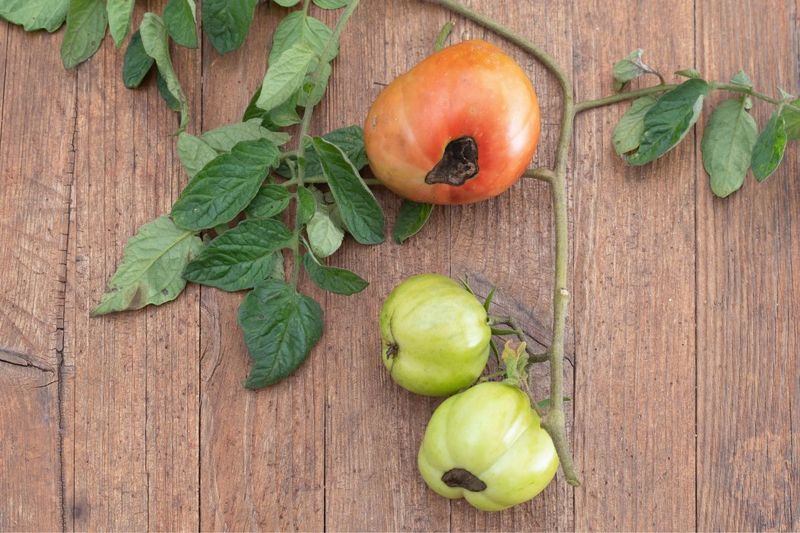
Once blossom-end rot marks a fruit, that tissue will not recover. The damaged cells are already dead, and no amount of improved watering or added calcium will reverse the lesion. Removing affected fruit is the most productive response because it allows the plant to stop allocating resources to a fruit it cannot save and redirect them toward the healthier ones developing later. University of Minnesota Extension recommends removing fruit with obvious blossom-end rot for exactly this reason.
Fruit with secondary mold or bacterial growth on the damaged tissue should be discarded rather than composted or eaten. The blossom-end rot itself is not poisonous, but secondary organisms may colonize the dead tissue and the prudent step is to remove badly affected or moldy fruit from the garden entirely. Fruit where only a small portion of the blossom end is affected and the rest looks and smells normal may still be usable after cutting away the damaged area, though that is a judgment call best made carefully.
Fertilizer choices matter for the fruit that follows. Excessive nitrogen encourages rapid, leafy growth that can outpace calcium delivery to young fruit, worsening the very conditions that triggered the problem. Avoid applying ammonium-heavy fertilizers without a soil-test reason to do so. Utah State University Extension lists excess nitrogen as a recognized contributing factor.
If blossom-end rot returns season after season despite stable moisture and good root care, consider trying cultivars described as less susceptible. Cherry tomatoes and smaller-fruited types are generally less prone than large slicers or elongated paste types, though no cultivar is fully immune to the disorder.
Use the heat episode as a moisture check, not a verdict
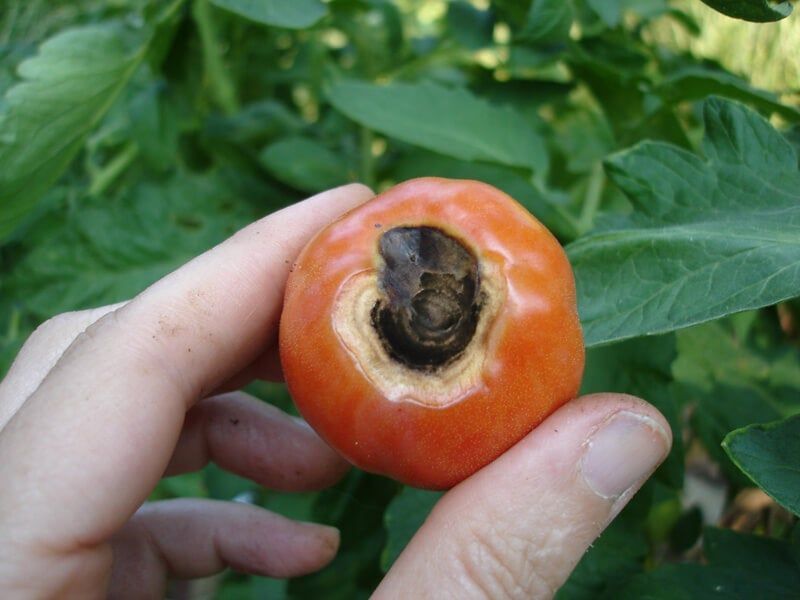
A flare-up of blossom-end rot after hot weather is a useful signal, not a confirmation that you watered incorrectly or that your soil is calcium-poor. Treat it as a prompt to run through a short checklist. Confirm the symptom is a dry, sunken lesion at the blossom end and not sunscald or a disease on the fruit sidewall. Then check soil moisture several inches down, and if it is dry, water deeply and consistently going forward without letting the soil stay saturated.
Add mulch if you have not already, and verify that drainage is working in both in-ground beds and containers.
Penn State Extension and University of Minnesota Extension both point back to consistent, soil-checked moisture and healthy roots as the foundation of prevention. Remove damaged fruit, hold off on amendments until you have soil-test results, and watch the next flush of fruit as conditions stabilize. Heat may have been the trigger, but steady moisture from here forward is the most controllable thing you can offer the plant. The tomatoes still developing have a real chance of coming through clean.