
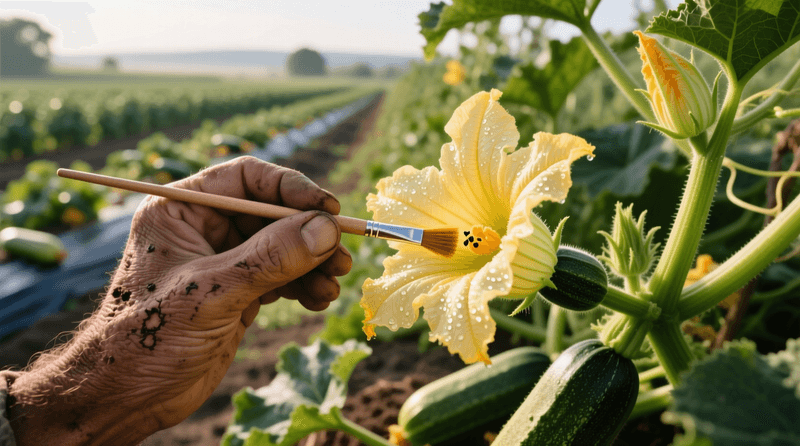
Your zucchini plant looks healthy, covered in big leaves and bright yellow flowers, but the fruit just never seems to show up. For many home gardeners, this is one of the most frustrating summer surprises. The good news is that when female flowers open and then fail to develop, there are real, testable reasons worth checking before you give up on the season.
Start by checking for female flowers
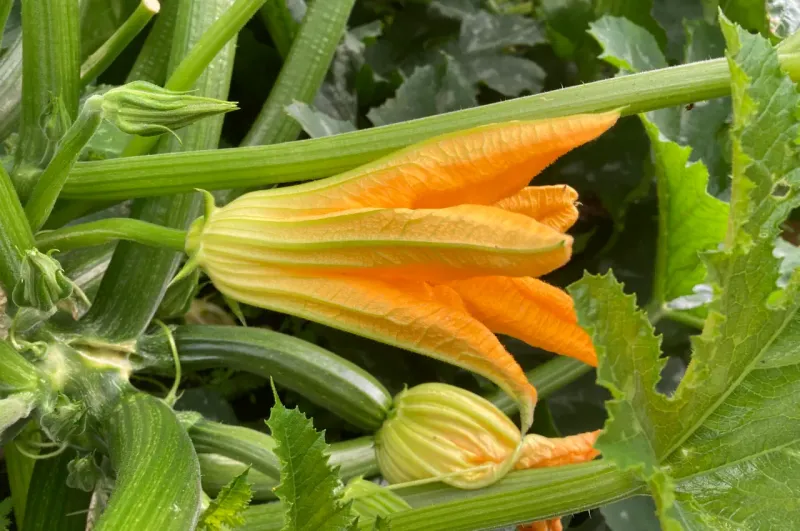
Before assuming something has gone wrong with pollination, take a close look at the actual flowers on your plant. Not every zucchini bloom is capable of becoming a fruit. University of Minnesota Extension guidance on summer squash explains that zucchini is monoecious, meaning one plant grows both male and female flowers, so a second zucchini plant is not biologically required for fruit to set.
Female flowers are the only ones that can develop into zucchini. You can spot them by the small, swollen, miniature zucchini sitting right at the base of the bloom, before the petals even open. Male flowers, by contrast, sit on longer and thinner stems with no swelling at the base; they exist to provide pollen and then drop off naturally.
University of New Hampshire Extension notes that male flowers commonly appear first and may outnumber female flowers, especially early in the season. A plant showing only male flowers may simply be immature or responding to heat stress, which shifts a different kind of problem than female flowers that open and then fail to grow. Confirm you are seeing female flowers before diagnosing a pollination problem.
Zucchini’s pollination window is short
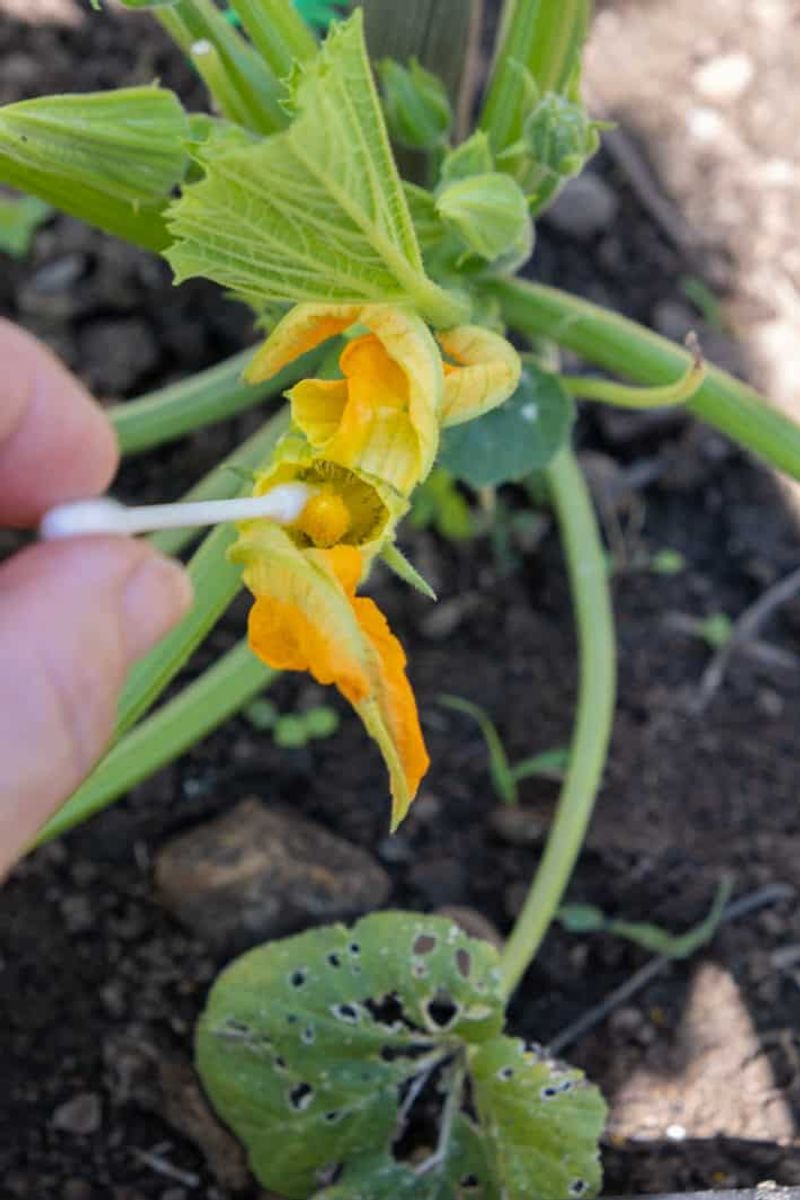
Catching zucchini flowers at the right moment matters more than most gardeners realize. Zucchini flowers typically open shortly after sunrise and remain receptive for only a limited period, often described by university extension sources as a few hours or a single morning. Once a flower closes, that opportunity is gone for that bloom.
University of Georgia Extension and Michigan State University Extension guidance on vegetable pollination both point to morning as the most reliable window for effective pollination, when flowers are freshly open and stigmas are receptive. This timing also aligns with when many native bees and squash bees are most active.
The short window does not automatically mean that most gardeners are missing it, or that missed timing is the single most common reason fruit fails to set. Heat, drought, excess moisture, and low female-flower production are all meaningful alternatives. But early-morning inspection gives you the best chance to observe open female flowers, assess whether pollinators are visiting, and step in with hand pollination if conditions look unfavorable. Checking after midday, when flowers have often closed, leaves you with incomplete information about what actually happened that morning.
Hand-pollinate a few open female flowers
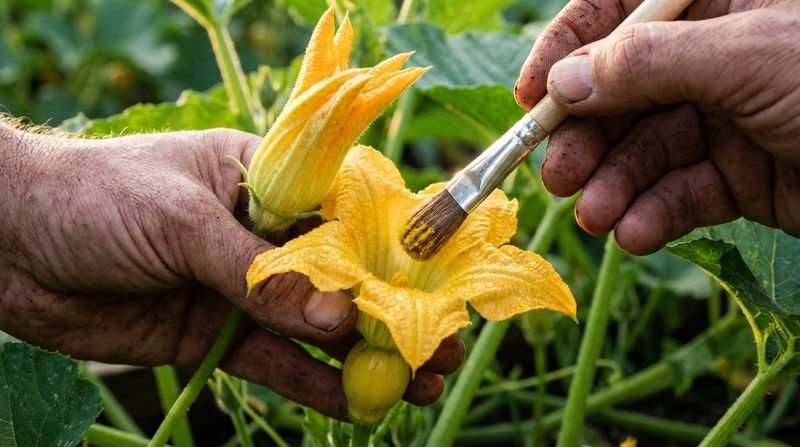
Hand pollination is a practical rescue you can try this week, and the technique is straightforward. Head out to your garden early in the morning while female flowers are still freshly open. Look for a male flower that opened the same morning, identifiable by fresh, powdery yellow pollen on its central anther column.
University of Florida IFAS Extension and University of New Hampshire Extension both describe two workable methods. The first uses a clean, small paintbrush or a cotton swab: gently collect the yellow pollen from the male flower’s anther, then brush it carefully onto the sticky stigma inside the open female flower. The second method skips the tool entirely. Pick the male flower, peel back or remove its petals to expose the anther column, and press it gently but directly against the female flower’s stigma.
Either approach can transfer adequate pollen when done carefully.
A few practical notes: use only freshly opened male flowers, since older ones may have already shed their pollen. Handle the female stigma gently to avoid damaging it. University of Georgia Extension recommends targeting open female flowers rather than attempting to pollinate every bloom on the plant. Hand pollination is a short-term intervention for unfavorable conditions, not a task you need to perform on every healthy flower all season long.
Mark the flowers and watch what happens
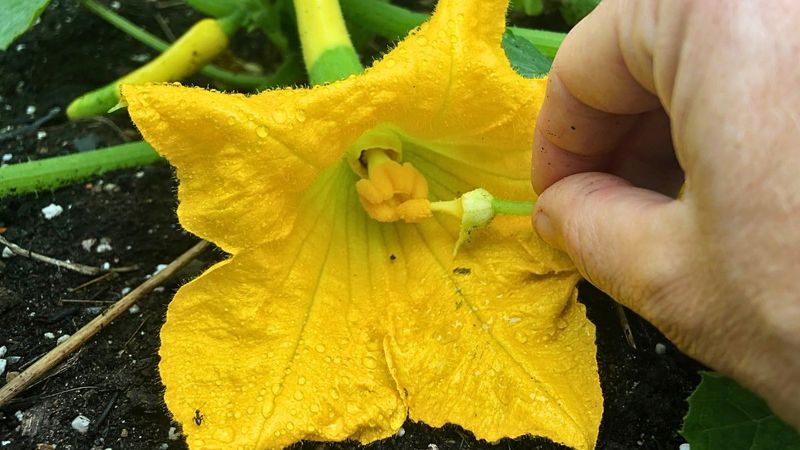
Hand pollinating a few flowers is only half the diagnostic step. The other half is marking those flowers so you can actually track what happens to them over the next several days. A loose piece of yarn, a soft twist tie, or a small flag tied gently around the stem works well without constricting the developing fruit.
Kansas State University Extension suggests using hand-pollinated flowers as a comparison group against unassisted flowers on the same plant. If your marked flowers begin to swell and grow into straight, developing zucchini while the unmarked female flowers shrivel and drop, that pattern points toward insufficient pollination as a reasonable explanation for your fruit-set problem.
If both groups fail, the diagnosis shifts. Flowers aborting regardless of hand pollination directs your attention toward heat stress, moisture problems, damaged flowers, or another plant stress rather than a simple pollination gap. Treat this comparison as a practical garden inference rather than a controlled experiment. Conditions change day to day, and a few flowers are not a formal field trial.
Still, the results give you genuinely useful information about what to address next, which is more than guessing from the outside.
Heat can disrupt flowers, pollen, and pollinators
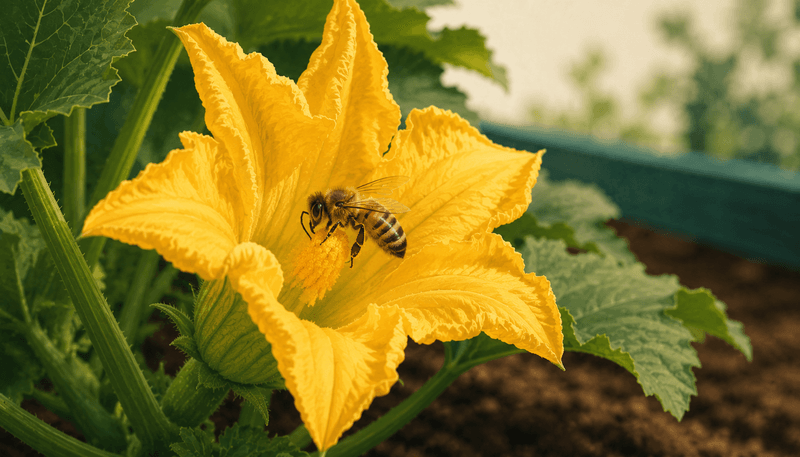
Pollination is not the only force working against your zucchini during a heat wave. University of Minnesota Extension’s vegetable IPM blog notes that high temperatures can reduce female-flower production, shift the plant toward producing more male flowers, limit pollinator activity during the hottest parts of the day, impair pollen performance, and cause small developing fruits to abort before they are visible. These effects can occur even when bees are visiting and pollen is being transferred.
Reported temperature thresholds for these effects vary with cultivar, duration, humidity, location, and how stressed the plant already is. University of Maryland Extension’s resource on pollination in a changing climate discusses how warming conditions affect bee activity and cucurbit pollination broadly. Daytime temperatures in the 90s°F or warm nights around 70°F have been associated with flower and fruit abortion in cucurbits, but these are not hard cutoffs that apply equally to every plant or every garden.
Several supportive steps can reduce plant stress without replacing pollination. Keep root-zone moisture reasonably consistent and avoid both drought and waterlogged soil. Mulch around the base of the plant to moderate soil temperature and slow moisture loss. Ensure adequate drainage.
EPA guidance on reducing pesticide impacts on wildlife reinforces the importance of avoiding insecticide applications to blooming zucchini, since wild bees, squash bees, and bumblebees may all be contributing to pollination. If you are using row covers for pest protection, University of Maryland Extension guidance on row covers recommends removing them once insect-pollinated varieties begin flowering, unless you are hand-pollinating consistently or growing a specifically parthenocarpic cultivar. These measures support the plant and natural pollination, but they do not guarantee fruit set if heat or other stress continues.
Use the fruit’s symptoms to separate other problems
Not every failure looks the same, and the symptom pattern on your plant can help you separate pollination problems from other issues. A plant producing only male flowers is not yet presenting a hand-pollination problem at all. That situation points more toward plant immaturity or a heat-related shift in flower production, and the practical response is patience and attention to heat and moisture conditions rather than immediate hand pollination.
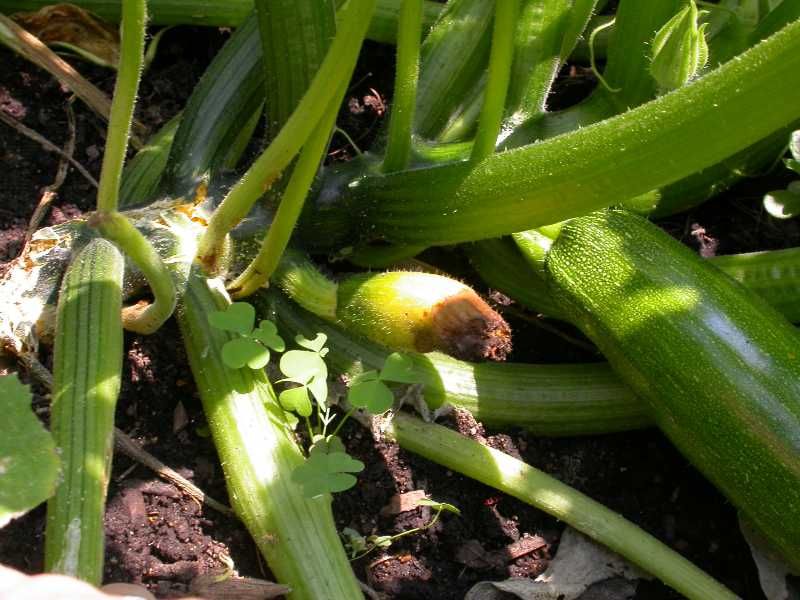
When female flowers do appear but the tiny zucchini at their base shrivels and drops shortly after the flower opens, poor pollination is a common contributor, but heat, drought, excess moisture, wind, and rain can also cause that kind of early abortion. University of Maryland Extension’s guide to common squash problems and Colorado State University Extension’s vegetable disorder resource both describe fruit that narrows or becomes misshapen as it develops, which often reflects incomplete or uneven pollination across the fruit’s surface.
A different symptom entirely is blossom-end rot: dark, sunken, leathery tissue at the blossom tip of a developing fruit. That pattern is associated with water-uptake irregularities and calcium distribution inside the plant, not failed pollination. Adding calcium or eggshells is not a reliable remedy for failed pollination, and it is not appropriate without symptoms consistent with blossom-end rot or evidence from a soil test. Similarly, lush foliage alone does not confirm excess nitrogen.
University of Minnesota Extension’s fertilizing guide recommends soil testing and evaluation of overall plant symptoms before making any fertilizer adjustment, rather than adding phosphorus, calcium, or bloom booster without supporting evidence.
Repeat the morning check while conditions improve
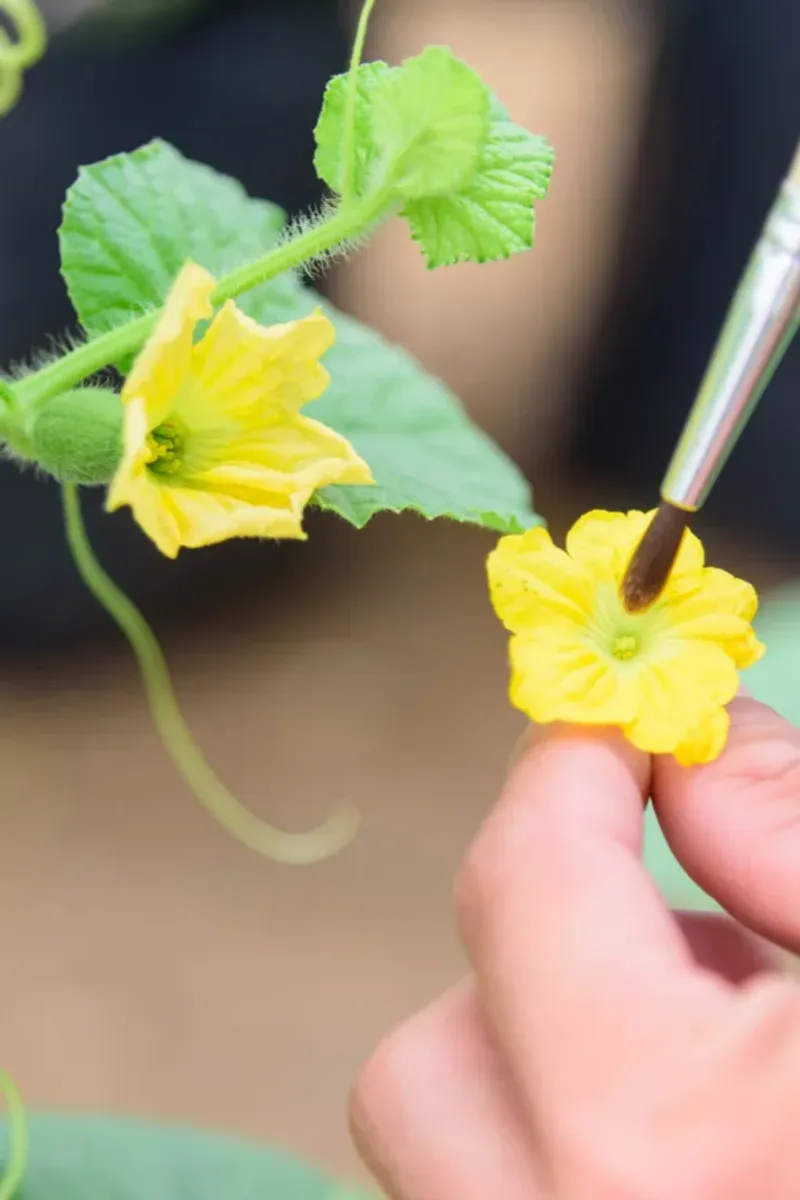
The most useful thing you can do right now is build a simple morning routine around your zucchini. Go out near sunrise, look for open female flowers with their characteristic swollen base, hand-pollinate a few, and mark them loosely. Then check those marked fruits over the following days to see whether they begin to develop.
University of Minnesota Extension confirms that male flowers naturally open, shed pollen, and drop without producing fruit, so falling male blooms are not a sign that the plant is in trouble. A second zucchini plant is also not required; one plant produces both flower types. If your marked female flowers develop while unassisted ones fail, insufficient pollination is a reasonable working diagnosis. If both groups fail, shift your focus to heat, moisture consistency, drainage, pollinator access, and the fruit symptoms described in the previous section.
Production may not bounce back immediately, especially if heat or drought stress has been building. Conditions that ease gradually tend to bring gradual improvement. Keeping the morning check going gives you the earliest possible signal that things are turning around.