
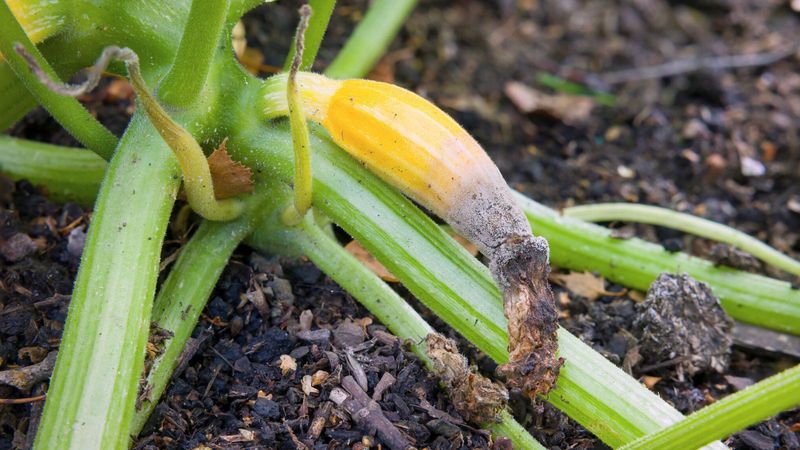
Few things are more discouraging than watching a zucchini you have been tending for weeks turn brown and mushy right at the tip before you can harvest it. That soft, sunken spot at the blossom end is one of the most common late-summer complaints from gardeners across Florida, Texas, and the rest of the South.
The good news is that once you know what is actually happening, you can take steps that give your next round of fruit a real shot at coming in clean.
A Dry, Sunken Blossom End Usually Signals Blossom-End Rot
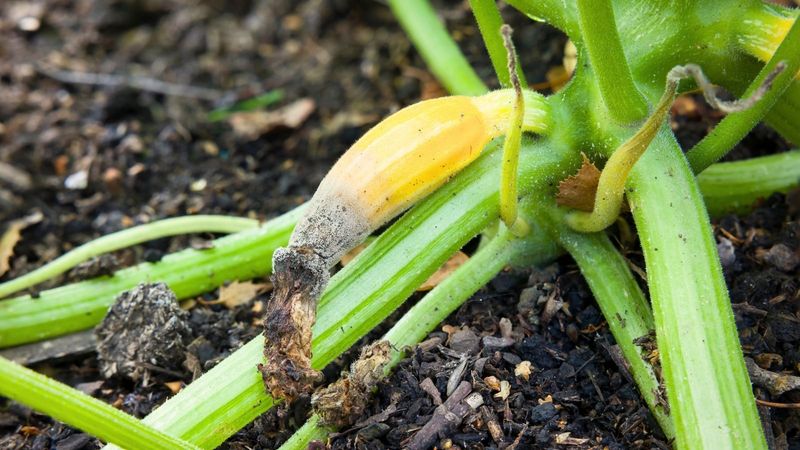
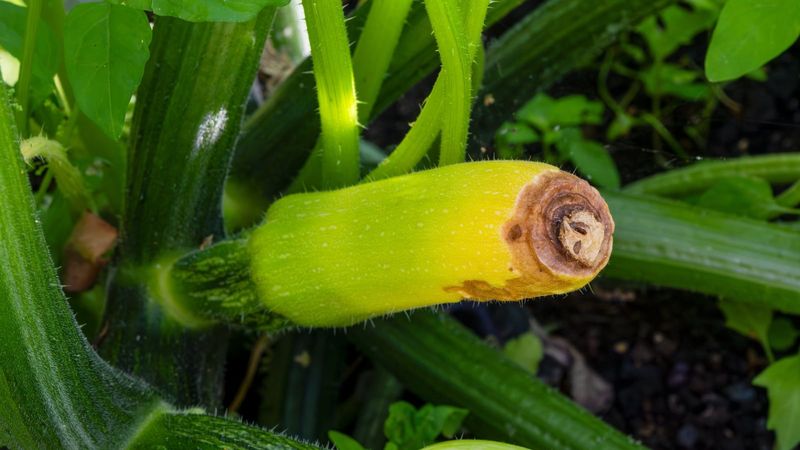
When a developing zucchini shows a pale or tan spot at the end farthest from the stem, and that spot gradually darkens, sinks inward, and turns leathery, the most likely explanation is blossom-end rot. The lesion starts out looking almost water-soaked before it firms up into a dry, necrotic patch that can range from light brown to nearly black.
According to Utah State University Extension guidance on blossom-end rot, secondary fungi and bacteria often move into that damaged tissue over time, so a lesion that started out dry and leathery can eventually become soft or watery. That mushy end result can look like a fungal disease from the start, but the original problem is physiological, not infectious.
Blossom-end rot is not caused by a pathogen, so no fungicide will correct it. Heat is frequently blamed because symptoms tend to appear or worsen during hot stretches, but heat alone is not a sufficient diagnosis.
What matters most is whether the developing fruit received a steady, adequate supply of calcium through the plant’s water-transport system, and several different conditions can interrupt that supply.
Heat Raises Water Demand and Can Disrupt Calcium Delivery
Calcium does not move through a plant the way most nutrients do. Rather than being drawn up by active root processes, it travels almost entirely with the water stream, riding upward through the xylem as the plant transpires.
Rapidly growing zucchini fruit has high demand for calcium but relatively low transpiration compared to the leaves, so the fruit can end up short-changed even when the rest of the plant looks fine.
Hot weather increases the plant’s overall water demand, and if watering is inconsistent, the root zone swings between too dry and too wet. Both extremes hurt uptake.
Oklahoma State University horticulture tips identify drought, irregular irrigation, waterlogged soil, root damage, salinity, and excessive fertilizer as contributors alongside heat, making clear that the disorder reflects disrupted water and calcium movement rather than one single cause.
Root injury from hoeing or cultivation, saturated soil that suffocates roots, or heavy nitrogen fertilizer that pushes rapid leafy growth can all tilt the balance against the fruit. Salinity in the root zone also limits water uptake.
Critically, University of Minnesota Extension notes on soil amendments point out that calcium may already be present in adequate amounts in the soil but still fail to reach the fruit because water uptake or transport has been disrupted. Adding more calcium without fixing the underlying water problem rarely solves anything.
Texture and Shape Reveal the Main Look-Alikes
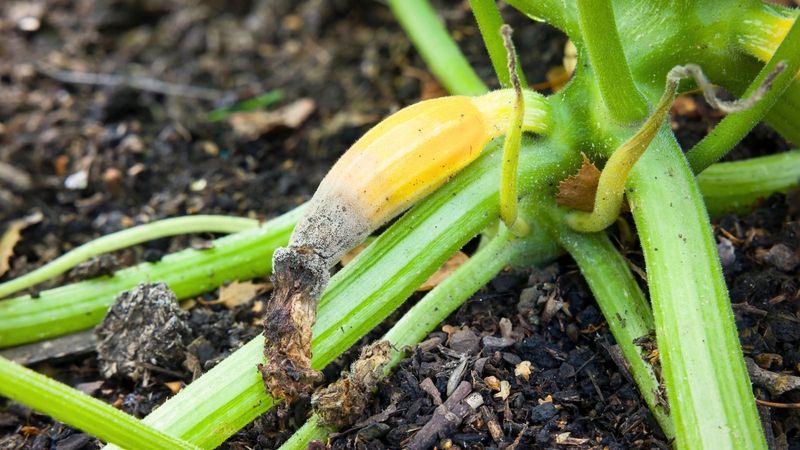
Not every brown or mushy zucchini tip is blossom-end rot, and misreading the symptom leads to the wrong fix. Three problems show up at the blossom end, and texture plus shape do most of the sorting work.
Blossom-end rot produces a lesion that is dry, dark, sunken, and leathery. The skin stays relatively intact even as the tissue beneath dies.
Utah State University Extension’s blossom-end rot profile describes the progression from pale water-soaked tissue to the firm necrotic patch most gardeners recognize. Secondary organisms may eventually soften the lesion, but the initial damage is dry rather than wet.
Poor pollination looks different. Zucchini produces separate male and female flowers on the same plant and depends heavily on bees and other insect pollinators to carry pollen from one to the other.
Texas A&M AgriLife Extension’s cucurbit poor-pollination guide describes fruit that is small and lopsided, stops enlarging, browns at the blossom end, and drops from the vine without ever developing the characteristic dry leathery lesion of blossom-end rot.
The third look-alike is Choanephora wet rot, a fungal disease that spreads rapidly and produces a wet, mushy collapse with visible white, gray, or purplish-black fuzzy growth on the blossom or young fruit. University of Minnesota Extension’s Choanephora rot page notes that warm, wet conditions strongly favor this pathogen, making it especially relevant in Florida gardens during humid late-summer periods.
If fuzz is visible and the rot is spreading fast, the problem is almost certainly not blossom-end rot.
Stabilize Moisture and Protect the Roots
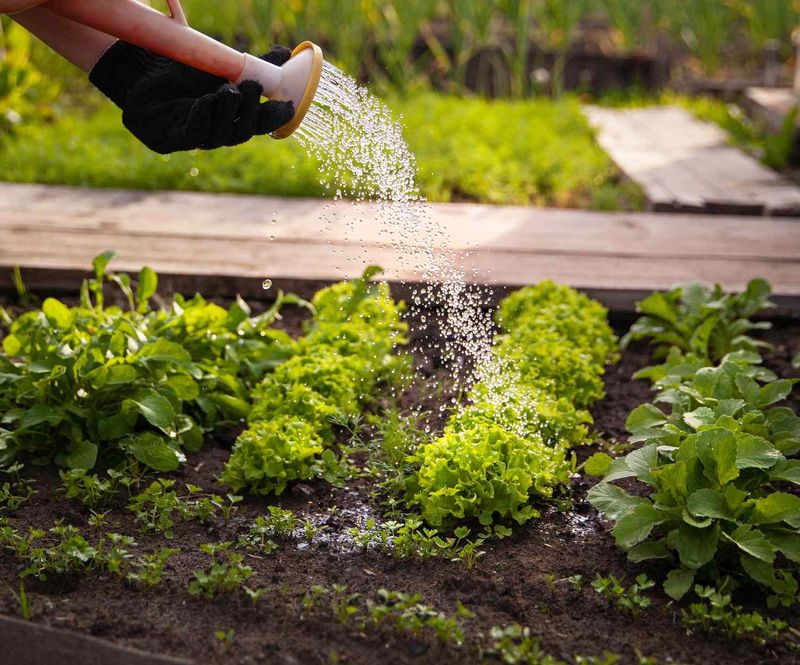
Once blossom-end rot is the likely diagnosis, the most effective first response is stabilizing soil moisture. Calcium cannot reach the fruit without a steady water supply moving through the roots, so anything that keeps the root zone from swinging between bone-dry and waterlogged directly addresses the core problem.
Water deeply and less frequently rather than giving the plant a shallow drink every day. Deep irrigation encourages roots to grow downward where soil moisture is more stable, and it avoids the wet-then-dry cycle that disrupts uptake.
UF/IFAS guidance on cucurbit production specifically recommends supplementing erratic rainfall with irrigation during fruit development in Florida, where summer rain can be intense but unpredictable. In Texas, where heat and dry spells are common between rain events, the same principle applies.
Mulching around each plant with organic material or plastic mulch reduces evaporation from the soil surface and buffers moisture fluctuations between waterings. Leave a few inches of space around the stem to allow air circulation and prevent rot at the crown.
Oklahoma State University’s squash and pumpkin production guide supports mulching as a practical tool for managing soil temperature and moisture in warm-season gardens.
Protect the root zone from physical damage. Hoeing, deep cultivating, or digging close to zucchini plants can sever feeder roots that are essential for water and calcium uptake.
Hand-pull weeds near the base of the plant instead, and keep foot traffic away from the area directly under the canopy.
Remove Blossom-End-Rot Fruit; Remove Wet Rot to Limit Spread
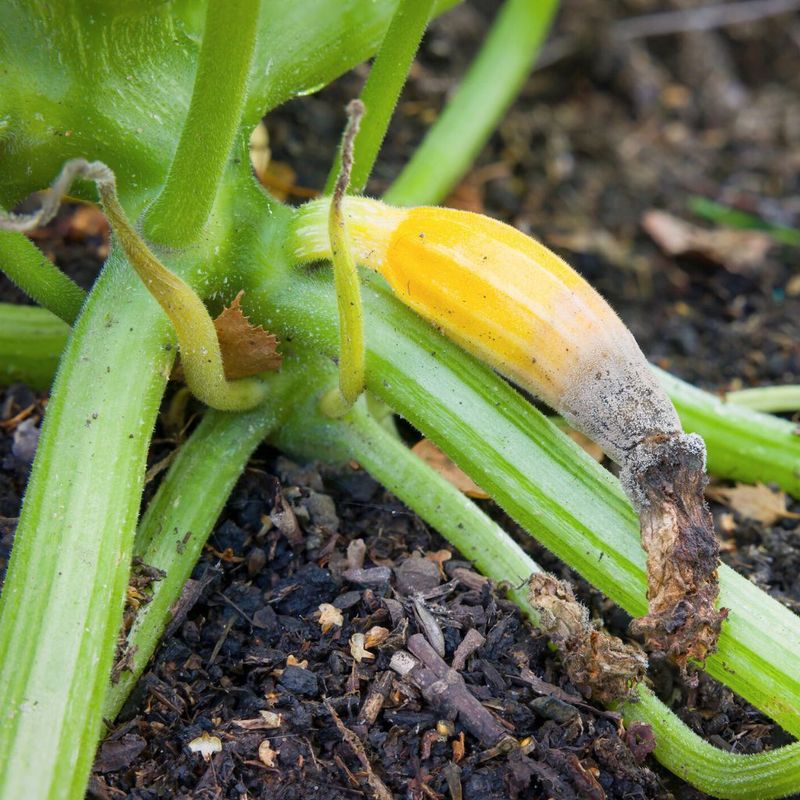
Fruit that has developed blossom-end rot will not recover. The damaged tissue is dead, and the lesion will not shrink or heal even if growing conditions improve.
Removing affected fruit is the right call, particularly when secondary decay has made the tissue soft, watery, or foul-smelling. University of Minnesota Extension’s guidance on tomato and cucurbit disorders recommends removing damaged fruit so the plant can redirect its resources toward the next flush of developing zucchini.
Blossom-end rot is not contagious. Removing the fruit is about clearing dead tissue that can attract secondary decay organisms, not about stopping the spread of an infectious disease from one fruit to another.
That distinction matters for how you handle the situation.
Choanephora wet rot is a different story. Because this is a fungal pathogen, removing affected blossoms and fruit promptly helps reduce the amount of spore-producing material in the garden and lowers the chance of the disease spreading to nearby plants or additional fruit.
University of Minnesota Extension’s Choanephora rot management page recommends prompt removal as part of a broader approach that also includes improving air circulation around plants and avoiding prolonged wetness on flowers and young fruit.
For Florida gardeners dealing with warm, wet summer conditions, UF/IFAS tropical vegetable production resources highlight Choanephora as a significant concern. Using drip irrigation or directing water at the soil rather than overhead can help keep blossoms and developing fruit drier, which reduces the environment the pathogen needs to establish.
Use Soil Testing Instead of Blind Calcium Treatments
The instinct to reach for eggshells, lime, or a calcium spray when blossom-end rot appears is understandable, but those responses often miss the actual problem. Colorado State University Extension’s vegetable disorder guide notes that soil calcium is frequently adequate and that the more common issue is disrupted water movement rather than a shortage of calcium in the ground.
Eggshells break down slowly in the soil, far too slowly to address an active blossom-end rot problem in the current season. Lime can raise soil pH and release calcium, but adding it without knowing your starting pH risks making the soil too alkaline, which can lock out other nutrients.
University of Minnesota Extension’s review of common garden amendments also cautions that excess magnesium from Epsom salts can interfere with calcium uptake, meaning that a popular folk remedy can actually make the transport problem worse.
A soil test through your local cooperative extension service gives you an actual picture of calcium levels, pH, and nutrient balance before you make any changes. Follow the recommendations that come back with the results rather than guessing.
Calcium sprays applied to foliage or fruit have limited practical value for correcting blossom-end rot in a home garden. Oklahoma State University’s resource on non-infectious tomato and cucurbit disorders describes foliar calcium applications as having little corrective effect because absorption through leaves and movement to fruit are poor.
Avoid heavy nitrogen fertilizer applications as well, since pushing rapid leafy growth diverts resources and can increase the fruit’s susceptibility to the disorder. And because blossom-end rot is physiological rather than infectious, fungicides have no role in addressing it.
Steadier Conditions Give New Fruit Its Best Chance
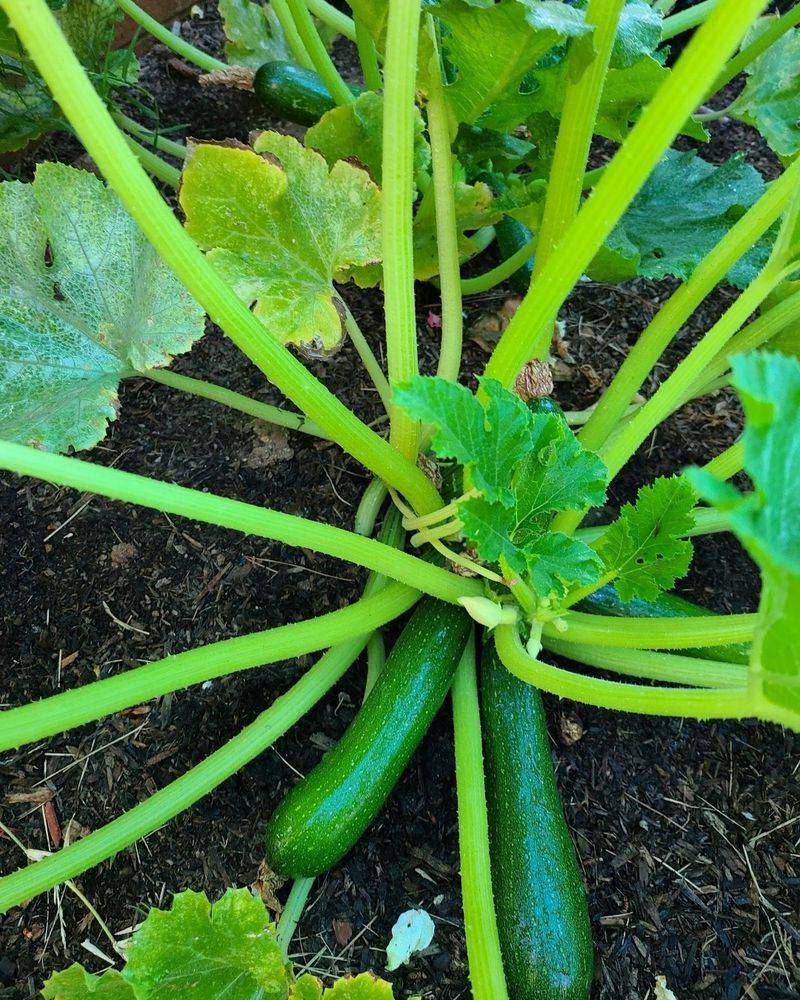
A practical late-summer response comes down to a short checklist. Inspect each developing fruit and remove any that show a sunken, leathery lesion, especially if the tissue has gone soft or the fruit smells off.
Then shift focus to the conditions around the roots.
Water deeply on a consistent schedule, add mulch if it is not already in place, and leave the soil near the roots undisturbed. Hold off on heavy fertilizer applications until conditions stabilize.
Oklahoma State University horticulture tips for mid-to-late season reinforce that early or rapidly growing fruit is most vulnerable to blossom-end rot, while later fruit can develop normally once watering and root conditions stabilize. That outcome is common but not guaranteed for every plant or every season.
Watch the next round of small fruit closely. Improvement in newer fruit is a good sign that moisture management is working.
If the same lesion pattern keeps showing up, a soil test is worth doing before the next planting cycle. Managing water movement through the root zone, not automatically adding calcium, remains the first and most reliable response when blossom-end rot appears in your late-summer zucchini bed.