
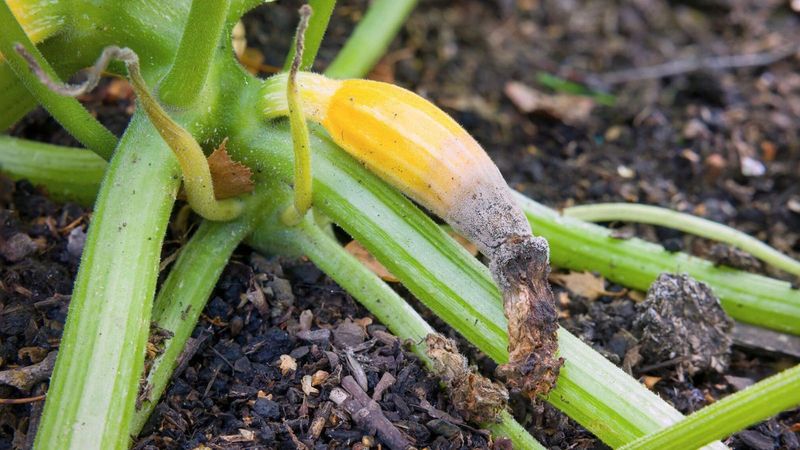
Watching a tiny zucchini turn soft and brown at the tip before it ever reaches picking size is genuinely frustrating, especially when the rest of the plant looks healthy. The usual instinct is to blame watering, but the real story is often more complicated. Poor pollination, uneven moisture, and fungal wet rot can all produce a rotting blossom end, and telling them apart is what points you toward the right fix.
The blossom end shows where the symptom appears, not what caused it
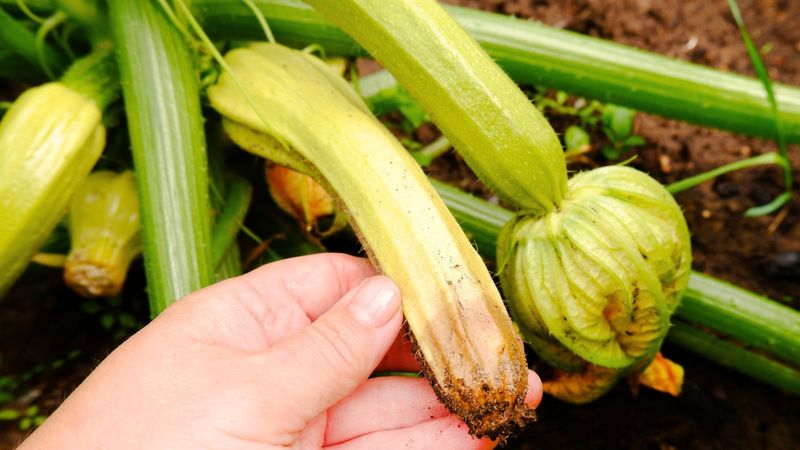
Rotting at the blossom end of a zucchini tells you where the damage is, not why it happened. The blossom end is simply the tip opposite the stem, and decay there can stem from at least three very different causes: poor pollination, a physiological disorder sometimes called blossom-end rot, or a fungal wet rot that moves in when conditions stay damp. Changing your watering schedule before you know which one is at work may not help, and could make things worse.
Start by looking closely at the fruit and thinking back over recent weather. A tiny zucchini that formed right after flowering, then stopped enlarging, shriveled, and turned soft or mushy is telling a different story than a zucchini that grew normally for several days before developing a firm, sunken, tan-to-black lesion at the tip. Both can end up rotting, but the sequence matters. Utah State University Extension’s overview of blossom-end rot notes that the disorder appears as a leathery, collapsed lesion, while fungi and bacteria can later colonize that damaged tissue and make it look wet and soft.
A third possibility is soft, wet fruit covered in fuzzy white, purple, or black growth, which points toward a fungal infection rather than a physiological disorder. University of Minnesota Extension’s guide to Choanephora rot describes this pattern and distinguishes it from fruit that simply fails to develop after poor pollination. Inspecting the fruit carefully, recalling whether the flower opened and was visited by insects, and noting recent rainfall and temperatures gives you a much better starting point than any single-cause explanation.
Poor pollination often stops a zucchini before it reaches harvest size
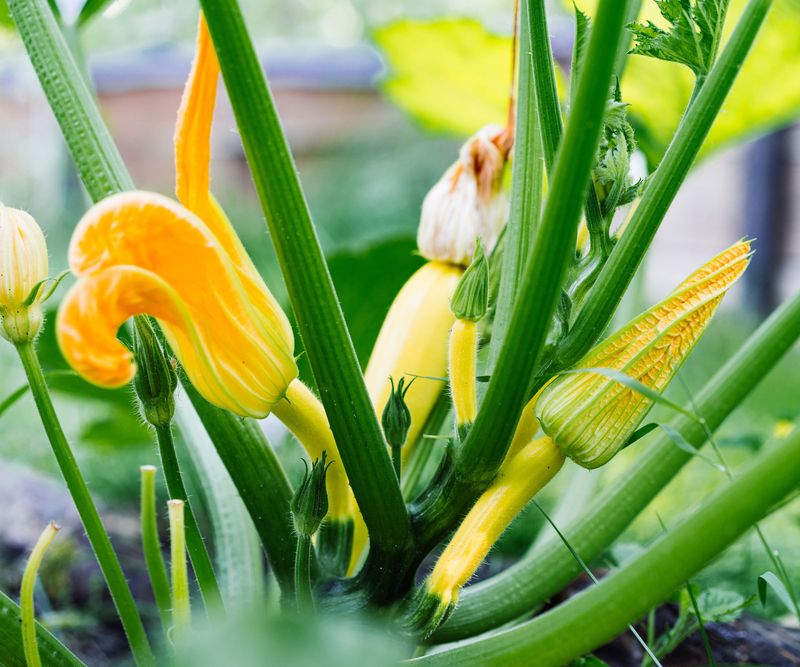
When a tiny zucchini forms right after the flower drops and then quickly shrivels, stops growing, and rots without ever reaching a few inches in length, poor pollination is often the most likely explanation. Zucchini are not self-pollinating in the usual sense; they need insects, primarily bees, to carry pollen from a male flower to a female flower. If that transfer is incomplete or does not happen at all, the young fruit may begin to form because the female flower triggered some initial development, but it will stall out and collapse before reaching anything close to harvest size.
Telling the two flower types apart is straightforward once you know what to look for. University of Minnesota Extension’s guide to growing summer squash explains that female flowers have a small, swollen, fruit-shaped ovary right behind the bloom, while male flowers sit on a plain, slender stem with no swelling. Both types open for only a few hours in the morning, which means a single morning of bad weather, heavy rain, or low bee activity can leave several female flowers without adequate pollen.
This early-failure pattern is distinct from a zucchini that grows normally for days before developing a lesion. University of Minnesota Extension’s Choanephora rot resource identifies poor pollination as a common reason small summer squash rot, particularly during the first flush of fruit set. If most of your very small fruits are failing rather than your larger developing ones, pollination trouble is worth investigating before adjusting anything else.
Hot weather can weaken pollination while increasing water demand
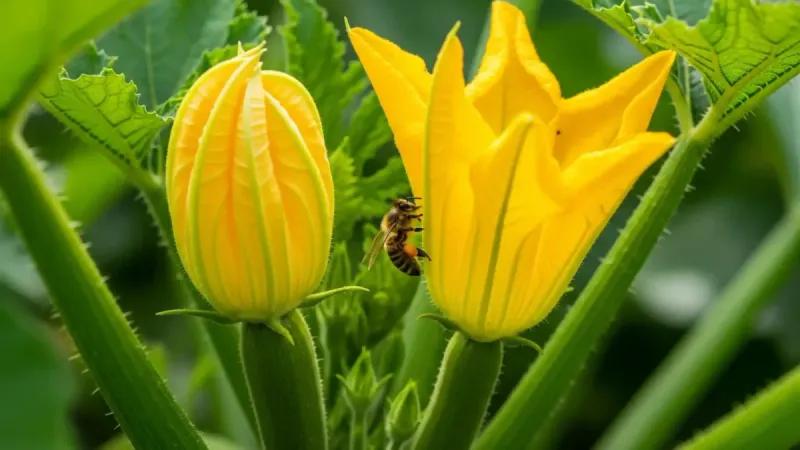
A stretch of hot days can create two separate problems at the same time, and gardeners sometimes blame one for symptoms actually caused by the other. Bee activity tends to slow considerably when temperatures climb above 90 degrees Fahrenheit. University of Minnesota Extension’s resource on heat and the vegetable garden notes that hot days and nights can contribute to flower and small-fruit abortion, meaning the plant itself may drop blossoms or stall early fruit development when temperatures stay high.
At the same time, heat speeds up evaporation from both the soil surface and the plant’s leaves, so your zucchini may be pulling moisture out of the ground faster than usual. This is a real concern, but it is a separate concern from pollination failure. Responsible, consistent watering during a heat wave does not prevent pollinator activity from dropping, and it cannot compensate for female flowers that received little or no pollen on a scorching morning when bees stayed home.
Treating heat as a complicating condition rather than a direct diagnosis helps you avoid chasing the wrong fix. A hot week that produces both poor bee activity and drier soil could trigger either pollination failure or moisture-related stress, or both at once, depending on your specific garden conditions. Check the fruit size and developmental stage, not just the calendar or the thermometer, before deciding what to address first.
A firm, sunken lesion may indicate blossom-end rot
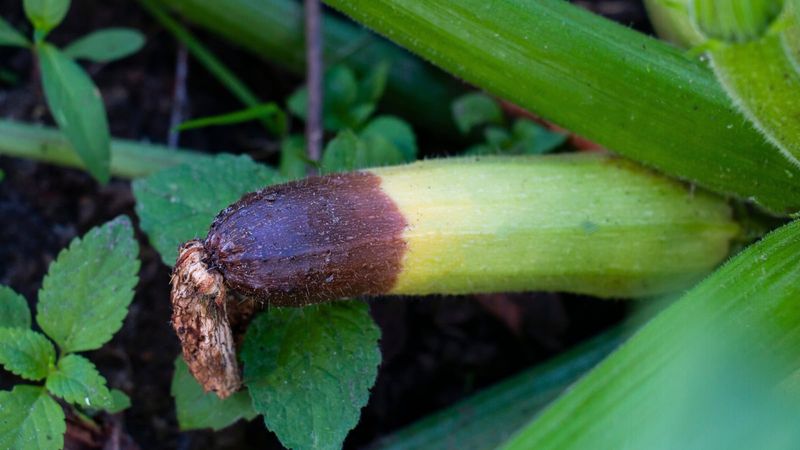
Blossom-end rot looks different from a fruit that shrivels after poor pollination. The classic pattern is a tan, brown, or black lesion at the blossom tip that starts out firm and slightly sunken, then gradually becomes leathery and collapsed. Fungi or bacteria can move into that damaged tissue afterward and make it look wet, soft, or discolored, which sometimes causes gardeners to confuse it with a fungal infection that started from the outside. The lesion itself, before secondary organisms arrive, tends to be dry and leathery rather than fuzzy or obviously wet.
Utah State University Extension’s blossom-end rot overview describes the disorder as a physiological problem related to inadequate calcium reaching developing fruit tissue, often because water-uptake or transport is disrupted rather than because the soil itself is low in calcium. Uneven moisture can interfere with how water and calcium move through the plant, which is why keeping soil moisture reasonably consistent matters. That said, a peer-reviewed review in Scientia Horticulturae and a broader review published in PMC both note that the relationship between calcium deficiency and blossom-end rot is more complicated than a simple soil-shortage story.
Most of the detailed research and extension guidance on blossom-end rot centers on tomatoes and peppers. Extension sources do report the disorder in cucurbits including squash, but the physiology may differ. University of Georgia Cooperative Extension’s bulletin on blossom-end rot in pepper and tomato does not recommend blanket calcium amendments without a soil test, and that caution applies equally to zucchini. Diagnose from the symptom pattern first, and avoid reaching for lime, gypsum, or foliar calcium sprays as automatic solutions.
Fuzzy growth points toward a possible wet-rot infection
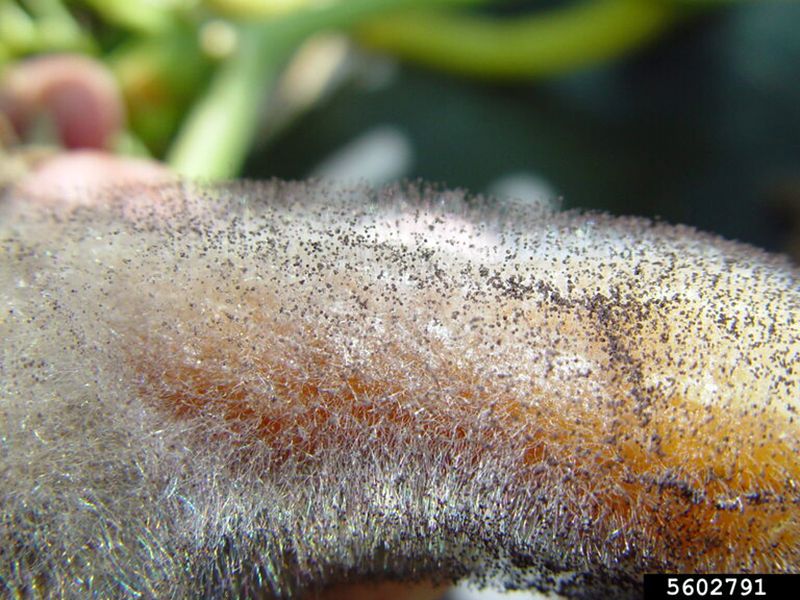
Soft, wet decay covered in fuzzy growth is a noticeably different picture from either a shriveled unpollinated fruit or a dry leathery lesion. When white, grayish-purple, or black fuzz appears on a collapsing zucchini or on the old flower tissue still attached to the tip, a fungal wet rot is worth considering. University of Minnesota Extension’s guide to Choanephora rot describes exactly this pattern, noting that the fungus tends to move in after prolonged wetness on flowers and fruit, particularly when foliage is crowded and airflow is poor.
Choanephora rot typically starts at the old flower and works its way into the developing fruit, so the decay often begins at the very tip. Conditions that favor it include damp soil in contact with fruit, overhead watering that keeps flowers wet, and dense planting that traps humidity around the blossoms. This is meaningfully different from blossom-end rot, which starts as a dry, sunken lesion caused by a physiological disruption inside the plant, not by a fungus arriving from outside.
Softness alone cannot confirm a fungal diagnosis. A fruit that rotted after poor pollination will also become soft eventually, and secondary bacteria can make any damaged tissue look wet. Look specifically for the fuzzy, thread-like growth that is visible to the naked eye before assuming a fungal infection is present. If the fuzz is there, prompt action on airflow and removal matters more than any watering adjustment.
Hand-pollinate the next morning’s flowers when insect activity is low
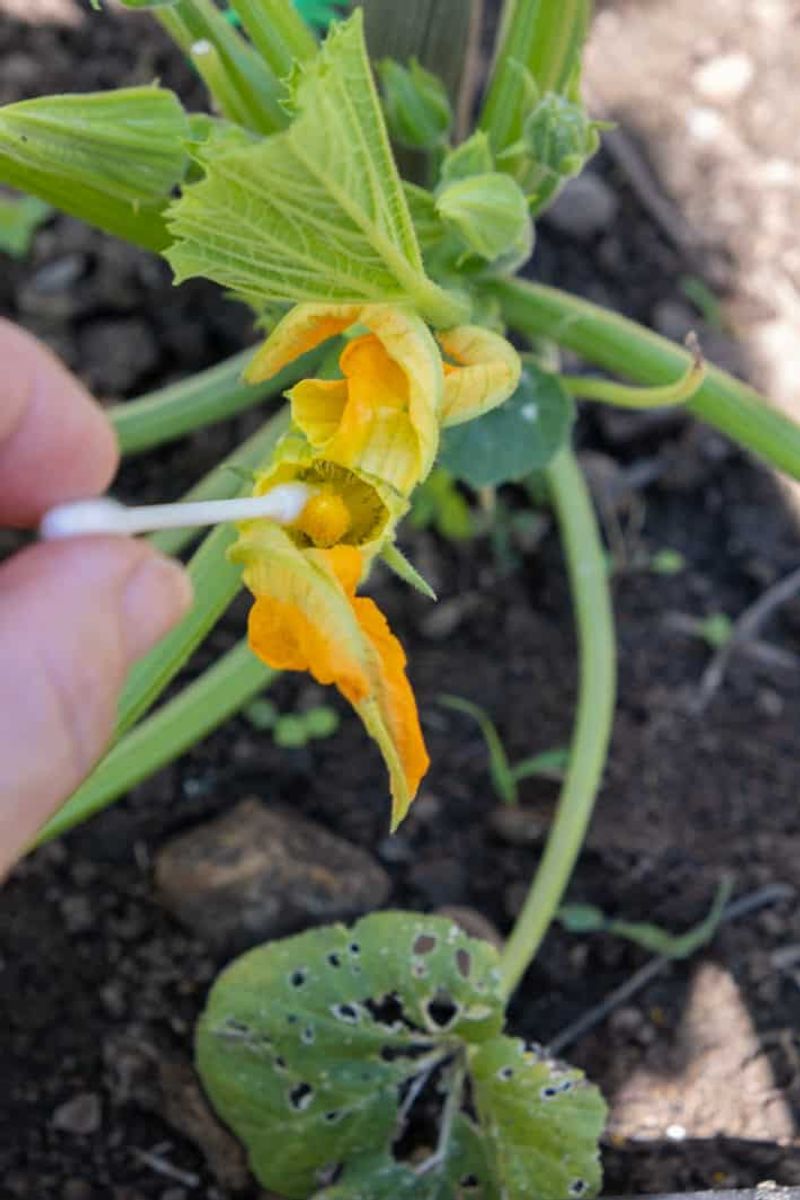
Hand-pollination is a practical option when you suspect bees are not visiting your plants often enough, and it costs nothing but a few minutes on a summer morning. The process is straightforward: find a freshly opened male flower (the one on the plain stem with no swelling behind it), and use a small soft paintbrush or even your fingertip to collect the bright yellow pollen from its center. Then carry that pollen directly to the sticky stigma inside an open female flower, which you can identify by the small fruit-shaped swelling sitting just behind the petals.
Colorado State University Extension’s guide to cucumbers, squash, and melons specifically recommends hand-pollination when insect activity is low, making it a recognized and reasonable response rather than a last-ditch effort. Timing matters because zucchini flowers are only open for a few morning hours, generally between sunrise and mid-morning, after which the blooms close and will not accept pollen. Plan to be out in the garden early, before the heat peaks.
Hand-pollination can improve the odds for the next round of fruit set, but it cannot help a fruit that has already shriveled, stopped growing, or begun to rot. University of Minnesota Extension’s summer squash growing guide reinforces that successful fruit development depends on adequate pollen transfer at the time the flower is open. Judge whether your efforts are working by watching whether the small fruits that follow hand-pollination continue to enlarge over the next several days rather than stalling out.
Stabilize soil moisture without keeping the root zone saturated
Once you have considered pollination and fungal wet rot, moisture management becomes a genuine part of the picture, particularly if a firm sunken lesion fits your symptom better than a shriveled unpollinated fruit. The goal is reasonably consistent soil moisture, not a strict daily schedule. Utah State University Extension’s water recommendations for vegetables puts summer squash in the range of roughly 1 to 2 inches of water per week, but that figure is a starting point, not a fixed rule. Sandy soil, raised beds, containers, intense heat, and high winds can all push that number higher; clay soil or poor drainage may mean you need to water more slowly and less often.
The most reliable approach is to check soil moisture directly rather than relying on a calendar. Push a finger or a thin probe about 2 inches into the soil near the plant; if it feels dry at that depth, water thoroughly. Oregon State University Extension’s heat and drought preparation guide recommends watering deeply enough to wet the active root zone, roughly 8 to 10 inches down, rather than applying frequent shallow splashes that only dampen the surface.
Mulch is one of the most practical tools available for reducing moisture swings. A 2- to 3-inch layer of organic mulch or plastic mulch slows evaporation and buffers the soil against the rapid dry-out that happens between waterings in hot weather. Keep mulch a few inches away from the main stem to allow airflow. Utah State University Extension’s blossom-end rot guidance also warns against keeping soil constantly saturated, because waterlogged roots can reduce water and nutrient uptake just as effectively as drought stress.
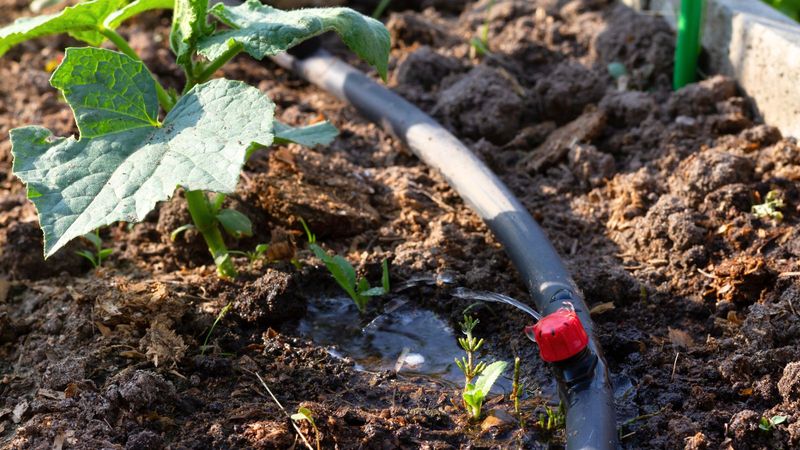
Drip or soaker irrigation keeps moisture at the root zone and away from flowers and fruit, which also helps limit conditions that favor Choanephora and other wet-rot fungi.
Remove fruit that will not recover and monitor the next fruit set
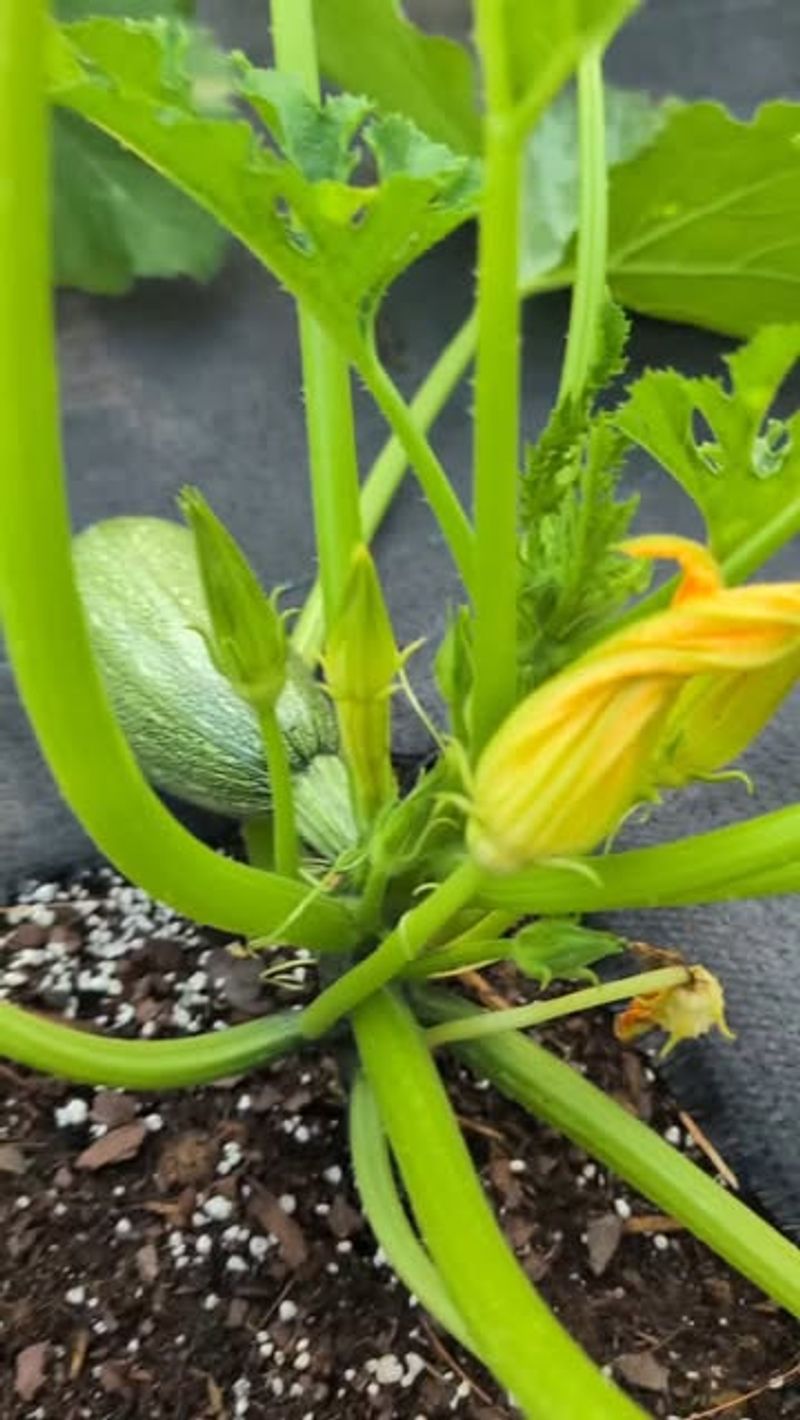
Fruit that has clearly stopped enlarging, shriveled significantly, or developed active rot is not going to recover on the vine. Removing it promptly serves a few practical purposes: it keeps you from waiting on something that will never reach harvest, and when fuzzy wet rot is present, getting that infected tissue away from healthy flowers and fruit nearby can reduce the chance of spreading contamination. University of Minnesota Extension’s Choanephora rot guidance specifically recommends removing infected flowers and fruit promptly for this reason.
Removal does not cure the plant, reverse any damage already present, or guarantee that the next round of fruit will succeed. University of Minnesota Extension’s overview of tomato disorders makes a similar point about affected fruit: taking it off prevents you from waiting on something that will not develop normally, but it does not eliminate the underlying cause. The same logic applies to zucchini. Discard removed fruit rather than composting it if you suspect a fungal infection.
After cleanup, shift your attention to the next set of flowers. Check whether male and female flowers are opening at the same time, watch for bee activity in the early morning, and hand-pollinate if visits seem scarce. Monitor new fruit over several days to see whether they continue enlarging or stall out again. Consistent observation across two or three fruit sets will tell you more about what is actually happening in your garden than any single theory can.