
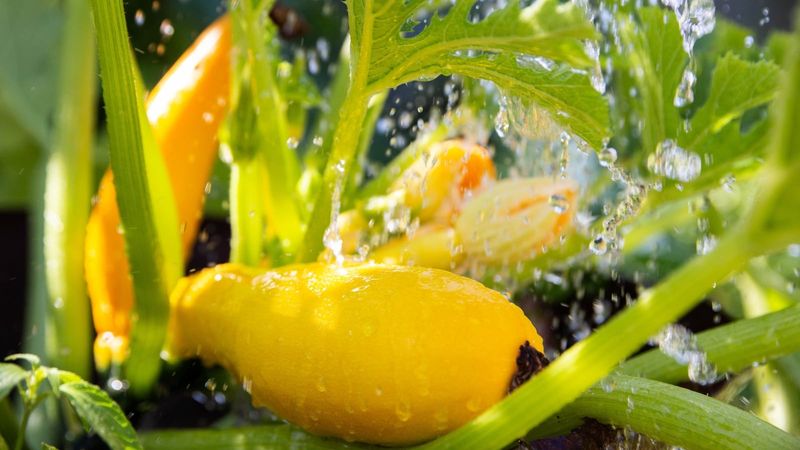
Spotting a brown, sunken patch on the tip of a young zucchini is one of the more disheartening moments in a summer garden. Many growers assume disease or insects are attacking their plants, but the answer is often rooted in how and when water reaches the soil. Understanding what causes this damage, and what does not, can help you protect the fruit still developing on the vine.
Start with the blossom end, but do not assume the diagnosis
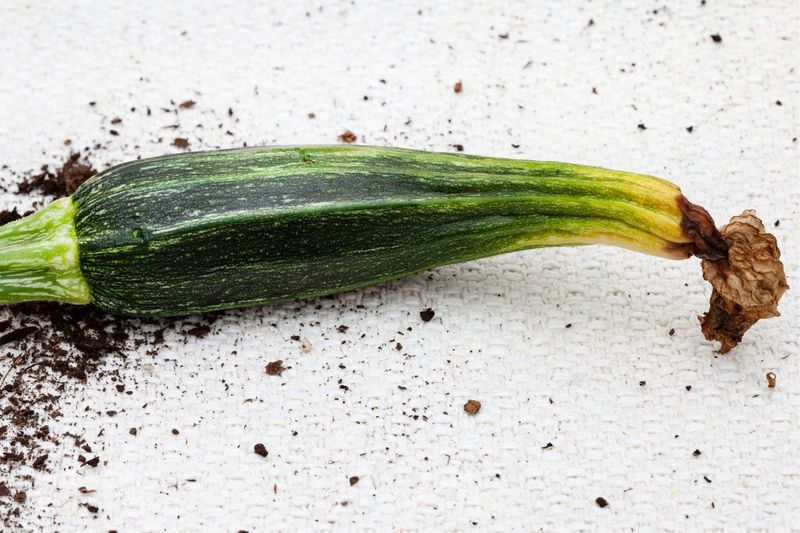
The blossom end of a zucchini is the tip opposite the stem, the spot where the flower was attached before the fruit began to grow. When something goes wrong during early fruit development, that tip is often where the trouble first appears. A water-soaked or pale tan, sunken area typically shows up first, then gradually darkens to brown or black, toughens, and may become leathery and necrotic as the tissue dies.
According to Utah State University Extension guidance on blossom-end rot, the condition is a physiological disorder, not primarily an insect attack or a contagious disease that spreads from plant to plant. It can affect summer squash, including zucchini, as well as tomatoes, peppers, eggplant, and watermelon. Because the initial injury is physiological, no spray will eliminate it the way a pesticide targets an insect.
Secondary fungi or bacteria can move into the damaged tissue over time, turning what started as a dry, firm lesion into something soft, watery, or mold-covered. That secondary colonization can make the damage look more alarming than the original disorder. Before concluding that watering is the problem, compare the fruit carefully: a dry, sunken, leathery blossom-end spot looks quite different from fuzzy mold growth or from a tiny, undeveloped fruit that simply stopped growing after poor pollination.
Moisture swings may stress fast-growing fruit
Young zucchini fruit grows remarkably fast during warm weather, and that rapid expansion puts real demand on the plant’s ability to move water and nutrients from root to fruit. When the root zone cycles between very dry and then heavily saturated, the plant’s uptake of calcium, a nutrient that travels primarily with the flow of water through plant tissue, can be disrupted even when the soil itself contains adequate calcium.
A peer-reviewed reappraisal of blossom-end rot in tomatoes and peppers notes that researchers continue to debate whether localized calcium shortage actually starts the injury or whether broader abiotic stress from heat, drought, or salinity causes cell damage first, with reduced calcium as a later consequence. Both perspectives agree that reducing moisture fluctuation is a useful management step. USU Extension describes moisture stress as a major trigger for the disorder in squash, emphasizing that the root zone drying out and then being flooded can interfere with calcium movement to developing fruit.
Heat and rapid fruit growth increase the risk because the plant is pulling more resources toward fruit at the very moment when a moisture gap is most costly. A gardener can be watering regularly and still see the disorder appear if the intervals between watering sessions are long enough for the root zone to dry significantly. Reducing those swings, rather than simply adding more water, is the practical goal.
Build a steady watering routine without saturating the soil
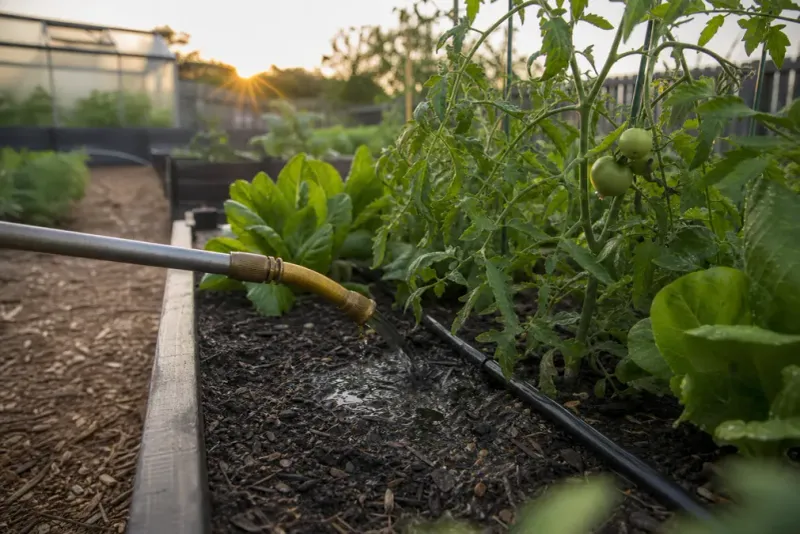
The most reliable way to protect developing zucchini from moisture-related stress is to water deeply and consistently rather than giving the plants frequent, shallow drinks. Shallow watering moistens only the top inch or two of soil, which dries out quickly in warm weather and encourages roots to stay near the surface where they are most vulnerable to heat and drying. A thorough watering session moves moisture down through the root zone, supporting the steady uptake that developing fruit depends on.
A practical starting check is to push a finger or a small trowel about 2 inches below the soil surface. University of Minnesota Extension watering guidance recommends watering when that zone begins to dry rather than waiting until the plant shows visible wilting. If the soil at that depth still feels moist, hold off and check again the following day. Approximately 1 inch of water per week from rain plus irrigation is a reasonable starting reference for summer squash, as noted by UMN Extension’s summer squash growing guide, but that figure is a baseline, not a fixed prescription.
Sandy soils, raised beds, and containers lose moisture much faster than heavier garden soil, so the interval between waterings will be shorter in those situations. Conversely, heavy clay or poorly drained soil may stay wet long after a watering session, and adding more water before it is needed can suffocate roots as effectively as drought. Adjust based on what you observe below the surface, not on a fixed calendar schedule.
Keep irrigation at the soil surface and use mulch wisely
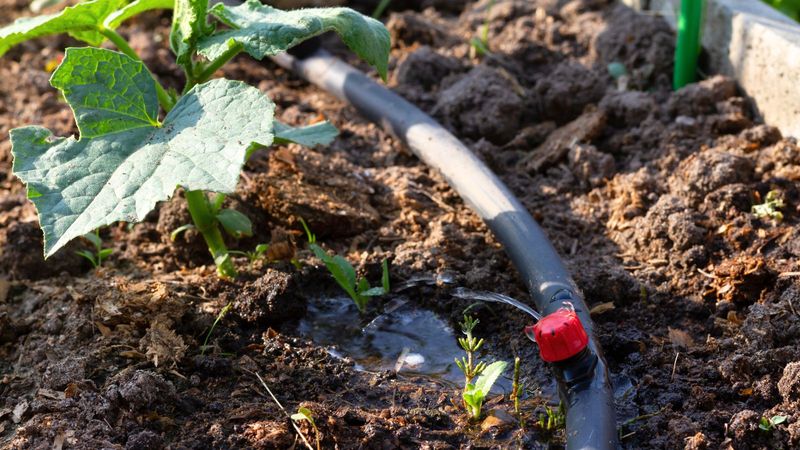
Where water lands in the garden matters as much as how much you apply. Drip irrigation, soaker hoses, and careful hand watering directed at the soil rather than the foliage deliver moisture directly to the root zone without routinely wetting leaves, stems, and flowers. Keeping zucchini foliage and blossoms drier can reduce conditions that favor some fungal diseases and wet-weather rots, a useful side benefit during humid stretches of summer.
USU Extension’s blossom-end rot resource recommends mulching around plants to reduce evaporation and moderate the wet-dry swings that contribute to the disorder. A 2-to-3-inch layer of straw, wood chips, or shredded leaves slows surface moisture loss significantly, which can be especially helpful during hot, windy days when bare soil dries within hours of watering.
Two cautions apply when using mulch. First, keep it a few inches away from the plant’s crown to avoid trapping moisture against the stem, which can invite crown rot or other problems at the soil line. Second, mulch does not eliminate the need to check soil moisture below the surface. A thick layer can sometimes make the top of the soil feel dry while the root zone below is still adequately moist, so the finger-test habit described in the previous section remains useful even in mulched beds.
Adjust timing and frequency for heat, soil, and containers
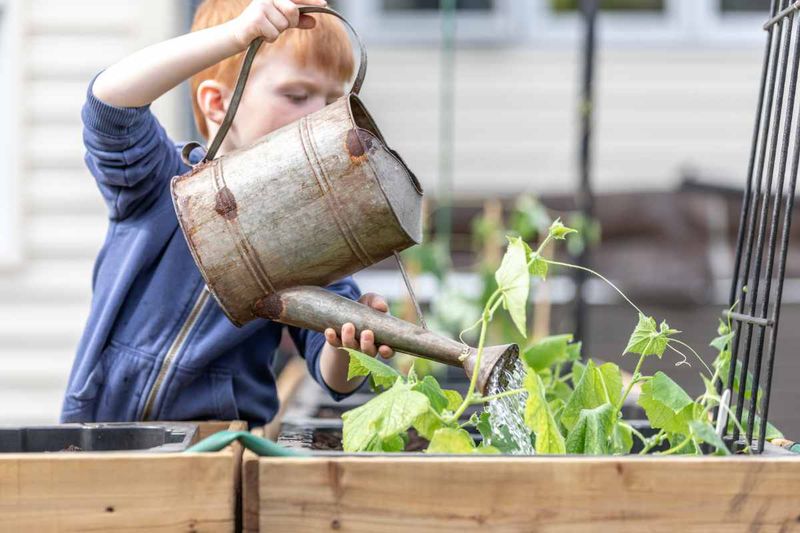
Hot weather changes the rules. On days when temperatures climb well above 90 degrees Fahrenheit, wind is steady, or humidity is low, zucchini plants can lose soil moisture far faster than they would during mild weather. UMN Extension guidance on gardening in hot weather emphasizes that high temperatures and intense sunlight accelerate evaporation from both soil and plant tissue, increasing the risk of stress even for gardeners who watered thoroughly the day before.
Containers are the most demanding situation. Because their soil volume is small and often exposed to heat on all sides, they can dry out completely within a day during a heat wave. Raised beds dry faster than in-ground beds for similar reasons. Sandy or gravelly soil drains quickly regardless of bed type, so plants growing in it need more frequent attention.
On the other end, heavy clay or compacted soil that drains poorly can stay wet for days after a rain, and adding more water to already-saturated soil damages roots just as drought does.
Morning watering is generally the better choice when conditions allow. It reduces evaporation loss compared to midday watering and gives any wet foliage time to dry before evening, when prolonged leaf moisture can encourage fungal problems. That said, if a plant is severely wilting in the afternoon heat, water it then rather than waiting for morning. A plant under acute water stress is already at risk, and delaying relief to follow a preferred schedule can make the situation worse.
Separate blossom-end rot from pollination failure and wet rot
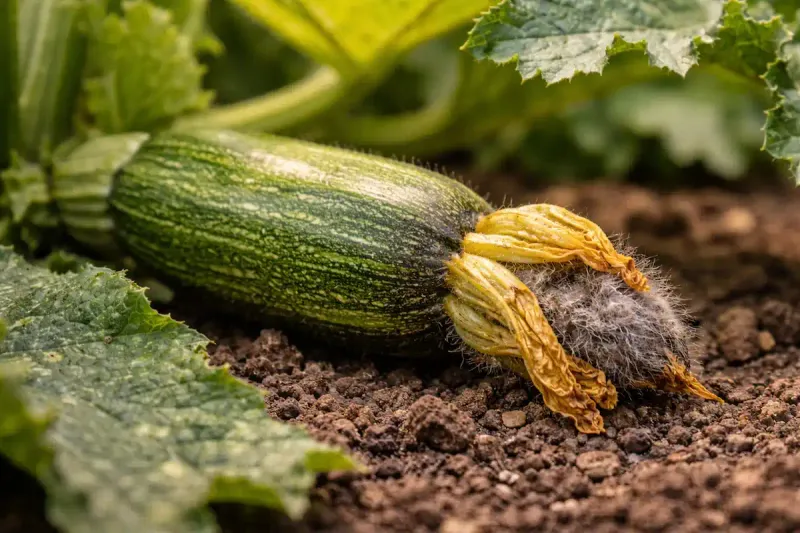
Not every young zucchini that fails at the tip has blossom-end rot, and forcing every failure into a single diagnosis leads to fixes that do not match the actual problem. Two other causes produce similar-looking damage and require different responses.
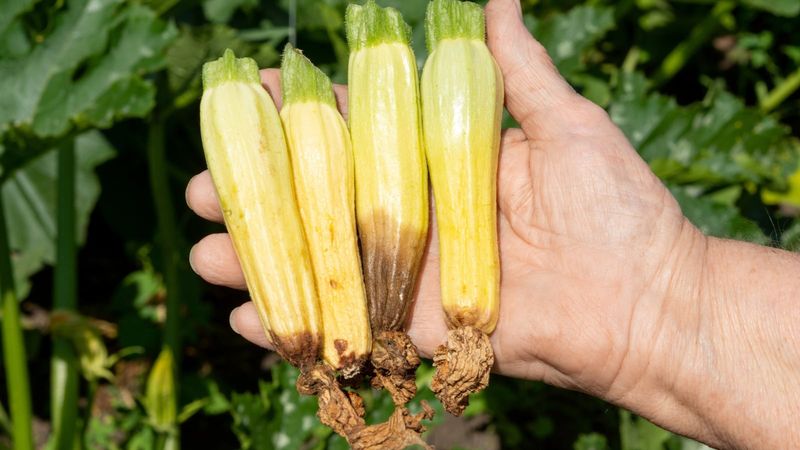
Poor pollination is common early in the season and during stretches of cold, cloudy, or rainy weather when bees are less active. UMN Extension’s summer squash guide explains that zucchini requires pollination to develop properly, and that inadequately pollinated fruit typically stops growing while still very small, yellows, and eventually rots. The decay in pollination failure usually starts throughout the small fruit rather than as a focused, leathery spot at the blossom end specifically. If the problem is concentrated in the first few weeks of the season and coincides with cool or overcast weather, pollination is a more likely explanation than moisture stress.
Choanephora wet rot looks distinctly different from either of those causes. A fruit affected by this fungal disease develops soft, watery decay and becomes covered with white, purple, or black fuzzy growth, sometimes described as resembling whiskers. UMN Extension’s Choanephora rot resource connects this disease with prolonged wet conditions, overhead irrigation, poor air movement around plants, and fruit that contacts moist soil. The practical response is to improve air circulation, avoid wetting flowers and foliage, and remove affected fruit.
Fungicides are not a reliable solution for Choanephora because new susceptible flowers open continuously, and they have no role at all in correcting the physiological disorder of blossom-end rot.
Remove unrecoverable fruit and investigate persistent symptoms
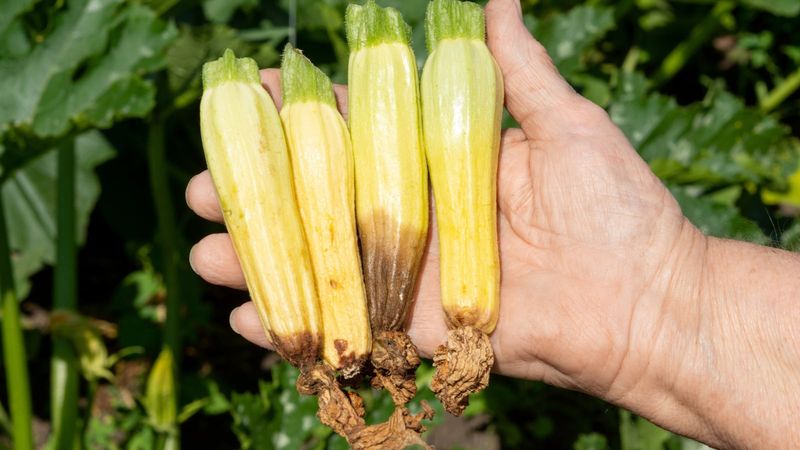
Once blossom-end rot has developed, the affected tissue will not recover. The cellular damage is done, and no amount of additional water, calcium spray, or fertilizer will restore the sunken, darkened area. UMN Extension’s tomato disorders guide recommends removing fruit with advanced damage so the plant can direct energy toward the fruit still developing on the vine. For zucchini, which produces continuously through summer, getting rid of badly affected fruit quickly also reduces the chance that secondary rot spreads to nearby healthy growth.
If symptoms continue appearing on new fruit after you have steadied your watering routine, the cause may not be moisture alone. USU Extension notes that root injury from cultivation, waterlogged soil, soil salinity, and excess nitrogen, ammonium, potassium, or magnesium can all interfere with calcium movement to fruit even when the soil contains adequate calcium. A soil test is the right starting point before adding any amendment. UMN Extension’s fertilizing guide emphasizes that applying nutrients without knowing current soil levels can create new imbalances that worsen the problem.
Two popular home remedies deserve a direct response. UMN Extension’s review of common soil health home remedies explains that eggshells decompose too slowly to provide timely calcium, and that Epsom salts, which supply magnesium rather than calcium, can actually interfere with calcium uptake and harm soil and water quality. Foliar calcium sprays are similarly unreliable for correcting established symptoms: Illinois Extension and Penn State Extension both caution that foliar applications have limited ability to correct blossom-end rot once tissue is already damaged. Address the root cause, not the symptom.
Give the next zucchini a steadier start
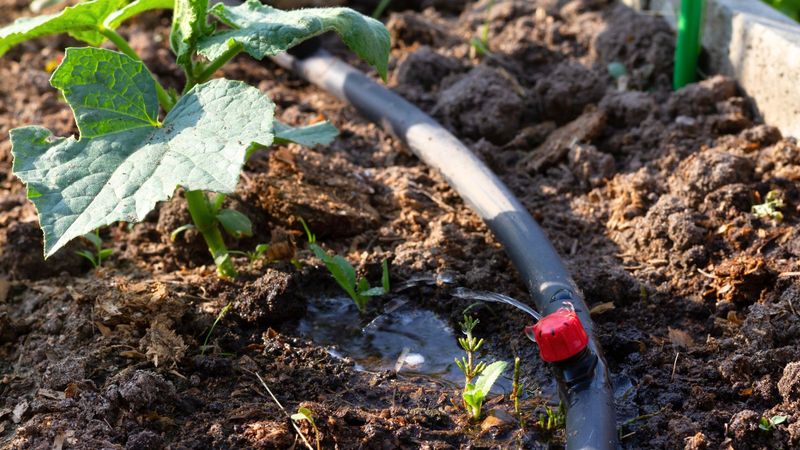
Protecting future fruit comes down to a repeatable routine rather than a single fix. Check the soil roughly 2 inches below the surface, water thoroughly when that zone begins to dry, and direct moisture to the root zone rather than over the foliage. Use mulch to moderate wet-dry swings, but keep it away from the crown and continue checking below the surface.
Adapt the routine to conditions rather than a fixed schedule. Containers, raised beds, sandy soil, and heat waves all call for closer attention and shorter intervals between checks. When a young zucchini does fail at the tip, compare it carefully against pollination failure and Choanephora wet rot before assuming the problem is moisture-related.
Fluctuating moisture commonly contributes to blossom-end rot, but it does not explain every young zucchini that stops developing or decays. The garden that earns the fewest losses is usually the one where the gardener checks the soil more often than the calendar.