
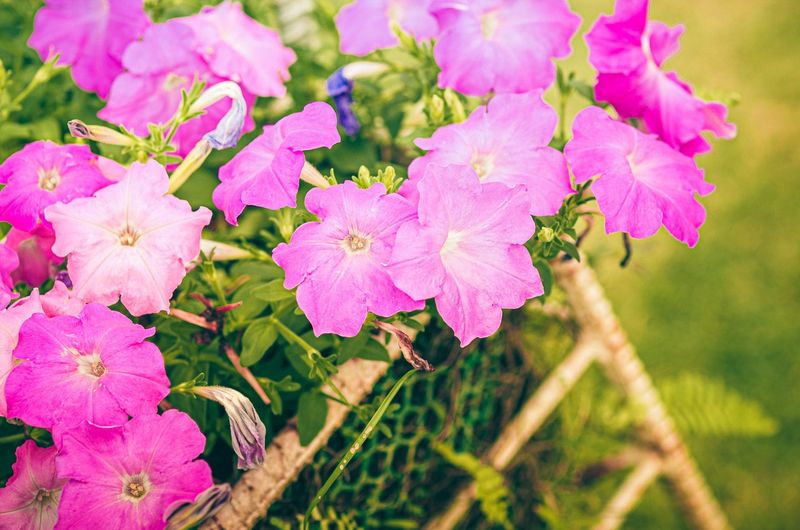
Petunias are one of the most cheerful flowers you can grow on a Southern porch or in a garden bed, but when the blooms suddenly disappear in the middle of summer, it feels like something went badly wrong overnight. A lot of gardeners immediately wonder whether they made a mistake with deadheading – and that is sometimes part of the story, especially with older large-flowered types.
The fuller picture almost always includes heat, inconsistent watering, container stress, or the natural limits of the plant you chose. Knowing which problem you are actually dealing with is the fastest way to get your petunias back on track.
A missed deadheading step may leave the seed structure behind
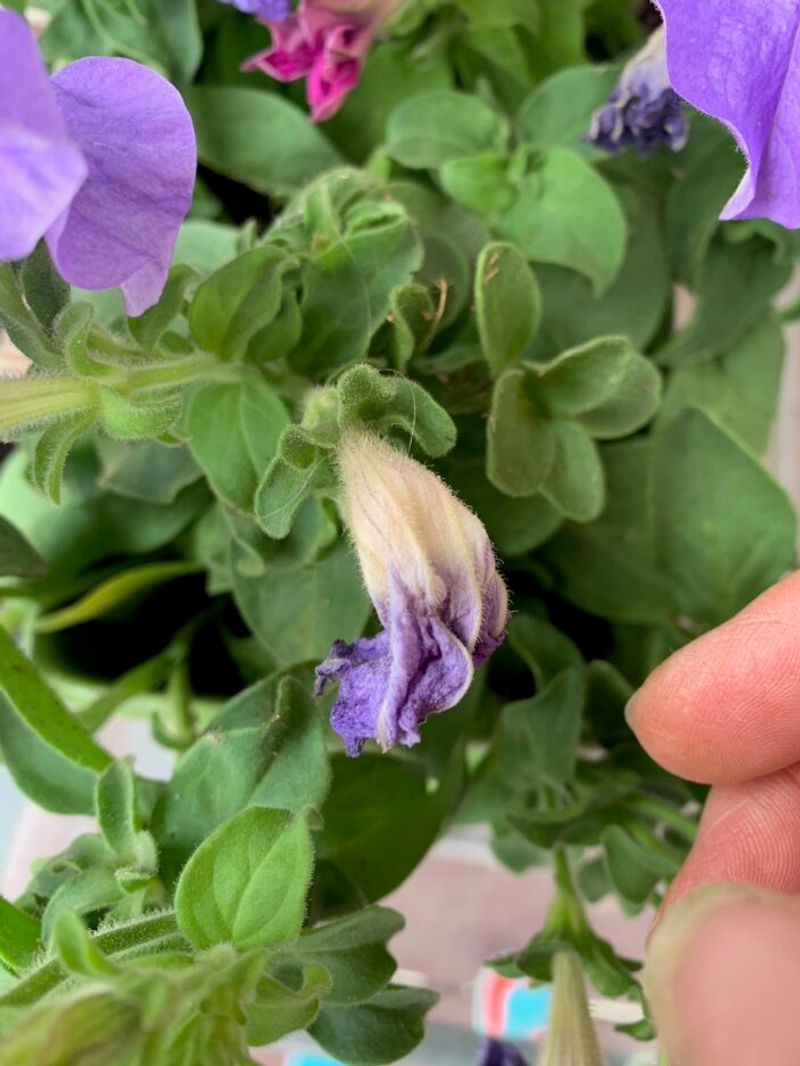
Pulling off a faded petunia petal and calling it done is an easy habit to fall into, but on certain petunia types it can leave part of the problem behind. When you remove only the colorful petals from an older large-flowered or double petunia, the short flower stalk and the swollen green seed capsule beneath it often stay attached to the plant.
That remaining structure can continue developing, and Mississippi State Extension specifically advises removing the stalk because seeds form below the flower head rather than inside the petals themselves.
Leaving seed capsules in place on a non-self-cleaning petunia can reduce how quickly new flower buds form and makes the plant look messier than it needs to. NC State’s plant profile for petunia notes that deadheading provides optimal performance and can increase flower-bud production.
That is real and worth acting on.
What the evidence does not support is the idea that one missed deadheading session shuts down every petunia overnight, across all cultivars and climates. For some plants in some conditions, incomplete removal makes a noticeable difference.
For others, particularly self-cleaning spreading types, the whole question barely applies. Understanding which type you are growing is the place to start.
The petunia type tells you whether deadheading matters
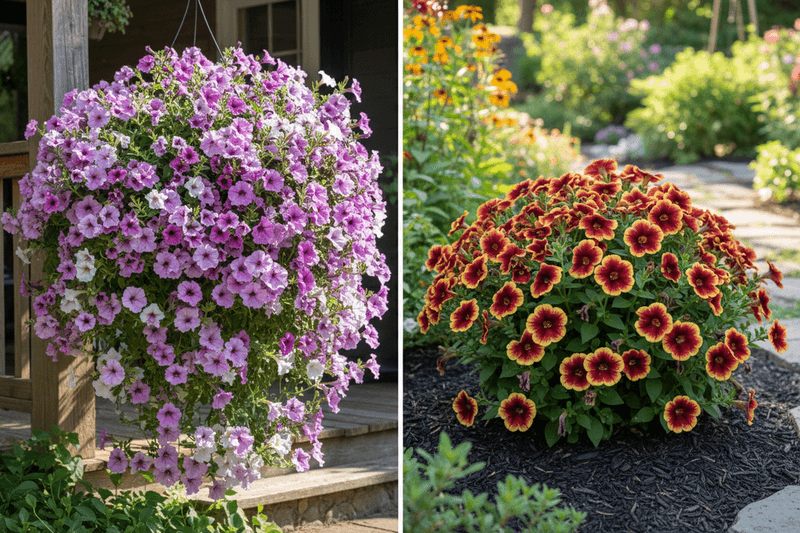
Not every petunia on the market behaves the same way, and that difference matters a lot before you spend time deadheading. Large-flowered grandiflora petunias and double-flowered varieties are the types most likely to benefit from regular manual removal of spent blooms.
Their flowers tend to stay on the plant after they fade, and the seed structures beneath them can persist if you do not remove them deliberately.
Spreading types, Wave petunias, milliflora varieties, and Supertunia-type hybrids are a different story. UF/IFAS notes that modern cultivars differ substantially in their heat tolerance and deadheading needs, and Mississippi State describes Supertunias as largely self-cleaning, meaning spent flowers drop away without your help.
For these plants, spending time removing individual blooms may not produce any visible improvement.
Illinois Extension distinguishes self-cleaning cultivars from older types when discussing annual care, a useful reminder that a universal weekly deadheading rule would steer some gardeners toward unnecessary work while potentially misleading others about what their plant actually needs. Check the tag or look up your cultivar name before deciding how much manual removal makes sense.
Remove the spent flower and everything beneath it
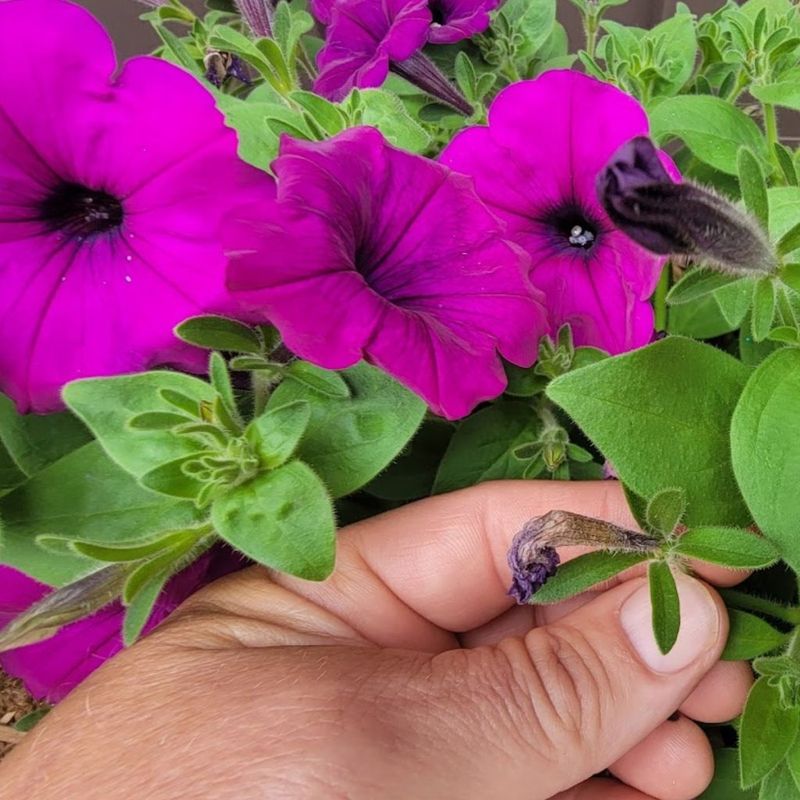
On a non-self-cleaning petunia, the goal is to remove the faded flower, its short stalk, and the swollen green capsule sitting beneath it as a single unit. Mississippi State Extension recommends taking the stalk along with the bloom because the seed forms in that lower structure, not in the petals.
Pinching or snipping just the colorful part leaves the seed-producing section intact and the job unfinished.
Before you cut, trace the stem down from the faded bloom and look for any unopened buds nearby. Penn State Extension recommends checking the stem carefully so you do not accidentally remove flower buds that are still developing.
Your cut can sit just below the spent bloom itself or slightly above a healthy leaf node, depending on how much you want to tidy the plant’s overall shape at that point.
Illinois Extension’s deadheading guidance supports working above a node when shaping is part of the goal. Clean, sharp scissors or snips make cleaner cuts and reduce the chance of crushing soft stems.
One important exception: if you are planning to collect seed from a particular flower you admired, Ask Extension confirms that leaving selected spent flowers in place is the right call, since removing the capsule prevents seed from forming. Mark those stems and skip them during your regular rounds.
Check heat and moisture before blaming the flowers
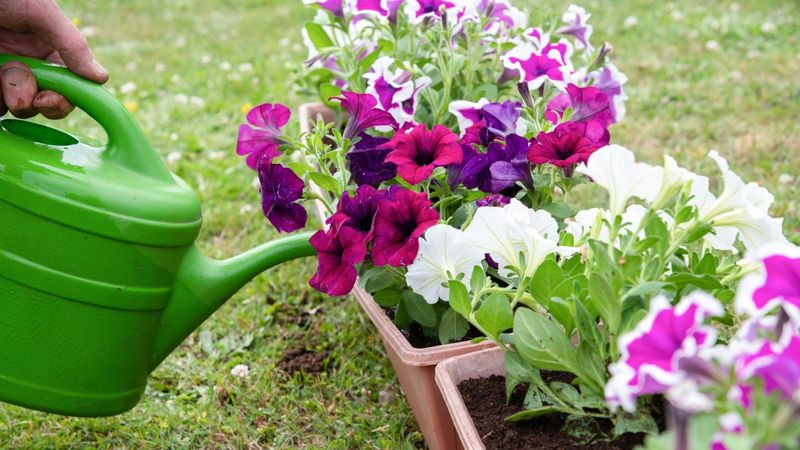
A sudden drop in blooms during a Southern summer is more often a heat and water problem than a deadheading problem. Mississippi State reports that letting Supertunias dry out and wilt can stop flowering for up to two weeks, even when the plant looks like it might recover with the next watering.
That kind of temporary shutdown happens because the plant is protecting itself, not because it is going to seed.
Before you decide the cause is incomplete deadheading, press a finger an inch into the potting mix or soil. If it comes back dry, the plant likely needs water more urgently than it needs any pruning.
Also look at where the container is sitting. UF/IFAS identifies reflected heat from walls and pavement as an added stressor for container petunias, and afternoon heat from a west-facing wall or a concrete patio can push temperatures far beyond what the air thermometer reads.
Oklahoma State’s container gardening guidance notes that pots and hanging baskets dry out much faster than in-ground beds, particularly during hot, windy weather. Check for wilting, yellowing, insect damage on leaves or buds, and any visible spots or discoloration before assigning the cause to seed production.
A sudden bloom loss does not prove the plant is redirecting energy into seeds – it often just means the plant is hot, dry, or both.
Stabilize a stressed plant before pruning it hard
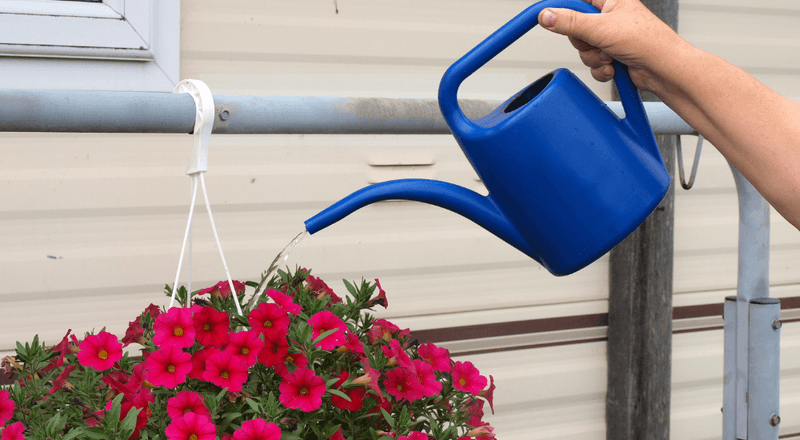
When petunias are wilting or showing signs of heat exhaustion, the first move is water, not scissors. UF/IFAS recommends keeping petunias in moist, well-drained soil and gives a general guideline of 1-2 inches every 7-10 days for established Florida plantings, adjusted for weather and the specific site.
Frequent shallow sips at the surface do less good than a thorough soak that reaches the full root zone.
Oklahoma State’s container guidance recommends watering until water runs freely from the drainage holes, then letting the pot drain completely rather than leaving it sitting in a saucer of water. During very hot weather, containers and hanging baskets may need checking daily or even twice a day.
Moving a pot to a spot with morning sun and afternoon shade can reduce the rate at which the mix dries out.
Feeding matters for heavily watered container plants because nutrients wash out with frequent irrigation. Use a controlled-release fertilizer or a balanced water-soluble product according to the label, and avoid the idea that extra phosphorus is a guaranteed fix for missing blooms.
Excess fertilizer can damage roots and contribute to salt buildup in the mix. Oklahoma State mid-summer garden guidance and Mississippi State’s Supertunia advice both support label-directed feeding rather than aggressive fertilizer applications.
Hold off on any major pruning until a severely wilted or scorched plant has had a chance to stabilize with consistent moisture.
A leggy plant needs a trim rather than endless deadheading
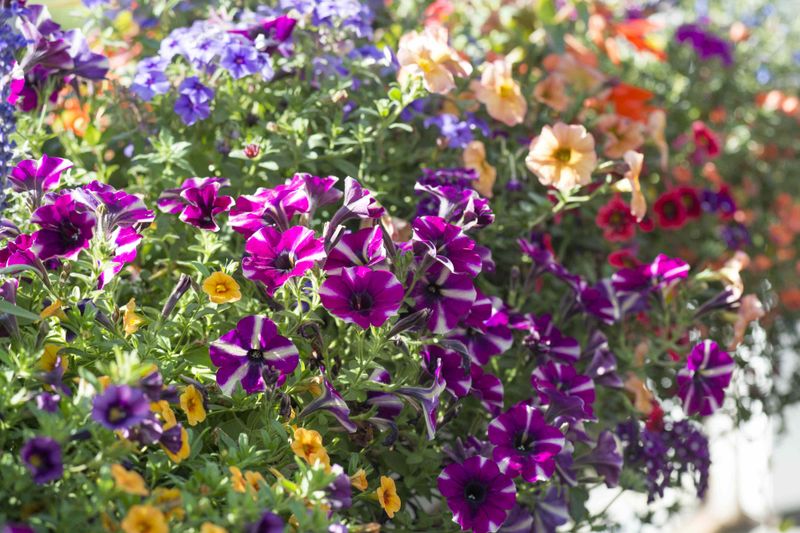
Deadheading and pruning back are two different jobs, and mixing them up can leave a struggling plant without the help it actually needs. Removing spent blooms keeps the plant tidy and supports reblooming on non-self-cleaning types.
But when stems grow long, sparse, and almost flowerless with widely spaced leaves, that is a sign the plant needs a trim to restore branching, not just cleaner flower removal.
Mississippi State recommends cutting Supertunias back by about one-third when they become leggy, followed by watering and feeding to support the flush of new growth. University of Georgia Extension notes that many petunias respond well to a more substantial midsummer cutback when it is followed by consistent moisture and fertilizer.
Neither source presents a precise cut depth as a universal rule, and the right amount depends on how far the plant has stretched and how healthy it looks overall.
Illinois Extension separates trimming for shape from spent-flower removal when discussing annual care, and Penn State’s herbaceous pruning guidance reinforces that cutting growing tips or stem sections is a different operation from cleaning up old blooms. Make sure moisture is adequate before trimming, and avoid a heavy cutback on a plant that is already severely stressed by heat or drought.
Southern seasons and site conditions can limit rebloom
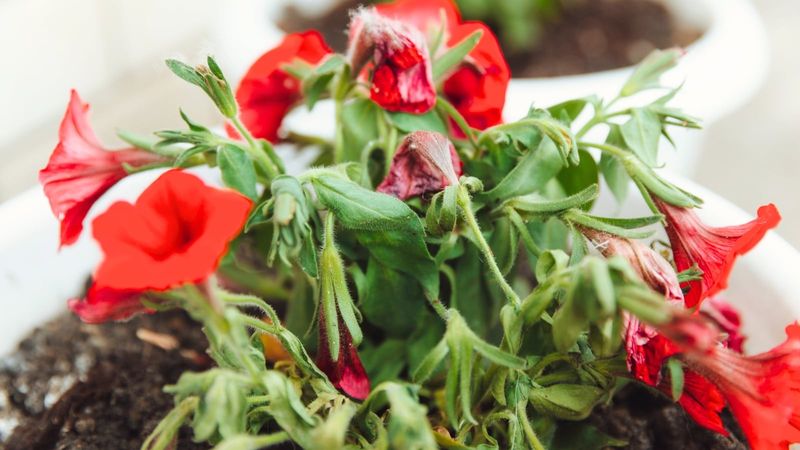
Florida gardeners often work with a fundamental timing reality that no amount of deadheading can change. UF/IFAS treats petunias as primarily cool-season annuals in Florida, recommending October and November planting for the best performance.
A Florida petunia that fades as summer heat builds is often responding to its natural seasonal limits rather than a care mistake, and expecting deadheading to reverse that decline sets an unrealistic bar.
Texas gardeners face a related challenge. Texas A&M’s EarthKind program notes that some annual color plantings are replaced with more heat-tolerant choices during the hottest months rather than pushed through conditions they were not bred for.
Cultivar selection matters: Mississippi State identifies newer spreading and Supertunia-type petunias as stronger performers in warm conditions than some older grandiflora forms, though even heat-tolerant cultivars are not immune to stress when temperatures stay extreme.
Pests and diseases can also pull the diagnosis in a different direction. UF/IFAS identifies petal blight as a problem during rainy, humid weather and notes that aphids, caterpillars, and viruses can all affect petunias.
If you see spotted or distorted leaves, chewed buds, or a sticky residue on stems, broaden your inspection before concluding the plant simply needs better deadheading. Regional conditions, cultivar limits, and pest or disease pressure are all legitimate reasons for bloom loss that no deadheading technique will address.
Match the symptom to today’s appropriate fix
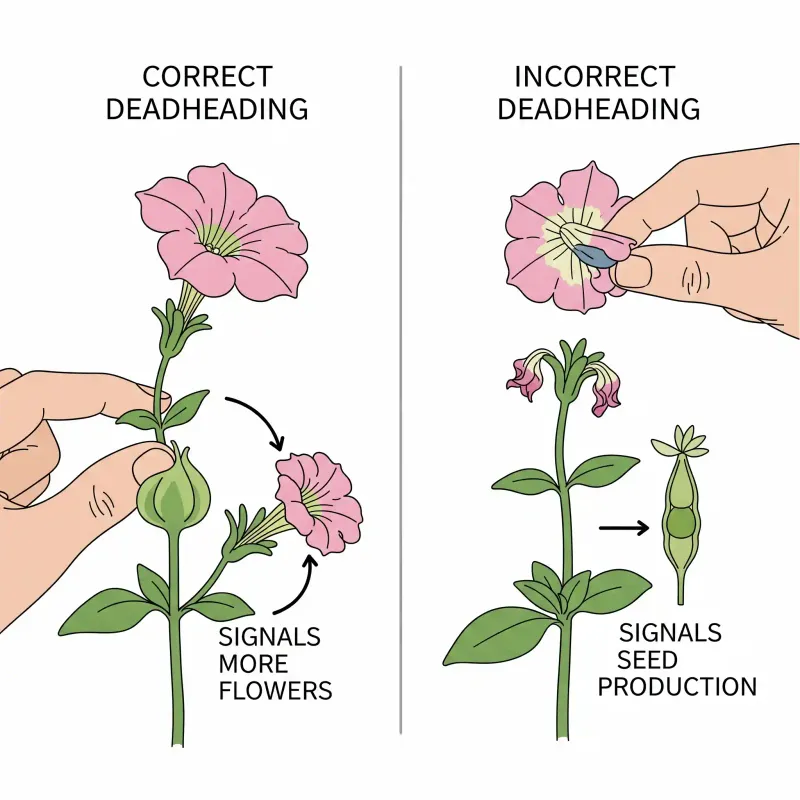
Running through a quick mental checklist before reaching for the scissors saves time and protects the plant. On a non-self-cleaning grandiflora or double petunia with faded flowers still clinging to the stems, removing the entire spent bloom, stalk, and seed capsule is the right first action.
On a self-cleaning spreading or Wave-type petunia, check the potting mix and the site conditions before assuming the flowers are the problem.
A wilted or heat-stressed plant needs water and possibly a position change before anything else. UF/IFAS guidance on petunia care supports stabilizing moisture first, especially for container plants in Florida’s summer heat.
Feed containers with a balanced product at label rates once the plant is drinking normally again, and hold off on heavy pruning until you see signs of recovery.
When stems are long and bare rather than simply bloom-free, trim rather than deadhead, and follow the cut with water and fertilizer. Mississippi State’s Supertunia guidance links that trim-and-feed sequence to restored flowering.
If Southern heat is simply past the plant’s seasonal range, the most honest fix may be replacing it with a more heat-suited annual and returning to petunias in the fall. Incomplete deadheading is worth correcting when it applies, but it is one piece of a larger diagnosis, not a single explanation for every quiet summer pot.