
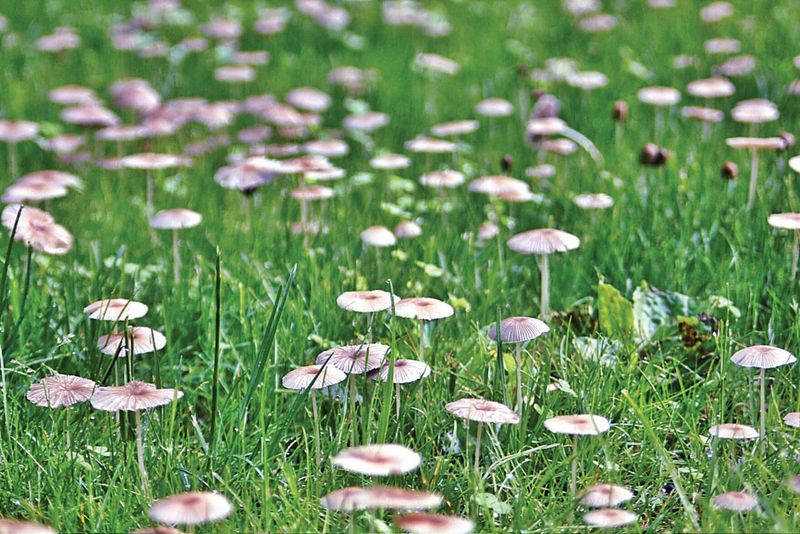
You wake up after a stormy night and find a cluster of pale mushrooms poking through the grass. It is easy to wonder if something has gone wrong with your lawn.
Most of the time, those mushrooms are a sign that fungi are busy underground and the soil is damp. Knowing what to look for in the grass around them helps you decide whether to relax or take a closer look.
Mushrooms are a clue, not a soil test
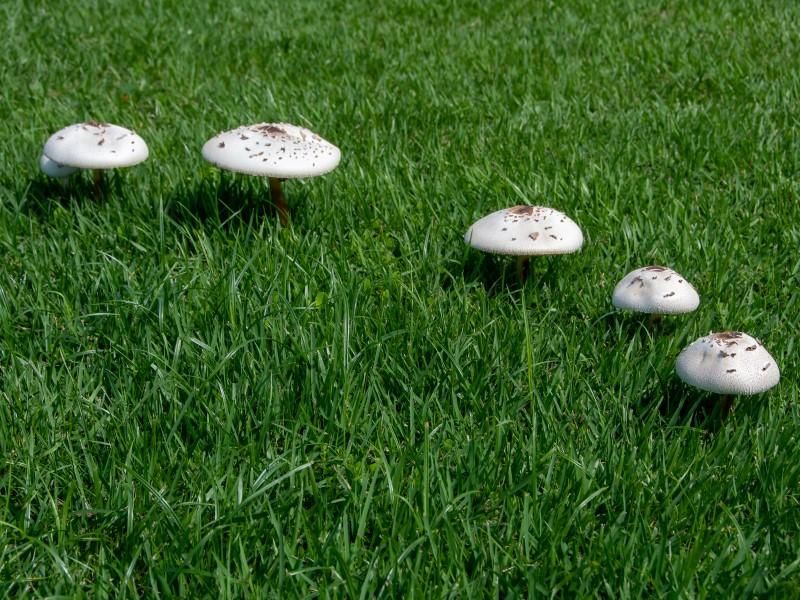
Spotting mushrooms after a storm does not mean your soil has earned a gold star. What it does tell you is that a fungus is active and that conditions are damp enough for it to send up fruiting bodies.
University of Minnesota Extension explains that lawn mushrooms usually grow from fungi feeding on organic matter in the soil, and that they generally are not a sign the grass itself is diseased.
That is a narrower message than “your soil is healthy.” Wet weather, buried wood, or old roots can explain mushrooms all by themselves, so the mushrooms alone cannot grade your soil. Fungi are a normal part of a working soil community, but a mushroom is only one clue.
The more useful question is what the grass around the mushrooms looks like. Scattered mushrooms in an otherwise thick, green lawn are usually just a passing visitor, and Iowa State University Extension notes that they often appear when conditions are moist and food is available.
Grass that is thinning, browning, or forming odd shapes deserves a closer look.
Rain brings underground fungi into view
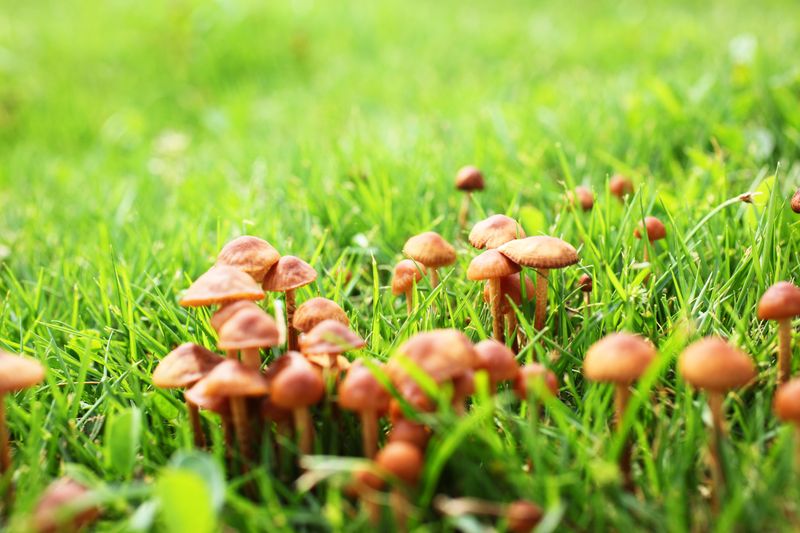
Picture an iceberg. The mushroom you see is just the fruiting body, the part the fungus builds to release spores, while most of the organism spreads out as tiny threads in the soil.
That hidden network can be there for months or years before anything pops up.
Rain or irrigation does not create the fungus. It simply helps trigger mushrooms when the fungus already has food and the right conditions.
University of Minnesota Extension describes mushrooms as showing up when moisture and organic material line up.
In Florida and Texas, warm temperatures plus summer downpours or sprinkler cycles can make that happen quickly, sometimes overnight. Many mushrooms fade within a day or two, which is why a lawn can look clear by the weekend.
With fairy-ring types, UGA Extension notes the fungus keeps living in the soil even when no mushrooms are visible, so the absence of mushrooms does not mean the organism is gone.
Many lawn fungi recycle organic matter
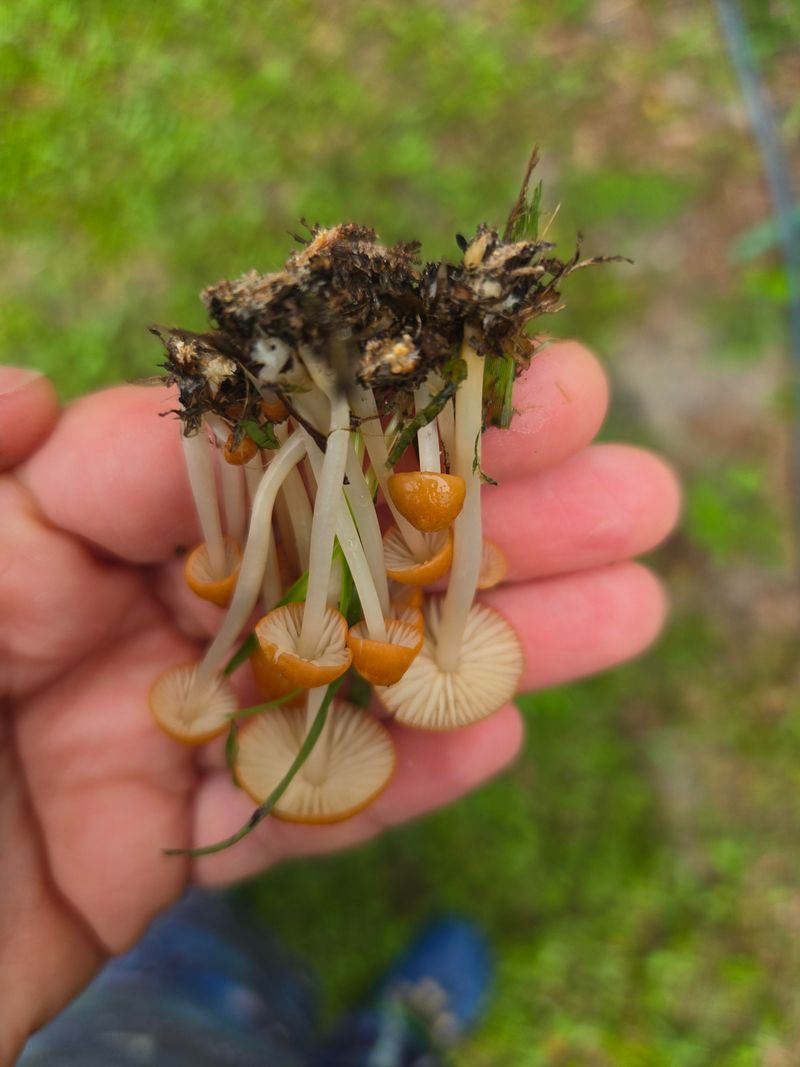
Plenty of lawn fungi make their living as recyclers. They feed on dead roots, thatch, fallen leaves, or wood buried when a tree was removed, breaking that material down and helping release nutrients back into the soil.
That is a real job, and it explains why mushrooms often pop up over old stumps or builders’ debris.
University of Minnesota Extension notes that most lawn mushrooms grow on this kind of organic matter rather than attacking living grass. Still, doing useful decomposition is different from proving a lawn is in great shape.
Florida homeowners often meet Marasmius vagus, sometimes called the wandering creamsicle. UF/IFAS lists it as one of the state’s most common lawn mushrooms and says it is not known to harm lawns or landscapes.
That finding applies to that species only, not to every mushroom in your yard.
When should you look more closely?
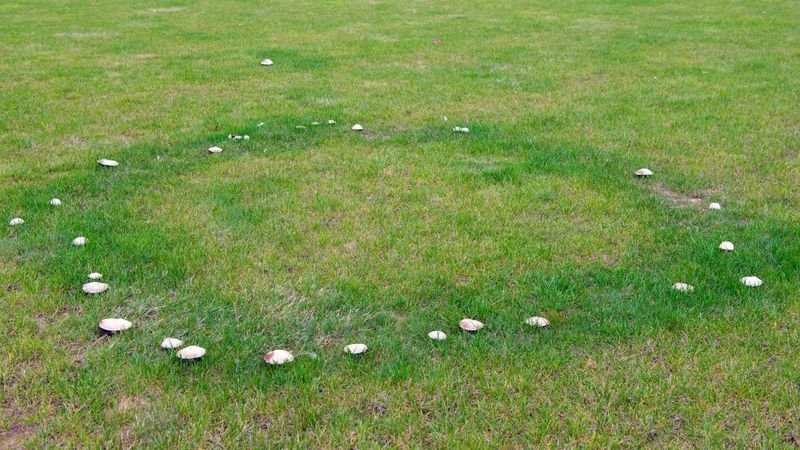
Walk the yard and look at the pattern, not just the mushrooms. Persistent circles or arcs in the turf are the main warning sign for fairy ring, a fungus that can change how the lawn grows.
Watch for brown or dead grass, a ring of extra-lush dark green growth, or a dry patch that stays dry even when nearby soil is wet.
UGA Cooperative Extension explains that fairy-ring fungi can make soil resist water, which starves the grass above. UF/IFAS adds that rings can look quite different from lawn to lawn.
Here is the catch: the mushrooms alone cannot tell you which effect is happening. A ring may show little turf damage, a lush green band, or dead zones.
For Texas lawns, Texas A&M AgriLife Extension describes brown or dark green arcs and circles as the telltale signs. If the damage is spreading or significant, ask your county Extension office for a diagnosis.
Manage moisture and remove mushrooms only if needed
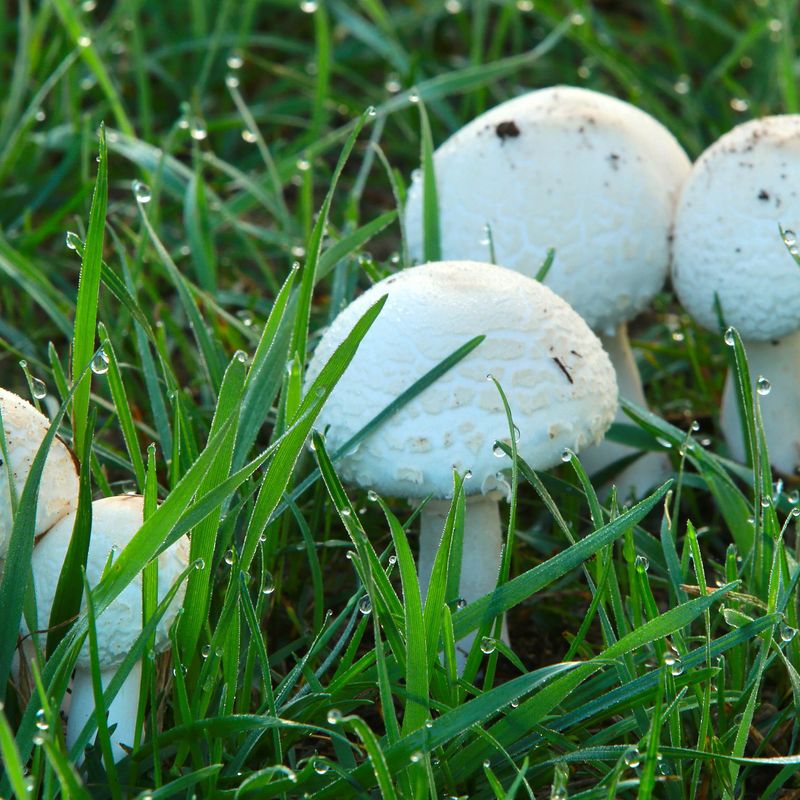
If your lawn is green and the mushrooms are scattered, you generally do not need to treat anything. They tend to fade on their own.
If you simply dislike them, rake or pick them up and throw them away.
Keep in mind that removal only takes off the visible fruiting bodies. UC Statewide IPM points out that the fungus stays in the soil, so mushrooms may return after the next soaking rain.
For a longer-term fix, check for overwatering or spots where water pools, and dig out accessible decaying wood or roots when practical, as described by University of Minnesota Extension and Iowa State. Do not cut irrigation so far that the grass gets stressed, since UF/IFAS frames the goal as fixing excess moisture, not drying the turf out.
Fungicides are not a sound general fix for lawn mushrooms or fairy-ring symptoms.
Keep unidentified mushrooms away from people and pets
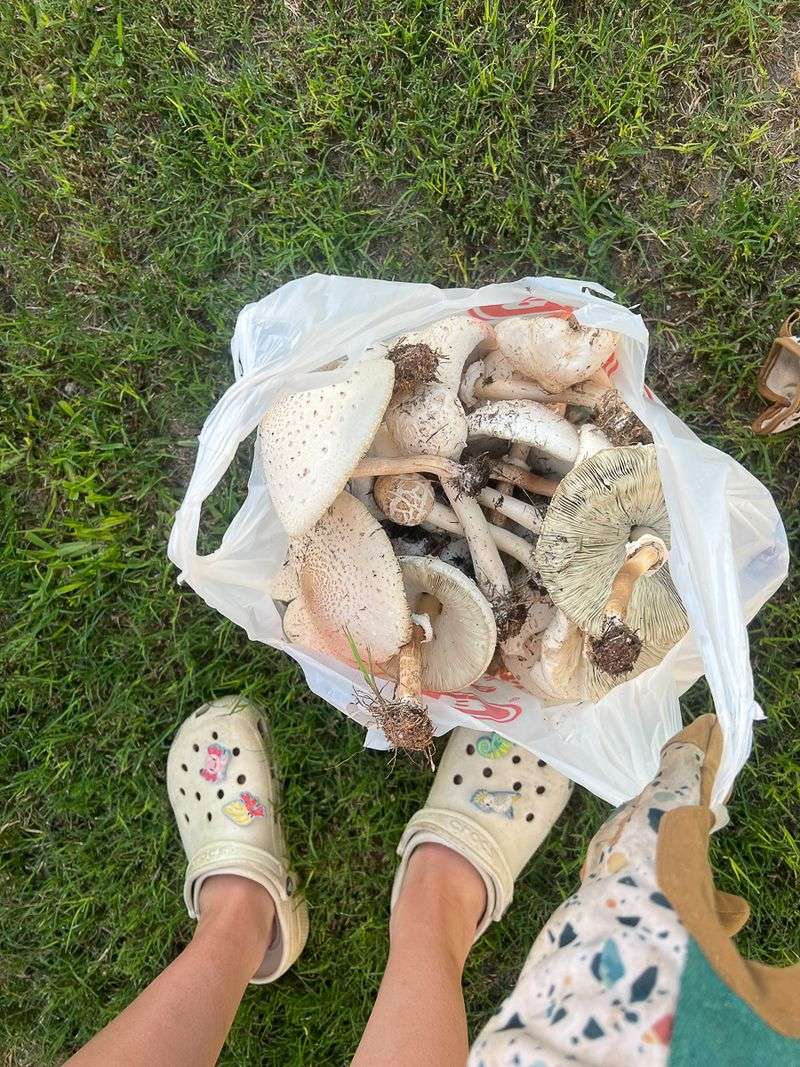
Never eat a mushroom that grew in your yard unless an expert has identified it. Color, shape, or a quick photo match are not reliable ways to judge safety, and cooking does not make an unknown mushroom safe.
Poison Control warns that dangerous look-alikes exist and recommends expert identification before anyone eats a wild mushroom.
If children or pets play in the yard, pick up or rake away accessible mushrooms and discard them, as UC Statewide IPM suggests. Wear gloves or wash your hands afterward.
If someone has eaten a yard mushroom, call Poison Control at 1-800-222-1222 right away. Symptoms can be delayed, so waiting to see if the person feels sick is a risky plan.
Let the lawn’s condition guide your response
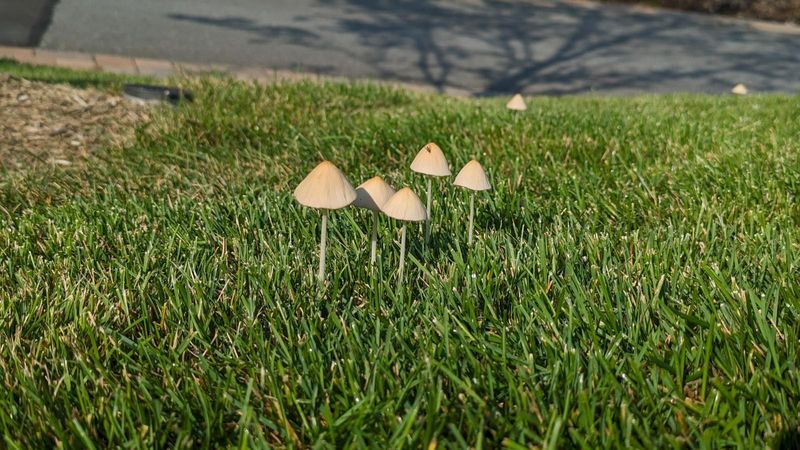
Mushrooms after rain usually point to active fungi and damp ground, as University of Minnesota Extension describes. What the grass looks like around them tells you what to do next.
Even, green turf means you can leave them be, while rings, arcs, or stubborn dry patches are worth a closer look, as UF/IFAS outlines.
Think of the mushroom as a knock on the door, not a verdict. The lawn itself holds the answer.