
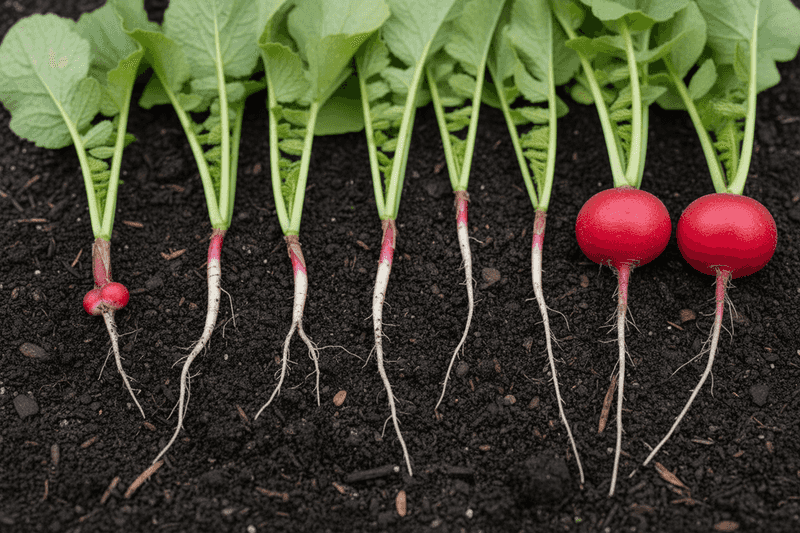
You planted radishes for crunchy red roots, but your fall bed is full of lush green tops and barely a bump underground. It looks like the plants are thriving, yet the part you wanted to eat is not showing up.
That mismatch is a clue, and it can point to more than one problem. Here is how to check your bed and set up a better sowing next time.
Lush leaves do not reveal the cause on their own
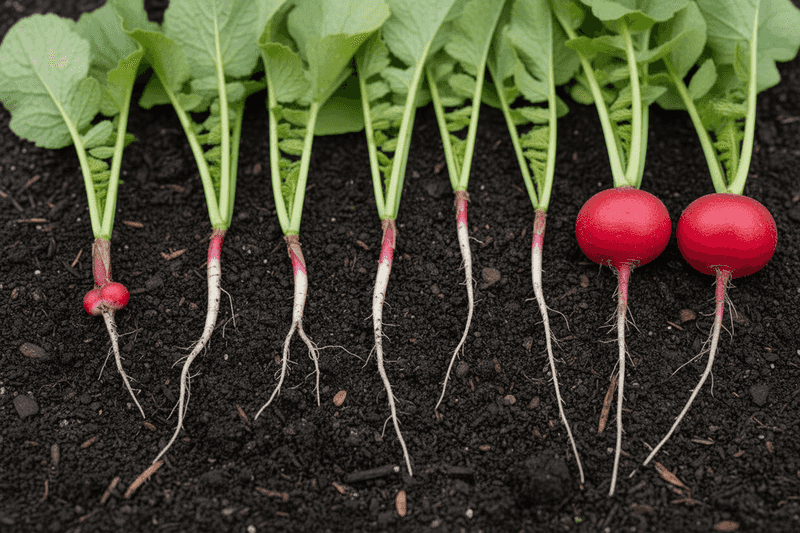
Big, healthy-looking tops with a skinny root underneath are a symptom, not a diagnosis. Illinois Extension lists overcrowding, excessive heat, and shade among the possible reasons radishes fail to form roots, and it says shade has to be severe to completely stop root enlargement.
Other sources add to that list. Iowa State guidance names excess nitrogen, heat, and overcrowding.
Poor or compacted soil can also lead to small or oddly shaped roots.
So resist the urge to blame one thing and move on. A bed can be crowded and also too warm, or sunny and still too rich in nitrogen.
Walk the bed and check spacing, light, temperature, soil, and feeding history one at a time. Fixing a condition may help future growth, but it will not promise that radishes already stuck with tiny roots will bounce back.
Check spacing and thin without disturbing nearby roots
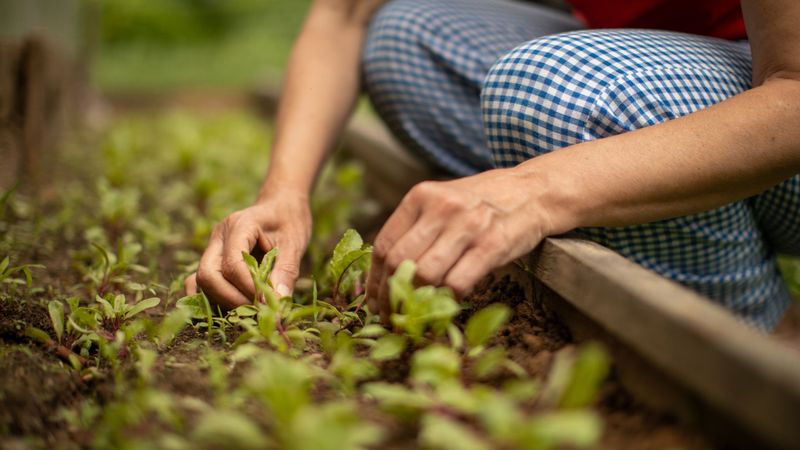
Start with a ruler. For common small garden radishes, about 2 inches between plants is a good general target, according to Iowa State.
Larger types such as daikon need more room, roughly 4 to 6 inches. If your seed packet gives a different number, follow the packet.
If seedlings are packed shoulder to shoulder, thin them by snipping the extras at soil level with small scissors. Pulling can tug on the roots of the plants you want to keep.
Radishes also do not like being moved, and Oregon State Extension notes they are best sown right where they will grow, so skip any plan to transplant the spares.
Thinning reduces competition for light, water, and soil space. It can help the remaining plants, but it cannot guarantee that roots that never began swelling will catch up.
Treat it as one useful step, not a cure.
Distinguish partial shade from severe shade
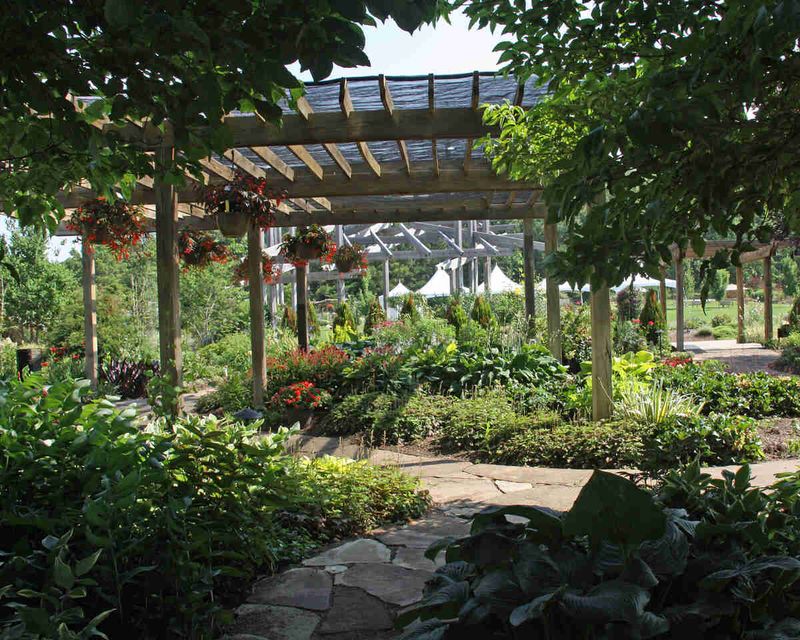
Radishes grow best in a sunny spot, so full sun is a sound goal. Still, a bit of shade does not doom the crop.
Texas A&M AgriLife describes radishes as suitable for partial shade, and Illinois Extension says only severe shade completely discourages root enlargement.
Look at your bed through a typical day. If it gets several hours of direct light and some filtered sun, shade is probably not your only suspect.
If a wall, dense tree canopy, or tall neighboring crops keep it dim most of the day, shade could be playing a bigger part.
In a heavily shaded bed, moving the next sowing to a brighter location is a reasonable change. It may improve root growth, but it is an adjustment, not a guaranteed fix, and shade alone does not explain every leafy radish.
A fall bed can still be too warm
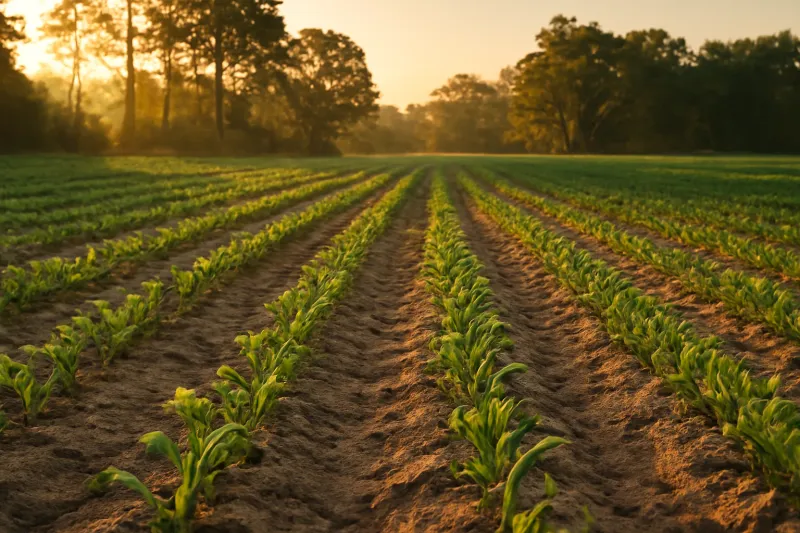
Just because the calendar says fall does not mean your soil has cooled off. Across much of the South, September can feel like summer.
Iowa State notes radishes do best in cool spring and fall weather and that summer heat can lead to poor quality or seed stalks, so a hot spell or an early sowing may be part of your problem.
Local timing matters more than any national date. UF/IFAS gives September through March for radishes in Florida.
A Texas A&M AgriLife Hardin County guide lists September 1 to October 15. Those are regional recommendations, not statewide calendars.
Check with your own county extension office for dates that fit your area. If your radishes went in during a heat wave, note that for next time.
Check soil moisture, drainage, and nitrogen
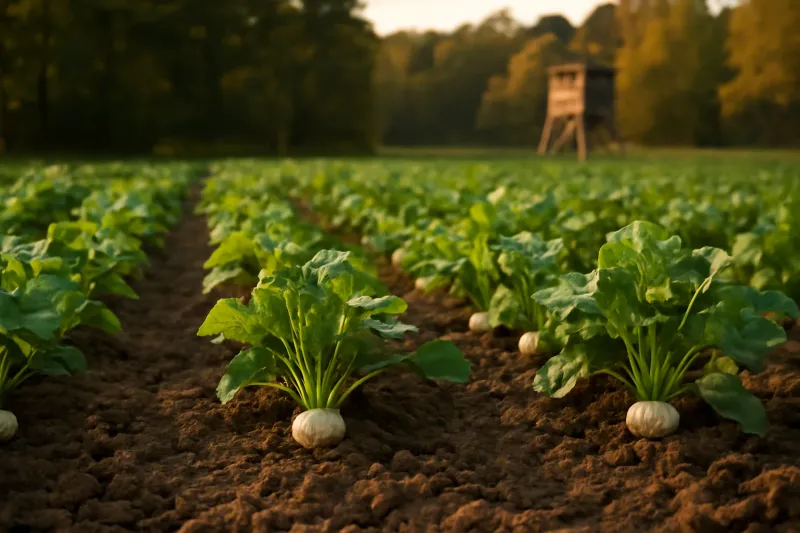
Roots need room to swell, so push a finger or trowel into the soil. It should feel loose, drain well, and stay evenly moist without turning soggy.
Iowa State recommends moist, well-drained, uncompacted soil, and UF/IFAS likewise favors loose soil with even watering. Hard clay or packed ground can lead to small or irregular roots.
Now think about feeding. Excess nitrogen can produce lush tops with little root development, which matches the symptom you are seeing.
If the bed was recently amended with compost or well-composted manure, extra fertilizer may be unnecessary.
Do not add fertilizer to try to force roots to grow. It may make the leaves even bigger.
Changing soil or feeding habits can help the next planting, but it will not reverse damage that has already happened to this one.
Set up the next sowing for better root growth
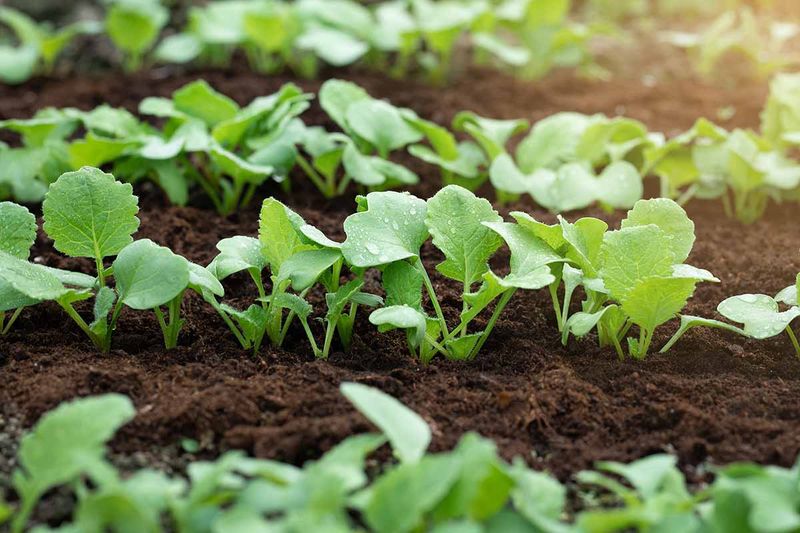
Plan the next round in order of impact. First, wait until your local conditions are cool enough, using your county extension guidance or the UF/IFAS radish page if you garden in Florida.
Second, pick a bright site with loose soil.
Third, sow directly in the bed and space by variety. Salad radishes need about 2 inches and mature in roughly 3 to 5 weeks, based on Iowa State figures.
Daikon needs more room and about 50 to 60 days. Snip extras rather than pulling them, as Oregon State advises against disturbing growing roots.
These steps improve the odds, though they cannot promise perfect roots or rescue this crop. Radishes are quick, so a fresh try costs little.
A leafy radish is a plant telling you something, and a short checklist usually beats a guess.