
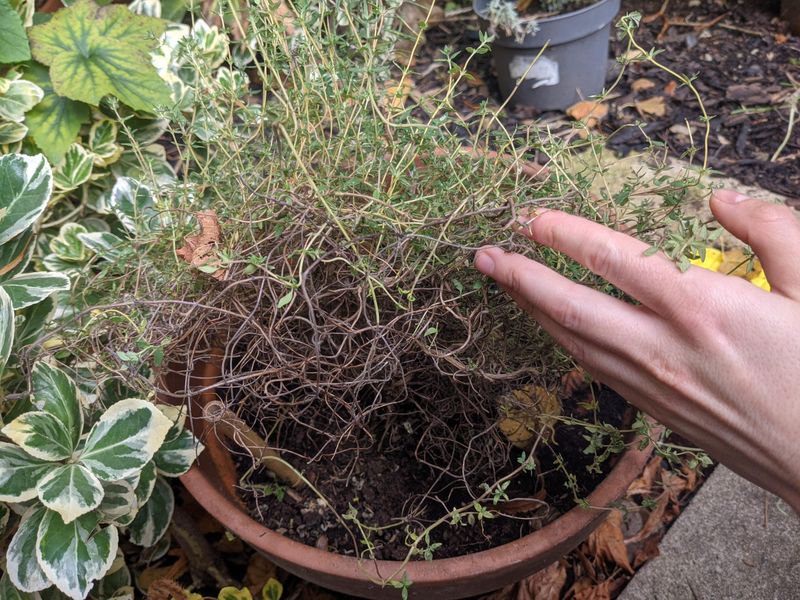
Thyme that looks stretched out, bare in the middle, and a little sad makes many gardeners reach for the pruners or the trash can. Before you do either, it helps to know that thyme ages in a way that can fool you.
A hard cut at the wrong time can finish off a plant that might have recovered. Here is how to read your thyme, trim it safely, and decide when a fresh plant makes more sense.
A woody center does not always mean thyme is dying
Woody stems are part of thyme’s normal life story. Iowa State Extension notes that thyme develops woody growth as it ages, and older plants often end up with woody centers.
A leggy shape or a bare middle is a sign of age, not proof that the plant is finished.
That said, pruning will not turn old wood back into soft, leafy growth. If you are hoping one big cut will reverse the aging, it is better to adjust that expectation now.
Your goal is to keep the leafy parts healthy, not to erase the woodiness.
Brown thyme after winter deserves patience too. Cold can damage stems without killing the whole plant.
NC State Extension advises checking the stems and waiting for new growth before you prune green stems. Scratch a stem lightly with a fingernail.
Green underneath is a good sign, and a few weeks of warm weather will usually show you where new leaves are coming from.
Identify the type of thyme before trimming
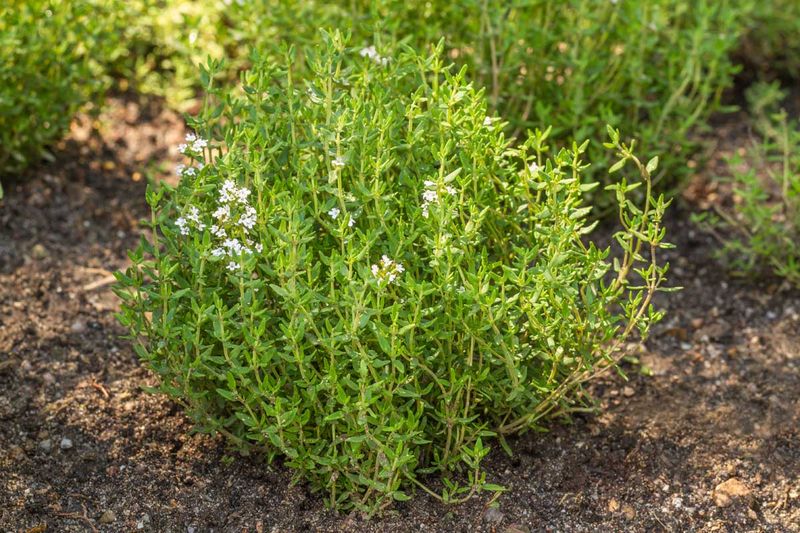
Thyme is not one plant with one set of rules. The name covers many species, and they grow in very different shapes.
Upright or shrubby culinary thyme forms a small mound of stems, while creeping thyme hugs the ground and spreads into a mat.
That difference changes how you trim. The RHS recommends light trims for shrubby thyme in mid- to late spring and/or soon after flowering.
Creeping thyme generally needs only a very light trim after flowering to remove the spent flowers.
Gardeners sometimes treat every thyme like the one in the herb pot by the kitchen door, then wonder why the groundcover between the pavers looks ragged. Iowa State Extension points out that guidance for common culinary thyme should not automatically be applied to creeping or ornamental types.
Check the plant tag if you still have it. If not, look at the habit: stems standing up in a clump, or stems running flat along the soil.
That quick look tells you which gentle approach to use.
A fall trim is not a dependable reset
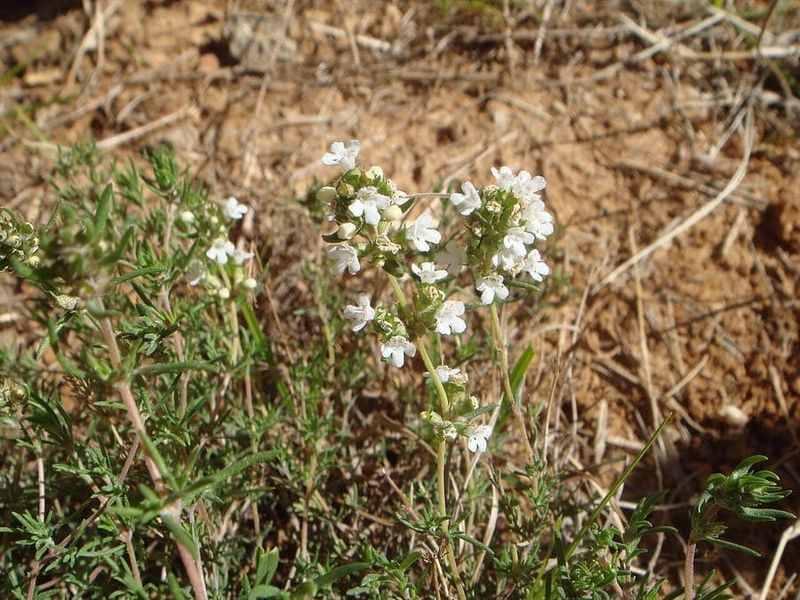
The idea that one fall trim will bring thyme back thick and fragrant is tempting, but the guidance does not back it up. The RHS suggests light trimming of shrubby thyme in mid- to late spring and/or after flowering.
Nothing in that advice promises a fall rescue.
Timing matters near cold weather, too. NC State Extension warns against severe late-fall pruning of woody herbs.
Significant pruning late in the season can push tender new growth or reduce winter hardiness before the cuts have healed. Its suggestion to avoid severe pruning within four to six weeks of the first severe freeze is regional guidance for North Carolina.
Texas and Florida vary a lot. A Panhandle garden, a Hill Country yard, and a South Florida patio have very different freeze risks, so there is no single date that works for all of them.
Fall is a fine time to plant thyme in much of the South, but planting is not pruning. If your thyme looks rough in autumn, leave the big cuts alone and plan a light trim for the next growing season.
Keep pruning cuts in leafy growth
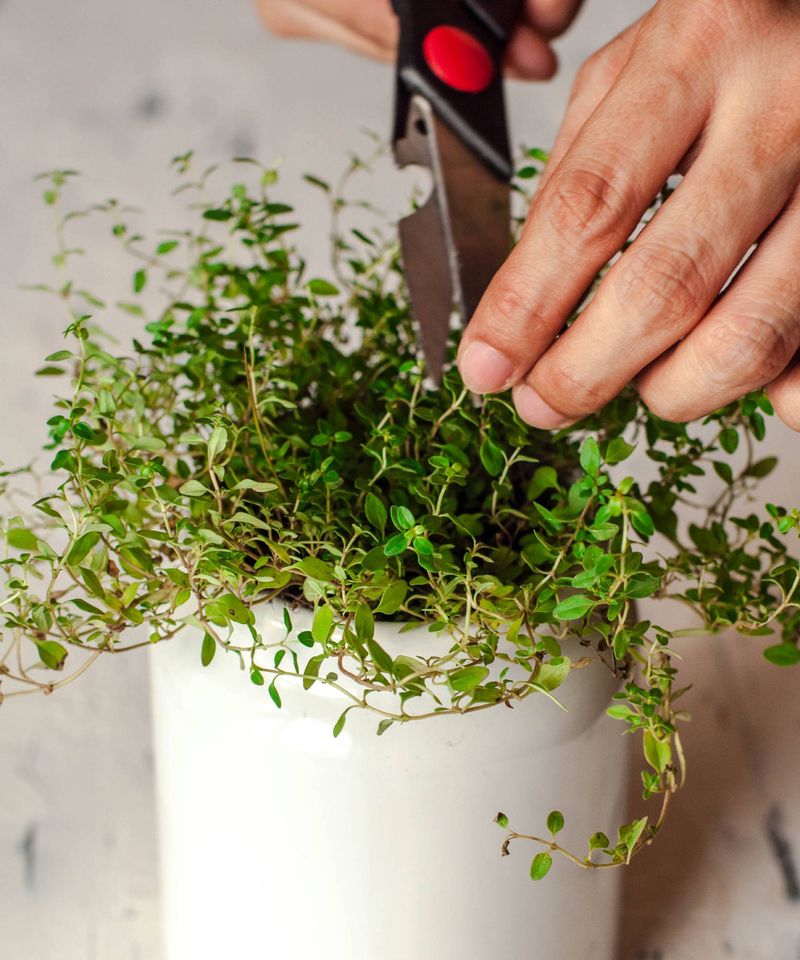
When you do trim, the safest rule is to stay where the leaves are. Take off the green, leafy top growth and leave the bare, old wood alone.
Stems that have no leaves on them may never sprout again once cut.
For a local example, UF/IFAS Santa Rosa County Extension advises trimming leggy common thyme in early spring and summer, cutting top growth, leaving woody stems, and keeping at least five inches of growth. That is local guidance for common thyme, not a universal measurement for every cultivar or yard.
The risk of cutting too deep is real. The RHS cautions that hard pruning into old wood may fail to reshoot.
Texas A&M AgriLife says pruning woody thyme nearly always kills the plant, according to its herbs for Texas landscapes publication. That does not mean every plant will die, but it is a good reason to be careful.
Before each snip, look for a leaf or a green bud just below the cut. If you cannot find one, move up the stem.
Harvest near flowering for flavor, not a fragrance guarantee
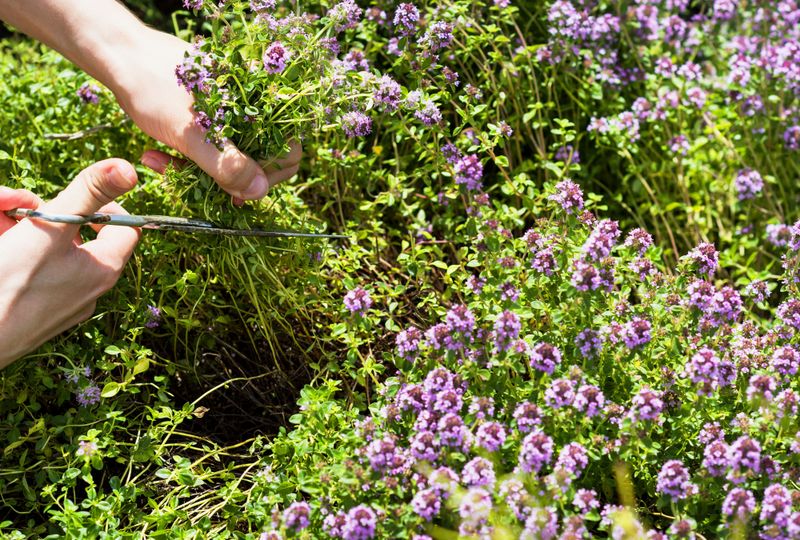
Cutting sprigs for the kitchen is not the same job as reshaping a plant. Harvesting is about flavor, while structural pruning is about how the plant grows.
Mixing them up can lead to cuts in the wrong places.
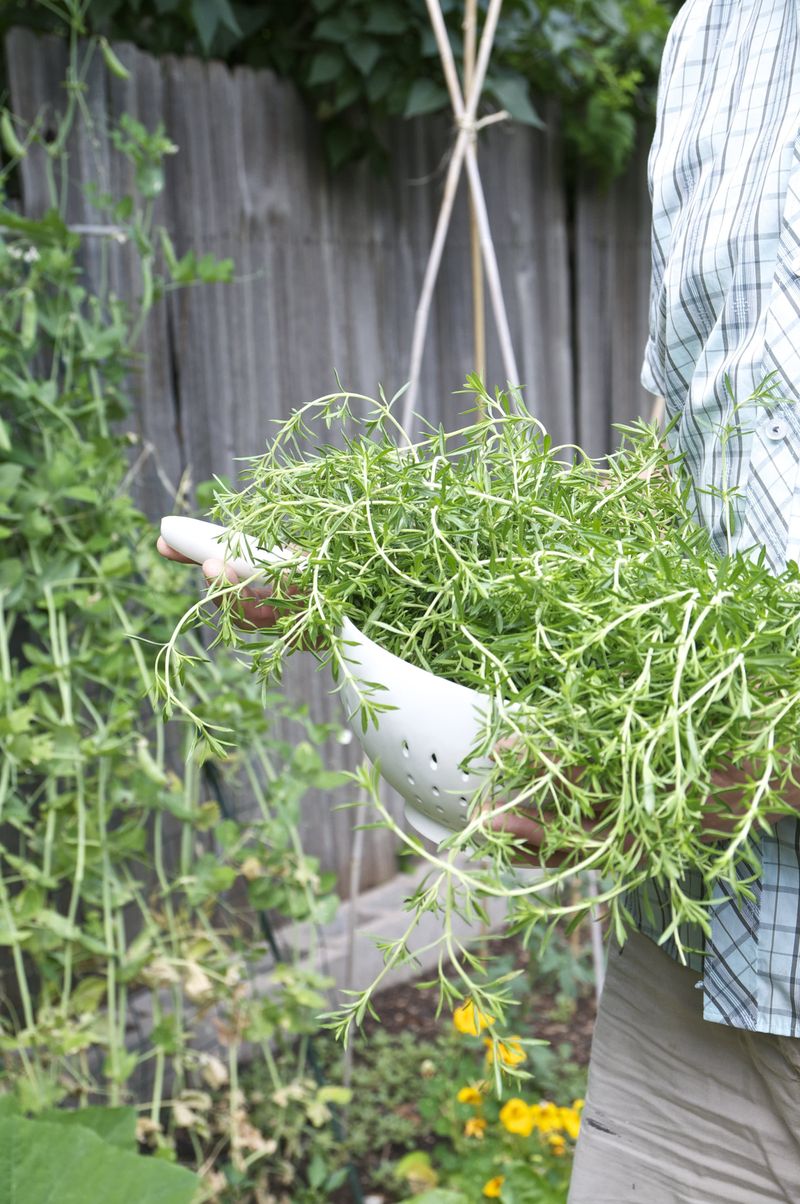
For cooking, Iowa State Extension says leafy stems are best cut shortly before flowering or as the first blossoms open, when essential oils are generally most concentrated. That is a handy timing tip for the cook.
It does not show that pruning makes thyme more fragrant.
Regular picking can also help. The RHS notes that regular harvesting can help keep thyme compact and bushy.
Snip the soft, leafy tips and keep the cuts above the woody parts.
A fall trim is not a proven way to get a thicker or more aromatic plant, so skip it. Pick a little often during the growing season, and let the plant show you how it responds.
When to replace an old, straggly plant
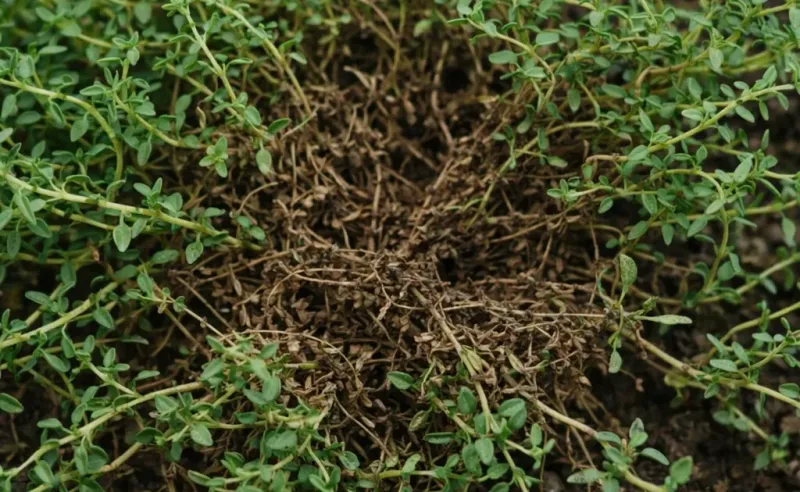
Some thyme plants simply reach the end of their best years. Iowa State Extension notes that older plants may develop woody centers and recommends spring trimming or replacement every few years.
Replacing an old plant is a reasonable choice, not a failure on your part.
Consider a new plant if most stems are bare and woody, only a few leafy tips remain, and a light spring trim has not helped. Waiting for new growth first is wise, since brown stems after winter may still wake up.
Replacement is not inevitable, and it does not guarantee a certain amount of growth, but it gives you a fresh start with young, leafy stems.
Do a soil check either way. Thyme needs well-drained soil, and soggy conditions can encourage root problems.
Raised beds, gritty mixes, and sunny spots can help. Better drainage may keep a plant healthier, but it will not reverse old woody growth.
Thyme rewards patience more than drama.