
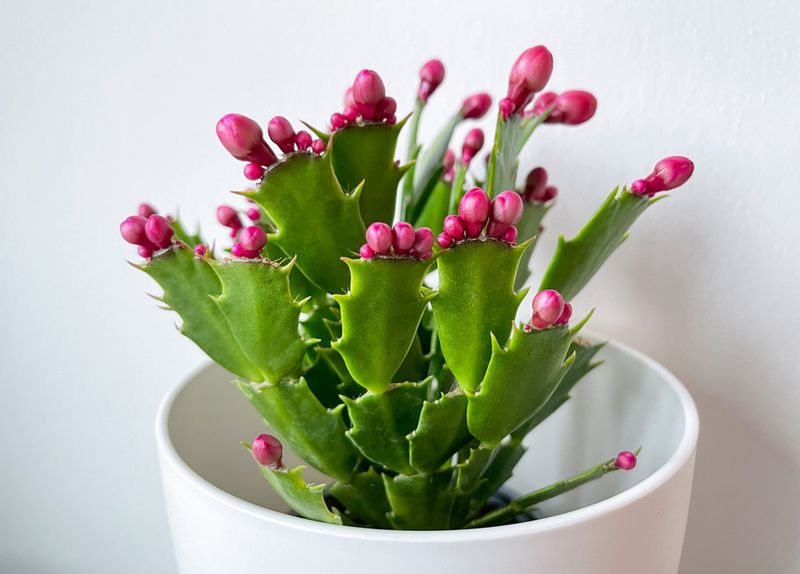
Few houseplants are as frustrating as a holiday cactus that grows healthy green stems and then never blooms. The fix often has less to do with fertilizer and more to do with light and temperature in early fall.
Several weeks of long, uninterrupted nights can nudge the plant to form flower buds, and cool nights may help too. Here is a practical routine for Southern homes, with realistic expectations about what it can and cannot do.
Identify your holiday cactus before setting expectations
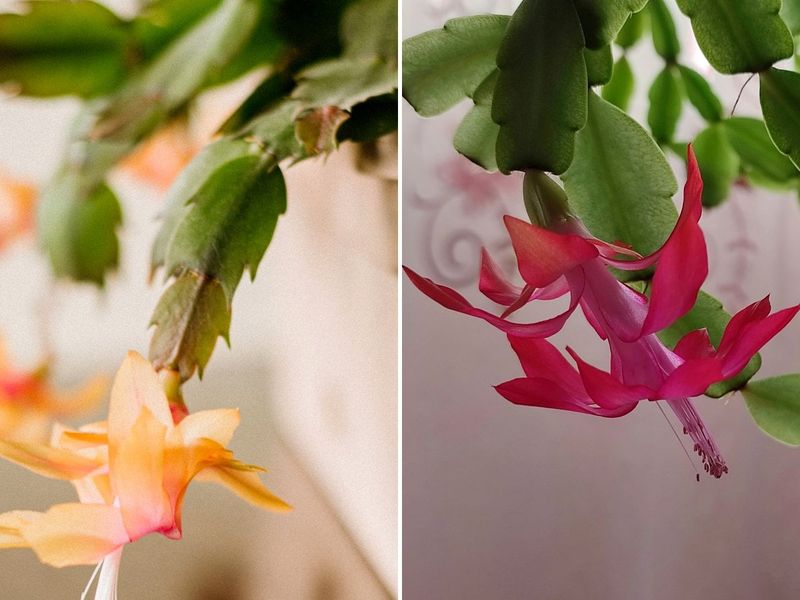
Check the label on your plant, then check the plant itself. Many plants sold as Christmas cactus are actually Thanksgiving cactus, Schlumbergera truncata, so the tag may not tell the whole story.
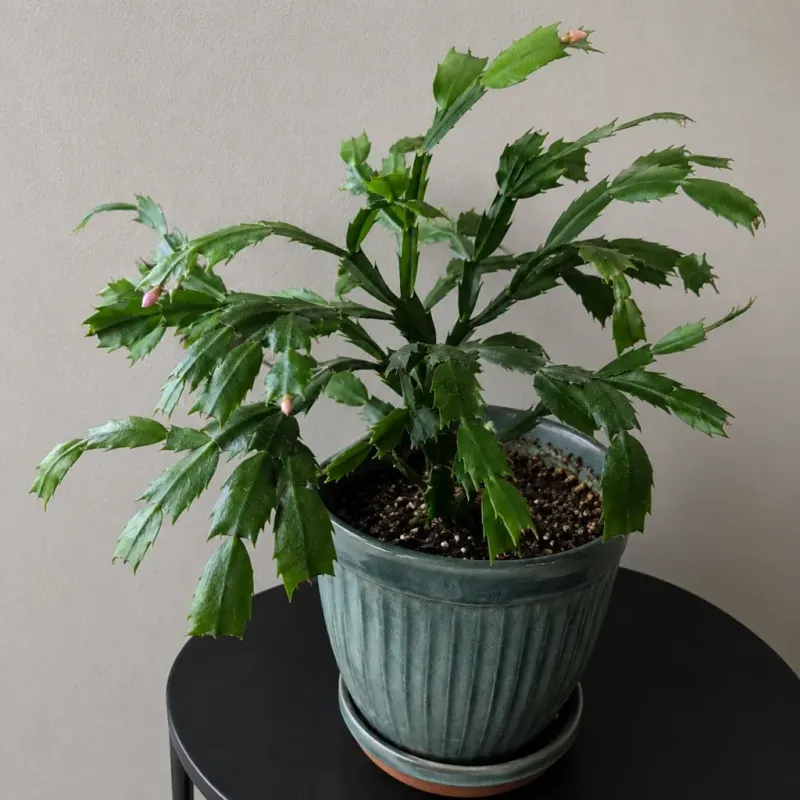
Look closely at the stem segments. The Thanksgiving type has pointed, toothed edges, almost like tiny claws.
The true Christmas type has smoother, more rounded edges. UGA Extension in Paulding County points out that both are commonly grown as holiday cacti, but their natural bloom timing differs, and commercial growers can manipulate flowering time.
That difference matters for your calendar. A Thanksgiving type may open earlier than you expect, while a true Christmas type may come later.
Neither one is guaranteed to bloom on a set holiday date, so treat the timing as a general tendency and not a promise. Once you know which plant you have, the routine in the next sections makes more sense.
Long nights and cool conditions can encourage buds
Darkness gets most of the attention, but it is only part of the story. Day length and temperature work together, and published research on Schlumbergera truncata reports different flowering responses under different photoperiods depending on temperature.
In plain terms, long nights can encourage buds, and cool nights can help too. University of Minnesota Extension notes that guidance differs on the exact conditions needed.
That means a closet is not required for every plant, and one method will not suit every cultivar.
Keep your expectations realistic. These conditions may encourage a plant to form buds, but they cannot promise a heavy bloom.
A sparse, stressed, or poorly branched plant may still produce only a modest show. Healthy stems, good daytime light, and steady care give the routine its best chance.
Treat October as a window, not a deadline
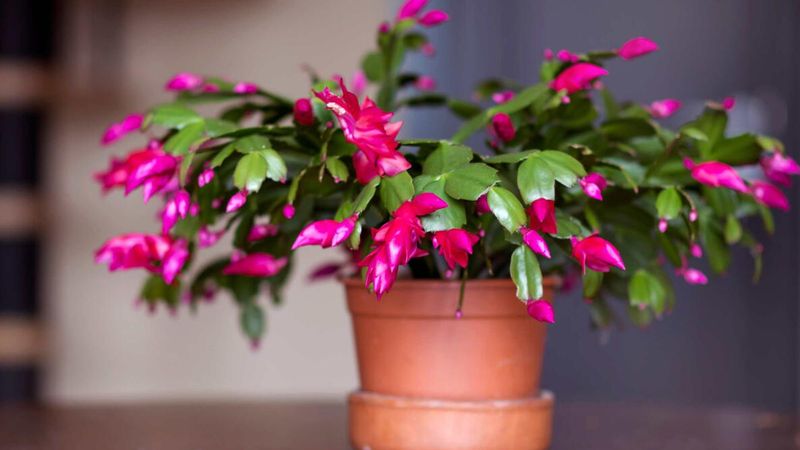
Bud formation is not instant. The plant needs several weeks of the right conditions, so the start date depends on when you want flowers.
University of Florida IFAS suggests about six weeks of daily dark treatment for holiday bloom.
Other advice starts earlier. The UGA Extension article mentioned above recommends beginning around mid-September for holiday flowers, and some sources describe four to six weeks of treatment.
Buds may show up after roughly three to four weeks, though the timing varies from plant to plant.
So if October has already arrived, you have not missed out. Count backward from the month you would like to see flowers, allow about six weeks, and start there.
A Thanksgiving type may want an earlier start than a Christmas type. Growing spot and plant condition also shift the timeline, so watch your plant instead of the calendar.
Give bright days and reliably dark nights
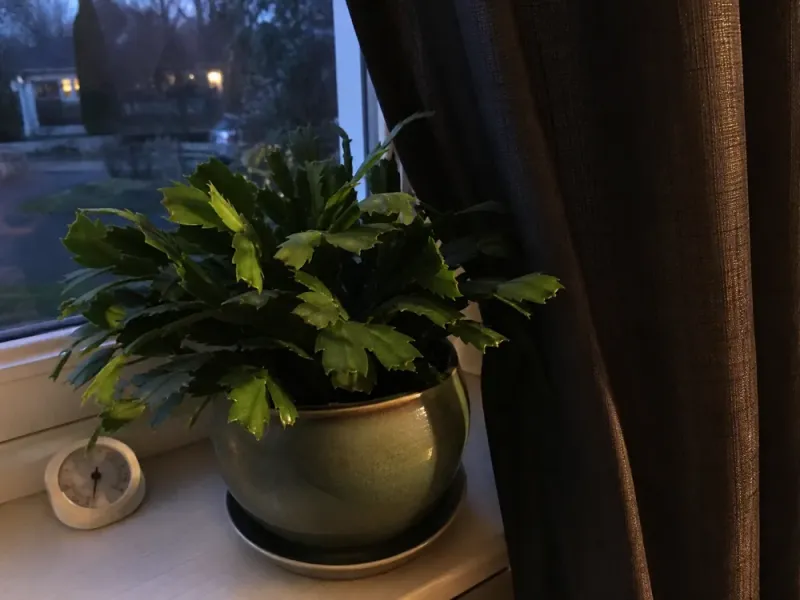
Think of this as a simple two-part daily routine. Give the plant bright light during the day, then aim for about 12 to 14 hours of uninterrupted darkness each night.
University of Minnesota Extension describes darkness and bright daytime light as the core of bud setting, and a stretch of roughly four to six weeks is a practical target.
The word that matters most is uninterrupted. A hallway light, a TV glow, or a quick flip of a lamp can break up the dark period.
A spare room you rarely enter works well, and so does a box or cloth cover placed over the plant each evening and removed each morning.
Treat 12 to 14 hours as a useful range, not a strict rule. Some sources suggest longer dark periods, and some plants respond with less.
If you notice tiny buds at the stem tips, you are on track, and you can ease back into normal care.
Keep cool conditions safe in Southern climates
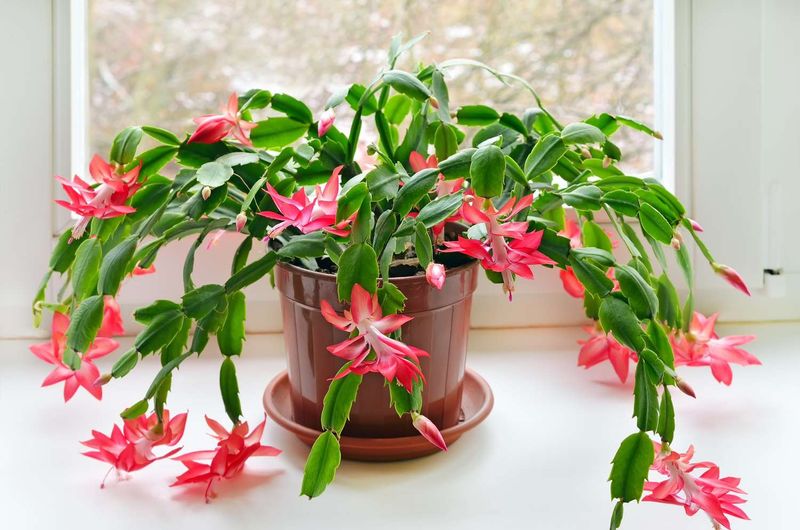
Nights around 55 to 65°F are a commonly recommended target, and several extension guides pair them with bright daytime light. University of Minnesota Extension says cool nights near 55°F may induce buds even without controlled long nights.
Treat that as a helpful condition, not a guaranteed trigger.
In Florida and Texas, a porch is not always a safe default. Early fall nights can stay warm, then a cold snap can arrive fast.
Texas A&M advises bringing the plant indoors before frost.
The UGA Extension article also warns against leaving holiday cacti outside below 50°F. An indoor spot with bright days and a dark, slightly cool night is easier to control.
Do not chill the plant on purpose, and never leave it outdoors until frost. If your house runs warm, a cooler bedroom or sunroom may be a better choice.
Keep care steady while buds develop
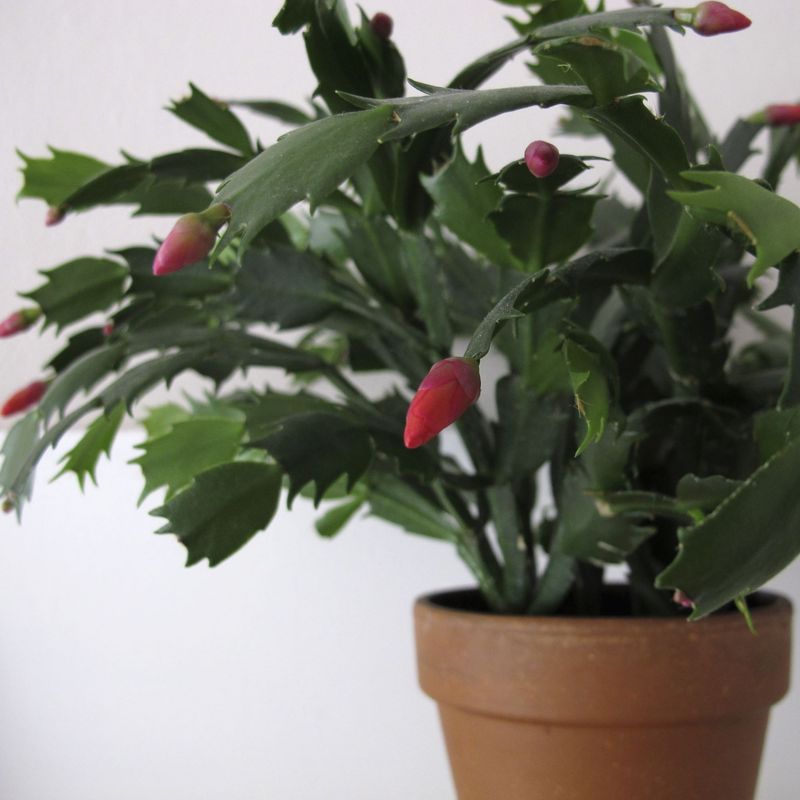
Once buds appear, steady care matters more than anything new. Use well-drained soil and water so the mix is neither soggy nor bone dry.
Iowa State Extension lists stress and abrupt changes as possible causes of bud drop. Do not use drought as a bloom trigger, since severe dryness can stress the plant and cost you buds.
Try to keep light, temperature, watering, and location consistent. A draft from a vent, a sudden move to a darker room, or a swing from soggy to dry can all make buds fall off.
Resist the urge to show off the plant early. Iowa State recommends leaving it in place during bud development and waiting until flowers begin opening to move it.
This routine encourages flowers, but it cannot promise a bloom date or bud count. Sometimes the best reward is simply a patient plant.