
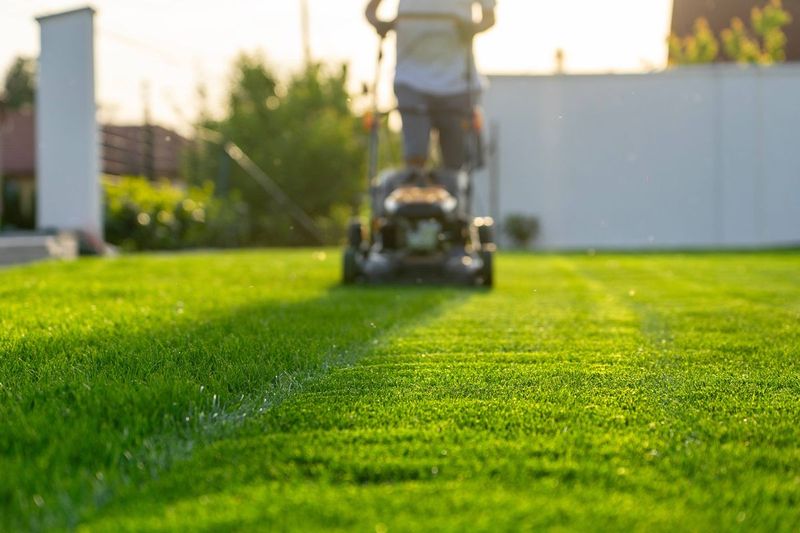
Summer lawn care in Florida and Texas can feel like a guessing game, especially when your grass starts looking rough after a mowing session. The truth is that when you mow matters, but it is only one piece of a bigger puzzle.
Getting the timing right can reduce stress on your turf, though the condition of your grass, how much you cut, and the sharpness of your blade all play a role too.
Timing reduces stress, but it does not explain every lawn problem
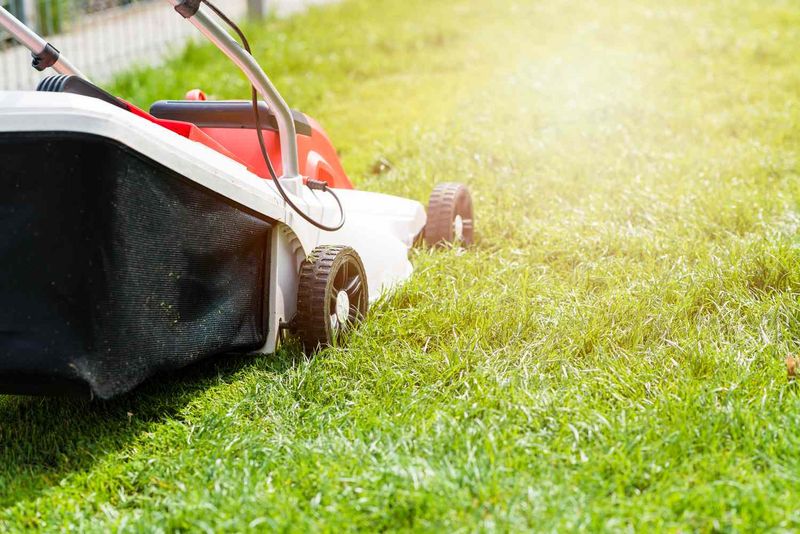
A struggling summer lawn is frustrating, and it is easy to blame the last time you ran the mower over it. Mowing under wet conditions or during the hottest part of the day can add stress to your turf, but that is rarely the whole story.
UF/IFAS guidance on mowing Florida lawns makes clear that mowing height, how much leaf tissue you remove in a single pass, and the condition of your blades are all well-established factors in summer turf health.
Drought stress, soil conditions, grass species, and pest pressure can each contribute to a lawn that looks beaten up after mowing. No single variable typically carries all the blame.
Timing is best understood as one practical adjustment within a broader summer routine, not a magic fix that overrides everything else.
UF/IFAS best management practices and Texas A&M mowing recommendations for warm-season turfgrasses both point to a combination of factors shaping turf response. Changing when you mow may reduce some stress, but if your blade is dull, your cut is too low, or your lawn is already drought-stressed, adjusting the clock alone will not restore it.
Choose a dry, cooler part of the day
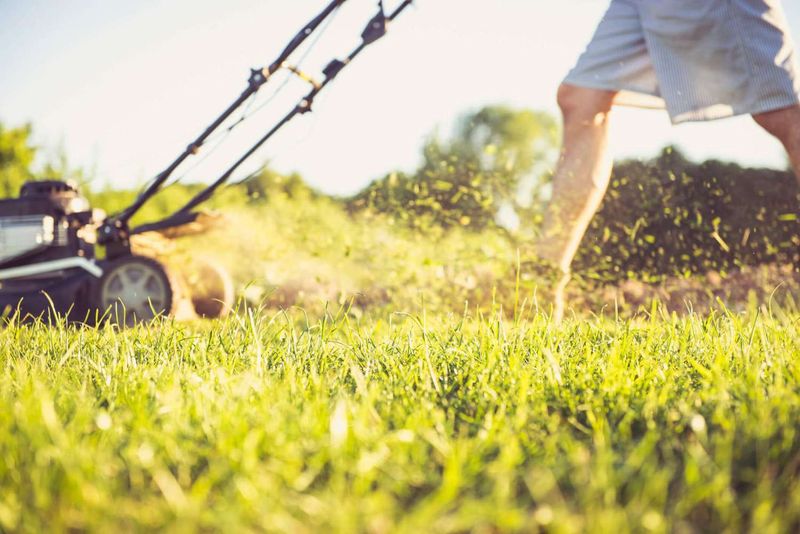
The clearest summer mowing advice from extension research points to two reasonable windows: mid-morning after dew or irrigation has dried, and late afternoon after the day’s peak heat has passed. Neither window is defined by a fixed clock time.
Conditions on your lawn that morning, not the hour on your phone, should make the final call.
University of Georgia Extension’s mowing guidance and Texas A&M’s warm-season turfgrass mowing recommendations both converge on avoiding wetness and peak heat rather than prescribing a specific hour. A cool morning is only useful for mowing once the canopy has actually dried.
Stepping out at dawn while the grass is still wet defeats the purpose, even if the temperature feels comfortable.
Late afternoon can work well when temperatures have eased and the lawn is dry. The catch in humid climates like Florida is that mowing too close to nightfall can leave cut surfaces and clippings damp overnight, which creates conditions that some turf diseases prefer.
Aim to finish with enough daylight left for the lawn to dry before the evening settles in. When cloud cover, recent rain, or heavy humidity keeps the grass wet well into the morning, simply wait – no single window fits every day.
Wait until the grass is genuinely dry
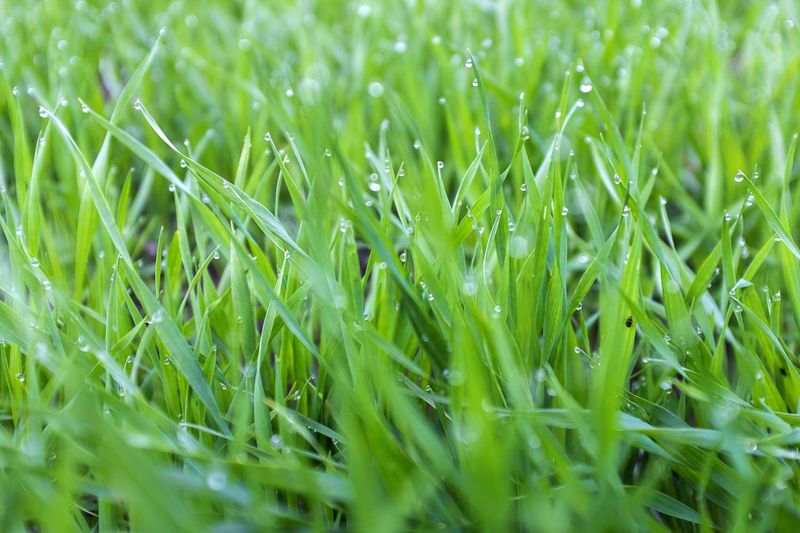
Wet grass creates a chain of problems that go beyond a messy mowing job. Dew, irrigation, or recent rain makes clean cutting harder, causes clippings to clump instead of dispersing evenly, and can reduce traction on slopes.
Thick clumps of wet clippings left on the lawn can smother the turf beneath them if they are not raked or redistributed.
UF/IFAS best care practices and Texas A&M’s turfgrass mowing guidance both caution against mowing wet grass, citing clipping distribution and potential disease spread as concerns. Wet foliage can also create conditions where some fungal pathogens move more easily from one area of the lawn to another via the mower deck and wheels.
A practical go-or-wait test: walk across the lawn and check whether blades spring back quickly and feel dry to the touch. If your shoes pick up visible moisture or the grass lays flat and clumps under light pressure, wait.
CPSC walk-behind mower safety guidance specifically warns against mowing on wet slopes, where reduced traction raises the risk of slipping or losing control of the machine. When persistent humidity keeps the lawn damp through late morning, an afternoon window after conditions improve is often the safer choice.
Avoid peak heat and protect the person mowing

Mowing during the hottest part of a summer day is not guaranteed to scorch your lawn, but it can pile additional stress onto turf that is already struggling. When grass is wilted or showing signs of drought, foot traffic and the physical disturbance of mowing add to the load the plant is already managing.
UF/IFAS drought management guidance notes that visibly stressed turf – blades that fold, a blue-gray color, or footprints that stay visible – signals a lawn that needs water, not more mechanical disturbance.
Texas A&M’s mowing recommendations support avoiding the hottest midday period, particularly when turf is under heat or drought pressure. Severe injury after midday mowing is more often tied to excessive leaf removal, low cutting height, or pre-existing stress than to the time of day alone.
Think of peak-heat mowing as an added risk factor, not an automatic cause of damage.
The human safety side of this deserves equal attention. Mowing is physically demanding work, and CDC guidance on heat and outdoor workers recommends scheduling strenuous tasks during cooler hours, drinking water regularly, and taking breaks in the shade.
OSHA heat exposure controls reinforce that same approach. If you feel weakness, dizziness, confusion, or faintness while mowing, stop immediately, move to a cool area, and seek help.
Use the one-third rule to prevent scalping
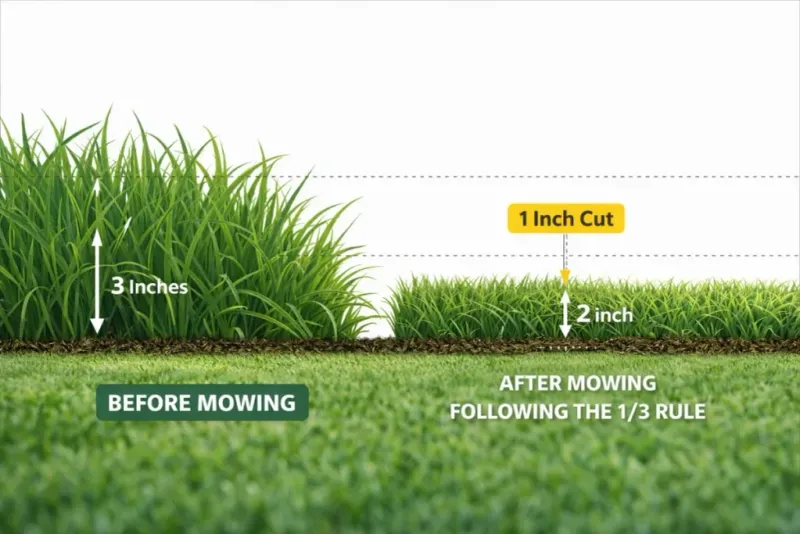
Cutting too much grass at once is one of the more damaging things a homeowner can do to a summer lawn, and it happens more often than most people realize. The one-third rule is straightforward: never remove more than one-third of the leaf blade in a single mowing.
If your St. Augustine lawn is sitting at six inches because life got busy, dropping it to two inches in one pass will expose the lower stem tissue and leave the plant with little capacity to recover quickly.
UF/IFAS best care practices and the Texas A&M bermudagrass management calendar both support this guideline. When a lawn has grown beyond its ideal range, raise the mower to remove only the top third, then lower it gradually over the next one or two mowing sessions until you reach the target height.
Scalping in one pass is harder to recover from in summer than at any other time of year.
Taller turf during heat and drought is also a meaningful stress buffer. Texas A&M’s warm-season turfgrass guidance and UF/IFAS drought guidance both note that keeping the blade slightly higher than usual during stress periods preserves photosynthetic area, shades the soil surface, and supports deeper rooting.
Raising the mower height even a quarter to a half inch above your normal summer setting can make a noticeable difference when temperatures climb.
Match the mower height to the grass
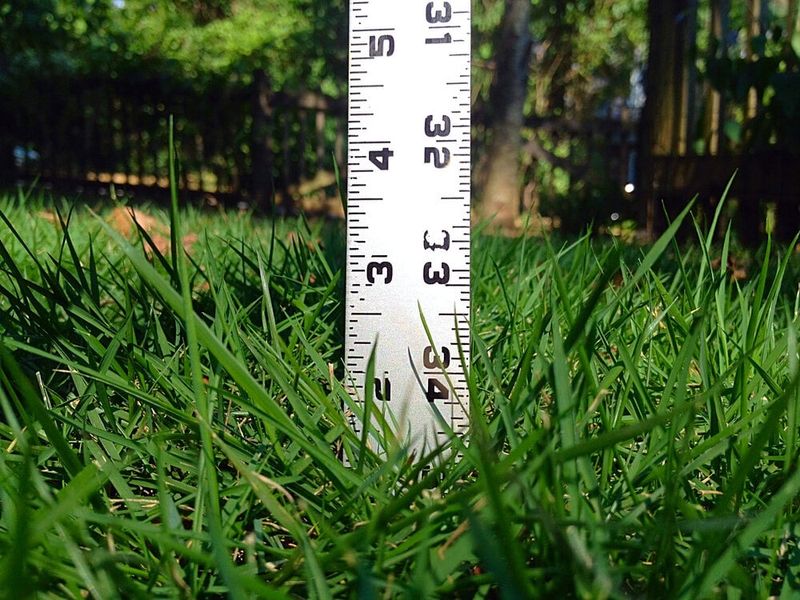
Southern lawns are not all the same, and treating them as if they share one ideal mowing height causes unnecessary stress. The grass growing in a Florida backyard is often St. Augustinegrass or bahiagrass, while a Texas lawn might be bermudagrass, zoysiagrass, or centipedegrass – and in parts of North Texas, cool-season tall fescue is also used.
Each species has its own documented range, and cutting outside that range in summer heat adds a layer of stress that timing alone cannot fix.
UF/IFAS mowing guidance for Florida lawns lists approximate ranges of 3.5 to 4 inches for standard St. Augustinegrass, 3 to 4 inches for bahiagrass, 1.5 to 2 inches for centipedegrass, and around 1.5 to 2 inches for most zoysiagrass varieties. The Texas A&M bermudagrass management calendar recommends roughly 1 to 2 inches for home bermudagrass lawns.
These are starting points, not fixed rules.
Cultivar, mower type, and local growing conditions can all shift the appropriate setting up or down. A reel mower cuts differently than a rotary, and a dwarf St. Augustine cultivar may tolerate a lower setting than a standard variety.
Texas A&M’s turfgrass selection guide for Texas highlights how regional variation in Texas alone means that one height recommendation does not travel well across the state. Check the guidance for your specific species and cultivar, then adjust for your current conditions.
Build a routine around growth and turf condition
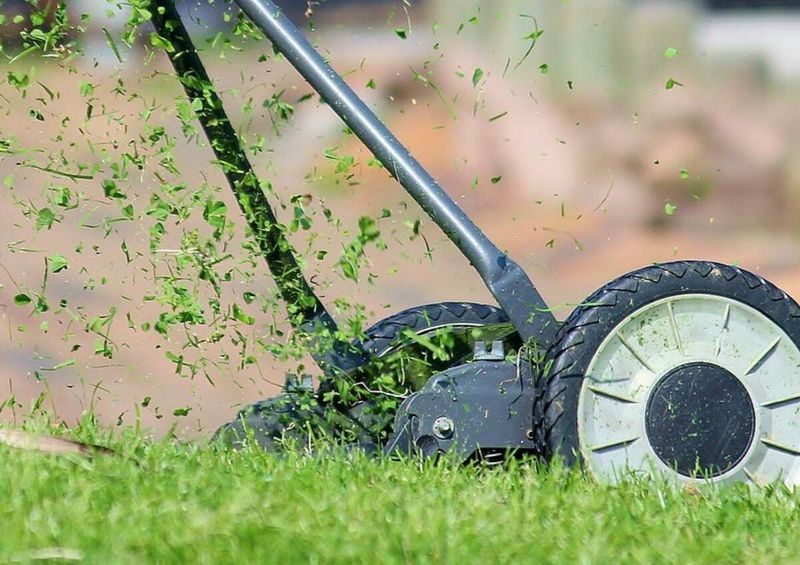
A fixed weekly mowing schedule sounds organized, but it often works against the lawn. Warm-season grasses in Florida and Texas can grow fast during wet summer stretches, meaning a seven-day schedule may allow the lawn to get too tall between cuts.
During drought or heat stress, that same schedule may push you to mow turf that does not need it – or should not be disturbed at all. UF/IFAS guidance on mowing Florida lawns and Penn State Extension’s seasonal lawn management resource both support mowing based on actual growth rather than the calendar.
When turf is severely drought-stressed or dormant, the best move is often to pause or significantly reduce mowing. UF/IFAS drought care guidance notes that folded blades, a blue-gray color, or footprints that linger are signs the lawn needs water before it needs a mower.
Blade sharpness matters throughout the season: a dull blade shreds leaf tips rather than cutting cleanly, and Texas A&M’s turf cutting height guidance connects ragged cuts to increased susceptibility to disease and environmental stress.
Irrigation timing is a separate decision from mowing timing. UF/IFAS summer lawn irrigation guidance notes that watering around sunrise is generally efficient, but that does not mean the lawn is ready to mow shortly after.
Wait until the canopy is genuinely dry. On clippings: University of Georgia Extension’s grasscycling guidance supports leaving dispersed clippings on the lawn to return nutrients, but thick clumps should be raked or redistributed so they do not smother the turf below.
Run a final safety and condition check
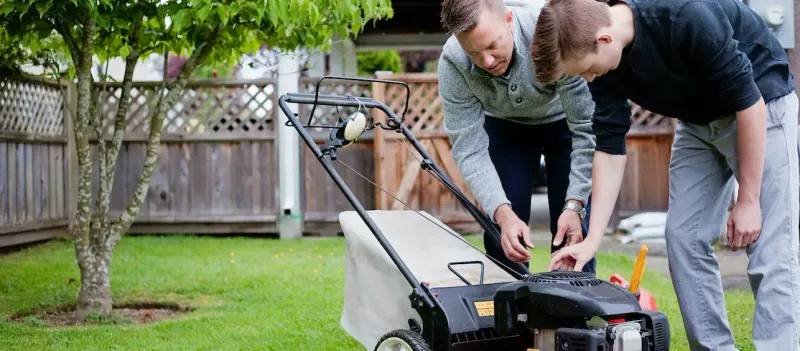
Before you start the mower on a hot summer day, run through a quick condition check. Confirm the grass is dry, the heat has eased from its peak, and the lawn is not visibly wilted or dormant.
Verify your mower height is set within the appropriate range for your grass species and that you will not be removing more than one-third of the blade. Texas A&M’s mowing recommendations and UF/IFAS best care practices both treat these as baseline summer habits rather than optional extras.
On the equipment and safety side, CPSC walk-behind mower safety recommendations include clearing debris from the mowing area, wearing sturdy closed-toe footwear, and keeping children away from the mowing zone. Avoid wet slopes where traction is unreliable.
Check that your blade is sharp enough to cut cleanly. OSHA heat illness first aid guidance is clear: if weakness, dizziness, confusion, or faintness develops, stop mowing immediately and get to a cool area.
If your lawn continues to decline even after correcting timing, height, and blade condition, the cause may lie elsewhere. UF/IFAS Florida lawn mowing guidance acknowledges that irrigation problems, poor soil, species mismatch, pests, or disease can all drive summer decline in ways that no mowing adjustment will fully address.
A healthy mowing routine reduces one category of stress – keeping the rest of your lawn care in order is what holds it together.