
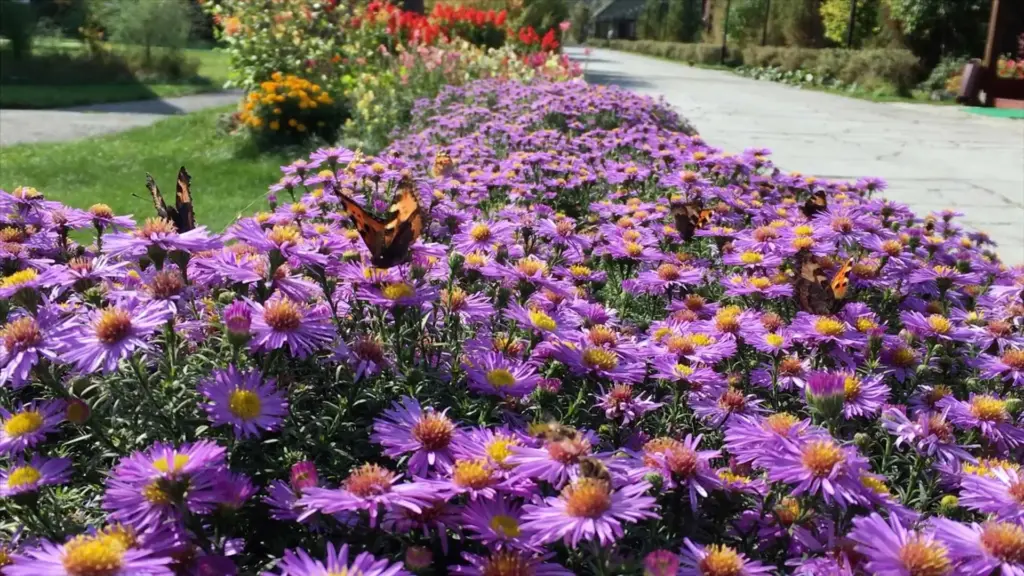
By the time October rolls around, many North Carolina flower beds look tired and brown. Native asters are still just getting started, opening up daisy-like blooms in purple, blue, and white.
Those late flowers can give bees and other insects something to visit when summer plants have faded. Here is how to pick the right aster for your yard and use it well.
Asters can extend the fall forage window

Walk through a North Carolina yard in October and you will notice how many summer blooms have gone to seed. Native asters often keep going when those plants wind down.
That makes them a handy addition for a gardener who wants flowers in the fall landscape.
Timing depends on the species, the location, and the weather. In Central North Carolina, NC Cooperative Extension reports that aromatic aster can bloom from late September into November, often through the first frost.
A cold snap can end flowering sooner, and bloom windows in the Mountains and along the coast may shift earlier or later than the Piedmont.
Asters are not the only late food source, and they are certainly not a final meal before winter. Goldenrods, ironweed, blazing star, and other native perennials can also offer nectar in fall, as extension guidance for eastern gardeners points out.
Think of an aster clump as one useful piece of a larger late-season supply. It can add flowers when it is in bloom, but it cannot promise visits from any particular insect.
The garden payoff is a bed that still has color and activity after many neighbors have gone dormant.
Bees and monarchs use asters in different ways
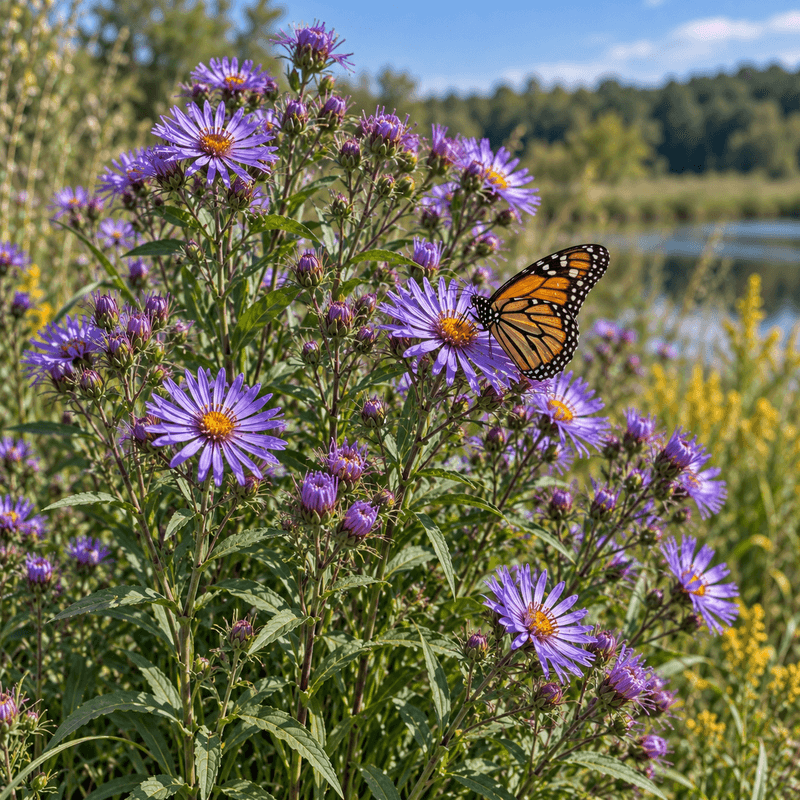
A bee on an aster is usually after more than one thing. The flowers offer nectar to many visiting insects and pollen to bees.
Some mining bees in the genus Andrena even specialize on aster pollen, as described by NC Cooperative Extension.
Adult monarchs use the flowers differently. They sip nectar for energy, and asters are among the fall plants listed on North Carolina native pollinator flower lists.
Adults feed on many kinds of flowers, so asters are one stop and not their only food.
Monarch caterpillars have a different menu. They eat milkweed, which is their host plant, while the adult butterflies draw on a much wider range of nectar sources, according to USDA Forest Service monarch guidance.
Planting asters will not replace milkweed in a monarch-minded yard.
Not every pollinator shares the same needs, and not all of them are flying in November. Some species finish their season earlier, so asters help the insects that happen to be active while the flowers are open.
That is a modest but real benefit for a home garden.
Aromatic aster offers one late-blooming option
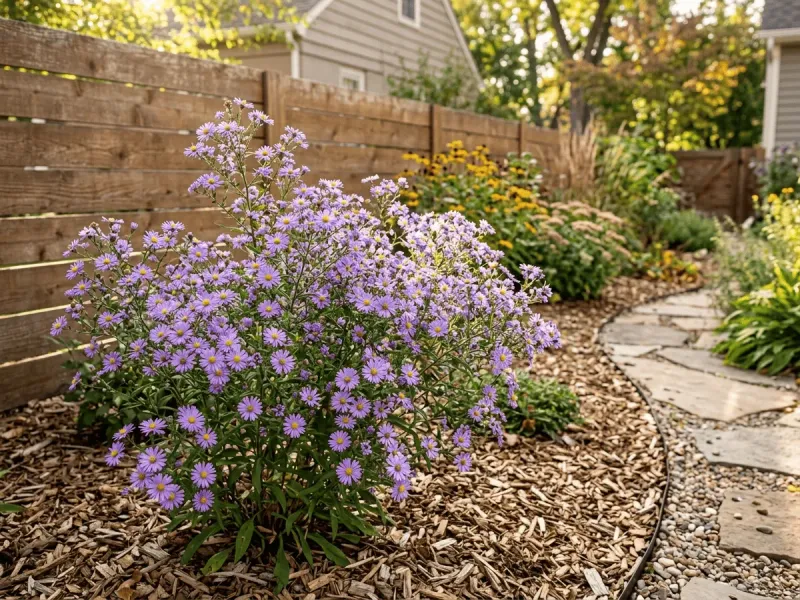
If you want a concrete plant to start with, aromatic aster (Symphyotrichum oblongifolium) is a solid example. It is not the answer for every yard, but it shows what a good fall aster looks like.
Gardeners often grow it as a low, rounded mound that fills out with small lavender-blue flowers.
In Central North Carolina, NC Cooperative Extension reports bloom from late September to November, and often through the first frost. Weather and local conditions can move that schedule around, so treat the dates as a typical range.
The NC State Extension Plant Toolbox lists aromatic aster for the Mountains, Piedmont, and Coastal Plain. It prefers full sun and handles a range of soil textures as long as the drainage is good.
Poor drainage and poor air circulation can contribute to foliar disease. Give each plant some elbow room, avoid soggy spots, and skip crowding it between dense shrubs.
A sunny, open border with soil that drains after rain is a better bet than a low corner that stays wet.
Choose an aster that fits your part of North Carolina
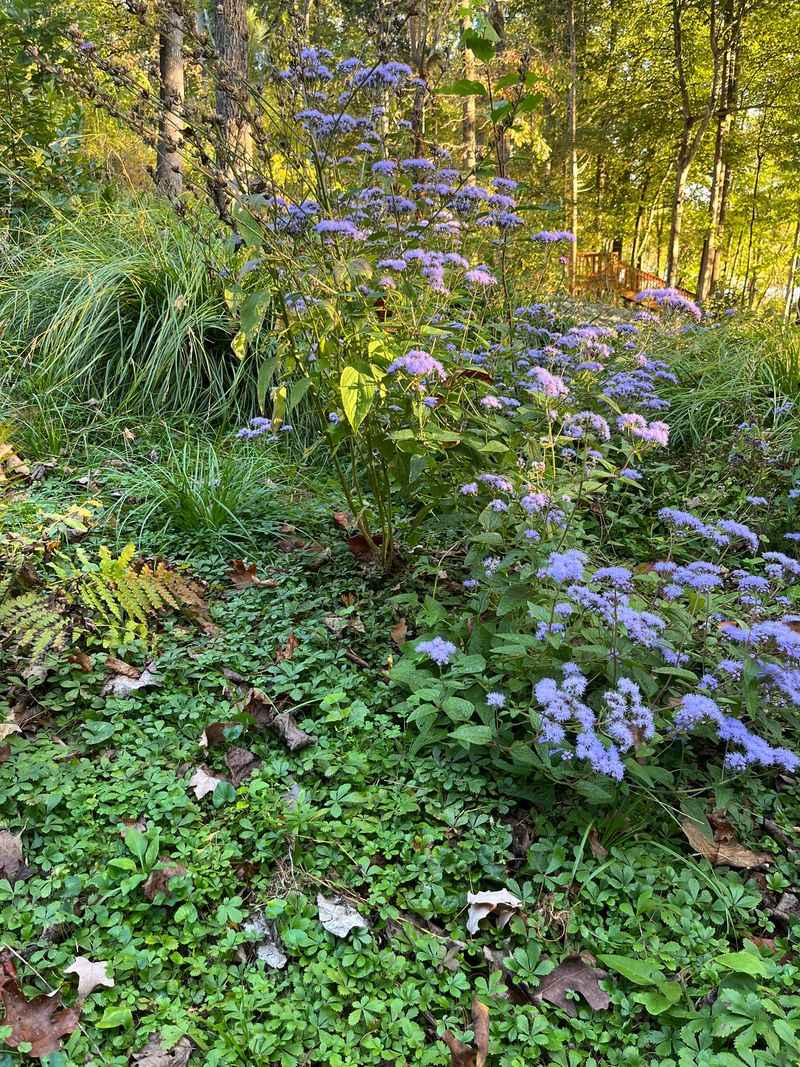
A tag that says native or wildflower only tells part of the story. A plant can be native to North Carolina and still struggle in your yard.
NC State Extension advises choosing plants adapted to your property’s ecoregion rather than relying on the label alone.
The state has three broad regions to think about: the Mountains, the Piedmont, and the Coastal Plain. A species that thrives on a Piedmont clay slope may not suit a sandy coastal lot.
Check regional suitability before you buy, and the North Carolina Wildlife Federation regional plant lists are a good place to start.
Then walk your yard with three questions. How many hours of direct sun does the spot get?
Is the soil sandy, loamy, or clay? Does water drain away after a heavy rain, or does it sit?
Match the answers to the plant’s listed needs. If your only open space is a shady, wet corner, an aster that wants full sun and good drainage is the wrong pick no matter how well it blooms elsewhere.
A local native plant nursery or your county extension office can help you narrow the choices.
Combine asters with other late-season flowers
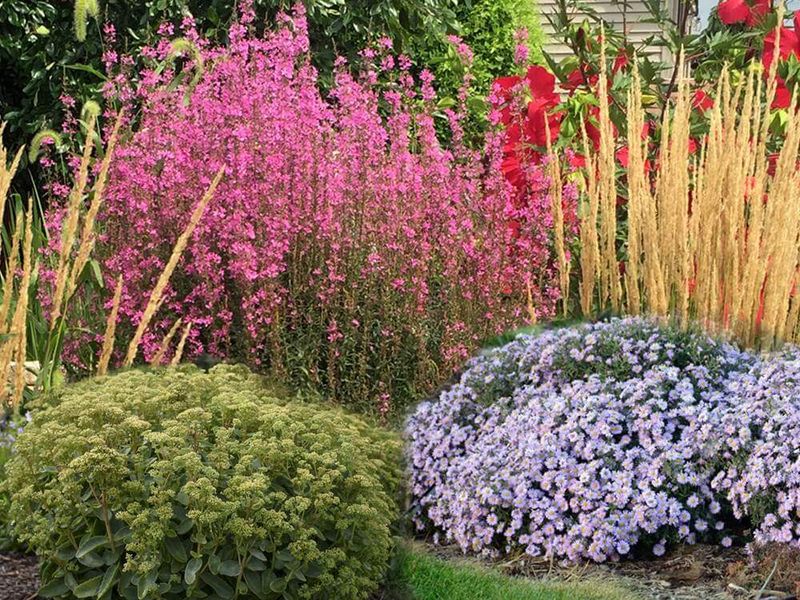
One plant makes a nice accent, but a mix makes a better fall bed. Pairing asters with other late bloomers gives visiting insects more choices and gives you more color.
NC Cooperative Extension names goldenrods, asters, ironweed, blazing star, boneset, mountain mint, and Joe-Pye weed as potential late-season nectar sources.
Not every one of those fits every yard. Ironweed and Joe-Pye weed like more moisture, while some goldenrods and blazing stars handle drier, sunnier spots.
Check each species against your sun, soil, and region before you plant.
Staggering bloom times is a practical trick. Choose plants that flower in late summer, early fall, and into late fall so something is open across the season.
Group each kind in a drift of several plants so it is easy for insects to find.
Adult monarchs sip nectar from many flowers, and the USDA Forest Service lists asters beside goldenrods, gayfeathers, and coneflowers among fall nectar plants. A varied planting gives them options, but it cannot guarantee a visit.
Treat any butterfly sighting as a bonus.
Protect flowers and leave stems for habitat
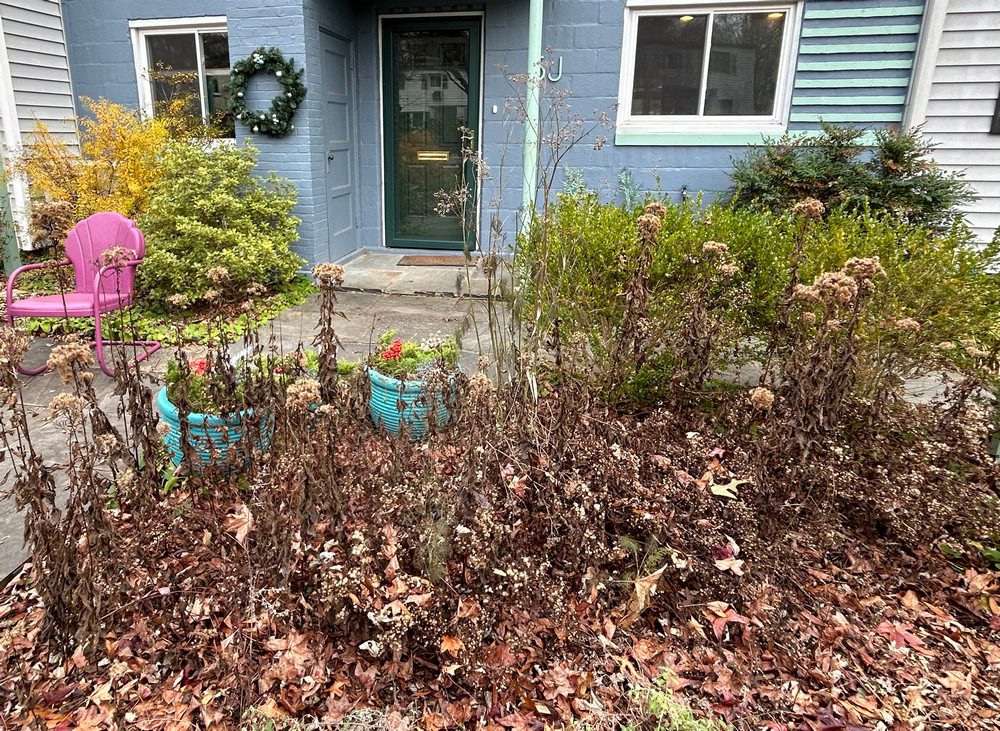
Two small habits make an aster planting more useful to wildlife. The first is to avoid unnecessary insecticide where pollinators are feeding.
NC Cooperative Extension cautions against unneeded sprays, especially systemic products that can end up in nectar or plant tissues. Not all products act the same way, so read labels and skip treatment when there is no real problem.
The second habit is how you handle cleanup. Leave perennial stems standing until after the first frost.
Frost dates vary from the Mountains to the coast, so watch your own yard instead of the calendar.
After frost, NC State Extension recommends cutting stems to 18 to 24 inches. Then leave them alone, because stem-nesting insects may be inside and a second trim could disturb their nests.
Those standing stems are habitat, not food. They do not mean the plant is still blooming or feeding pollinators through winter.
Once the flowers fade, the stubble simply offers a place for some insects to nest.
Asters help, but they cannot carry the season
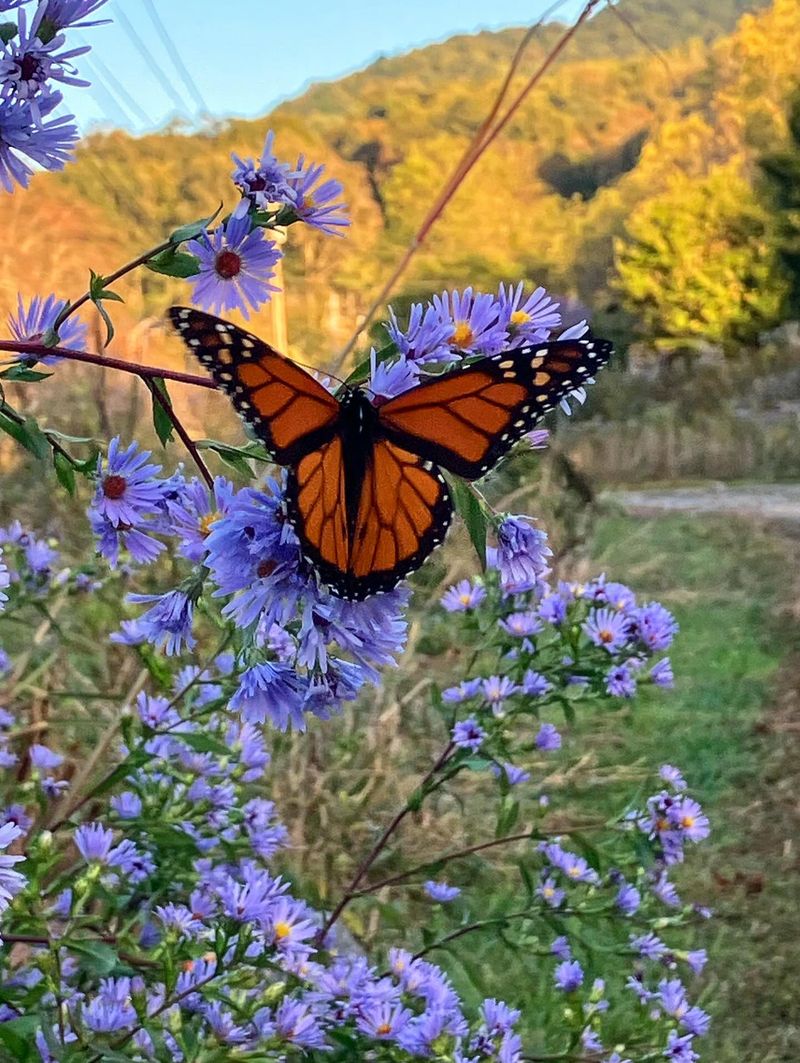
Pick an aster that suits your sun, soil, and region, and let it add flowers when its bloom time arrives. Pair it with other locally suitable late bloomers so the bed offers more than one option.
As extension guidance shows, a clump can be useful without being the only food or a promise of visitors.
A single aster is a good start, and a yard full of varied flowers is a better one.