
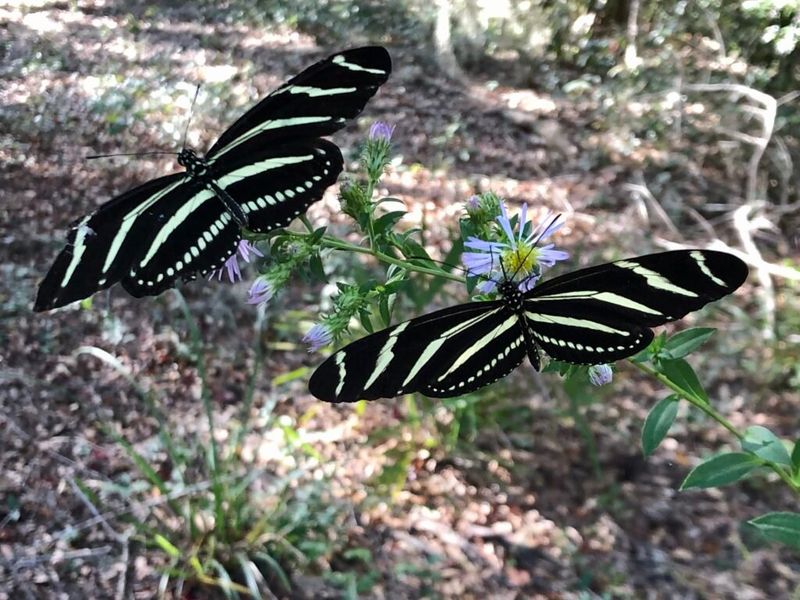
Few sights in a Florida yard beat a zebra longwing drifting past in its black and yellow stripes. It is the state butterfly, and many gardeners would love to see more of it.
The caterpillars have a very short menu, and a native passionflower vine can put the right food in your yard. Here is how to pick the vine, give it room, and let it do its job.
What the evidence says about zebra longwings in Florida
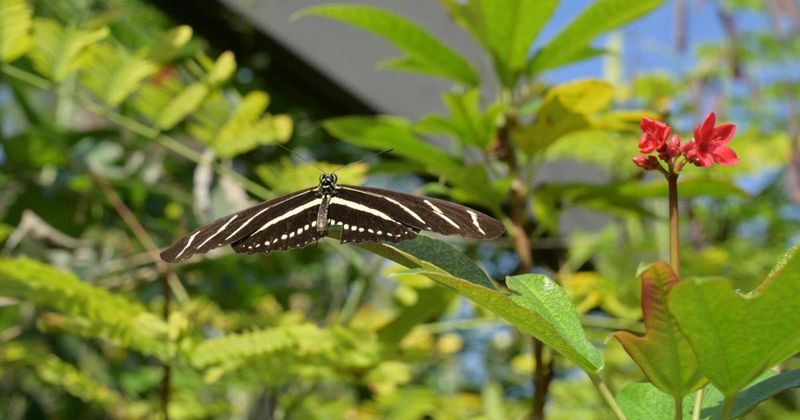
Florida has officially named the zebra longwing its state butterfly, and the Florida Department of State describes it as living throughout the state, with more sightings in South Florida. That means a gardener in Pensacola and a gardener in Homestead are both in its range, though the odds of a visit run higher the farther south you live.
You may have heard that this butterfly is vanishing from yards. The sources used for this article do not show that.
They do not document a Florida decline for this species, and they do not track how often it shows up in yards.
There is a real broader concern. A study of butterflies across the contiguous United States found a 22 percent drop in total butterfly abundance from 2000 to 2020.
That number covers all butterflies combined across the lower 48 states. It says nothing specific about zebra longwings or about Florida yards.
The UF/IFAS butterfly gardening guide lists zebra longwings in all seven Florida regions, with gardens among their habitats and a flight season that runs all year. So the honest picture is a butterfly that is widespread here.
Adding the right plants is a way to make your own yard more useful to it.
Two Florida-native passionflowers feed zebra longwing caterpillars
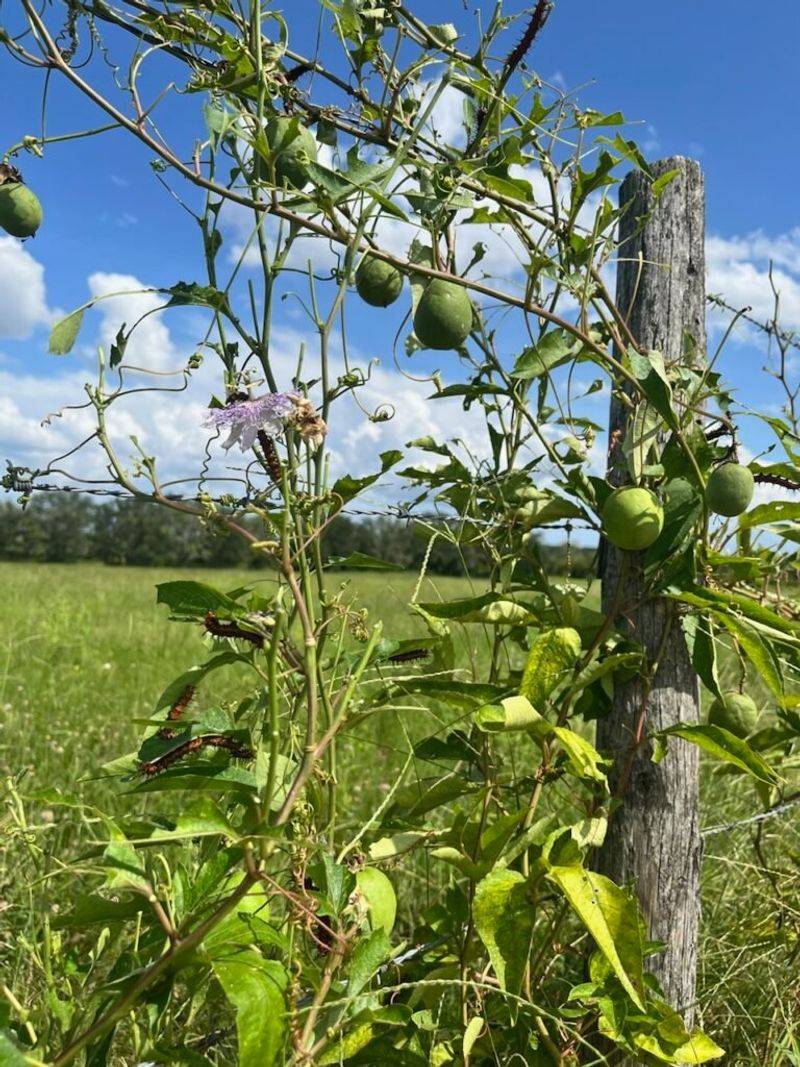
Zebra longwing caterpillars do not eat just any leaf. They need passionflower vines, and the UF/IFAS guide to butterfly gardening names two Florida natives as hosts: purple passionflower (Passiflora incarnata) and corkystem passionflower (P. suberosa).
Purple passionflower, also called maypop, is the showy one. The Florida Museum also lists it as a host plant.
Corkystem passionflower is a smaller, more modest vine with little greenish flowers, so it is easy to overlook at a nursery.
The word passionvine covers many species, and they are not interchangeable. Some are native and some are not.
UF/IFAS Extension in Pasco County cautions that certain nonnative passionflowers can be invasive or poorly suited to local conditions.
Before you buy, look for the scientific name on the tag. If a plant is labeled only as passion vine, ask the grower which species it is.
Favor a Florida native that fits your spot, whether that is a sunny fence line or a corner of a small yard.
Choose a site that suits maypop’s growth
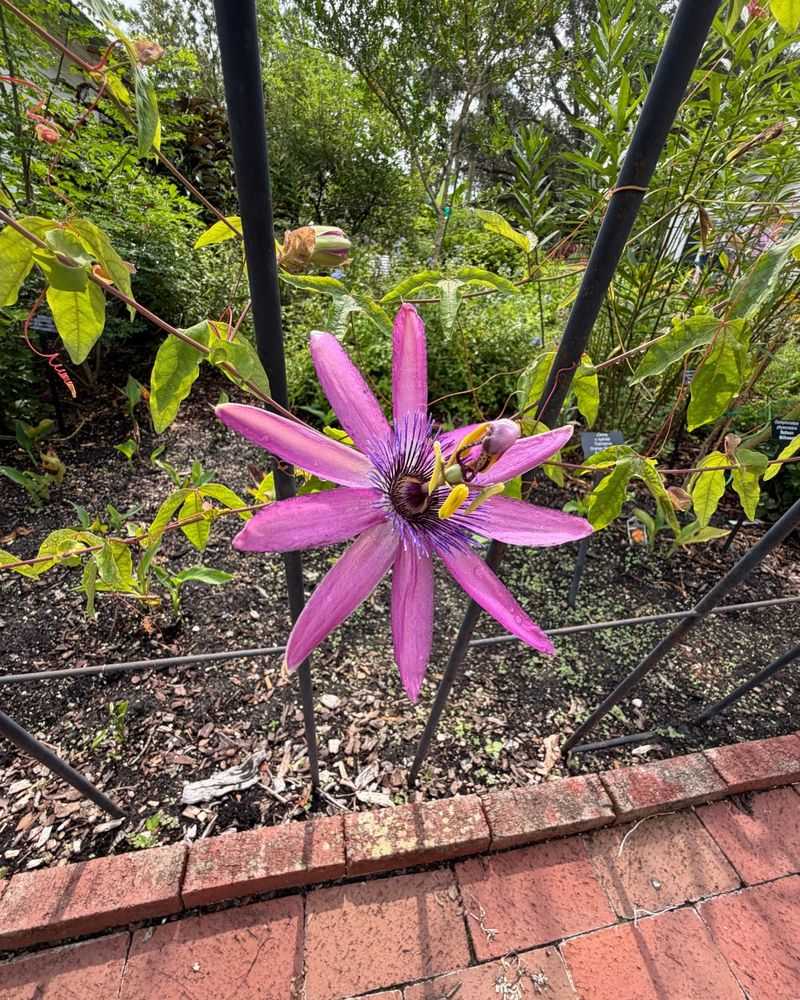
Maypop is a vigorous grower, so the spot you pick matters more than the care you give later. The Florida Museum recommends full sun to partial shade and well-drained soil.
Florida’s sandy yards often drain well already, which helps.
Think about how you want it to grow. The vine can climb a support, or it can sprawl as a ground cover.
Either way, give it room to move, because it is not a plant that stays where it is put.
Water matters too. UF/IFAS Extension in Osceola County advises regular irrigation and a sunny location for passionflowers generally.
In sandy soil, that means checking the vine during dry stretches rather than assuming it will fend for itself.
Expect it to look different from one yard to the next. In central and north Florida, maypop can die back and then regrow.
A bare patch in winter does not always mean the vine has failed. In South Florida, you may see it hold its growth longer, so judge it by your own local conditions.
Plan separately for support and root spread
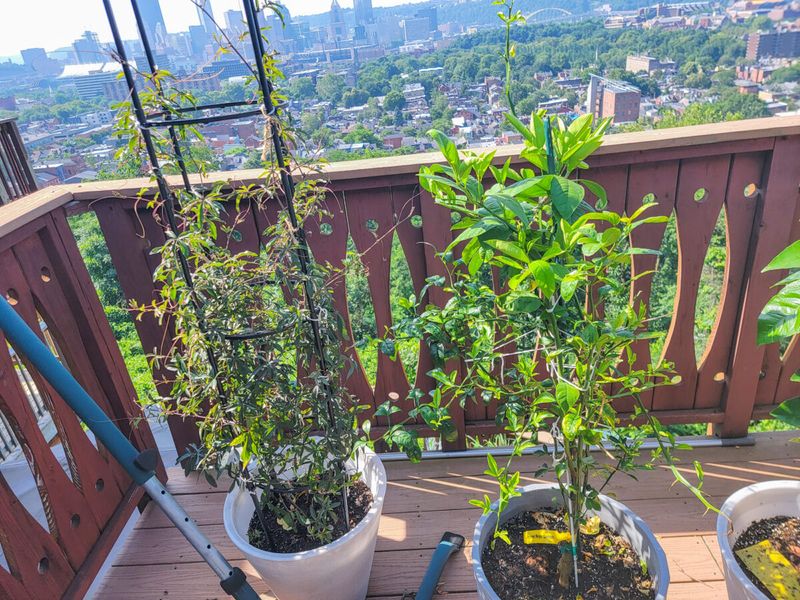
Two jobs get mixed up with maypop: holding the vine up and keeping it in bounds. A trellis does the first.
It gives the stems something to climb. It does not stop the roots, which can send up new shoots well away from the plant.
The Florida Museum notes that maypop may spread rapidly by suckers and need pruning in small gardens. Picture a sprout popping up in the lawn a few feet from your trellis.
That is what suckering looks like.
If space is tight, UF/IFAS Extension suggests that a container with a sturdy trellis may suit a small urban landscape. Choose a large pot with drainage holes and a trellis that can handle a heavy, tangled vine.
Whatever setup you choose, walk the area every week or two during the growing season. Pull or cut stray shoots early, and trim stems that wander onto neighbors or walkways.
Maypop is not a plant to plant and forget, but a little regular attention keeps it welcome.
Let caterpillars feed without spraying the host plant
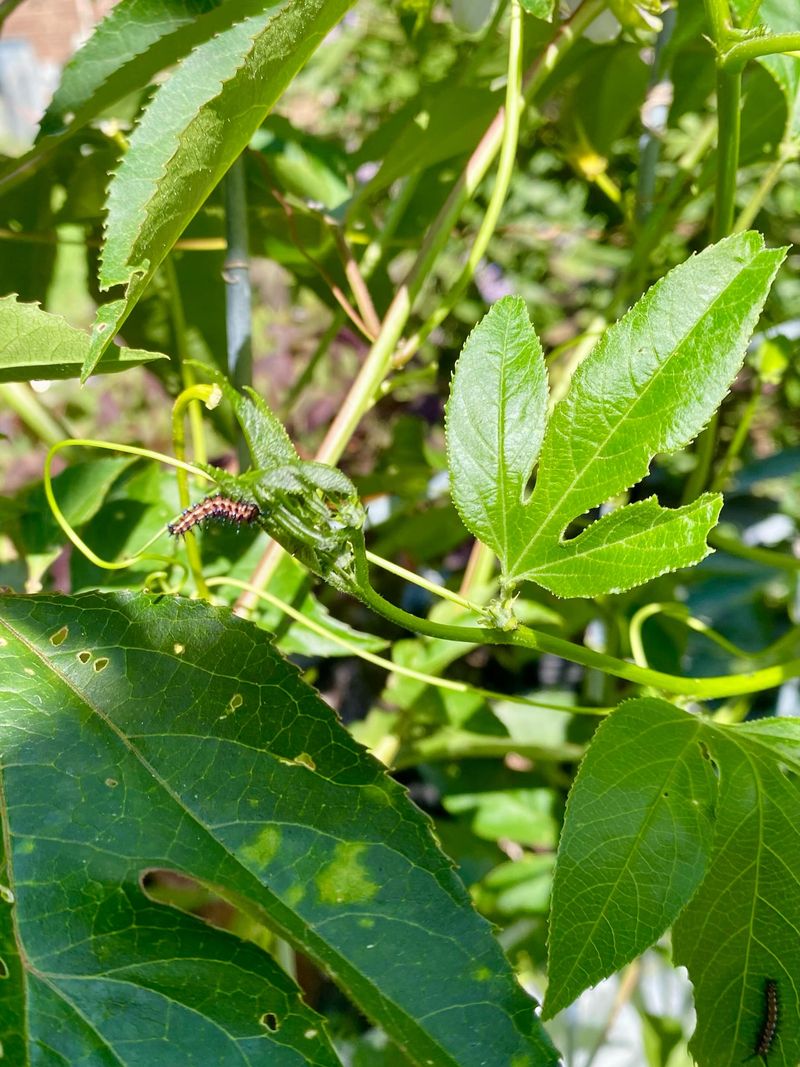
Chewed leaves on a passionflower are a good sign that it is doing its job. Caterpillars eat host plants, and that is the whole point of planting one.
A vine with holes in it, or even one stripped bare, can be part of a working butterfly garden.
UF/IFAS says that damaged or even completely defoliated plants fit in a functioning butterfly garden. Healthy vines often push out new growth after the caterpillars finish.
Give the plant water and time before you decide it is in trouble.
That is why spraying is a bad idea. UF/IFAS warns that pesticides can kill larvae, so skip them on host plants.
Picking off caterpillars because they are eating the vine defeats the purpose of growing it.
The same goes for the plant you bring home. Ask the nursery whether it was treated with pesticides before you buy.
If the staff cannot say, consider another source or another plant. A vine treated before you bought it could harm the very caterpillars you hoped to feed.
A host vine supports habitat, not guaranteed visits
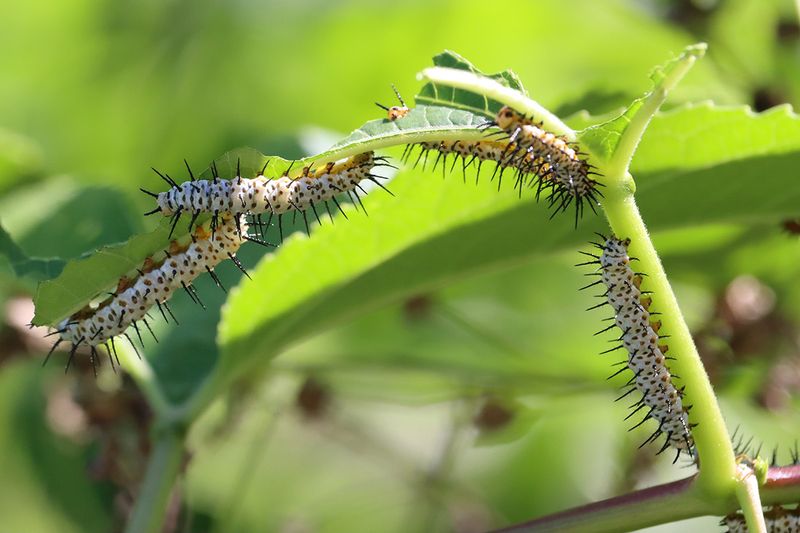
A passionflower feeds caterpillars, but adult butterflies need other things. The UF/IFAS guide separates larval host plants from adult food, and it lists flower nectar and pollen as what adult zebra longwings eat.
So a good yard pairs the vine with flowers that bloom over many months.
Here is the short version of the plan. Choose an identified native host vine that fits your site.
Plan for its growth, and let the caterpillars eat without pesticides.
Those steps build habitat, but they cannot promise an adult will visit. They also cannot show that zebra longwings have bounced back from a decline, because the sources here do not document one in Florida.
The 22 percent drop reported nationally was for all butterflies combined, not this species.
Still, a yard with a host vine and nectar plants offers something many yards lack. Even if no caterpillar shows up this season, you have set the table, and that is worth doing.