
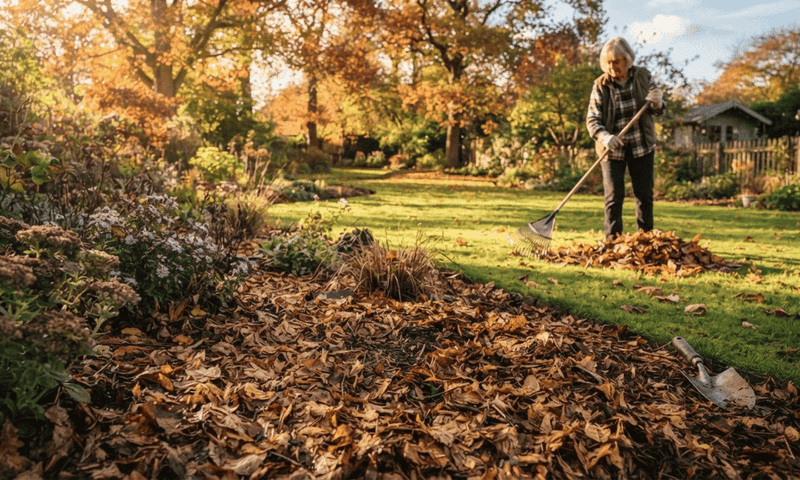
Florida sand drains fast, and it holds on to very little water or food for your plants. Every fall, piles of leaves land on lawns and in paper bags, and many of them end up far from a garden bed.
Those leaves can become a useful, low-cost helper if you know how to use them. Here is how to turn them into mulch or compost, and what to expect along the way.
Leaves help sandy soil gradually
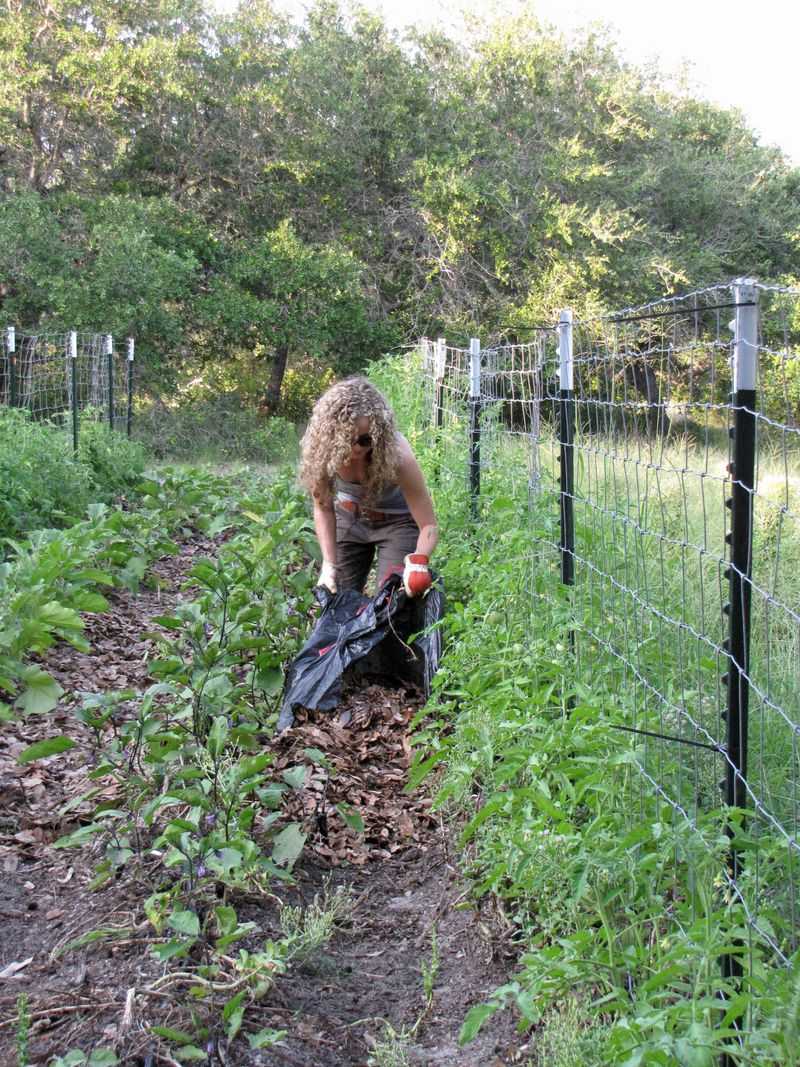
Most Florida yards sit on sand that is naturally low in organic matter and water-holding capacity, according to UF/IFAS soil health guidance. Water moves through it quickly, and so do many nutrients.
That is why a bed can look soaked after a storm and thirsty a day or two later.
A layer of leaves on the surface works like a blanket. It shades the ground, slows evaporation, and protects the top few inches of sand from baking in the sun.
UF/IFAS lists mulching with leaves as a practical way to conserve moisture in Florida edible gardens.
As the bottom layer breaks down, it feeds soil life and adds organic matter bit by bit. Compost, the finished form of this material, can raise the moisture-holding ability of a bed, but Florida fertilizer research also reminds gardeners that soil additions need to be matched to real plant needs.
Here is the honest limit. Leaves will not turn sand into a different kind of soil, and nobody can promise a set amount of extra water retention from a certain number of bags.
Think of them as a steady, gradual aid that supports better soil care over seasons, not a one-time makeover.
Use leaves you have permission to collect
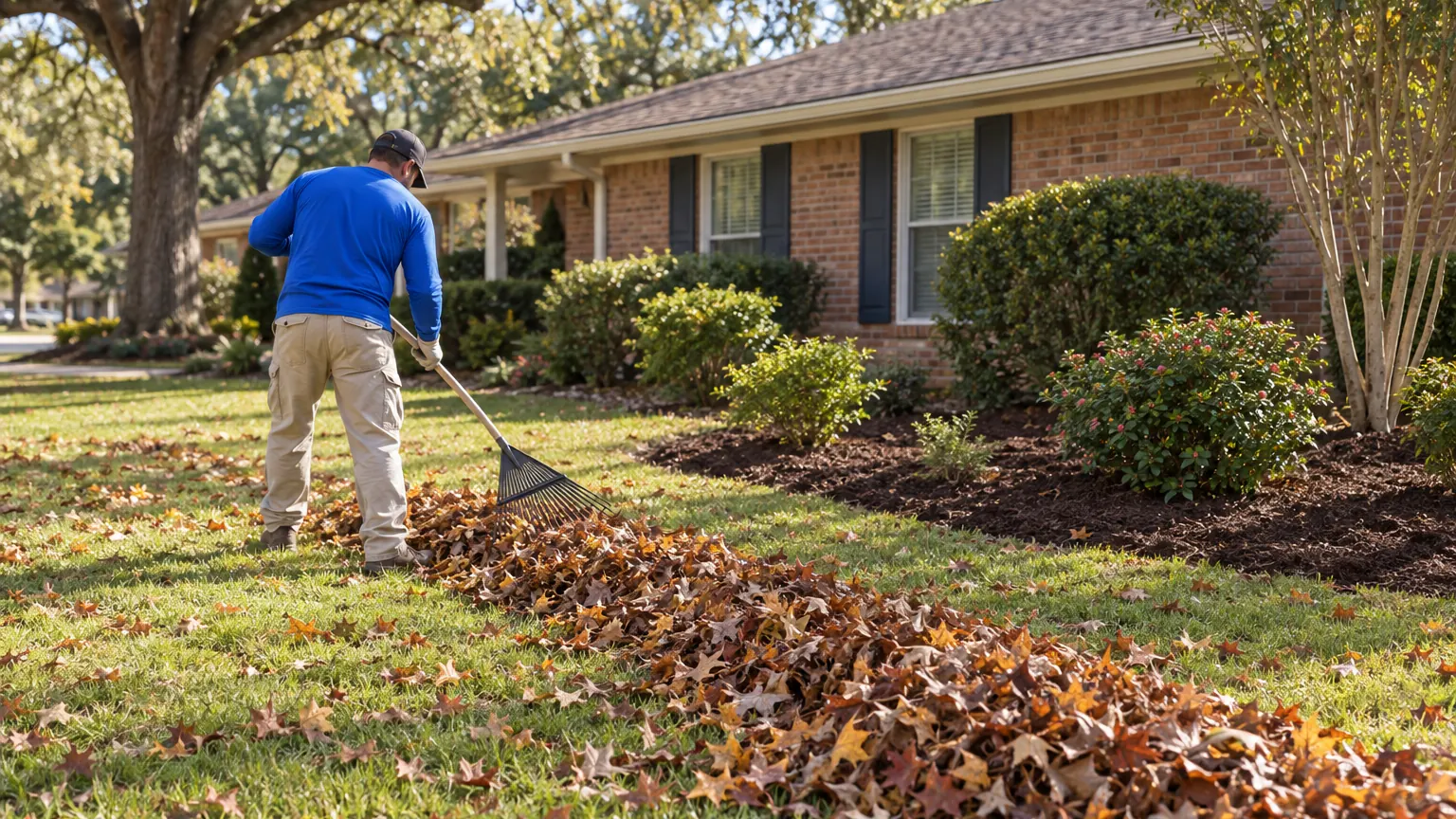
The easiest leaves to use are the ones already on your own property. Rake them from the lawn, driveway, and under your trees, and you have a no-cost supply right where you need it.
If your yard runs short, ask a neighbor who has extra and is happy to hand it over.
UF/IFAS does list leaves from a neighborhood as a suitable mulch for Florida edible landscapes. That is not the same as permission to grab bags someone has set out at the curb.
Collection practices and rules vary from city to city and county to county, so a quick question or a call to your local waste office saves trouble.
Look over what you gather. Skip leaves that show signs of disease, since UF/IFAS advises against using them where they could harbor problems for your plants.
Spotted, blighted, or moldy foliage belongs in the trash, not the bed.
One more caution applies to compost. The EPA advises keeping plants and grass treated with herbicides out of a backyard pile.
That warning is about treated material, and ordinary fallen tree leaves from a yard you know are not automatically a concern.
Apply a modest leaf layer around plants
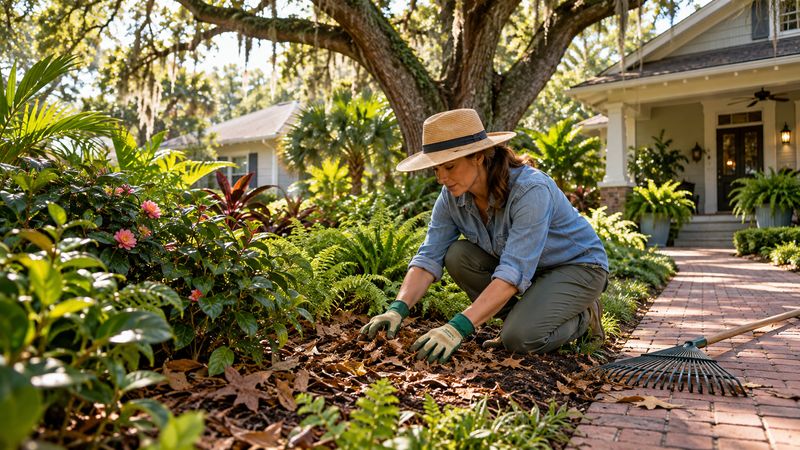
Thicker is not better. For established plants, UF/IFAS recommends a mulch layer of 2 to 3 inches.
Around seedlings and small vegetables or herbs, keep it to 1 inch or less so young plants are not smothered.
Pull the leaves back from every stem and trunk. Leave a couple of inches of bare space around smaller plants and about a foot around large plants and trees.
Mulch piled against bark stays damp, which invites rot and pests.
You can spread leaves whole or run them over with a mower or shredder first. Whole leaves are fine in sheltered beds, but they can blow around on a breezy day.
Shredding helps them pack down and stay put, and a light cover of wood mulch on top can also hold them in place.
Watch the drainage, too. Thick or finely ground mulch can slow drainage for some plants, especially species that like to stay on the dry side in sandy soil.
If a plant sulks after a rainy spell, check that the mulch is not holding too much moisture and thin it out.
Plan to top the layer off as it settles and breaks down. A quick look every month or two tells you when the sand is showing through again.
Compost leaves before mixing them into a bed
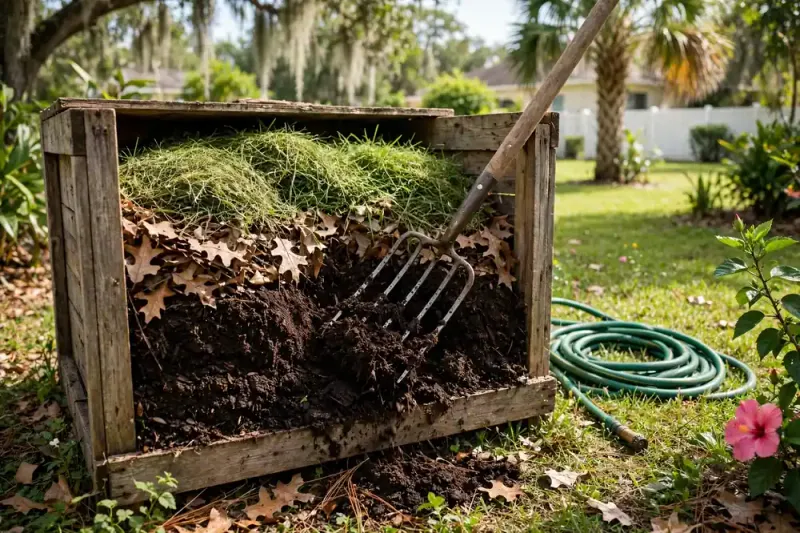
If your goal is to work organic matter into the soil, compost the leaves first instead of burying fresh ones. Mixing in material you can still recognize can temporarily tie up nitrogen, leaving your plants short on food while microbes do the breakdown work.
Dry leaves are carbon-rich browns. They break down best when mixed with nitrogen-rich greens such as fresh grass clippings from untreated lawns, vegetable scraps, and coffee grounds.
The EPA’s home composting guide also stresses air and moisture as key ingredients.
Aim for a pile that feels about as damp as a wrung-out sponge, moist but not soggy. Turn it now and then to bring in air and speed things up.
According to UF/IFAS, a pile you ignore will still decompose, just more slowly.
Do not count on a backyard pile to wipe out every weed seed or disease organism. Home piles often do not stay hot enough for long enough.
Leave out diseased plants and weeds that have gone to seed, and you will not have to hope the heat handles them.
Incorporate finished compost before planting
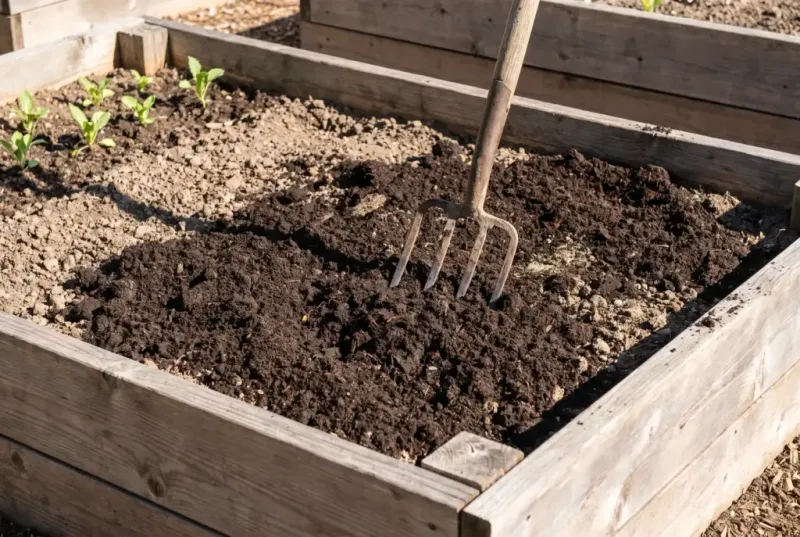
Finished compost looks dark and crumbly and smells earthy, like a forest floor. If you can still pick out whole leaves, twigs, or wood chips, it needs more time.
Material that is not ready can pull nitrogen away from plants for a while after you mix it in.
When the compost is ready, UF/IFAS suggests spreading a 2-inch layer and working it about 6 inches into the bed. Do this 2 to 3 weeks before planting so the bed has time to settle.
Keep expectations realistic about nutrition. Compost nutrient content varies from batch to batch, and it is usually too low to meet all the needs of vegetables.
You may still need a fertilizer, so test or follow label guidance rather than assuming the compost covers it.
Resist the urge to pile on extra. Florida guidance, including this UF/IFAS review of fertilizer ordinances, notes that compost incorporation can raise the potential for nitrogen and phosphorus to leach through sandy soil.
In sand, a measured layer protects both your plants and nearby water.
Replenish organic matter as it breaks down
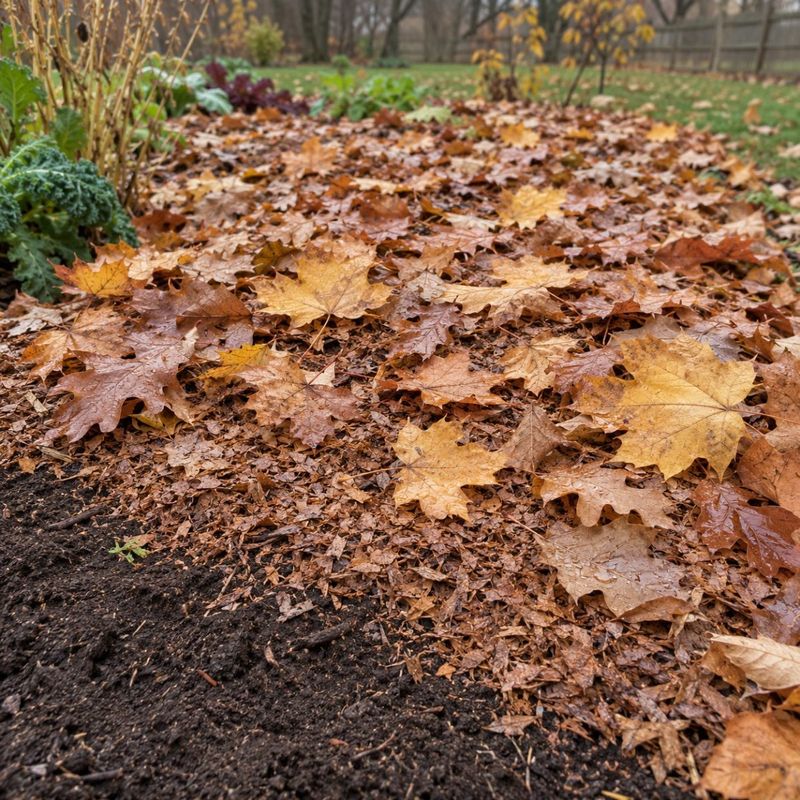
You now have two clear paths. Leave leaves on the surface as mulch when you want to protect the soil and slow moisture loss.
Compost them first when you want to mix organic matter into a bed before planting.
Either way, plan on repeating the job. UF/IFAS notes that Florida’s subtropical conditions let soil organisms break down organic matter for longer periods, and faster, than in cooler regions.
Warm, wet months can make a mulch layer shrink quickly, so adding more each fall is part of the routine. Refresh surface mulch following the layer guidance as it thins.
Leaves you own or have permission to use are a handy resource, but they are not a one-time cure. Sandy soil improves through steady habits, one season at a time.