
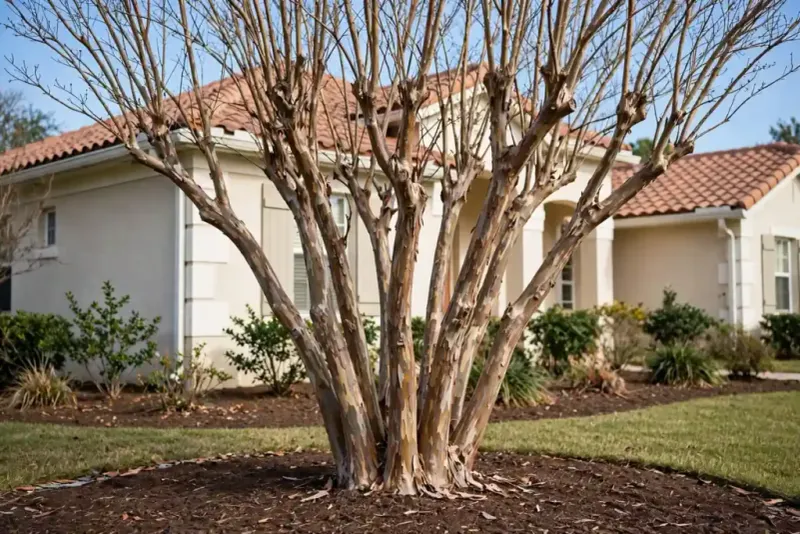
Drive through any Florida neighborhood in winter and you may spot crape myrtles cut down to bare stumps. It can make you wonder if your own tree needs the same treatment.
In most cases, a healthy crape myrtle needs far less work than you might think. Here is how to decide whether to prune, and how to make small, careful cuts if you do.
First decide whether the tree needs pruning
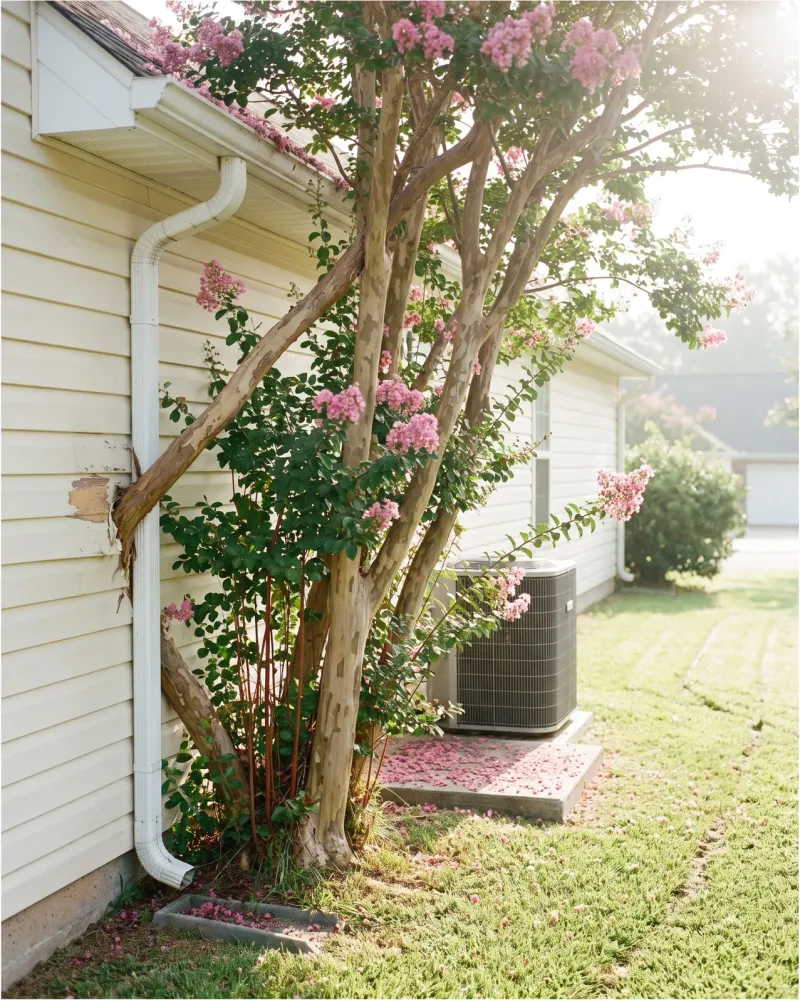
Before you pick up loppers, ask what problem you are trying to solve. A crape myrtle planted with room to reach its mature size often needs little or no pruning, and UF/IFAS guidance on crapemyrtle pruning says routine topping is not recommended.
The tree blooms on new growth, but that does not mean it must be cut back every winter to flower.
Good reasons to prune are specific. Look for dead or damaged wood, branches that rub against each other, or limbs that crowd the center of the canopy.
If you cannot name a problem, leaving the tree alone is a perfectly good choice.
Some cultivars actually bloom most heavily when left unpruned. Pruning may give slightly larger flower clusters, but flower numbers generally drop as cuts get more severe, a point also covered in UF/IFAS Extension Charlotte County advice.
So a trim is not a bloom booster you can count on.
If your tree keeps outgrowing its spot, such as bumping a roofline or crowding a walkway, the size itself is the problem. Hard cuts only buy a short break, because vigorous regrowth can bring the size right back.
A smaller-maturing cultivar is usually a better long-term fit than cutting the same tree hard every year.
Topping is not a shortcut to better blooms
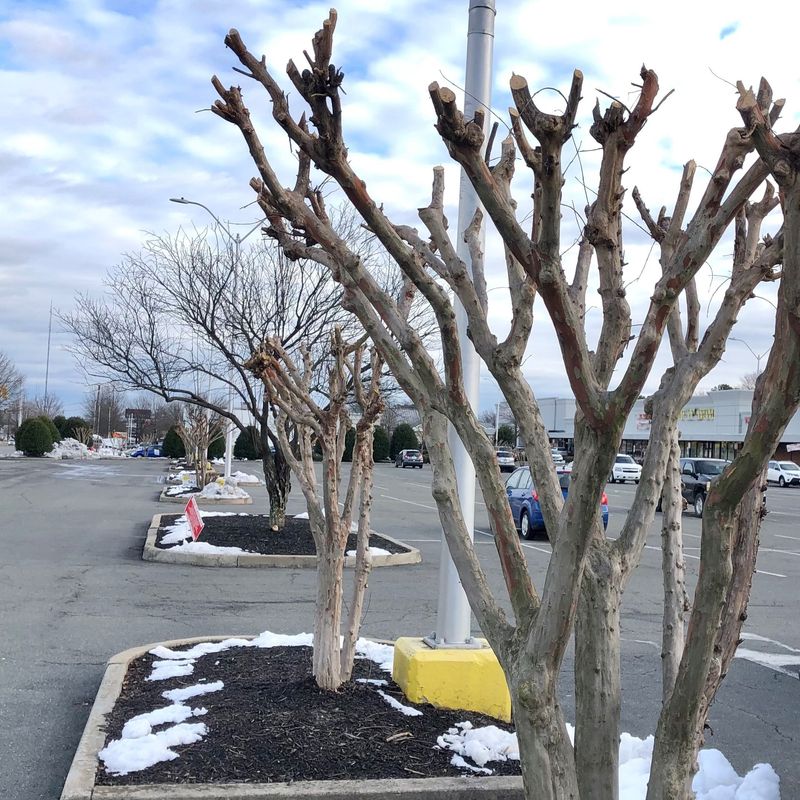
Topping means cutting larger, older branches back to arbitrary stubs. Plenty of well-meaning homeowners do it because it looks tidy and seems to be what everyone else does.
It is a common habit, but it comes with trade-offs worth knowing.
Pollarding is something different. It is a deliberate system where branches are cut back to established heads, and it needs annual maintenance, as described in the UF/IFAS pruning publication.
That same source notes that topping and pollarding can delay flowering by up to a month and shorten the bloom season in some cultivars.
Topping does not necessarily kill a healthy tree. The drawbacks are about structure and upkeep.
Large stubs can decay, and the vigorous sprouts that follow can be weakly attached. In a study of Natchez crape myrtles, topped trees had about six times more dead stub wood in the canopy than pollarded ones.
On flowers, results vary by cultivar. In a University of Florida trial of Natchez and Carolina Beauty, bigger cuts were linked with fewer flower clusters and shorter flowering in Natchez, while Carolina Beauty responded less consistently.
The peer-reviewed version of that work covers only those cultivars, so treat it as a clue, not a rule for every crape myrtle.
Pruning may give slightly larger clusters, but it cannot promise more or better blooms.
Prune during dormancy, not by the calendar alone
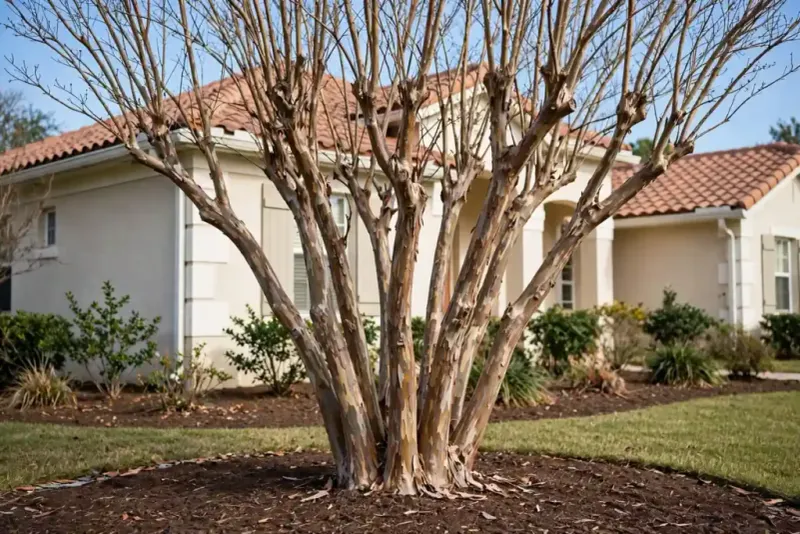
When a tree does need work, wait until it is leafless and dormant. In Florida that is typically December through February, according to UF/IFAS.
Think of those months as a typical window, not a deadline.
Timing shifts with the plant and the weather. A tree in North Florida may drop its leaves earlier than one in the far south of the state, and a warm spell can keep foliage hanging on.
Let the bare branches tell you it is time, not the date on the wall.
Going too early has a cost. Pruning before the plant is fully dormant can stimulate new growth that is vulnerable to cold, and the same guidance suggests saving any severe pruning for late in the dormant period.
Since severe cuts are rarely needed anyway, most homeowners can keep things light.
If you walk around your tree and find nothing dead, rubbing, or hazardous, you can skip the job entirely. A crape myrtle with no pruning need does not get better by being trimmed on a schedule.
Make targeted cuts that solve a specific problem
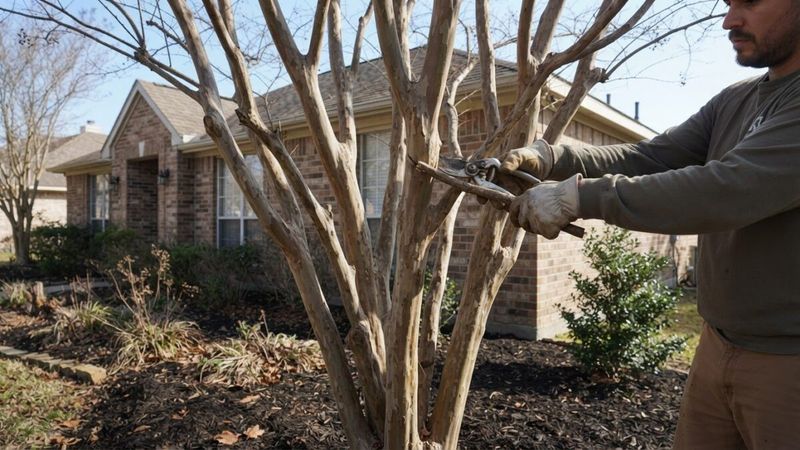
Selective pruning means each cut has a reason. Start with dead, damaged, or diseased branches.
Then look for branches that cross or rub, and vigorous shoots growing toward the center of the canopy.
Where you cut matters. To remove a whole branch, cut just outside the branch collar, the slightly swollen ring where it joins the trunk or a larger limb, as UF/IFAS recommends.
If you only need to shorten a branch, cut back to a suitable side branch or bud instead of leaving a blunt stub.
Skip the pruning paint. Virginia Cooperative Extension advises against applying it to the cut surface, and a clean cut in the right spot is enough.
Work in small steps. Make a cut, step back, and look at the whole tree before making another.
Most trees need only a handful of cuts, and the tree should still look like itself afterward, with its natural vase shape intact.
Stay away from reducing the whole canopy to a uniform height. Targeted cuts fix real problems, while across-the-board shortening creates new ones.
Shape the tree selectively and leave seed capsules if you like
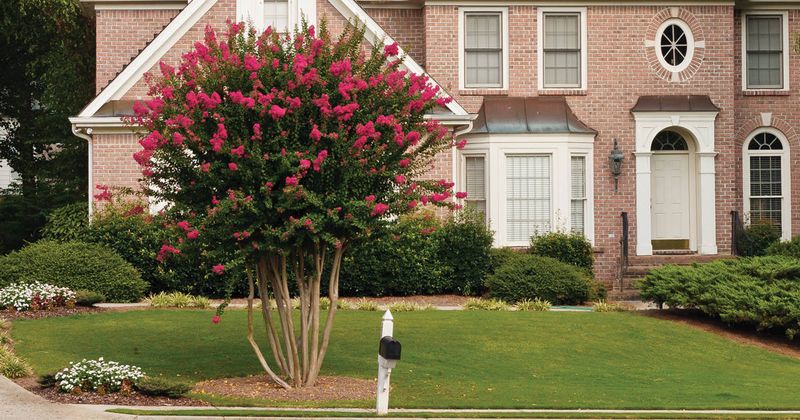
If you want a clean tree form, there are two light jobs to consider. Remove unwanted basal suckers at the base, and take off lower limbs gradually as needed, as covered by UF/IFAS Gardening Solutions.
Suckers can show up whether or not the tree has ever been pruned, so seeing them is no sign you did something wrong.
You may hear about tipping, which gets mixed up with topping. Tipping means snipping small, typically one-year-old, pencil-sized branches near the outer canopy.
It is not required for flowering and is not practical on large plants, as Clemson Extension and Florida sources both indicate. On a small shrub-sized plant it is an optional tidy-up.
Then there are the seed capsules. Those brown clusters can stay on all winter without affecting the next growing season’s flowers, according to UF/IFAS.
Removing them is purely about looks.
On a tall tree, reaching them is often impractical anyway. If the capsules do not bother you, enjoy the winter texture and save your afternoon.
Leave hazardous branches to a qualified arborist
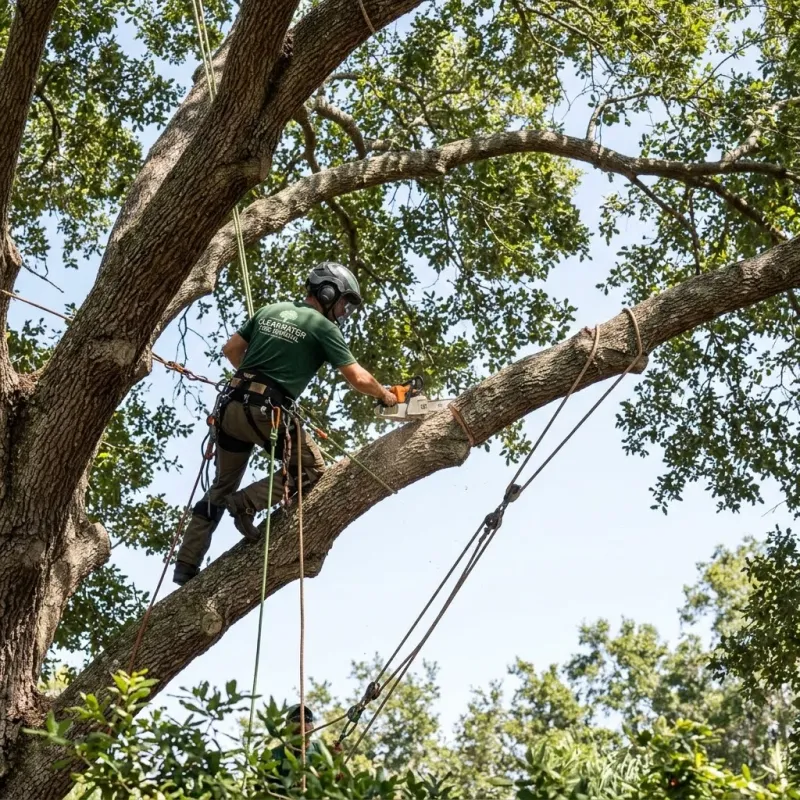
Some jobs are not for a ladder and a pair of loppers. Large limbs, branches high off the ground, storm-damaged wood, and anything near power lines call for a qualified arborist.
The International Society of Arboriculture notes that inappropriate pruning can weaken a tree and recommends professional help for this kind of work.
When you call, ask about credentials and whether the crew follows pruning guidance like the UF/IFAS recommendations for selective cuts rather than topping.
The practical decision is simple. If your tree is healthy and well placed, leave it be.
If something specific needs fixing, make only the dormant-season cuts that address it, and hand the risky ones to a pro.
The goal is sound structure and natural form, not a guaranteed jump in blooms. A crape myrtle that is left to be itself will usually keep putting on a show.