
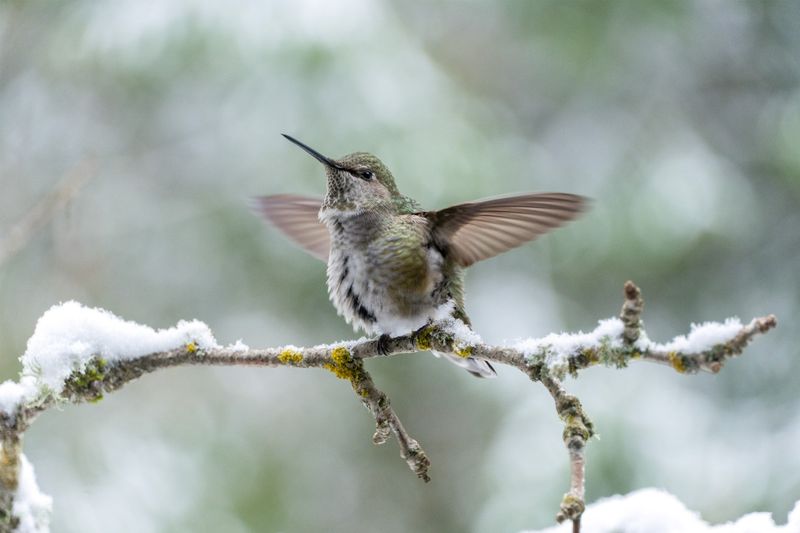
Walk outside on a chilly January morning in much of coastal California and you may hear the buzzy squeak of a hummingbird. Some species stay through winter in parts of the state, while others head south.
Knowing who stays, who leaves, and what they eat can help you support the birds that are around. Here is how to set up a yard that helps without making promises nature cannot keep.
A year-round resident is not necessarily the same bird all year
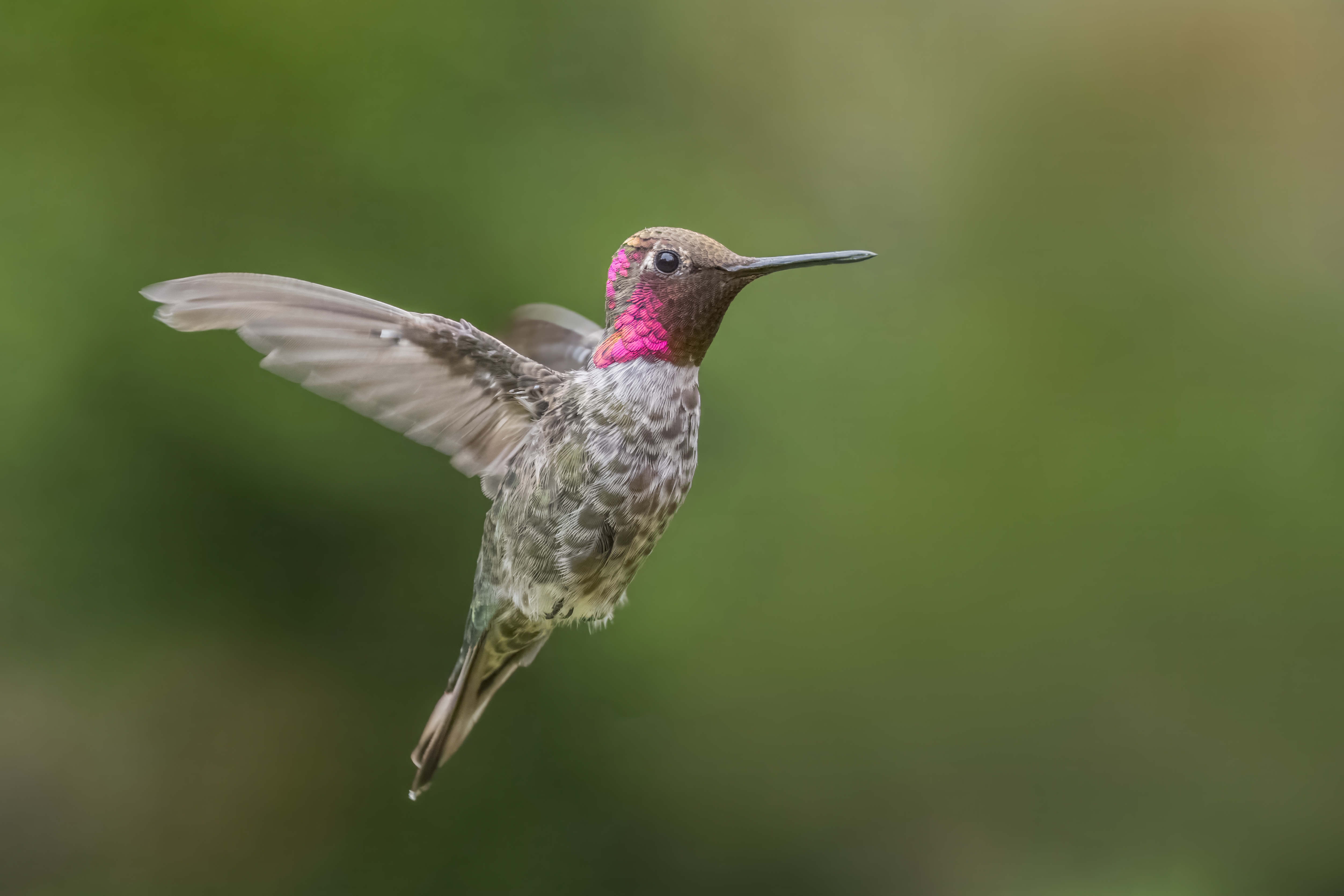
Anna’s hummingbirds are common year-round residents in much of coastal California. If you see one in December, that is normal for many neighborhoods.
Still, American Bird Conservancy notes that movements vary by population and by elevation, and some birds shift to follow food and favorable conditions.
That detail matters for how you read what you see. A species being present all winter in a region does not prove that one bird stayed in your yard the whole time.
The male chasing rivals from your fence in November could be a different bird than the one you saw in July.
Think of it like a busy bus stop. The route runs all year, but the riders change.
Birds may use your yard for a few days, a few weeks, or most of the season, depending on what is blooming nearby, how much competition there is, and the weather.
Hills and mountains add another twist. A bird that spends summer at higher elevation may drop toward warmer, lower ground when winter arrives.
Homes in foothill areas may notice more coming and going than a yard right on the coast.
So the goal is not to hold a particular bird in place. It is to make your yard a reliable stop with food, shelter, and safe water.
Whoever passes through, and whoever lingers, will benefit.
Allen’s winter presence depends on which subspecies you see
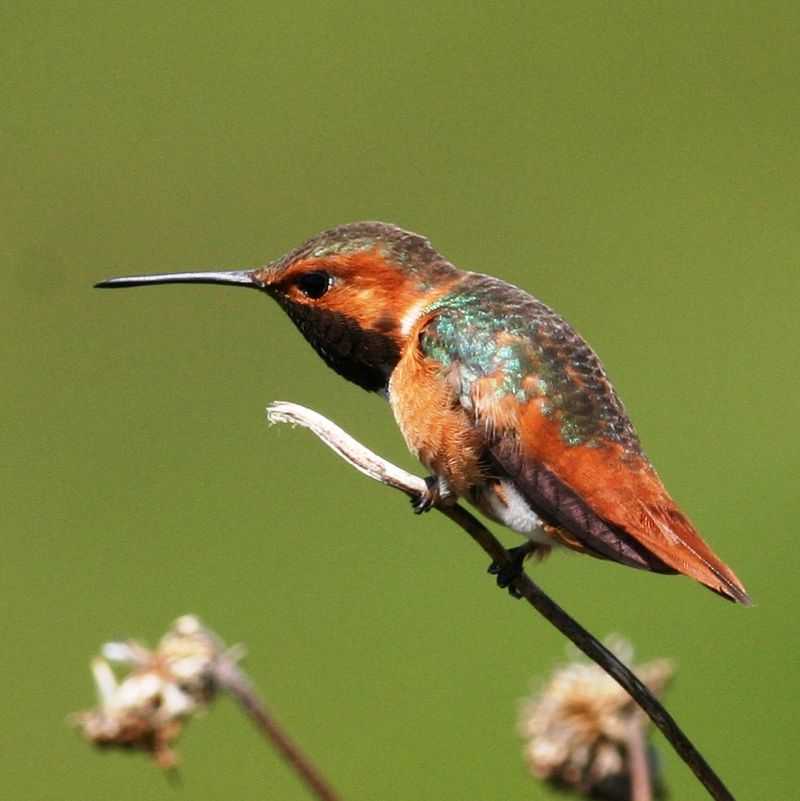
Allen’s hummingbirds are often lumped into the idea that all small California hummingbirds stay put in winter. That is too broad.
There are two subspecies to keep straight, and they behave very differently.
The migratory one, Selasphorus sasin sasin, winters in Mexico. If you see Allen’s in spring and summer along the northern and central coast, these are usually the birds that will leave when the season turns.
The resident one, S. s. sedentarius, stays put. The National Park Service describes it on the Channel Islands, and it also occurs in parts of mainland Southern California, including Los Angeles and Orange counties.
The geography is the key. If you live in the Bay Area or the Sierra foothills, a winter hummingbird at your feeder is much more likely to be an Anna’s than an Allen’s.
Cornell Lab range maps show how limited the winter range is compared with the summer one.
Telling the two Allen’s subspecies apart in the field is very hard, so location is your best clue. Southern California homeowners near the coast have a real chance of year-round Allen’s.
Everyone else should enjoy them in season and not expect a winter visit.
Natural food helps explain why some Anna’s stay
Winter in coastal California is mild and wet, and that is when many native shrubs bloom. Those flowers give Anna’s hummingbirds natural nectar when much of the country is frozen.
Insects are part of the menu too, which supplies protein that nectar does not.
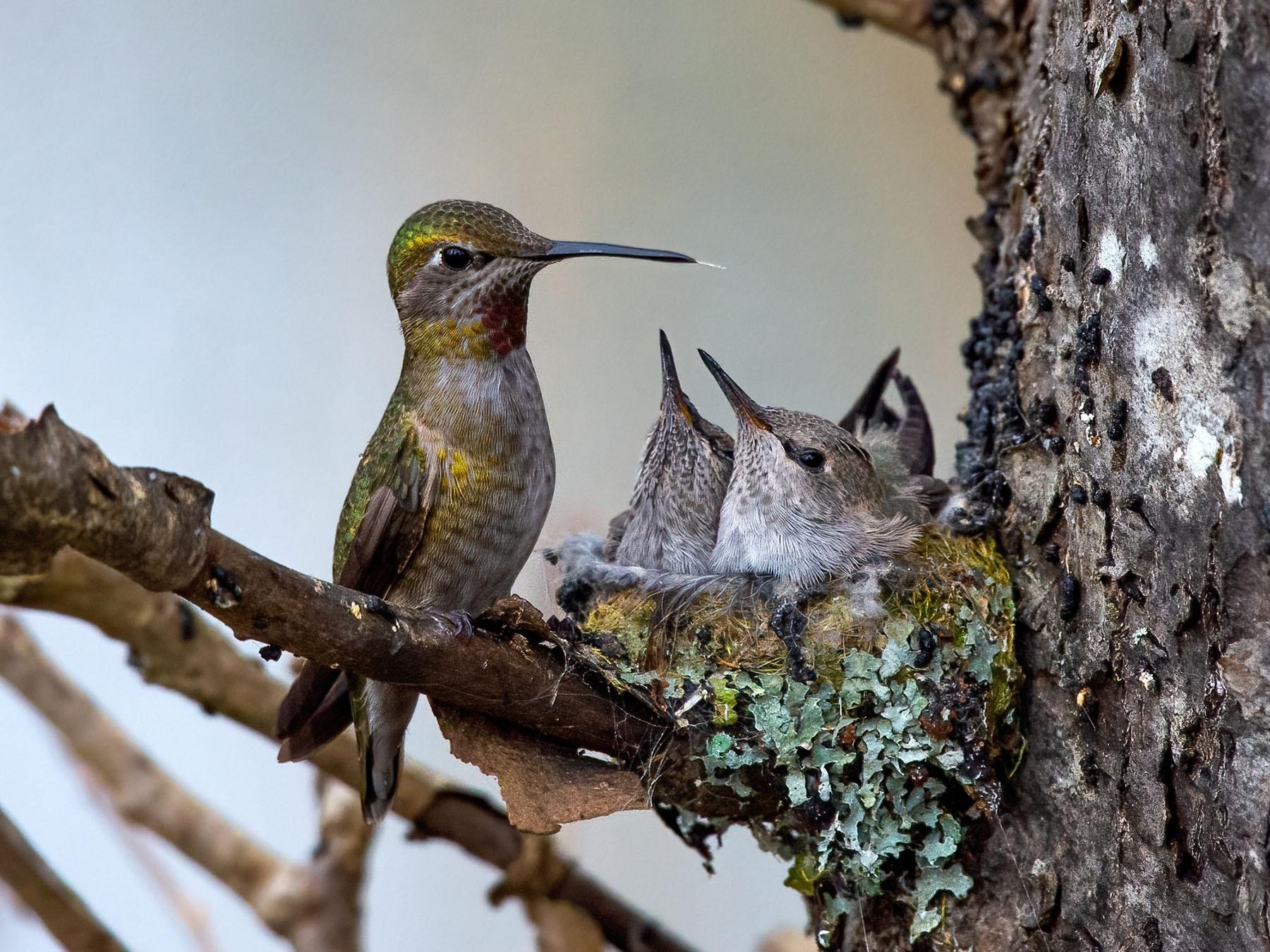
Anna’s also breed unusually early. A USDA Forest Service report and other sources describe nesting in coastal California as early as mid-November or mid-December.
A female building a nest in midwinter needs steady blooms and bugs nearby.
Feeders and ornamental plantings come up in this story as well. Cornell Lab of Ornithology links feeders and flowering garden plants with the species’ range expansion in past decades.
That link is not proof that your feeder keeps a given bird around. A feeder does not stop migration, and it does not turn a visitor into a resident.
Birds still respond to what the surrounding landscape offers.
The practical takeaway is to start with real food. Flowers and insects are the foundation, and a clean feeder is a backup that can fill gaps on cold, rainy days when foraging is tough.
Which California plants can offer winter blooms?
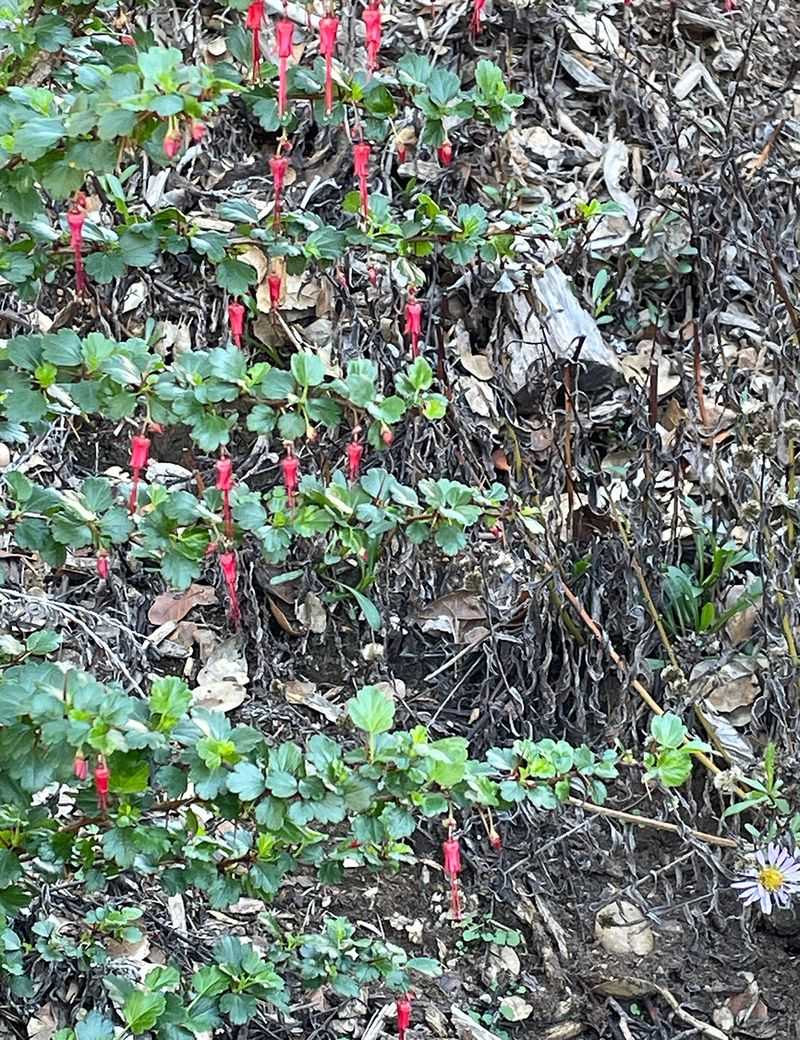
The California Native Plant Society lists several winter options for hummingbird gardens. Manzanitas (Arctostaphylos) are a classic choice, with small urn-shaped flowers that open in cooler months.
Chaparral currant (Ribes malvaceum) and fuchsia-flowered gooseberry (Ribes speciosum) also bloom in winter.
Fuchsia-flowered gooseberry has bright red, dangling blooms that suit hummingbirds well. It is also thorny, so place it away from walkways, play areas, and spots where you reach in to prune.
Plant needs vary a lot across California. A species that thrives in a foggy coastal yard may struggle in a hot inland valley or on a dry hillside.
Check your local conditions, such as sun, soil, summer water, and frost, before choosing.
A local native plant nursery can point you to the manzanita or currant that fits your area. Native shrubs also tend to suit our dry summers, which helps in a water-wise yard.
Plant in fall when rains are coming, so roots get established without much extra watering. Aim for a few different bloom times across the year, so something is flowering whenever a hummingbird stops by.
Insects, cover, and pesticide choices matter too
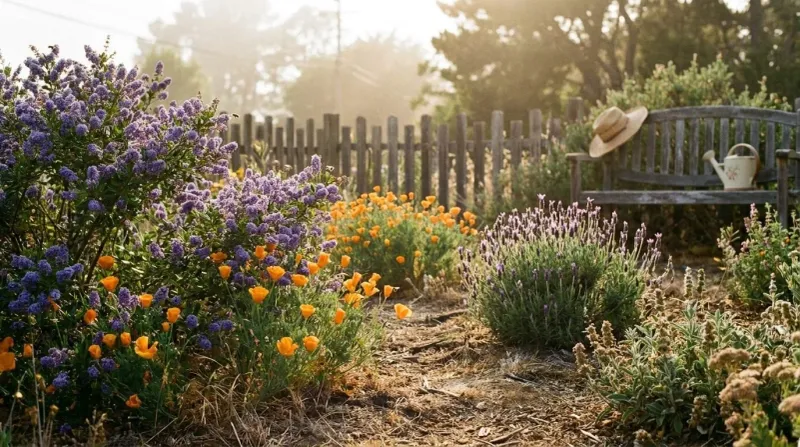
Flowers are only half of a hummingbird’s diet. Adults catch tiny insects and spiders, and chicks rely heavily on arthropods to grow.
A yard with only nectar and no bugs leaves out a big part of what they need.
Audubon advises keeping insect-supporting plants and shrubs, and minimizing or eliminating pesticides. Shrubs and small trees also give perches, shelter from wind and rain, and places to build nests.
Pesticides deserve a closer look. A California study documented insecticide exposure in sampled hummingbirds.
It recorded that exposure, but it did not show what effects followed.
That is reason enough to be careful. Try handling aphids with a spray of water, tolerate a few chewed leaves, and skip broad insecticides on flowering plants.
If you have been spraying, you are not a bad neighbor. Many products are sold for garden use.
Switching to gentler methods is a clear next step that helps hummingbirds, bees, and other wildlife at once.
Leave a little leaf litter and let some shrubs grow full. A slightly messy corner often becomes insect habitat, and that supports birds all year.
A feeder helps only when its nectar stays safe and fresh
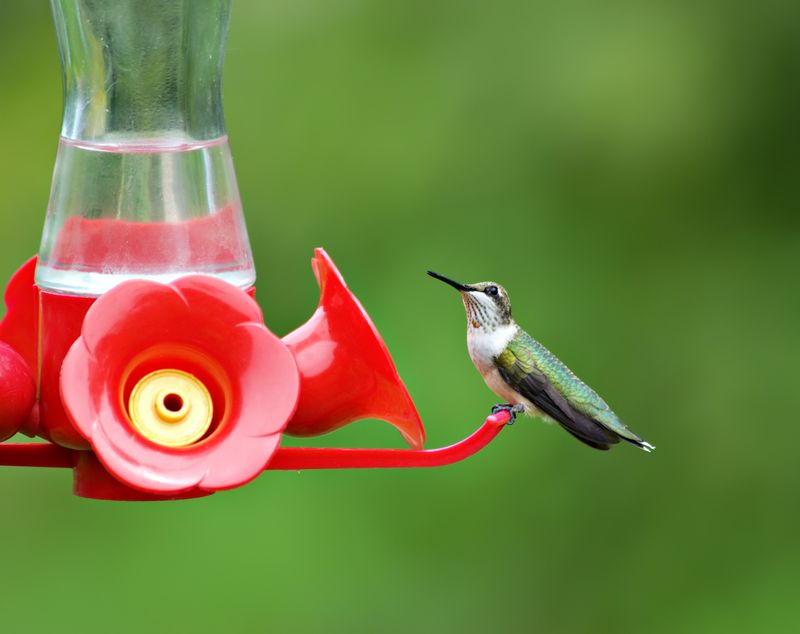
If you use a feeder, mix one part refined white sugar with four parts water. The Smithsonian National Zoo recommends this recipe and advises against adding red dye or using honey.
Clear nectar in a feeder with red parts is plenty to attract birds.
How often you clean and refill depends on the weather. Audubon suggests daily or every other day in hot weather, about every three days in temperate weather, and twice a week in cooler weather.
Clean sooner if the nectar turns cloudy or you see mold. Rinse with hot water and scrub the ports, then refill with fresh nectar.
A clean feeder is far better than a full one.
In parts of California with regular freezing nights, such as higher elevations and inland valleys, check that the nectar has not frozen. Frozen nectar blocks access to food.
Audubon says cold nectar itself is not known to cold-stun hummingbirds, so the concern is ice, not chill.
Bring the feeder in overnight or swap it for a fresh one in the morning if ice shows up. Keep it as a supplement only, because flowers and insects do the heavy lifting.
Build winter support into the whole yard
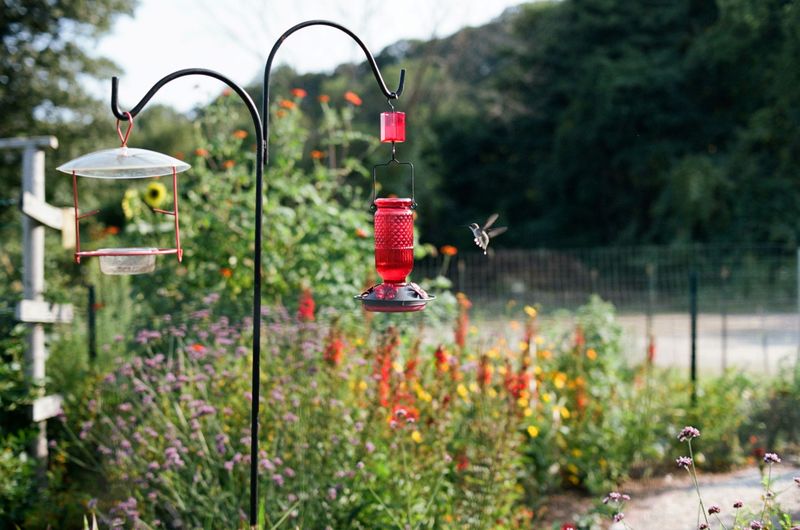
A good winter yard works in layers. Start with locally suitable blooms, such as manzanita or currant from California Native Plant Society’s list, then add shrubs and small trees for insects and cover.
Audubon’s yard guidance also supports cutting back on pesticides.
If you add a feeder, keep it clean and follow Audubon’s weather-based schedule. These choices can support hummingbirds, but they cannot guarantee that any one bird will stay or remain until spring.
Hummingbirds decide where to go, and a good yard simply gives them a reason to stop.