
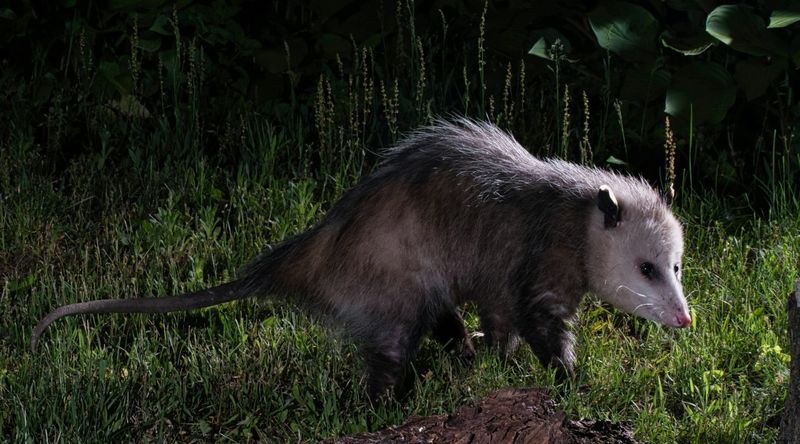
You flip on the porch light and see a gray, pointy-faced opossum shuffling past your collards. It is tempting to think it came for the slugs chewing your fall greens.
Maybe it did, but a quick sighting cannot tell you that. Here is what is known about opossums and slugs, what to check in your own beds, and how to give a wild visitor space.
Opossums may eat slugs, but a visit proves nothing
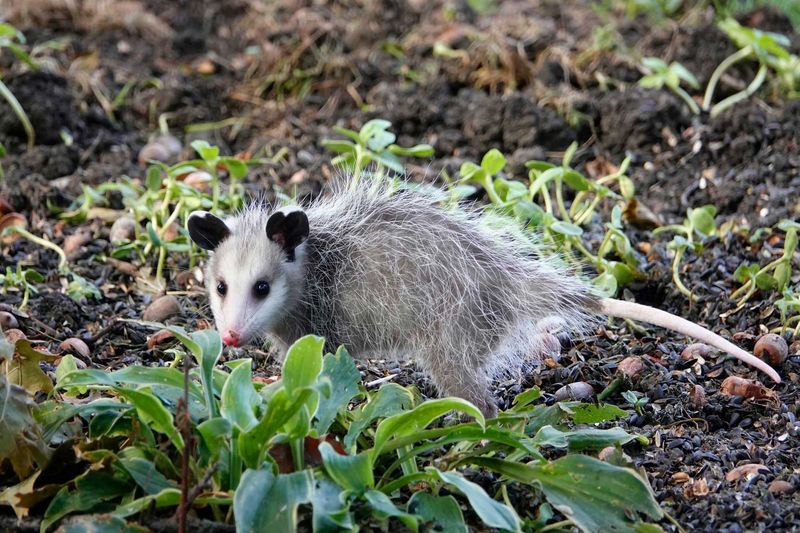
Virginia opossums eat a wide range of foods. NC Wildlife’s species profile lists slugs among them, along with snails, insects, worms, fruit, plants, small animals, and carrion.
So an opossum eating a slug is a real possibility.
A possibility is not proof, though. Seeing an opossum cross your yard does not show that it ate slugs there.
It may have been after fallen fruit, pet food left out, insects in the lawn, or just passing through to somewhere else.
It also does not show that your lettuce or collards took less damage because of the visit. Nobody can say how many slugs an opossum eats, or whether it looks for them in vegetable beds.
Those details are simply not known, so a sighting should not be counted as a pest-control service.
Think of the opossum as a visitor that might grab a slug if one crosses its path. That is a pleasant bonus at best.
It is not a plan, and it should not make you skip checking your plants.
The better question is what is actually happening on your greens. The next sections show how to read slug damage, match your timing to your part of the state, and act directly, whether or not a wild visitor stops by.
Look for signs of slug damage on tender greens
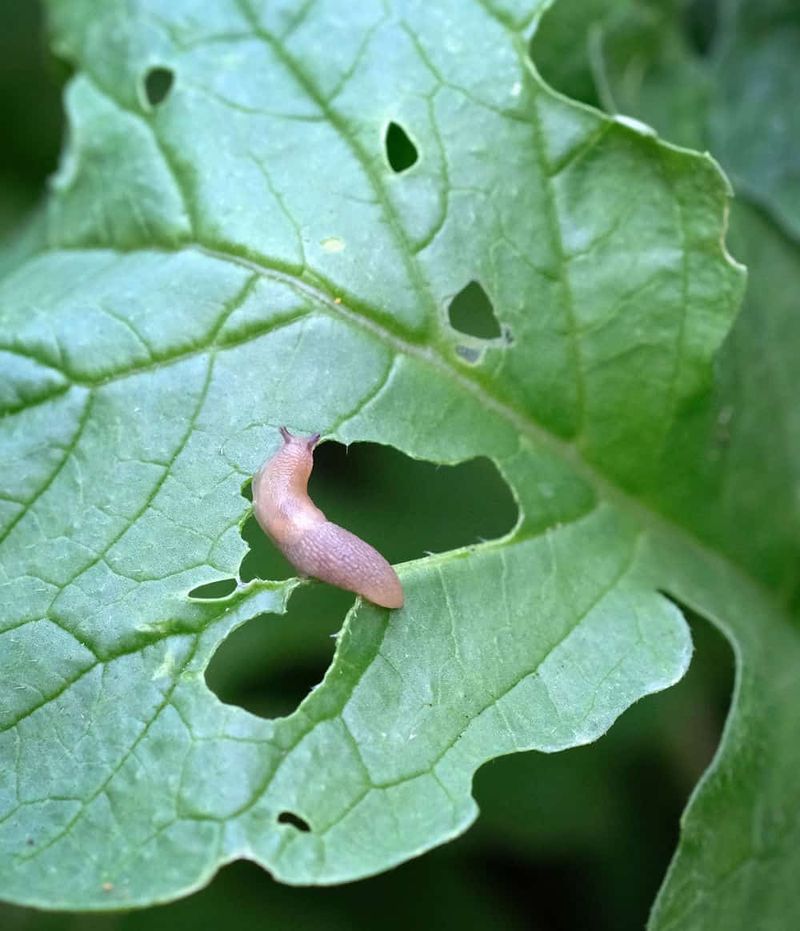
Slugs go after soft, tender plants, and young fall greens fit the bill. NC State Extension describes their damage as ragged holes in leaves, often along with slime trails.
Look for both, since the shiny trail is the clue that points to slugs rather than something else.
Check the leaves of lettuce and collards in the morning, when trails are easiest to spot. Slime dries into a silvery streak on leaves, soil, mulch, and the sides of pots.
Seedlings and low, outer leaves are good places to start.
Stick to what you can see. Holes and trails tell you slugs have been feeding.
A lack of fresh damage does not tell you an opossum cleaned them up, and a sighting of one does not explain damage you find. Other pests chew leaves too, so a trail is your best confirmation.
Timing matters here as well. Not every North Carolina garden has greens in the ground at the same moment.
A Wilmington gardener may have lettuce well along by October, while a mountain gardener may have already seen frost. Look at what is actually growing in your bed, and scout that.
Fall planting dates vary across North Carolina
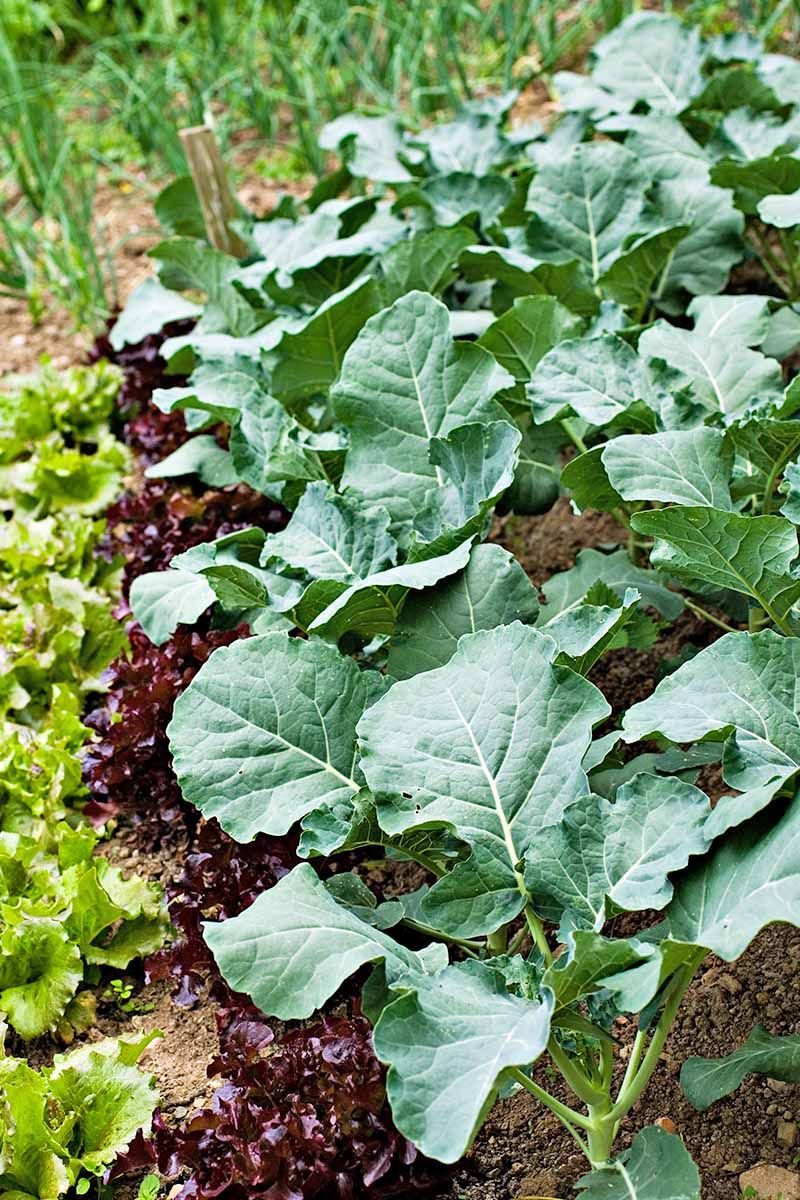
Where you garden changes the calendar. NC State’s lettuce guidance says fall planting of leaf and butterhead lettuce in eastern North Carolina can run from late August to early October.
That window is for the east, not a statewide schedule.
In most western locations, fall lettuce is not recommended because of the risk of early frost. If you garden in the mountains or foothills, check with your local Extension office before counting on a fall lettuce crop.
Collards have their own timing. The 2026 Southeastern U.S.
Vegetable Crop Handbook lists an Aug. 1 to Sept. 15 planting window for collards in eastern North Carolina. Again, that is an eastern schedule.
The takeaway is practical. If your greens are still seeds or seedlings, slugs have tender targets right now.
If they are past the planting window or frosted, your slug watch may look very different. Use the dates for your region, then scout accordingly.
Check for slugs and manage their hiding places
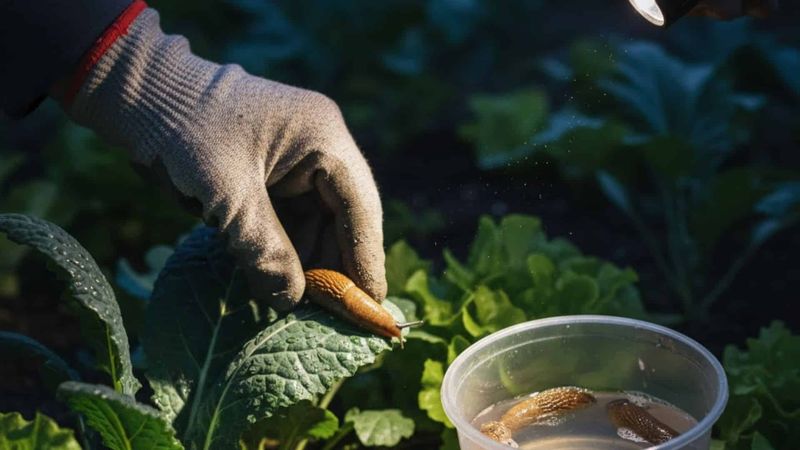
Slugs feed after dark and hide by day, so a flashlight is one of your best tools. Head out a couple of hours after sunset and look over the affected plants.
Then lift pots, boards, flat stones, and anything else that gives them a damp, shady place to rest.
NC State Extension recommends reducing moist hiding places and debris. Near your beds, that means clearing leaf piles and old plant matter, and watering so that surfaces are not constantly soggy.
Extension also notes that hand-picking can reduce slug numbers. Drop what you collect into a bucket of soapy water.
No single step guarantees control. Slugs can move in from neighboring areas, so repeat your checks over several evenings and see whether the damage slows.
If you consider bait, read and follow the product label first. Children, pets, and wildlife can all be affected.
NC State points out that metaldehyde products are toxic to pets and children, while iron-phosphate bait has lower mammalian toxicity. Lower is not the same as none, so keep any bait out of reach and use it carefully.
All of this is something you can do tonight, and it gives you real information about what is in your garden.
The tick-eating reputation does not promise yard control
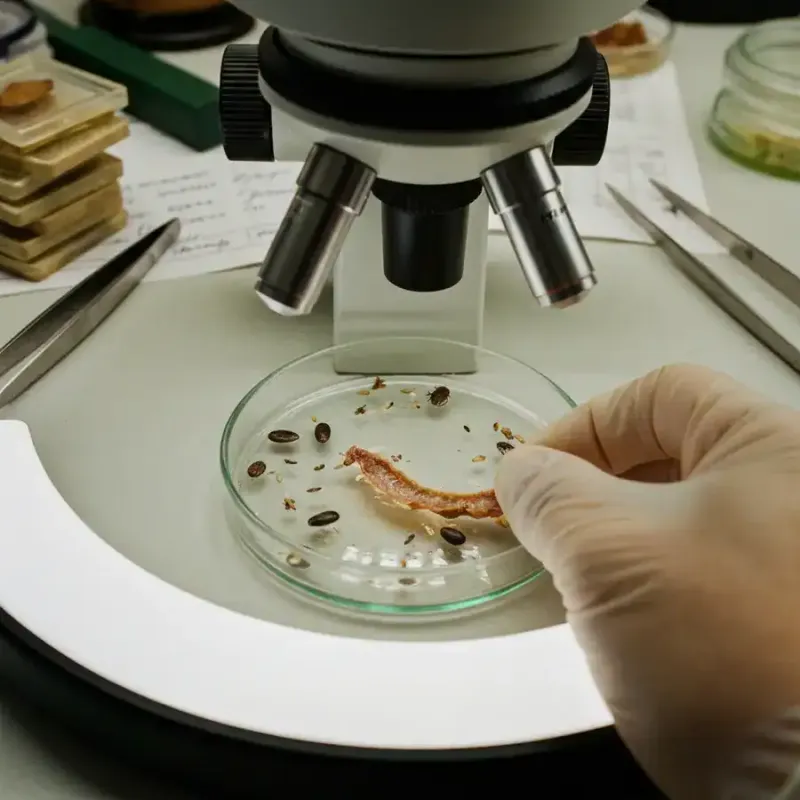
You may have heard that opossums gobble up thousands of ticks. That claim comes from a 2009 study.
Researchers put larval blacklegged ticks on several kinds of host animals, including opossums, and many ticks died. They then used models to estimate what that might mean for ecosystems.
That was an experiment with ticks placed on animals, plus modeled effects. It was not a count of what wild opossums actually eat in backyards.
A 2021 follow-up looked at real wild animals. Researchers examined stomach contents from 32 wild-sourced opossums and found no ticks or tick parts.
They also reviewed 23 earlier opossum diet studies, and none reported ticks.
That challenges the idea that opossums reliably eat large numbers of ticks in the wild. It does not prove that an opossum never swallows a tick while grooming, so a stray tick here and there is still possible.
For your yard, the safe reading is simple. Do not count on an opossum to lower your tick numbers.
Slugs and ticks are separate questions, and the slug diet information is the better supported of the two. Keep up your usual tick precautions, such as tucking pants into socks and checking yourself after time outdoors.
Let the opossum pass without feeding or handling it
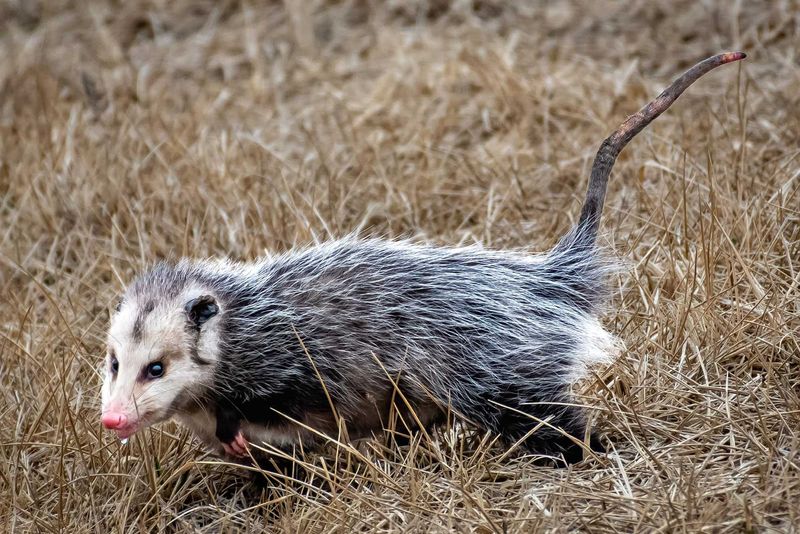
If an opossum wanders through, the best response is to leave it alone. Skip the food, and do not try to lure it closer.
NC Wildlife advises against feeding wildlife, since it can lead to more conflicts and disease risks. Bring in pet food at night and secure trash lids so your yard is not a buffet.
Do not pick one up or try to move it. NC Wildlife says opossums are highly resistant to rabies, but resistance is not immunity.
North Carolina public health guidance says any mammal can become infected. An opossum that looks sick or acts strangely should be reported to your local animal control or wildlife professional, not approached.
Most nights, though, a healthy opossum simply ambles through and moves on. Keep pets inside or leashed after dark, and give it a clear path along the fence line.
Meanwhile, keep your attention on the beds. Scout your greens at night, look for ragged holes and slime trails, and clear out the damp hiding spots, as covered earlier.
Those steps are in your hands.
An opossum may or may not eat a slug on its way past, but your flashlight and a bucket will tell you far more.