
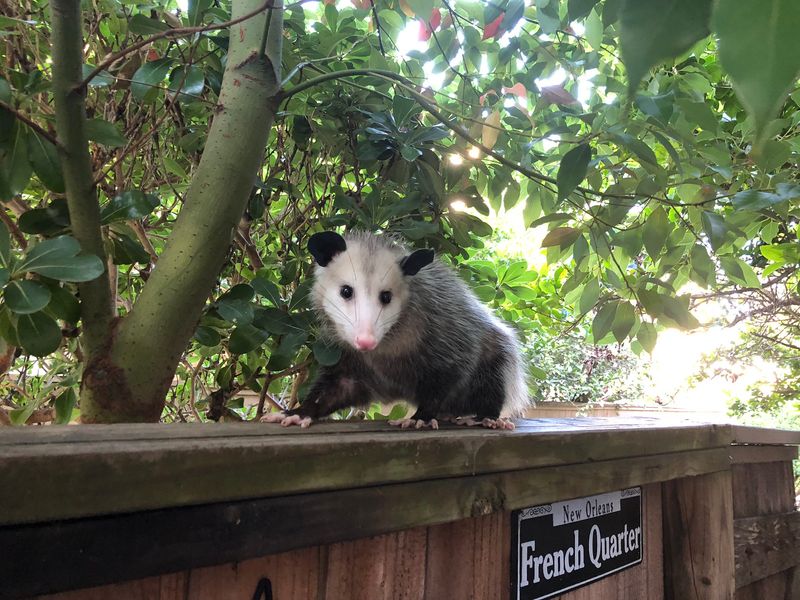
A video or social post claiming that a single opossum eats thousands of ticks every week sounds like exactly the kind of wildlife win every North Carolina homeowner wants to hear. The story is appealing, but the science behind it is shakier than most retellings let on.
Understanding what opossums actually do in a yard, and what they cannot do, helps families protect themselves from real tick-borne illness without missing a genuinely useful native animal.
The nightly tick-clearing claim does not hold up
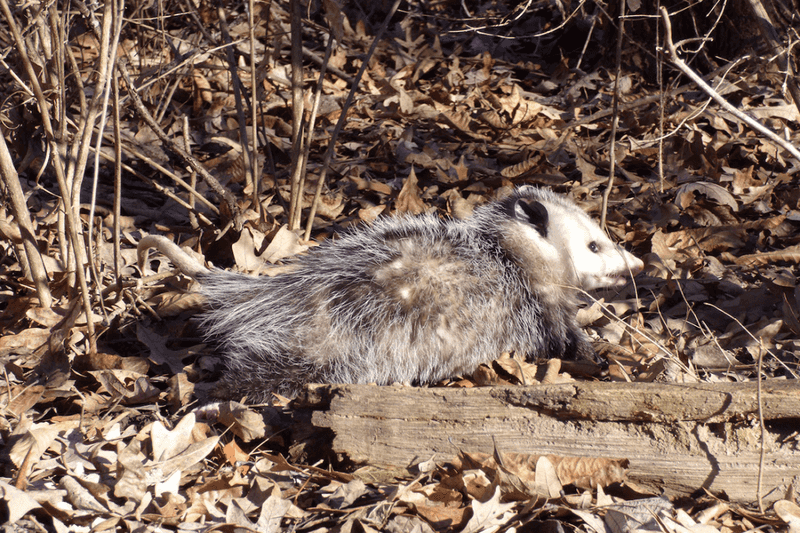
Social media and wildlife blogs have been repeating the same satisfying claim for years: let an opossum into your yard and it will hoover up thousands of ticks every night, protecting your family without a single spray can. The image is compelling, but no published field study has documented individual opossums patrolling residential yards nightly or producing a measurable drop in tick numbers around a home.
Penn State Extension’s review of tick-control claims for backyard animals notes that the evidence for opossums as reliable tick controllers is far weaker than the popular story suggests. The widely repeated number, usually cited as somewhere between 5,000 and 5,500 ticks per opossum per week, did not come from watching opossums work through North Carolina neighborhoods.
It came from a controlled laboratory experiment with captive animals, and the gap between a lab cage and a Piedmont backyard matters a great deal when evaluating pest-control claims.
That distinction, between a catchy wildlife statistic and a demonstrated residential outcome, is what this article works through. Opossums are native, largely nontroublesome animals that belong in the North Carolina landscape, and homeowners generally have no good reason to chase one off.
Treating a passing opossum as an on-call tick service, though, can lead families to skip the yard management and personal precautions that actually have solid support for reducing exposure to tick-borne illness.
The famous 5,500-tick figure came from a controlled experiment
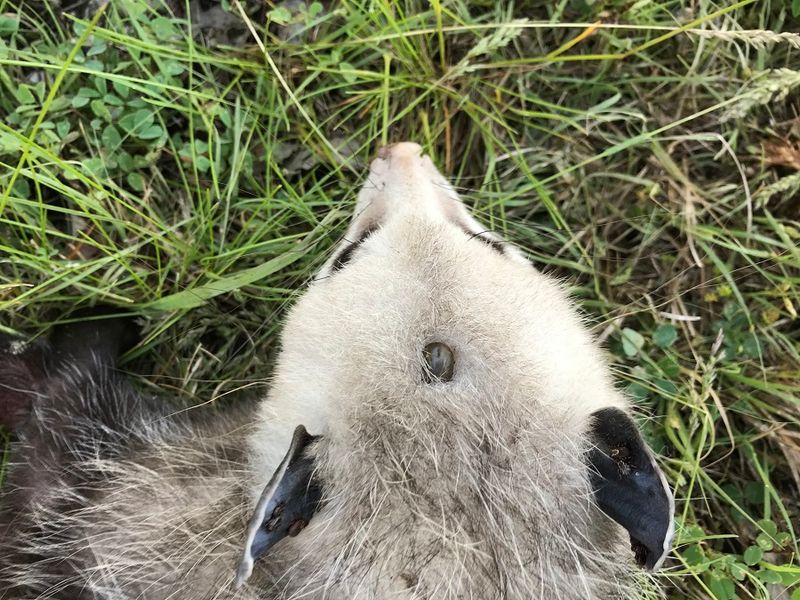
The number that launched a thousand wildlife posts traces back to a 2009 study published in the Proceedings of the Royal Society B, in which researchers placed larval blacklegged ticks on captive opossums and later counted how many ticks were not recovered from the animals or the enclosure. The inference was that the missing ticks had been consumed during grooming.
From that recovery gap, the researchers extrapolated an estimate of more than 5,500 larval ticks removed per opossum per week during a particular period of larval tick activity.
Two things about that estimate get lost almost every time it circulates online. First, researchers did not directly observe thousands of ticks being eaten.
They counted ticks that were absent and reasoned backward. Second, the estimate applied to a specific larval-activity window, not to a full year of tick seasons or to every tick species an opossum might encounter across different landscapes.
Popular retellings have since turned the figure into a seasonal total, an annual average, and a weekly guarantee, sometimes in the same article. A 2021 review of the opossum tick literature noted this pattern of variation and the problems it creates for homeowners trying to understand what the science actually shows.
Depending on which retelling a reader encounters, one opossum appears to eat 5,000 ticks per season, 5,500 per year, or 5,500 per week, and none of those versions is a measured backyard observation.
The 2009 study is real science and worth knowing about. It showed that captive opossums groomed away larval blacklegged ticks at a meaningful rate under controlled conditions.
What it cannot establish is that a wild opossum moving through a suburban yard in Raleigh or Asheville reproduces that outcome reliably enough to call it pest control.
Wild-opossum evidence does not show backyard tick control
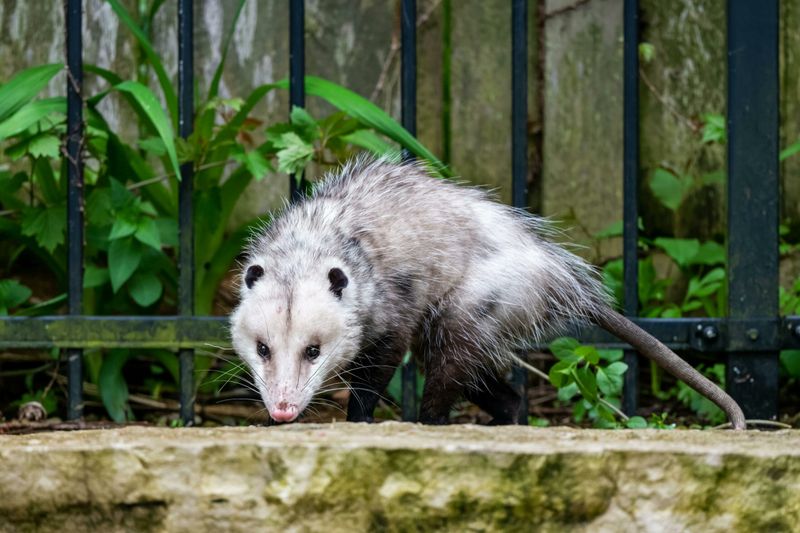
Field research tells a different story than the lab. A 2021 study that examined stomach contents from 32 wild Virginia opossums found no ticks or tick parts in any of the sampled animals.
The researchers also reviewed nearly two dozen published opossum diet studies and found no corroborating evidence that ticks are a meaningful or regularly consumed food item for wild opossums.
That result does not prove that an opossum has never swallowed a tick. Wild animals eat opportunistically, and a tick picked up during grooming could certainly end up in a stomach without leaving evidence.
What the study does undermine is the idea that ordinary wild opossums reliably consume thousands of ticks per week as a matter of habit. The gap between occasional incidental consumption and effective residential pest control is wide, and the 2021 data sits firmly on the wrong side of that gap for the popular claim.
Penn State Extension’s assessment draws the same line: an animal may remove some parasites while grooming without providing anything that functions as tick management in a yard where people and pets spend time.
North Carolina homeowners face an additional complication that most opossum tick stories ignore entirely. The 2009 laboratory study used larval blacklegged ticks, the species most associated with Lyme disease in the northeastern United States.
Research published in Emerging Infectious Diseases has documented that North Carolina carries substantial lone star tick pressure alongside blacklegged ticks, and the state’s tick-borne disease burden includes ehrlichiosis and spotted-fever illnesses that have different tick vectors. Applying a northeastern blacklegged-tick experiment to every tick species and disease system in North Carolina stretches the evidence well past its limits.
The North Carolina Division of Public Health’s tick page makes clear that tick exposure is a statewide concern across multiple species, reinforcing why a single wildlife claim cannot serve as a blanket answer to the state’s tick-borne disease risk.
What a Virginia opossum really contributes to a yard
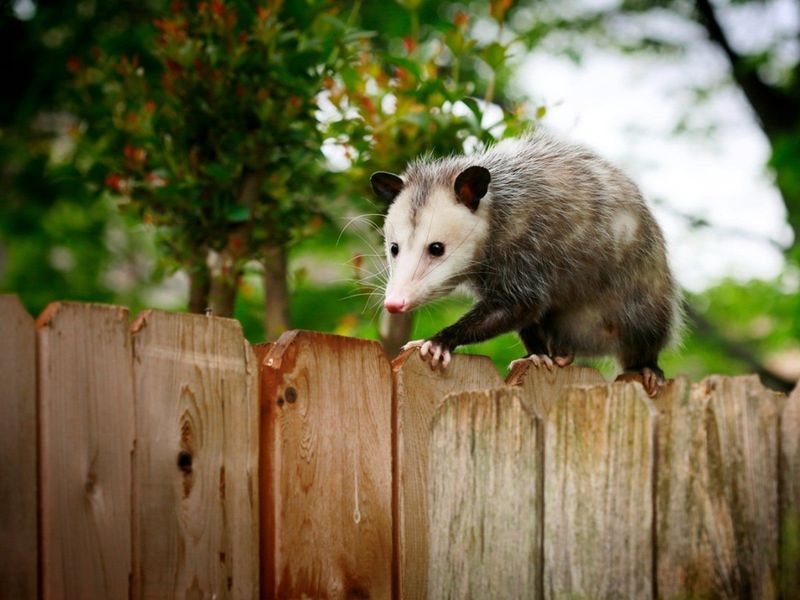
Strip away the tick-patrol mythology and the Virginia opossum is still a genuinely interesting native animal worth having around. National Park Service natural history records describe the species as a nocturnal, adaptable omnivore whose diet spans insects, earthworms, fallen fruit, small rodents, carrion, and, when opportunity presents itself, garbage and pet food left outdoors.
That breadth of appetite is exactly what makes opossums successful across such varied habitat, from mountain coves in the western counties to suburban lots along the Piedmont to coastal-plain edges.
University of Michigan’s Animal Diversity Web account for Didelphis virginiana notes that insects make up a documented and meaningful portion of the opossum’s diet. A foraging opossum working through a yard may consume beetles, grubs, and other invertebrates that homeowners would not want in their garden beds, which gives it a reasonable claim to being a useful part of a functioning yard ecosystem.
That contribution is modest and indirect rather than spectacular, but it is real.
What an opossum cannot do is stand in for a tick-management strategy. Its foraging path through a yard is driven by food availability and shelter, not by a systematic patrol of the places where ticks concentrate.
Treating its presence as a form of pest control assigns it a job it was not built for and one the evidence does not support. Letting a passing opossum continue on its way is a reasonable, wildlife-friendly choice.
Counting on it to protect the family from tick-borne illness is a different matter entirely, and one that the research does not back up.
North Carolina still has real tick exposure
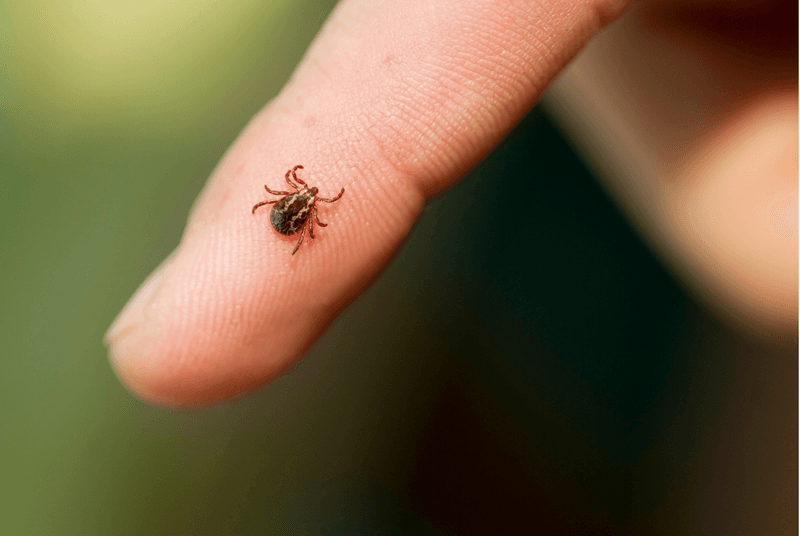
Whatever an opossum may or may not contribute to a yard, tick-borne illness in North Carolina is a concrete, documented public-health concern that does not disappear because a native marsupial passed through the night before. The North Carolina Division of Public Health tracks tick-borne illnesses statewide, including Lyme disease, ehrlichiosis, Rocky Mountain spotted fever, and other spotted-fever rickettsioses.
Cases have been reported across the Piedmont, coastal plain, and mountain regions, meaning no part of the state is outside the zone of concern.
North Carolina’s vector-borne disease data reflects the variety of tick species active in the state: blacklegged ticks, lone star ticks, and American dog ticks each carry different pathogens and are active at different times of year, which means tick-exposure risk extends across a long warm season in most of the state.
An opossum sighting in the yard is not a disease shield. Supporting native wildlife and protecting a family from tick-borne illness are compatible goals, but they call for different actions.
A homeowner can genuinely appreciate a passing opossum as part of a healthy yard ecosystem and still apply repellent before walking the dog at dusk. One choice does not replace the other, and framing wildlife stewardship as a substitute for tick precautions puts families at unnecessary risk during a season when tick activity is at its peak.
Let a passing opossum move through without attracting it
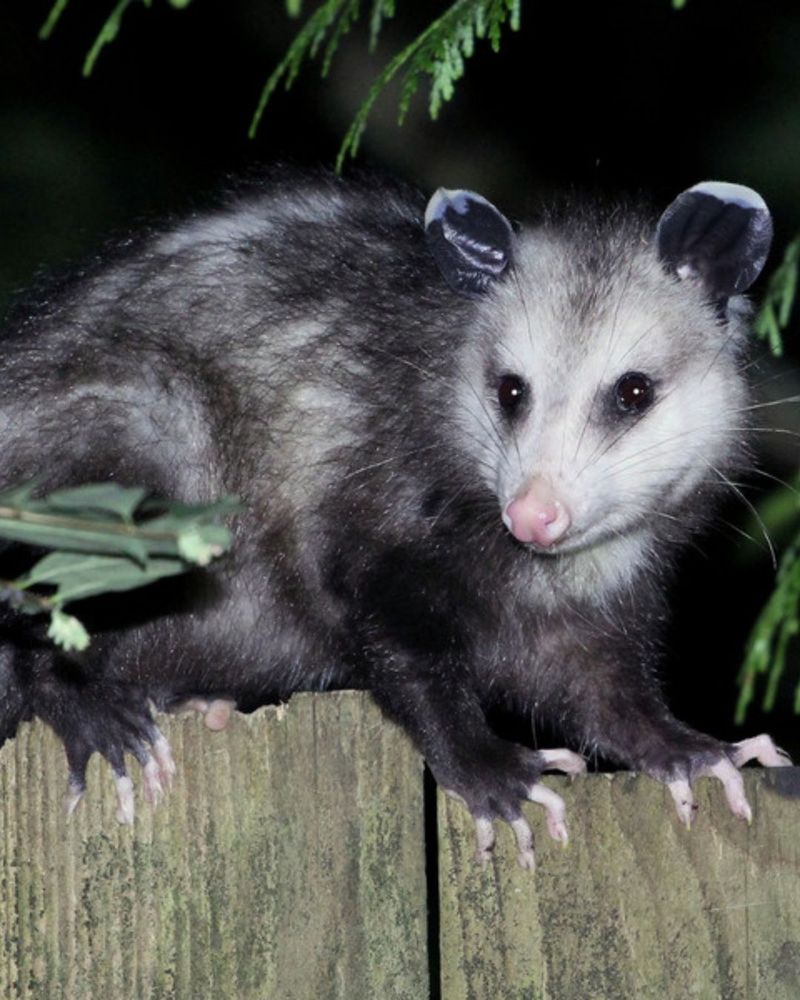
Spotting an opossum crossing the yard after dark rarely calls for any action at all. Opossums are nomadic animals that typically move through an area without settling, and most homeowners can simply watch it go and get on with their evening.
University of Georgia Extension’s guide to resolving human-wildlife conflicts recommends securing garbage cans, bringing in pet food before dark, and removing other food sources that might encourage an animal to linger or return repeatedly.
If an opossum has taken up temporary residence under a deck, porch, or in a crawl space, the practical response is to wait until the animal has left on its own, usually at night, and then close the access point. Evicting an opossum that has young with her can create a more complicated problem, so confirming the animal has moved on before blocking the entry is worth the extra patience.
Humane Pro’s opossum fact sheet walks through these steps and notes that exclusion, rather than trapping and relocation, is usually the most effective long-term approach.
Deliberately feeding an opossum to bring it into the yard for tick control is a different matter, and one worth avoiding. University of Illinois Extension’s reassessment of the opossum-tick relationship points out that intentional feeding can habituate wildlife to human spaces and reliably attracts raccoons, rodents, and feral cats, animals that carry their own health risks and nuisance problems.
A food source set out for an opossum does not stay exclusive for long.
One safety boundary applies regardless of how charming a yard opossum appears: do not handle, corner, or attempt to pet a wild animal. Opossums are generally nonaggressive and CDC data shows rabies is uncommon in opossums, but uncommon is not impossible.
Any bite, scratch, or contact with an opossum’s saliva should be assessed through local public-health or medical channels rather than dismissed because the species has a low rabies rate. An opossum that appears disoriented, unusually aggressive, or active during daylight hours warrants extra caution and a call to local animal control.
Manage the yard edges where ticks thrive
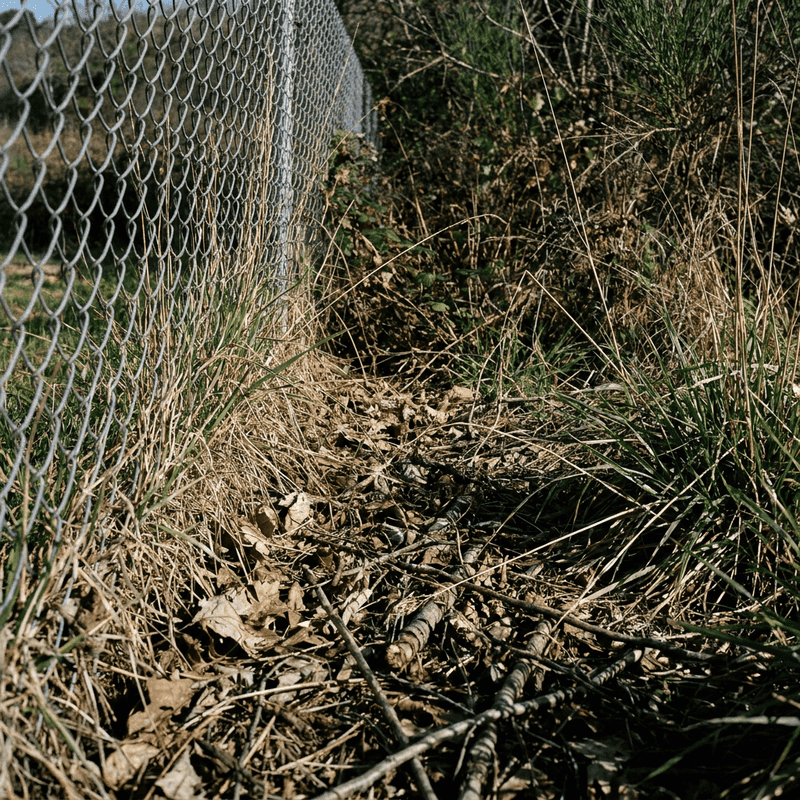
Ticks do not distribute themselves evenly across a yard. They concentrate in the transition zones between maintained lawn and taller vegetation: leaf-litter piles, brush edges, overgrown borders, and the shaded strip where a mowed lawn meets a wooded area.
Targeting those zones with regular maintenance removes the habitat ticks depend on, and it does so in places where people and pets actually spend time.
CDC tick prevention guidance recommends removing leaf litter from frequently used parts of the yard, clearing tall grass and brush from lawn edges, mowing on a regular schedule, and creating a three-foot barrier of wood chips or gravel between the lawn and any wooded border. That barrier works by making the transition zone less hospitable to ticks and by giving people a visible boundary to step over rather than through.
CDC’s tick habitat modification guidance document provides additional detail on barrier placement and the evidence behind each recommendation.
None of these steps eliminates every tick from a property. Ticks move on wildlife, on pets, and on clothing, so a well-maintained yard still requires personal precautions.
Yard work is one layer in a system of protection, not a complete solution on its own.
Pesticides can reduce tick numbers in treated areas when applied correctly, and some homeowners find them useful as part of a broader management plan. Any pesticide use must follow the product label and applicable North Carolina guidance.
Spraying should not become a substitute for habitat management, personal protection, or prompt tick removal, because chemical treatments alone leave the underlying conditions that support tick populations largely unchanged.
Use personal and pet checks as the final layer

Yard management handles the environment. Personal protection handles the moments when ticks get close anyway, which they will, even in a well-maintained yard.
CDC tick prevention recommendations call for using EPA-registered repellents on exposed skin and treating clothing or gear with permethrin before outdoor activity. Wearing long sleeves and tucking pants into socks creates a physical barrier that slows a tick’s path to skin, buying time to find it before it attaches.
After any time spent in the yard, a full body check matters. Ticks favor warm, hidden spots: behind knees, under arms, around the waistband, behind ears, and along the hairline.
Showering within two hours of coming indoors has been shown to reduce the risk of tick-borne illness by washing off unattached ticks before they find a spot to feed. CDC clinical guidance on tick-borne disease prevention notes that prompt removal of attached ticks with fine-tipped tweezers, grasping as close to the skin as possible and pulling upward steadily, is one of the most effective ways to reduce infection risk, because many tick-borne pathogens require hours of attachment before transmission occurs.
Pets add a separate pathway. A dog or cat that spends time in the yard can carry ticks indoors and deposit them on furniture, beds, and carpets before anyone notices.
CDC guidance on preventing ticks on pets recommends daily tick checks on animals, using veterinarian-approved tick-prevention products, and checking pets before they come inside. These steps remain necessary whether or not an opossum visited the night before, because no wildlife presence changes how ticks move through a yard and onto animals that share the house.
A wildlife-friendly yard is not a tick-free yard
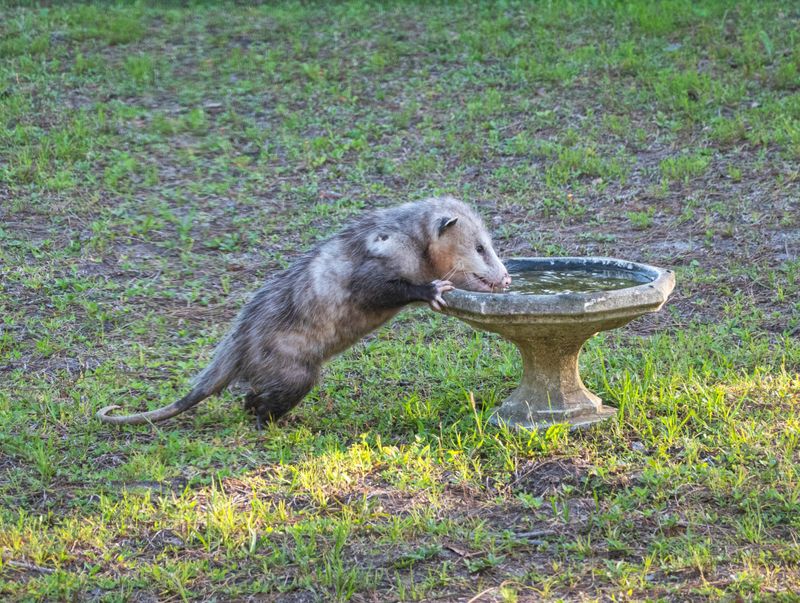
Letting an opossum pass through the yard without chasing it off is a reasonable, low-effort choice for any North Carolina homeowner. The 2021 wild-opossum stomach-content study is a good reminder that welcoming native wildlife and expecting it to solve a pest problem are two separate decisions, and only one of them is supported by evidence.
The practical formula is straightforward. Maintain sensible wildlife boundaries by securing food sources and closing off shelter access after an animal has moved on.
Manage lawn and wooded edges by removing leaf litter, mowing regularly, and placing a gravel or wood-chip barrier along the tree line. Use personal protection recommended by the CDC before and after time outdoors, check pets daily, and remove attached ticks promptly.
North Carolina’s tick-borne disease data makes clear that these precautions apply statewide, across all three regions, and through a long warm season.
An opossum moving through the yard at midnight is welcome company in a healthy landscape. It just is not clocking in for tick duty.