
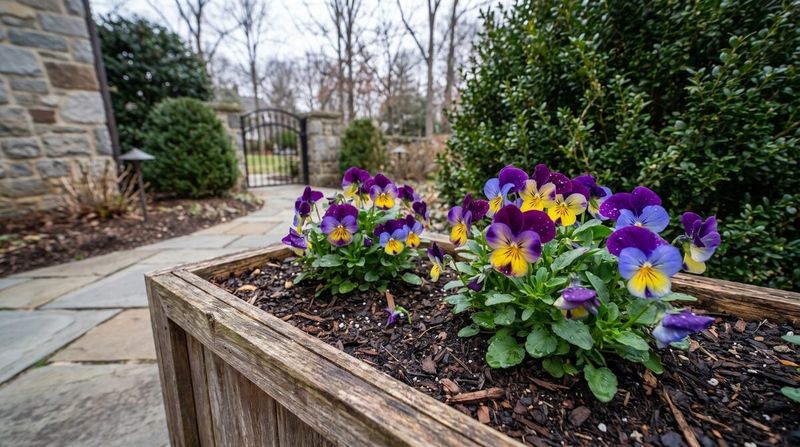
Your pansies looked great at the garden center, but now the stems are long and floppy and the flowers are few. Texas and Florida gardeners count on pansies to brighten cool-season beds, so a stalled bed is frustrating.
Dense shade may be part of the story, but it is not the only suspect. Here is how to sort out the clues and make one smart change first.
Is afternoon shade the whole problem?
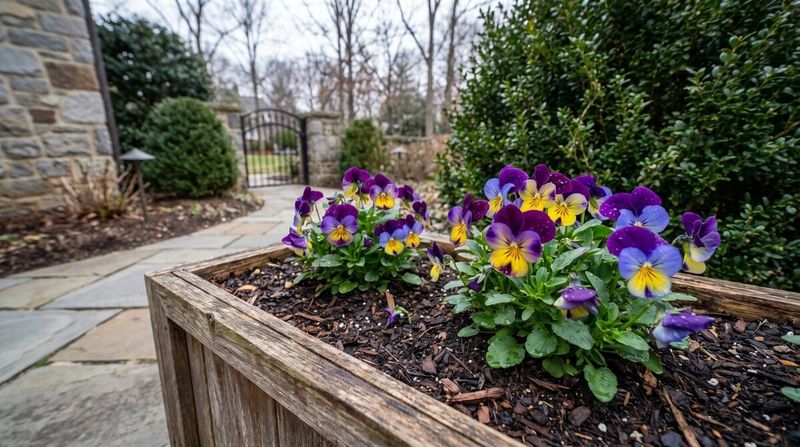
Shade gets blamed first, and it can play a part. Clemson extension guidance recommends full sun when possible and notes that plants in too little light can turn weak and spindly, with fewer flowers.
Still, shade comes in different strengths. A bed under a dense evergreen or against a north wall all winter is very different from a bed that loses sun for a few late hours.
Arkansas Extension says pansies can bloom in light shade, and Utah State Extension says they tolerate partial shade.
So afternoon shade alone does not prove the cause. Look at how much bright light the plants really get across the day, then check temperature, planting date, and drainage before you pick a fix.
Stretched stems plus few blooms is a clue, not a verdict.
Heat can affect growth and flowering
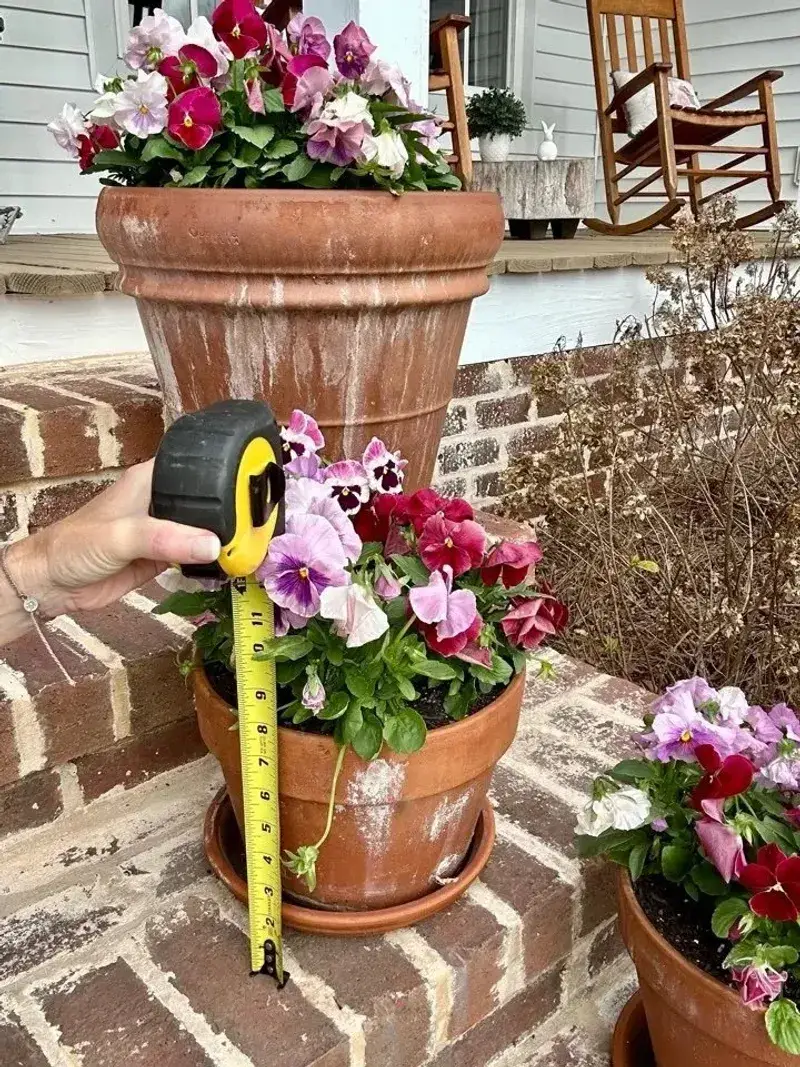
Warm weather can stretch pansies even in a sunny bed. UF/IFAS says pansies thrive when nighttime temperatures stay below 65 degrees F, and it warns that planting too early in hot weather can produce elongated stems.
Planting when it is too cold can hurt flowering instead.
Other extension sources give similar rules of thumb. Arkansas Extension reports that nights above 65 degrees F can make plants stretch and shrink the flowers, and Clemson says pansies grow and flower best below 75 degrees F.
Treat these as regional guides, not hard cutoffs.
A simple clue helps here. If a mild stretch of weather came right after planting, or your beds went in during a warm autumn, heat may be a bigger factor than light.
Jot down nighttime lows for a week and compare them with those numbers.
Move plants out of dense shade and toward winter sun
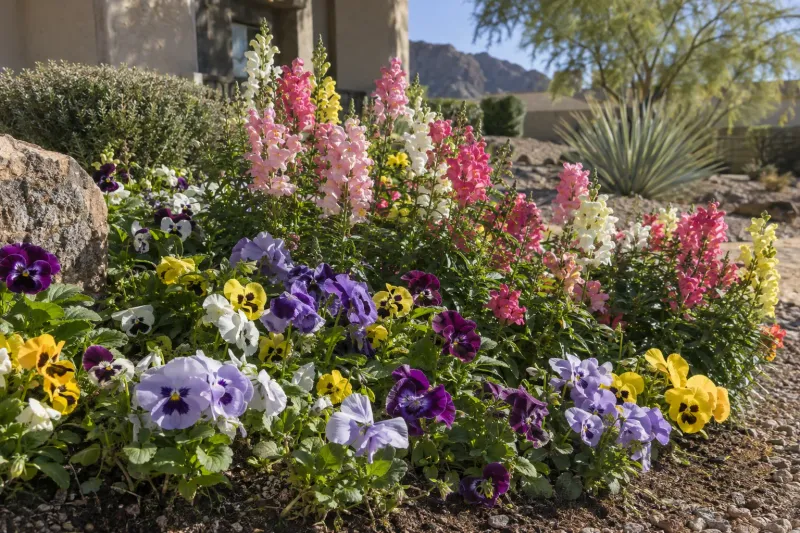
Brighter placement is the most practical change to try first. If your pansies sit in deep, persistent shade, moving them toward a spot with direct sun during cool weather may help them grow sturdier and flower more.
Extension guidance leans this way. Clemson advises full sun when possible, Texas A&M lists pansies as a fall-planted annual for sun, and UF/IFAS recommends full sun for winter annuals.
None of these sources set a magic number of sunlight hours, so skip the stopwatch. Watch your yard on a clear winter day and pick the open spot that stays brightest.
Low winter sun often reaches places that are shady in summer.
Dig up plants with a good root ball, replant at the same depth, and water them in. Recovery is not guaranteed or instant, but the plants will at least be in better light.
Texas and Florida have different winter windows
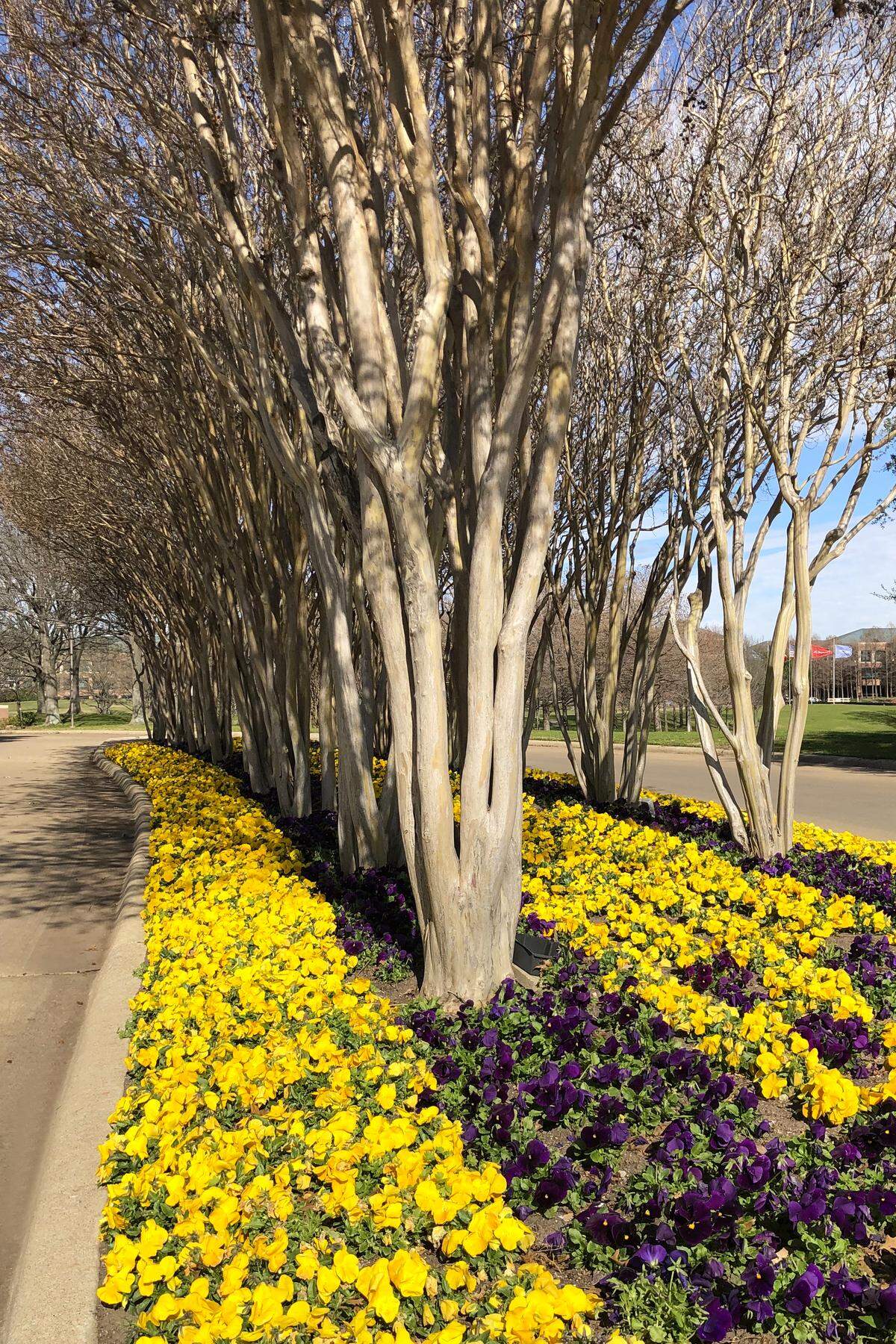
Timing sets expectations. Texas A&M recommends planting pansies in fall as temperatures begin to cool, generally late September through October in most of Texas.
Big state, though: the Panhandle, the Hill Country, and the Gulf Coast do not cool off on the same day, so local weather matters.
Florida runs on its own clock. UF/IFAS advises waiting for cooler weather, and notes that winter annuals in North and Central Florida typically perform until warm weather returns, often April or May.
South Florida gardeners may see a shorter or different window.
Both sources are covered in this Texas A&M seasonal color guide. Use them as starting points and adjust for your own conditions.
Pansies that fade in spring are often just reaching the end of their season, not failing.
Deadhead and trim as supporting steps
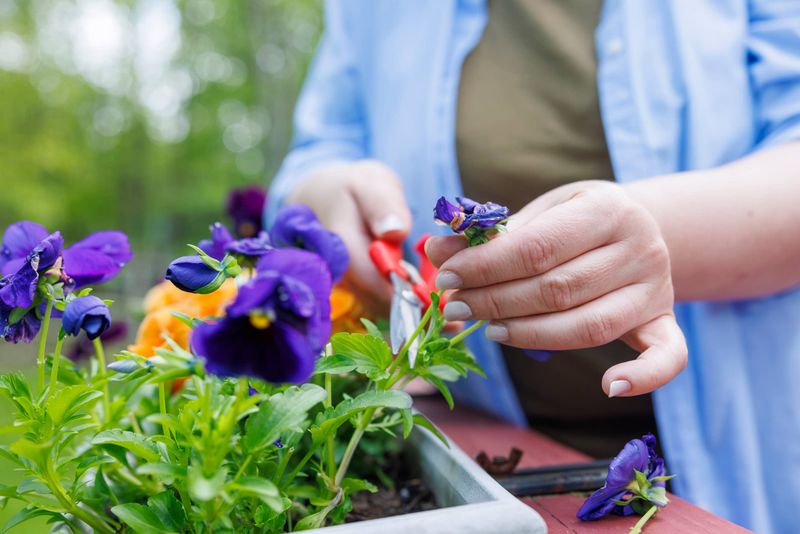
Pinching off spent flowers helps plants keep setting new buds instead of putting energy into seed. UF/IFAS also says established lanky branches can be trimmed periodically.
For bigger tangles, Clemson suggests cutting plants back by about one-third to stimulate new growth. Treat that as an option, not a rule for every plant, and go lighter on plants that are already struggling.
Trimming is tidy-up work. If the bed is still in deep shade or the nights are warm, new growth may stretch again.
Fix the site first, then use scissors to help the plants along.
Check soil moisture and drainage before adding fertilizer
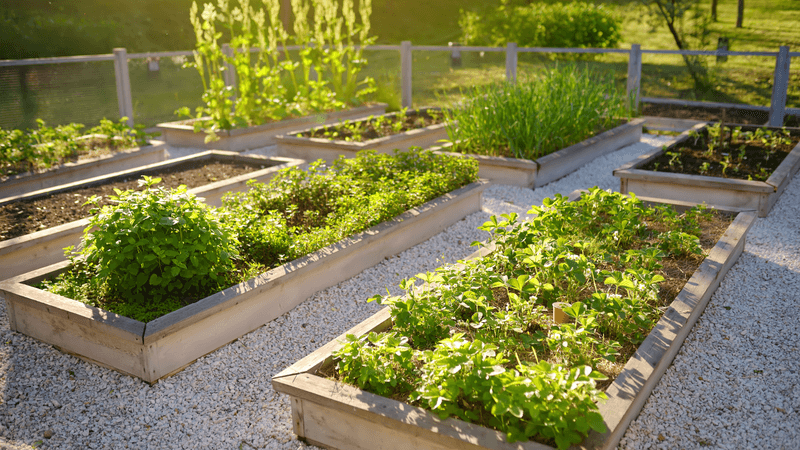
Before reaching for a fertilizer bag, poke around in the soil. Pansies do best in well-drained beds with reasonably even moisture, and soggy ground can stress roots and invite disease.
Florida guidance suggests letting soil dry between waterings to lower disease risk.
If water pools after rain, consider a raised bed or soil amended for drainage. There is no single watering schedule that suits every bed, so check by feel.
Extra feeding is not the default answer to sparse blooms. Nutrient needs vary, and Utah State Extension advises moderate feeding.
Too much nitrogen can promote soft growth, and fertilizer cannot correct shade, heat, or poor drainage. If you do feed, follow the label.
Disease can also affect growth and bloom, as covered in Clemson’s pansy fact sheet, so look for spotted or rotting leaves too.
Start with the site, then reassess
Work in order. First, see whether the plants sit in dense shade, and move them toward brighter winter sun if you can.
Then weigh temperature, planting timing, drainage, and moisture, using the UF/IFAS winter annual guide and Clemson’s fact sheet as checks.
Save deadheading and trimming for after that. No single change guarantees recovery, but each one removes a possible cause.
Give plants a few weeks and look again.