
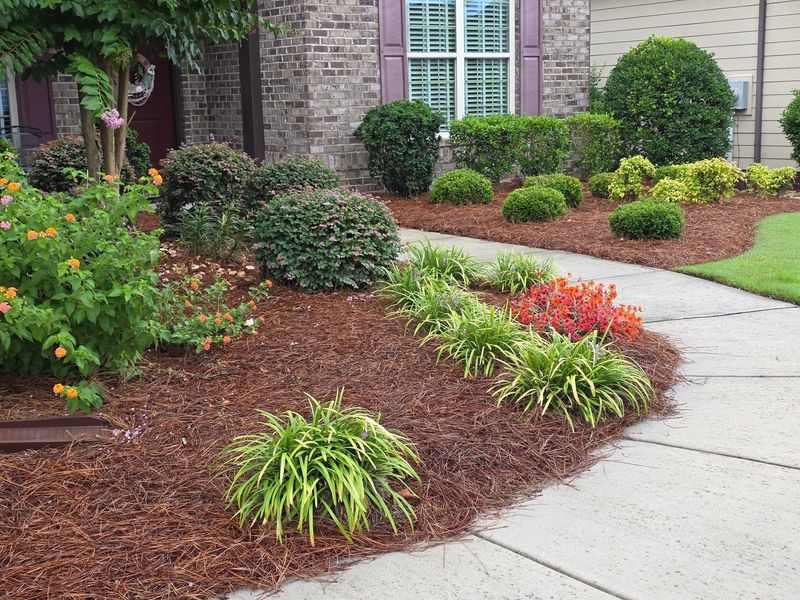
Pine needles feel acidic, so many gardeners worry that a layer of pine straw will ruin their soil. The real story is more interesting, and it can save you from skipping a mulch that works well in Southern yards.
Here is what research says about pH, what pine straw is actually good for, and when you should pick something else.
Surface pine-straw mulch usually has little effect on soil pH
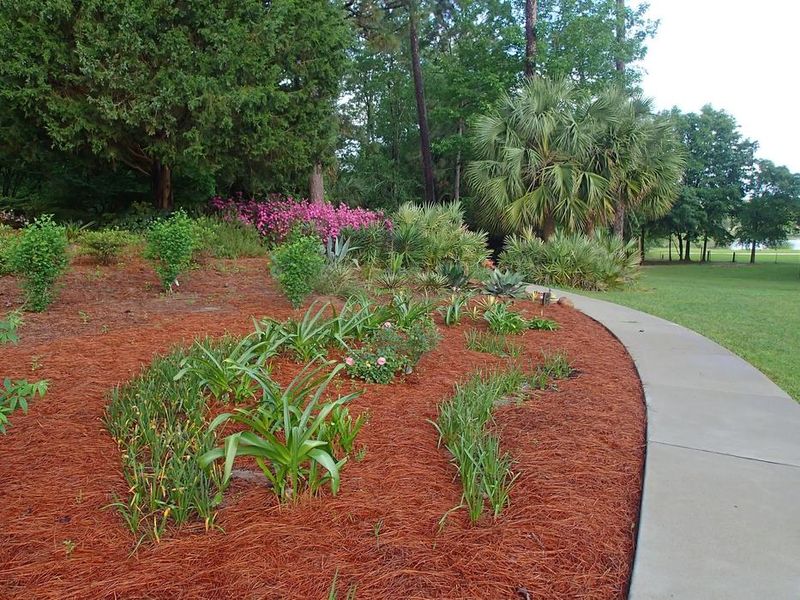
Pine needles are acidic as plant material, but that is not the same as sourcing a whole garden bed. University of New Hampshire Extension explains that pine trees and pine needles generally have little to no measurable effect on soil pH.
Extension advice for ordinary surface mulching points the same way.
So the idea that a layer of pine straw automatically harms nearby plants does not hold up for most home beds. The needles sit on top of the soil, and soil is good at resisting quick pH changes.
Florida gardeners already rely on pine straw, as described by UF/IFAS Extension in Santa Rosa County, as a common landscape mulch.
That said, nobody can promise pH will never budge. Soil type, how long the mulch stays, and repeated use can all matter.
The safe takeaway is that pine straw is a fine mulch for most beds, but it is not a dependable way to acidify soil on purpose.
Studies show pH shifts under some specific conditions
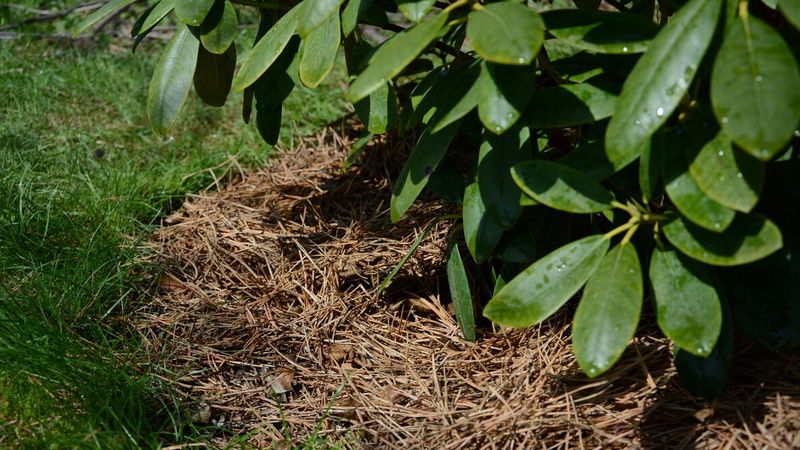
Some experiments did find pH changes, which is why the answer is not absolute. A 1999 Florida study in the Journal of Arboriculture measured soil under pine straw dropping from pH 5.0 to 4.4 over one year.
That test used a 3.5-inch layer at one site where the soil was already acidic, so it does not predict what will happen in your yard.
A USDA Agricultural Research Service study gave mixed results. In its field experiment, pine straw did not increase acidity.
In its container experiment, pine straw and pine bark lowered pH by as much as 0.48 units.
One detail matters a lot here. The USDA researchers mixed the mulch into topsoil to speed up decomposition, which is different from leaving needles on the surface.
The authors concluded that typical pine-straw use has little potential to acidify soil, though they suggested monitoring pH and adjusting only as the plants require.
Poor growth beneath pines does not prove the needles caused it
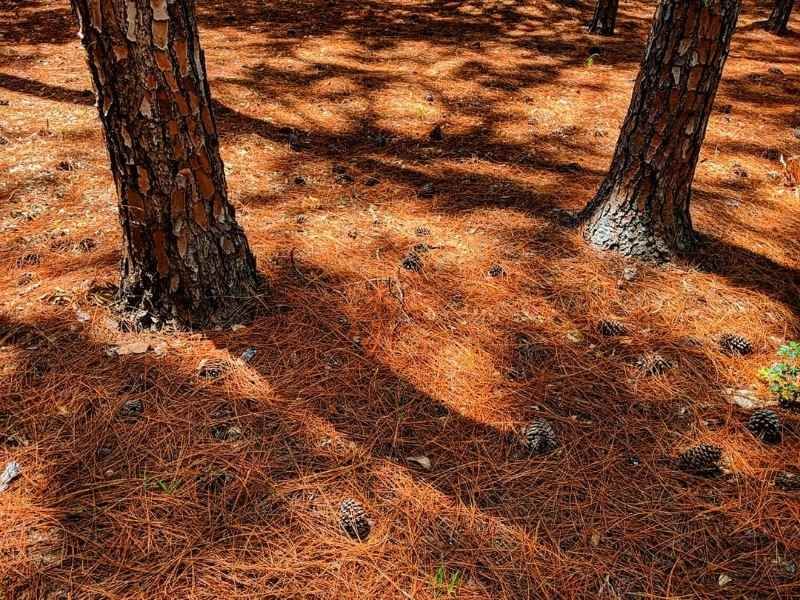
Walk under a big pine and you will often see thin grass and unhappy shrubs. It is tempting to blame the needles, but that skips some other suspects.
According to UNH Extension, shade and competition from shallow pine roots are also plausible reasons plants struggle there. Pines cast dense shade and their roots can soak up water and nutrients near the surface.
Before you decide the needles are the problem, look at the site. How many hours of sun does the spot get?
Are you digging into a web of roots? Does the area dry out fast between rains?
Poor growth alone does not show that the soil turned too acidic, so check those conditions first and choose plants that handle shade and root competition.
Pine straw’s main value is as an organic mulch
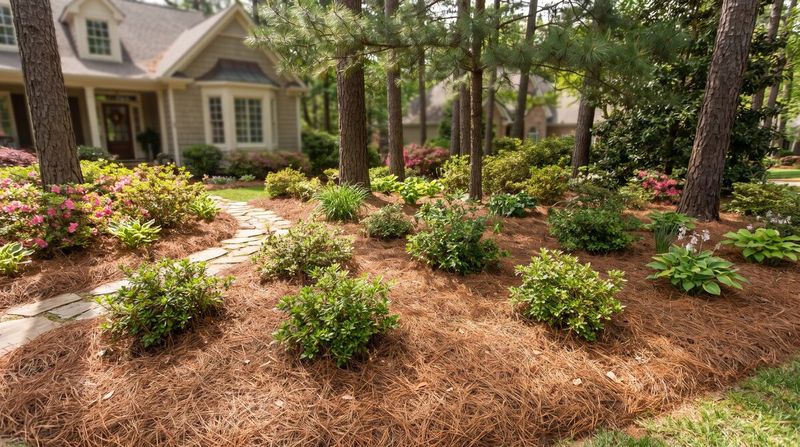
Where pine straw earns its place is as a plain, practical mulch. It is easy to find across the South and spreads quickly over large beds.
Like other organic mulches, it can help conserve soil moisture, limit weeds, moderate soil temperature, and reduce erosion, as noted by UF/IFAS Extension. As it breaks down, it can also add organic matter to the soil.
Texas readers get the same message from Texas A&M AgriLife Extension, which lists pine needles as a useful organic mulch and describes benefits such as moisture retention, weed suppression, and cooler summer soil.
These are potential benefits, not guarantees for every bed. Results depend on how thick the layer is, your weather, and your weeds.
Notice that none of these jobs involve changing soil pH.
Apply a modest layer and keep it away from plant bases
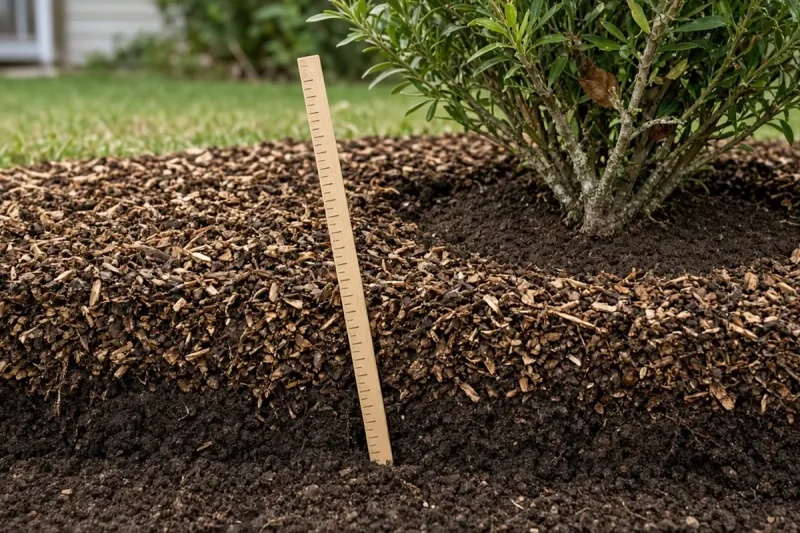
More mulch is not better mulch. UF/IFAS guidance recommends a 2 to 3 inch layer around established plants.
Around seedlings and small vegetables or herbs, use 1 inch or less.
Keep mulch off stems and trunks. Leave a couple of inches of open space around small plants and about a foot around large plants and trees.
Deep mulch or mulch piled against a trunk can contribute to rot and insect problems. Thick mulch around small vegetables and herbs can also cause growth problems.
A simple routine helps. Pull old needles back from the base, spread the new layer evenly, and check the depth with a ruler the first time.
Your eye will learn the right amount after that.
Test soil before trying to change its pH
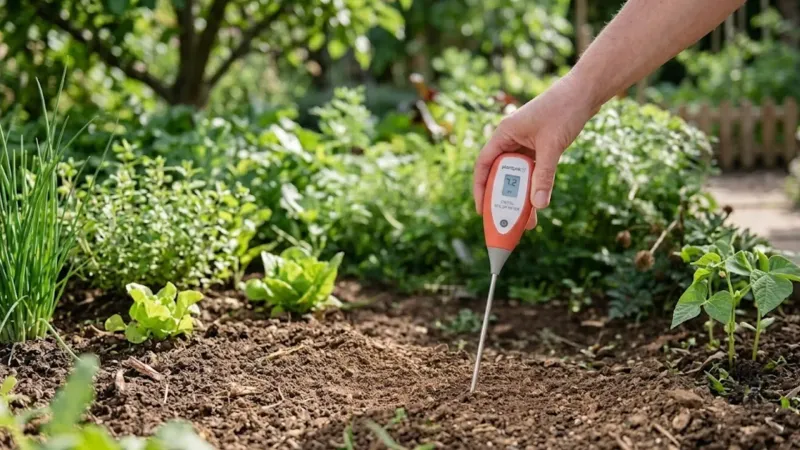
If you grow blueberries or other acid-loving plants, do not count on pine straw to fix your pH. It is not a reliable treatment, and guessing with lime or sulfur can make things worse.
A soil test tells you where you actually stand. UF/IFAS Extension advises testing before adding lime or sulfur, so you only correct a problem that is really there.
Texas readers can use the Texas A&M AgriLife soil testing laboratory, which offers pH analysis. It is one resource, and your local county extension office can point you to other options.
Once results arrive, follow the recommendations for your plants. Retest later to see whether changes are working.
Dry pine straw presents a separate fire concern

Fire risk has nothing to do with soil pH, but it can decide whether pine straw belongs in a spot. UF/IFAS Extension says pine-straw mulch dries quickly and is highly flammable.
Because of that, it advises against using it in firewise landscapes and near combustible building surfaces such as wood siding and decks.
If your home sits near woods or in a wildfire-prone area, choose a less flammable option close to the structure and save pine straw for beds farther away, if you use it at all.
Good mulch choice is about the right material in the right place.