
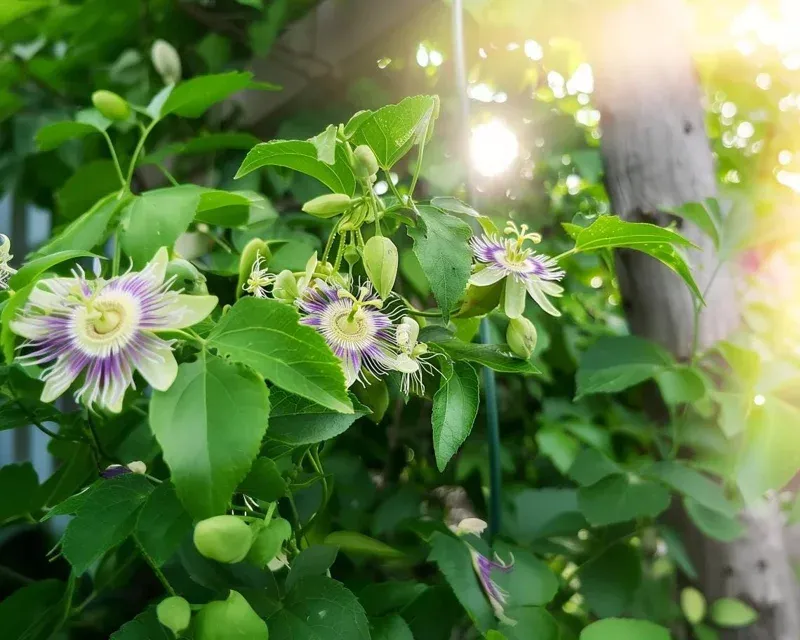
A bare, sunny fence in Florida can do more than hold up a property line. With the right native vine, it can become a place where butterflies lay eggs and caterpillars grow.
Maypop, a passionflower native to Florida, is a strong choice for this job. Here is how to pick it, plant it, and what to expect once it starts climbing.
Which passionflower belongs on a Florida fence?
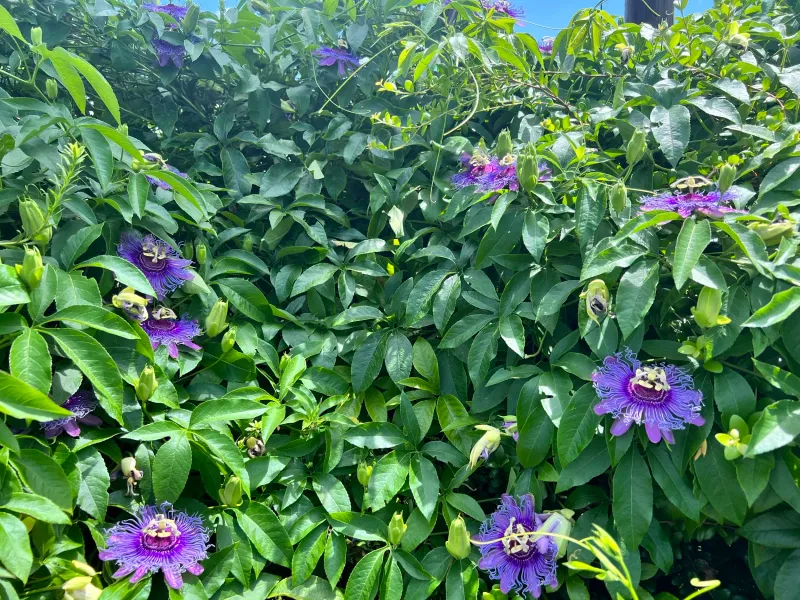
Start with the scientific name: Passiflora incarnata, also called maypop or purple passionflower. It is native to Florida, and UF/IFAS butterfly gardening guidance lists it as a host plant for both Gulf fritillaries and zebra longwings.
That makes it the clearest pick for a fence meant to serve caterpillars.
The word passionflower covers many different vines, and not all of them help these butterflies. A Central Florida Extension guide warns that some passionflower species are unsuitable or potentially invasive.
So check the Latin name on the plant tag before you buy. If the tag only says passionflower or passion vine, skip it until you can confirm the species.
Be especially careful with fruiting vines. UF/IFAS rates Passiflora edulis as a high invasion risk and not recommended in Florida.
UF/IFAS also describes P. foetida as invasive in Florida. Neither one is a good stand-in for maypop.
If your space is small, corkystem passionflower (Passiflora suberosa) is another verified host for both butterflies. The Florida Museum describes it as a spreading vine that may need pruning in tight quarters.
It is a possible alternative, not the same plant as maypop. Maypop itself is vigorous, so it suits a long fence better than a tiny courtyard.
Per UF/IFAS, it grows well in Florida’s sandy soils.
How does a fence vine become a butterfly nursery?
Butterflies are picky about where they lay eggs. Female Gulf fritillaries and zebra longwings look for passionflower vines, and the eggs hatch into caterpillars that eat the leaves.
The UF/IFAS butterfly gardening publication names maypop and corkystem passionflower as hosts for both species.
That is why a vine on your fence matters. It gives the young a place to start and food to grow on.
A Florida Museum profile of the Gulf fritillary describes this same link between the butterfly and its passionflower hosts.
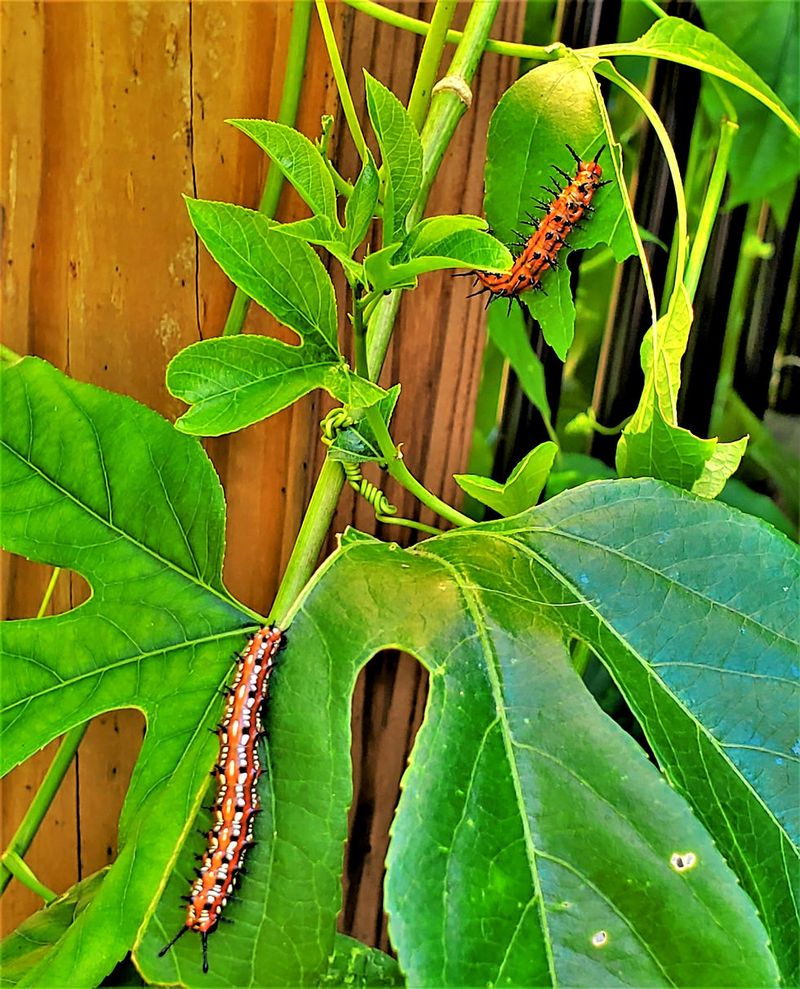
Look closely and you may spot tiny eggs on tendrils or leaves. Gulf fritillary caterpillars are orange with black spines.
Zebra longwing caterpillars are whitish with black spines and a dark head, according to the Florida Museum zebra longwing page.
The vine covers only part of the life cycle. It feeds caterpillars, but adult butterflies drink nectar elsewhere.
Planting it creates a chance for breeding in your yard, not a promise that adults will hang around. Think of the fence as a nursery with an open door.
A sunny, sturdy support gives maypop room to climb
Walk your fence at midday and see how much sun it gets. Maypop wants full sun, according to UF/IFAS.
It tolerates a range of soils, including sand, and handles drought once established. A bare, bright, south-facing fence fits well.
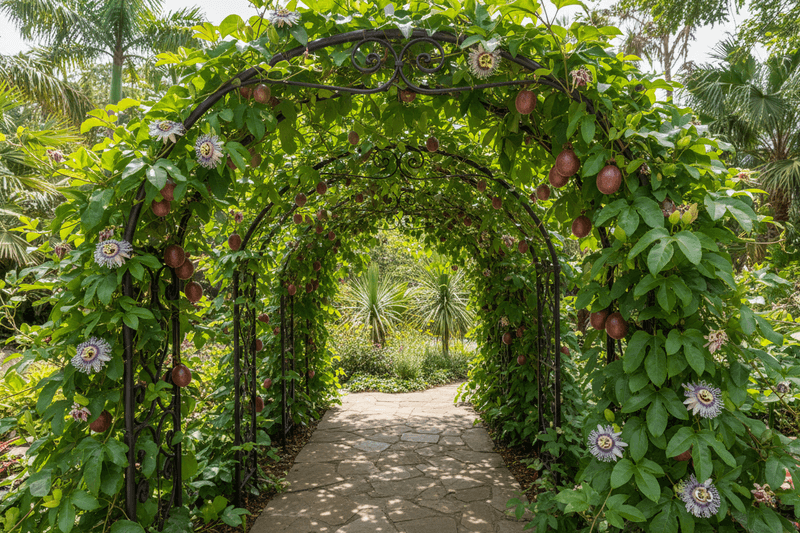
Maypop can climb a fence, trellis, or arbor. It grows quickly and spreads, so leave it room.
UF/IFAS Gardening Solutions advises allowing space and notes that heavy pruning may be needed. Keep it away from small shrubs, thin screens, and neighbors’ plantings.
Check the support before planting. A vine covered in leaves catches more wind, and Florida storms are real.
UF/IFAS passionfruit guidance says a fence or trellis should be strong enough to withstand high winds when covered with vine.
That advice was written for passionfruit production, not tested on maypop. Still, it is sensible for any densely covered fence.
Replace rotted boards, tighten loose posts, and add wire or string so tendrils have something thin to grab.
Plant at the base of the fence, water regularly until roots settle, then ease off.
Caterpillar feeding and vigorous growth call for hands-on management
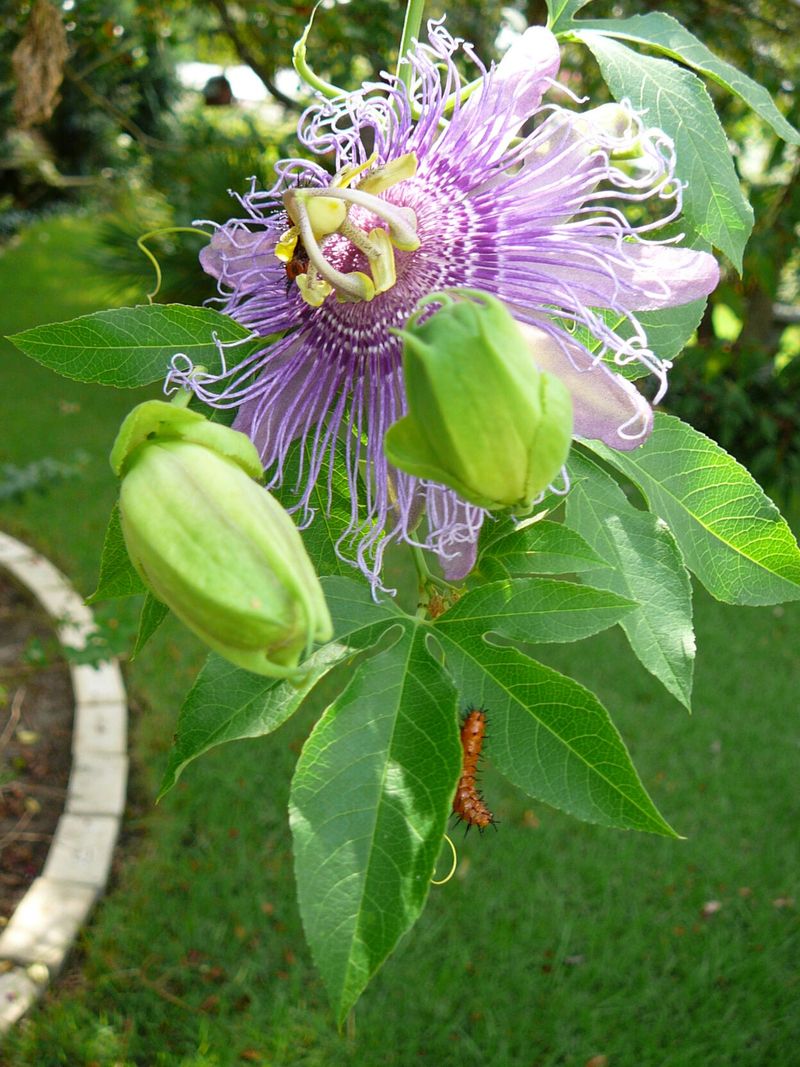
Chewed leaves are the point. Caterpillars eat maypop foliage, and UF/IFAS notes they can slow vine growth.
Holes and ragged edges mean the vine is doing its job as a host, not that the planting failed. Leave the caterpillars alone rather than removing or killing them to keep leaves pretty.
The other half of the job is controlling the vine. Maypop can spread by suckers and seed, and UF/IFAS Gardening Solutions says it may need regular or heavy pruning.
Pull or cut stray shoots that pop up in lawn or beds. Trim stems that reach past the fence line.
Native does not mean maintenance-free. This vine will not stay tidy on its own, and a fence that looks a bit rough in summer is normal when caterpillars are feeding.
Small yards deserve an honest look. If you cannot keep up with trimming, maypop may be too much.
Corkystem passionflower is a possible alternative, though the Florida Museum notes it also spreads and may need pruning.
Plan a quick check every few weeks during the growing season. Prune stems that grow beyond their space, and trim in spots where no eggs or caterpillars are present.
What else do adult butterflies need nearby?
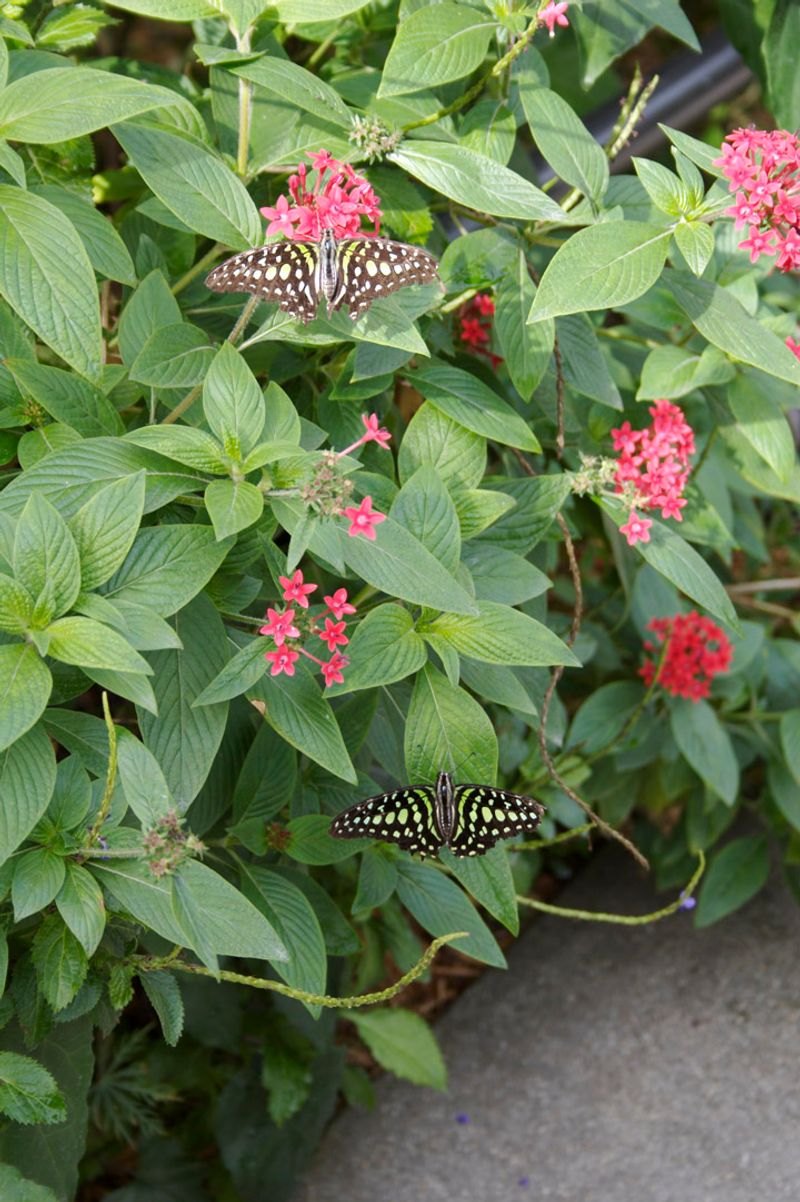
Adults have different needs than caterpillars. Gulf fritillaries feed on nectar, and zebra longwings feed on nectar and pollen, as the Florida Museum explains.
The Gulf fritillary page describes their nectar feeding too. A passionflower alone does not cover all of that.
UF/IFAS ButterflyScaping guidance separates host plants for caterpillars from nectar plants for adults. Add flowering plants within sight of the fence.
Choose Florida-friendly bloomers suited to sun and sandy soil, and aim for flowers that open at different times so something is blooming across the warm months.
Group nectar plants in clumps rather than scattering single plants. Butterflies find a patch of color more easily than a lone bloom.
Place them where they get sun and a bit of shelter from wind.
Pesticides deserve extra caution. A UF/IFAS Extension article advises protecting pollinators by avoiding pesticide use when passionflowers are blooming.
Sprays near the fence can also reach eggs and caterpillars, so do not treat them as harmless to butterflies.
Once the vine is growing, shift your attention from the fence to the flower beds around it.
A host plant invites butterflies; it cannot promise they will stay
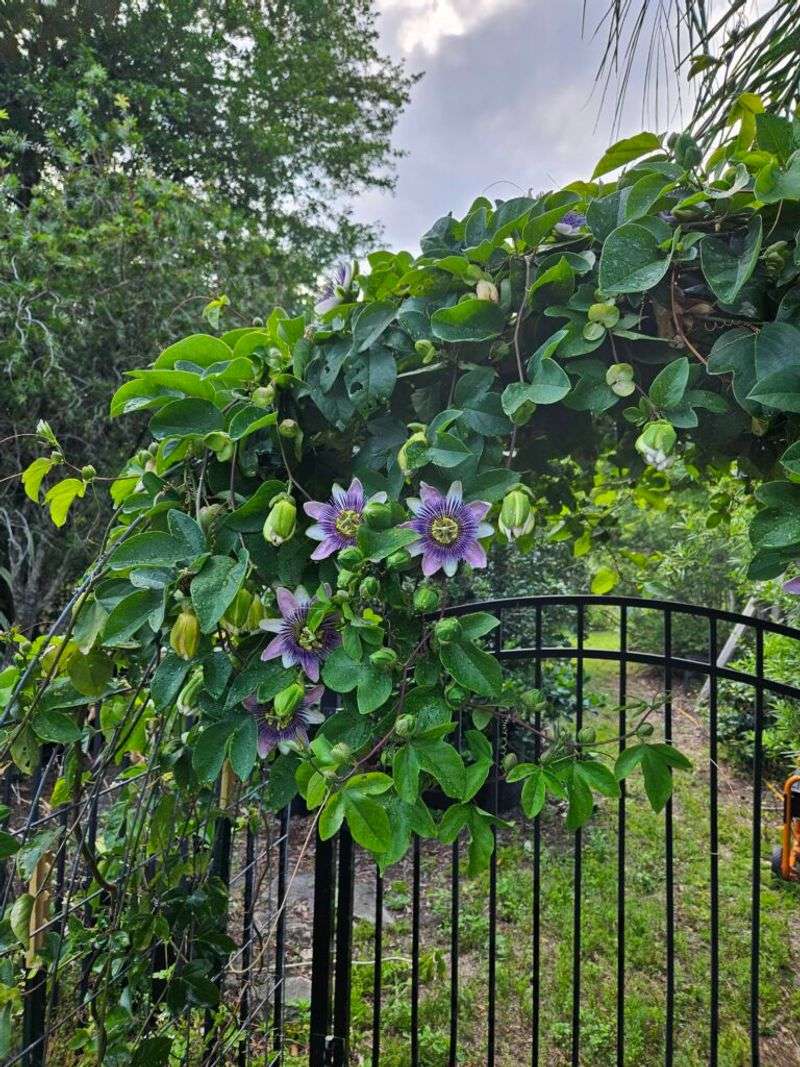
A correctly identified native passionflower gives butterflies a reason to stop and lay eggs. Nearby blooms feed the adults.
Beyond that, visits vary. The Florida Museum describes Gulf fritillaries as migratory, while zebra longwings have multiple generations a year.
Neither habit means a butterfly will settle at your fence for good.
The UF/IFAS host plant list is the best guide for choosing the vine. Pick maypop if you have a sunny fence and room to prune.
Some seasons will bring crowds of caterpillars, and others will bring a few. Either way, you have built a place worth finding.