
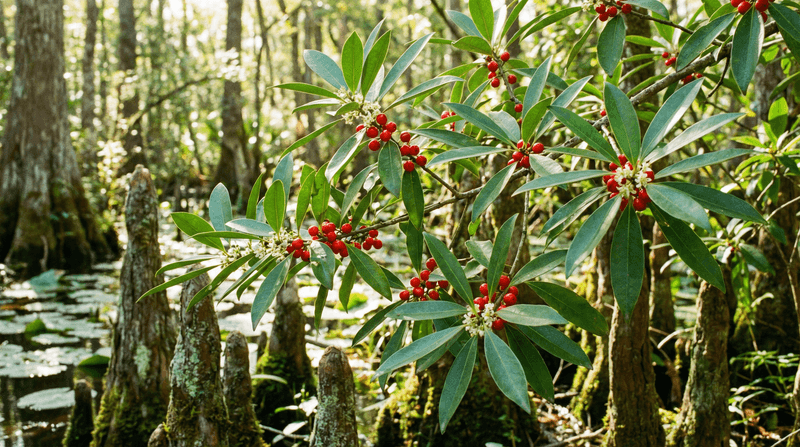
A winter yard can look green and still leave birds with little to eat. Florida native plants offer fruit, insects, and shelter that help visiting robins and warblers find a meal.
These seven choices build a food supply across the cooler months, though new plants need time to grow before they produce much. Match each plant to your part of Florida, and you can turn an ordinary border into a useful winter stop.
1. Wax Myrtle
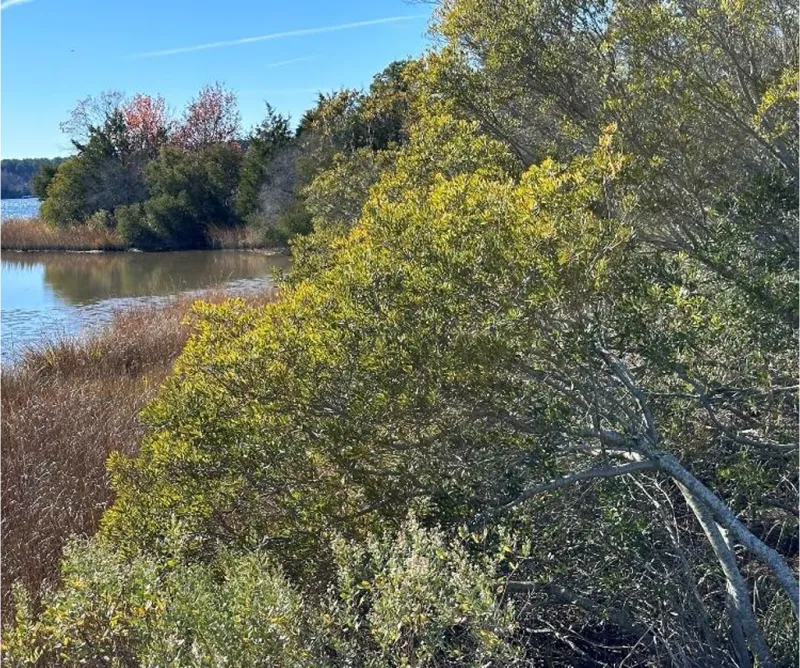
A yellow-rumped warbler has a special reason to visit a wax myrtle: it can digest the waxy coating on the small fruits. That makes this evergreen shrub especially useful when winter insects are harder to find.
Its branching growth also gives small birds a sheltered place to pause between meals.
Wax myrtle, Morella cerifera, grows across Florida and usually reaches about 10 to 20 feet tall, sometimes more. Give it sun or partial shade and enough room to develop naturally.
It handles a range of soils, including sandy ground, but newly planted shrubs still need regular watering while their roots spread.
Buy a female plant with visible fruit if winter bird food is your main goal. Male and female flowers occur on separate plants, so a compatible male nearby is needed for reliable fruit production.
Use several plants as a loose screen rather than clipping them into a tight wall. Heavy shearing removes fruiting growth and reduces the sheltered feeding space.
This is the list’s strongest direct match for yellow-rumped warblers, although other warblers will mostly search its foliage for insects.
2. Yaupon Holly
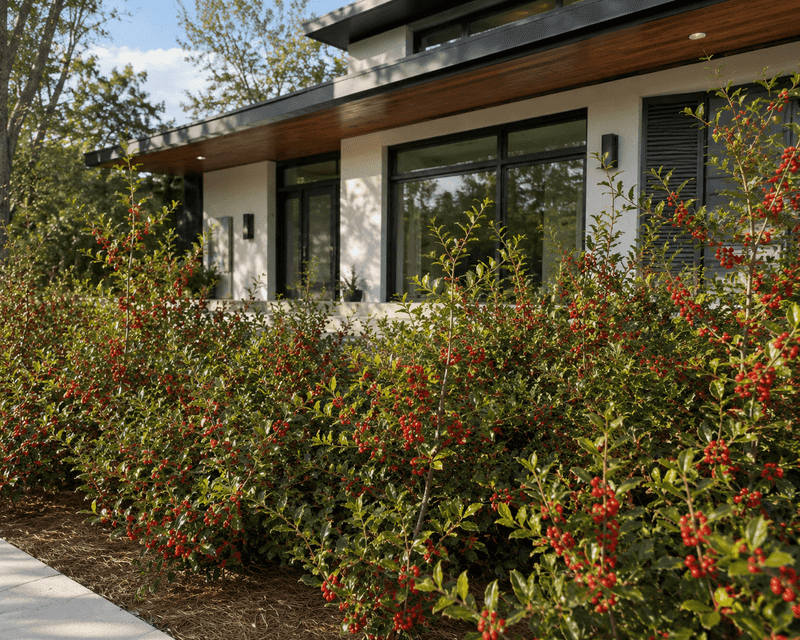
Bright red fruit can turn a quiet corner into a busy feeding stop once robins discover it. Yaupon holly holds its small fruits into winter, although the timing of a bird visit depends on local food supplies.
A flock may leave the branches untouched for weeks, then clear them surprisingly fast.
Ilex vomitoria is a practical choice for much of North and Central Florida. The standard species can become a large shrub or small tree, often 15 to 20 feet tall.
It tolerates sandy soil, sun to partial shade, and dry spells after establishment, making it useful near a driveway or along a broad property border.
Choose a fruiting female and make sure a male yaupon grows nearby for pollination. Do not assume a dwarf foundation cultivar will supply berries; some commonly sold selections are male.
For the best wildlife value, allow a full, branching crown instead of repeatedly shaping it into a narrow column. Robins gain fruit, while warblers can hunt small insects among the leaves.
Plant where fallen fruit is welcome, rather than directly above a pale walkway or frequently used patio.
3. Dahoon Holly
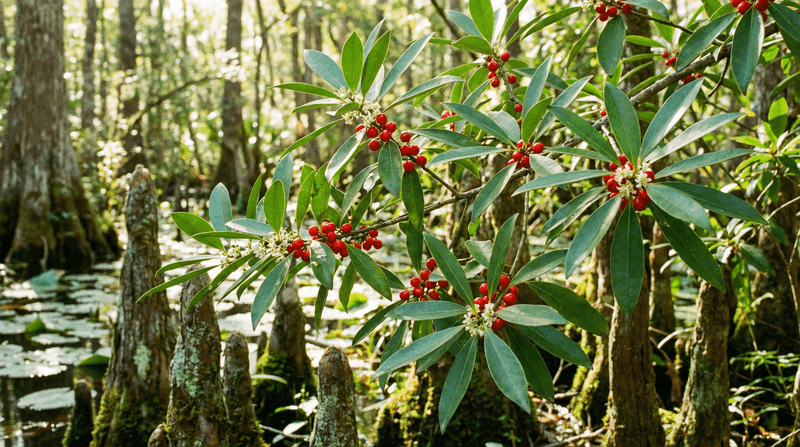
That damp patch near the downspout could become one of the yard’s better bird-feeding spots. Dahoon holly brings evergreen cover and red fruit to places that stay moister than a typical sandy planting bed.
It is a better fit for that job than a shrub that needs sharp drainage.
Native across much of Florida, Ilex cassine commonly grows about 20 to 30 feet tall. Plant it in sun or partial shade, allowing space for a small tree rather than squeezing it beneath low windows.
A rain-garden edge or naturally moist border can work well, provided the planting matches the site’s actual flooding conditions.
Female trees produce the fruit, and a male dahoon nearby supports pollination. Ask the nursery for a known female if berries are a priority.
Fruiting branches can attract robins and other fruit-eating birds during the cooler season.
Warblers benefit mainly from insects and protective foliage, not a guaranteed berry meal. Avoid routine insecticide treatments that strip away that food source.
On a very dry, exposed lot, choose another plant from this list unless you can provide the moisture dahoon needs, especially during establishment.
4. American Beautyberry
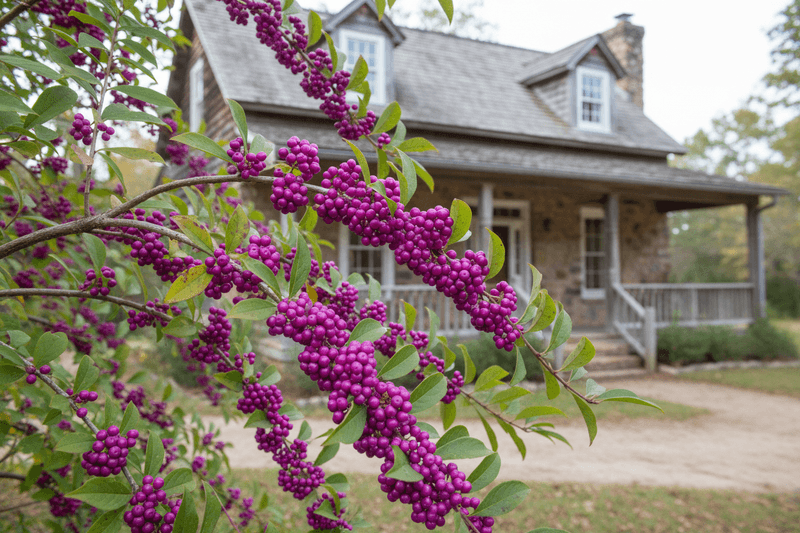
Purple berries wrapped around arching stems make this shrub look almost decorated by hand. American beautyberry supplies a burst of fruit in late summer and fall, with some crops lasting into early winter.
Think of it as the opening course in your winter habitat, not the plant that will carry the whole season.
Callicarpa americana grows throughout Florida and usually reaches roughly 4 to 8 feet tall. Its loose shape suits a woodland edge, an informal side-yard border, or the space beneath taller trees.
Partial shade often gives it a comfortable balance of light and moisture, though it can grow in sunnier sites with suitable care.
Robins and other fruit-eating birds may take the berries before deep winter arrives. That is useful feeding, even if the branches are bare by the time you expected a display.
Pair beautyberry with hollies or wax myrtle to spread food availability across more months.
Keep fallen leaves beneath the shrub where practical, giving insect-hunting birds another place to forage. If pruning is needed, do it in late winter before spring growth.
Repeated trimming during the growing season sacrifices the flowering stems that would otherwise develop fruit.
5. Sugarberry
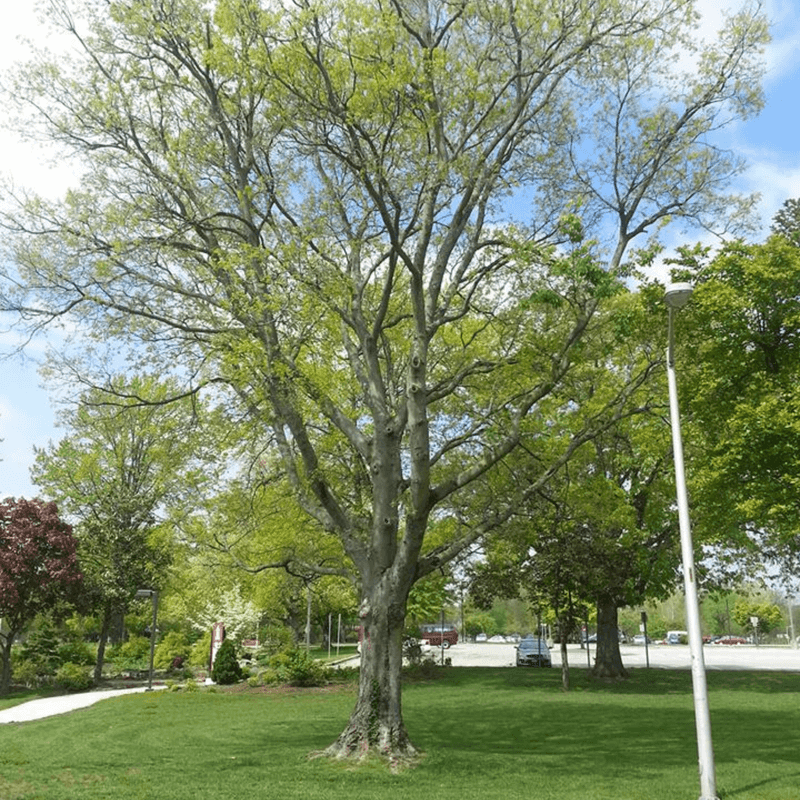
For a robin flock, a mature shade tree offers something a small shrub cannot: room for many birds to feed at once. Sugarberry produces small fruits that ripen in fall and can remain available into winter.
Its spreading branches also give visiting birds a place to watch the yard before dropping down to forage.
Celtis laevigata is a Florida native best considered for a roomy property, especially in North and Central Florida. It can reach 50 to 70 feet tall, so keep it away from overhead wires and allow generous clearance from buildings.
Sun to partial shade and a site with adequate rooting space matter more than trying to keep it small through pruning.
The fruit supports birds, while the tree’s leaves support insects during the growing season. In winter, warblers may inspect bark and twigs for small prey.
A leafy ground layer beneath the canopy adds another feeding zone.
Skip this choice if your only planting space is a narrow strip beside the house. Where there is room, start with a healthy nursery-grown tree and establish its structure early.
Expect a long-term habitat investment, not a heavy fruit crop immediately after planting.
6. Southern Red Cedar
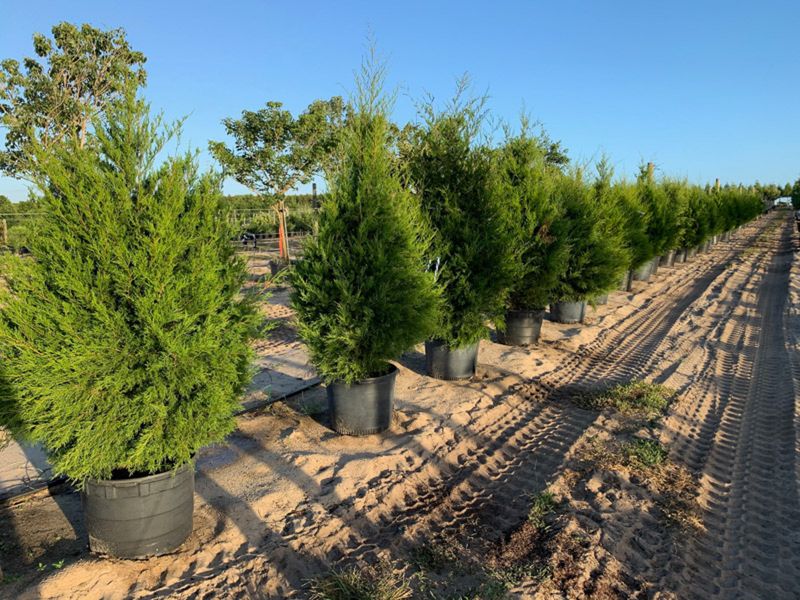
When a cool front blows through, dense evergreen branches offer birds a welcome windbreak. Southern red cedar combines that shelter with blue, berry-like cones on female trees.
Those cones are food for several fruit-eating birds, including robins, when a crop is available.
Juniperus virginiana var. silicicola is particularly useful in suitable coastal and well-drained Florida landscapes. It can become a substantial tree, often 30 to 50 feet tall, so plan for its mature size.
Give it full sun and avoid low spots where water stays around the roots.
Ask for a female tree if food production is the goal, with a male growing nearby for pollination. Nursery stock may not always be labeled by sex, so a cone-bearing specimen makes the choice clearer.
Fruiting varies with maturity and growing conditions.
Use cedar as a background tree or a loose wind-screen planting, not as a shrub forced into a small bed. Its cover complements the more open branches of deciduous plants nearby.
Warblers may search the foliage for insects, while robins use the cones, creating two different feeding opportunities in the same tree.
7. Live Oak
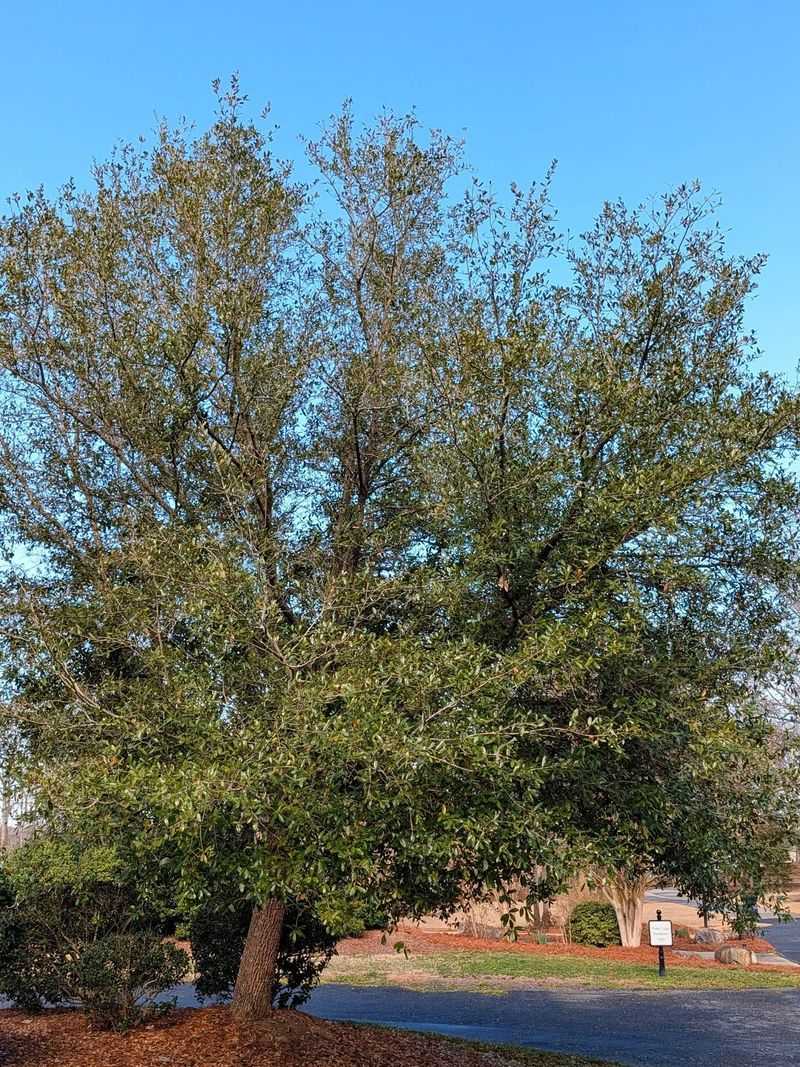
Not every bird meal needs to look like a berry. Live oak earns its place by supporting insects and providing a large, sheltered feeding area.
Most wintering warblers depend heavily on insects and other small prey, so a yard built only around fruit misses a major part of their diet.
Quercus virginiana is a long-term choice for a large Florida yard. A mature tree can stand 40 to 80 feet tall with an even wider crown.
Plant well away from buildings, pavement, and utilities, and arrange early structural pruning with a qualified arborist rather than waiting for large branch problems.
Warblers work through leaves, twigs, and bark, searching for food. Robins are more likely to benefit from the ground below, where fallen leaves shelter insects and other invertebrates.
Keep a broad mulched or leafy area beneath the canopy instead of running lawn right up to the trunk.
A newly planted oak will not feed birds like a mature one this winter. Pair it with established fruiting shrubs, keep insecticides out of the habitat planting, and add a shallow birdbath cleaned regularly.
Together, those steps build a yard with food, water, and cover rather than a single short-lived attraction.