

Put the pruners away this fall and give your crape myrtle a little mulch instead. If the ground around the roots is bare, a thin blanket of mulch is the simplest late-season gift you can offer.
It will not guarantee bigger blooms, but it is safe, cheap, and easy to do. Here is what to do, what to skip, and why.
Routine fall pruning is not what makes a crape myrtle bloom
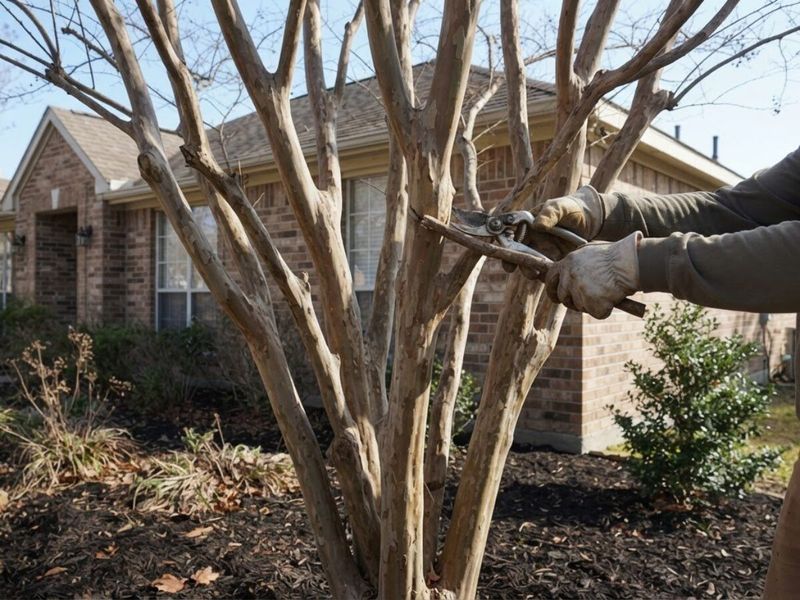
Crape myrtles flower on the growth they make in the current season, so they do not need routine pruning to bloom. Both University of Georgia guidance and Virginia Tech Extension treat pruning as optional.
Cutting in early fall can backfire. Routine pruning at that time can stimulate soft new growth that may not harden before a freeze, and tender shoots are the ones that get damaged first.
If your tree truly needs shaping, say a crossing branch or a dead limb, wait for late winter or early spring, before growth resumes. Until then, leave the shears in the shed and let the plant settle into dormancy on its own schedule.
If the root area is bare, mulch it lightly

Here is the one fall job worth doing. If the soil around your crape myrtle is bare, spread a 2 to 3 inch layer of mulch over the root area.
Mulch can conserve soil moisture and moderate soil temperature, as noted in University of Maryland Extension guidance. That is root-zone care, and it is useful on its own terms.
Keep the mulch several inches away from the trunk and stems. Piled-up mulch holds moisture against the bark, and deeper is not better, so resist the urge to overdo it.
No single late-fall treatment, mulch included, is established to reliably make next summer’s flowers bigger or more plentiful. Think of it as a tidy, protective blanket rather than a bloom booster.
Water according to soil moisture, not the calendar
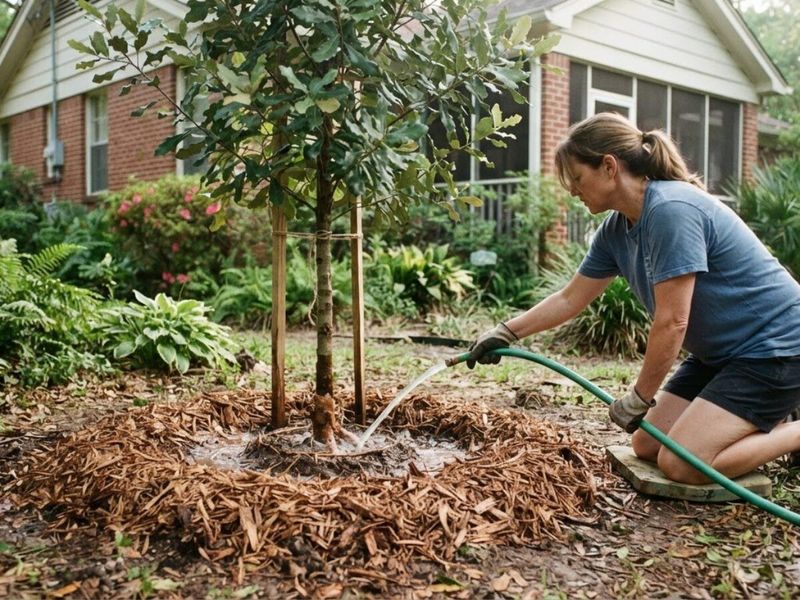
Poke a finger or trowel into the soil before you reach for the hose. A fixed schedule ignores rainfall, soil type, and how old the tree is, so checking moisture tells you far more.
Newly planted crape myrtles need closer monitoring because their roots have not spread yet. Established plants generally need extra water mainly during dry spells, according to Maryland Extension.
There is no magic one-time fall drink that enlarges next summer’s blooms. The flowering link is narrower: UGA guidance says watering during dry periods in the flowering season can enhance flowering.
So water when the soil says it is dry, and skip it when recent rain has done the job.
Fall fertilizer is no shortcut to more flowers
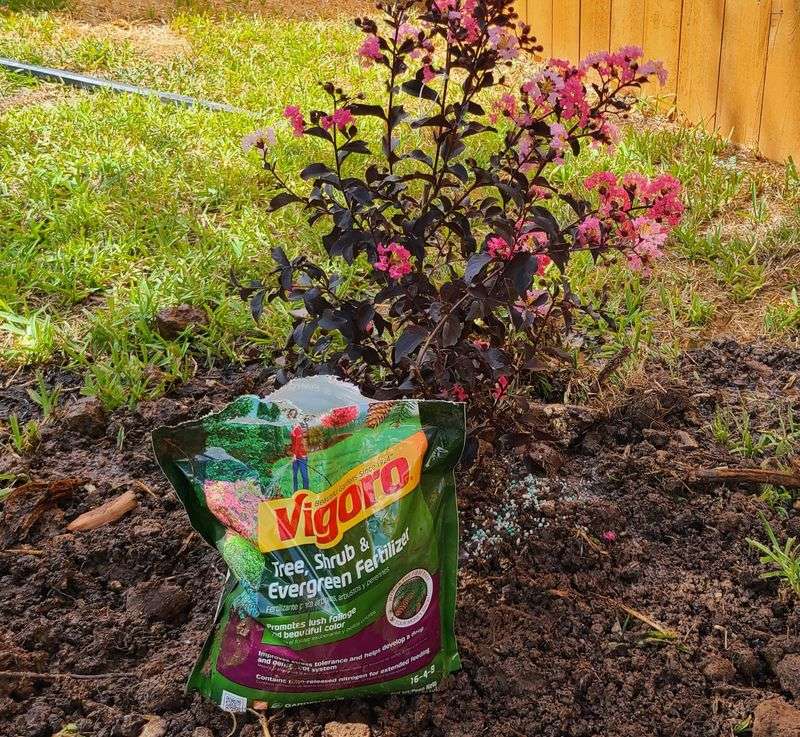
Tempting as it is to feed a plant before winter, late-fall fertilizer is not a bloom-boosting tactic for crape myrtles. UGA guidance places fertilizing of established plants in spring.
Too much fertilizer can also push leafy growth at the expense of flowers, which is the opposite of what you want. The University of Georgia publication warns about this directly.
Maryland guidance adds a useful check: fertilize only when a soil test shows a deficiency, as described by University of Maryland Extension. If you are curious about your soil, a test is the place to start, and it can wait until spring.
What shapes next summer’s floral display?
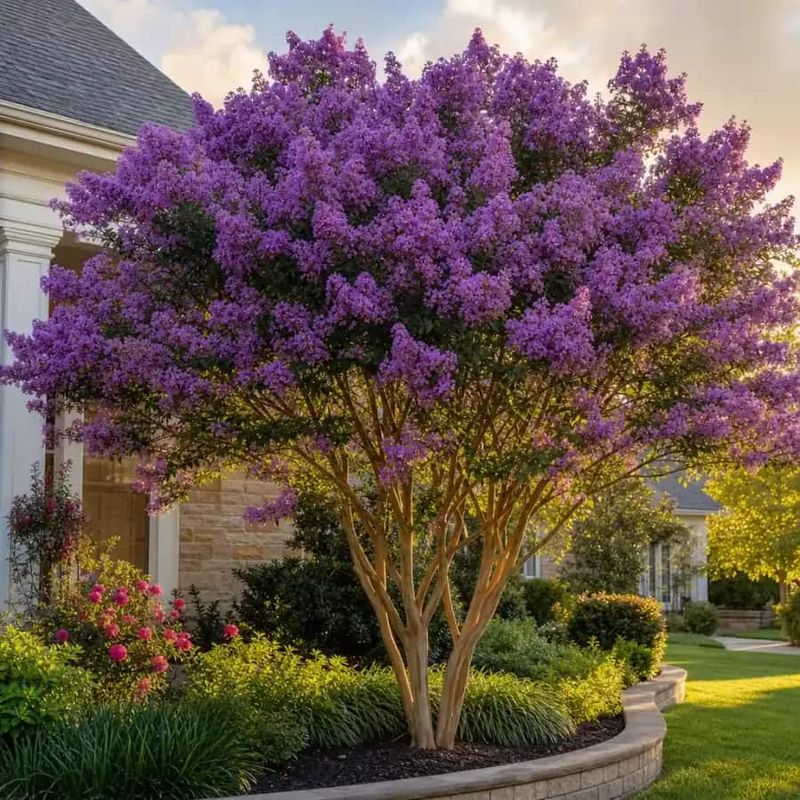
Instead of a fall trick, look at conditions the plant lives with all season. Full sun and adequate moisture during dry growing-season periods are the more defensible factors, according to UGA and Missouri Extension.
It also helps to be clear about what bigger blooms means. Larger individual clusters, more clusters, and a longer flowering season are three different outcomes, and one practice will not necessarily deliver all three.
Virginia Tech Extension reports that unpruned plants may carry more clusters and bloom longer. Topping, on the other hand, can reduce bloom days and produce weak, top-heavy shoots.
Winter risk depends on where the plant grows
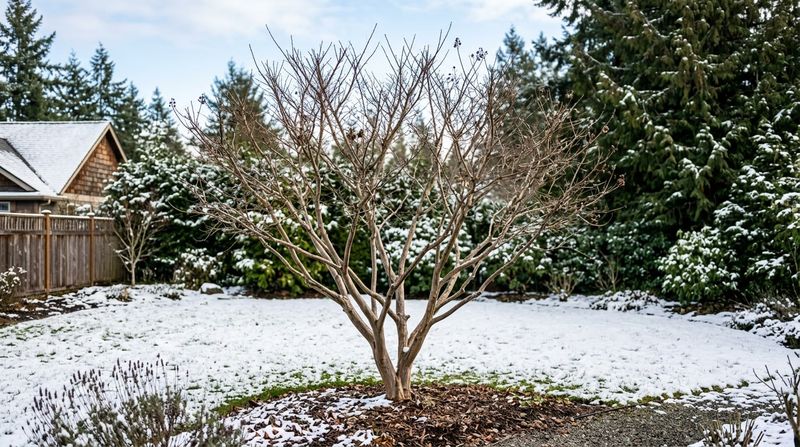
A crape myrtle in Georgia faces a very different winter than one in the Midwest. Cold tolerance varies by location and cultivar, so one set of winter instructions cannot fit every tree.
Maryland Extension lists in-ground hardiness at roughly USDA Zones 6/7 through 9. Missouri Extension notes that newer cultivars differ in cold tolerance and that severe freezes can harm plants that are not fully dormant.
So check your zone and the cultivar name on your plant tag before deciding anything. Skip blanket advice about wrapping, covering, or special watering, and let your local conditions guide you.
Keep the fall plan simple

The to-do list is short. Leave routine pruning for late winter or early spring, hold off on fertilizer until spring, and mulch the root area if it is bare, 2 to 3 inches deep and clear of the trunk.
Water when you find the soil dry, paying extra attention to young trees. Guidance from UGA and Maryland Extension backs that restrained approach.
Mulch protects the roots, but it does not promise a showier summer. A calm fall is still good care.