
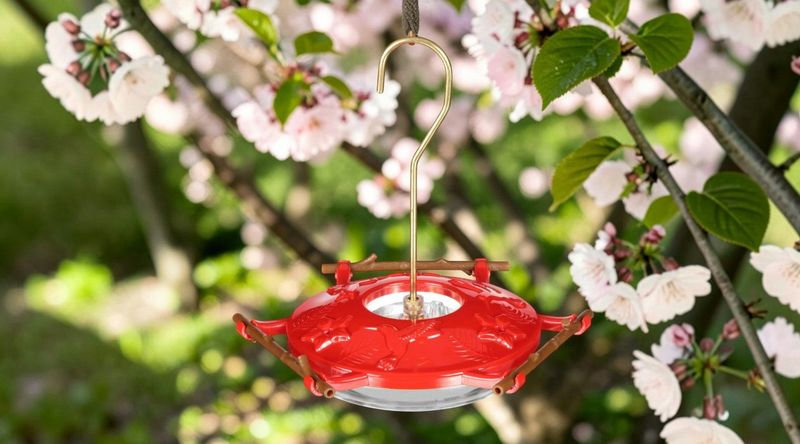
You hung the feeder, filled it with nectar, and waited. Meanwhile, the neighbors have hummingbirds buzzing around their yards all day.
Before you give up, it is worth checking the small feeding ports, because residue or blockages there are a maintenance problem you can fix. Here is how to inspect, clean, and refill a feeder in Southern heat, and what cleaning can and cannot tell you.
A quiet feeder does not identify the cause
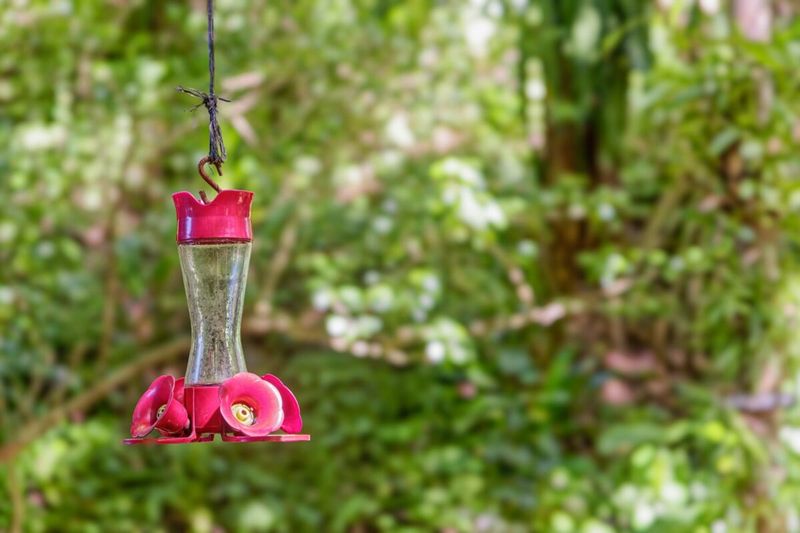
Few things feel as puzzling as a full feeder with no visitors while a neighbor’s feeder stays busy. A quiet feeder is a symptom, though, and it does not point to one cause.
According to Cornell Lab of Ornithology guidance on fewer hummingbirds, activity naturally shifts with the seasons and migration. Territorial birds can chase others away from a feeder.
Blooming wildflowers and other nearby food can also pull birds elsewhere for a while.
So a dirty feeder is one possibility, not a diagnosis for every quiet yard. This article walks you through the maintenance checks worth doing in Florida, Texas, and the rest of the South.
Cleaning is sensible care, but it cannot promise that birds will come back.
Inspect the ports, but do not assume crystals caused the slowdown
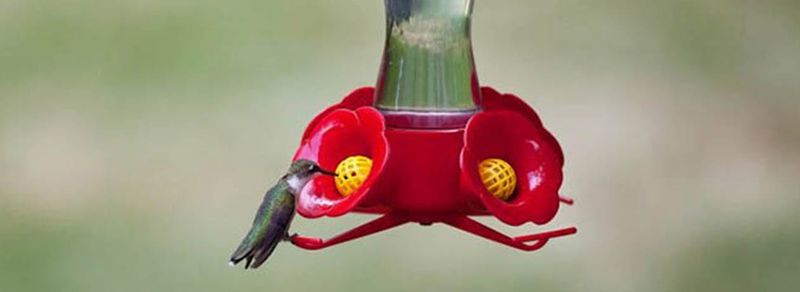
Start by looking closely at the feeding openings, not just the nectar. Check the reservoir, base, guards, and tiny crevices too.
Residue, debris, or a physical blockage can hide in spots a quick glance misses.
Keep a few terms separate. Visible residue, a port that is truly blocked, and microbial growth are not the same thing.
A 2019 study of feeder microbes found plenty of microbes in feeder solutions, and most were not known to cause disease. It did not test whether blocked ports make birds leave, and the effects on hummingbird health remain uncertain.
Crystallized sugar is also not a proven reason birds stop visiting. Treat any deposits as something to scrub away.
A local expert quoted by Texas A&M AgriLife says birds may avoid spoiled nectar, which is a good reason to keep everything fresh and clean. And as Cornell’s cleaning advice suggests, a feeder that is hard to take apart is the one most likely to hide grime.
Take the feeder apart and scrub every opening
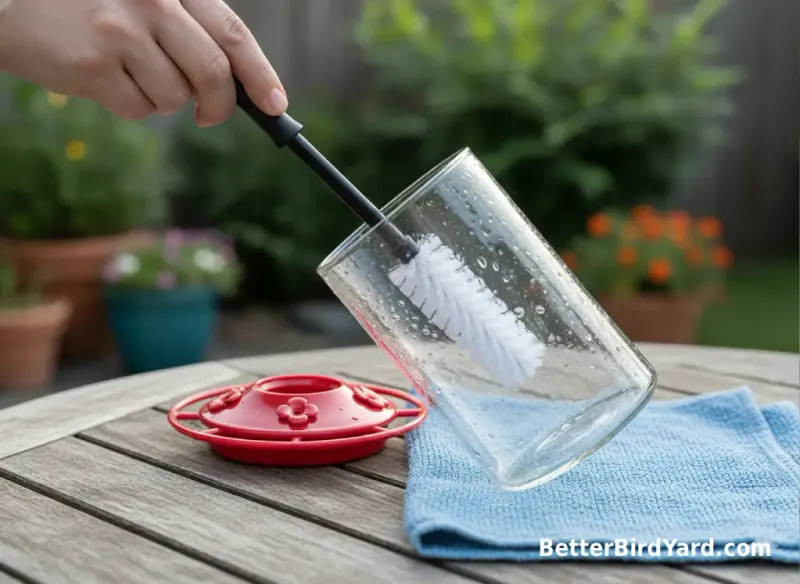
Begin by emptying the feeder and taking it fully apart. Scrub the reservoir, base, feeding ports, guards, and crevices with hot water and a bottle brush.
A small brush sized to fit the ports reaches spots a larger brush cannot.
Rinse thoroughly, then let every part dry before refilling. Cornell Lab recommends disassembling and brushing at least weekly, and Audubon also suggests more frequent cleaning in hot weather.
Sources do not agree on one exact interval, so treat weekly as a floor and clean sooner when nectar looks off.
For a low-residue routine, scrubbing and rinsing do most of the work. UF/IFAS advises against soap and chlorine bleach for Florida feeders, and always follow your feeder maker’s care instructions.
If you ever use bleach, CDC guidance warns that mixing it with vinegar or any other cleaner can release dangerous vapors. Never combine them, and rinse very well.
Make nectar with plain white sugar
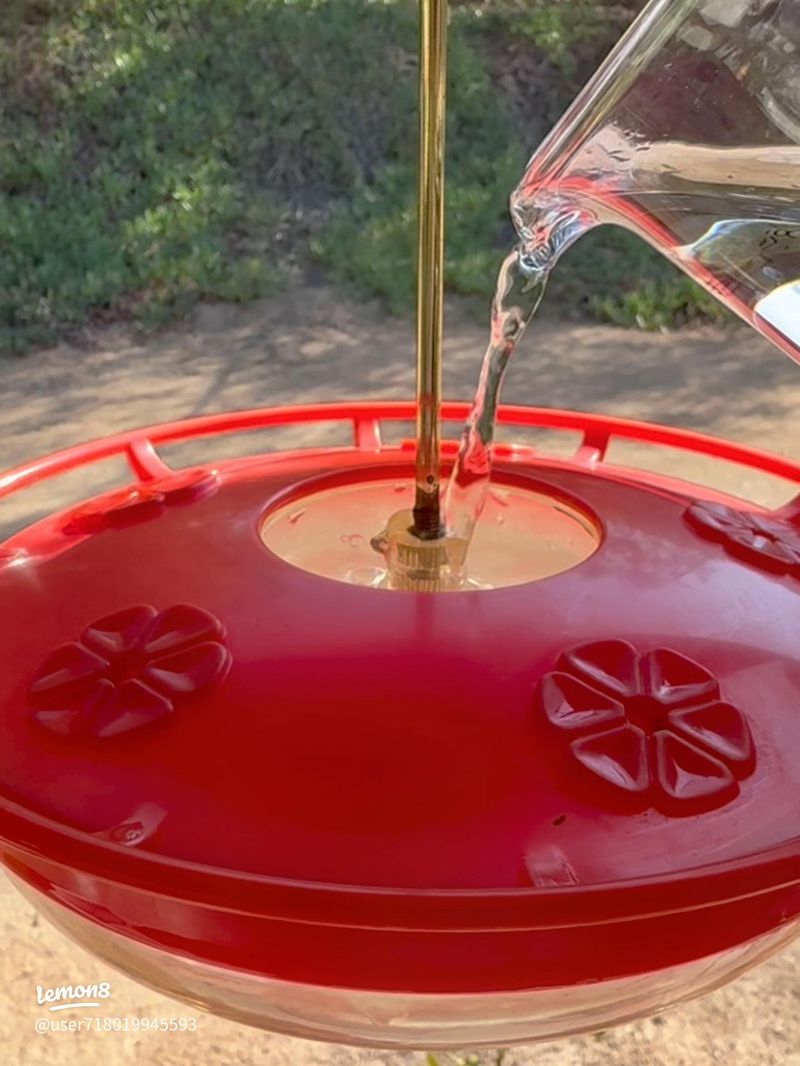
The recipe is simple: one part plain refined white sugar to four parts water. Stir until the sugar has fully dissolved, and the nectar is ready.
The Smithsonian’s National Zoo says tap water is fine and boiling is not required as long as the sugar dissolves completely. Extra solution can be refrigerated for up to one week, which makes small batches easy to manage.
Skip the red dye, since it is unnecessary. Honey, raw sugar, and artificial sweeteners are not suitable substitutes.
UF/IFAS likewise points to plain sugar and water.
Plain white sugar and water is cheap and quick, so there is no reason to stretch old nectar. Mixing a fresh batch is one of the easiest ways to rule out a maintenance problem.
Check more often during Southern heat
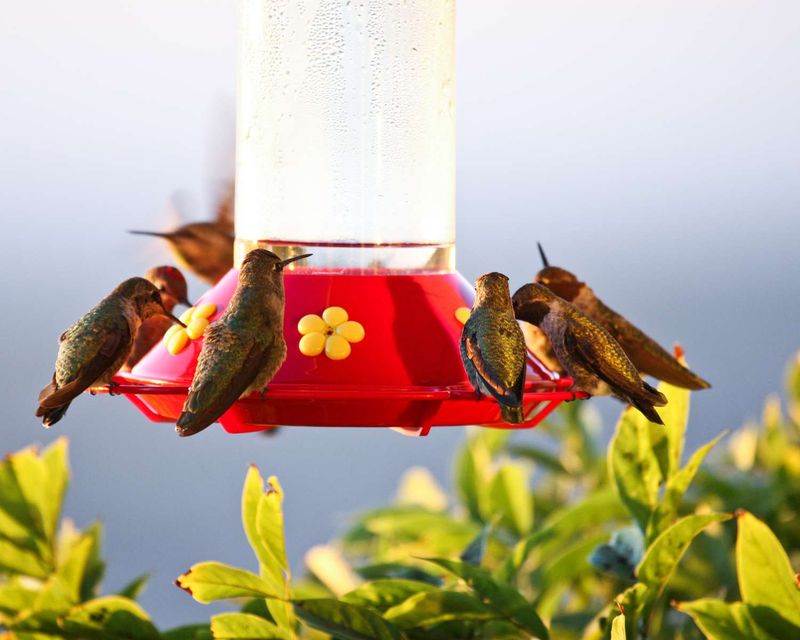
Summer in Florida and Texas can turn sugar water cloudy fast. A daily glance is a sensible habit, and smaller batches mean less nectar goes to waste if you need to dump it.
Reputable sources give different intervals. Texas A&M AgriLife suggests refreshing small amounts every day or two at peak heat.
Cornell and Audubon both call for more frequent changes and cleaning in hot conditions. Rather than chase one magic number, replace and clean more often as the heat climbs.
If nectar looks cloudy or moldy, act right away. Empty it, scrub the feeder, and refill with a fresh batch.
Shade helps, and UF/IFAS Gardening Solutions notes that sun and heat speed spoilage. Still, a shady spot can slow spoilage but cannot replace checking and cleaning.
Treat cleaning as a reset, not a promise
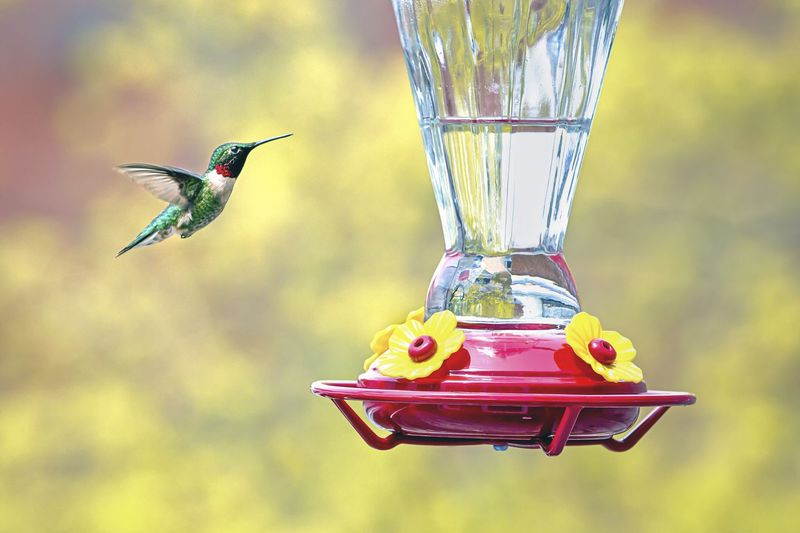
Think of the routine as a reset. Inspect the ports, clean the whole feeder, refill with fresh nectar, and keep checking it through the heat.
These steps may clear up residue or an obstruction, and Cornell’s cleaning guidance backs them as good feeder care.
They are not a guarantee, though. If activity stays low after a thorough cleaning, remember what Cornell’s note on fewer visitors describes: migration, territorial birds, and plentiful flowers all change feeder traffic.
Keep the feeder clean, keep the nectar fresh, and let the birds decide the rest. Sometimes the best you can offer a hummingbird is a spotless place to stop whenever it happens to pass through.