
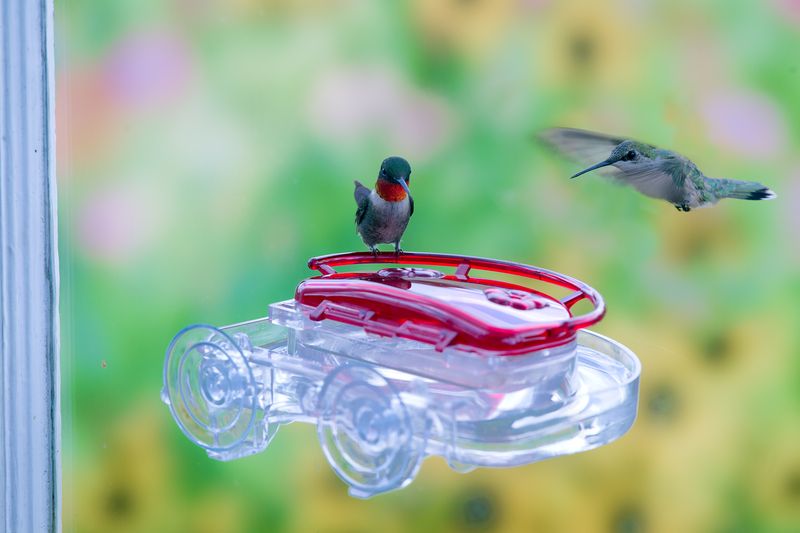
A hummingbird feeder that sits quiet can leave you wondering what went wrong. Glass near a feeder is one thing worth checking, because birds do sometimes hit windows.
It is only one piece of the puzzle, though, and there are simple steps you can take this fall to make your yard safer and your feeder more welcoming.
A quiet feeder does not prove a window strike
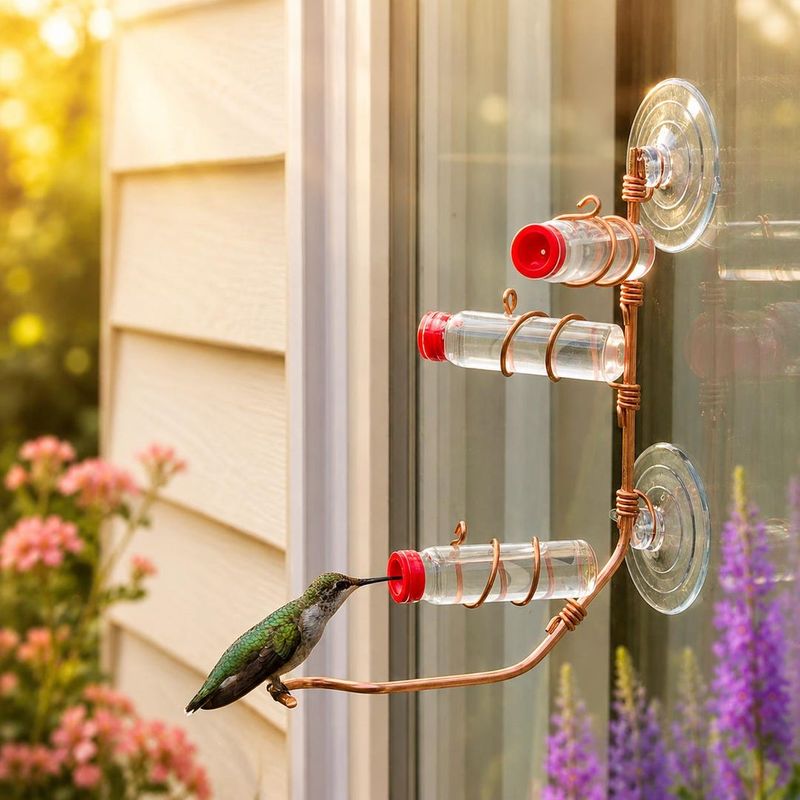
Few things are more puzzling than a full feeder with no visitors. It is easy to blame the nearby window, but an empty feeder is not proof that a bird hit the glass.
Birds do collide with windows near feeders, and that risk is worth taking seriously. Still, Cornell Lab guidance on feeder placement points to several other things that can matter, such as how long birds need to discover a new feeder and whether the spot feels comfortable.
Nothing in the available evidence shows that a nearby window generally makes a hummingbird feeder draw fewer birds.
So here is a practical plan. First, make the glass easier for birds to see.
Then look over the feeder setup, nectar freshness, and surroundings. No single factor is a proven cause for any one quiet feeder, and no step can promise visitors or end every collision.
Think of it as lowering risk while you troubleshoot.
Feeder distance matters, but it does not define a safe zone
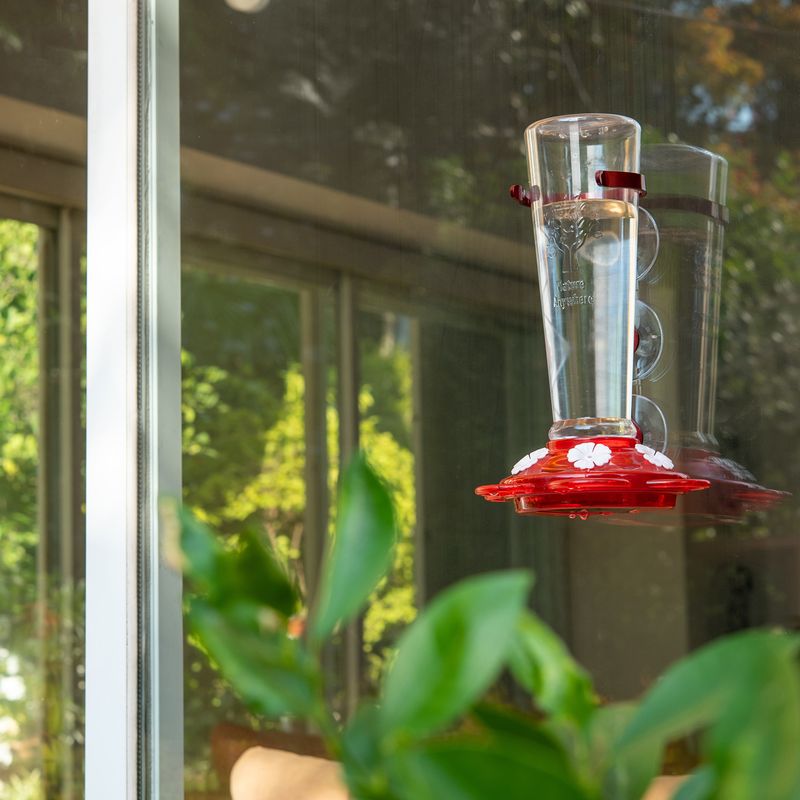
Cornell offers two different placement options. A feeder within 3 feet of glass can reduce injury risk, since a bird leaving it has little room to build speed.
Putting a feeder more than 30 feet away is the other option. Neither distance is a guaranteed safe zone.
You may come across a striking number from Project FeederWatch. In a FeederWatch winter summary, 75% of observed collisions happened at windows 3 to 30 feet from feeders.
That is a share of reported collisions. It does not compare risk across all windows, and it does not prove feeders caused the strikes.
Volunteers also logged windows where no collisions happened, and the team was still analyzing the data. You can read more on the FeederWatch bird-glass collision study page.
The takeaway: distance is one tool, and it works best alongside treating the glass itself.
Make nearby glass visible to birds

Glass can be dangerous in a few ways. It can reflect sky and plants, it can show a clear path straight through a room, and the surface itself can be hard for birds to notice.
That is why feeder distance alone does not decide the risk.
American Bird Conservancy home solutions recommend patterns on the outside of the glass, with no more than 2 inches between marks in either direction. Screens and full-window treatments are other options.
One decal is not enough. ABC’s glass FAQ explains that a lone sticker leaves wide open flight paths around it.
Fall is a handy time to get this done, before busy migration weeks. Even a well-spaced pattern may not stop every strike, but it can lower the odds.
If visits remain low, check the feeder setup
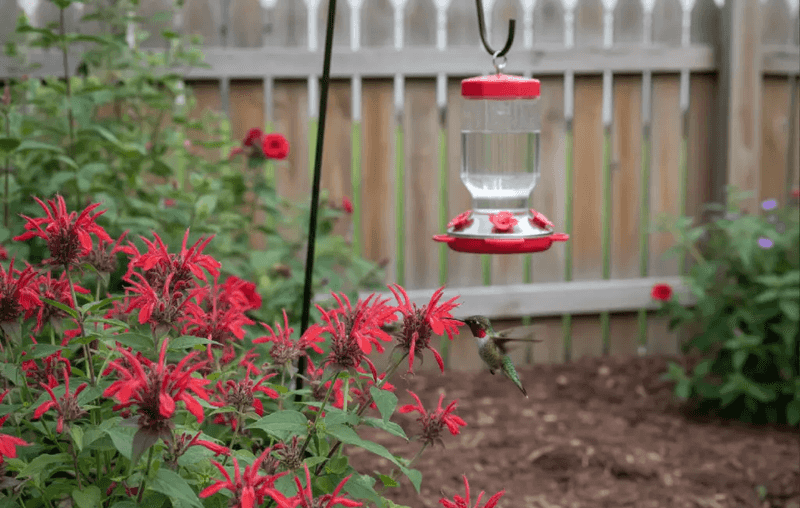
Once the window is treated, look at the feeder itself. Cornell notes that birds may need time to find a new feeder, and that a calmer, more sheltered spot may feel more comfortable if the current one is windy or busy.
These are possibilities to check, not diagnoses.
Access and plants may matter too. UF/IFAS points to feeder access and nearby bird-friendly plants as things to consider, and it suggests trying a new location if birds have not come after 1 to 2 weeks.
You can find that in UF/IFAS feeder selection guidance.
Watch the distances if you move it. UF/IFAS says feeders within 3 meters of a window are preferable when space is limited, which is a broader range than the under-3-foot advice from Cornell.
They are separate recommendations, so treat them as options, not one fixed rule.
Keep nectar fresh through Southern heat
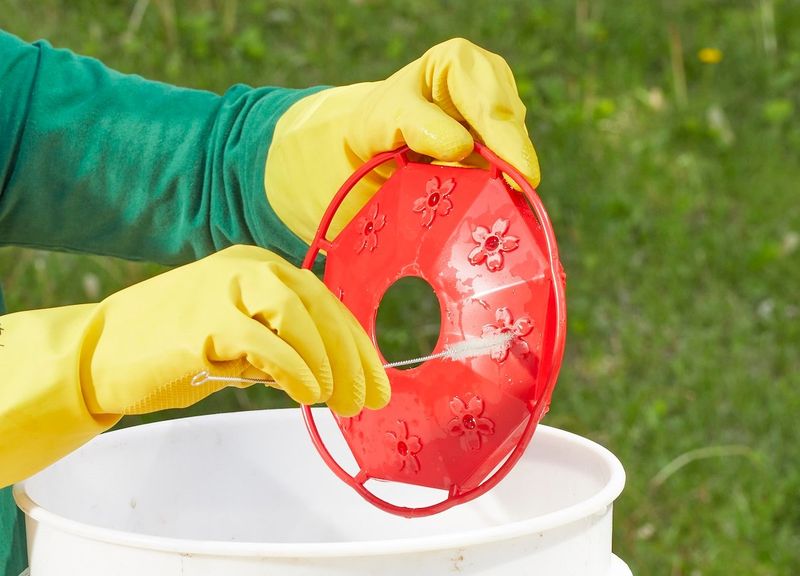
Heat speeds up spoilage, so nectar upkeep is a sensible thing to check. UF/IFAS advises changing nectar every 3 to 5 days, and more often when it is hot or sunny.
Its Hummingbirds of Florida publication also recommends cleaning feeders with hot water and a bottle brush.
A shady spot can slow spoilage. Shade does not replace swapping the nectar or scrubbing the feeder, though, so keep up both on a schedule.
Try marking a calendar or setting a phone reminder for a midsummer swap. In a Florida August, a feeder left a week may be well past its best.
Fresh nectar is a good habit, not a proven fix for any single quiet feeder. Think of it as removing one possible reason birds might pass by.
Leaving a feeder up in Texas does not stall migration
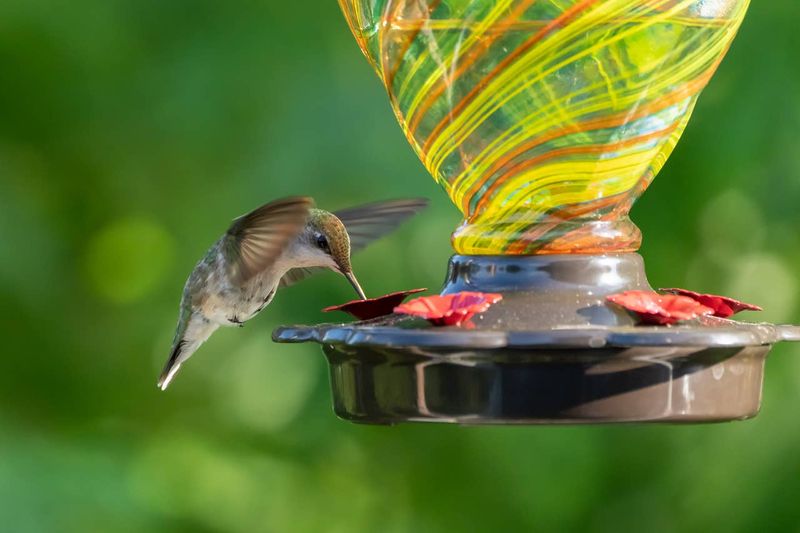
Many Texas gardeners wonder if a fall feeder keeps hummingbirds from heading south. Texas Parks and Wildlife says leaving a feeder up does not stall migration, and it can help late or wintering hummingbirds.
Keeping it available is an option, not a promise that birds will show up.
If you keep it up, keep the nectar fresh and the feeder clean through the cooler months too.
Fall is also a good time to pair that feeder with safer glass. Patterns spaced no more than 2 inches apart, as covered in ABC’s home solutions, can help, and the Cornell placement guide can help you check where the feeder hangs.
A quiet feeder rarely tells its own story, so treat the glass first and the rest as a checklist.