
A raised bed that looks dry again just days after watering can leave you wondering what went wrong. In many Southern gardens, the bed is not ruined at all.
It may simply need a little help holding onto moisture. You can work with the soil you already have, and a few steady habits may make a real difference.
Fast-drying soil does not mean the bed is spent
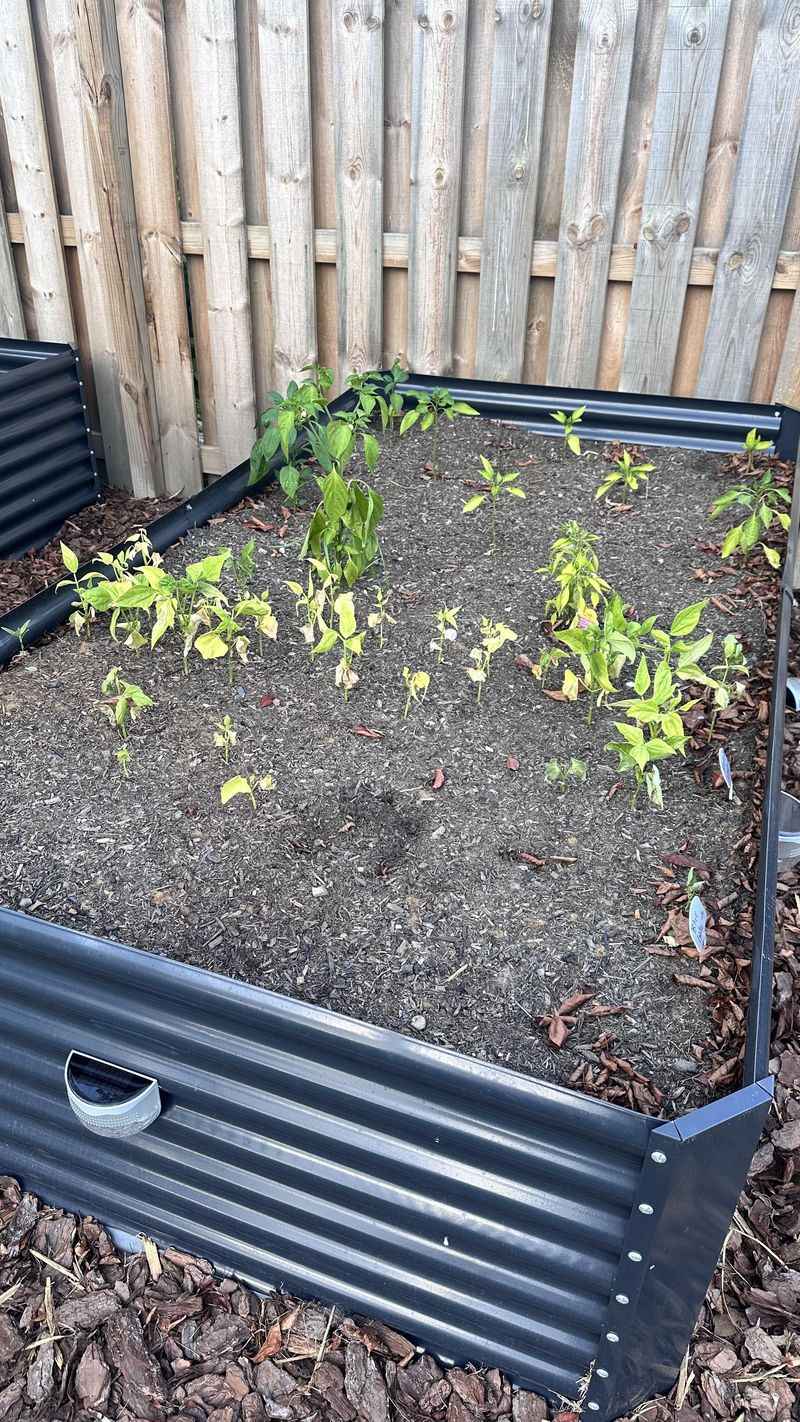
A bed that dries between waterings is not necessarily failing. Raised beds tend to drain and warm up faster than ground-level soil, which means water can leave the root zone sooner.
The mix matters too. Sandy or lightweight blends may store less plant-available water, and UF/IFAS soil guidance points out that Florida’s sandy soils are especially prone to low water storage.
Texas gardeners with sandy or fast-draining mixes may see something similar.
Not every bed behaves the same way, though. A bed in full afternoon sun, with tall sides and a loose mix, may dry far faster than a shaded one with heavier soil.
Crop size, wind, and rainfall also play a part.
The Florida vegetable gardening guide notes that sandy soil may need more frequent irrigation. So quick drying can be a normal trait of a bed, and it may be something you can improve step by step without tearing anything out.
Check soil moisture before changing your routine
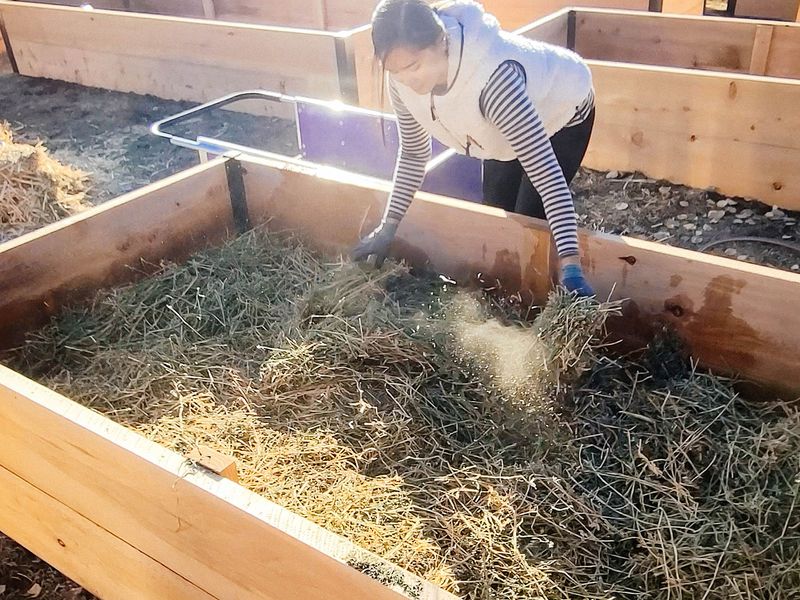
Before you change anything, find out what is happening below the surface. A dry-looking top inch does not always mean the root zone is dry.
Push a finger or a trowel several inches into the soil near your plants. Soil that feels cool and crumbles slightly is usually holding some water, while soil that is dry and powdery at root depth may need irrigation.
Inexpensive soil-moisture tools can also help, and the UF/IFAS vegetable guide lists them as one way to decide when to water.
Think about the plant’s stage, too. Seedlings with tiny roots dry out sooner than established tomatoes.
Recent rain, a hot spell, or a windy week can shift the picture.
If you keep finding dry soil at the same point every few days, treat that as a clue worth investigating. Note the bed’s sun exposure, how the mix feels, and whether the irrigation reaches the roots.
As Utah State Extension explains, watering should follow soil and crop conditions, not a fixed routine.
Top-dress existing soil with suitable finished compost
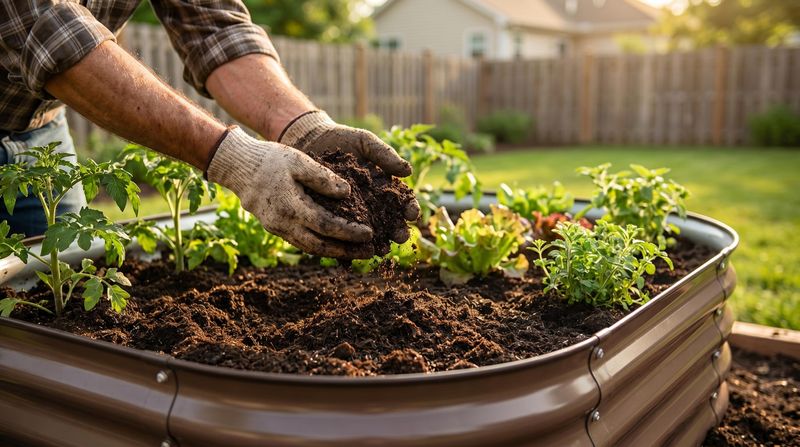
You can improve a planted bed right where it stands. Pull the mulch back from the area you want to treat, spread finished compost over the existing soil, and then put the mulch back.
A Texas A&M raised-bed guide describes this same rake-back, add, and replace approach.
How much compost? Oregon State Extension suggests roughly 1/4 to 1 inch per year for existing beds.
Treat that as one range, not a rule for every garden. Compost nutrient levels and your current soil conditions matter.
Some guidance is more careful. Penn State Extension advises no more than about 1/4 inch every few years when compost has not been tested.
If you do not know what is in yours, start on the lighter side.
Compost added on top works gradually. Rain, watering, and soil life slowly carry organic matter downward, so expect improvement over seasons rather than overnight.
Use mulch to slow moisture loss at the surface
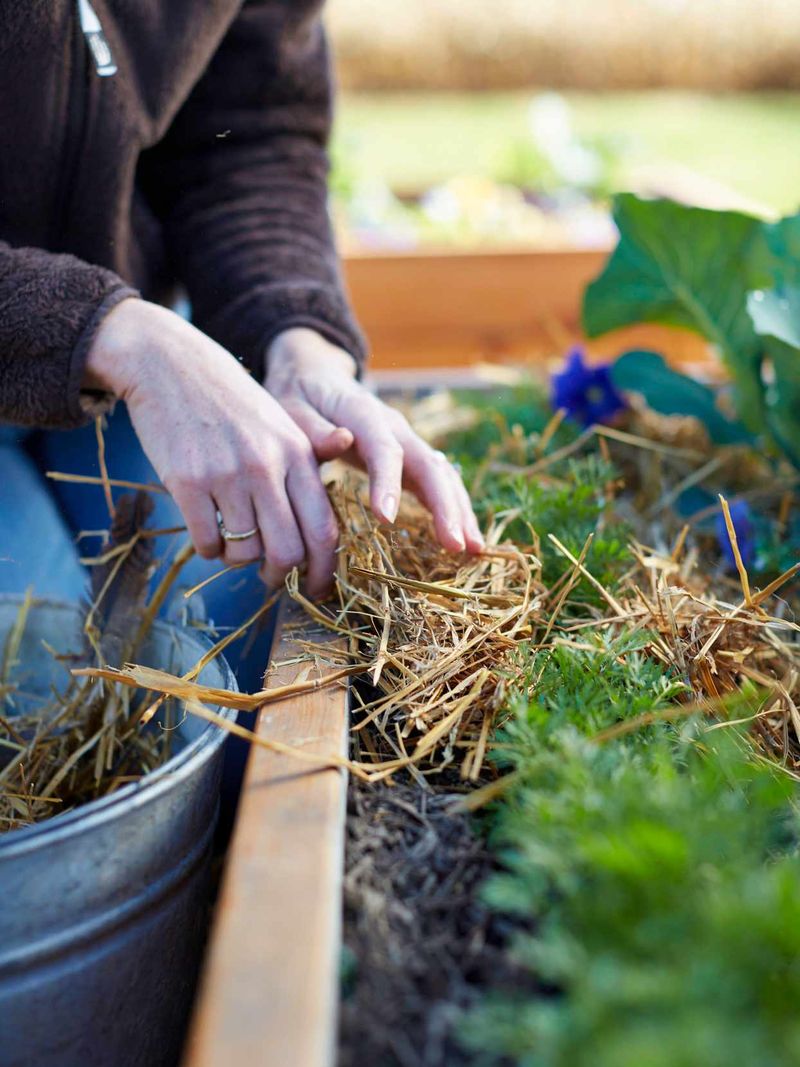
Bare soil in a hot, sunny bed loses water from the top. Organic mulch acts like a lid, helping reduce that surface evaporation.
As it breaks down, it can also add some organic material to the soil.
Mulch and compost do different jobs. Compost mixes organic matter into the soil, while mulch mainly protects the surface.
A mulch layer alone does not mean the mix underneath has been improved.
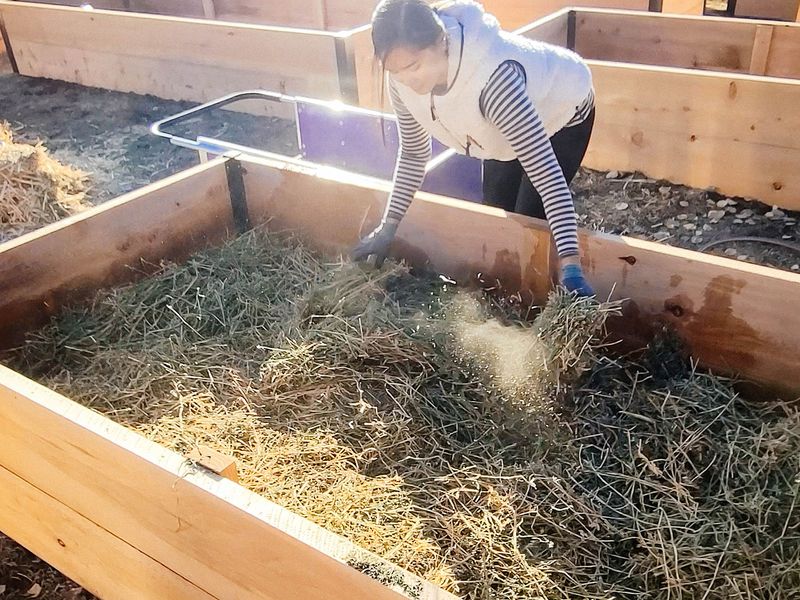
For depth, Texas A&M recommends about 2 to 3 inches in raised beds, as described in its raised bed maintenance guide. UF/IFAS lists straw, hay, leaves, and other light organic materials as options for vegetable beds.
Leave a small gap around each stem. Mulch piled against plant bases can hold dampness where you do not want it.
Check the layer through the season and top it up as it thins.
Water for the crop and root zone, not the calendar
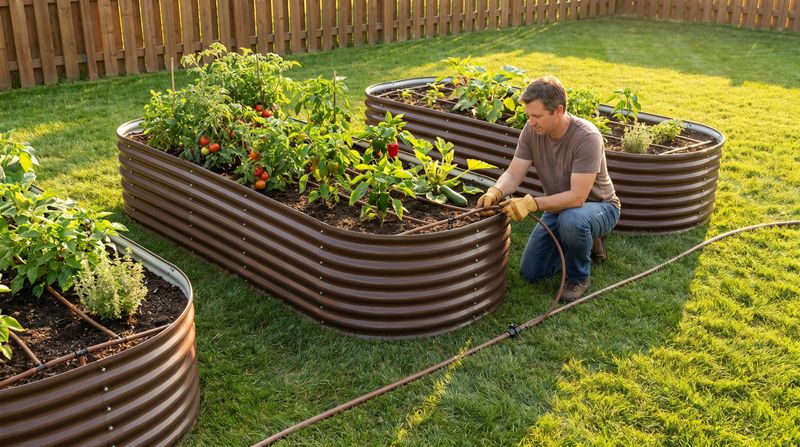
Plants do not read calendars. Their water needs shift with weather, soil, and age, so a fixed weekly schedule can leave a bed too dry one week and too wet the next.
The Florida vegetable guide says young plants usually need frequent, light irrigation, while maturing crops need more water but less often. Sandy soil and rainfall change the timing further.
Targeted watering can help. Drip irrigation and micro-sprayers are among the efficient options UF/IFAS lists, because they place water where roots are active.
Utah State Extension also stresses getting water into the root zone rather than just wetting the surface.
Watch for puddling. Vegetables cannot tolerate standing water, and roots need air as well as moisture.
If water sits on the surface or the soil feels soggy days later, cut back and check drainage.
Avoid quick fixes that create other problems
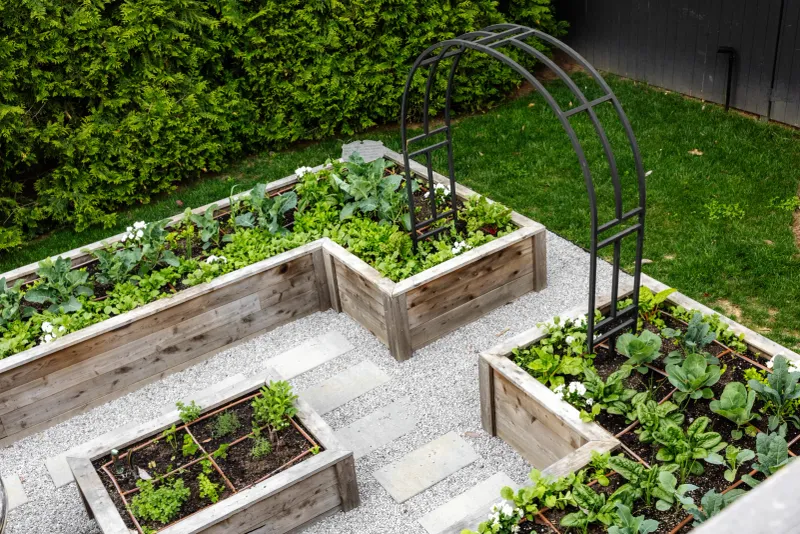
Shortcuts can backfire in an edible bed. Oregon State Extension warns that fresh manure can burn roots and should not go directly onto an established bed.
Choose finished compost instead, and check its quality.
Filling a bed with compost alone is not the answer either. Oregon State’s compost guide advises using a soil mix rather than compost by itself for framed beds.
Keeping soil soaked is another trap. Roots still need drainage and oxygen, a point the UF/IFAS vegetable guide backs up with its caution about standing water.
Biochar and hydrogels are not dependable shortcuts. Utah State Extension notes mixed results for biochar, and overusing superabsorbent polymers can disrupt soil structure.
A cautious path is to check moisture, add suitable compost gradually, keep the surface covered, and adjust watering as conditions change. Your bed may still dry faster than you would like, but small steady improvements tend to add up.