

Perennial garden delphiniums put on a dramatic show, but once those tall spikes finish flowering, a lot of gardeners just walk away and hope for the best next year. The one step most people skip is removing the spent flower stalk promptly, and that single task may encourage fresh growth and a possible second flush of blooms later in the same season.
Getting the cut right matters, and so does understanding what it can and cannot do for your plants going forward.
Remove the spent flower stalk after the first bloom
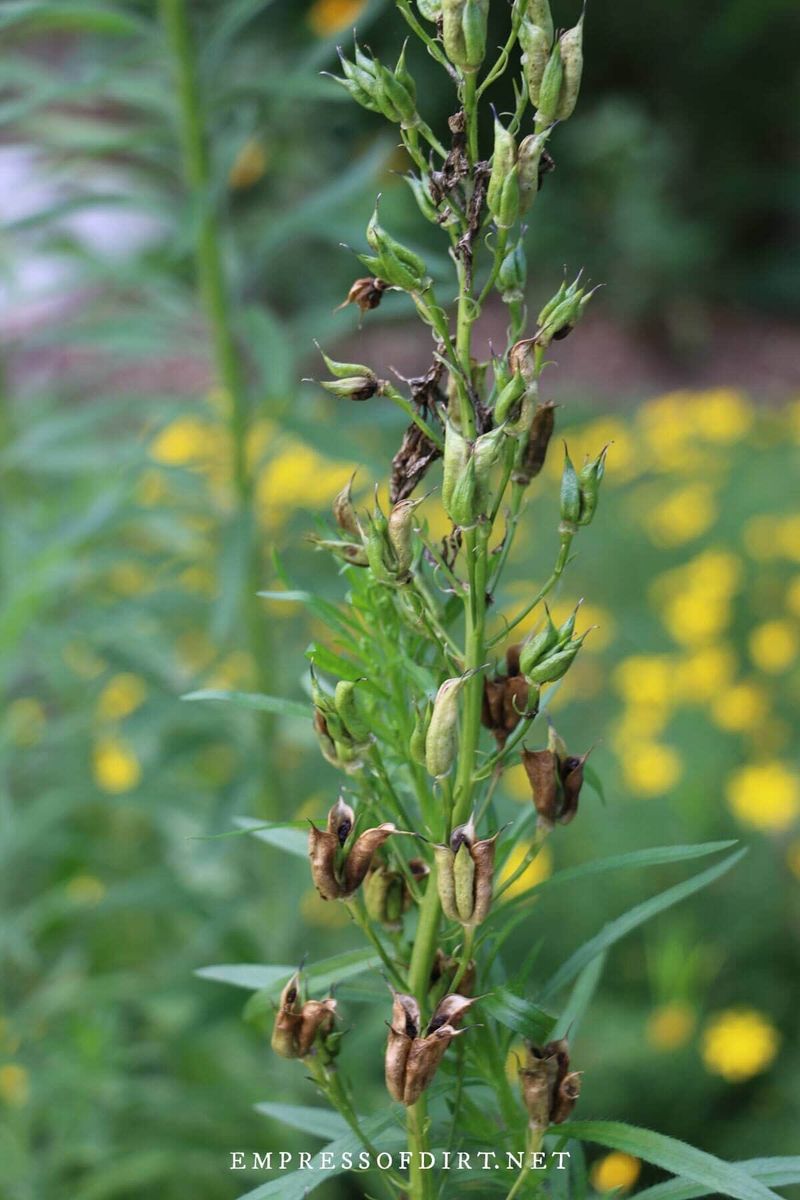
Once the flowers on a delphinium spike have faded and the petals are dropping, the spent stalk has done its job. Removing it promptly may encourage the plant to put out new basal growth, and in the right conditions, that growth can develop into a second, smaller flush of blooms later in the season.
Iowa State University Extension guidance on deadheading ornamentals supports cutting initial flower stalks after flowering as a way to encourage continued plant performance.
The subject here is perennial garden delphiniums, most often complex hybrids of Delphinium elatum and related species. Plants sold under the name “delphinium” or “larkspur” can include annuals, biennials, and several distinct perennial species, and their care requirements differ.
The advice in this article applies to perennial garden delphiniums rather than to annual larkspur or other species sold under similar names.
RHS guidance on perennial delphiniums recommends cutting faded spikes to ground level to encourage another flush, while North Carolina Extension notes that most commercial garden delphiniums are complex hybrids, and care needs can vary by cultivar. Knowing which type of plant you have helps you apply the right technique and set realistic expectations from the start.
Make the cut without damaging new shoots
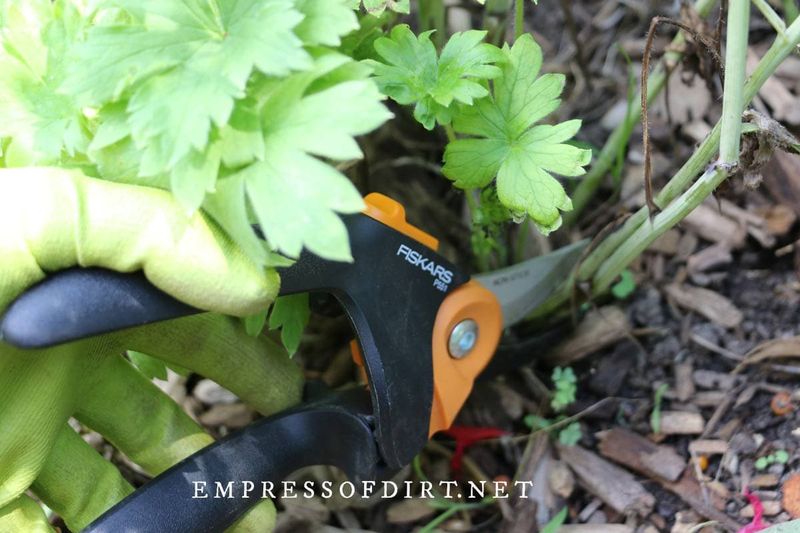
Timing the cut correctly makes a real difference. Wait until all the flowers on the spike have faded rather than cutting while any buds are still opening.
Using clean, sharp pruners reduces the chance of tearing the stalk or introducing pathogens to the wound, and a clean cut heals more efficiently than a ragged one.
Where you cut depends on what the plant shows you. If a healthy lower side shoot is already developing partway up the stalk, cutting back to that shoot preserves the developing growth and keeps the plant at a manageable height while encouraging the side branch to continue.
If no side shoot is visible, cut the stalk back to the basal leaves or close to the crown according to the plant’s structure. RHS deadheading guidance recommends removing the entire spent stem rather than trimming only the flower heads, and North Carolina Extension’s Delphinium elatum profile supports cutting back after flowering to encourage new growth.
Watch for small, pale shoots emerging from the crown at soil level and steer your cut well above them. Nicking those emerging shoots can set the plant back considerably.
One more practical note: delphiniums are toxic if eaten and their foliage can irritate skin during handling. Wearing gloves when you prune is a sensible habit, and cut material should be kept away from children and pets.
Leave healthy basal leaves in place for now
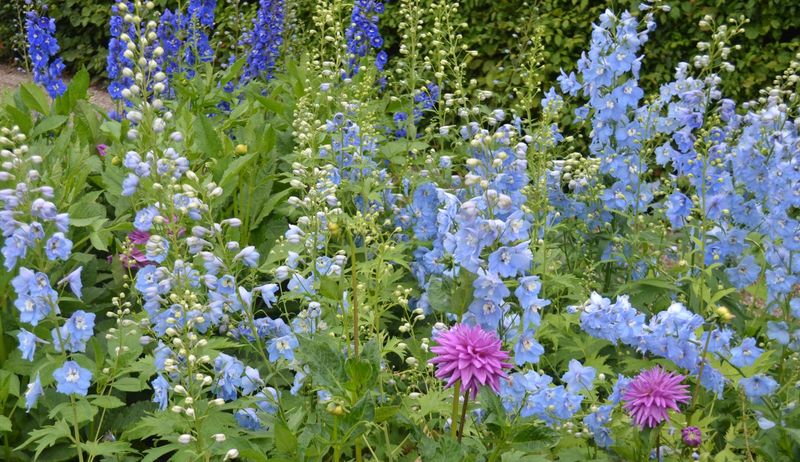
Cutting the flower stalk does not mean stripping the plant bare. Healthy basal foliage, the rosette of leaves at the base of the plant, continues to support the plant after the spike is gone, and several authoritative sources recommend leaving it in place rather than removing it along with the spent stalk.
Oregon State Extension’s spring pruning guide advises removing delphinium flower stalks while allowing the foliage to remain until spring in colder climates. RHS growing guidance recommends cutting old leaves only after they die down, following the first frosts.
Both approaches point to the same conclusion: healthy green leaves earn their place on the plant.
A fuller post-bloom cutback, where the plant is reduced more completely after flowering, is another supported approach that some gardeners use to encourage a possible repeat flush. That is not a universal requirement, though, and cutting back healthy foliage prematurely may reduce the plant’s ability to sustain new growth through the rest of the season.
Remove leaves that are yellowing, diseased, or visibly declining promptly, and dispose of any severely diseased material in the trash rather than the compost bin. Healthy leaves can stay until they tell you otherwise.
Expect a possible second flush, not a guarantee
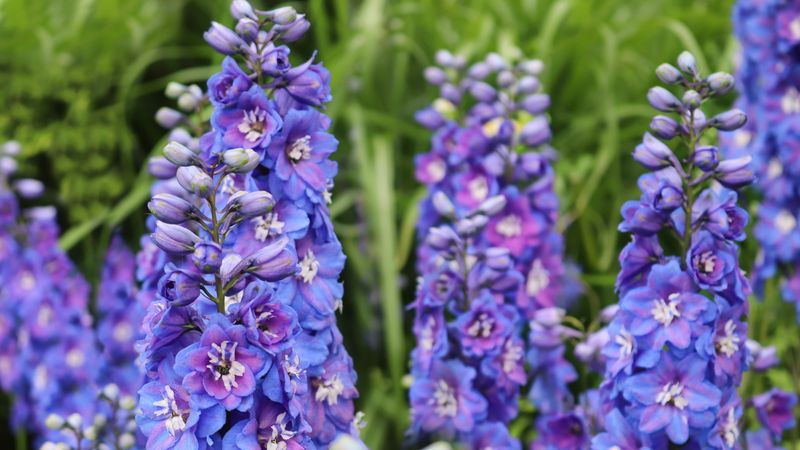
After the spent stalk comes off and the plant has healthy foliage, new shoots may emerge from the base and develop into a second display later in the season. That second flush is genuinely possible, and it is one of the clearest documented benefits of post-bloom cutback for perennial delphiniums.
The realistic picture, though, is that the second display is usually smaller than the first. Iowa State Extension and RHS perennial delphinium guidance both support post-flowering cutback as a way to encourage continued growth and a second bloom period, while making clear that the outcome depends on the plant’s condition and the season remaining.
Whether a second flush actually appears depends on cultivar vigor, how much of the warm season is left, summer temperatures, soil moisture, and whether disease is already affecting the plant.
North Carolina Extension’s delphinium overview notes that heat and humidity can reduce success even within a single growing season, which matters for Southern gardeners who may have a shorter window of suitable conditions between the first bloom and the arrival of oppressive summer heat. Cutting the stalk promptly improves the odds, but it does not create a second flush on its own.
A plant under heat stress or fighting off disease is unlikely to rebloom no matter how cleanly the stalk was cut.
Next year’s flowers depend on more than pruning
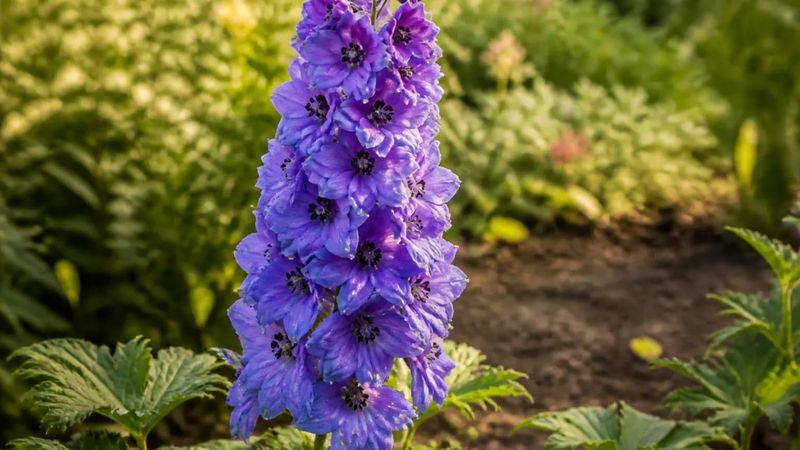
Post-bloom cutback is a useful practice, but connecting it directly to next year’s flower count overstates what the evidence shows. The number of blooms your delphiniums produce next season reflects a combination of factors that no single pruning task controls.
Cultivar matters significantly. Some hybrids are more vigorous and longer-lived than others, and a cultivar that performs reliably in one region may struggle in another.
Plant age is also a factor: North Carolina Extension gives a typical lifespan of approximately three to five years for Delphinium elatum, meaning that a plant approaching the end of that range may produce fewer flowers regardless of how it was pruned. Summer heat, drought, excess moisture, poor drainage, disease pressure, and winter survival all shape what the plant can offer the following spring.
UC IPM’s floriculture delphinium resources identify crown and root rots, soilborne pathogens, and environmental stress as significant threats to plant survival and performance. A sparse or absent display next year is more likely to reflect one of those pressures than a missed pruning step.
Before blaming the cutback, check the soil drainage, assess whether the plant looks genuinely healthy, and consider whether the cultivar is well-suited to your local conditions. North Carolina Extension’s general delphinium notes reinforce that growing conditions across seasons play a larger role in year-to-year performance than any single post-bloom action.
Support the plant with moisture, airflow, and a suitable climate
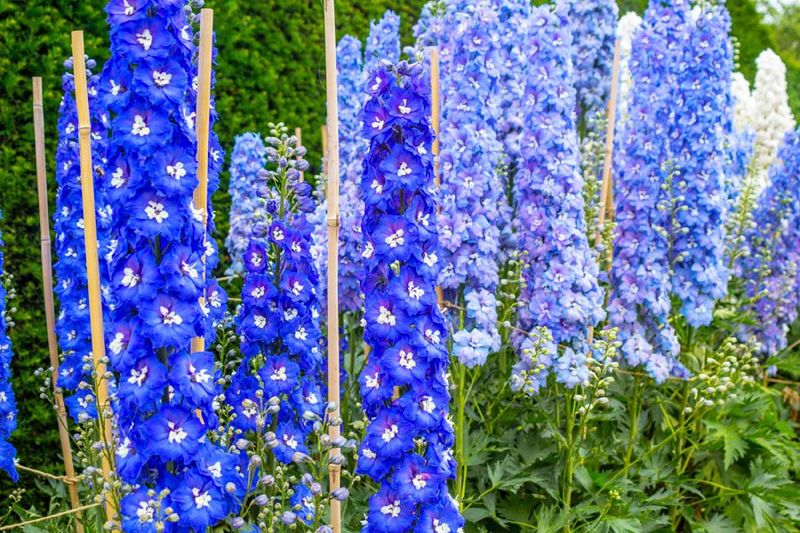
After cutting the spent stalk, the plant still needs conditions that support continued growth. Even soil moisture is one of the most important factors.
UC IPM’s delphinium guidance notes that delphiniums prefer moist, well-drained soil, and that overwatering and poor drainage increase the risk of crown and root rots. Water at the base of the plant rather than overhead, and allow the soil to drain between waterings rather than keeping it saturated.
Good air circulation reduces the risk of powdery mildew and other fungal problems that become more likely in warm, humid conditions. Adequate spacing between plants, mostly full sun, and some shelter from strong wind and driving rain all contribute to plant health and reduce lodging.
Tall varieties need staking before the stalks get heavy enough to topple, and checking supports after pruning is a practical time to confirm they are still secure. North Carolina Extension’s Delphinium elatum profile recommends full sun to partial shade and notes that humidity and heat can reduce success in warmer zones.
Southern gardeners should factor in regional climate honestly. North Carolina Extension describes delphiniums as difficult in humid summer climates south of USDA Zone 7, recommending afternoon shade protection in the southernmost zones.
Traditional tall perennial delphiniums may struggle in hot, humid parts of Florida and Texas, and gardeners in those areas should consult local extension resources or look for cultivar-specific guidance before committing to these plants. University of Florida IFAS resources address delphinium primarily as a specialty cut flower in protected settings, and Texas A&M’s EarthKind plant selector emphasizes evaluating plants for regional heat tolerance rather than assuming broad adaptation.
Pruning cannot cure a diseased crown
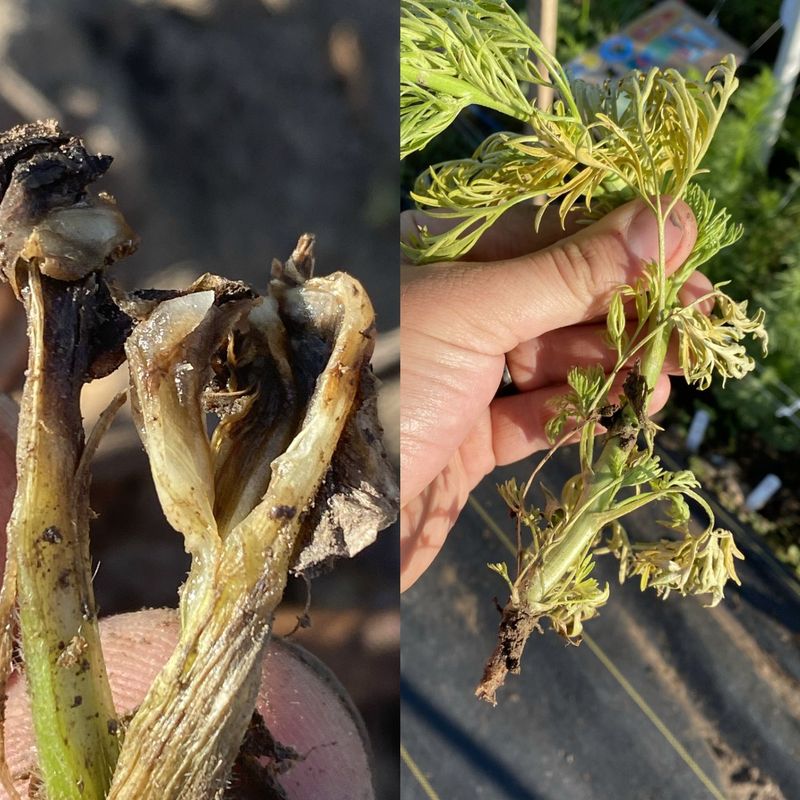
Yellowing leaves, wilting despite adequate water, blackened or mushy stem bases, and suspicious spots on foliage are not signals to cut harder. Those symptoms point toward possible disease or root problems that pruning alone will not resolve.
Penn State Extension’s delphinium disease resources identify powdery mildew, leaf spots, Botrytis blight, bacterial stem and crown rots, and several soilborne diseases as common threats. UC IPM’s delphinium guidance connects crown and root rots directly to drainage problems and excess moisture, which means the fix starts with soil conditions and watering habits, not with the pruning schedule.
Removing a symptomatic stalk without addressing the underlying cause leaves the problem in place.
Severely diseased foliage, stems, or crown tissue should be removed and discarded in the trash, not added to a compost pile where pathogens may survive. Improving drainage, adjusting watering to avoid saturating the crown, and increasing air movement around the plant are the practical responses to disease pressure.
A plant with crown rot or a soilborne infection needs diagnosis and corrective action, not a shorter stalk.
One final reminder for anyone handling delphiniums during any pruning or cleanup task: the plants are toxic if eaten. North Carolina Extension lists toxic effects for humans, dogs, cats, and horses, and RHS notes that foliage may irritate skin.
Gloves are a straightforward precaution, and all cut material should be kept away from children and pets.
Use the cutback as one part of better delphinium care
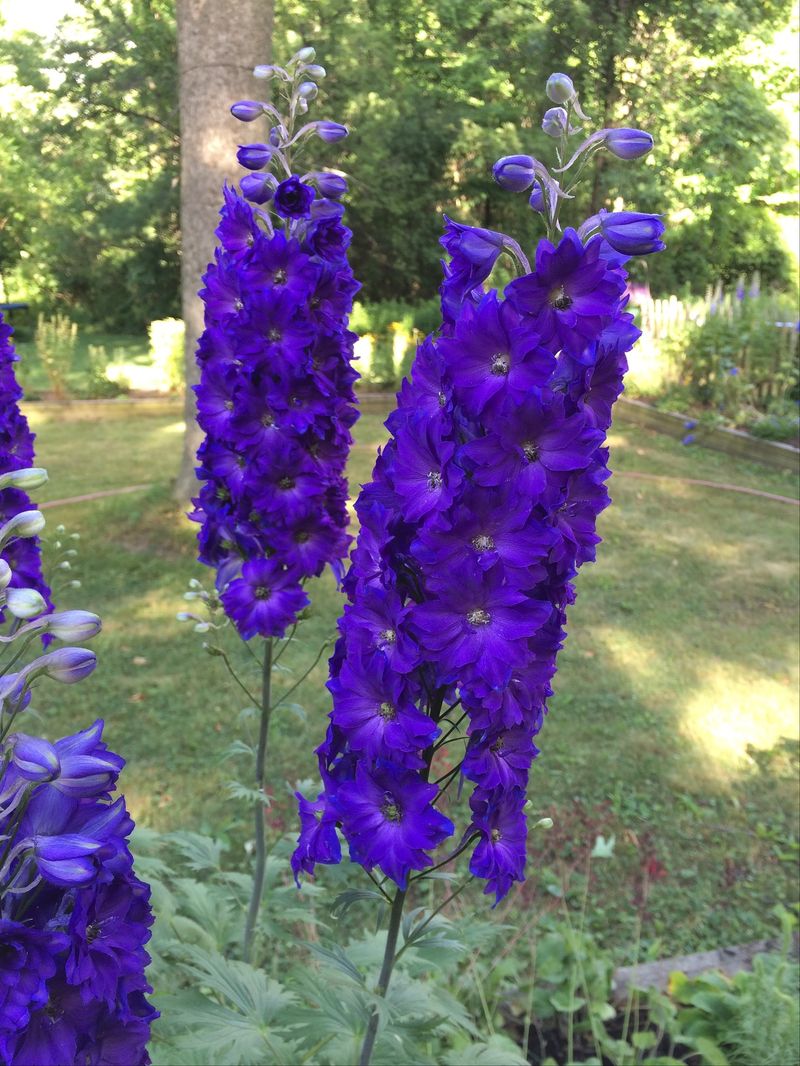
The practical sequence is straightforward. Once the first flowering finishes, remove the spent stalk cleanly, cutting to a healthy lower side shoot if one is visible or back to the basal foliage if none has developed.
Leave healthy basal leaves in place unless local conditions or cultivar-specific guidance call for a fuller cutback. Keep soil moisture even, avoid waterlogged soil, and maintain good airflow around the plant.
The realistic benefit of that sequence is a chance at a smaller second flush later in the current season, not a guaranteed increase in next year’s flower count. RHS perennial delphinium guidance and Iowa State Extension both support post-flowering cutback for encouraging renewed growth, while next year’s display will depend on the plant’s genetics, overall health, winter survival, and the growing conditions it experiences across the full season.
Good cutback technique is worth doing, and honest expectations make it worth doing well.