
Something is chewing through your North Carolina garden beds, and the damage gets worse every fall. Small tunnels, gnawed roots, and clipped stems near the soil line are classic signs of voles at work.
A screech-owl nest box is one wildlife-friendly step you can take alongside targeted vole management, though it is not a guaranteed fix on its own. This article explains how to identify the culprit, build and place a box responsibly, protect your plants directly, and understand what a resident owl can and cannot realistically do for your yard.
Confirm that voles—not moles—are damaging the beds
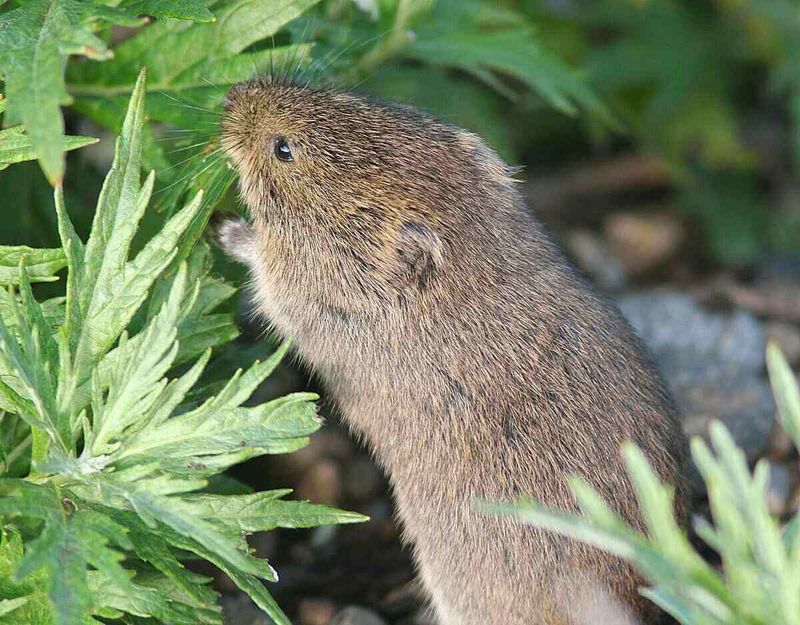
Before adding a nest box or any other control measure, spend a few minutes confirming which animal is actually causing the damage. North Carolina has two vole species that commonly trouble home gardens: pine voles and meadow voles.
Each behaves differently, and knowing which one you are dealing with shapes every decision that follows.
Meadow voles leave the most visible clues. Look for narrow surface runways about an inch or two wide through dense grass, ground cover, or mulch.
You may also find clipped vegetation, scattered droppings, small burrow openings at ground level, and irregular gnaw marks near the base of trees or shrubs. These above-ground signs often appear in fall when voles are most active near garden beds.
NC State Extension’s voles-in-turf guidance describes these surface trails and clipped stems as key indicators of meadow vole activity in North Carolina yards.
Pine voles are harder to spot because they spend much of their time underground. Their damage tends to show up as dead or dying plants whose roots, bulbs, or bark have been eaten below the soil surface, with few visible surface signs.
If you pull back mulch around a struggling shrub or ornamental tree and find gnawed roots or bark near the crown, pine voles are a likely suspect.
Moles are a separate animal and are commonly confused with both vole species. Penn State Extension’s mole resource notes that moles primarily eat invertebrates such as earthworms and grubs, and they generally do not consume plant roots or bulbs.
The raised ridges and volcano-shaped mounds moles leave behind look dramatic, but the real plant damage in those same beds is often coming from voles using the mole tunnels as ready-made travel routes.
Inspect mulched areas, ground cover patches, and the base of any recently stressed plants before reaching for a control. Penn State’s vole identification guide recommends looking for the combination of surface runways, gnaw marks, and small openings as the clearest confirmation of vole presence.
Choosing the right response depends on getting this step right first.
An owl box creates opportunity, not a guaranteed vole patrol
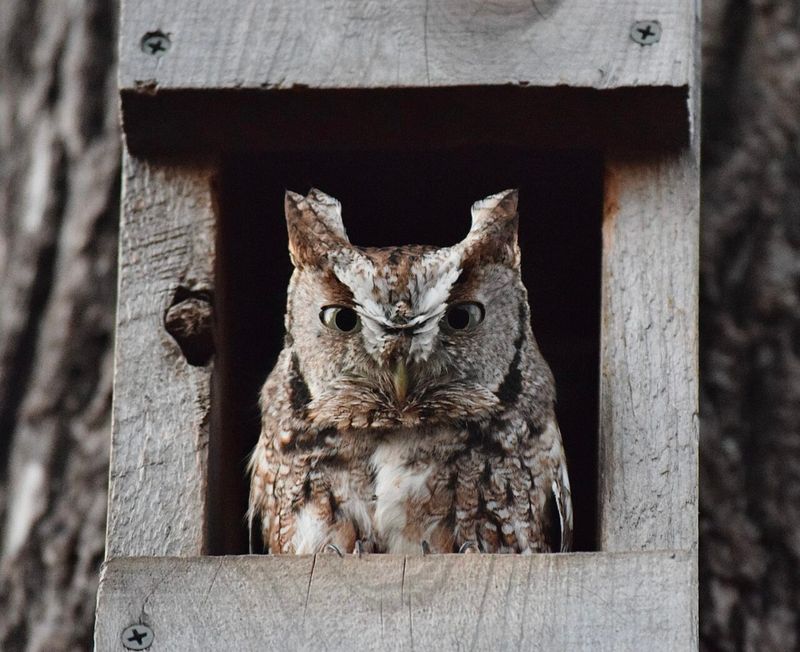
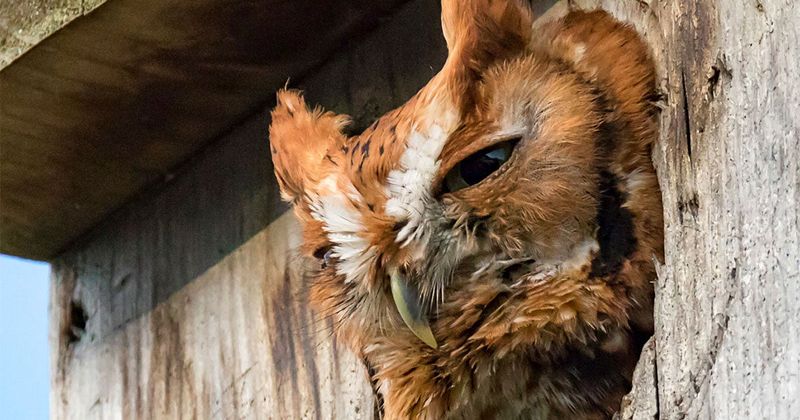
Eastern Screech-Owls are genuinely common in North Carolina suburbs, and they will use artificial nest boxes placed in suitable habitat. That much is well supported.
Where the picture gets more complicated is in the leap from “owl present” to “vole problem solved.”
As Cornell Lab’s Eastern Screech-Owl life history account explains, these birds are cavity nesters that cannot excavate their own holes, so they depend on natural cavities in trees or on boxes like the one you might build. They do live in wooded suburbs, parks, farms, and city landscapes, and their diet is broad, covering small mammals, insects, reptiles, amphibians, and occasionally birds.
Small mammals, including voles, can appear in that diet, but the available evidence does not establish that voles make up a predictable or dominant portion of what a screech-owl eats in a North Carolina residential yard.
The strongest published research on raptors reducing vole numbers comes from barn owls and kestrels working agricultural fields, not from screech-owls beside home garden beds. A study on avian predator nest boxes and common vole abundance found roughly 18 percent lower vole numbers within 180 meters of occupied boxes in some conditions, while other results were mixed.
Those findings involved different species in crop settings, so they support the general concept of predator pressure rather than a specific promise about one screech-owl box in a suburban garden.
Penn State Extension cautions that predators generally do not control large vole populations on their own, partly because voles reproduce quickly and can bounce back faster than predation pressure can reduce them. A screech-owl box may give a local owl a cavity for daytime shelter or nesting and may add some predator presence near your yard over time.
It does not compel any owl to move in, hunt the specific beds you care about, or reduce damage to a measurable level on a predictable schedule. Treat the box as supplemental wildlife habitat with an uncertain and potentially modest vole-management side benefit.
Build the box around screech-owl needs
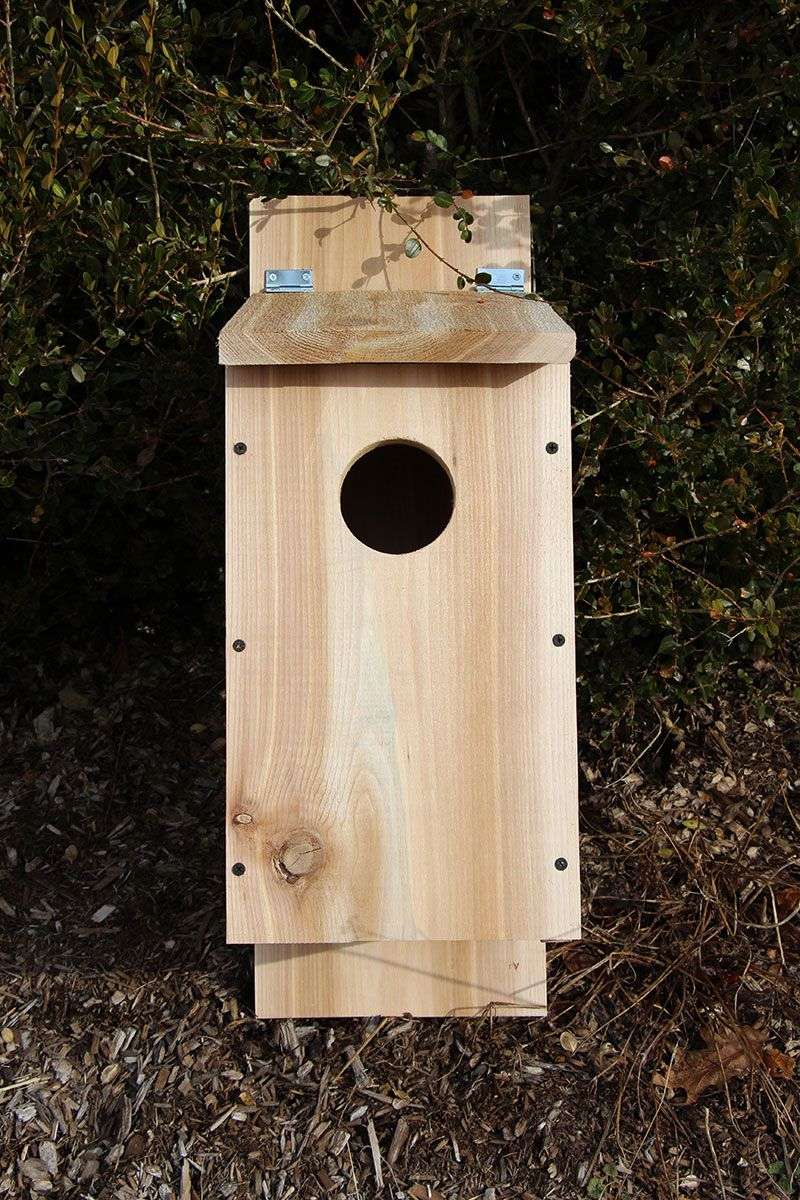
Getting the dimensions right matters more than making the box look decorative. A box built to screech-owl specifications gives the right bird a fighting chance against squirrels, starlings, and other cavity users that will happily move in if the entrance is too large or the interior is poorly designed.
The entrance hole should be approximately 3 inches in diameter, which is sized for a screech-owl but still accessible to European starlings if the placement is not managed carefully. NC State’s urban bird habitat guidance recommends a cavity depth of roughly 9 to 12 inches and a mounting height between about 10 and 30 feet.
The interior floor should measure around 8 by 8 inches to give the bird enough room without creating a space so large that heat retention suffers in cooler months.
Audubon’s screech-owl box guide recommends using untreated, unpainted, weather-resistant wood such as cedar or pine, adding drainage holes in the floor so moisture does not collect, and placing several inches of wood chips or dry leaves inside as nesting substrate. Paint and stain can off-gas chemicals that harm nestlings, so leave the exterior bare or use a water-based exterior finish only on the outside if weatherproofing is a concern.
Build the box so one panel can be opened for annual inspection and cleaning after the breeding season ends. NC Wildlife’s nest box guidance notes that box design and placement both influence which species actually use the structure, and a box that cannot be safely inspected or cleaned tends to deteriorate faster and may attract parasites that discourage future use.
Even a well-built box may attract a flying squirrel, a Carolina Chickadee, or a starling before a screech-owl finds it, so think of the project as adding a cavity to the landscape rather than reserving a unit for one specific tenant.
Place the box where an owl can use it safely
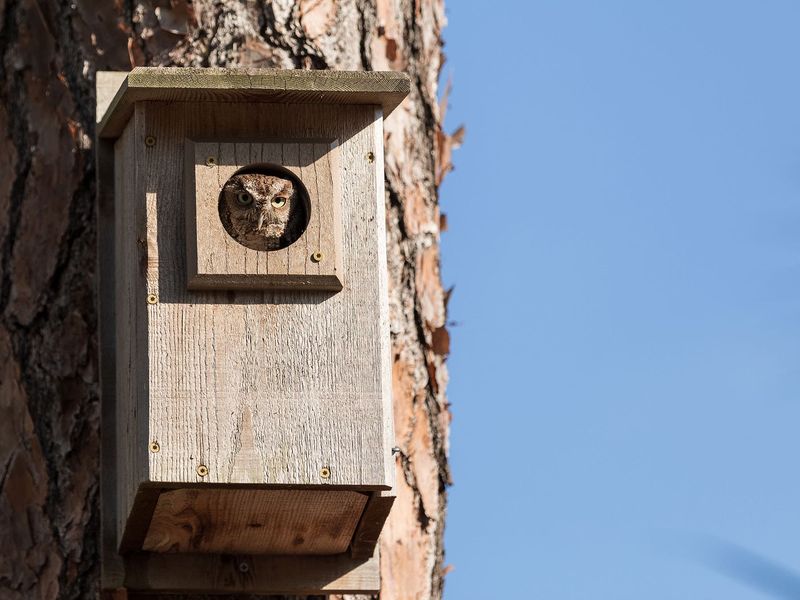
Choosing the right spot for the box is at least as important as building it correctly. A box mounted in the wrong location may sit empty for years, attract the wrong species, or expose a nesting owl to hazards that outweigh the wildlife benefit.
Aim for a mounting height between about 10 and 30 feet on a mature tree with a trunk large enough to hold the hardware securely. NC State’s backyard bird habitat resource and Audubon’s installation advice both favor shaded or partly open settings rather than fully exposed spots where heat can build up inside the box during warm North Carolina springs.
Orient the entrance east or south when the tree allows it, which reduces rain entry and takes advantage of morning warmth.
Wooded suburban edges, yards with several mature trees, and areas near open patches where owls can hunt all make reasonable candidates. The Carolina Raptor Center’s North Carolina-specific nest box instructions recommend installing boxes during cooler months, roughly October through February, before screech-owls begin scouting cavities for the breeding season.
The same guidance advises against placing boxes near wetlands or creek edges where Barred Owls, which are larger and more aggressive, may threaten the smaller screech-owls.
Pick a location you can reach safely with a ladder for annual inspection outside the nesting period, and keep the box away from any area of the yard where you regularly apply pesticides or where rodenticide bait stations might be active. A box mounted directly above a treated garden bed creates a conflict between the habitat you are trying to support and the chemicals you are using nearby.
Choose a tree at the yard’s edge or in a buffer area rather than directly over the beds you are protecting.
Protect the beds while the owl project develops
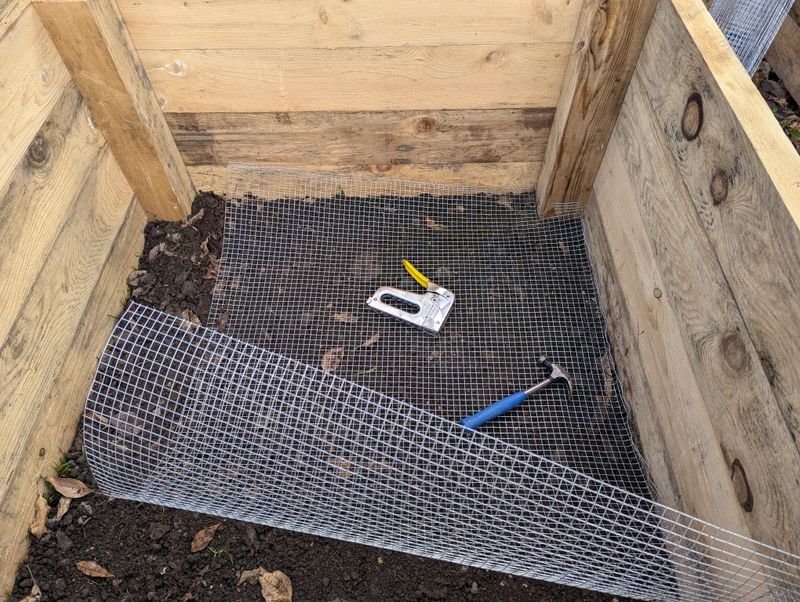
An owl box is a long-term habitat project. The voles in your beds right now will not wait for a bird to move in and establish a hunting territory, so direct protection measures need to run alongside the box project from the start.
Fall is the season when vole pressure tends to peak. Dense vegetation, thick mulch, leaf litter, and heavy thatch give voles cover from predators and easy access to food.
NC State’s vole management guidance recommends mowing grass short around garden beds, pulling mulch several inches back from the base of trees and shrubs, and removing weedy ground cover that creates protected travel corridors. These steps reduce the habitat that sustains vole activity near your most vulnerable plants.
For small trees, ornamental shrubs, and newly planted specimens, a physical barrier is one of the most direct protections available. NC State’s orchard and nursery vole guide and Penn State Extension both recommend wrapping the base of vulnerable plants with quarter-inch hardware cloth formed into a cylinder.
Bury the bottom edge several inches into the soil so voles cannot tunnel underneath, and keep the cylinder a few inches away from the trunk so it does not press against the bark as the plant grows. Check the fit each season and resize as needed.
Snap traps set inside a covered box or a section of PVC pipe can reduce a small, localized vole population without exposing pets, children, or birds to the trap itself. This approach works best when vole numbers are low and the activity is concentrated in a defined area.
Across a large lawn with extensive meadow-vole runways, trapping becomes time-consuming and less practical as a standalone strategy. Combine it with habitat reduction for better results, and check traps daily to keep the process humane and effective.
Keep pesticides away from the predator you are trying to support
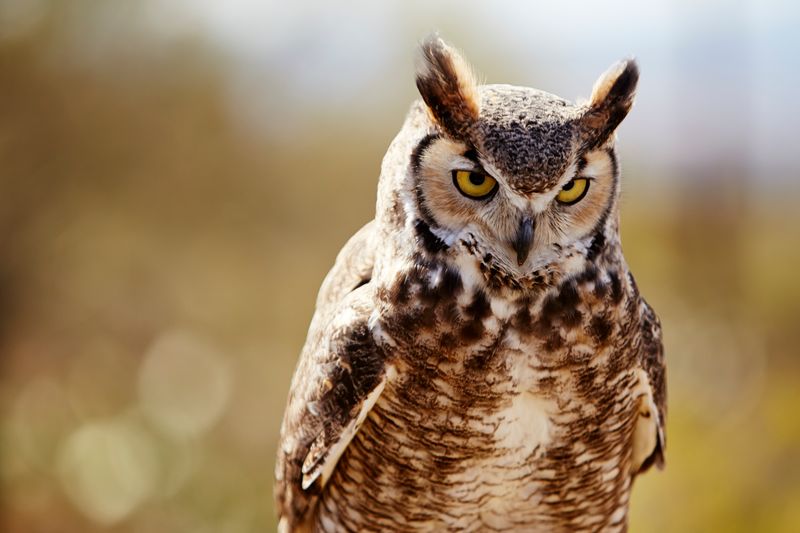
One of the fastest ways to undermine an owl box project is to use rodenticides in the same yard. Voles that eat poison bait do not die instantly.
They remain active for a period while the toxicant accumulates in their tissues, and an owl that catches and eats a poisoned vole can absorb a dangerous dose through that meal.
Secondary poisoning is a documented hazard for raptors. The USGS review of secondary poisoning in owls from anticoagulant rodenticides confirms that owls and other predators are exposed through prey, and anticoagulant products are among the most persistent offenders.
The Carolina Raptor Center’s nest box instructions specifically advise against using pesticides near a screech-owl box for this reason. If you are serious about attracting a predator to your yard, rodenticides and that goal work against each other.
If a pesticide feels necessary for a severe infestation, the EPA’s rodenticide safety review outlines the federal requirements that govern which products are available to homeowners, how bait stations must be designed to limit non-target exposure, and what label directions you are legally required to follow. Read the product label in full, use only what is labeled for the target pest, and follow any safeguards required by North Carolina rules.
Do not improvise placement or application rates.
A separate point worth being clear about: a screech-owl box is wildlife habitat, not a device that targets only rodents. Eastern Screech-Owls eat insects, earthworms, crayfish, small reptiles, amphibians, and occasionally small birds in addition to mammals.
Songbirds that visit your feeders could be on the menu, and other cavity users like flying squirrels or small songbirds may use the box itself. Supporting this owl means accepting its full role in the local food web, not just the parts that benefit the garden.
Treat an occupied box as protected wildlife habitat
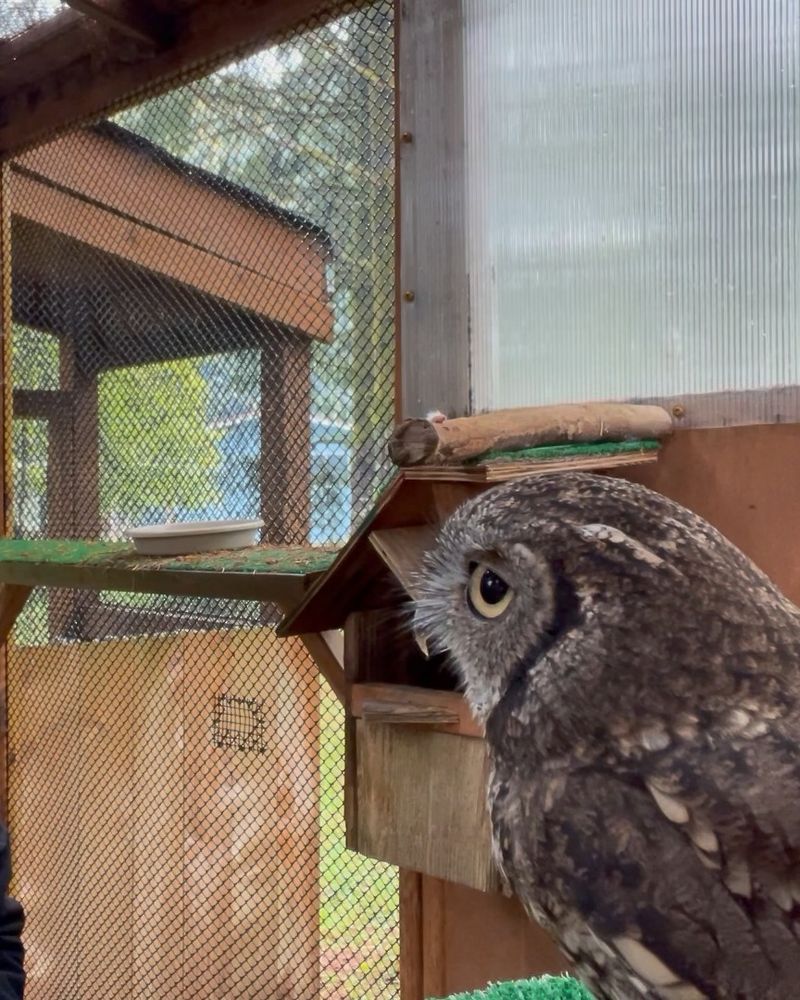
Once a screech-owl moves into the box, the rules change. What felt like a backyard project becomes active wildlife habitat with legal protections attached, and the right response to an occupied box is almost always to leave it alone.
Install the box in a spot where you can reach it safely with a ladder during the off-season, typically late summer through early fall after the breeding season ends. That window is when you should do any cleaning, remove old nesting material, and check for structural damage.
The Carolina Raptor Center’s nest box guide advises avoiding any disturbance once nesting begins and keeping annual inspection limited to the appropriate off-season period.
From a legal standpoint, the Migratory Bird Treaty Act prohibits the unauthorized take of covered migratory birds, their nests, and their eggs. Eastern Screech-Owls fall under that protection.
The practical conservation guidance is straightforward: do not open, move, or otherwise interfere with an occupied box during the nesting period. If you find eggs or nestlings inside when you open the box at what you thought was the right time, close it gently and leave it undisturbed.
Situations that feel ambiguous, such as a box in a location that has become hazardous, a bird that appears injured, or a nest that seems abandoned, are best handled by contacting the North Carolina Wildlife Resources Commission or a licensed wildlife rehabilitator rather than acting on your own judgment. Not every disturbance rises to the level of a legal violation, but the safest and most wildlife-responsible path is to get guidance from the appropriate authority before intervening.
Use the box as one part of a resilient garden plan
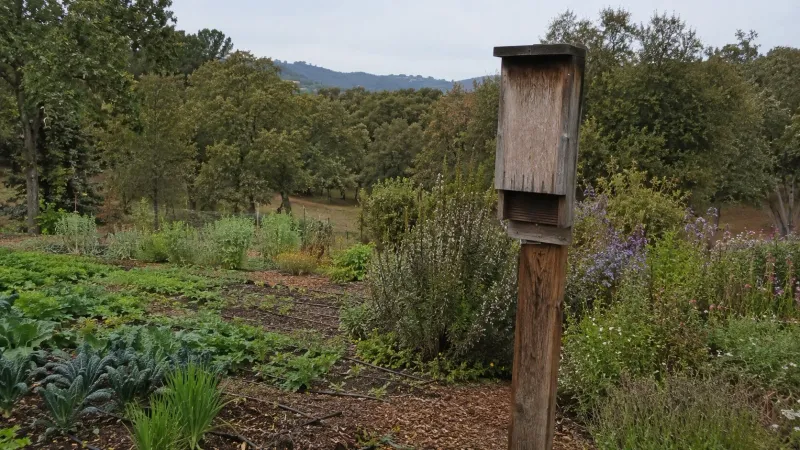
A screech-owl box fits best into a yard plan that does not depend on it to carry the full load. Confirm which vole species you are dealing with before choosing your controls, because pine voles spending most of their time underground are less accessible to a hunting owl than meadow voles moving through surface runways.
Habitat reduction and plant exclusion address existing damage directly and on your timeline. NC State’s vole management guidance and Penn State Extension both place habitat modification and physical exclusion at the center of an effective vole strategy.
The owl box adds a possible longer-term predator presence, but the timeline and outcome are uncertain and depend on whether a bird finds the box, claims it, and happens to hunt near the beds you care about.
Measure success by the health of your beds and the quality of the habitat you have created, not by whether voles disappear entirely. Cornell Lab’s species account makes clear that Eastern Screech-Owls are wide-ranging, opportunistic hunters with varied diets, not specialists targeting a single prey type in one corner of a suburban lot.
A yard with reduced cover, protected plants, no rodenticides, and a well-placed cavity box is genuinely better habitat than one without those features. That combination gives both you and any passing owl the best realistic chance of a productive outcome.
The goal is a more resilient yard, and the owl is a welcome but unpredictable partner in getting there.