
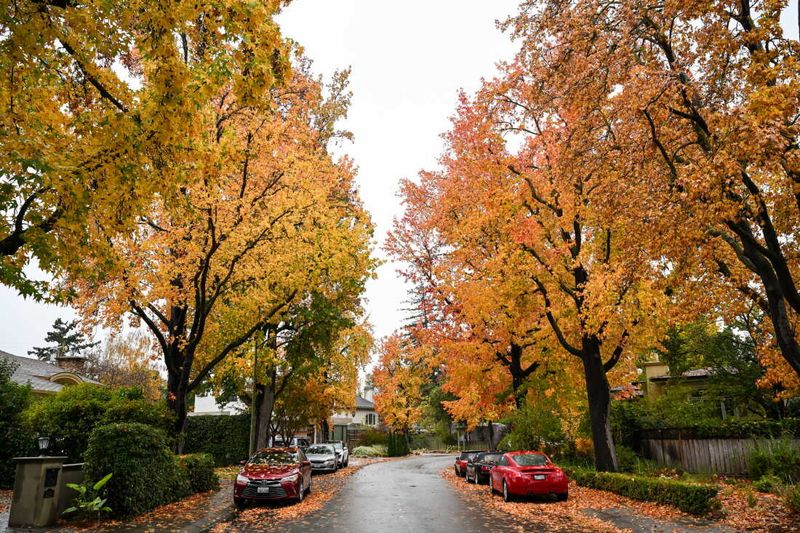
Raking every last leaf is a chore many Texas and Florida gardeners dread. The good news is that you do not have to bag them all.
Some of those fallen leaves can protect your soil, break down into organic matter, and give tiny winter guests a place to hide. Here is how to decide which leaves stay, which move, and which go.
Leaves can build soil gradually as they break down
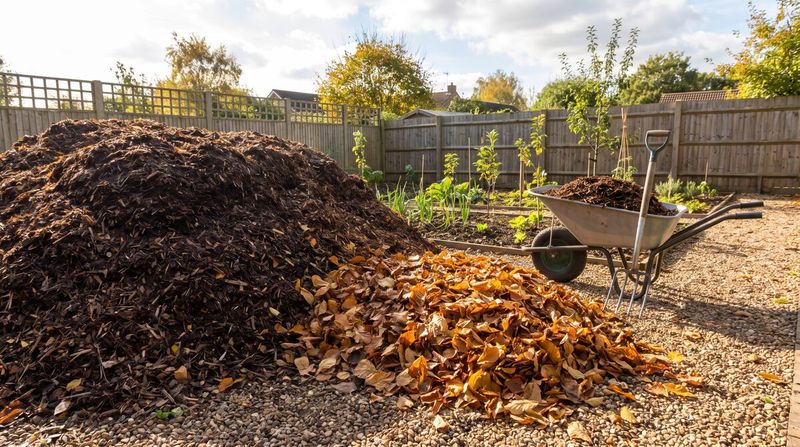
Staring at a yard blanketed in leaves, the first instinct is to grab the rake. Before you do, consider what those leaves can do.
Texas A&M AgriLife recommends several ways to put leaves to work instead of sending them to the curb.
As leaves decompose, they add organic matter and nutrients to the soil. This happens slowly, so it is not a burst of fertilizer and it is not a steady feeding all winter long.
How fast leaves break down depends on the leaf type, moisture, and temperature, which differ from a Houston backyard to a Panhandle lot.
While they sit on the surface, leaves also cover bare soil. That cover can help hold moisture and moderate soil conditions, as UF/IFAS Extension explains.
The goal is selective reuse: keep leaves where they help and move them where they do not.
A light lawn layer is useful; a thick one can smother grass
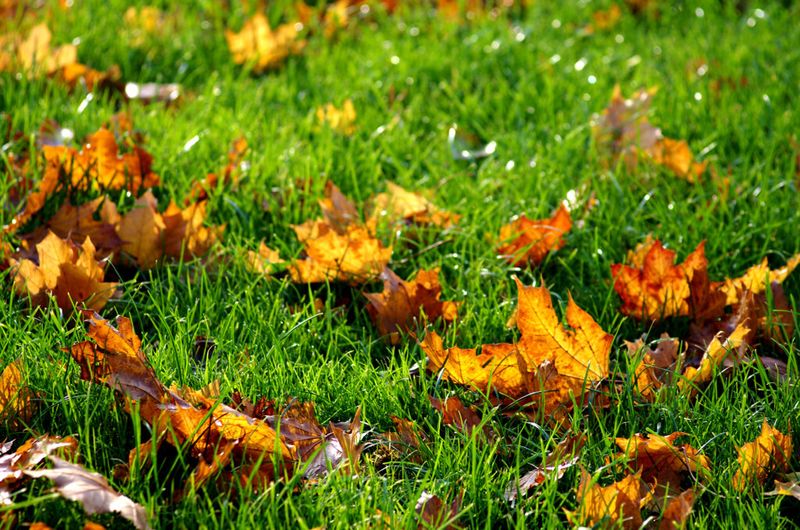
Lawns play by different rules than garden beds. A light scattering of leaves can be mowed into smaller pieces, and those bits settle down between the grass blades.
Texas A&M’s leaf plan likewise suggests mowing a light covering.
A thick blanket is a different story. According to UF/IFAS guidance, leaves that completely cover the lawn should be removed or redistributed, since a heavy, wet layer can shade and smother turf.
A simple check helps: if you can still see plenty of grass through the leaves, mowing is usually fine. If the grass has disappeared, rake or blow the extra leaves toward beds or the compost pile.
Turf response varies by grass type and yard, so watch how your lawn looks after a few weeks.
Letting leaves rest in a bed is not the same as letting them blanket the lawn. Treat the two areas separately.
Move extra leaves to beds and tree areas
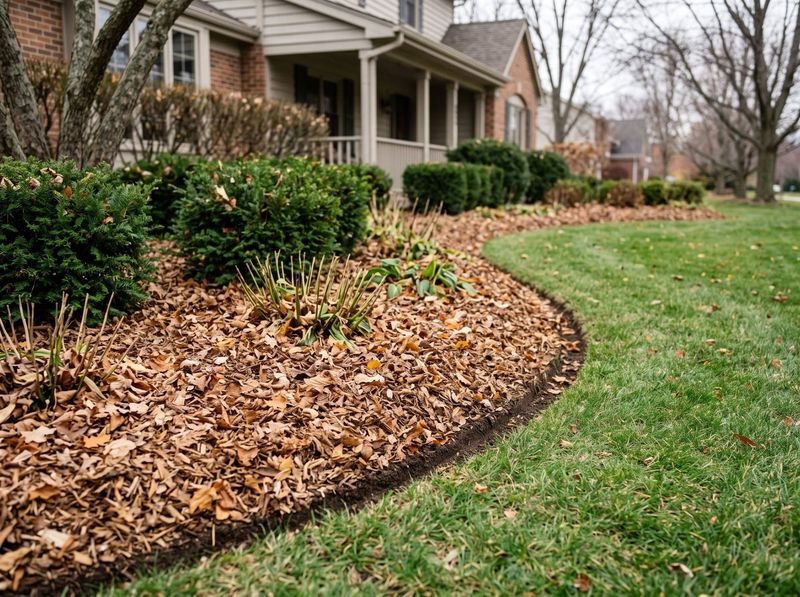
Extra leaves from the lawn, patio, or driveway have an easy home: garden beds and the ground under trees and shrubs. Shredding them first can reduce matting and speed up breakdown.
Running a mower over a pile works well.
Texas A&M suggests about 2 to 3 inches of shredded leaves in flower beds and 3 to 6 inches around trees and shrubs. Those are that source’s recommendations, not rules for every plant or yard, so adjust for your site.
Keep the layer back from trunks and stems. Piling mulch against them can hold moisture where it does not belong, so leave a little gap around each one.
Another option is working leaves into garden soil in fall. That gives them time to decompose before spring planting.
Texas A&M says this can help clay soil drain and aerate better, and help sandy soil hold water and nutrients.
Leaf litter can shelter some fireflies and pollinators
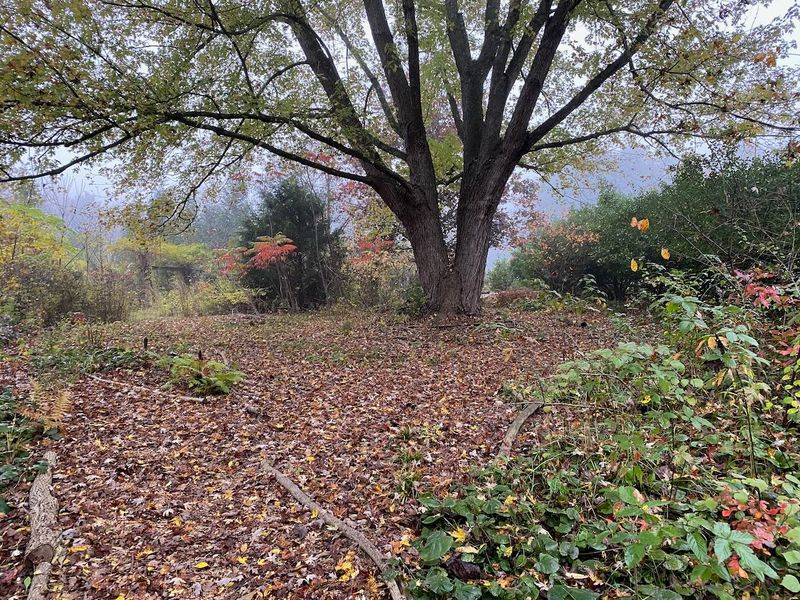
Tucked under a layer of leaves, plenty of small creatures are riding out the cool months. UF/IFAS notes that leaf litter shelters some overwintering insects and wildlife.
Fireflies are among them, and the Xerces Society recommends protecting leaf litter in firefly habitat.
Some pollinators also overwinter in or under leaves, while others use stems or other sites, according to the U.S. Fish and Wildlife Service and Illinois Extension.
Keep a few patches undisturbed beneath trees, behind shrubs, or in a less-used corner. This gives shelter, but it will not guarantee more fireflies or pollinators next year.
Leave some bare ground too. Some ground-nesting bees need open soil, so do not cover every patch.
Shred mulch leaves, but leave some habitat undisturbed
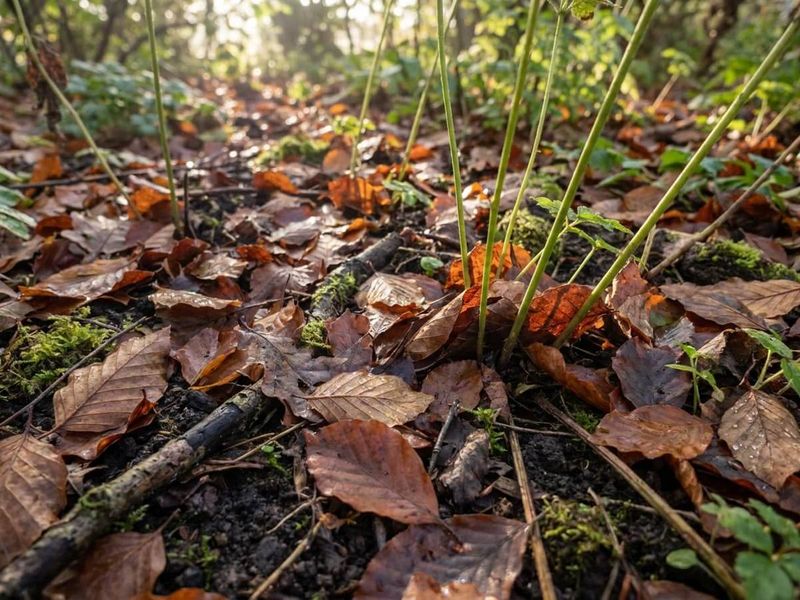
Shredding makes leaves easier to manage. Smaller pieces settle, resist matting, and break down faster, which is why UF/IFAS suggests shredding leaves for mulch.
The tradeoff is that mowing or shredding can disturb insects hiding in leaf litter. The Xerces Society advises minimizing disturbance in firefly habitat, so chopping up every leaf in the yard is not the best plan if wildlife matters to you.
A flexible approach is to shred the leaves you use as mulch in beds and around trees. Then set aside one patch of whole leaves, maybe behind a shrub or along a fence, and leave it alone through winter.
The size and location of that patch is up to you. A small side yard and a large rural lot will not look the same, and that is fine.
Clear leaves from problem areas and handle diseased debris carefully
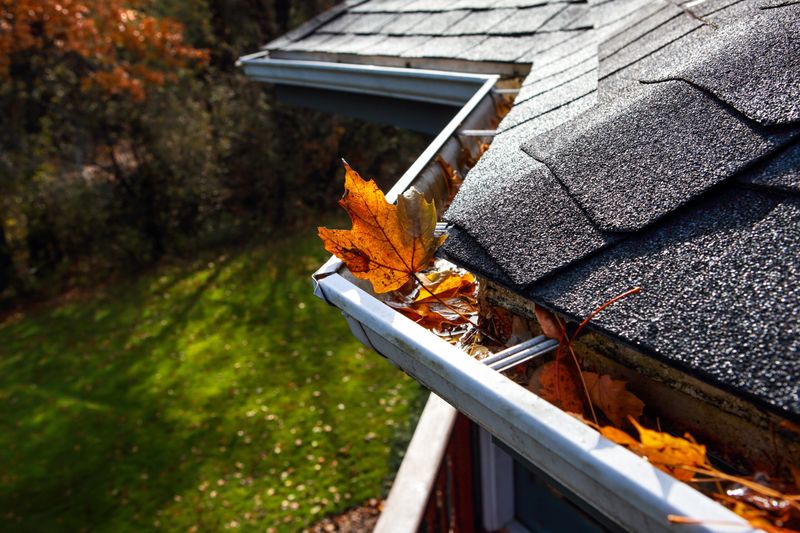
Some places should stay clear. Yard debris can wash into storm drains and clog drainage, and Florida’s water-quality guidance warns that it contributes to pollution.
Keep leaves out of drains and ditches, and sweep them off walkways and steps, where wet leaves get slippery.
In Texas, the Texas A&M Forest Service recommends clearing leaves from gutters and from places where they pile against the house, wooden fences, or decks. Its guidance covers the first five feet around the home.
Got more leaves than your beds can use? Composting is a good outlet for the extra.
Spots on leaves do not automatically mean trash. Illinois Extension advises removing infected material when disease is more than occasional leaf spot.
If you have identified a disease or see it year after year, check with your local extension office before reusing those leaves.
Keep the leaves that help, and move the rest
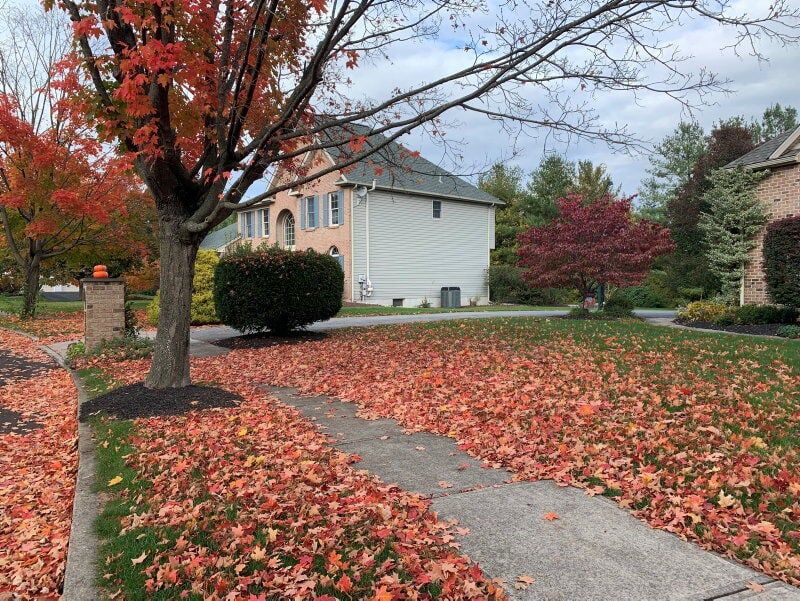
A good leaf plan comes down to sorting. Keep some litter in suitable beds or a quiet habitat patch, mow a light layer into the lawn, and send extra leaves to beds or the compost bin.
Clear drains, walkways, gutters, and the area next to your house.
Done this way, leaves can add organic matter to soil and give small creatures a place to shelter. Whether your beds look better by spring depends on your soil, how you use the leaves, and any plant problems on your site.
Texas and Florida yards vary a lot, so watch what works where you live. The UF/IFAS mulch guide is a handy reference.
Fall leaves are not trash, but they are not a blanket for everything either. Put them where they work.