
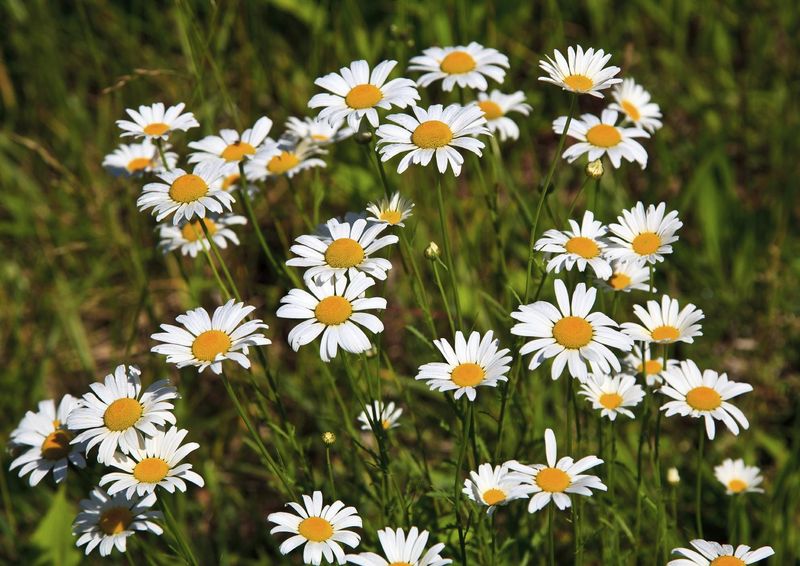
You planted a bright clump of Shasta daisies, and now the middle looks bare while the flowers around the edge get thinner. Many Southern gardeners run into this after a few seasons.
Dividing the clump is one way that may bring back some vigor, but it does not work for every plant or every yard. Here is how to tell whether division makes sense, and how to do it well if it does.
A bare center is a warning sign, not a diagnosis
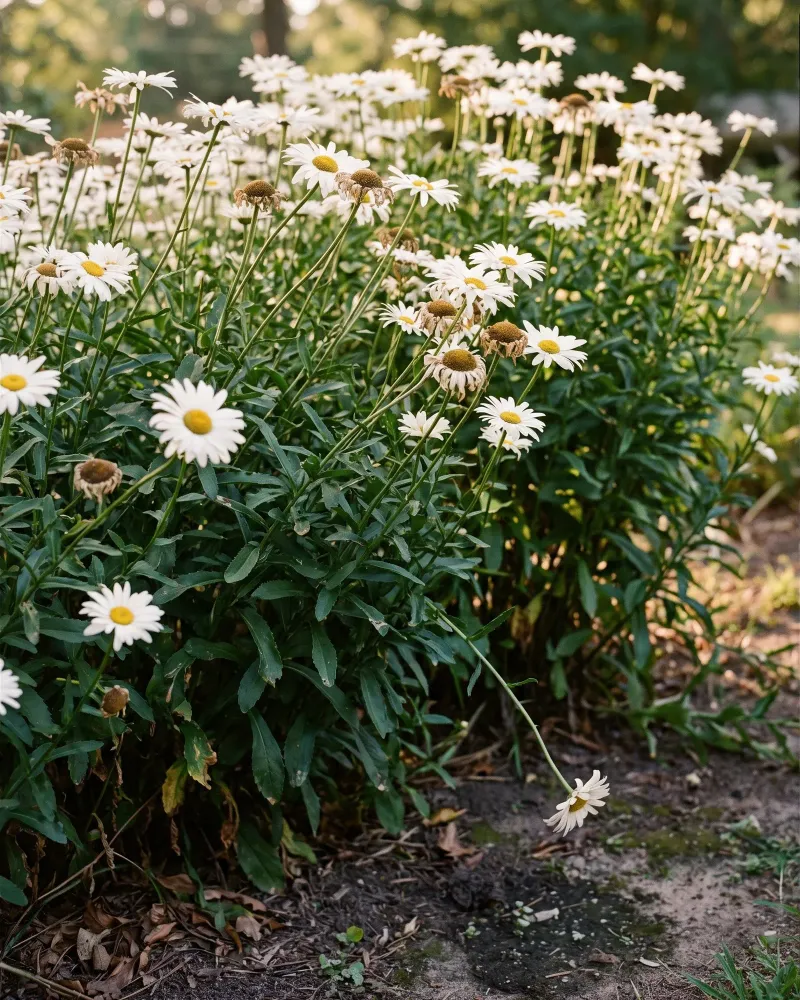
Picture the clump you loved two summers ago. Now the middle is empty, the blooms are fewer and smaller, and the plant just looks tired.
Illinois Extension guidance on dividing perennials lists a dead center, smaller flowers, and lost vigor as signs a perennial may benefit from division.
Those signs point toward division, but they do not prove why the plant is struggling. Shasta daisies can also decline from soggy soil or fungal trouble.
UF/IFAS notes they are prone to fungal disease and need well-drained soil.
Look at the whole plant before you grab a shovel. If leaves are wilting, yellowing, or dying back across the clump, or if cut stems show brown streaking inside, division is not the answer.
Arkansas Extension describes those as possible signs of Verticillium wilt, and a local extension office can help with diagnosis.
Division may renew a clump from its vigorous outer growth
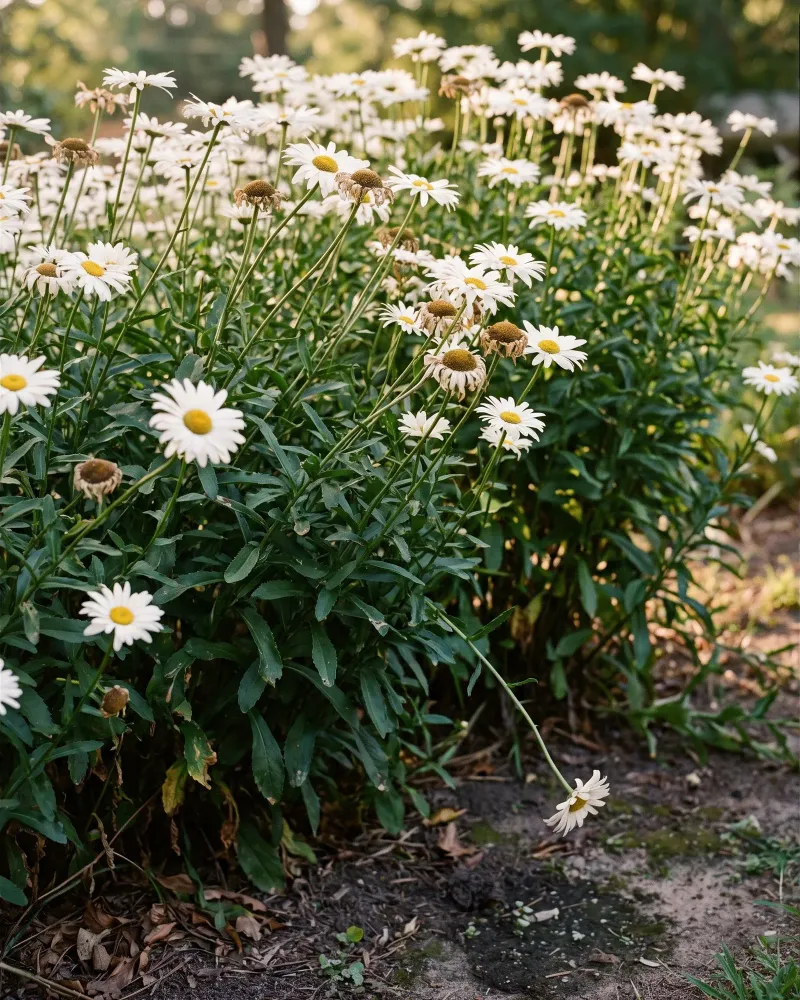
Daisy clumps grow outward over time. The oldest growth in the middle can turn woody and die, while the young shoots around the edge stay strong.
Division takes advantage of that pattern by letting you toss the tired center and replant the healthy edge.
Iowa State notes that Shasta daisies tend to be short-lived, which is one reason regular division is common advice. Gulf Coast gardeners get similar guidance from local Master Gardeners.
Be realistic about the payoff. Division may help a suitable clump bounce back, but it cannot promise a full plant by a set date, and it cannot repair a plant that is failing for other reasons.
When to do it also depends on where you live, which is the next question to sort out.
Choose a locally appropriate time to divide
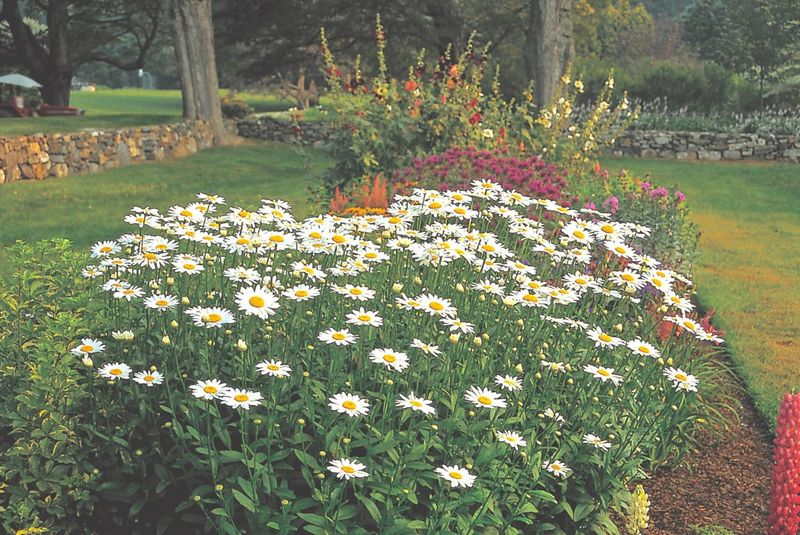
Experts do not agree on one season. Galveston County Master Gardeners recommend fall division every two to three years.
Iowa State lists spring for Shasta daisies, and UMass lists early fall.
So fall is a good option in some places, not a rule for everyone. Follow your own county extension office and local plant guidance.
You may also see advice to divide four to six weeks before the ground freezes, and University of Minnesota Extension gives that guideline. It was written for cold climates.
Freeze dates in Texas and Florida vary widely, so it does not work as a statewide calendar rule for either state.
Lift the clump on a cool day and protect its roots
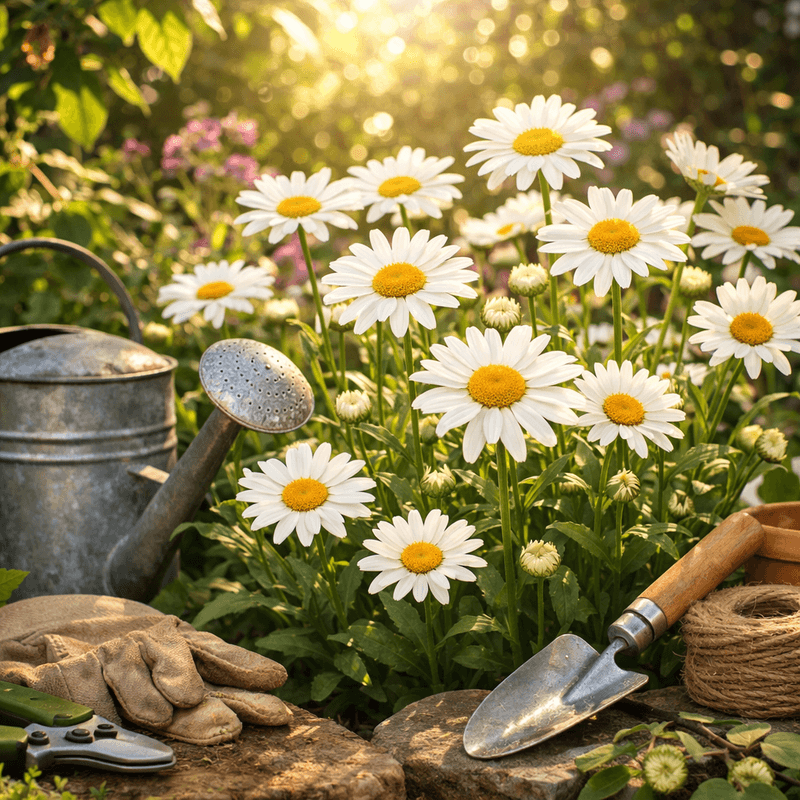
Pick a cool or overcast day for the job. Hot sun can dry exposed roots fast, and dry roots struggle to recover.
Water the plant the day before if the soil is dusty, since damp soil is easier to dig.
Push a spade into the soil in a circle a few inches outside the clump. Lift the whole plant, rocking the spade to free it.
Then shake or gently knock off loose soil so you can see the crown and where the healthy growth sits.
Work promptly. University of Minnesota Extension advises against letting roots dry out while a plant is out of the ground.
Set the clump on a tarp in shade, and have your new planting spots ready before you start. Illinois Extension gives similar advice about keeping divisions from drying.
Keep the healthy edge and discard the dead center
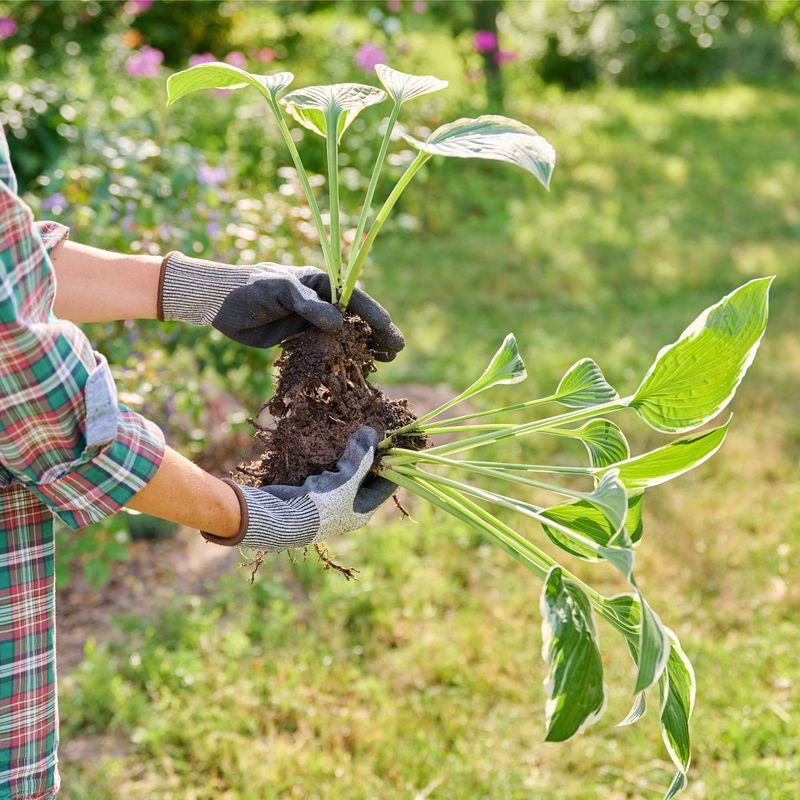
With the clump on the tarp, pull it apart with your hands where it separates easily. For tougher spots, use a sharp spade or knife.
Cut cleanly rather than tearing roots to shreds.
Now sort the pieces. Keep vigorous sections from the outer edge that have healthy roots.
Discard the woody, dead, or weak center, along with any piece that looks limp or has few roots. University of Georgia Extension suggests aiming for three to five vigorous shoots per division.
Do not be tempted to save the center just to have more plants. A few strong divisions beat many weak ones.
Keep your keepers shaded and moist, perhaps under damp burlap or in a bucket with a little water, until you replant them. Illinois Extension stresses the same point about moist roots.
Replant promptly and water without saturating the soil
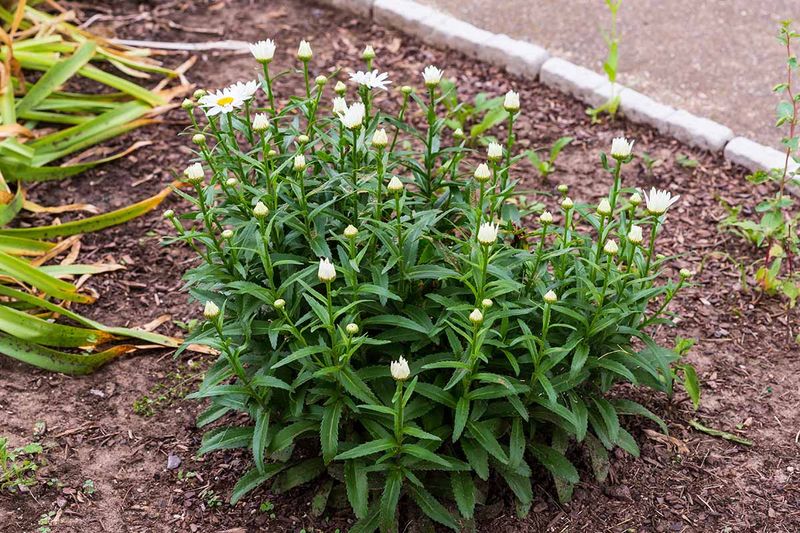
Get the divisions back in the ground as soon as you can. Loosen the soil in the new spot and mix in compost if your soil is heavy or sandy.
Set each piece at the same depth it grew before, spaced with room to spread.
Water them in well so soil settles around the roots and air pockets close. After that, keep the soil lightly moist while the divisions settle in, checking with a finger rather than a schedule.
Moisture is a balance, though. UF/IFAS advises well-drained soil for Shasta daisies and cautions against overwatering.
Choose a spot without standing water, and consider a raised bed or mounded soil if your yard stays soggy after rain. How fast the plants recover, and how many blooms they give, will vary from yard to yard.
Check whether your region and plant suit this remedy
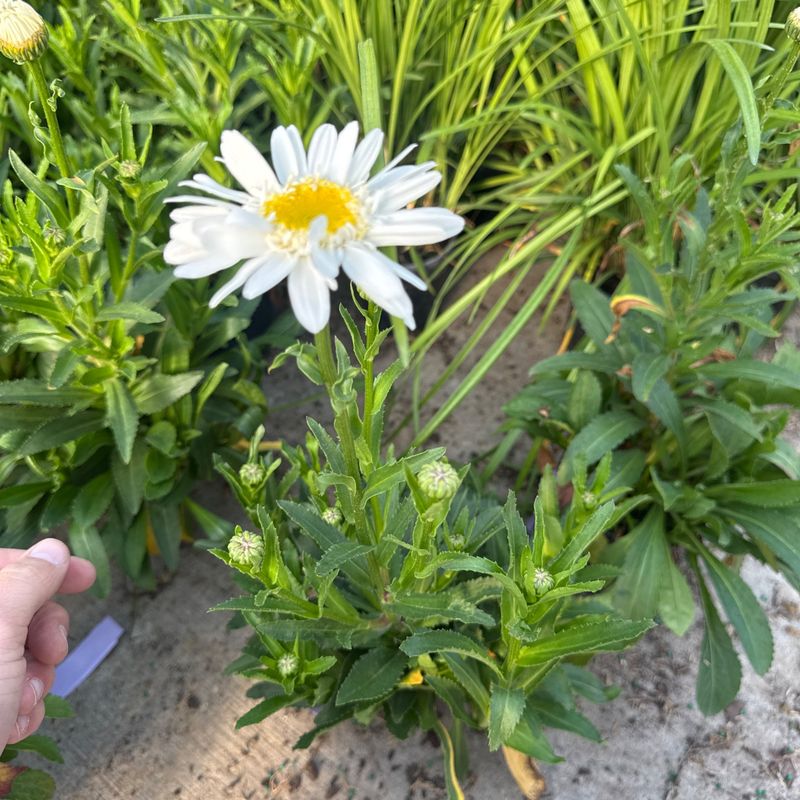
Before you divide anything, ask two questions. Does the clump still have vigorous outer growth?
And does your climate suit the plant? If either answer is no, division may not be worth the effort.
Florida makes the second question urgent. UF/IFAS says high summer temperatures kill Shasta daisies in Central and South Florida, where gardeners treat them as annuals.
Dividing cannot fix a plant that the climate keeps defeating.
Texas varies too. Galveston County Master Gardeners caution that large-flowered and double forms may struggle in heat and humidity.
Texas Tech lists medium heat tolerance and zones 5 to 8.
Divide only in a window that fits your area, and replant only the healthy sections. A hollow clump is sometimes the plant’s way of saying it has had a good run.