
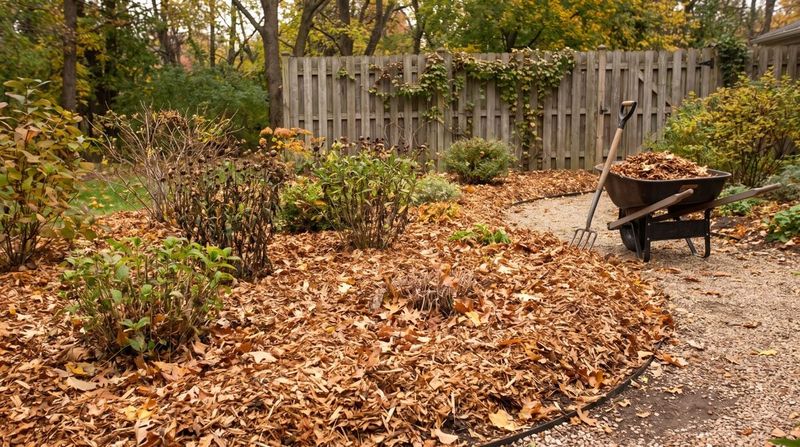
Rain hammers bare garden soil all winter, and that can wash away the best part of your bed. A thin blanket of shredded leaves is one low-cost way to cover it.
Leaves will not turn clay into fluffy soil in a single season, but they can protect the ground and slowly add organic matter. Here is how North Carolina gardeners can use them well, and where they fall short.
Cover idle beds to protect bare soil
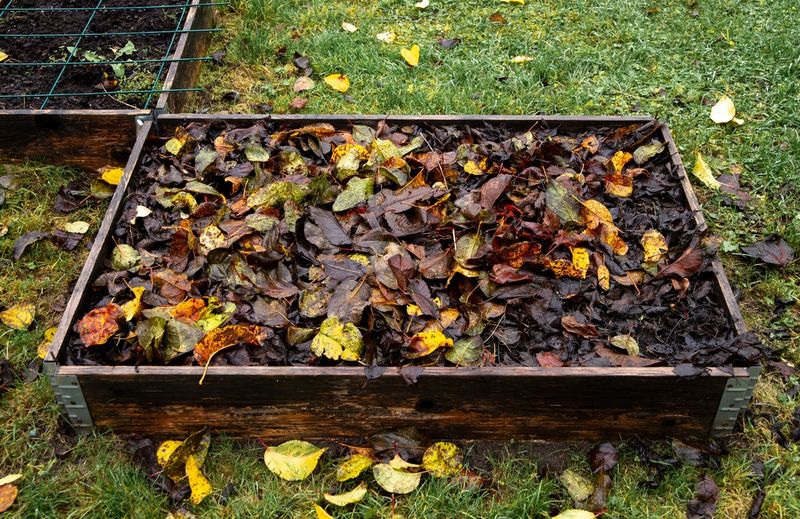
Picture a heavy November rain landing on a bed with nothing growing in it. Each drop hits bare soil like a tiny hammer, splashing particles loose and sending them downhill.
Over a wet winter, that can strip away the best topsoil, especially on sloped Piedmont yards.
Mulch acts like a shield. According to NC State Extension guidance on garden plots, mulch helps protect soil from erosion, conserve moisture, and suppress weeds, and it can improve soil structure as it breaks down over time.
Covering bare ground is a sound goal for any idle bed.
Shredded leaves are one practical way to do it, particularly if your trees already drop plenty each autumn. They are not the only way.
NC State also points to winter cover crops, and its water quality guide for gardeners specifically recommends them for protecting bare vegetable gardens.
Think of leaves as an option to weigh, not a rule every garden must follow. A flat bed in the coastal plain, a sloped plot in the foothills, and a shaded mountain garden may each call for a different approach.
If your bed would otherwise sit exposed until April, a leaf cover is a simple step worth considering.
Shred leaves and keep the layer modest
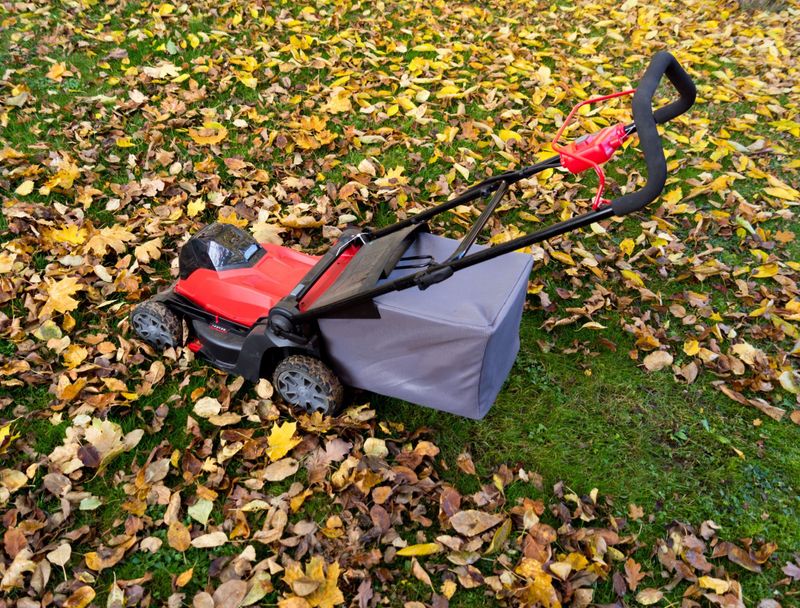
Start with the mower. Running over a pile of dry leaves a few times chops them into small pieces, and a leaf shredder does the same job.
UGA Extension recommends shredding because whole leaves tend to mat into soggy sheets, while fine pieces settle in and stay put in the wind.
Next, spread the pieces loosely over the bed. NC State recommends about 1 to 2 inches of fine leaf mulch for vegetable plots, and it says there is no need to go beyond roughly 4 inches of any organic mulch.
More is not better here. A thick, unshredded pile can smother the soil surface and stay wet.
A quick check: if you can still see bits of soil through the layer when you poke it with a finger, it is loose enough. Fluff down any clumps you find.
You can read the full recommendation in NC State’s community gardening handbook.
Leaves are free only if you already have suitable ones in your own yard or from neighbors. If you bring in outside materials, know where they came from.
NC State documents herbicide carryover in hay, manure, compost, and grass clippings, so ask about those sources before spreading them on a food garden.
Set realistic expectations for clay soil
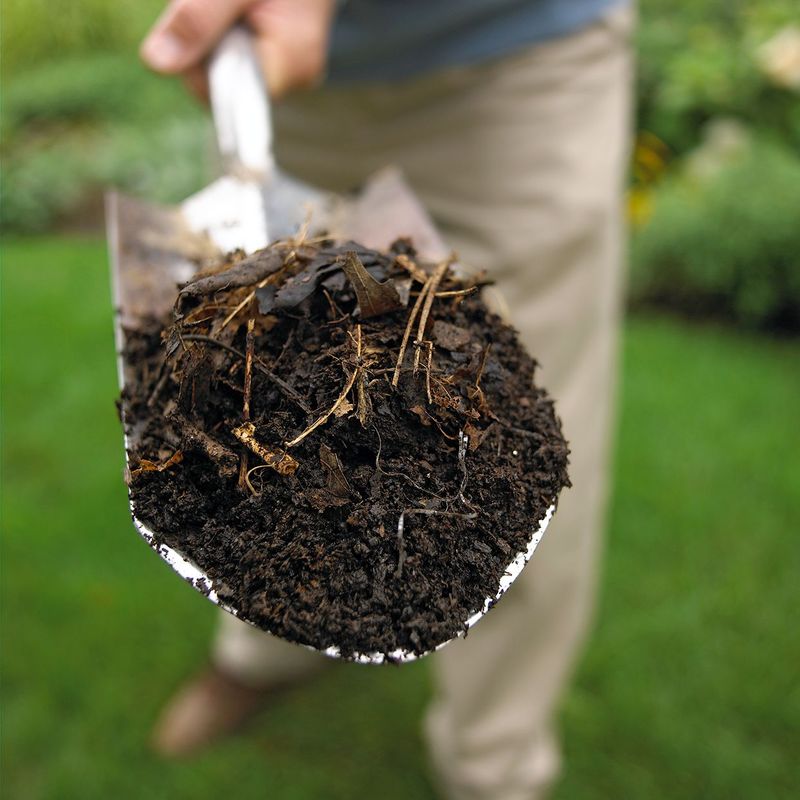
Many North Carolina gardeners work with clay, especially across the Piedmont. Clay holds water and nutrients well, but it packs tight and can be hard to dig.
Organic matter is the standard remedy, and decomposing leaves are one source of it.
As leaves break down, they feed soil organisms, and earthworms may be among the beneficiaries. Oregon State Extension explains that organic matter can improve clay structure, drainage, and aeration.
Still, a single winter of leaves will not guarantee more worms, and worms will not till your bed for you.
Here is the honest timeline. Benefits build gradually, and keeping them takes repeated additions year after year.
Organic matter does not change the underlying soil texture, so clay stays clay. It may become easier to work, but it will not turn into sandy loam.
A useful clue is how the bed behaves over several seasons. Does a trowel slide in more easily a day after rain?
Does water soak in instead of pooling? Those small changes are better signs of progress than a crumbly bed next April.
Serious compaction or drainage trouble needs its own fixes, and leaf mulch alone will not solve it.
Keep surface mulch distinct from soil amendments
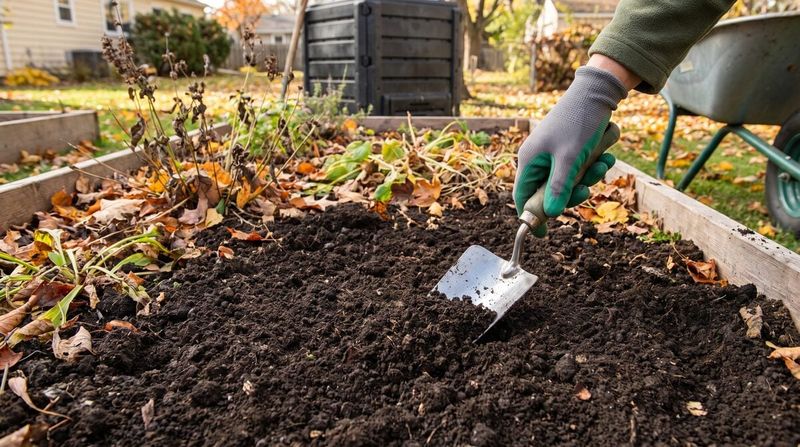
Tucking a bed in for winter means laying leaves on top, not burying them. Surface mulch and soil amendment sound similar, yet they do different jobs.
A thin leaf blanket shields the soil, while an amendment is mixed in to change how the soil behaves.
NC State’s vegetable gardening handbook discusses incorporating well-rotted leaves or compost to improve heavy clay. Notice the words well-rotted.
Finished material is a different thing from a fresh pile of whole leaves.
Digging fresh leaves deep into a bed can backfire. Oregon State’s guide to organic matter notes that fresh material decomposing in soil can temporarily tie up nitrogen, leaving less for your plants.
A buried deep layer is not a shortcut to better soil by spring.
So the plan is simple. Leave fresh shredded leaves on the surface through winter.
If you want to mix something in, use finished compost or leaf mold that has already broken down, and treat that as a separate project on its own schedule.
Choose a cover crop for a different kind of protection
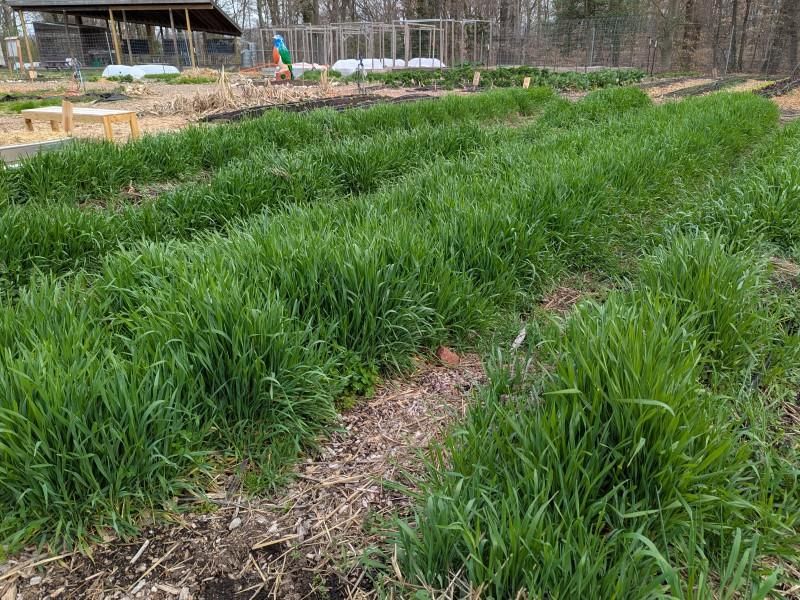
Leaves and cover crops both protect soil, but they are not interchangeable. A leaf layer is a blanket that sits on top and slowly breaks down.
A cover crop is alive, with roots and foliage working through the cold months.
That growth matters. NC State’s winter annual cover crop guide describes active winter erosion protection, and it notes that legumes such as crimson clover may add nitrogen, depending on species and management.
Leaves offer none of that growth or nitrogen contribution.
On the other hand, cover crops take more work. You have to buy seed, sow at the right time, and cut or turn the crop under before planting.
NC State’s water quality guide lists both mulch and winter cover crops as ways to protect soil, so each has a place.
Weigh your situation. If you have leaves on hand and little time, a simple cover may suit you.
If you want living roots and are ready to manage a crop, a cover crop may be worth the effort. Neither option universally wins, and some gardeners use one in one bed and the other elsewhere.
Manage mulch around spring planting
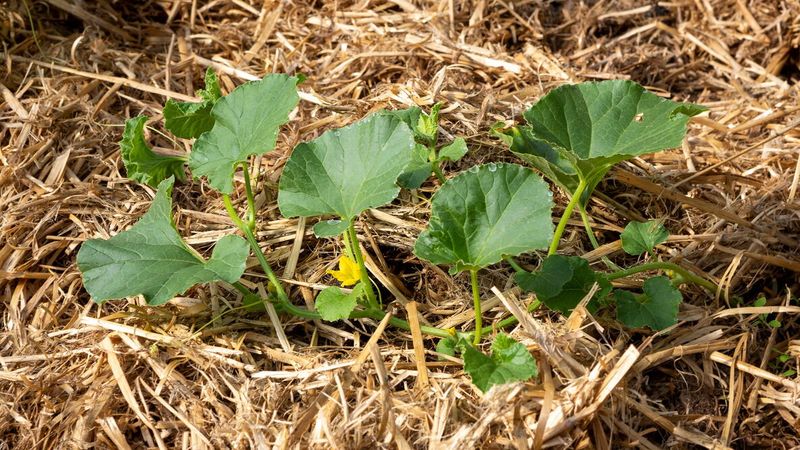
Come late winter, the same blanket that protected the bed can work against you. Organic mulch slows soil warming and can delay crop maturity.
NC State’s vegetable gardening handbook warns about this effect and advises applying organic mulch after the soil warms, around well-established plants.
If you plan early planting, do not leave a thick layer sitting over cold soil. Rake the leaves aside so the sun can reach the bed, and stash them nearby.
Once seedlings are established and the ground has warmed, you can tuck a thin layer back around them.
North Carolina varies a lot, from the coast to the mountains, so no single calendar date fits everyone. Watch your own soil and your own last frost instead.
Warm-season crops like tomatoes and peppers also want warmer ground than peas or lettuce.
Shredded leaves can protect a resting bed, and repeated organic matter may support better structure over many seasons, as Oregon State Extension notes. A crumbly bed by spring is not a promise.
Patience, and a little mulch each year, is what builds good soil.